

BUDAPEST HISTORY
Origins–1541: Ancient & Medieval Foundations
Human settlement along this stretch of the Danube reaches deep into prehistory, long before Budapest existed as a unified city. Celtic communities occupied the region before Rome incorporated it into the province of Pannonia, where Aquincum, on the western bank of the Danube in present-day Óbuda, developed into an important military and civilian center. The river was already defining the area's geography: a frontier, transportation corridor and source of thermal waters that would remain central to the city's identity. After Roman authority receded during the fifth century, successive peoples moved through the Carpathian Basin before the Magyar conquest near the end of the ninth century established the political foundations of medieval Hungary. (UNESCO World Heritage Centre)
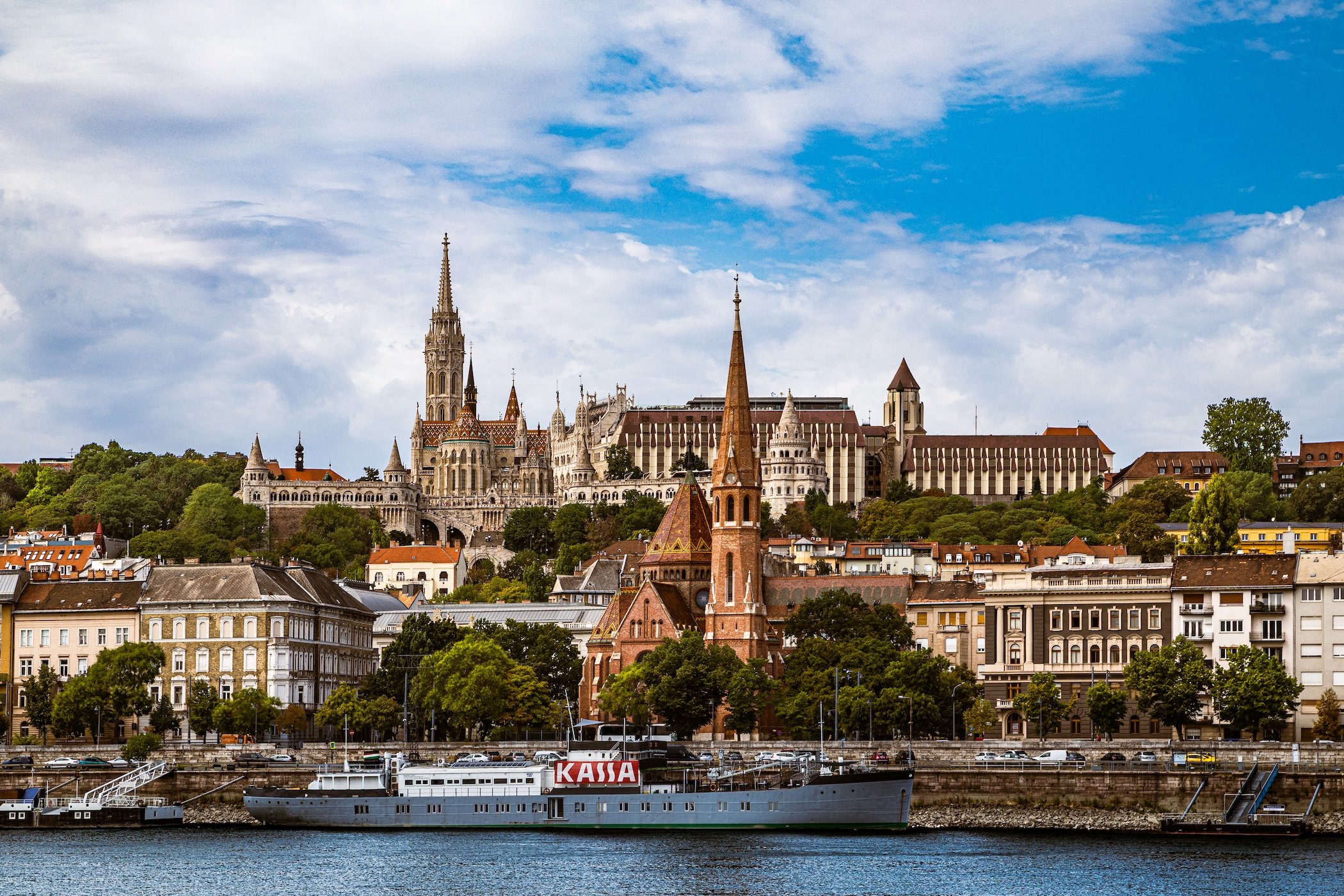
Buda, Pest and Óbuda emerged as distinct settlements rather than parts of a single city. Pest became an important commercial settlement on the flat eastern bank, while Óbuda developed around earlier Roman remains. The Mongol invasion of 1241–42 devastated both, prompting King Béla IV to establish a fortified settlement on Castle Hill; the new Buda subsequently grew into Hungary's principal royal center. By the fifteenth century, particularly under Sigismund of Luxembourg and Matthias Corvinus, Buda's royal palace and court culture reached extraordinary prominence while Pest prospered as a mercantile town across the river. Their medieval flourishing ended amid the collapse of Hungarian royal power after the Battle of Mohács in 1526, culminating in the Ottoman occupation of Buda in 1541. (Buda Castle)
1541–1790: Ottoman Buda & Habsburg Renewal
The Ottoman seizure of Buda in 1541 transformed the region politically, culturally and architecturally. Buda became the administrative seat of an Ottoman province, while Pest declined considerably and warfare repeatedly affected settlements surrounding the capital. Ottoman rule nevertheless left enduring physical traces, particularly through the development and use of Budapest's thermal springs. Bathhouses such as the predecessors of the Király and Rudas baths embedded an Ottoman architectural layer within a city whose relationship with warm water stretched back to Roman Aquincum. Buda's mosques, minarets and administrative buildings largely disappeared after the period ended, but the surviving baths remain among the clearest reminders that Budapest's identity was shaped by cultures arriving from both east and west. (Budapest Főváros Levéltára)
Habsburg forces retook Buda in 1686 after a destructive siege, beginning a lengthy process of reconstruction and repopulation. German, Hungarian and other Central European settlers reshaped communities that had been depleted by war, while Baroque churches, civic buildings and residences increasingly replaced the physical landscape of Ottoman Buda. Pest gradually revived as a commercial center, and Buda regained administrative and cultural importance; the transfer of the university from Nagyszombat to Buda in 1777 was one sign of that renewal. By the late eighteenth century, Buda, Pest and Óbuda were again substantial neighboring settlements—but they remained politically and physically distinct communities whose increasing interdependence anticipated the much larger transformation to come. (Budapest Főváros Levéltára)
1790–1873: Reform, Revolution & the Road to Unification
The nineteenth century transformed Pest-Buda from a collection of neighboring towns into the emerging heart of modern Hungarian political and cultural life. During the Reform Era, Pest increasingly became the country's commercial, intellectual and civic center, while institutions such as the Hungarian Academy of Sciences reflected growing national ambitions. Improvements in roads, river transport and eventually railways accelerated movement through the region. The Chain Bridge, completed in 1849, carried particular symbolic weight: for the first time a permanent bridge physically joined Buda and Pest across the Danube, turning an aspiration toward unity into an everyday geographic reality. (UNESCO World Heritage Centre)
Budapest's emerging metropolitan identity was inseparable from the Hungarian Revolution of 1848–49. Pest became one of the principal stages of the national movement as demands for constitutional government, civil rights and Hungarian autonomy moved from political debate into revolution. Although Habsburg authority was ultimately restored, the aspirations of the era survived, and the Austro-Hungarian Compromise of 1867 returned substantial self-government to Hungary. Economic growth accelerated dramatically thereafter. Buda, Pest and Óbuda were increasingly functioning as components of the same metropolis, and the legal process of unification began in 1872. On November 17, 1873, the council of the united Budapest formally assumed authority, turning three historic communities into a single capital. (Budapest Portál)
1873–1918: The Birth of Budapest & the Imperial Metropolis
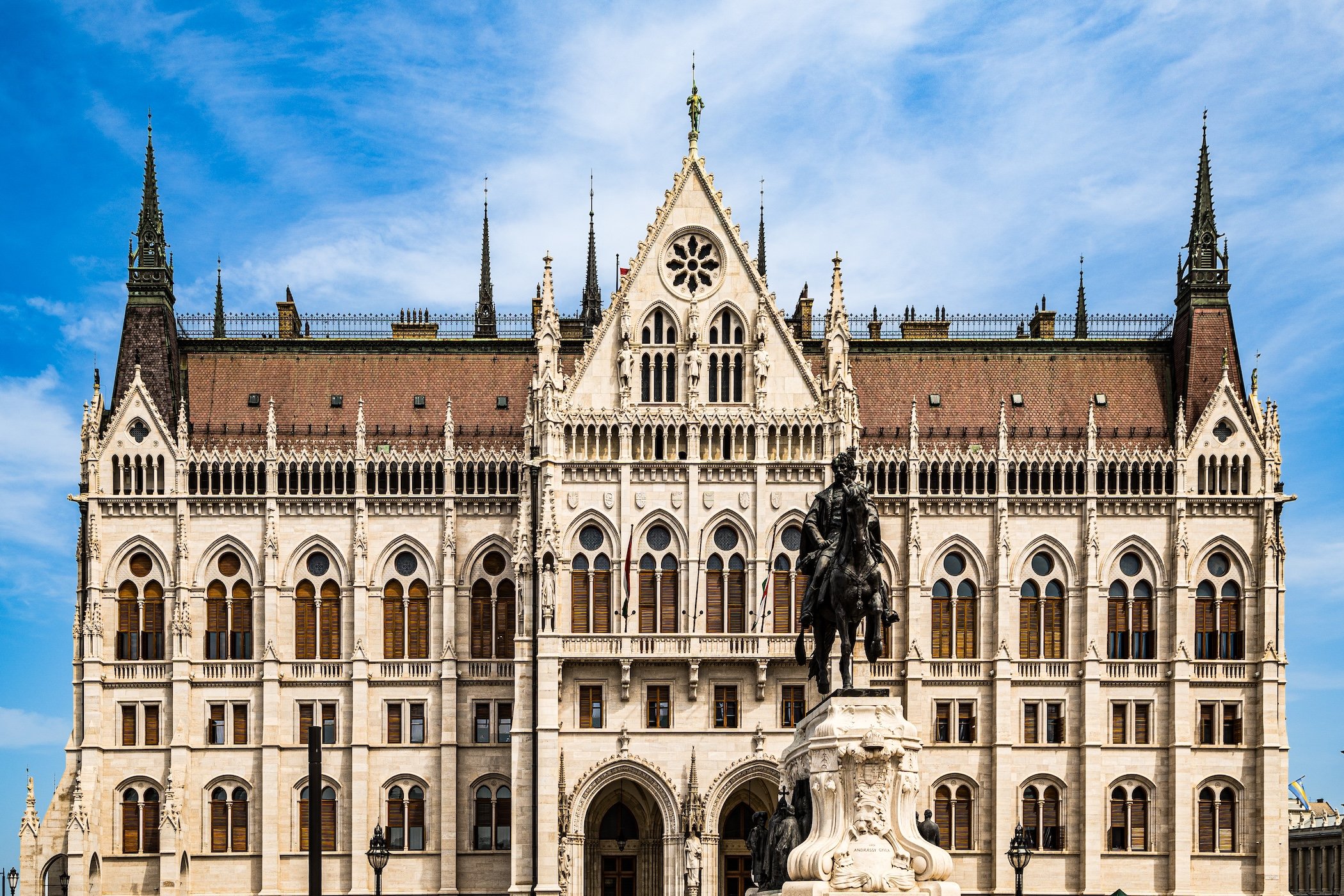
Unification unleashed one of the most dramatic periods of urban construction in European history. Budapest became the co-capital of the Hungarian half of Austria-Hungary and a physical expression of Hungary's ambitions within the Dual Monarchy. Boulevards were cut through older urban fabric, bridges multiplied across the Danube, utilities and sewers modernized daily life, and entire neighborhoods of multistory apartment buildings spread outward from the historic core. Andrássy Avenue, the Hungarian State Opera House, the Great Market Hall, the Parliament building and countless schools, baths, railway stations and civic institutions belonged to a larger project of creating a capital that could stand beside Vienna as a political and cultural metropolis. (Budapest Portál)
The Millennium celebrations of 1896 crystallized this confidence. The city gained continental Europe's pioneering underground railway beneath Andrássy Avenue, while monumental construction around Heroes' Square and elsewhere presented Hungarian history through architecture and public space. Yet the imperial metropolis was not merely ceremonial: Budapest had become a dense industrial and commercial city populated by workers, merchants, civil servants, immigrants and an influential Jewish middle class whose contributions were deeply intertwined with the capital's economic and cultural flowering. By the beginning of the twentieth century, Budapest had grown from a regional collection of towns into a city of more than 700,000 people. That extraordinary ascent, however, remained tied to an empire that would disappear with the First World War. (Budapest Portál)
1918–1945: Between Empires & Wars
The collapse of Austria-Hungary in 1918 radically changed Budapest's relationship with the country it governed. The city became capital first of a newly independent Hungary and then the stage for successive political upheavals, including the short-lived Hungarian Soviet Republic of 1919 and the consolidation of the Horthy regime. The Treaty of Trianon in 1920 reduced Hungary's territory and population dramatically, leaving Budapest as an unusually dominant capital within a much smaller state. Interwar Budapest nevertheless remained a major center of cafés, universities, publishing, music, architecture and commerce, while new residential districts and modernist buildings expanded the physical city beyond its imperial-era core.
World War II brought catastrophe. Hungary's alliance with Nazi Germany and increasingly antisemitic legislation preceded the German occupation of March 1944, after which persecution of Budapest's Jewish population intensified dramatically. Thousands were deported, confined to designated buildings or the Budapest ghetto, conscripted into forced labor, or murdered by members of the Arrow Cross—including executions along the Danube. From December 1944 into February 1945, the Siege of Budapest turned streets, bridges and buildings into a battlefield as Soviet forces encircled German and Hungarian defenders. By liberation in February 1945, the city had suffered immense physical destruction and human loss, leaving scars that remain embedded in Budapest's monuments, memorials and collective memory. (Holocaust Encyclopedia)
1945–1989: Socialist Budapest & Revolution
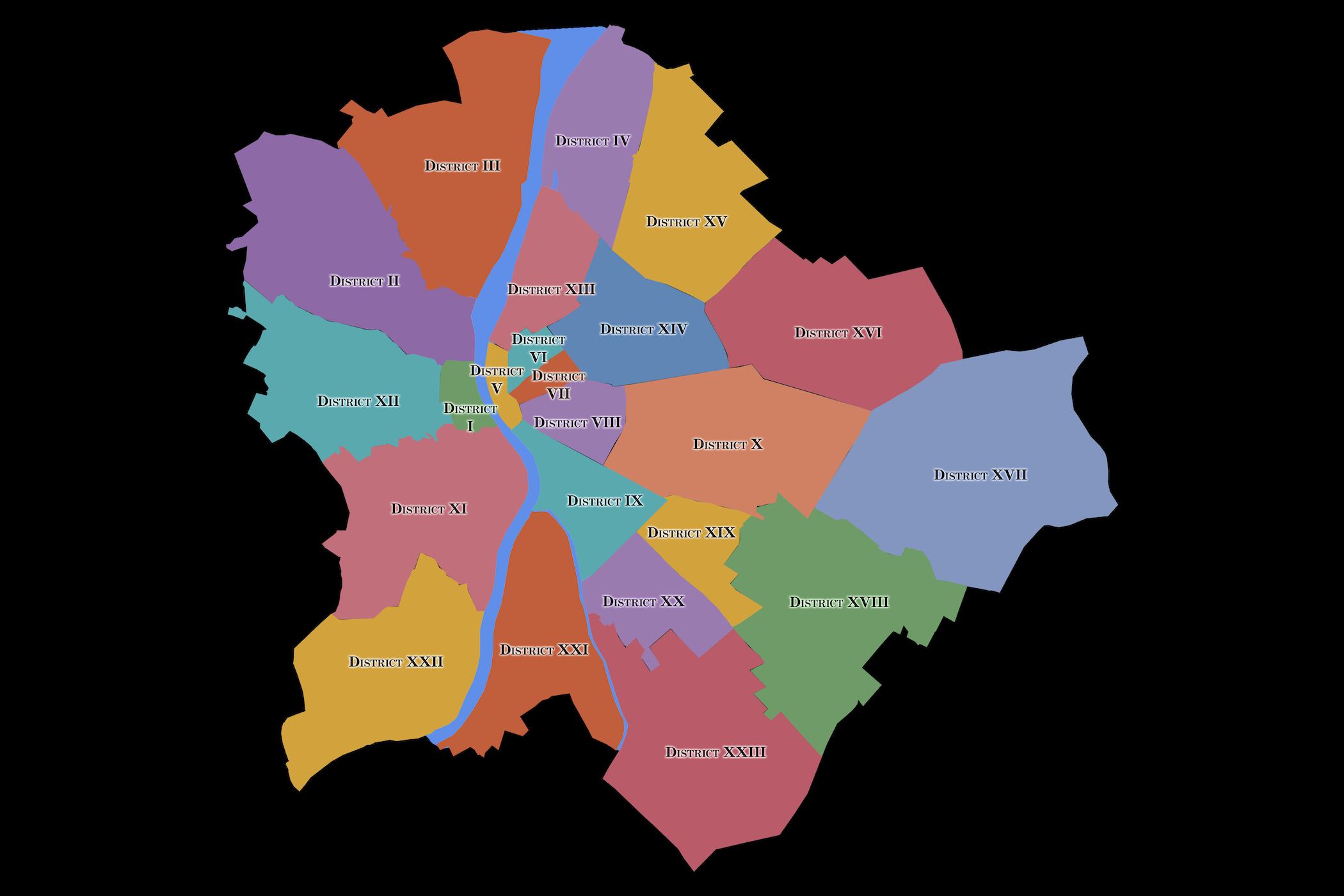
Postwar reconstruction occurred alongside Hungary's incorporation into the Soviet sphere. Communist control hardened during the late 1940s, bringing nationalization, political repression and the transformation of Budapest's economic and civic institutions. The city's geography itself changed dramatically on January 1, 1950, when seven towns and sixteen large villages were annexed to create Greater Budapest. The capital expanded from 207 to roughly 525 square kilometers, absorbing places such as Újpest, Csepel, Kispest, Rákospalota and numerous other communities whose previously independent identities remained visible within the enlarged city. This act established essentially the municipal footprint Budapest retains today. (Budapest Portál)
Budapest then became the epicenter of the Hungarian Revolution of 1956. Student demands formulated at the Budapest University of Technology developed into a mass demonstration on October 23, drawing crowds toward the Petőfi statue, Bem Square, Parliament and the Hungarian Radio building. The uprising became armed as fighting spread through locations including Corvin köz, Széna tér, Baross tér and other neighborhoods. Hopes for political liberalization and an end to Soviet domination were crushed when Soviet forces intervened decisively in November. Under the subsequent Kádár regime, repression gradually gave way to a comparatively more permissive form of state socialism; housing estates, industrial districts, metro infrastructure and public services expanded even as older neighborhoods often suffered from deferred maintenance. By the 1980s, economic stagnation and declining faith in the political system were preparing the ground for another transformation. (Kormány)
1989–2010: Democratic Transition & European Reintegration
Budapest again became the symbolic stage for national change as communist rule unraveled. On October 23, 1989—exactly thirty-three years after the beginning of the revolution—the Republic of Hungary was proclaimed from Parliament, deliberately linking the emerging democratic state with the suppressed legacy of 1956. Multiparty elections, freedom of expression and a market economy followed. The transition was also disruptive: state industries contracted or disappeared, privatization reshaped property ownership, unemployment and inequality increased, and suburbanization began drawing residents and investment outward from some parts of the capital.
At the same time, Budapest reconnected rapidly with Western Europe and the global economy. Historic buildings were restored, international businesses entered the city, tourism expanded and neighborhoods once marked by socialist-era neglect began undergoing redevelopment and, eventually, gentrification. Hungary joined NATO in 1999 and the European Union in 2004, placing Budapest once again within institutional networks stretching across Europe. The 2000s brought new cultural venues, commercial districts and rehabilitation projects, but also sharpening debates over development, historic preservation, housing and the unequal distribution of the benefits of economic transformation. The global financial crisis of 2008 exposed those vulnerabilities and helped create the political conditions for the next era.
2010–2026: Budapest in the Orbán Era
Viktor Orbán's return to power in 2010 inaugurated sixteen years in which Hungary's political system changed substantially. Fidesz governments rewrote the constitution, altered electoral and judicial institutions, consolidated influence over much of the media and emphasized nationalism, Christian identity, restrictive immigration policy and family incentives. Supporters pointed to political stability, infrastructure investment and policies intended to strengthen Hungarian sovereignty, while domestic opponents and European Union institutions increasingly criticized the concentration of power, corruption risks and weakening checks and balances. These disputes eventually led the EU to withhold billions of euros from Hungary over rule-of-law and governance concerns. (Reuters)
Budapest developed an increasingly distinctive relationship with this national political order. Large state-sponsored projects reshaped portions of the capital, including sports facilities, cultural developments and extensive reconstruction within the Castle District, while tourism reached enormous levels before the disruption of the COVID-19 pandemic and rebounded afterward. Beginning in 2019, city government was controlled by political forces opposed to Fidesz, turning questions of municipal financing, public space, transportation and urban development into recurring points of tension between Budapest and the national government. The result was an era of striking contrast: a visibly modernizing and internationally connected capital operating within a national political system increasingly at odds with many of its European partners. Orbán's sixteen-year tenure ended with the April 2026 parliamentary election. (Reuters)
2026–Present: A New Political Chapter
The April 2026 election produced one of the most consequential political changes in Hungary since 1989. Péter Magyar's center-right Tisza party decisively defeated Fidesz and ultimately secured 141 of Parliament's 199 seats, ending Orbán's sixteen consecutive years as prime minister and giving the new government a constitutional majority. Magyar was sworn in on May 9, pledging anti-corruption reforms, greater judicial and media independence, and a restoration of closer relations with the European Union. Within weeks, his government reached agreements that allowed the European Commission to release €16.4 billion in previously frozen recovery and cohesion funding. (Reuters)
For Budapest, however, this period is still far too new to possess a settled historical character. The political divide that had defined relations between the opposition-led capital and the Orbán government has been fundamentally altered, while renewed access to EU funding and a national effort to rebuild relations with European institutions could have significant consequences for infrastructure, public services and urban investment. Yet the ultimate direction remains unwritten. As of August 2026, this is properly understood not as an established “post-Orbán era” with identifiable outcomes, but as a new political chapter whose meaning for Budapest will emerge through decisions, conflicts and developments that have only begun. (Reuters)
Legacy & Spirit
Budapest is ultimately a city created by accumulation. Roman ruins survive beneath neighborhoods shaped by medieval kings; Ottoman baths operate beneath Baroque and nineteenth-century skylines; imperial boulevards lead toward socialist housing estates and contemporary glass towers. Buda and Pest were politically unified more than 150 years ago, yet the Danube still divides experiences of the city as clearly as it connects them. Hills and plain, monumental architecture and ordinary residential streets, grandeur and weathering, reconstruction and surviving scars exist alongside one another rather than resolving into a single visual identity. Budapest's history is therefore not a sequence in which each era erased the one before it, but a collection of layers that remain simultaneously legible. (UNESCO World Heritage Centre)
That layering gives Budapest much of its particular spirit. The city has repeatedly been conquered, rebuilt, enlarged, revolutionized, centralized, liberalized and politically reimagined, yet its neighborhoods continually convert those enormous historical forces into ordinary lived environments. Thermal baths inherited from ancient and Ottoman traditions remain places of everyday life; grand imperial façades carry the physical effects of later decades; monuments and memorials make political memory part of the streetscape; and former villages absorbed into Greater Budapest retain identities older than the districts containing them. Budapest's legacy therefore lies not merely in surviving upheaval, but in absorbing change without becoming historically anonymous. Its past remains visible—not frozen as preservation, but continuously incorporated into the life of the present.
Explore Budapest
Explore Worldwide
-

Explore cities through their geography, history, neighborhoods, photography, and the observations gathered by CityNeighborhoods along the way.
-

Discover significant places beyond the city scale—from historic landmarks and cultural sites to landscapes, monuments, and destinations worthy of deeper exploration.
-

Explore CityNeighborhoods by country, bringing together its cities, featured sites, smaller destinations, and journeys across the wider landscape.
-

Follow the themes that cross borders and connect places—revealing shared histories, contrasting identities, recurring patterns, and unexpected relationships across the world.
-

Go behind the exploration through essays on photography, walking, observation, mapping, and the ideas and methods that shape CityNeighborhoods Worldwide.