
4e - HÔTEL-DE-VILLE
Arrondissements
From Notre-Dame and the Île Saint-Louis to the Hôtel de Ville and the southern Marais, the 4th Arrondissement gathers some of Paris’s most symbolic civic, religious, and riverfront landscapes. It is a district where medieval streets, municipal power, and cultural reinvention remain visibly intertwined.. Part of an ongoing project to walk and photograph every neighborhood in Paris, this page explores 4th - Hôtel-de-Ville through maps, district identity, history, and photography.
The Map
Geographic Setting
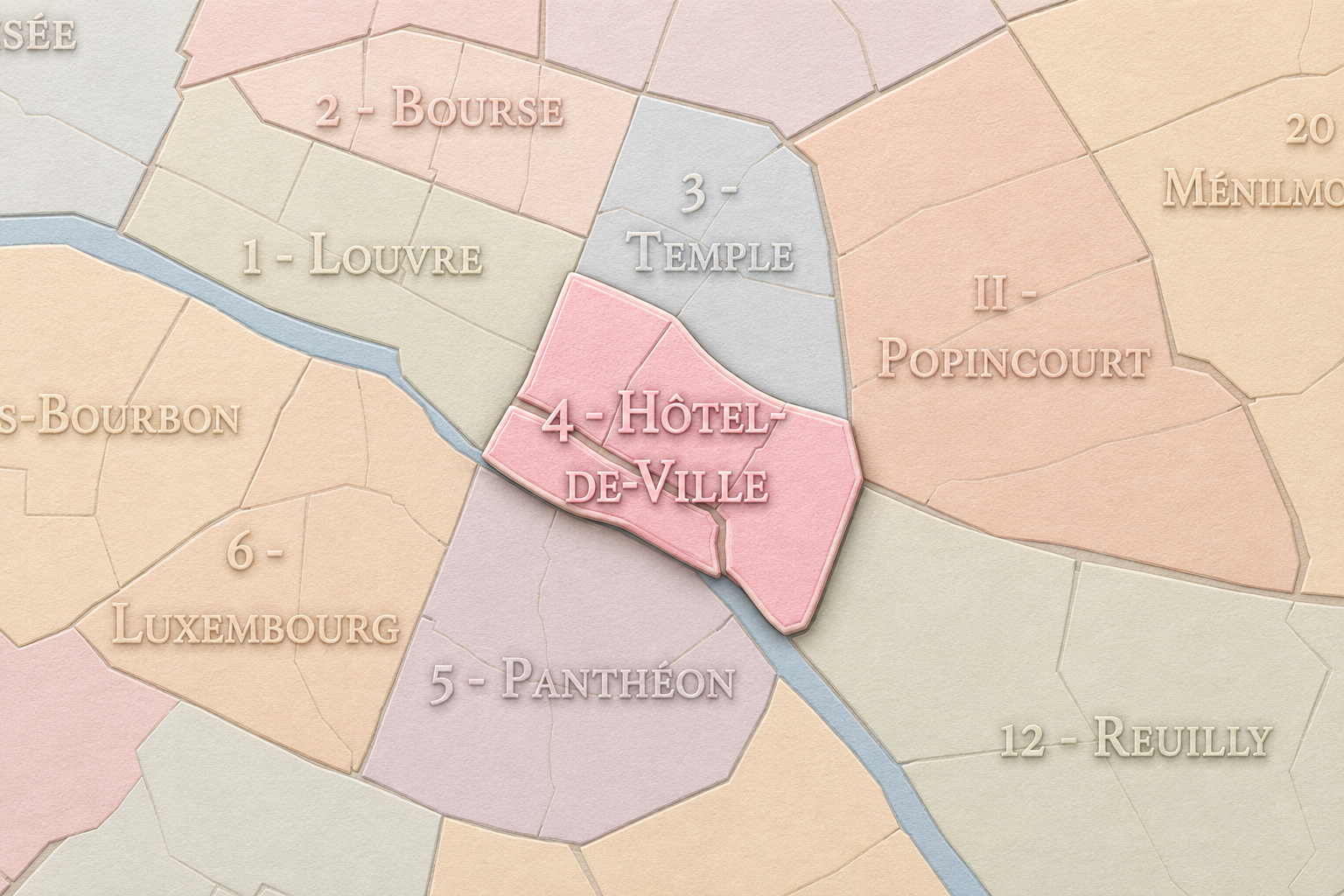
4e - Hôtel-de-Ville Neighborhood Map
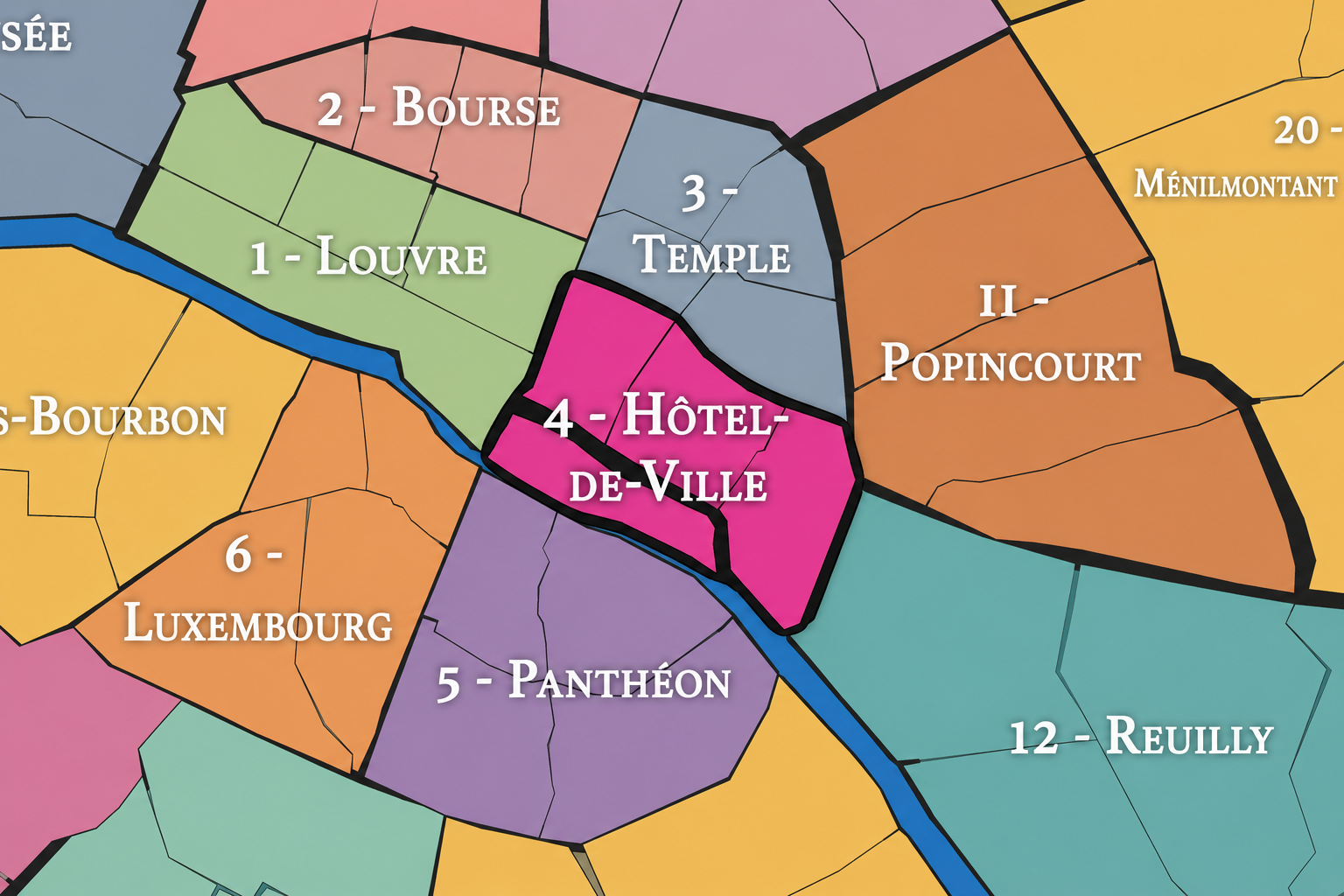
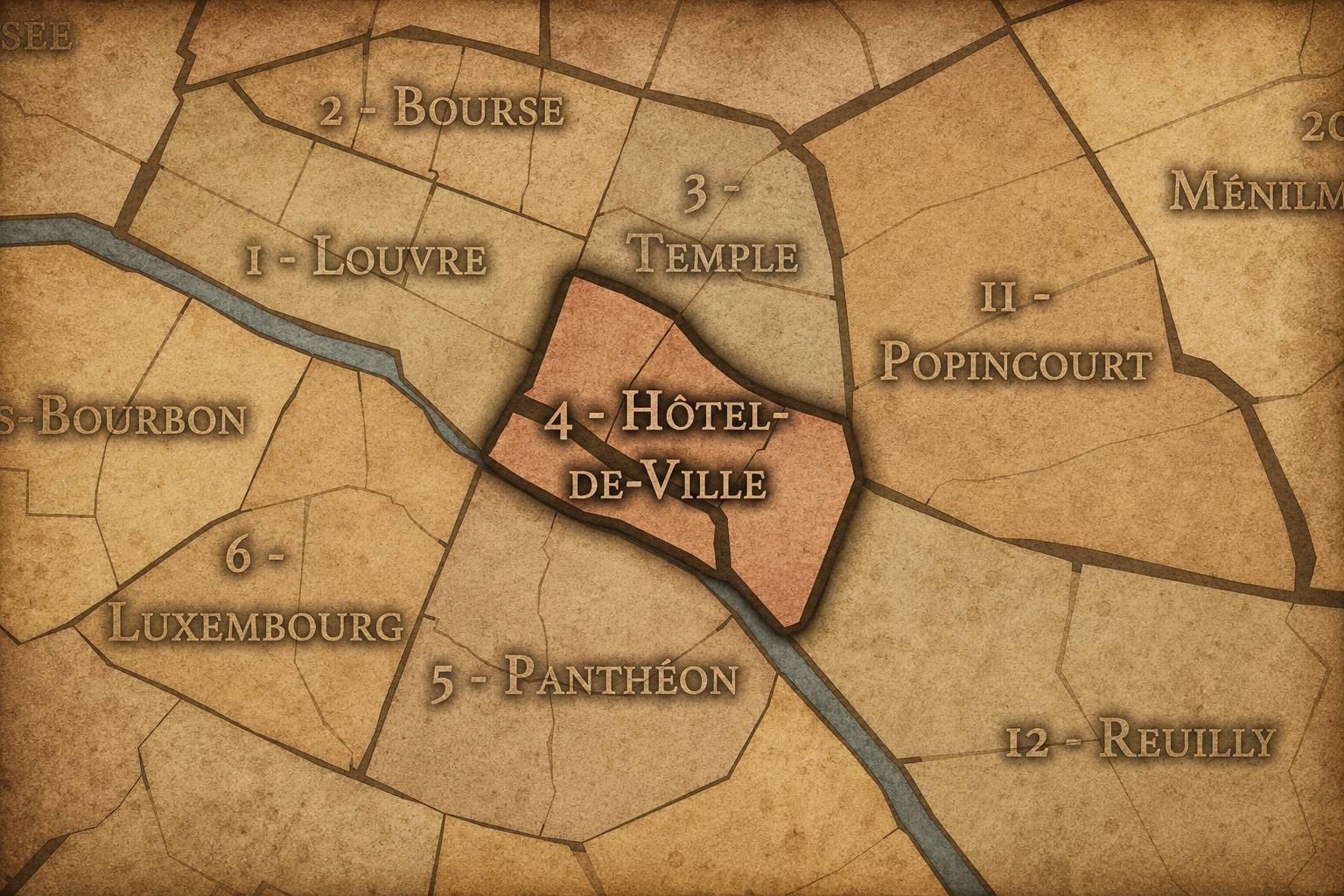
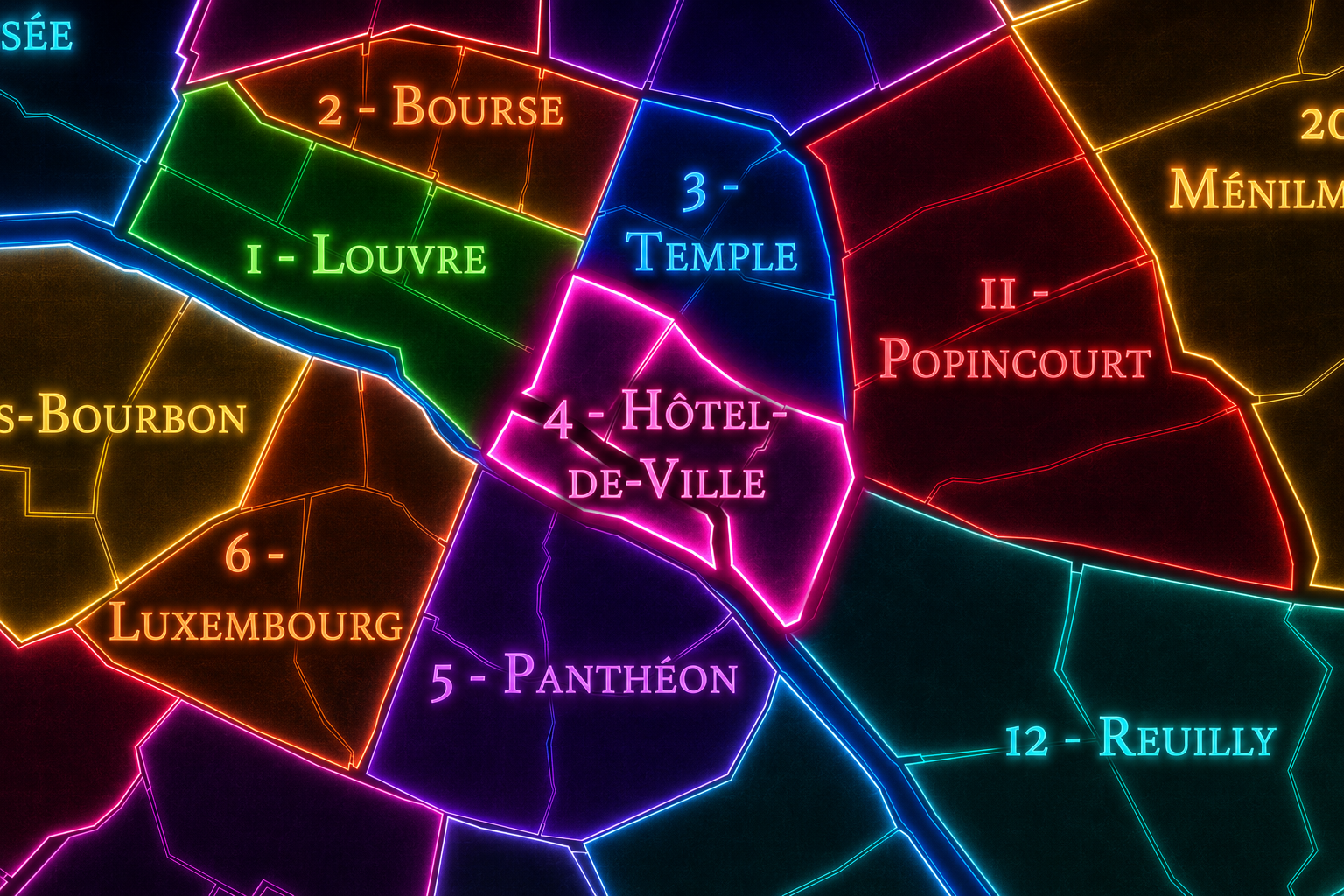
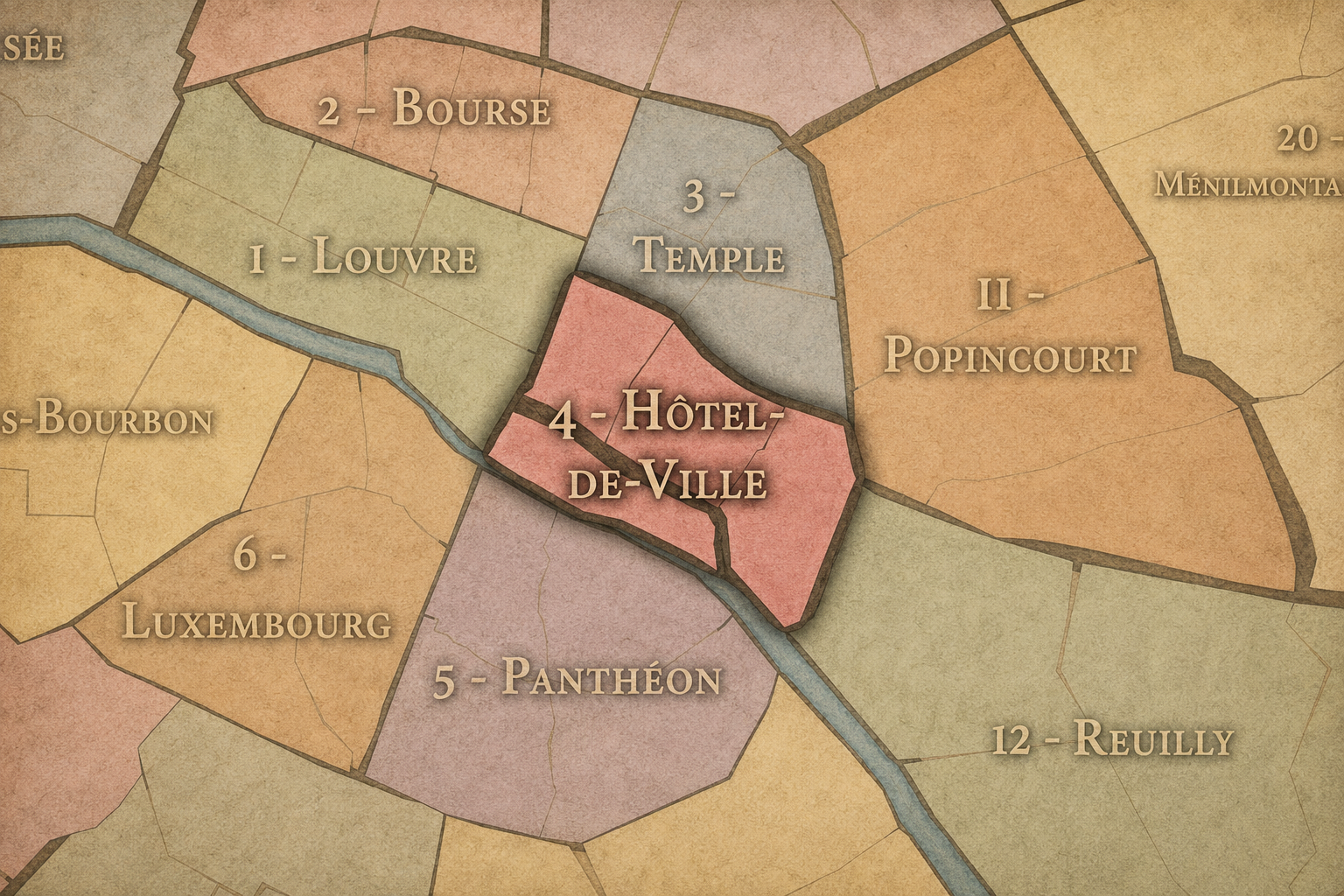
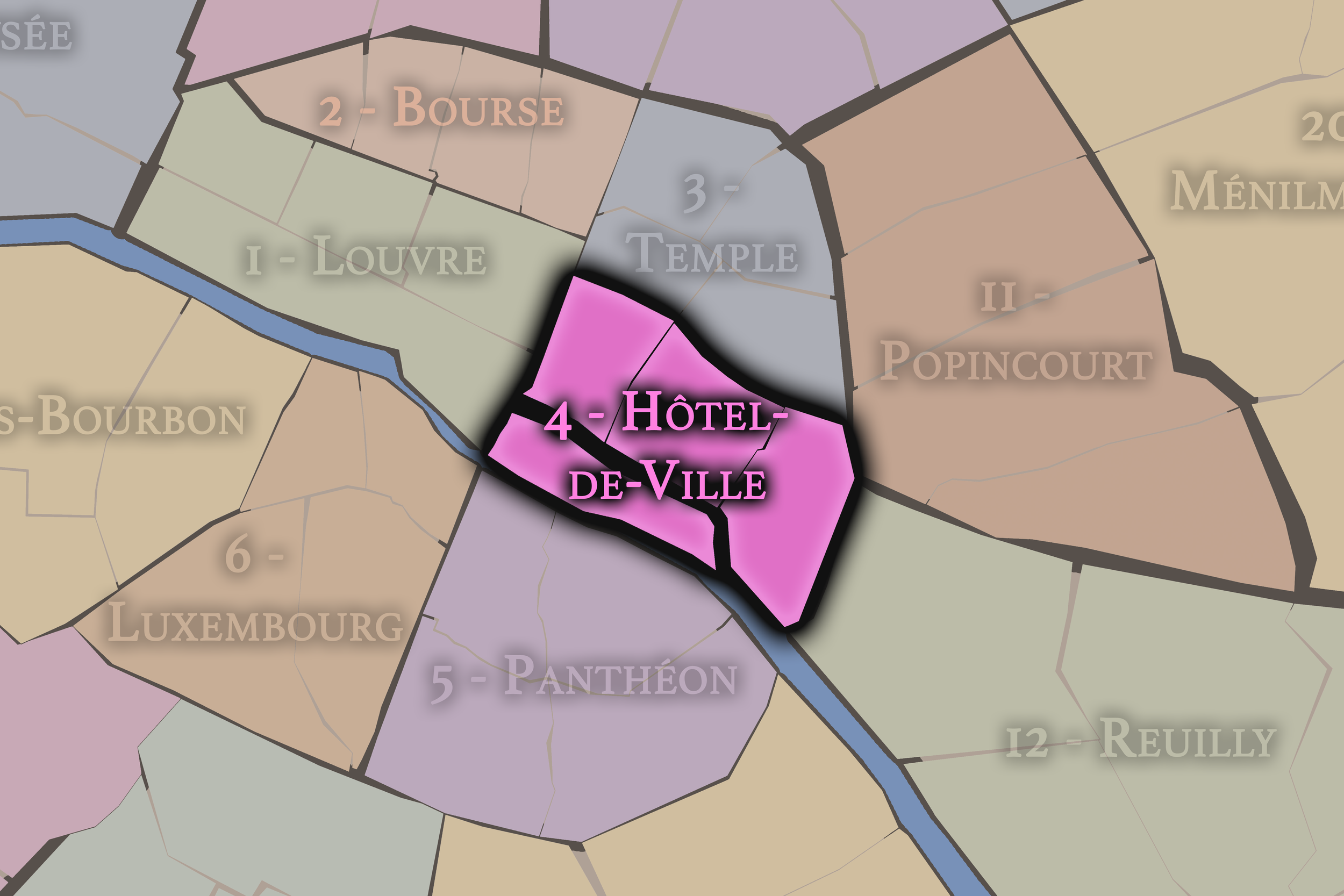
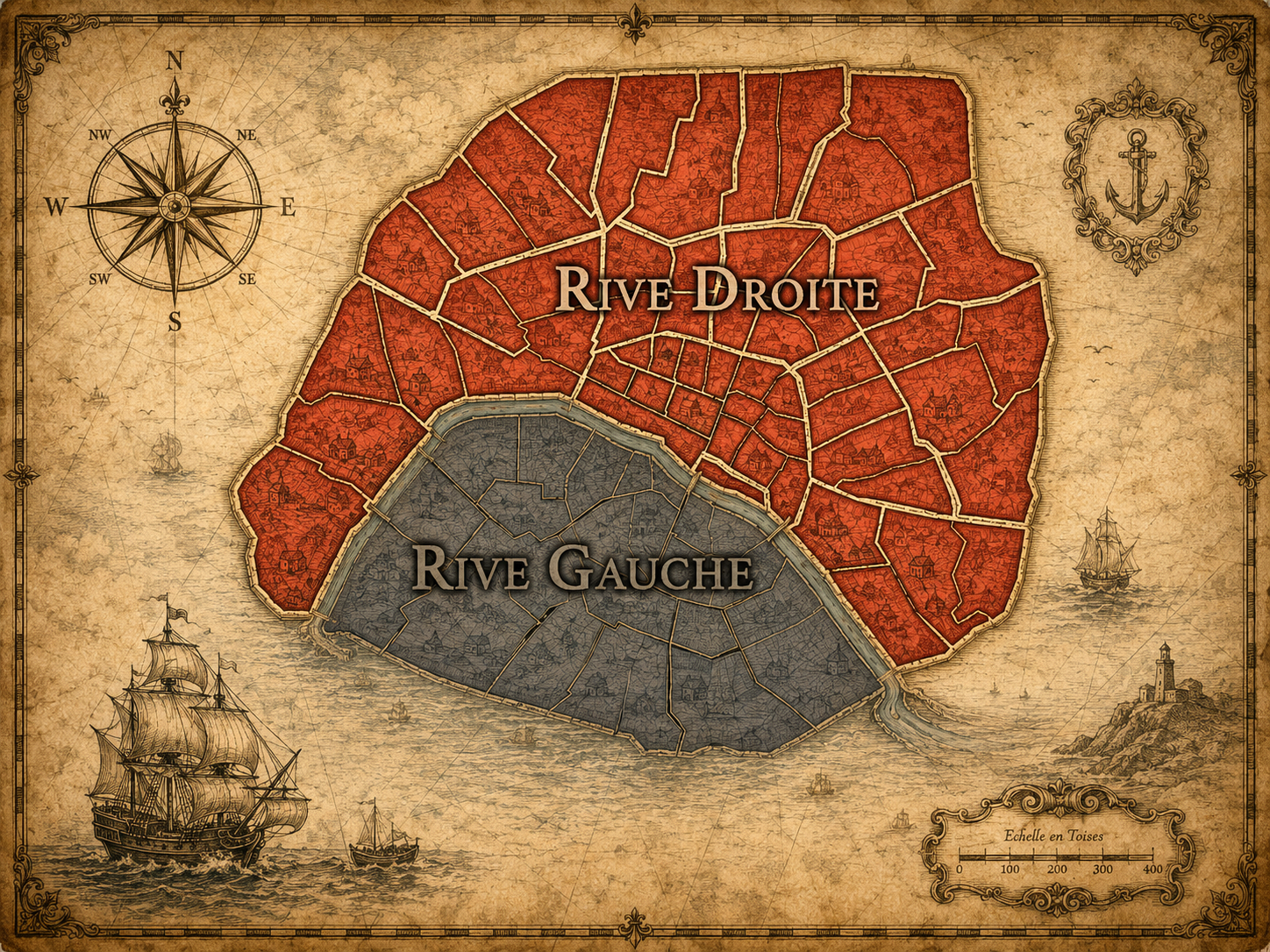
The 4th arrondissement occupies one of the most historically charged positions in Paris. It sits on the Right Bank of the Seine, east of the 1er arrondissement and south of the 3rd, with the 11th and 12th extending farther east. It also includes the eastern portion of the Île de la Cité and the Île Saint-Louis, tying the arrondissement directly to the river islands where the earliest city took shape.
This geography gives the 4th an unusual dual identity. On the Right Bank, it contains the southern Marais, the area around the Hôtel de Ville, the streets leading toward Beaubourg, and the historic corridors around Rue Saint-Antoine and Place des Vosges. On the islands, it reaches into some of the oldest and most symbolic ground in Paris: Notre-Dame, the eastern Île de la Cité, and the quieter, residential fabric of the Île Saint-Louis.
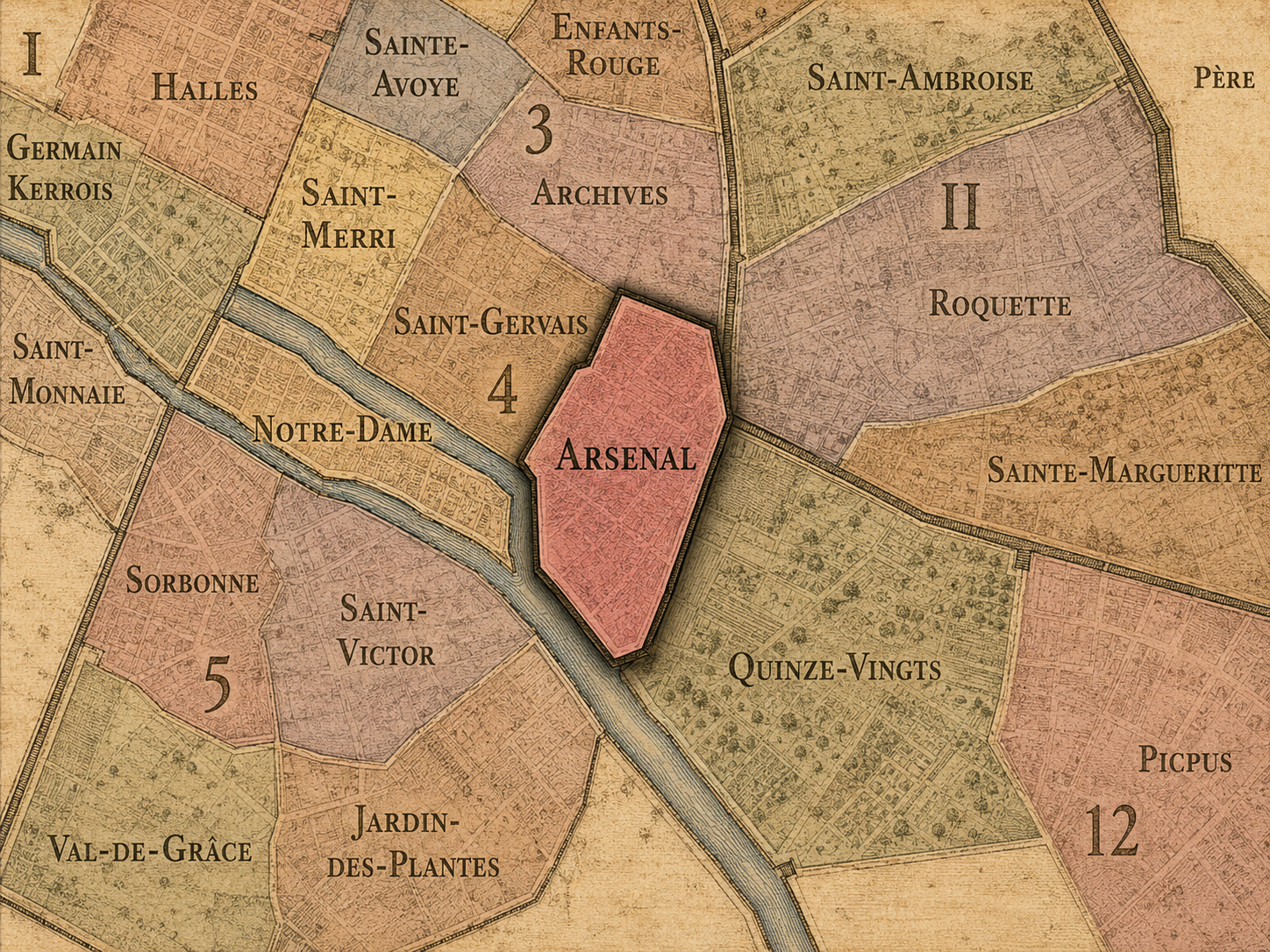
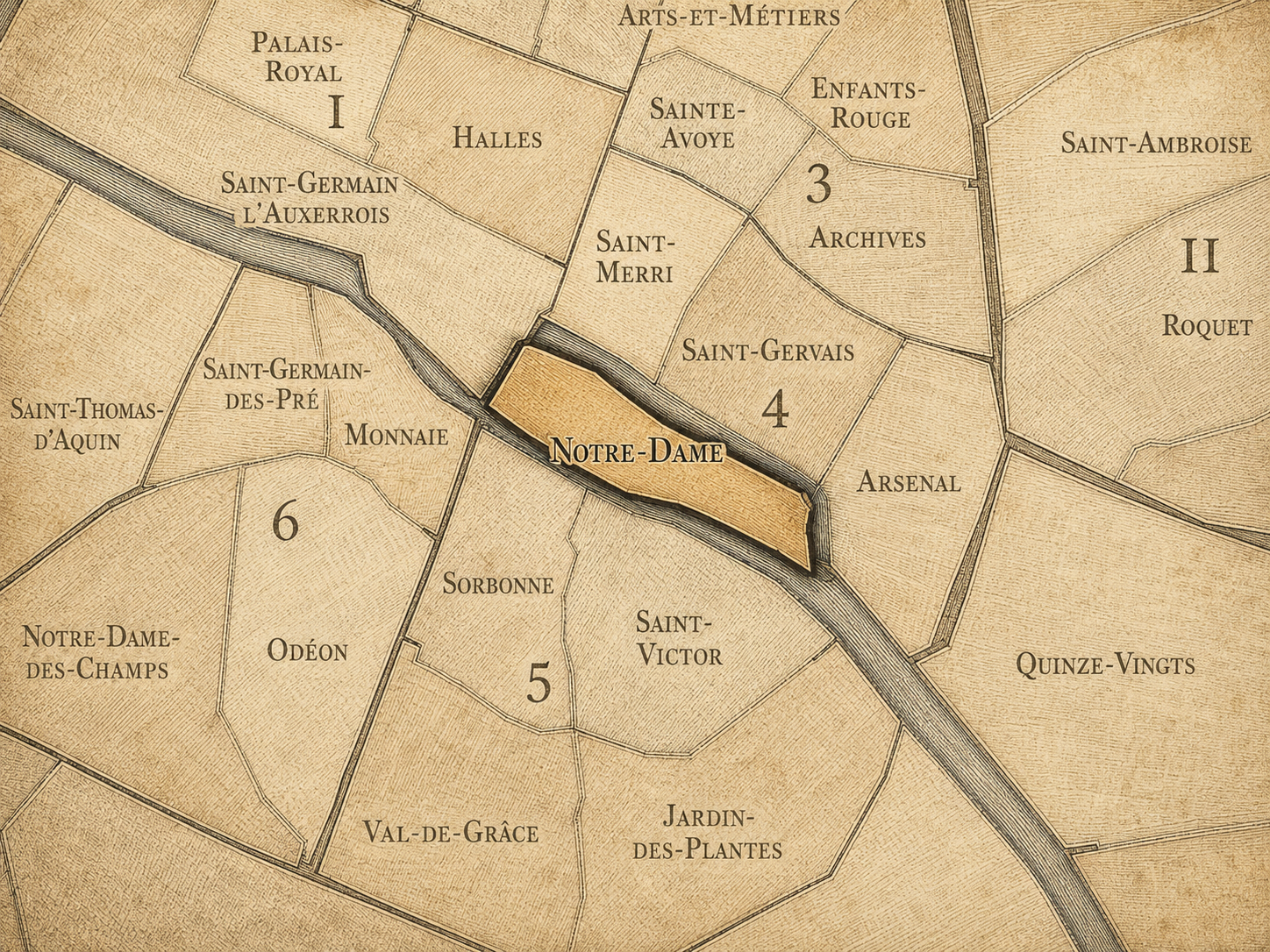
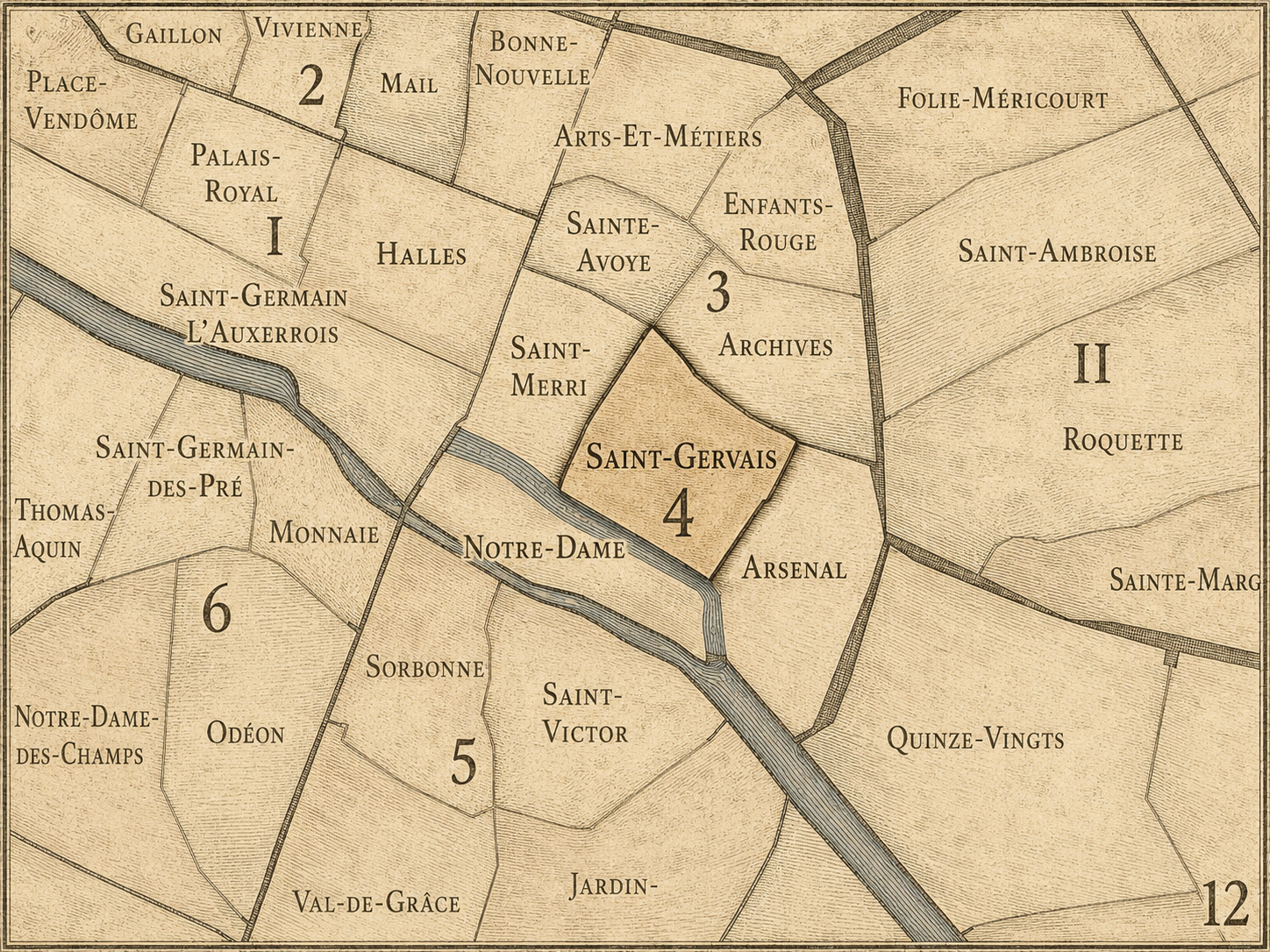
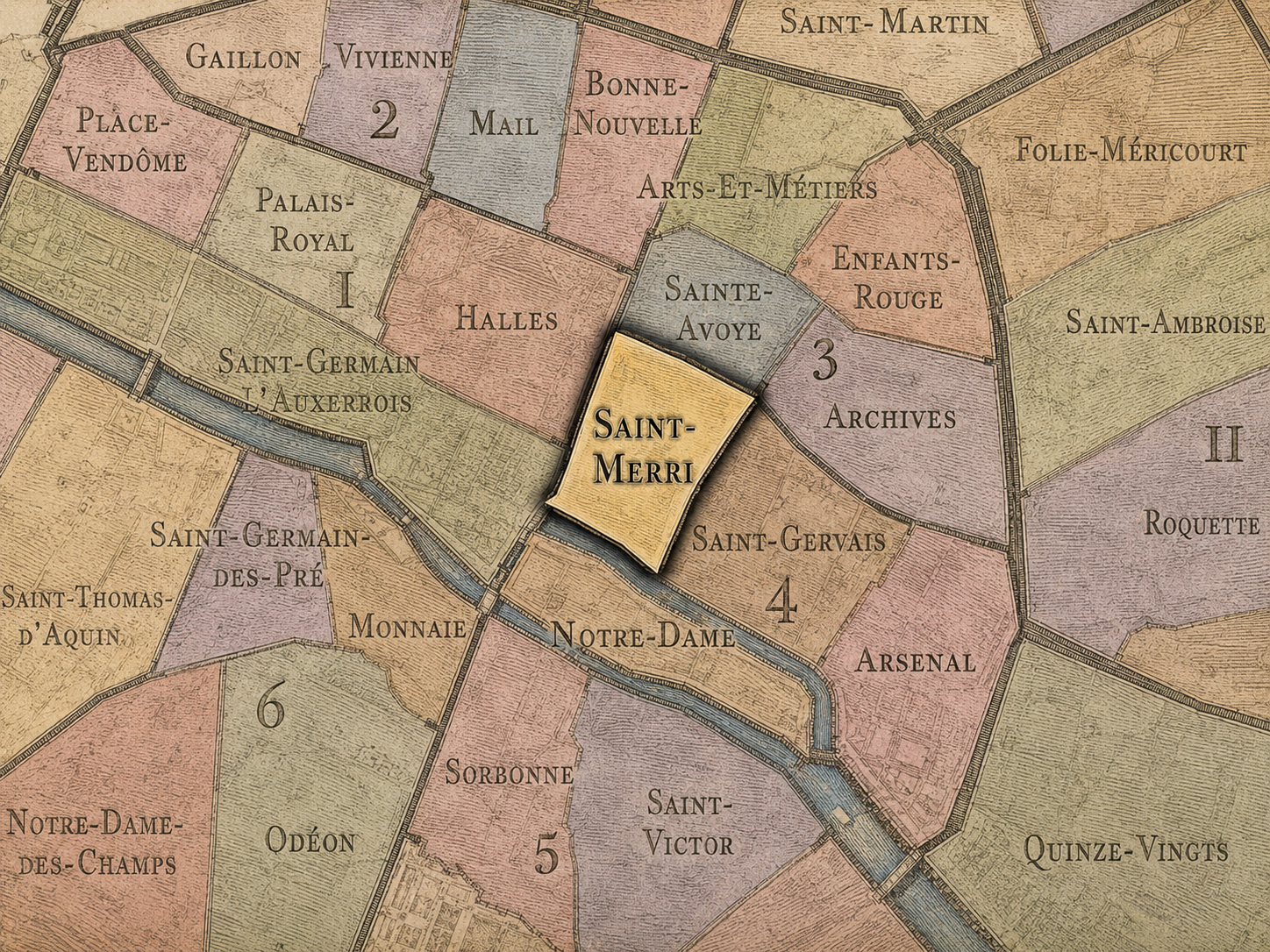
The arrondissement is divided into four administrative quarters: Saint-Merri, Saint-Gervais, Arsenal, and Notre-Dame. Together, they form one of the most layered urban landscapes in the city: civic Paris around the Hôtel de Ville, medieval and religious Paris around Notre-Dame, aristocratic and residential Paris in the southern Marais, island Paris along the Seine, and revolutionary and infrastructural Paris near the Arsenal and Bastille edge.
The 4th is therefore not simply a central arrondissement. It is a hinge between Paris’s origins and its civic present, between the river islands and the Right Bank, between medieval streets and grand public institutions, between religious memory and municipal authority.
Arrondissement Identity
Etymology and Origins
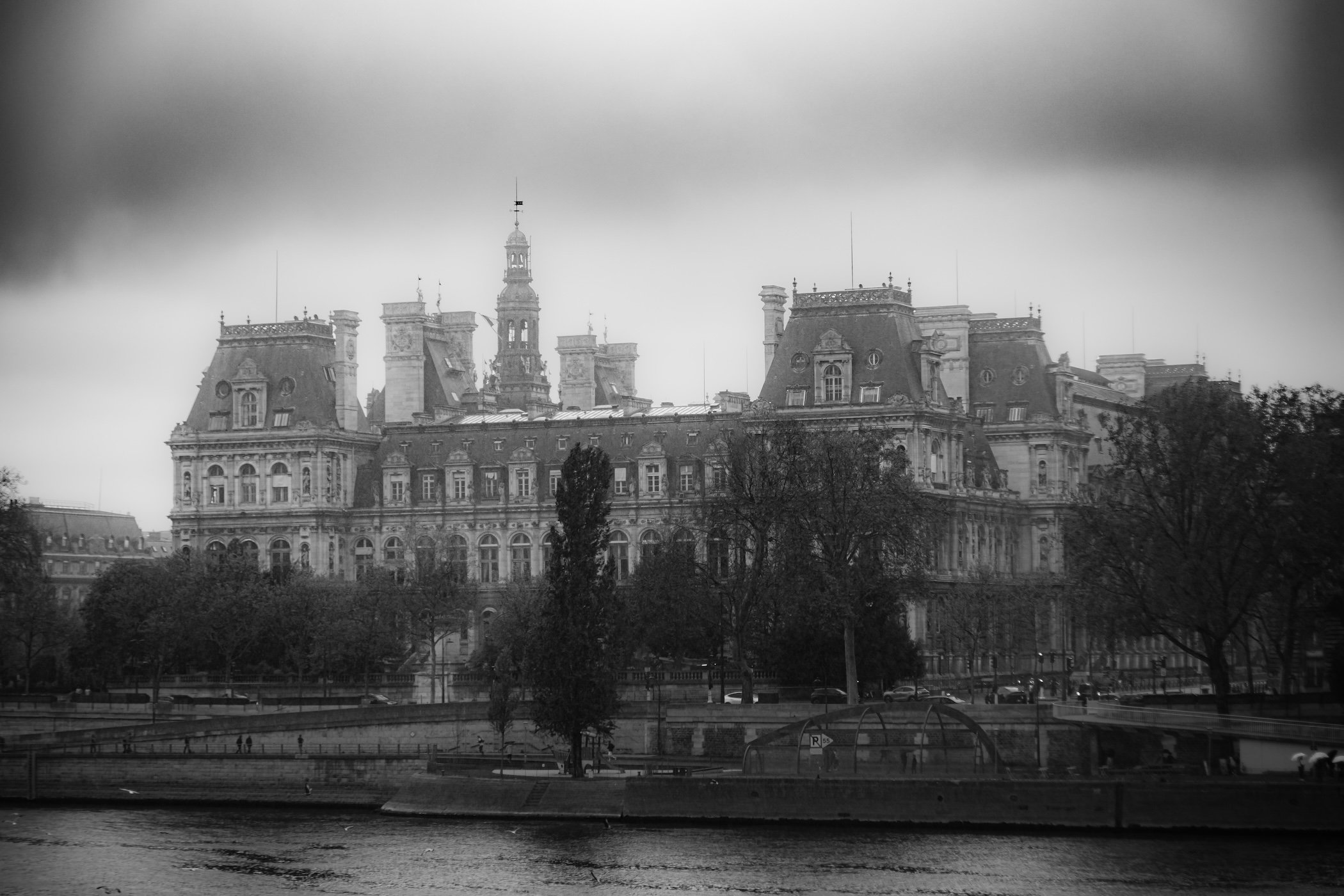
The arrondissement’s administrative name, Hôtel-de-Ville, comes from the Paris City Hall, the seat of municipal government. The name identifies the arrondissement with civic authority and with the long history of Paris as a self-governing urban community. The Hôtel de Ville stands on the Place de l’Hôtel-de-Ville, formerly known as the Place de Grève, a site historically associated with labor, gathering, ceremony, punishment, and public assembly.
The name is especially fitting because the 4th arrondissement contains some of the city’s most important civic and symbolic spaces. It includes not only the Hôtel de Ville, but also Notre-Dame, the Île Saint-Louis, Place des Vosges, Saint-Gervais, Saint-Merri, and the eastern edges of the old city. Its identity is therefore civic, religious, residential, aristocratic, and popular all at once.
The deeper origins of the arrondissement reach back to the earliest geography of Paris. The Île de la Cité was the ancient core of the city, while the Right Bank developed through river crossings, churches, markets, streets, religious houses, and later aristocratic residences. The 4th’s name points to municipal power, but its origins are far older than the Hôtel de Ville itself. It is one of the places where Paris’s earliest island settlement, medieval expansion, royal urbanism, and modern civic identity converge.
Civic Framework
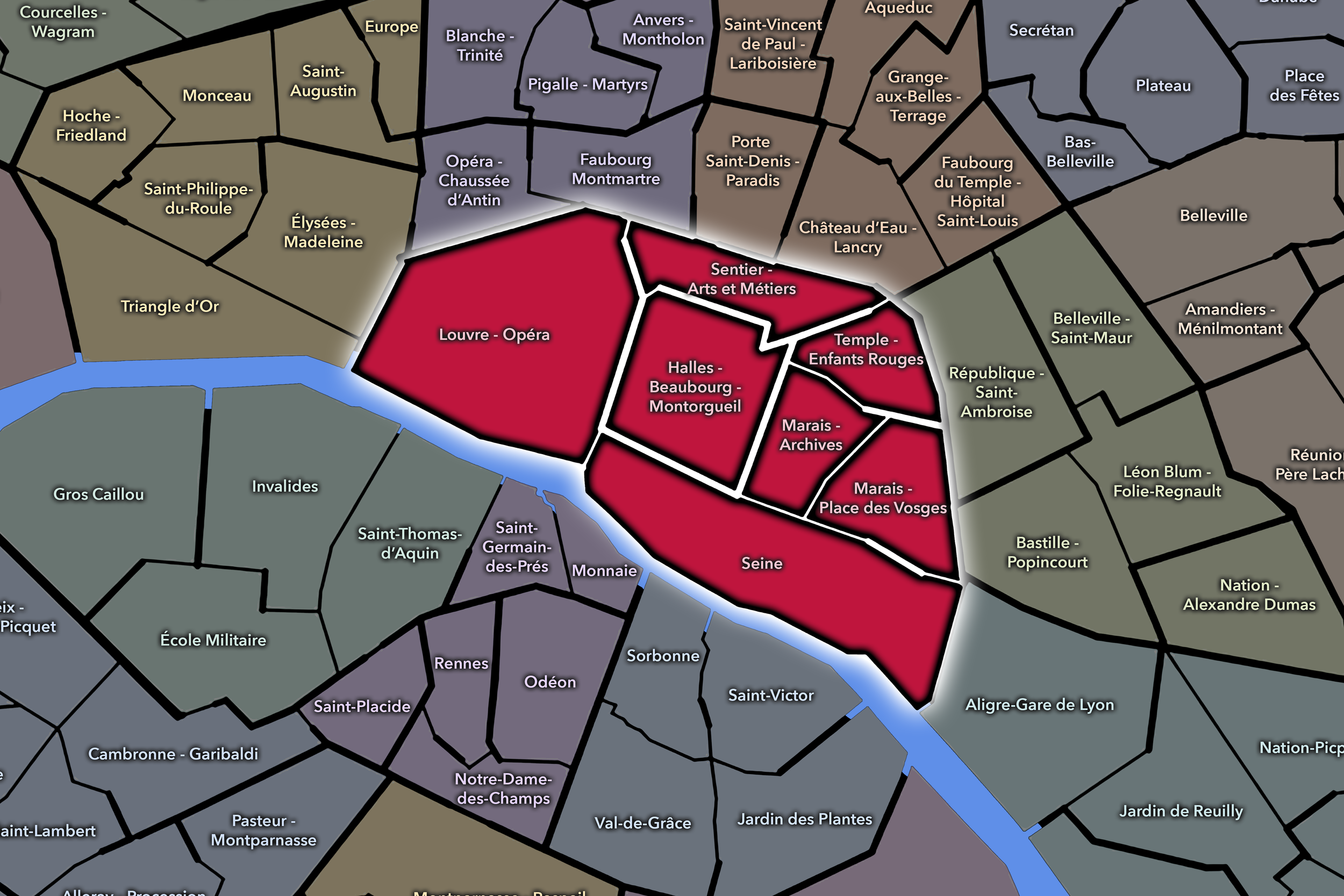
The 4th arrondissement is part of Paris Centre, the administrative sector created in 2020 that combines the 1st, 2nd, 3rd, and 4th arrondissements under a shared local mairie. Although the traditional arrondissement names and boundaries remain important for geography, history, culture, and navigation, the local civic administration of these four central arrondissements is now organized through the mairie of Paris Centre.
Within that modern framework, the 4th remains a distinct historical and geographic unit. Its name, Hôtel-de-Ville, continues to express its civic significance, while its four administrative quarters — Saint-Merri, Saint-Gervais, Arsenal, and Notre-Dame — preserve the arrondissement’s internal structure. These quarters help distinguish the 4th from the broader idea of “the Marais,” which overlaps the 3rd and 4th but does not fully describe either arrondissement.
For this project, the 4th is treated as both an official geographic layer and a cultural-historical district. Its civic framework explains its role within contemporary Paris administration, while its older churches, islands, squares, streets, and institutions preserve one of the deepest historical landscapes in the city.
Parisian Identity
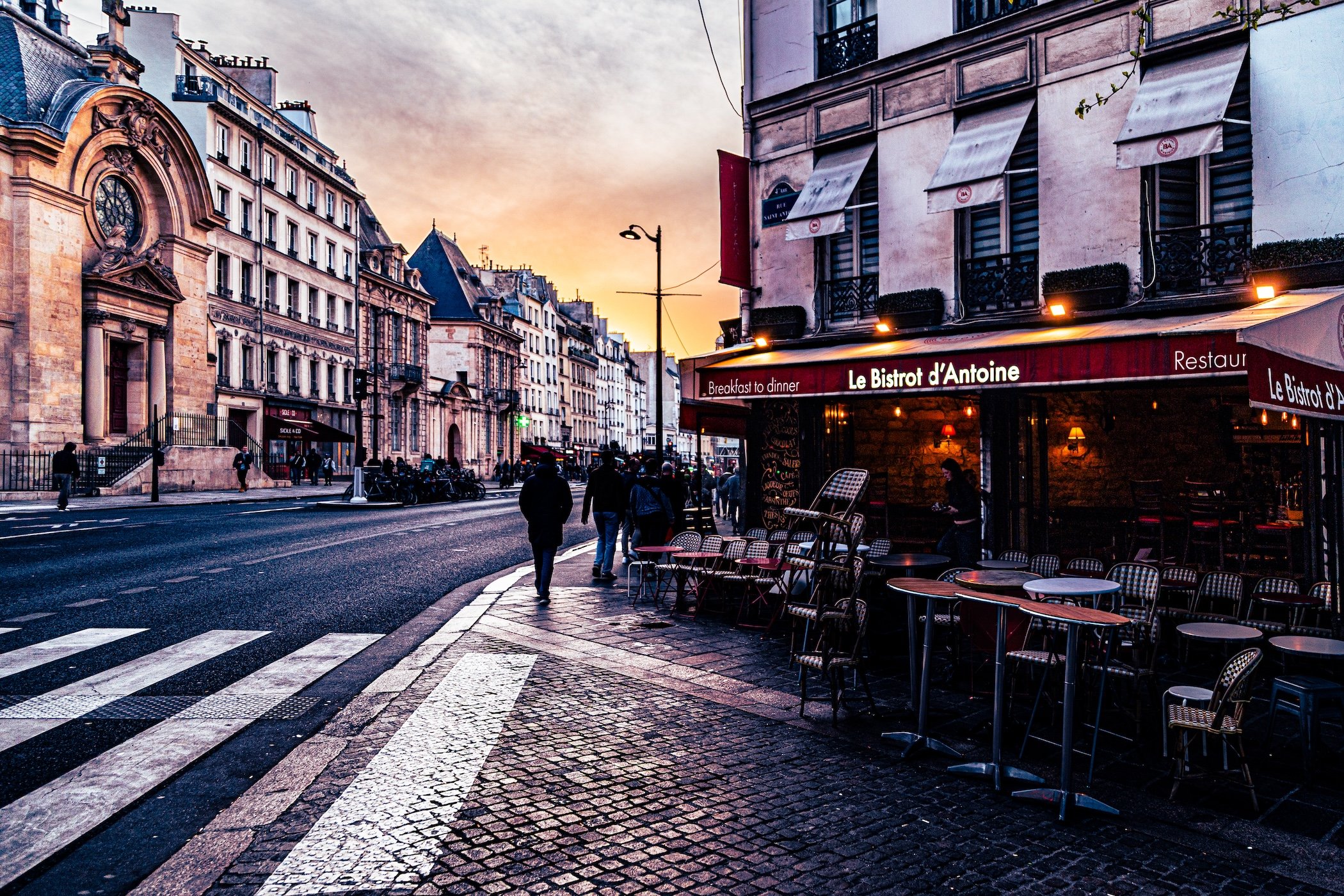
The 4th arrondissement holds a central place in the Parisian imagination. It contains Notre-Dame, the Hôtel de Ville, the Seine islands, the southern Marais, Place des Vosges, Rue Saint-Antoine, and the approaches toward Bastille. Few arrondissements gather so many symbolic versions of Paris into such a compact area.
It is Paris as origin and Paris as civic stage. On the Île de la Cité, the city’s ancient and medieval memory remains visible in the presence of Notre-Dame and the river crossings around it. At the Hôtel de Ville, Paris presents itself as a municipal capital, a place of public gathering, political symbolism, and urban governance. In the Marais and around Place des Vosges, the arrondissement carries the memory of aristocratic residence, religious institutions, Jewish history, LGBTQ+ visibility, galleries, cafés, boutiques, and preserved streets that continue to shape the contemporary city.
The 4th is also one of Paris’s great districts of public movement. Tourists, residents, workers, worshippers, students, shoppers, activists, and pedestrians all move through its streets and squares. Its identity is not quiet or singular. It is layered, ceremonial, crowded, intimate, sacred, secular, local, and global. In the 4th, Paris is both the city of origins and the city of continual reinvention.
Neighborhood Distinction
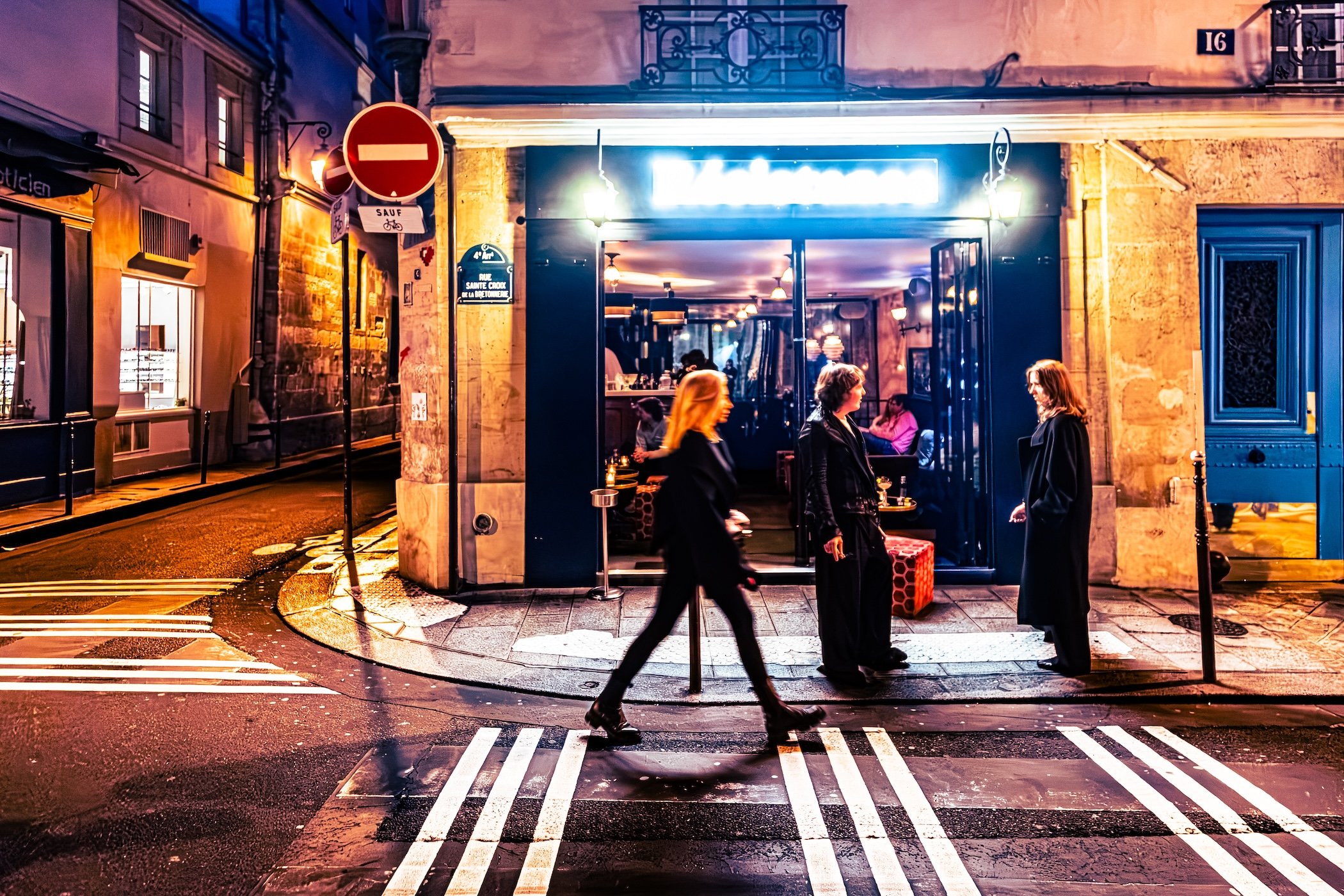
The 4th arrondissement is distinguished by the intensity of its layers. It is smaller than many outer arrondissements, but it contains several of the most recognizable historical landscapes in Paris: the islands of the Seine, the southern Marais, the civic center around the Hôtel de Ville, the religious presence of Notre-Dame, and the eastern axis toward Bastille.
Its distinction also comes from contrast. The Île Saint-Louis feels contained, residential, and river-bound. The eastern Île de la Cité carries sacred, institutional, and touristic weight. Saint-Merri and the Beaubourg edge connect the arrondissement to contemporary cultural life and dense pedestrian activity. Saint-Gervais preserves one of the deepest layers of the Marais, with churches, old streets, and a long history of Jewish, religious, and residential life. Arsenal points toward Bastille, old fortifications, river infrastructure, and the eastern edge of central Paris.
The arrondissement is therefore not one neighborhood in the simple sense. It is a composition of historic zones that touch and overlap: island Paris, civic Paris, Marais Paris, river Paris, and revolutionary Paris. Its character lies in how closely those identities sit together.
Neighborhood Connections
Every neighborhood belongs to a wider Parisian fabric.
-
Arsenal
-
Notre-Dame
-
Saint-Gervais
-
Saint-Merri
-
Paris Centre: 1er - 4e
-
Rive Droite
-
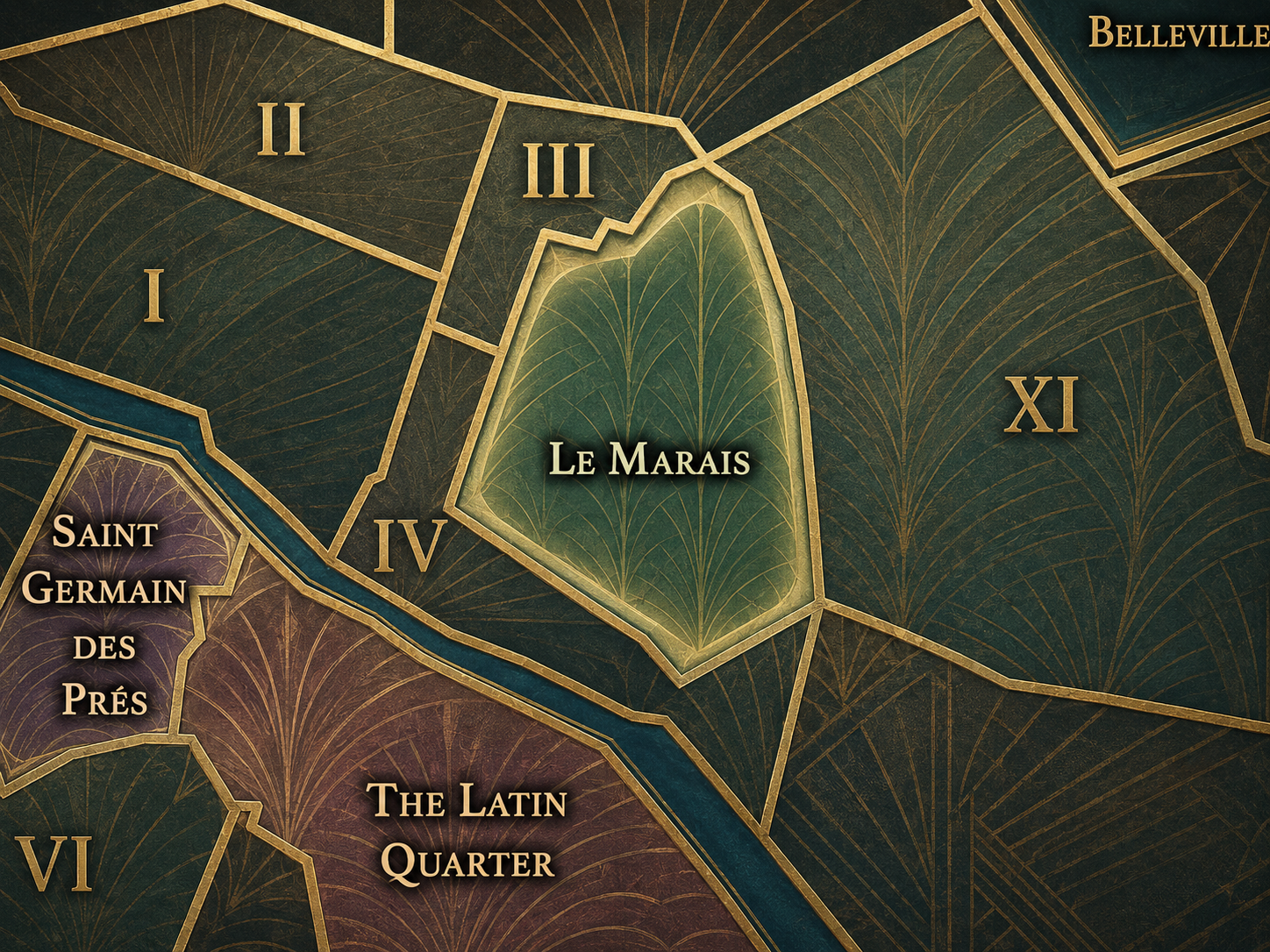
Le Marais
The History
Origins
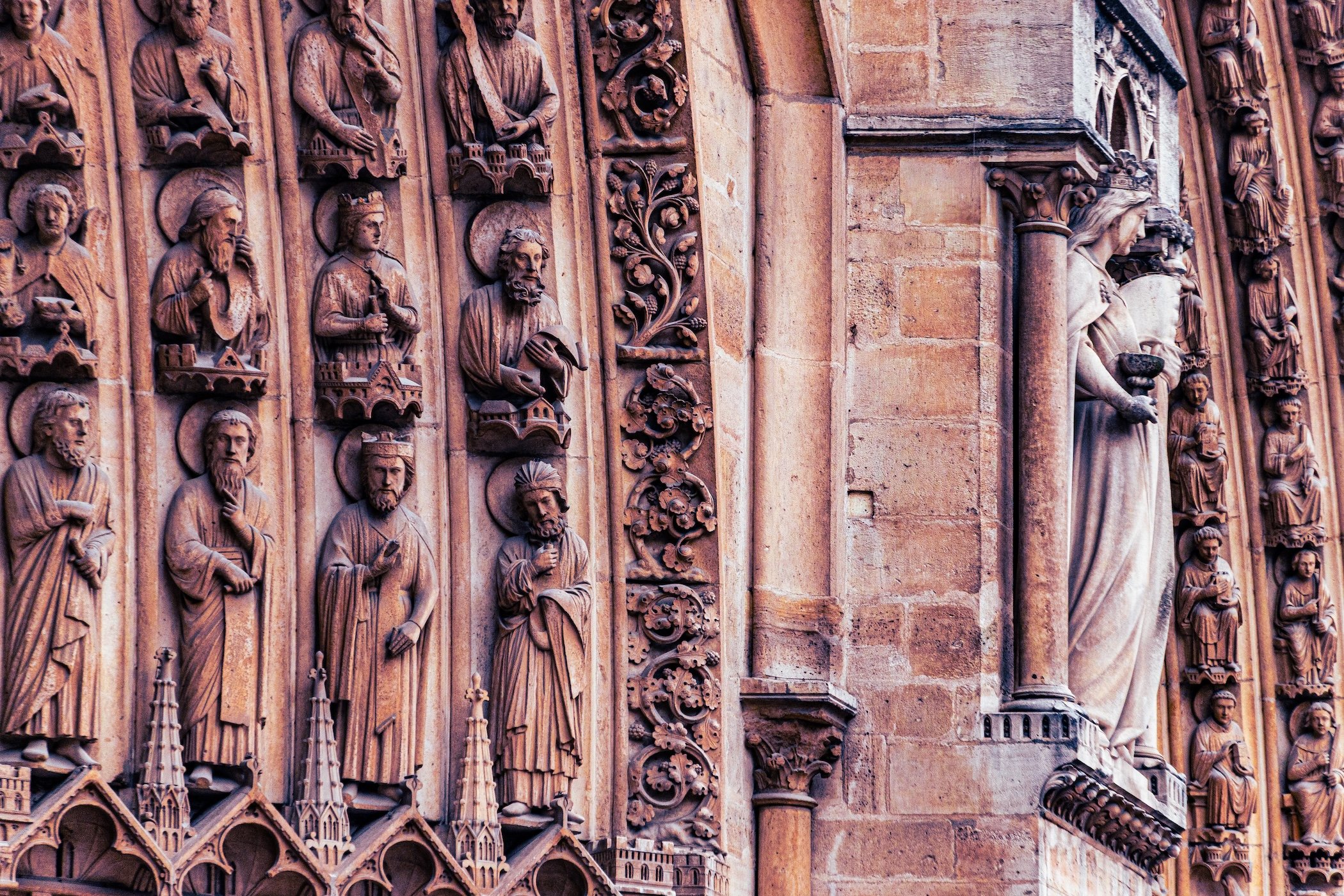
The origins of the 4e arrondissement are inseparable from the origins of Paris itself. The eastern portion of the Île de la Cité lies within the ancient island core from which the city developed. This river island provided defense, access to crossings, and a strategic position within the Seine, making it central to the earliest settlement and later to the medieval city.
As Paris expanded beyond the island, the Right Bank areas that now form the 4e grew through churches, streets, river landings, markets, religious communities, and early urban neighborhoods. The Seine connected the district to trade and movement, while the crossings linked the islands to the growing city on both banks.
The future arrondissement therefore began as a layered geography of island and bank: sacred ground on the Île de la Cité, residential and commercial growth on the Right Bank, and gradually urbanized river islands and quays. Before the 4e was associated with the Hôtel de Ville, the Marais, or Place des Vosges, it was part of the earliest physical and symbolic structure of Paris.
16th–17th Century
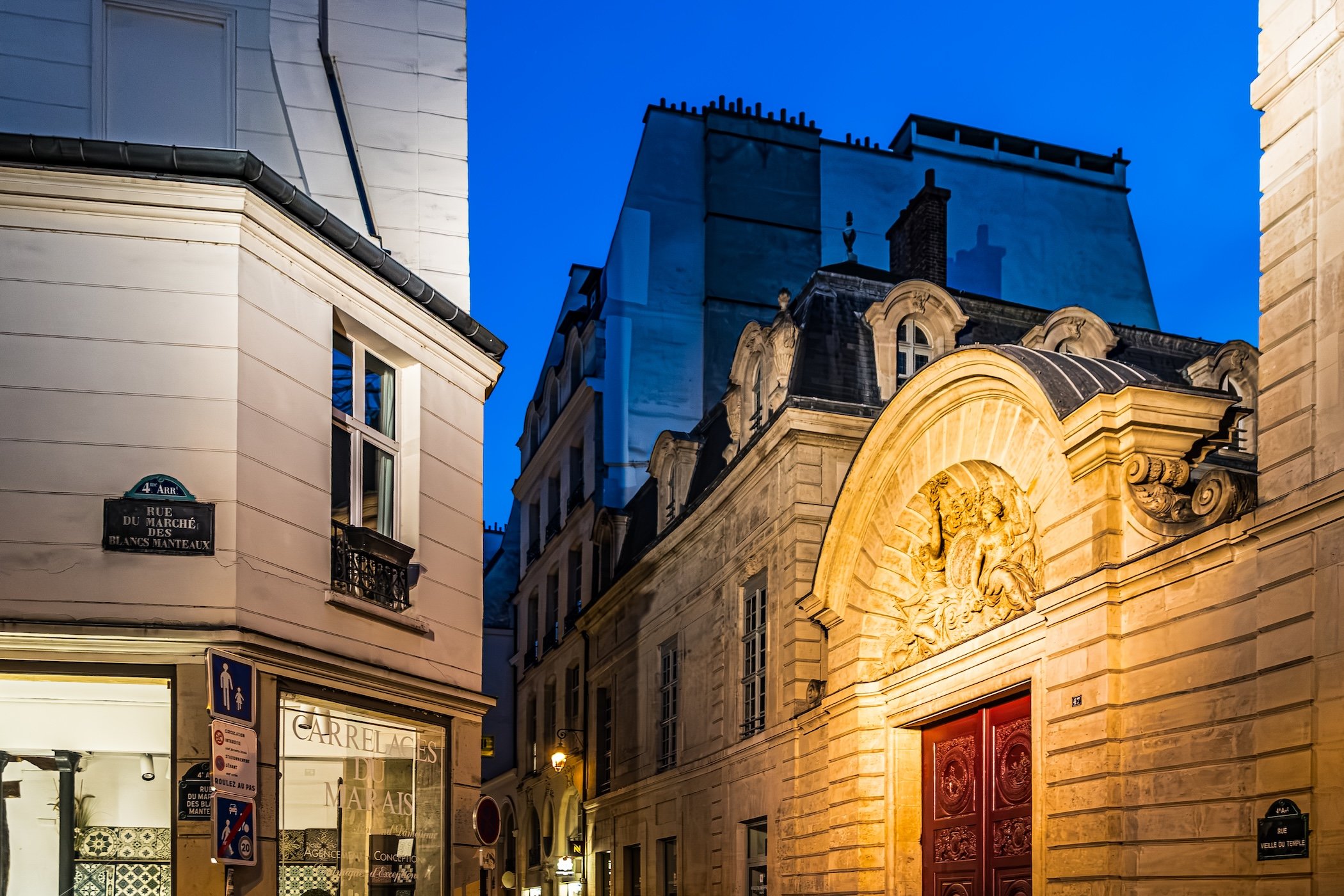
During the 16th and 17th centuries, the future 4e arrondissement became increasingly central to the aristocratic, civic, and religious life of Paris. The Marais developed as one of the city’s most prestigious residential quarters, attracting nobles, officials, and religious communities. Hôtels particuliers, convents, churches, and formal squares helped transform the district into one of the most refined urban landscapes of early modern Paris.
The creation of Place Royale, now Place des Vosges, at the beginning of the 17th century marked a major moment in Parisian urban design. Its regular façades, arcades, and enclosed square helped establish a new model of planned aristocratic space. Around it, the southern Marais became closely associated with elite residence, courtly society, and architectural prestige.
At the same time, the Hôtel de Ville and the Place de Grève remained central to civic life. The area around city hall was a place of gathering, labor, ceremony, and public authority. The future 4e therefore held several forms of power at once: religious authority on the islands, municipal authority at the Hôtel de Ville, aristocratic authority in the Marais, and commercial life along streets and quays.
18th Century
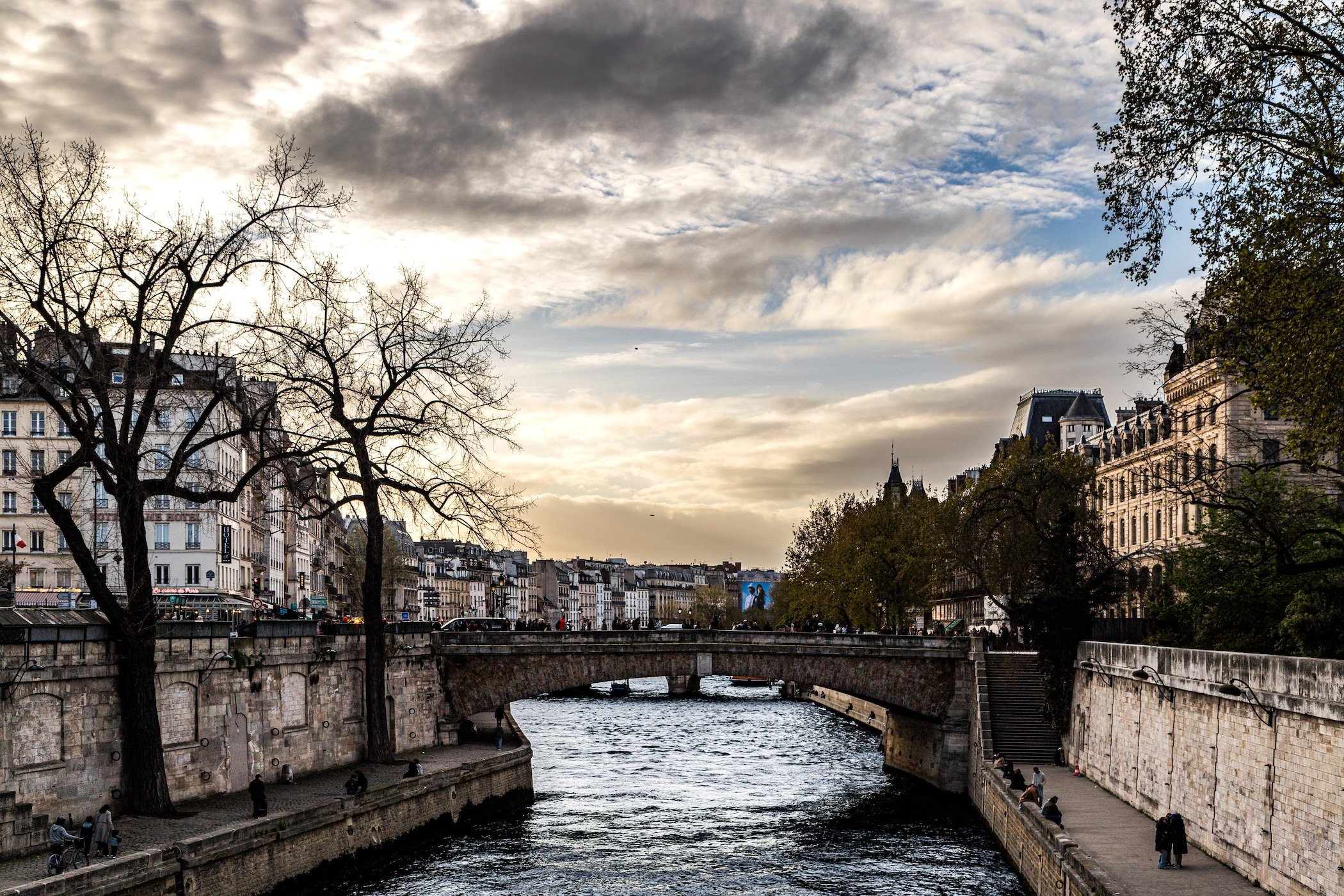
In the 18th century, the 4e arrondissement’s future territory remained one of the dense historic centers of Paris. The Marais continued to contain aristocratic residences, religious houses, and older urban streets, even as other fashionable districts began to draw elite attention westward. The quarter’s buildings and institutions remained important, but its social geography was beginning to change.
The islands retained their symbolic and residential importance. Notre-Dame continued to anchor the religious identity of the Île de la Cité, while the Île Saint-Louis remained a distinctive residential landscape of quays, townhouses, and enclosed urban calm. These island spaces gave the future arrondissement a sense of deep continuity even as the broader city modernized around them.
The 18th century also prepared the district for revolutionary transformation. Civic spaces, churches, aristocratic residences, and public squares would all be reinterpreted under the pressures of political change. By the end of the century, the future 4e contained many of the institutions and symbolic sites that would be transformed by revolution, secularization, and the reorganization of urban authority.
19th Century
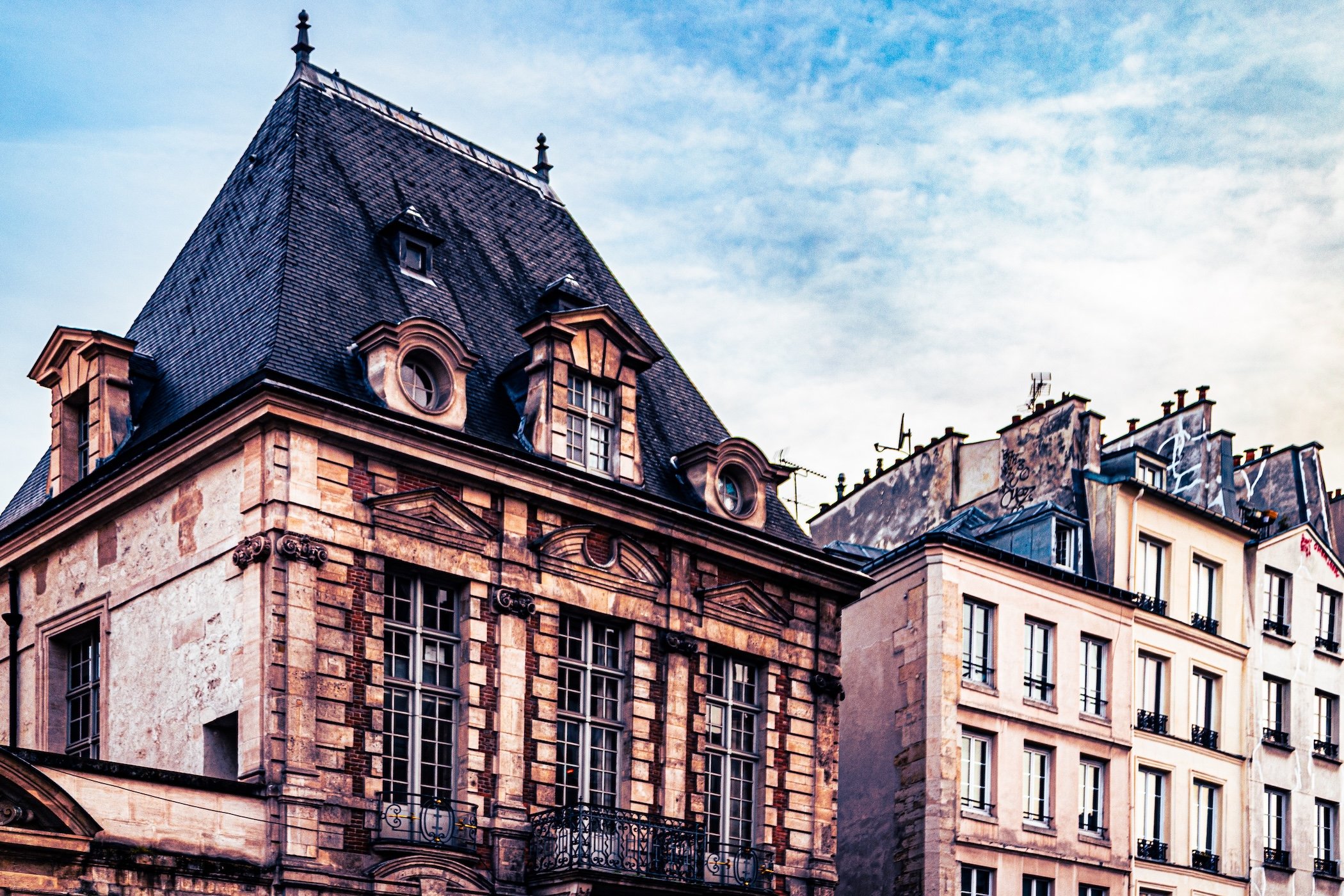
The 19th century reshaped the 4e arrondissement in dramatic ways. The Hôtel de Ville became an even stronger symbol of municipal Paris, though the building itself was destroyed during the Paris Commune in 1871 and later reconstructed. This destruction and rebuilding made the site a powerful emblem of rupture, civic memory, and republican renewal.
The century also brought major urban modernization. New streets, widened corridors, and changing patterns of circulation affected the old fabric of the district. While parts of the Marais preserved their narrow medieval and early modern texture, other areas were altered by the broader transformation of Paris under modern planning, infrastructure, and traffic needs.
Notre-Dame also underwent a major 19th-century restoration, helping recast the cathedral as a national monument as well as a religious site. The cathedral’s medieval identity was renewed and reimagined in an age deeply invested in heritage, restoration, and the symbolic power of the Gothic past.
The 19th century therefore intensified the arrondissement’s central paradox: preservation and transformation occurred together. Medieval streets survived near modernized routes. Old aristocratic houses were adapted to new uses. Civic buildings were destroyed and rebuilt. The 4e became a district where Paris’s historical memory was not merely preserved, but repeatedly reconstructed.
Early–Mid 20th Century
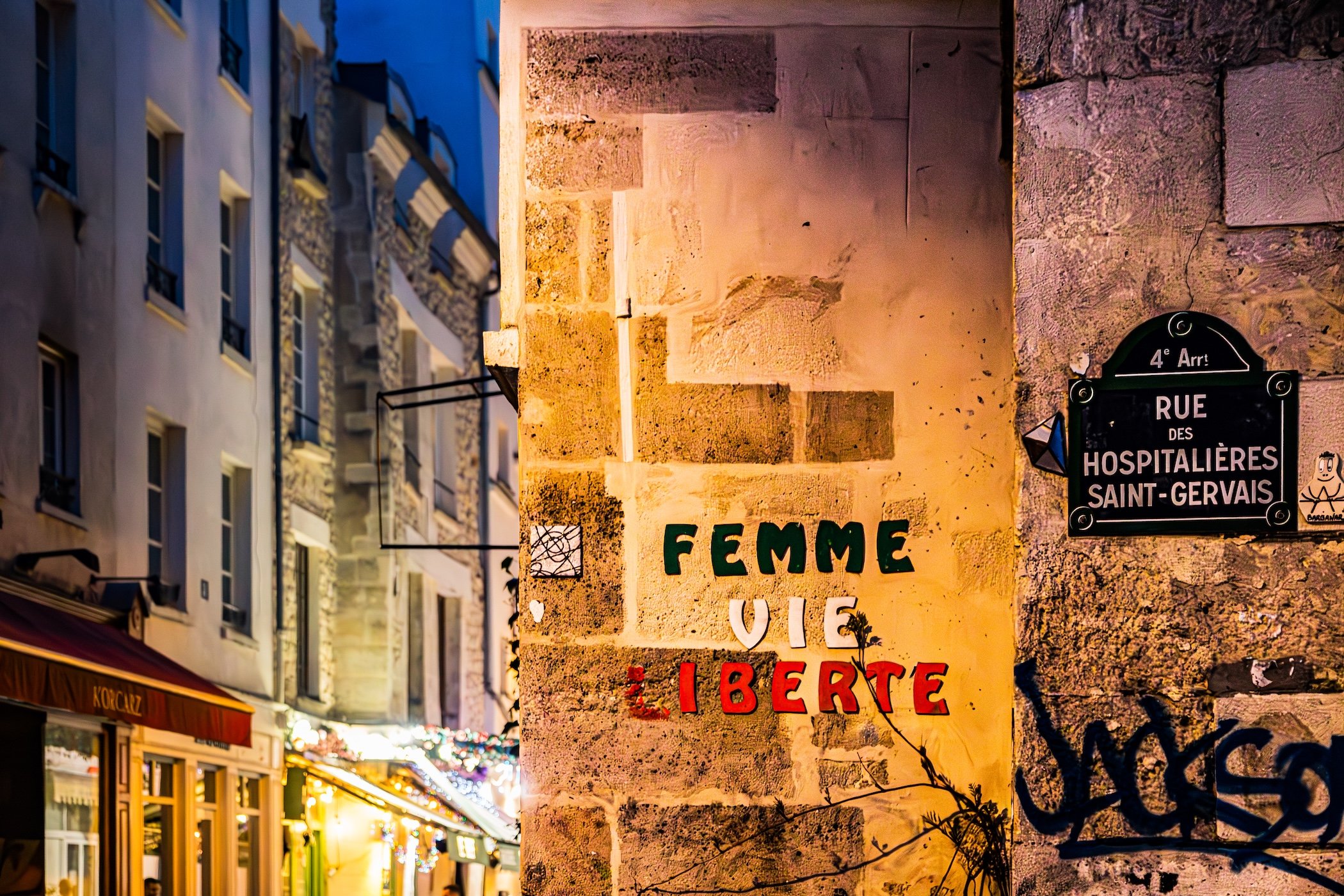
In the early and mid 20th century, the 4e arrondissement remained a dense, mixed, and historically layered part of central Paris. The Marais contained old residences, workshops, religious sites, small shops, Jewish institutions, schools, and community life, while the islands continued to draw religious, residential, and visitor attention.
During this period, parts of the Marais suffered from overcrowding, neglect, and deterioration. Many historic buildings remained standing, but they were not always understood or protected as heritage in the way they would be later. The district was lived, worked, and inhabited before it became widely celebrated as one of Paris’s most carefully preserved historic quarters.
The arrondissement also carried the burdens of 20th-century history. Jewish life in the Marais made the area especially significant before, during, and after the Second World War. The violence and deportations of the occupation years left lasting scars on the district’s memory, visible in memorial plaques, schools, synagogues, and the continued importance of remembrance in the neighborhood’s public landscape.
Late 20th Century
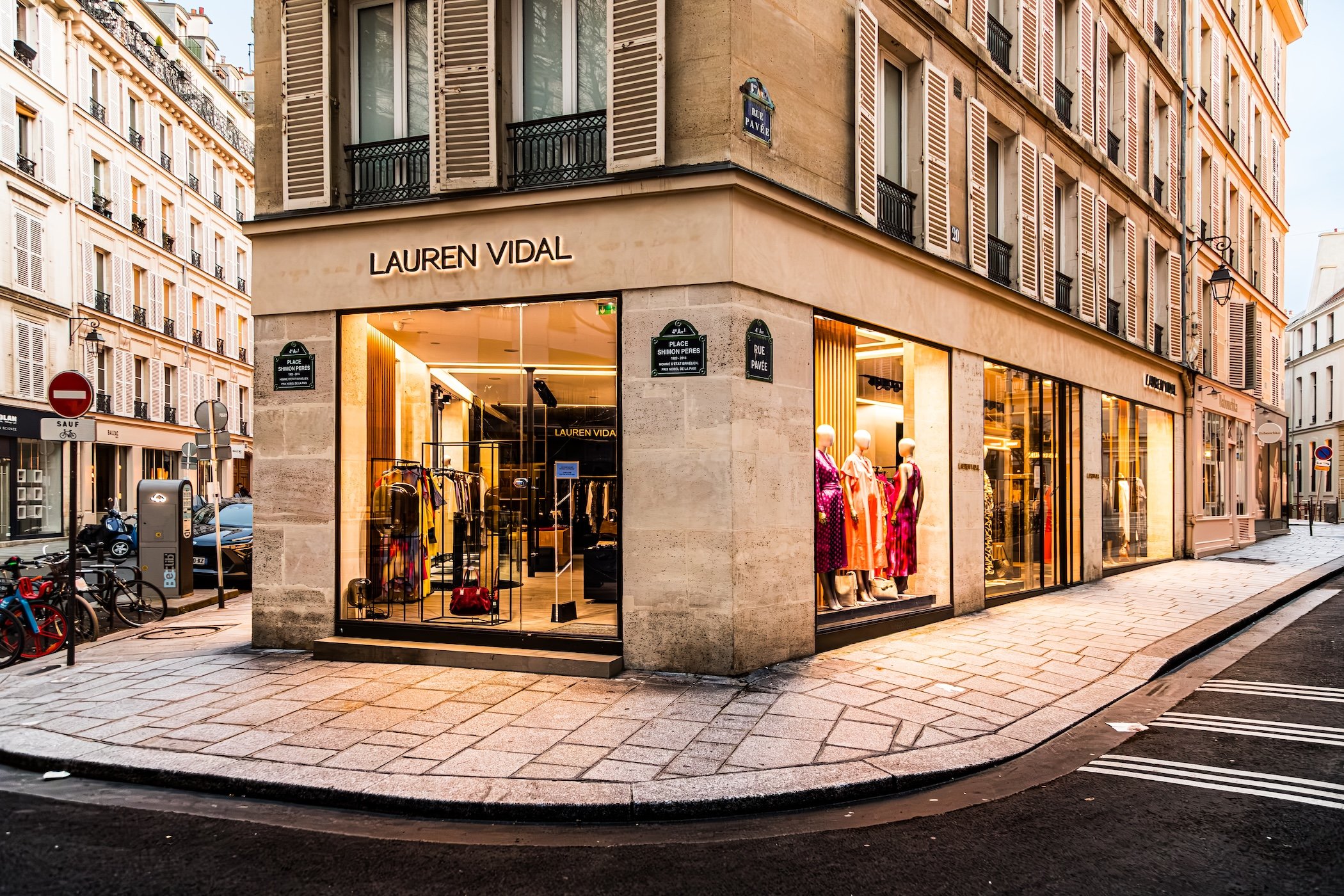
The late 20th century brought a major transformation in how the 4e arrondissement was valued, restored, and experienced. The Marais became one of Paris’s most important preservation districts, with renewed attention given to its hôtels particuliers, historic streets, courtyards, religious buildings, and older urban fabric. What had once been seen in some places as aging or neglected came to be understood as architectural and historical treasure.
The arrondissement also became more strongly associated with culture, tourism, galleries, fashion, restaurants, and nightlife. The broader Marais developed into one of the most visible LGBTQ+ districts in Paris, while also retaining important Jewish history and institutions. This layered identity gave the 4e a contemporary cultural significance that built upon, rather than erased, its older histories.
At the same time, the area around the Hôtel de Ville and Beaubourg became increasingly central to public life, pedestrian movement, and cultural activity. The 4e’s late 20th-century identity was therefore shaped by preservation and reinvention: historic architecture restored, old streets revalued, communities made visible, and central Paris reimagined as both heritage district and contemporary urban stage.
21st Century
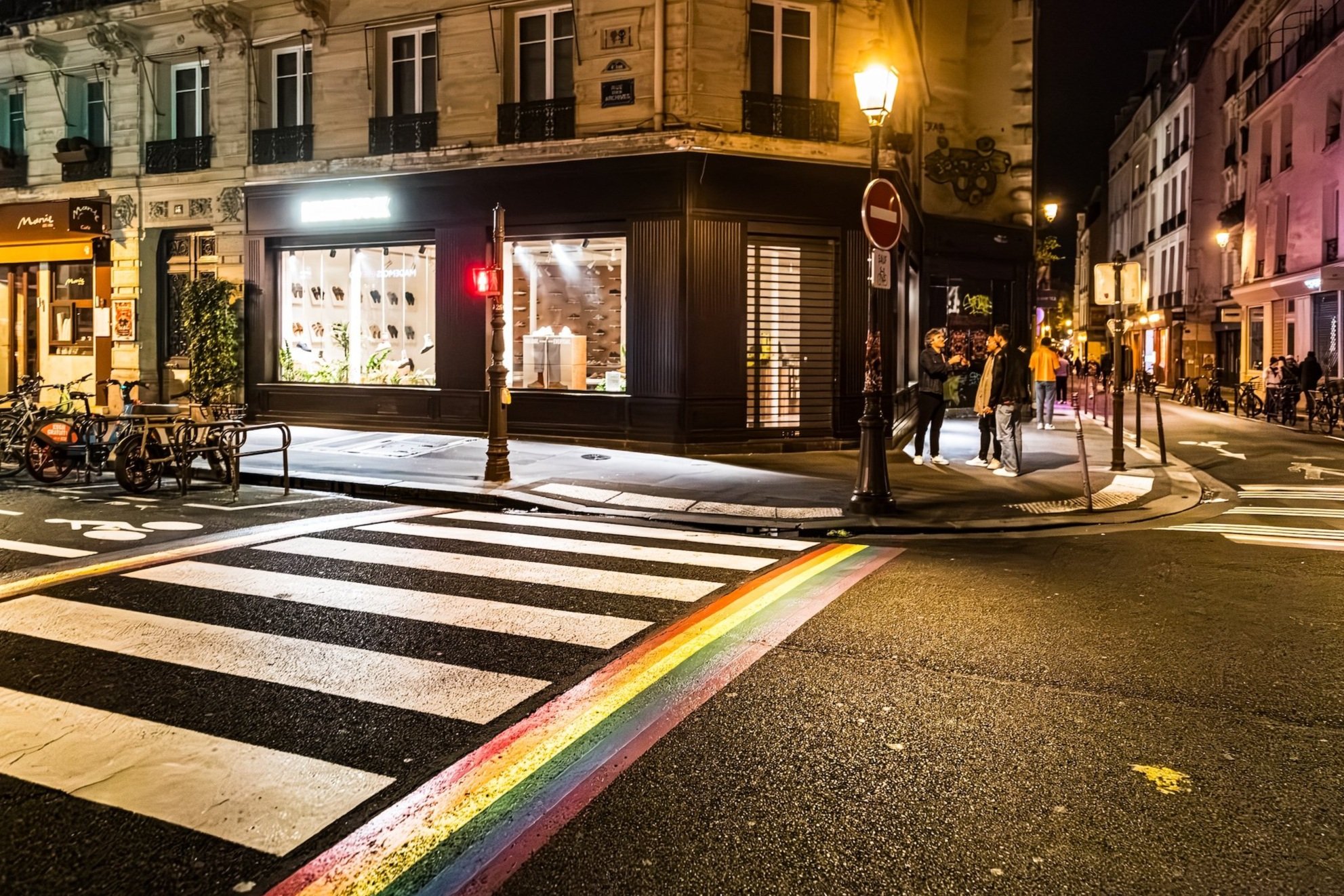
In the 21st century, the 4e arrondissement remains one of the most visited and symbolically charged districts in Paris. Notre-Dame, the Hôtel de Ville, the Île Saint-Louis, Place des Vosges, the Marais, and the Seine quays all draw intense public attention, while the arrondissement also remains a place of residents, schools, shops, religious institutions, restaurants, galleries, and civic life.
The fire at Notre-Dame in 2019 added a new layer to the arrondissement’s contemporary history. The cathedral’s restoration has reinforced the quarter’s global symbolic importance while also reminding Paris and the world that even the city’s most enduring monuments are vulnerable, material, and constantly renewed through care.
The 4e also continues to navigate the pressures of centrality: tourism, rising costs, preservation demands, commercial change, public gatherings, and the challenge of maintaining neighborhood life in one of the city’s most iconic areas. Its civic role remains strong through the Hôtel de Ville and Paris Centre, while its cultural role extends through the Marais, the islands, and the public spaces along the Seine.
Today, the 4e is both historic core and contemporary stage. It is a district where Paris performs itself for the world, but also where older layers of residence, worship, commerce, memory, and community continue to endure.
Spirit and Legacy
The 4e arrondissement is one of the great symbolic hearts of Paris. It contains the city’s island origins, its cathedral memory, its municipal authority, its aristocratic Marais, its revolutionary edges, and its modern civic stage. Few districts hold so many versions of Paris so closely together.
Its legacy is one of convergence. Notre-Dame and the Hôtel de Ville speak to sacred and civic authority. The Île Saint-Louis speaks to river-bound residential elegance. Place des Vosges speaks to royal urbanism and aristocratic Paris. The Marais speaks to preservation, Jewish memory, LGBTQ+ visibility, galleries, cafés, and the reinvention of old streets for contemporary life.
The 4e is not only a place of monuments. It is a district of thresholds: island to bank, medieval to modern, religious to secular, aristocratic to democratic, local to global. To walk through it is to move through the oldest and most public layers of Paris at once — a city continually restored, contested, inhabited, and remembered.
The Photography
Visual Identity
-
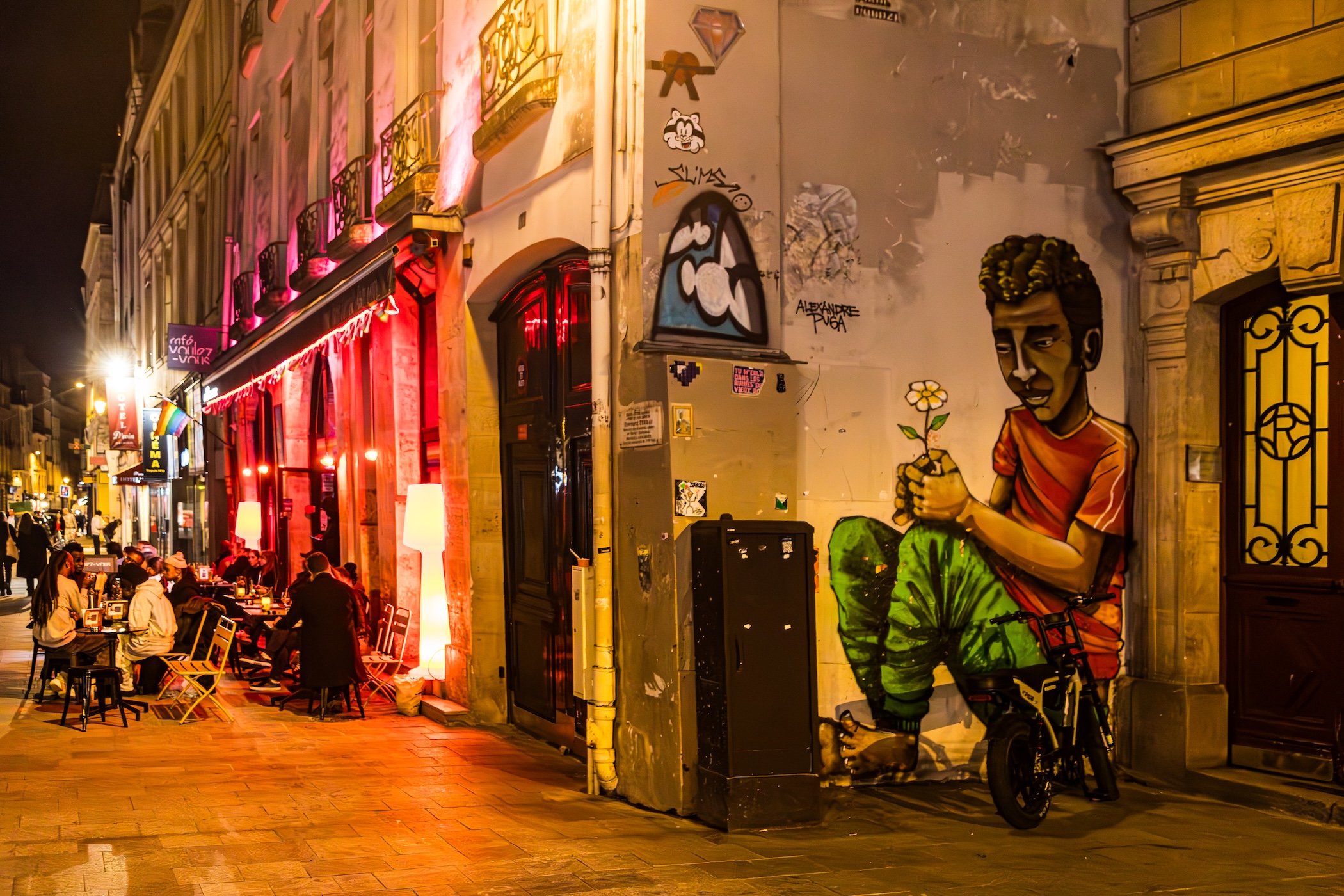
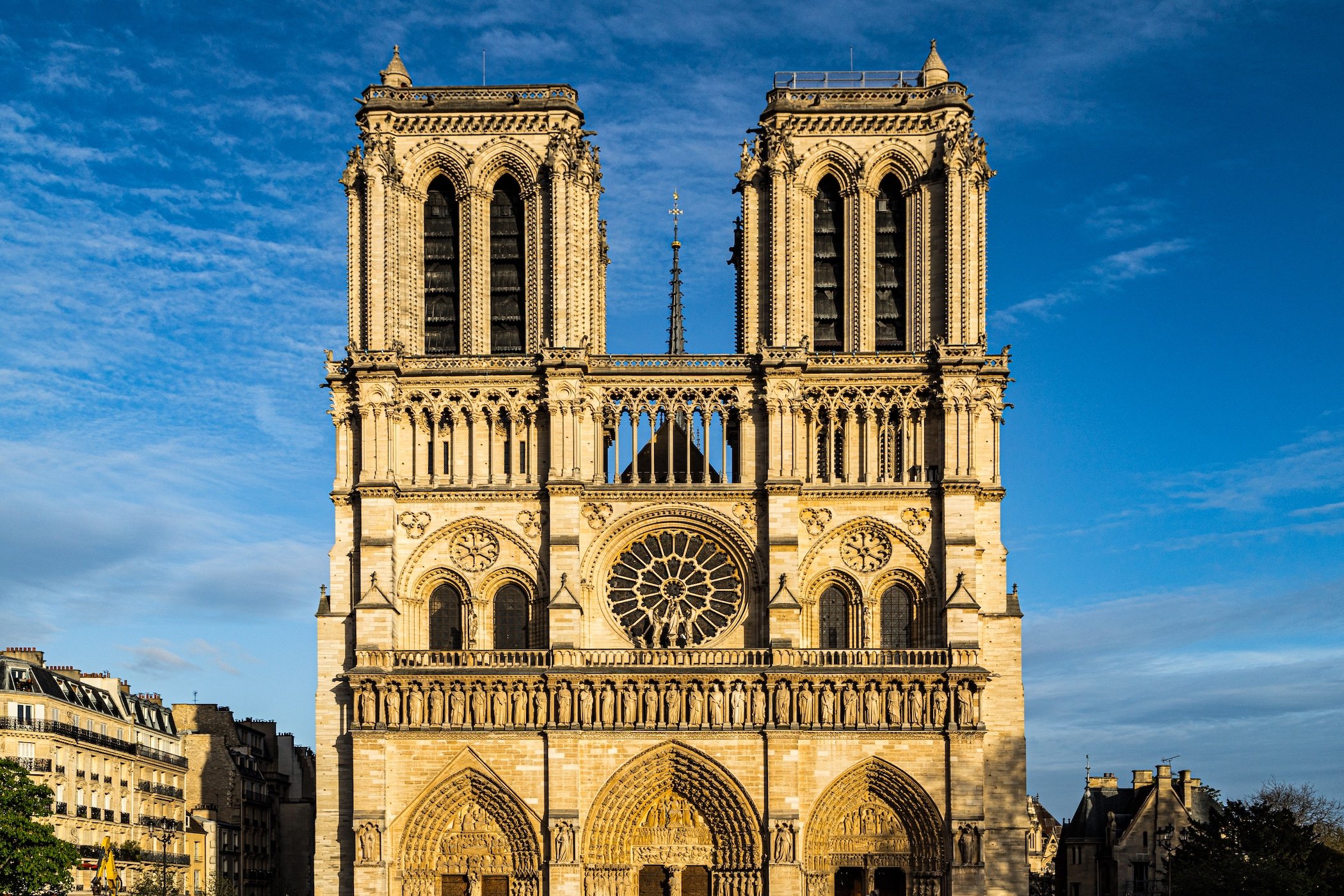
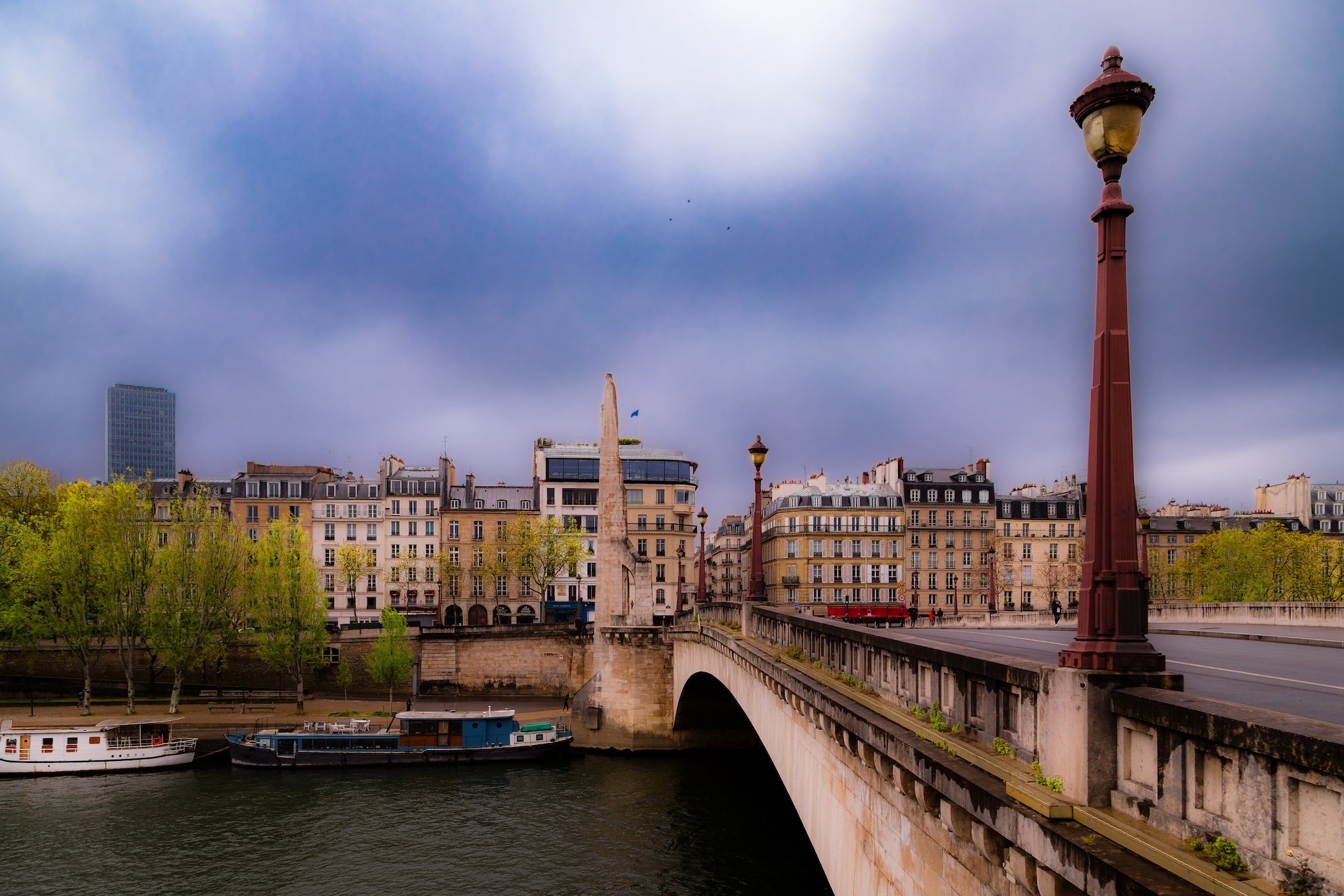
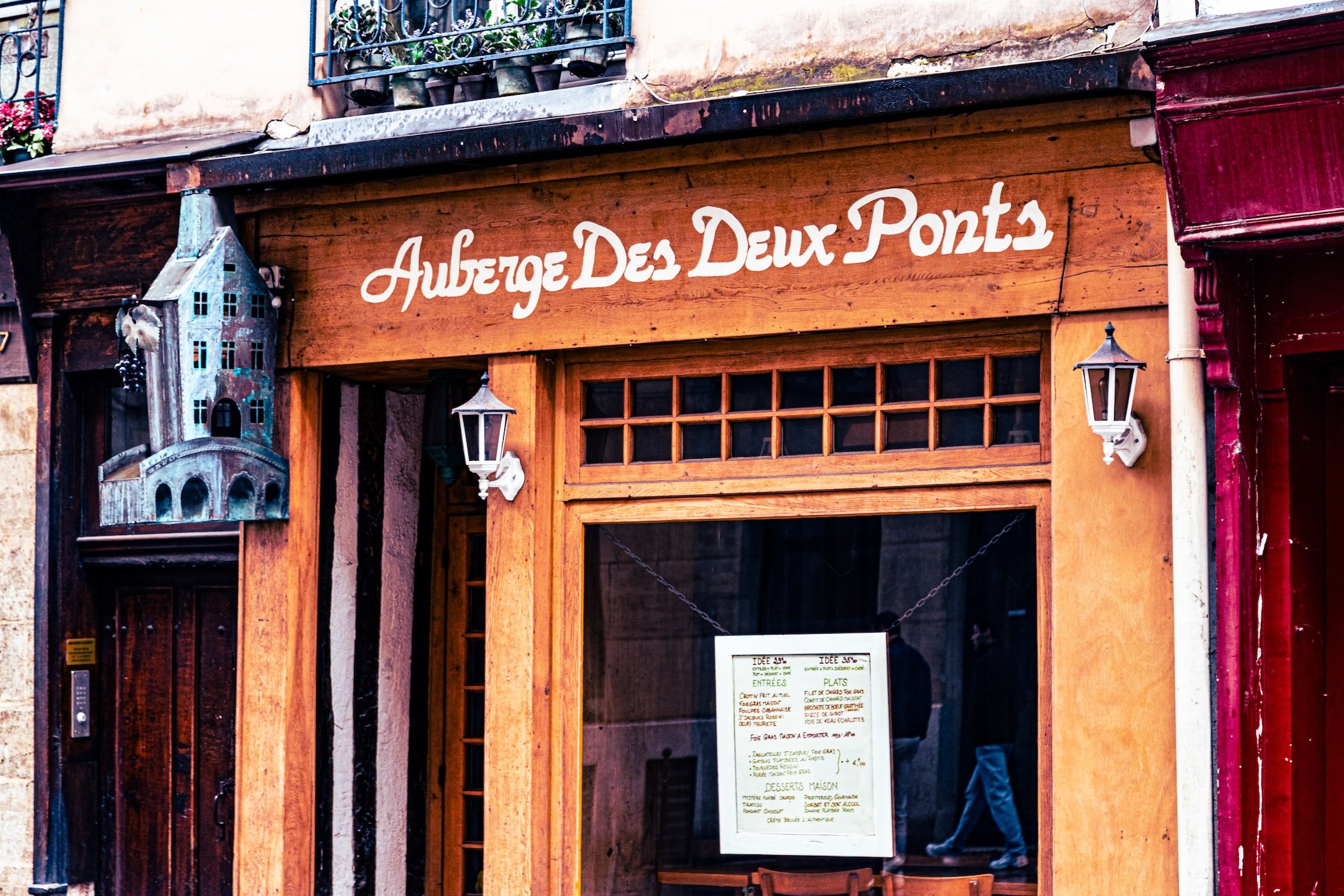
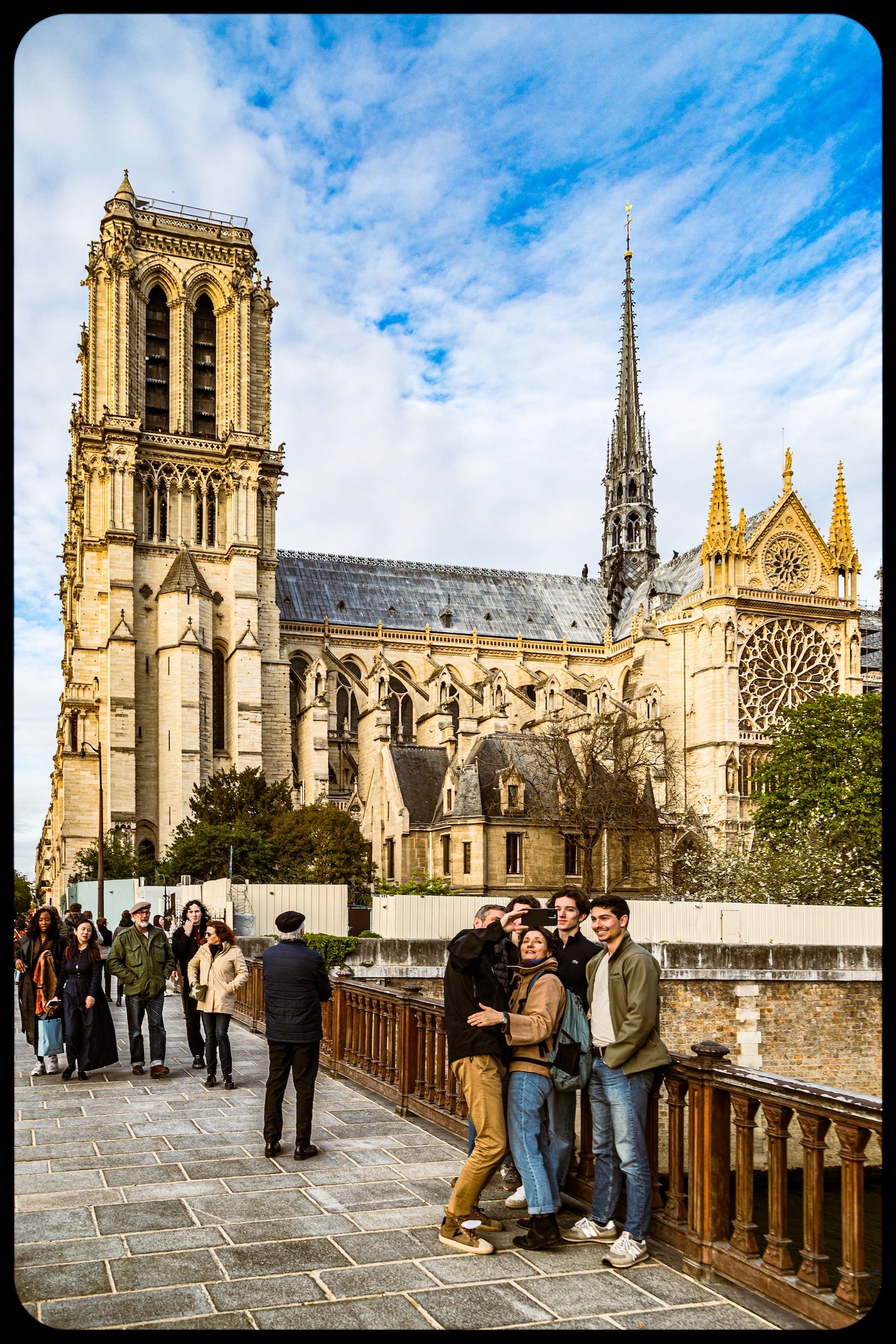
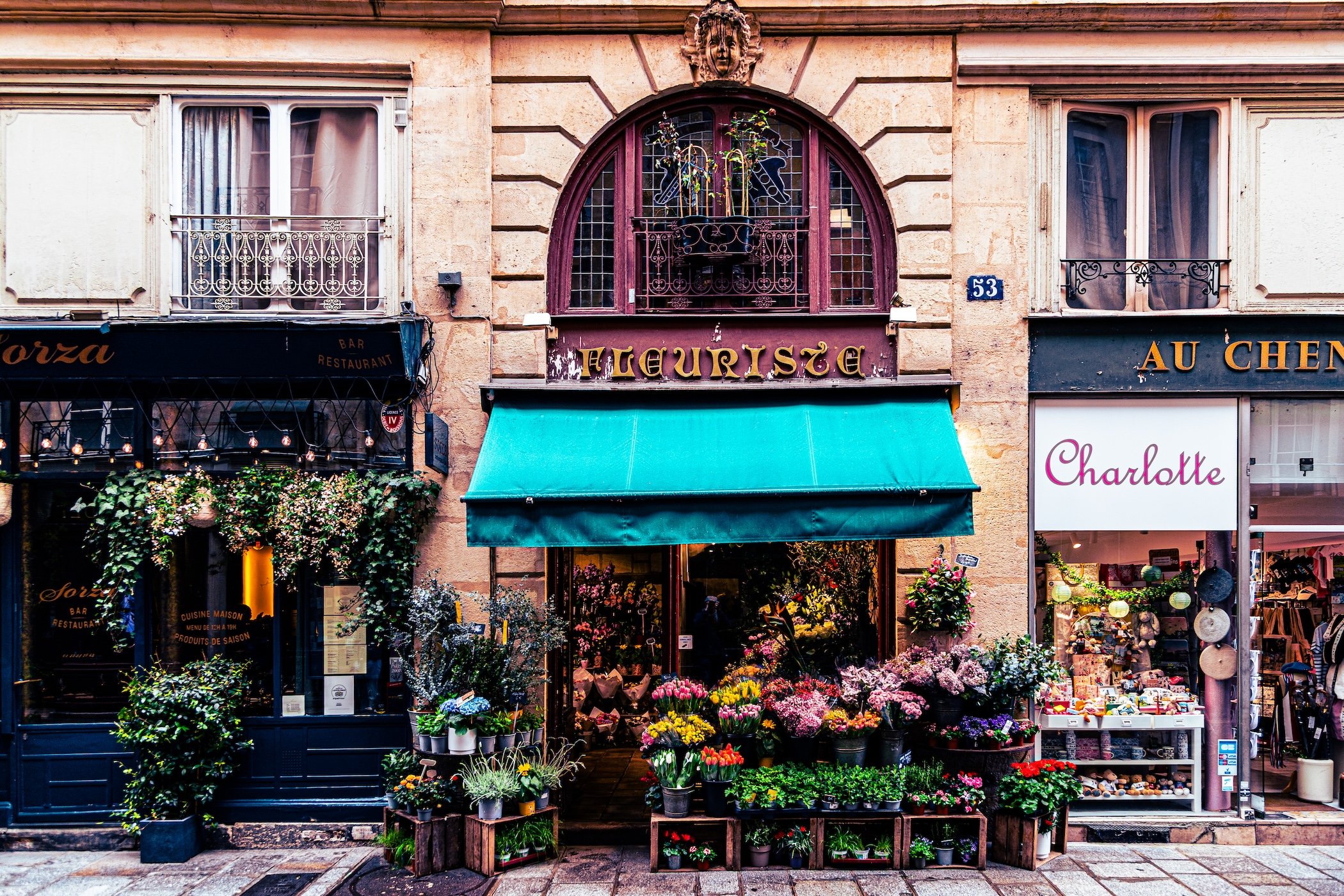
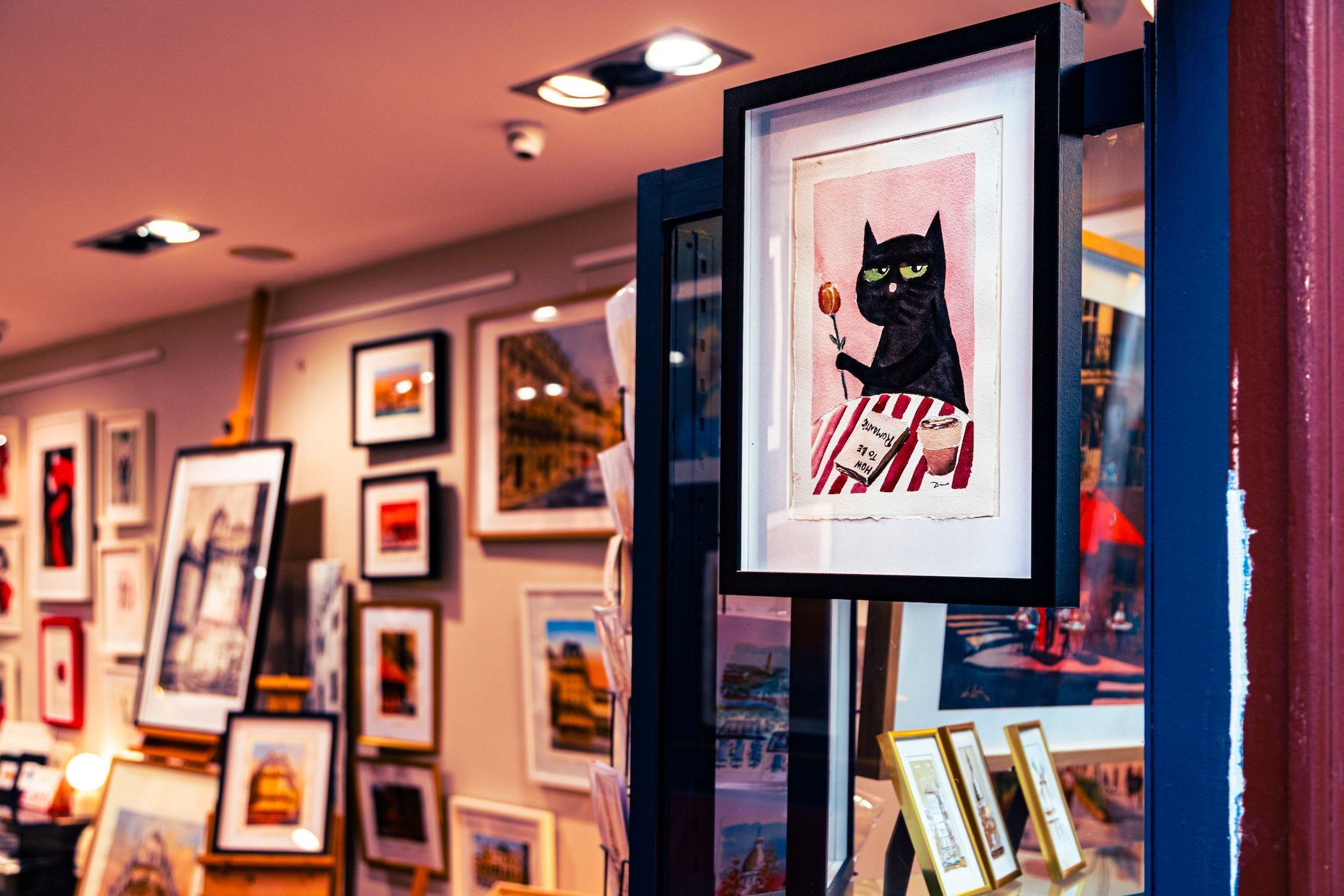
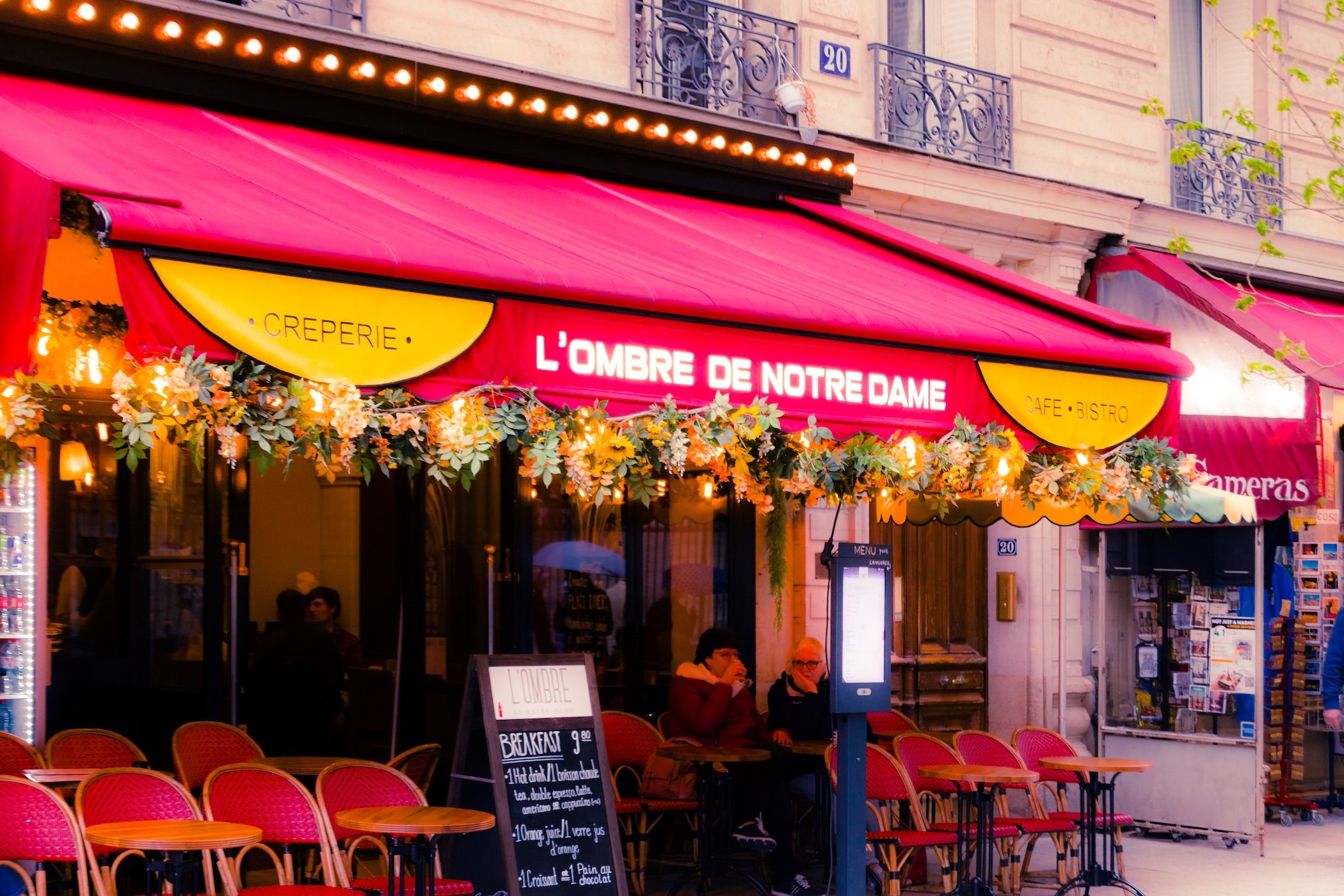
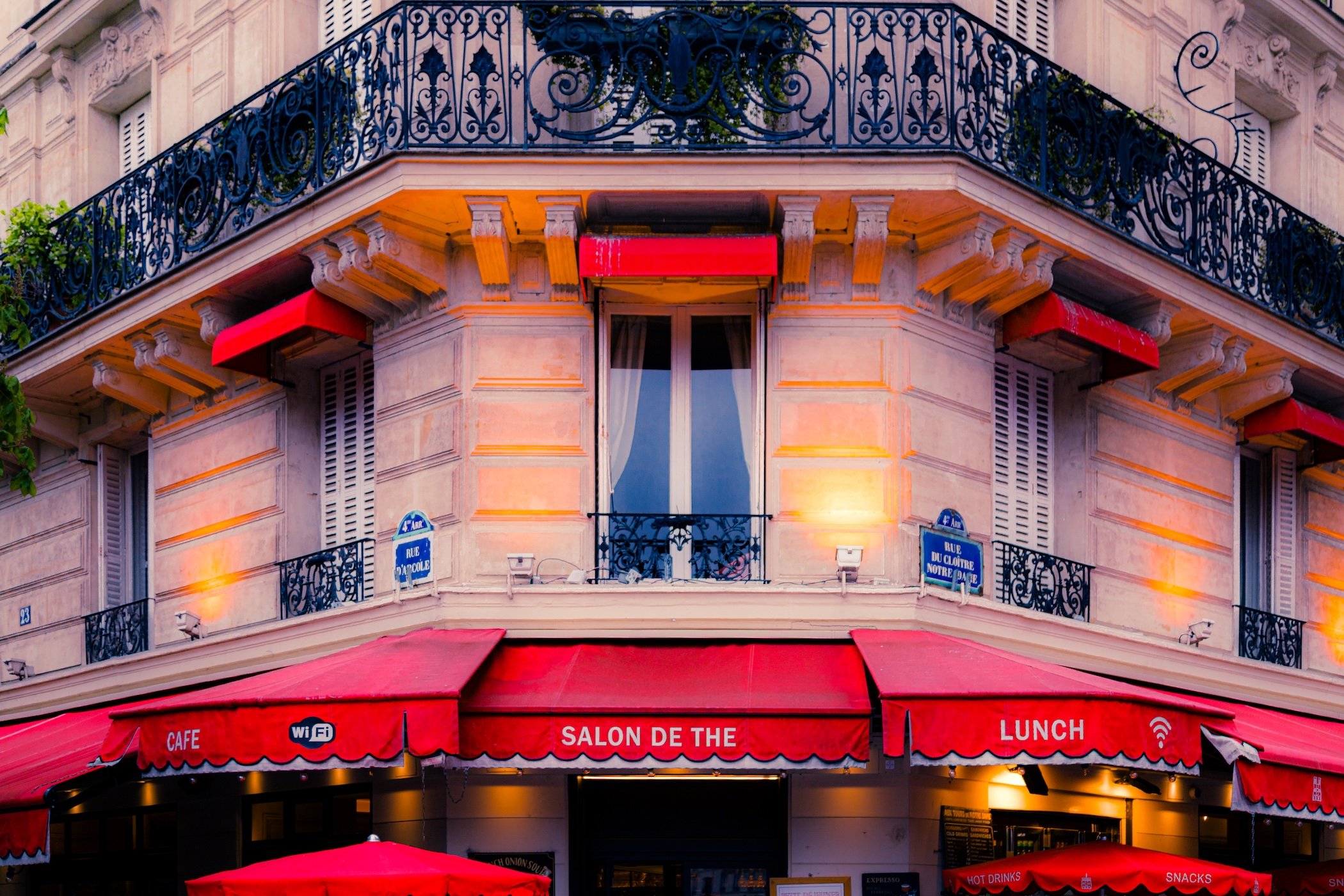
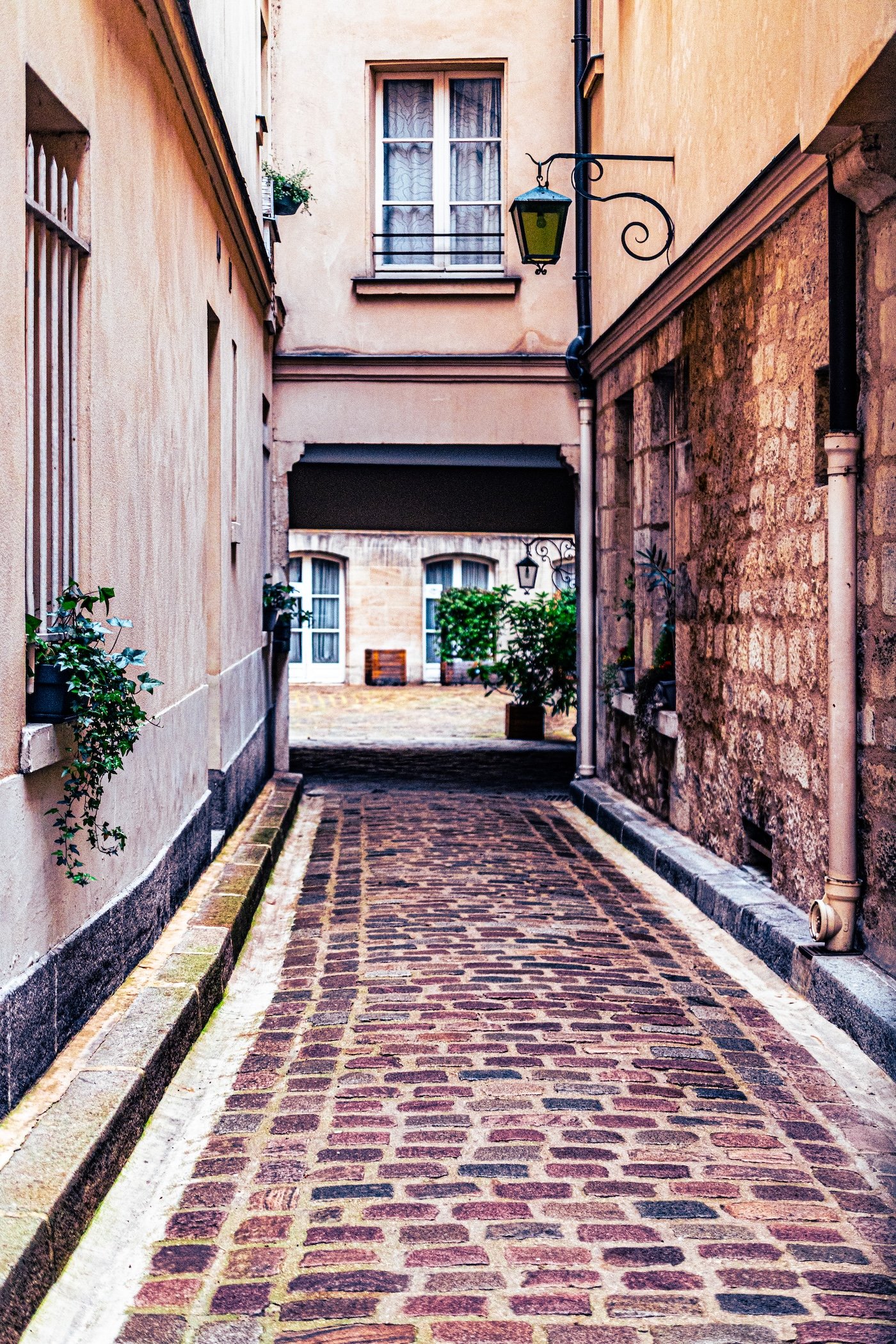
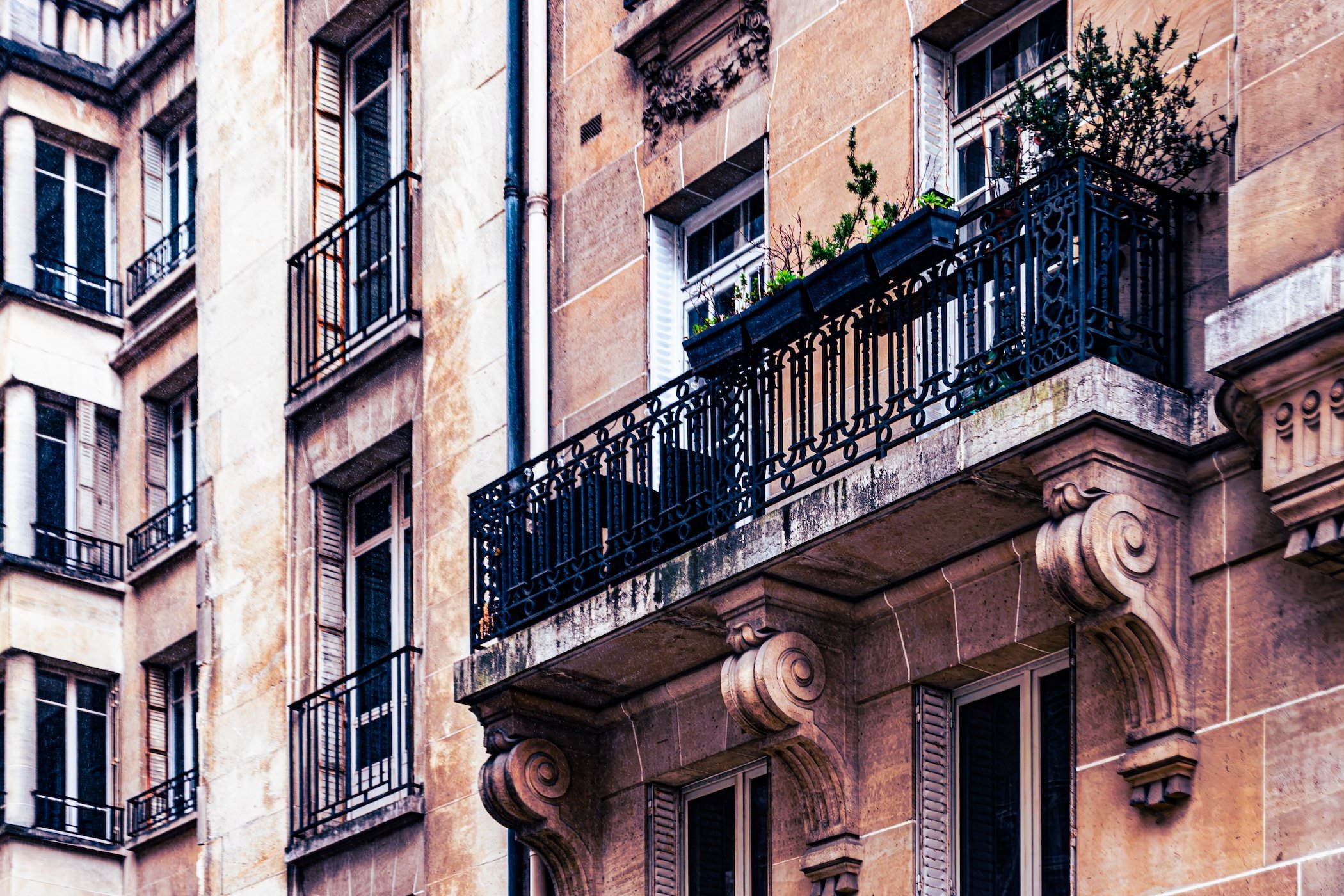
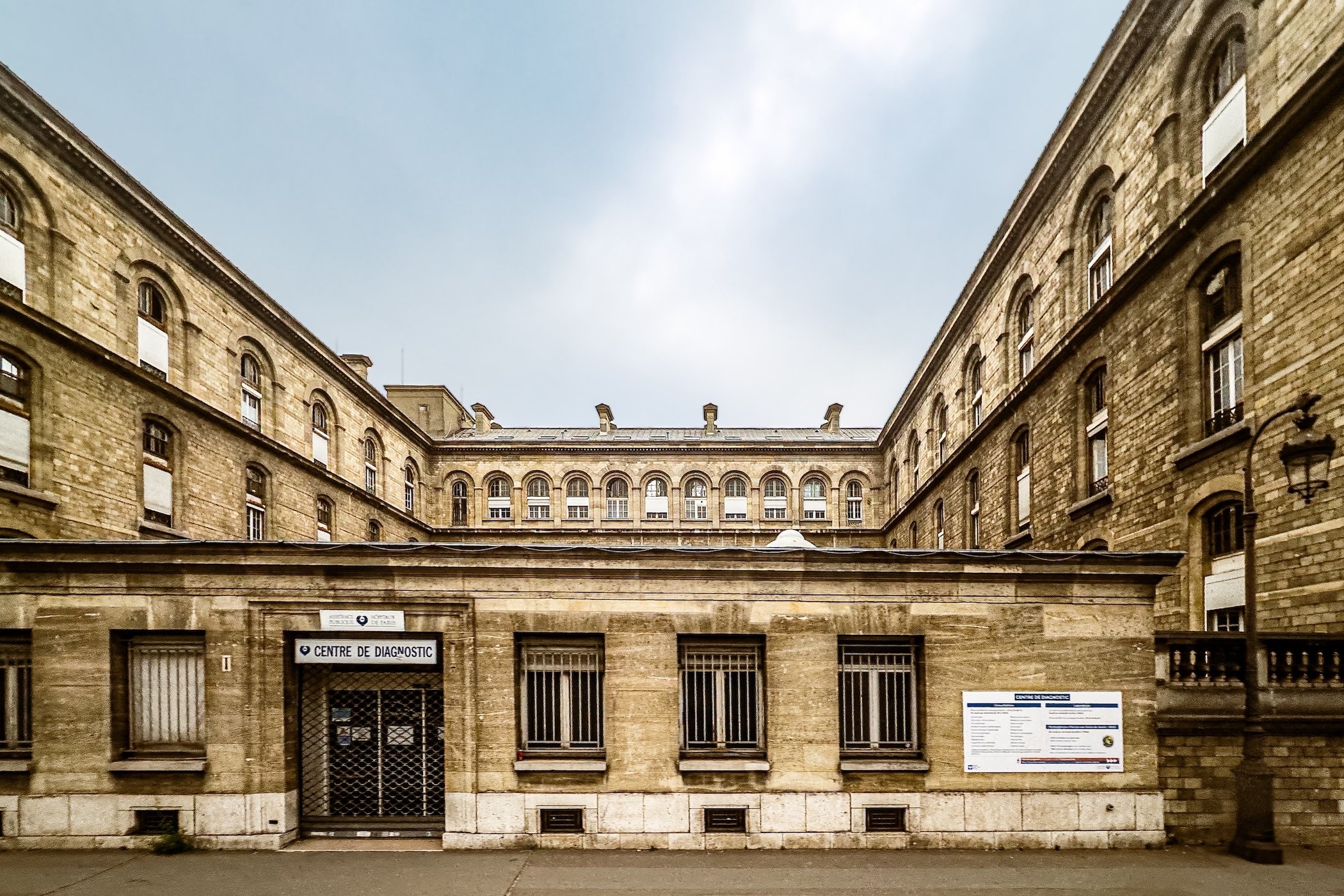
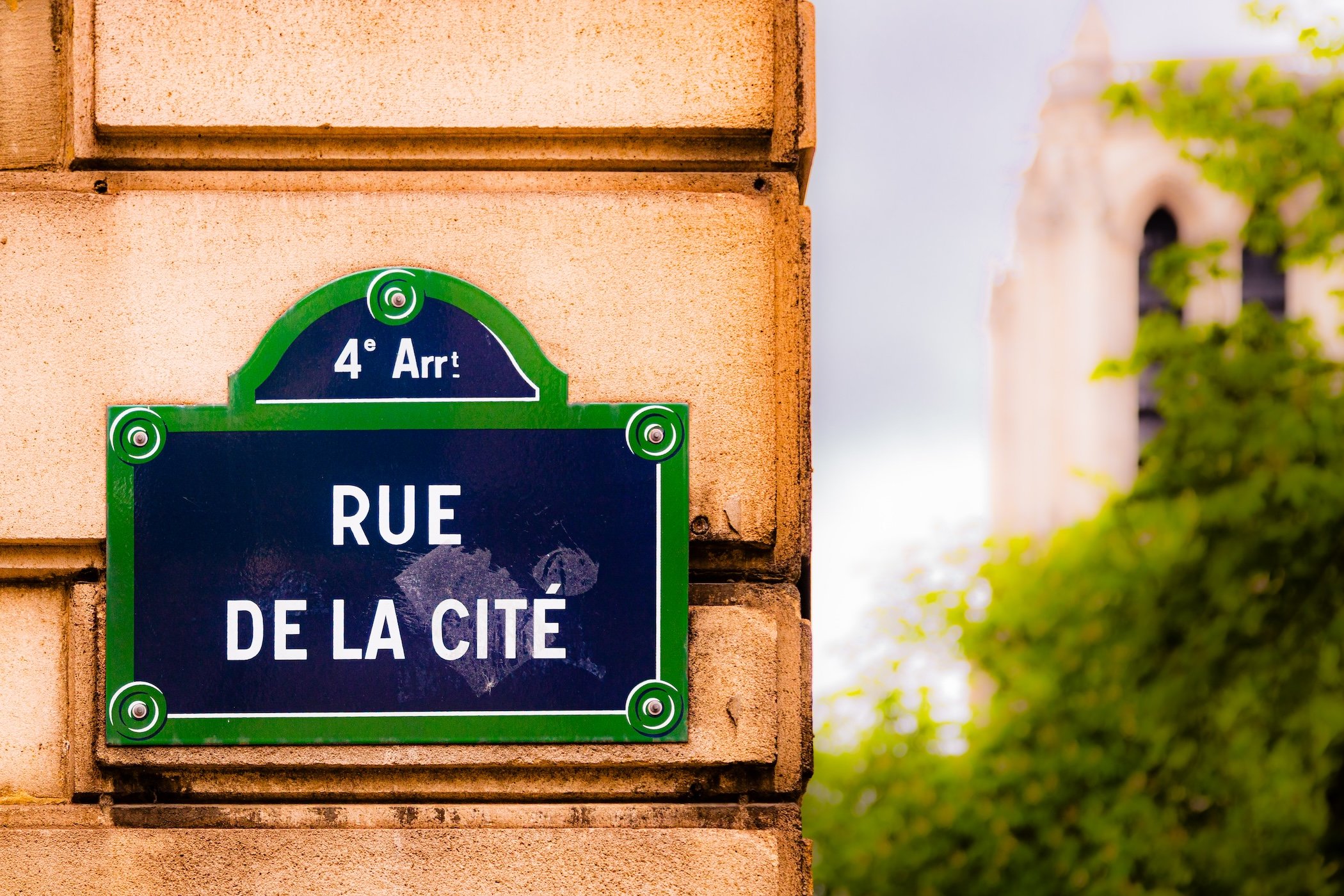
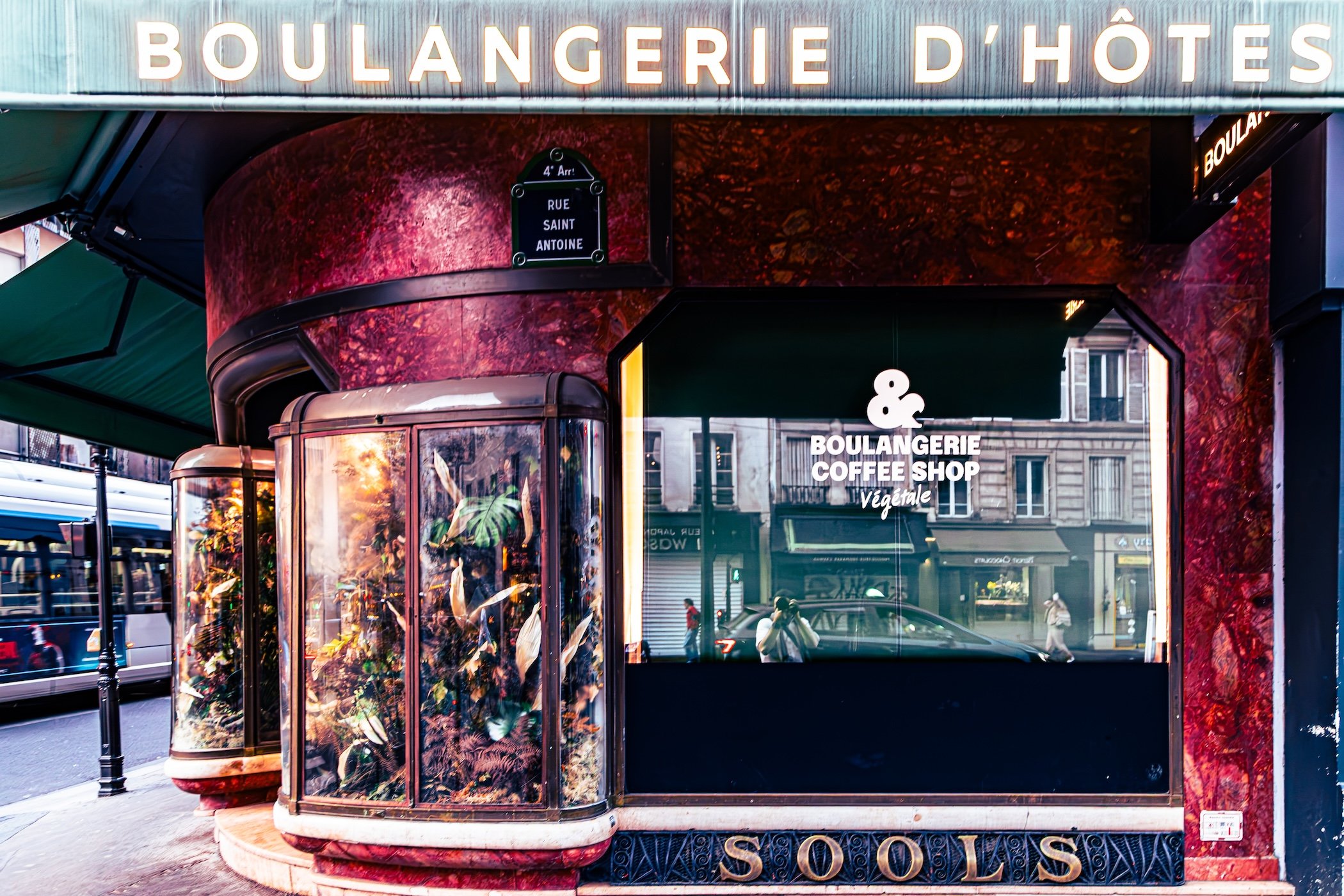
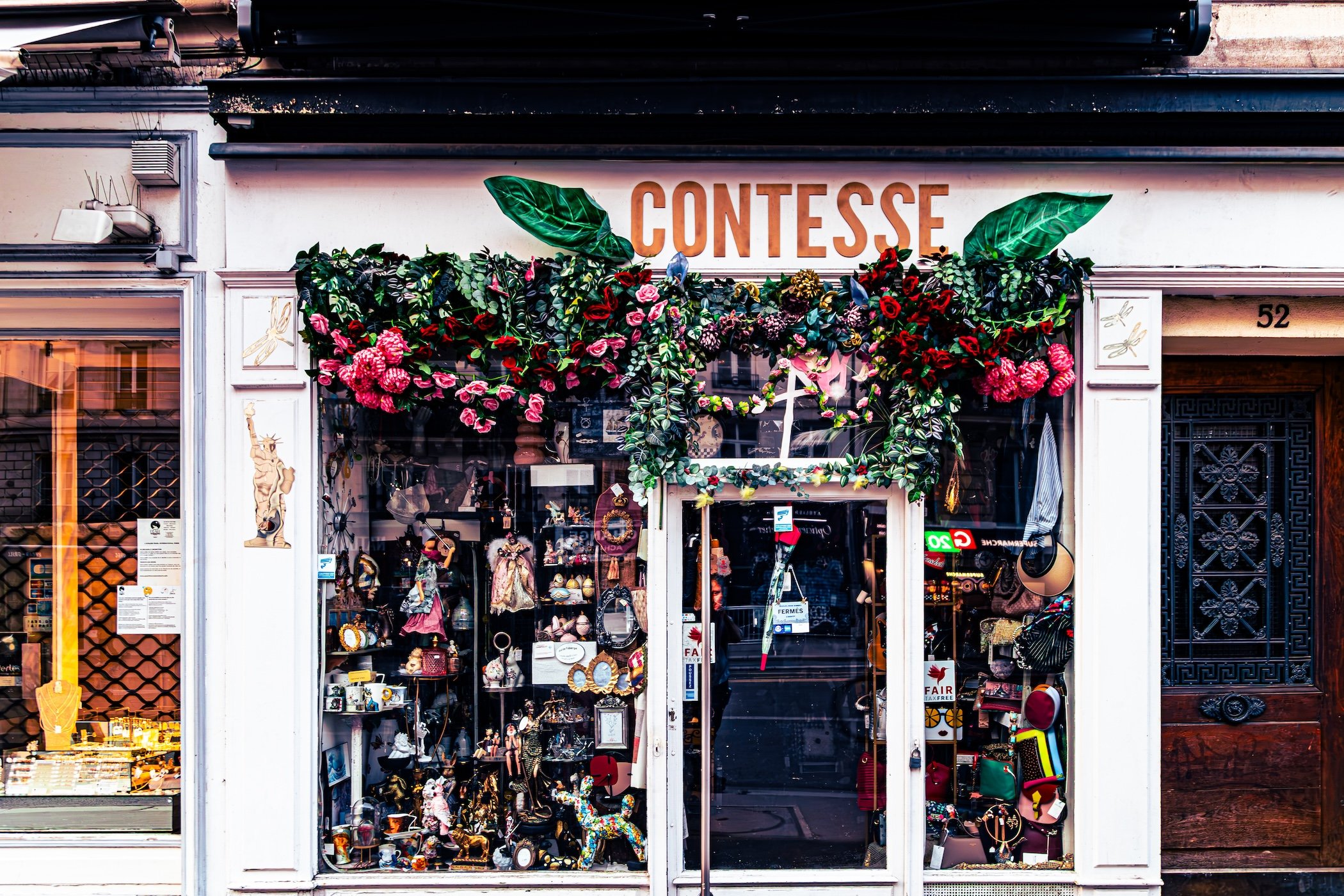
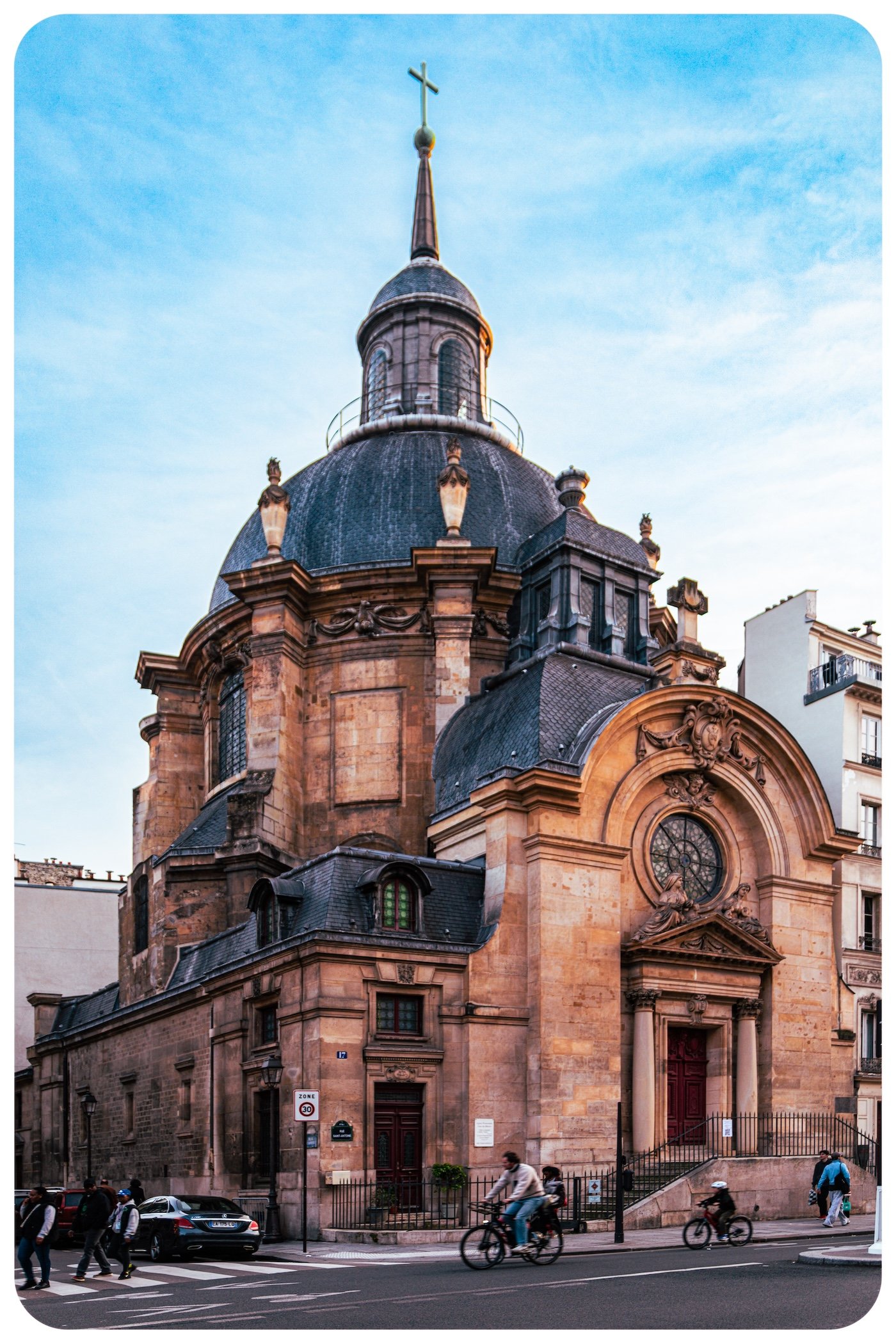
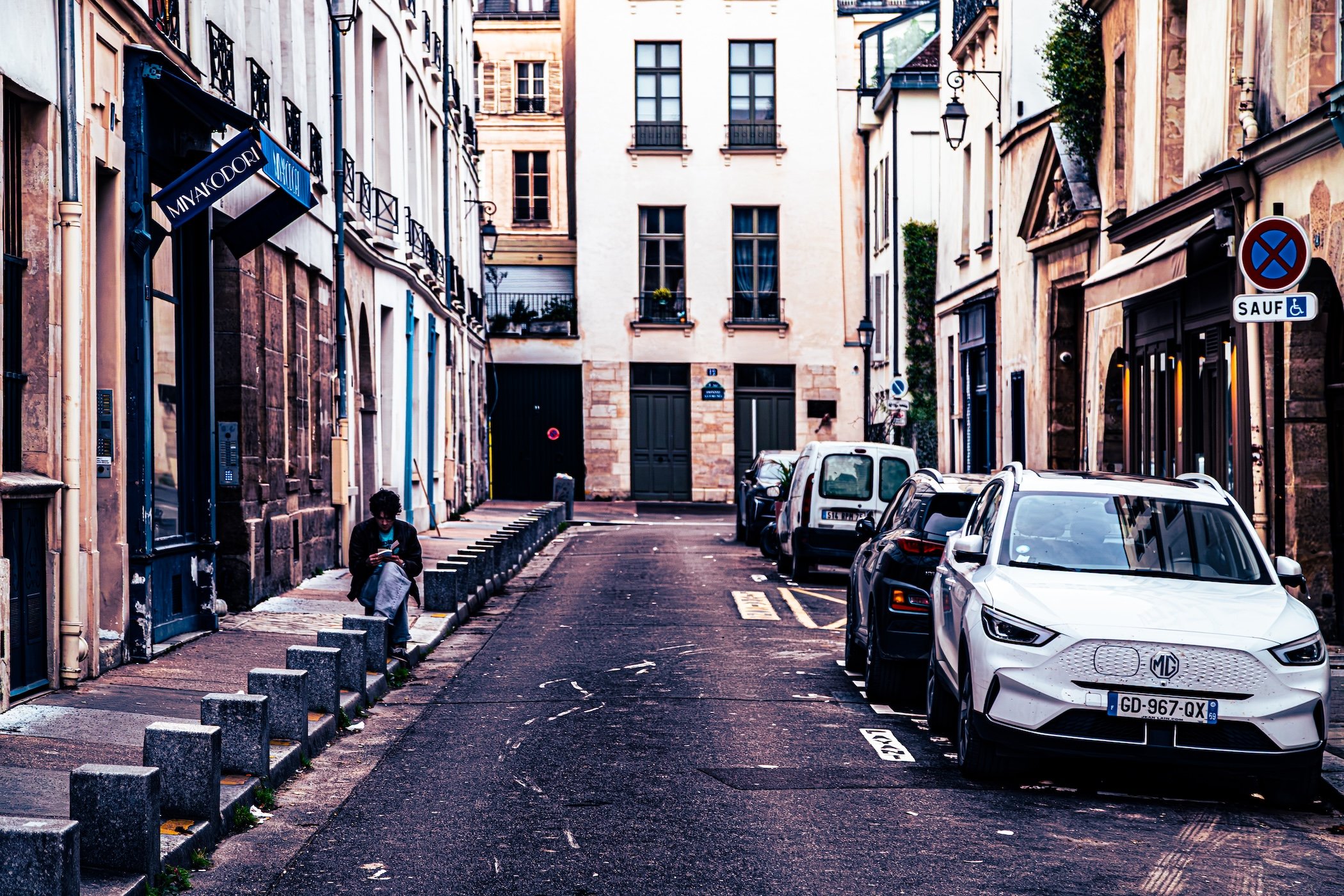
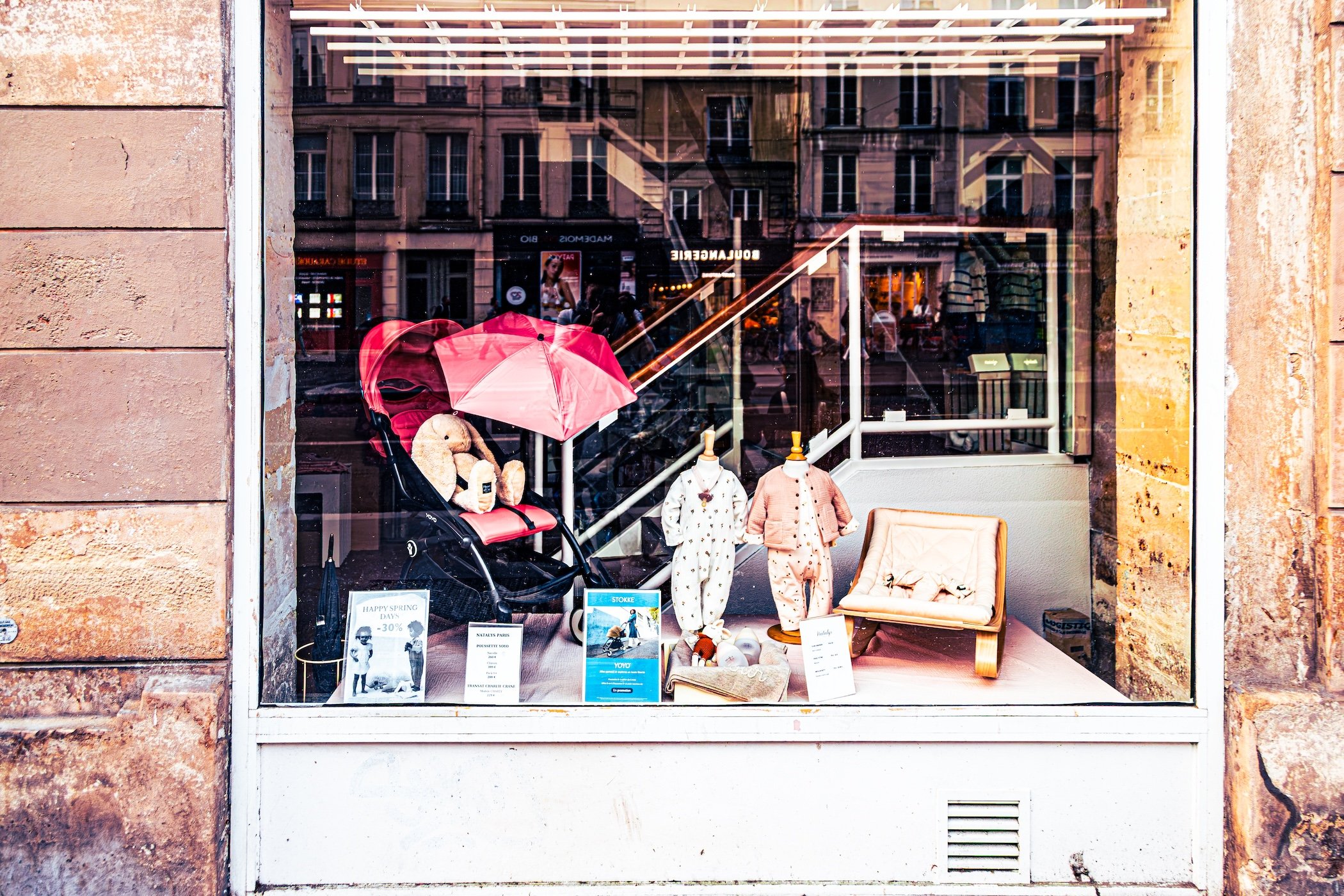
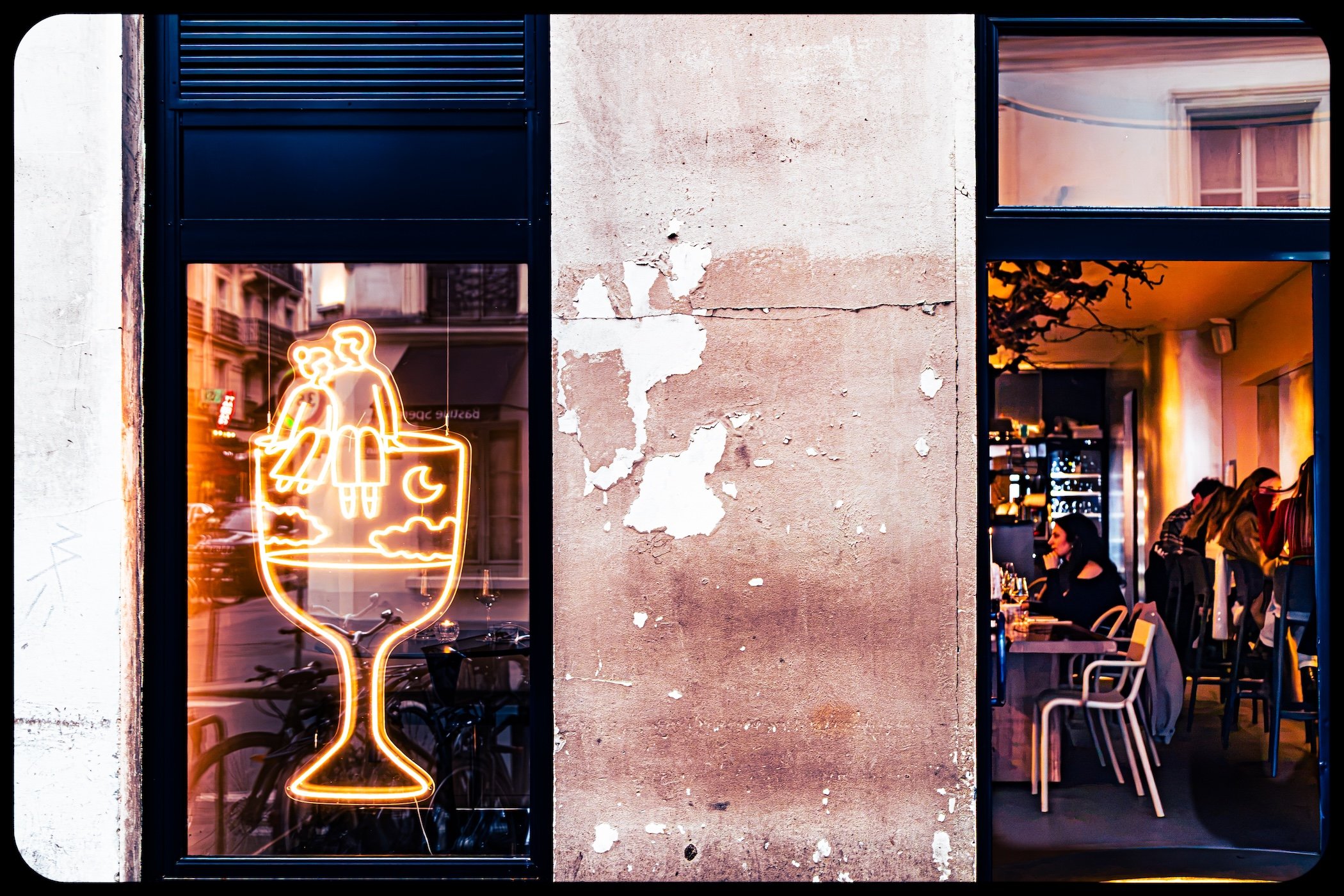
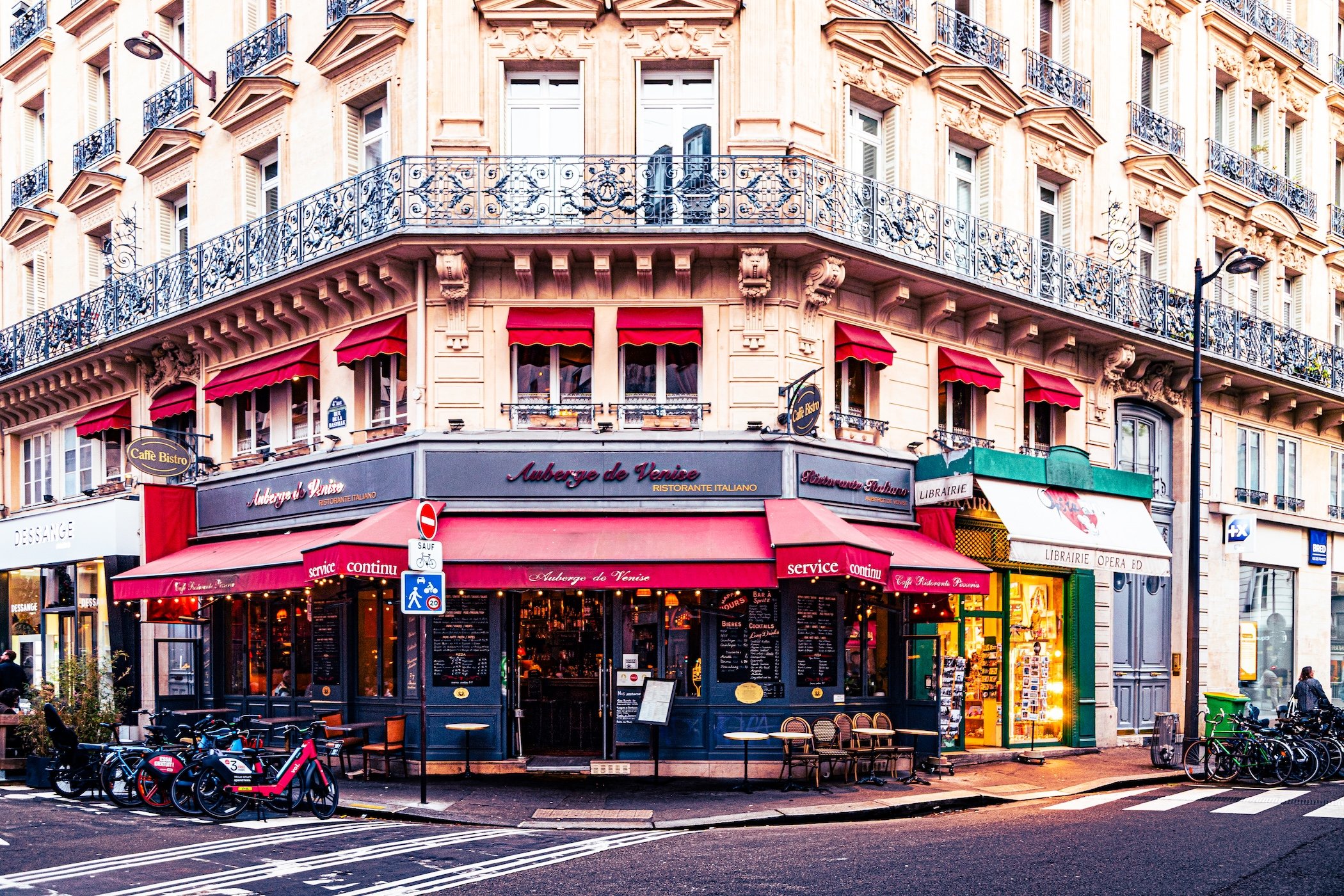
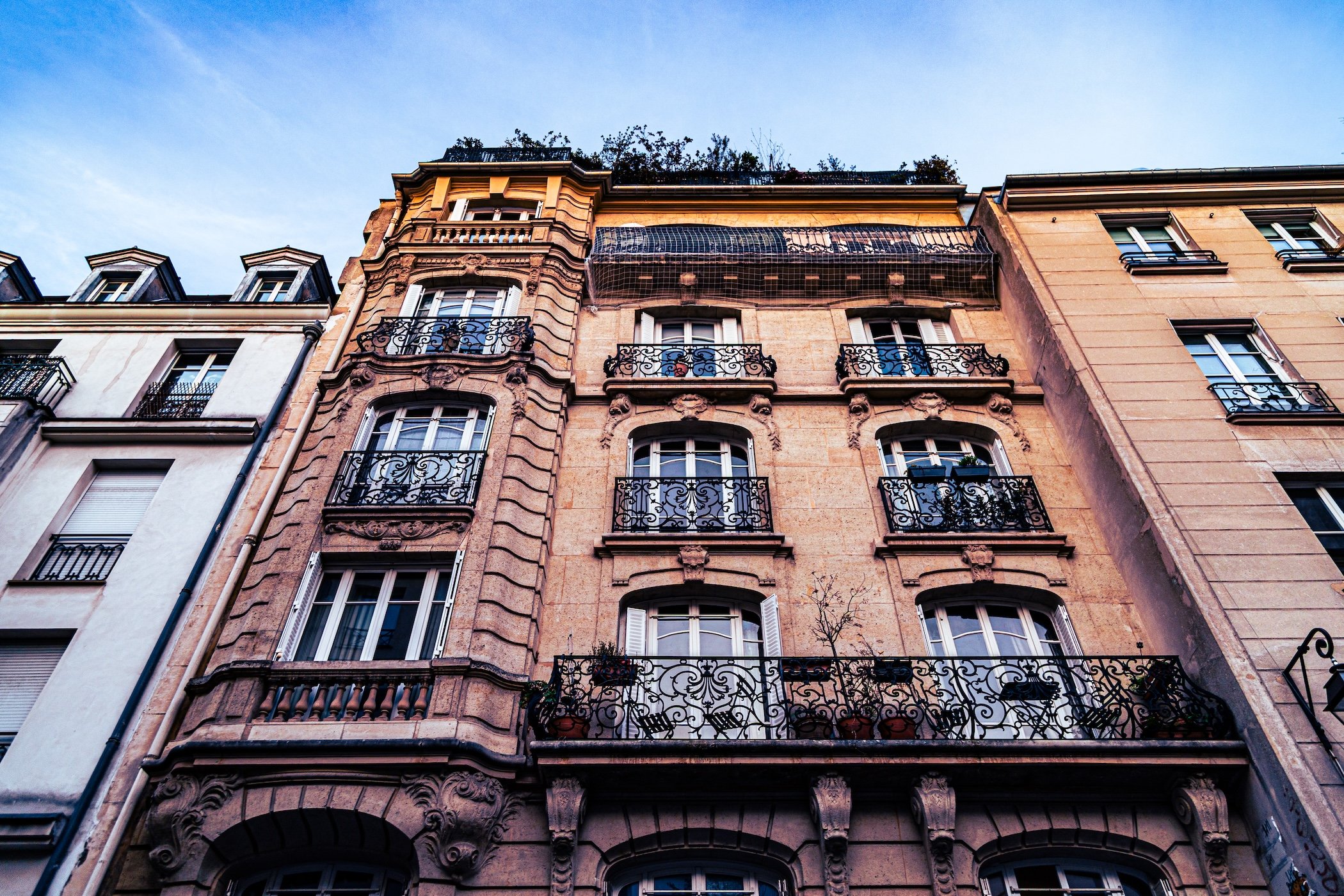
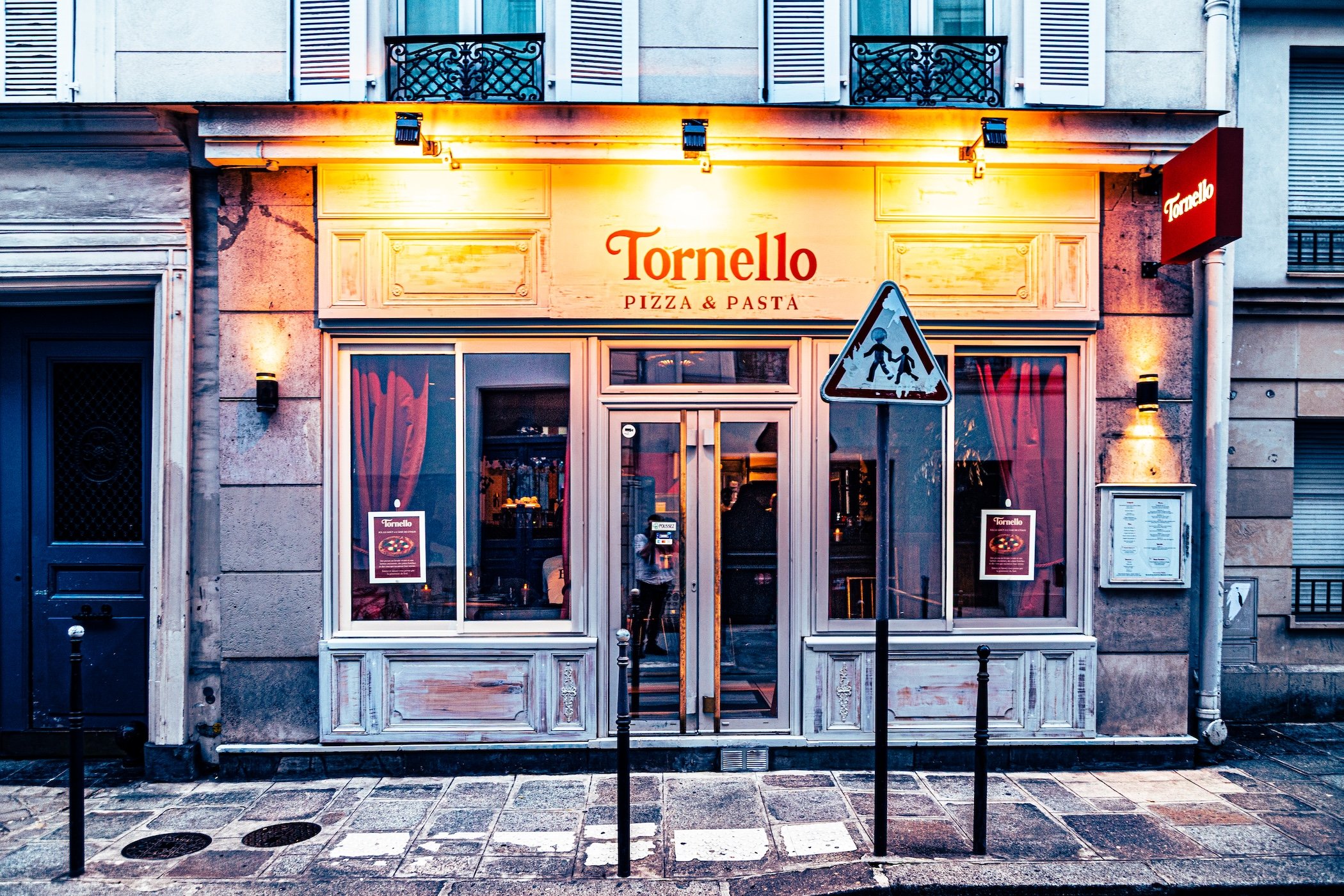
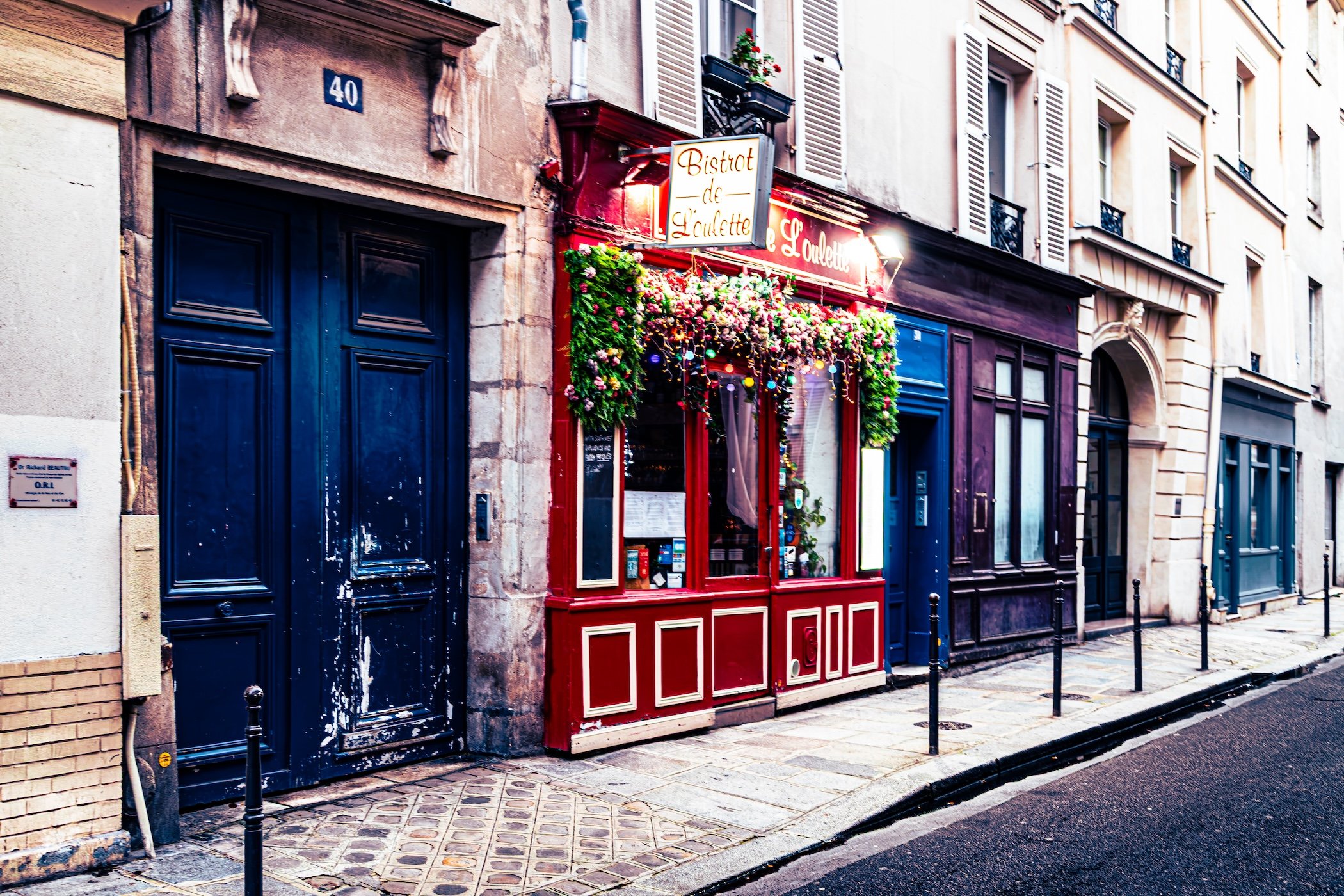
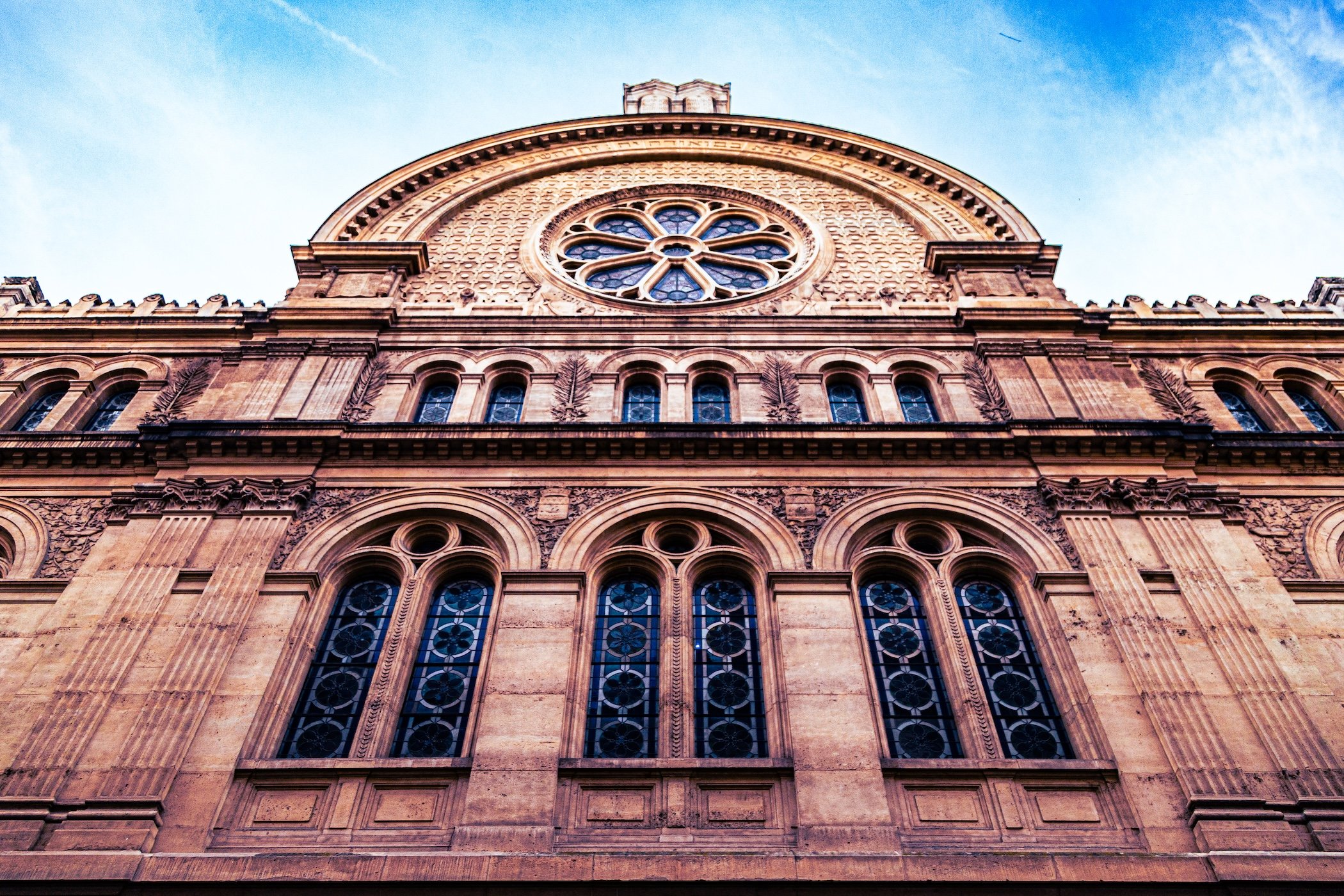
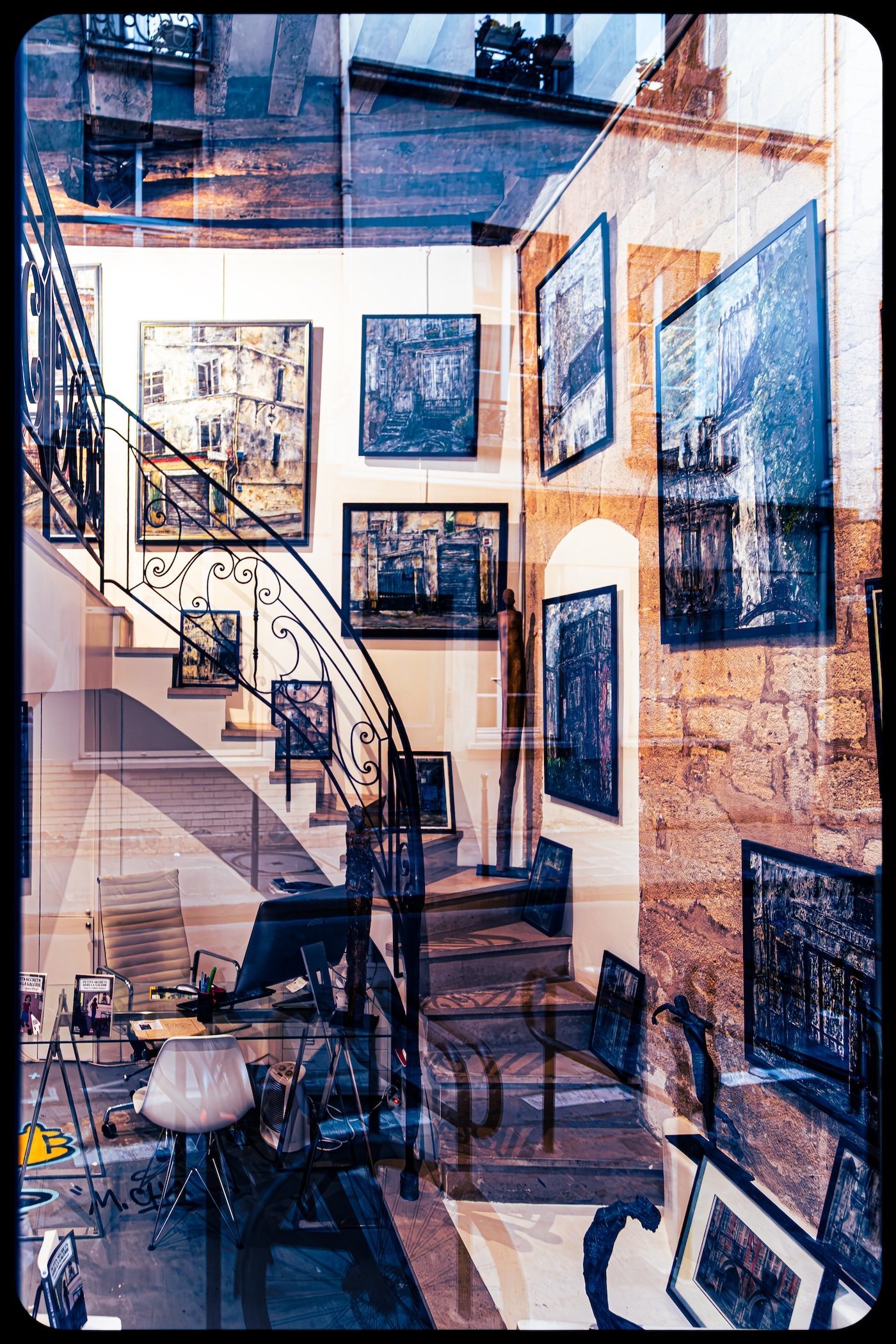
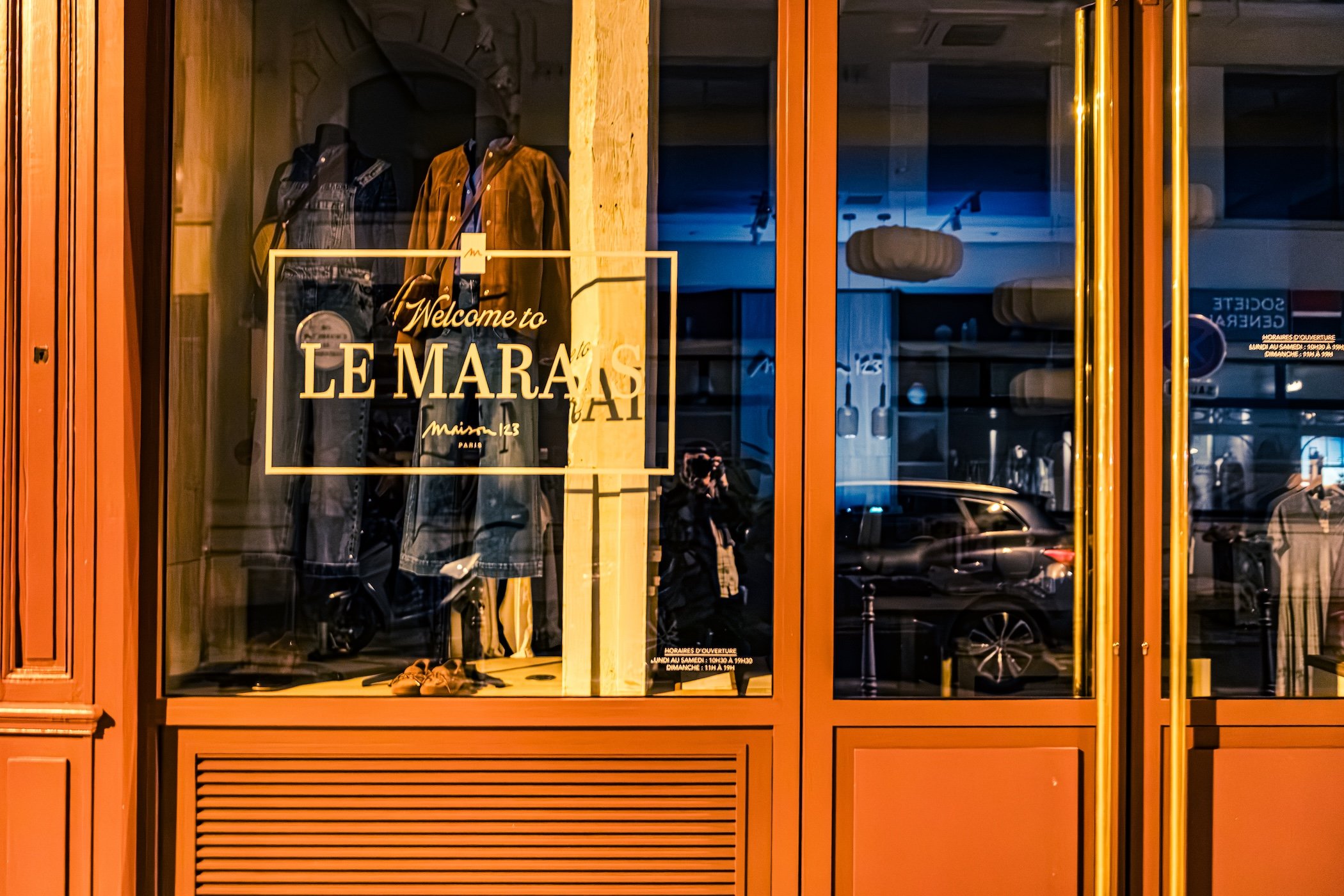
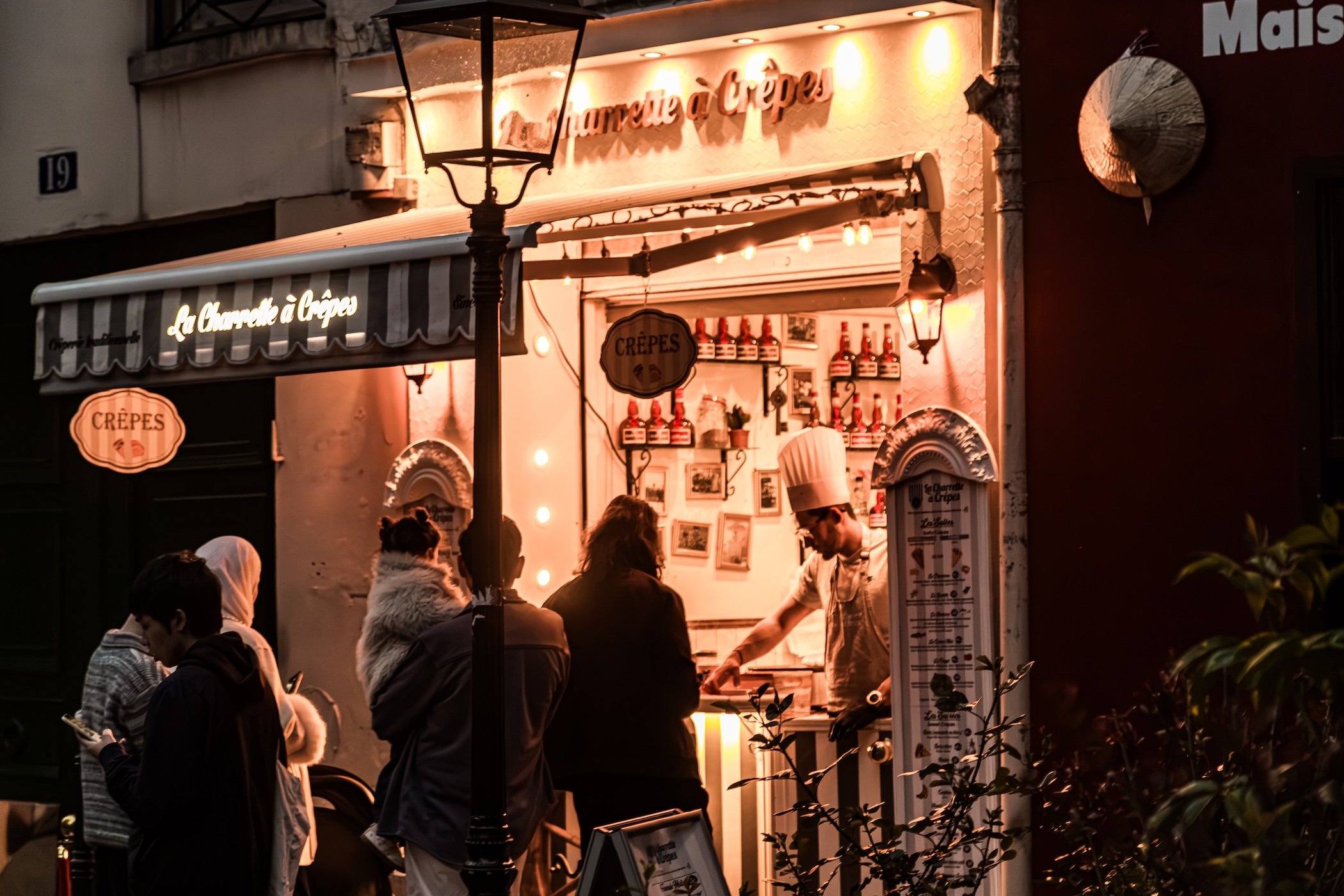
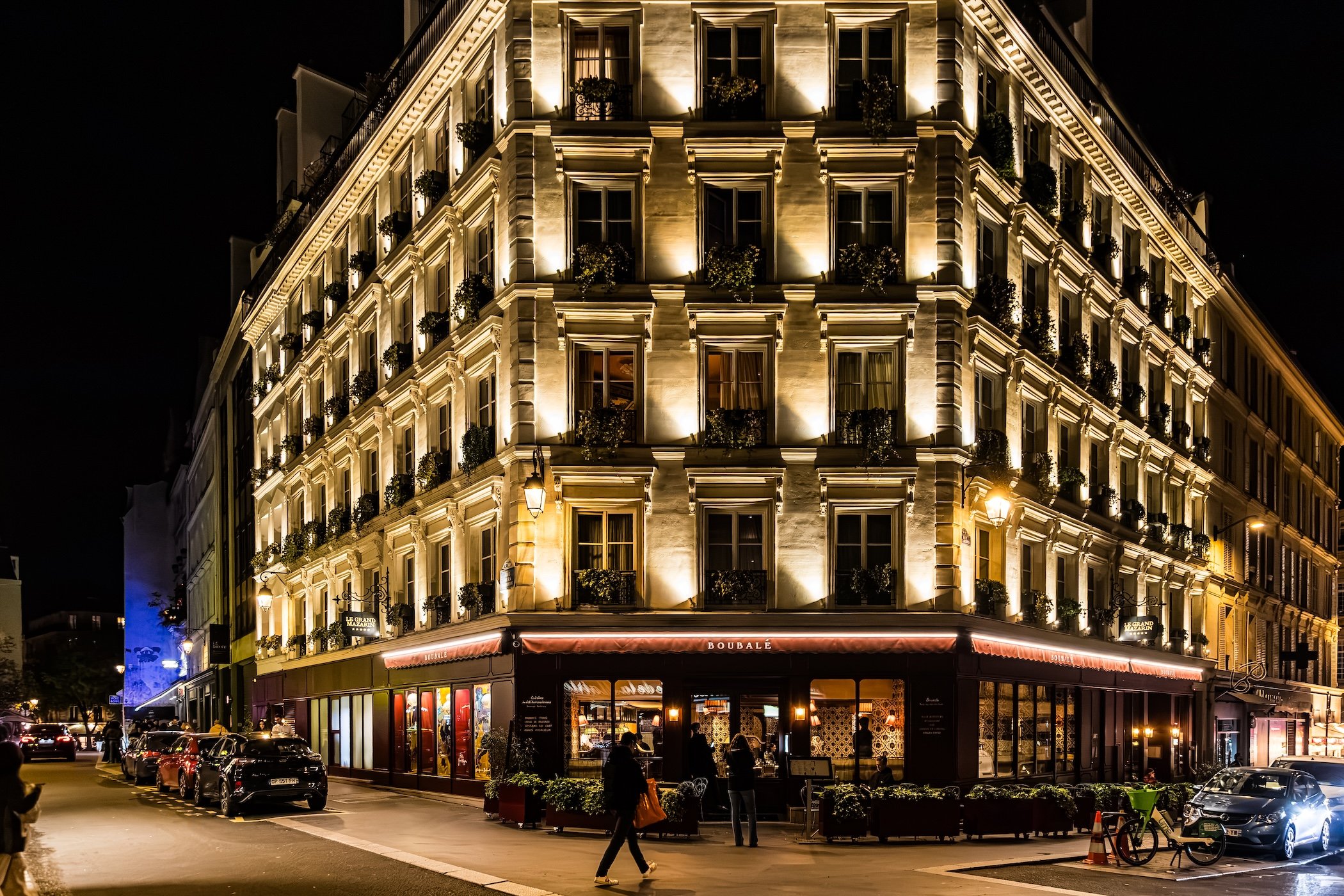
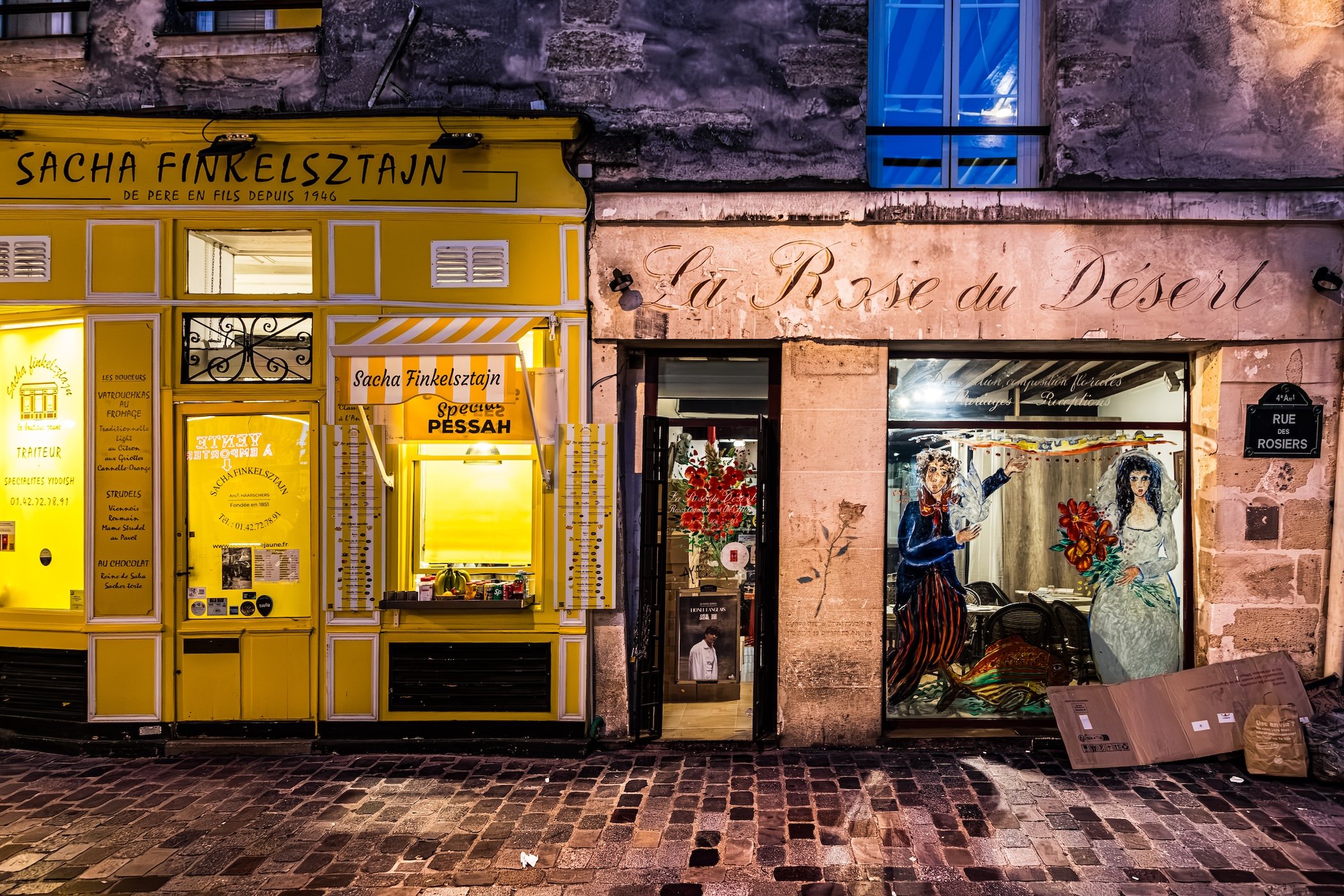
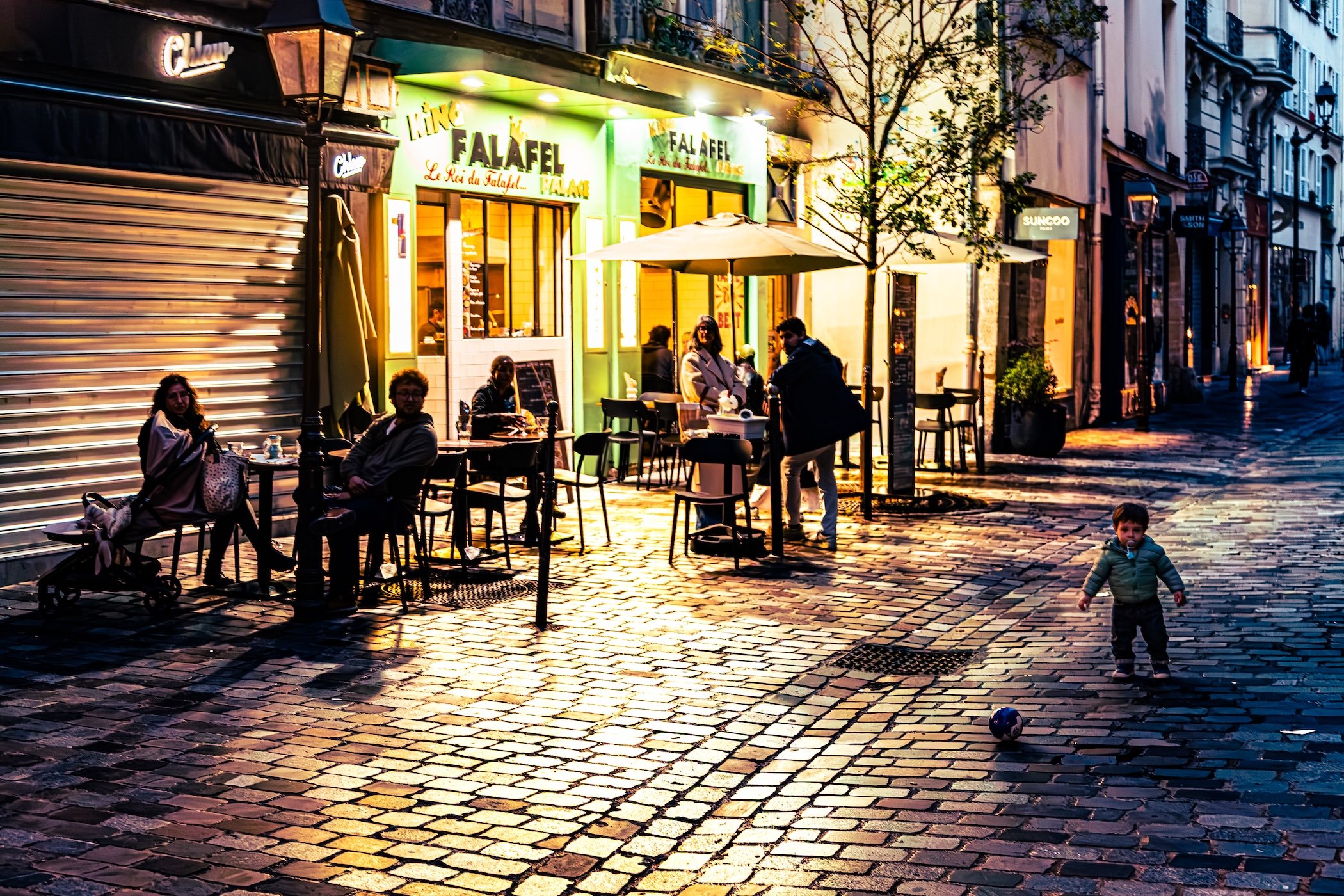
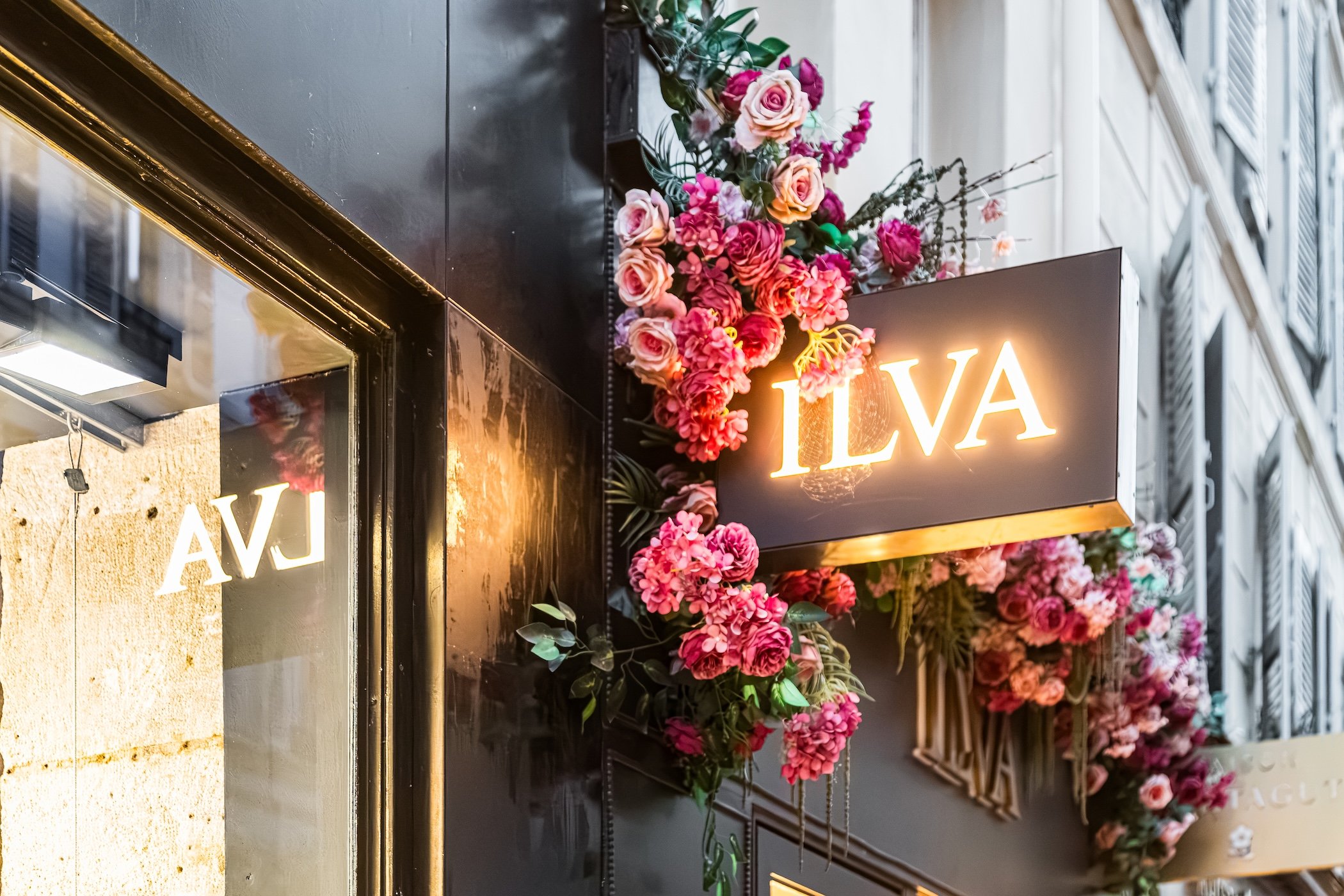
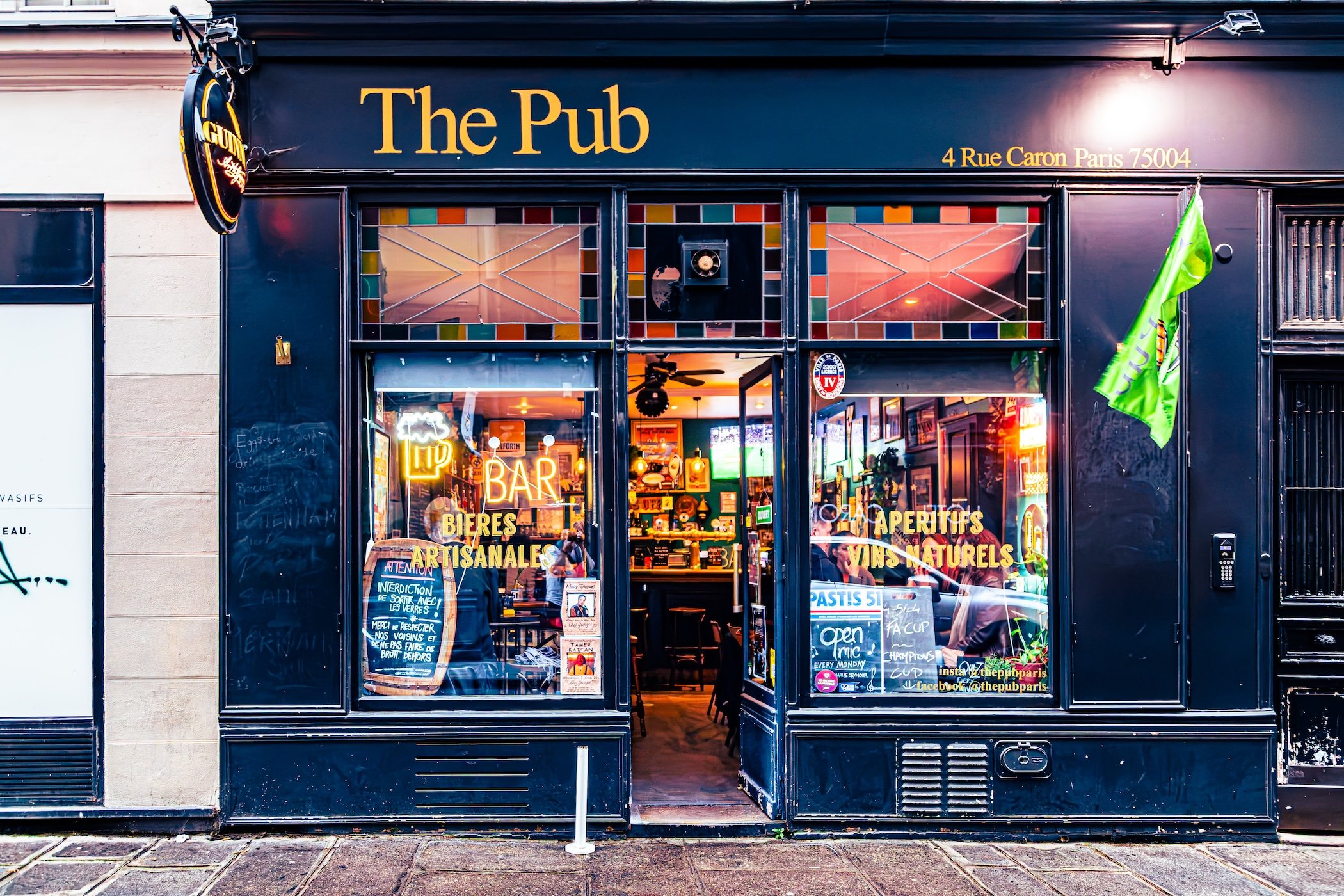
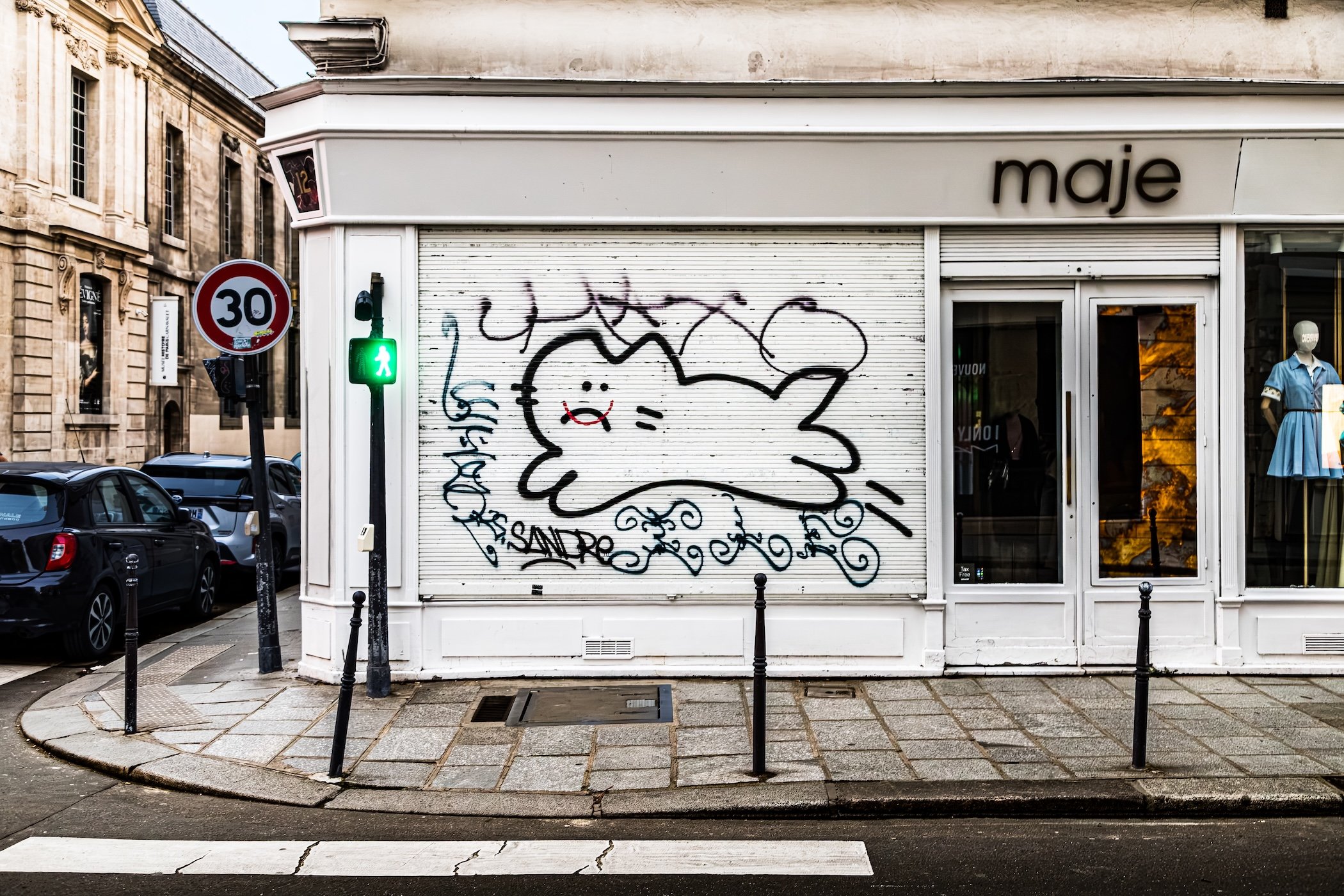
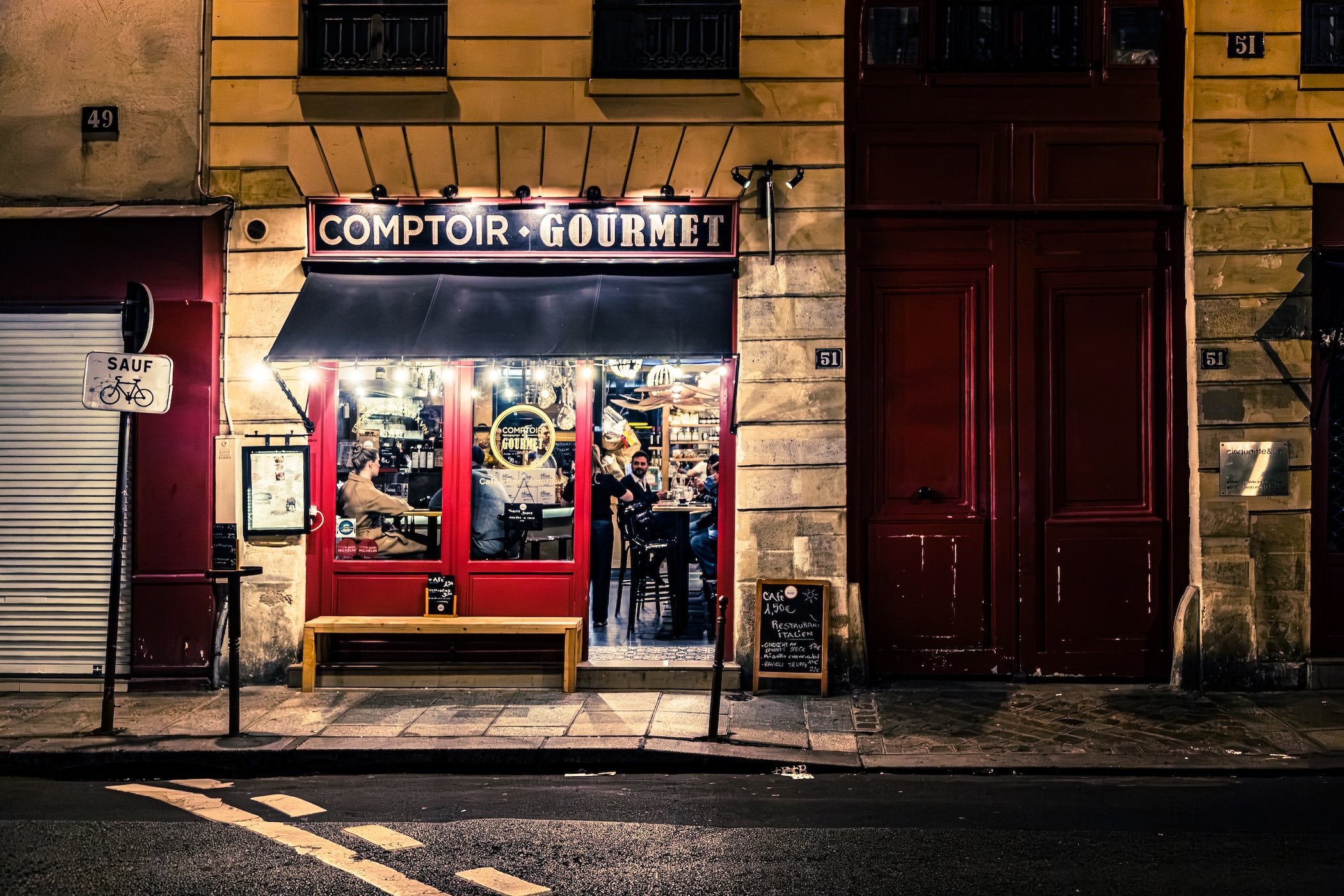
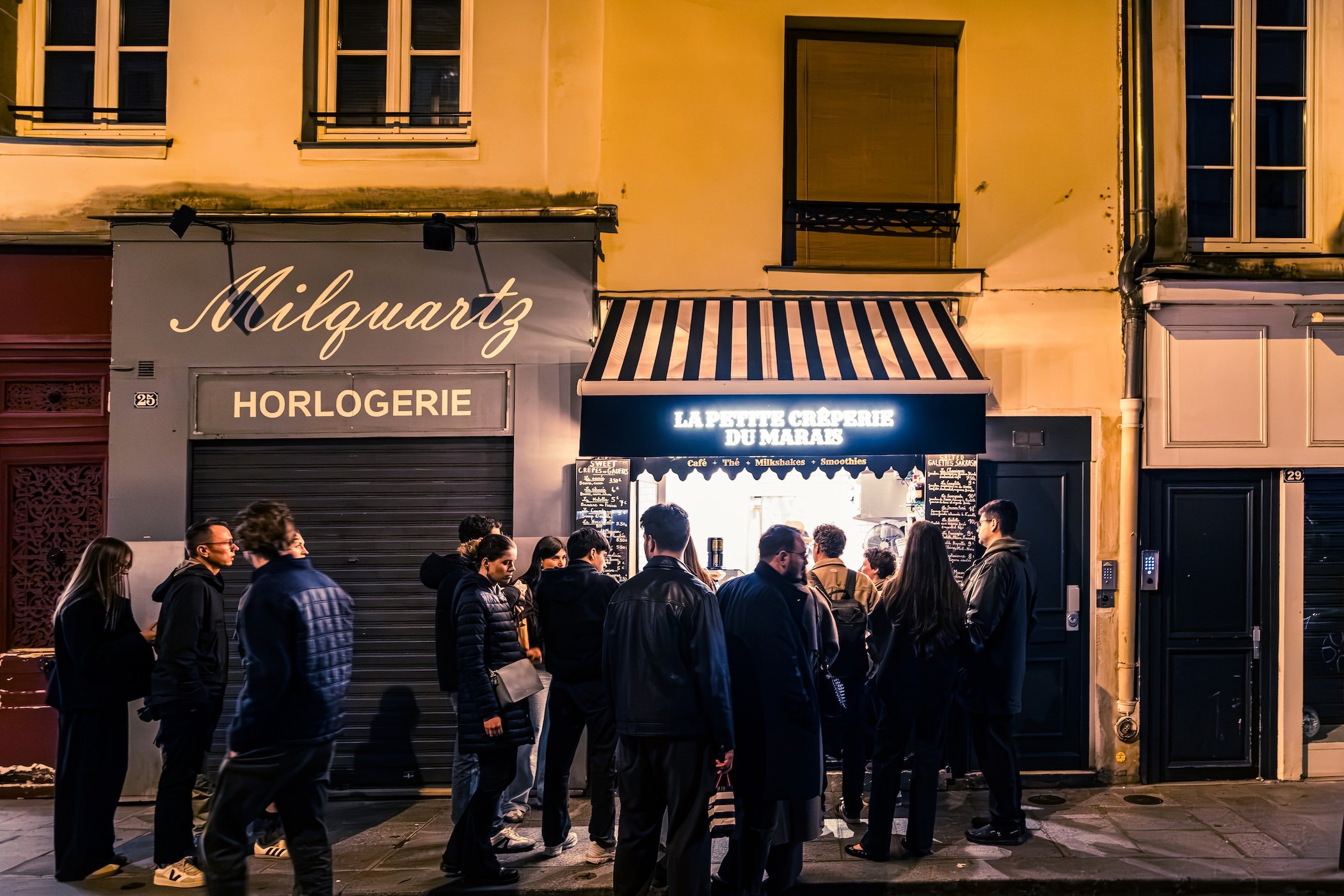
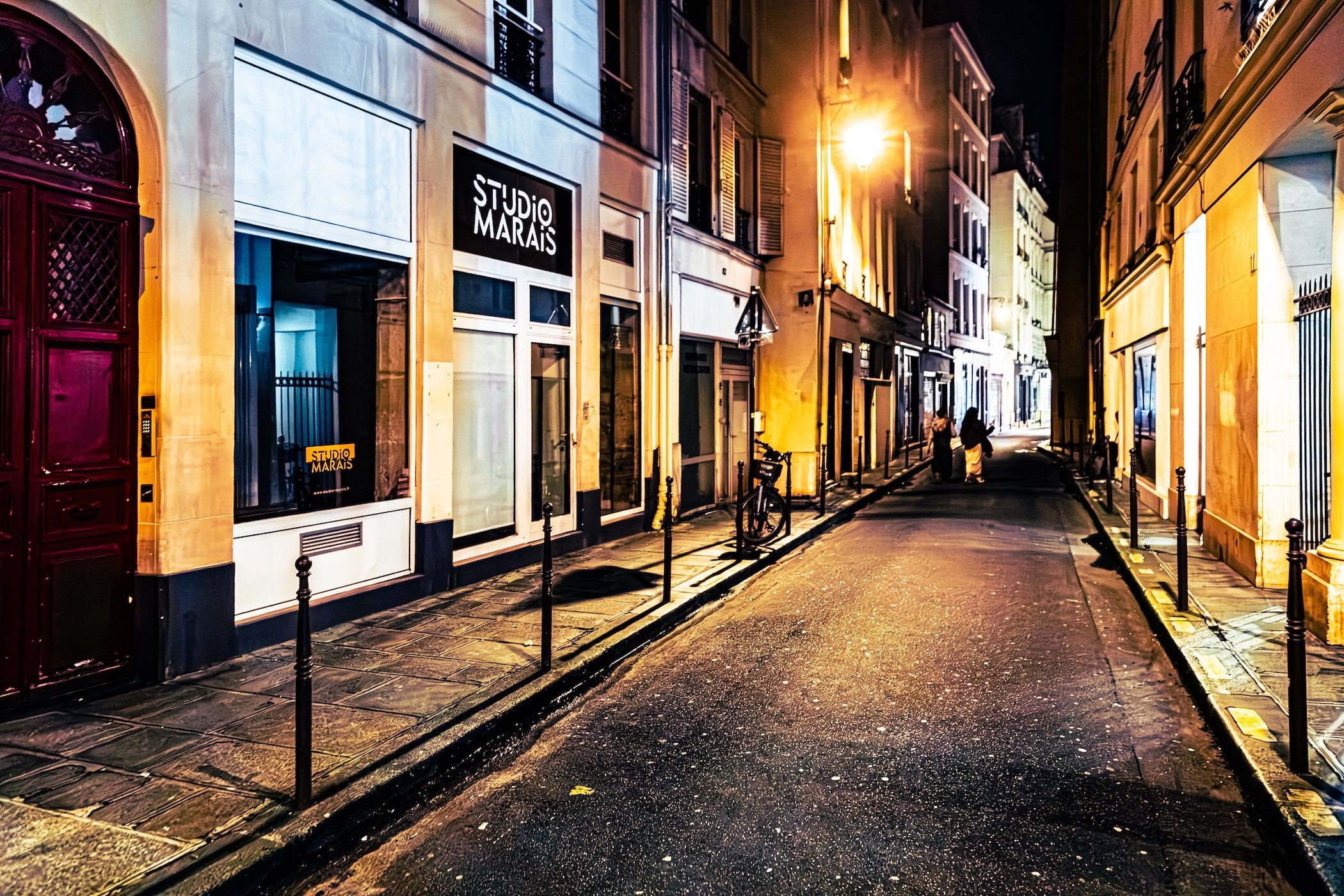
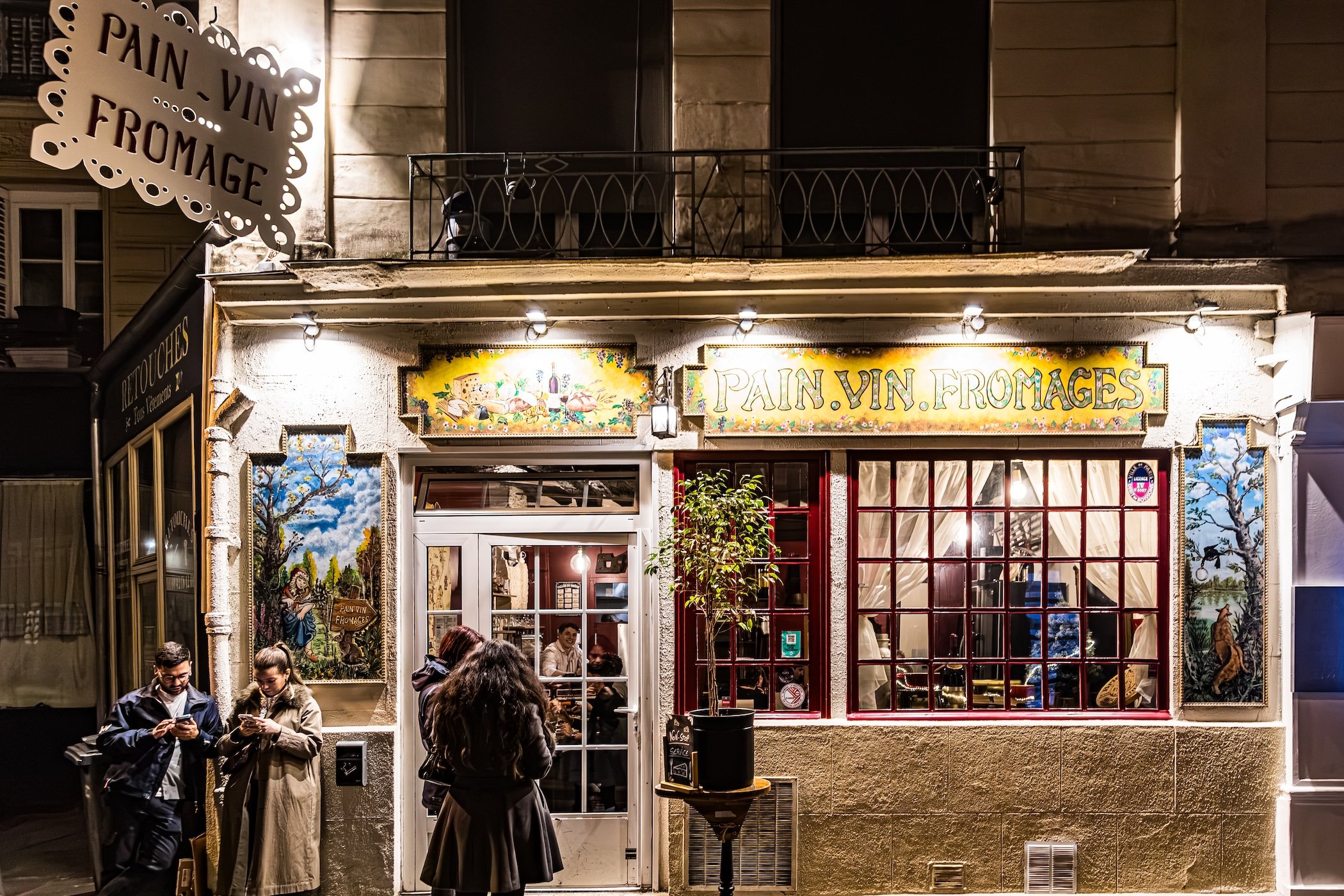
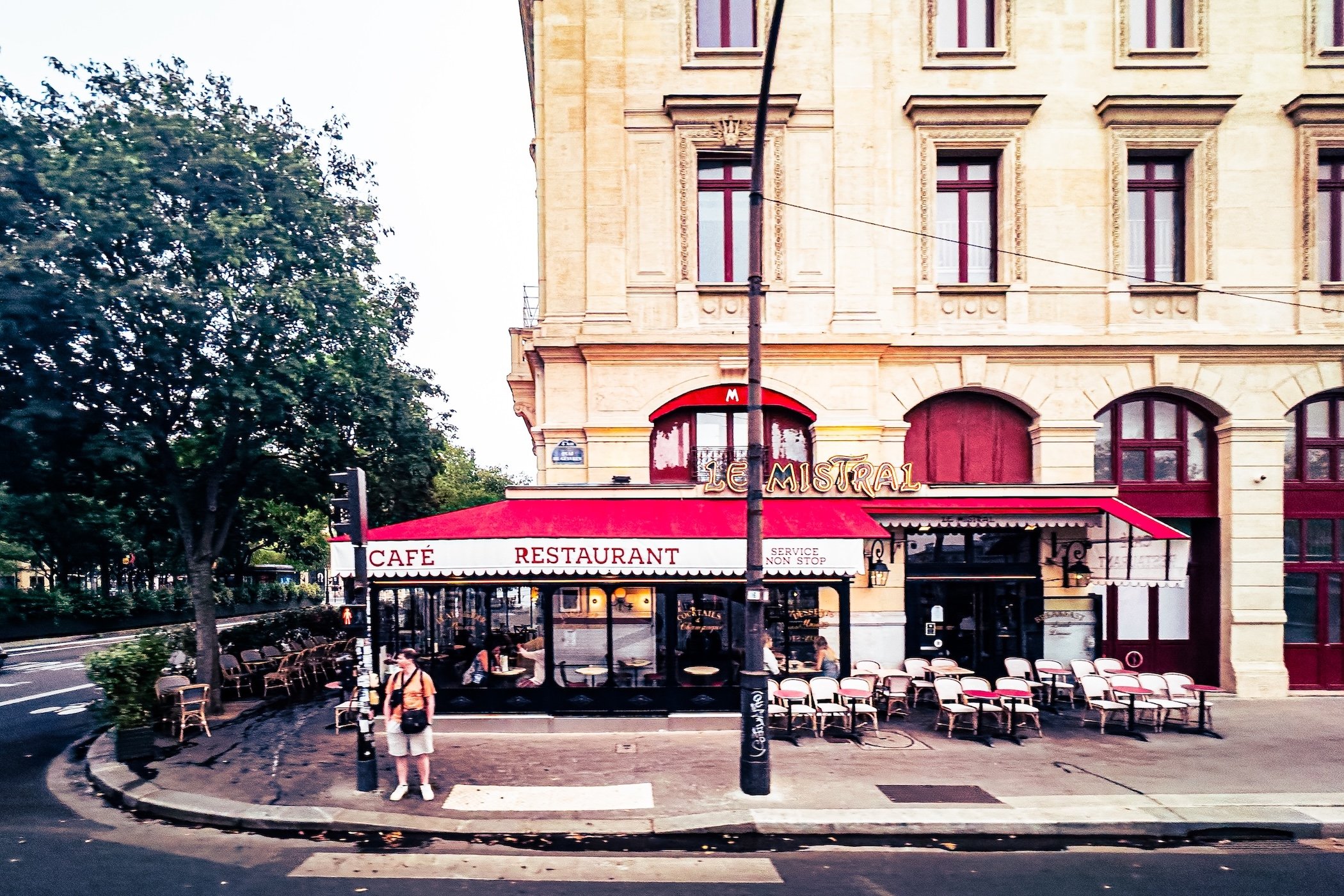
The 4e Arrondissement revealed a visual identity built upon striking changes in scale and atmosphere. On Île de la Cité, Notre-Dame rises above the parvis, bridges, civic spaces, and surrounding rooftops with an almost overwhelming architectural presence. Across Pont Saint-Louis, the visual language becomes smaller and more intimate: narrow streets, pale façades, galleries, florists, cafés, and passages descending toward the Seine. On the mainland, the broad urban theater of Rue Saint-Antoine gives way to the enclosed streets, cobbled squares, historic architecture, boutiques, restaurants, bars, and illuminated storefronts of Arsenal, Saint-Gervais, and Saint-Merri.
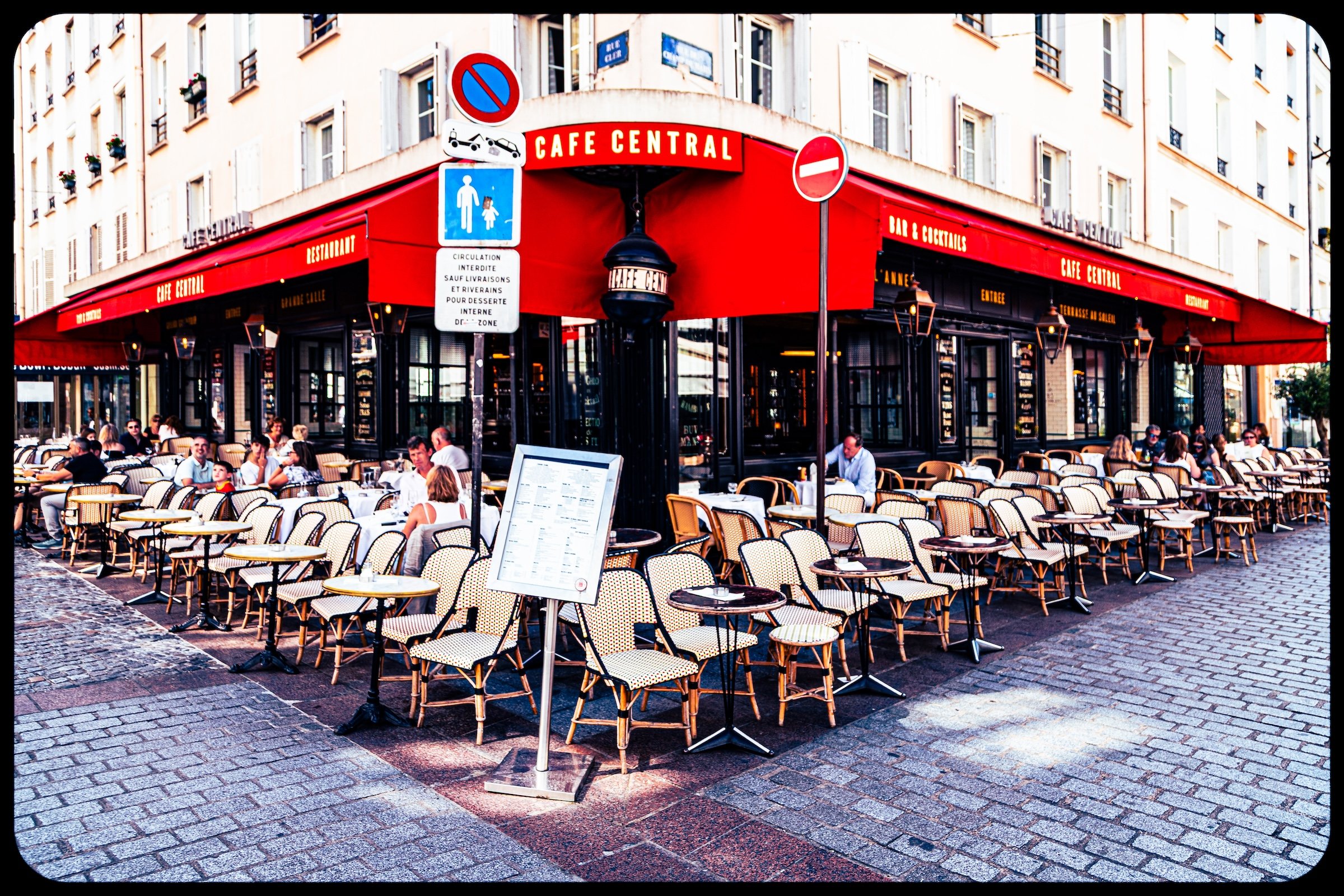
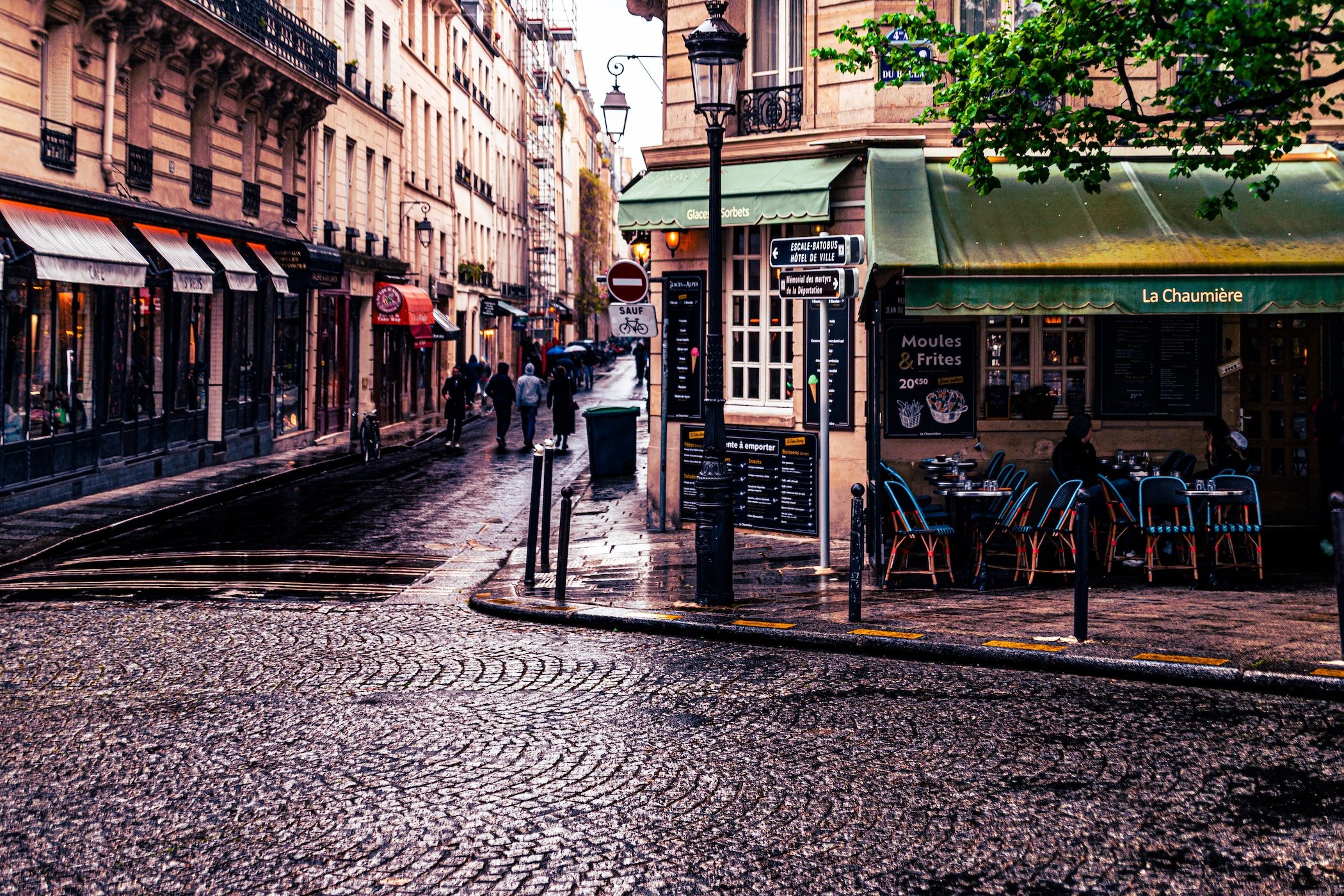
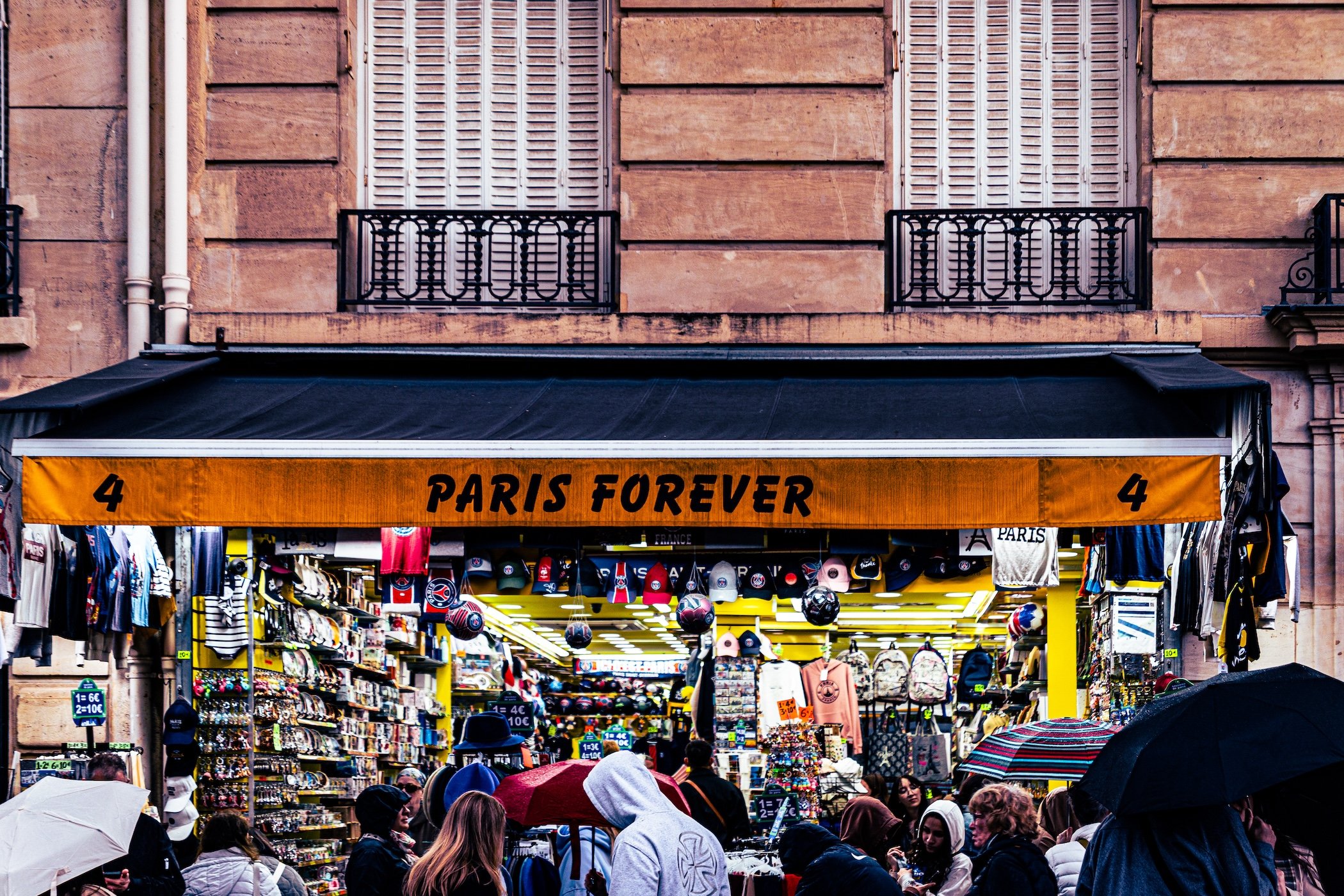
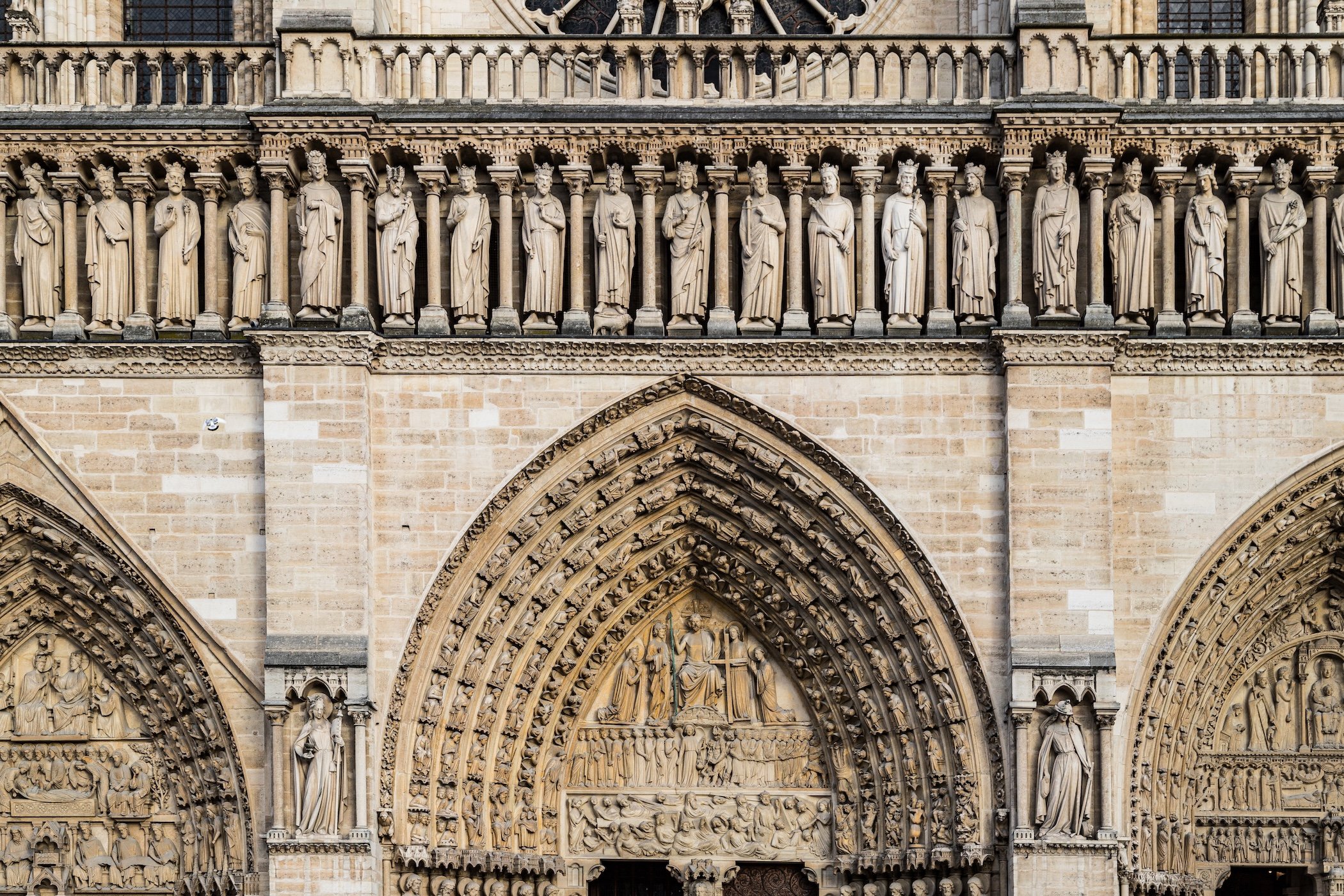
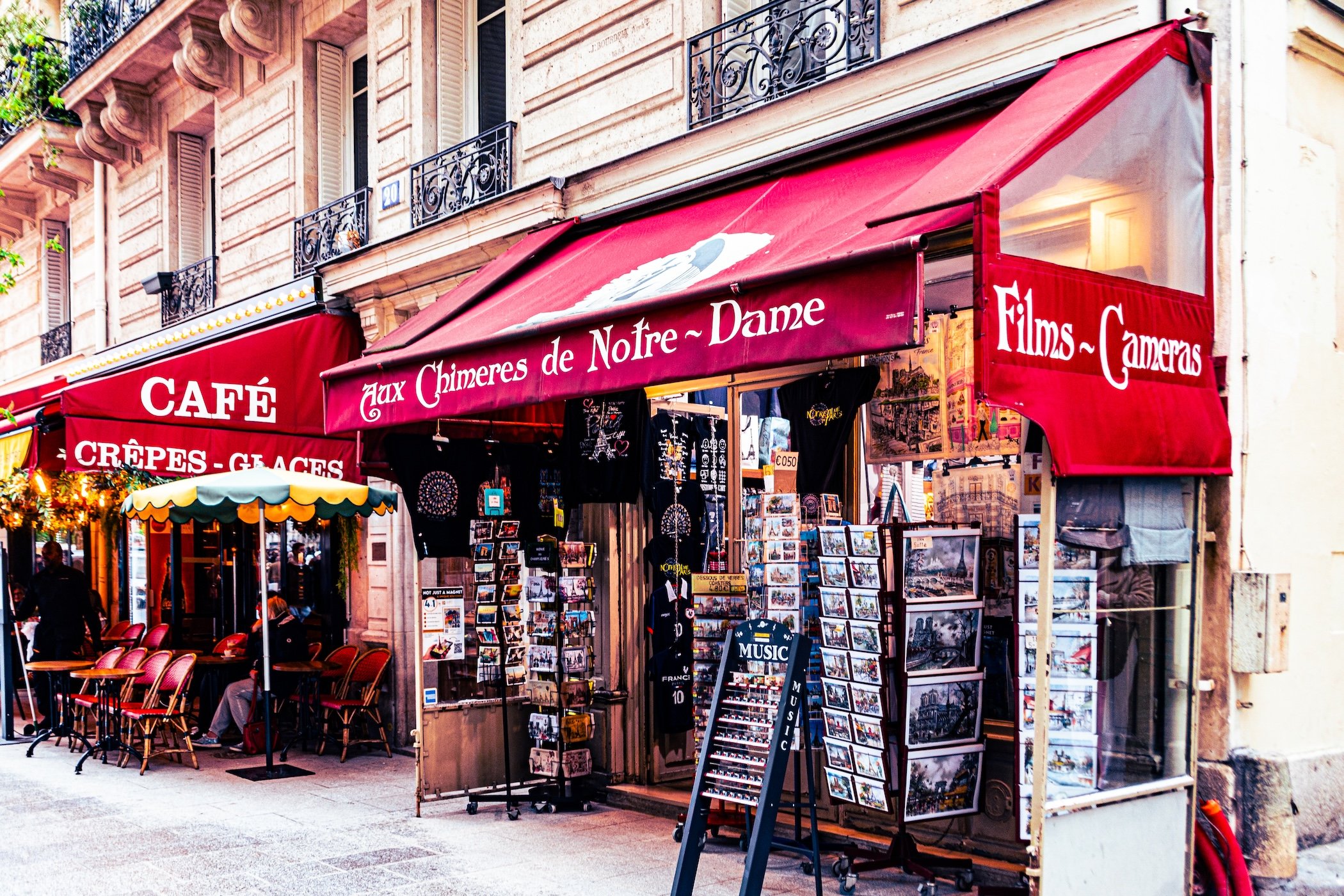
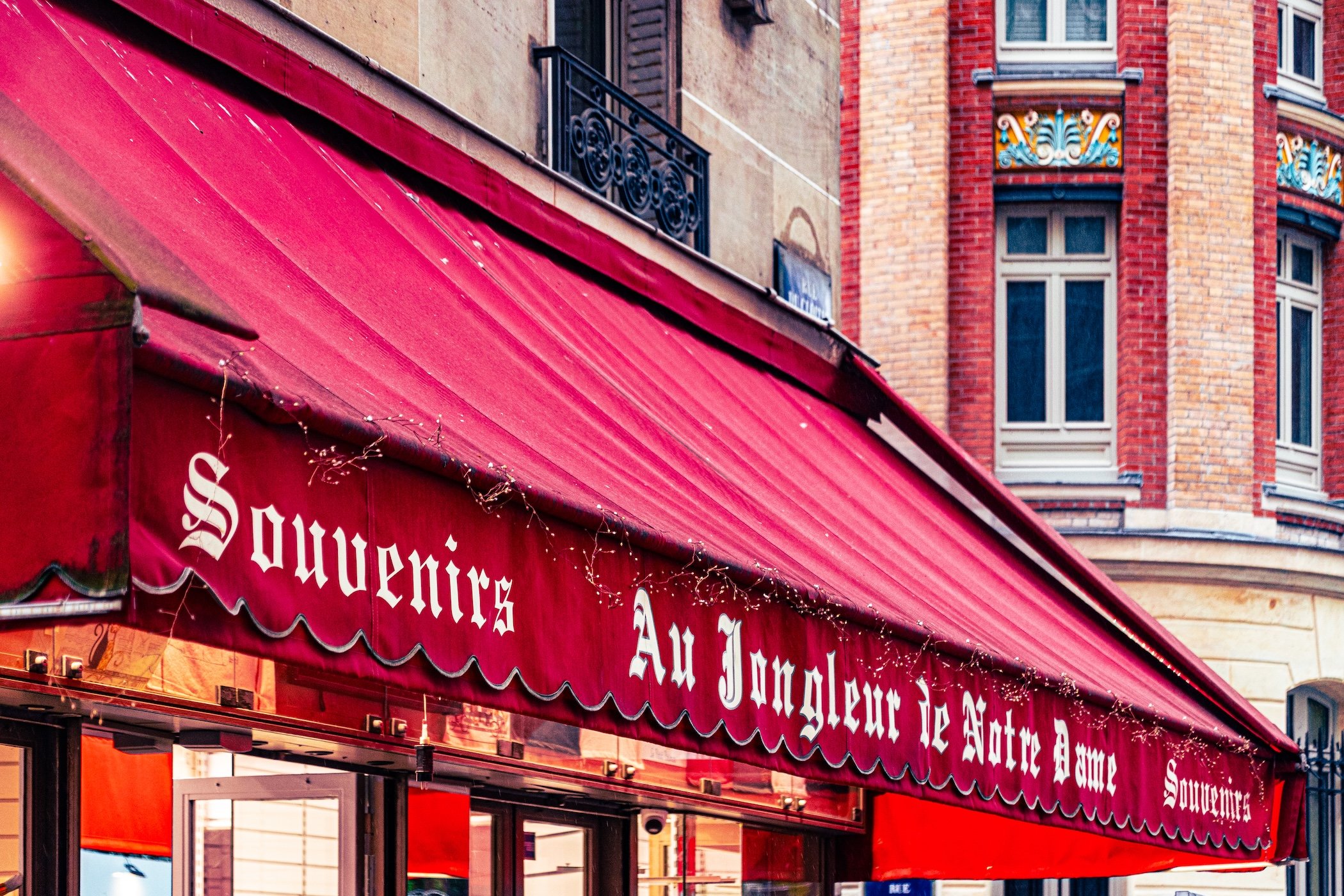
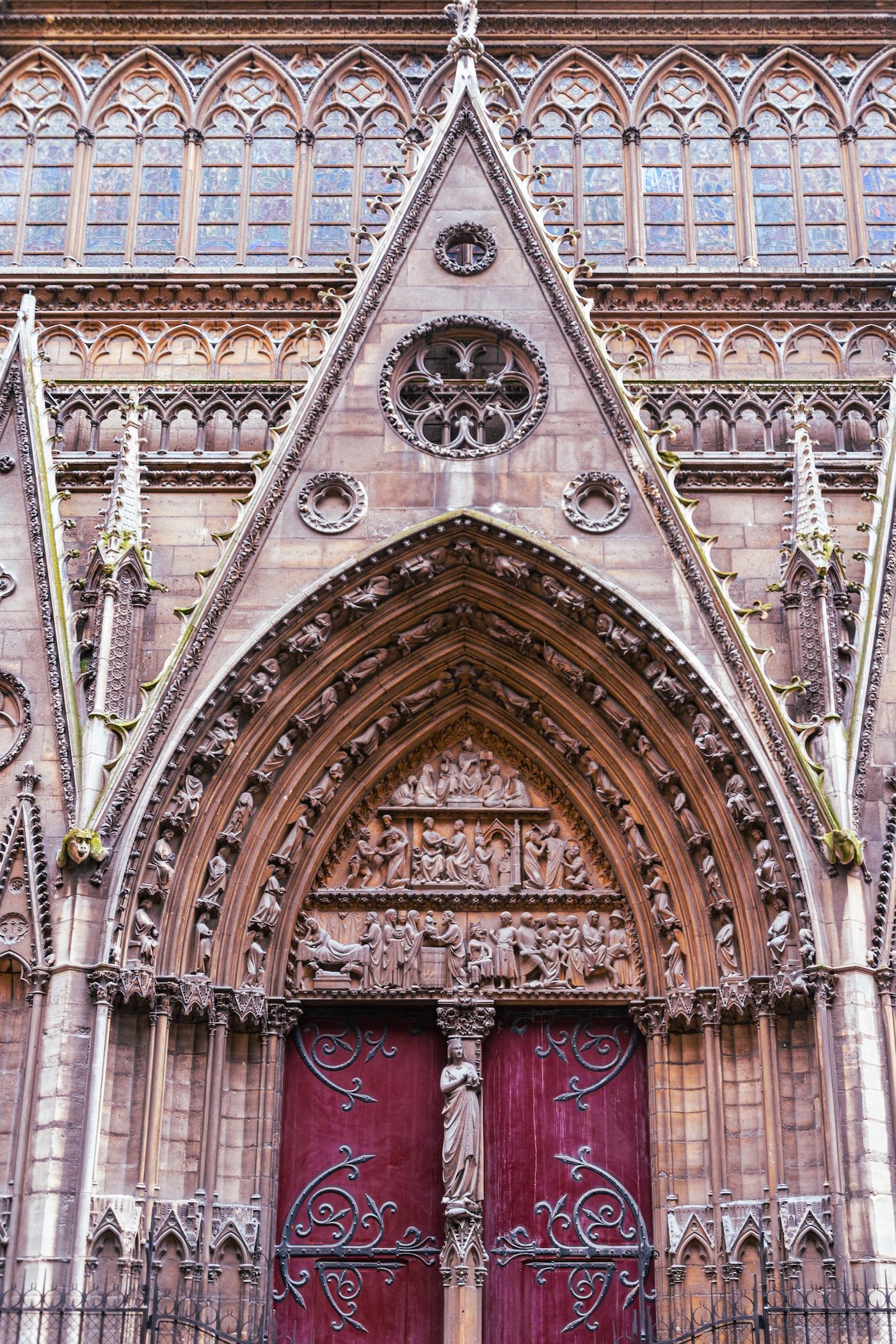
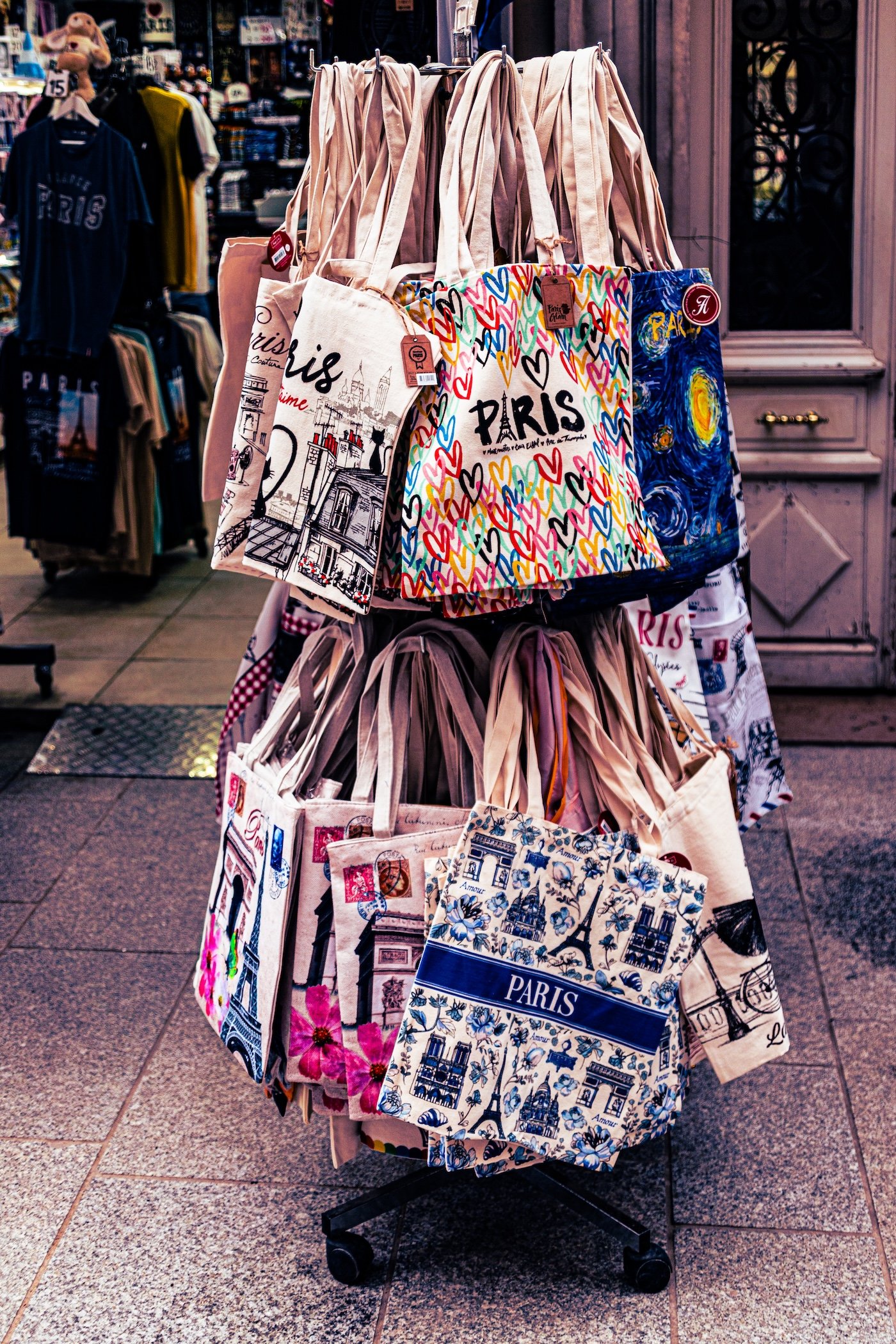
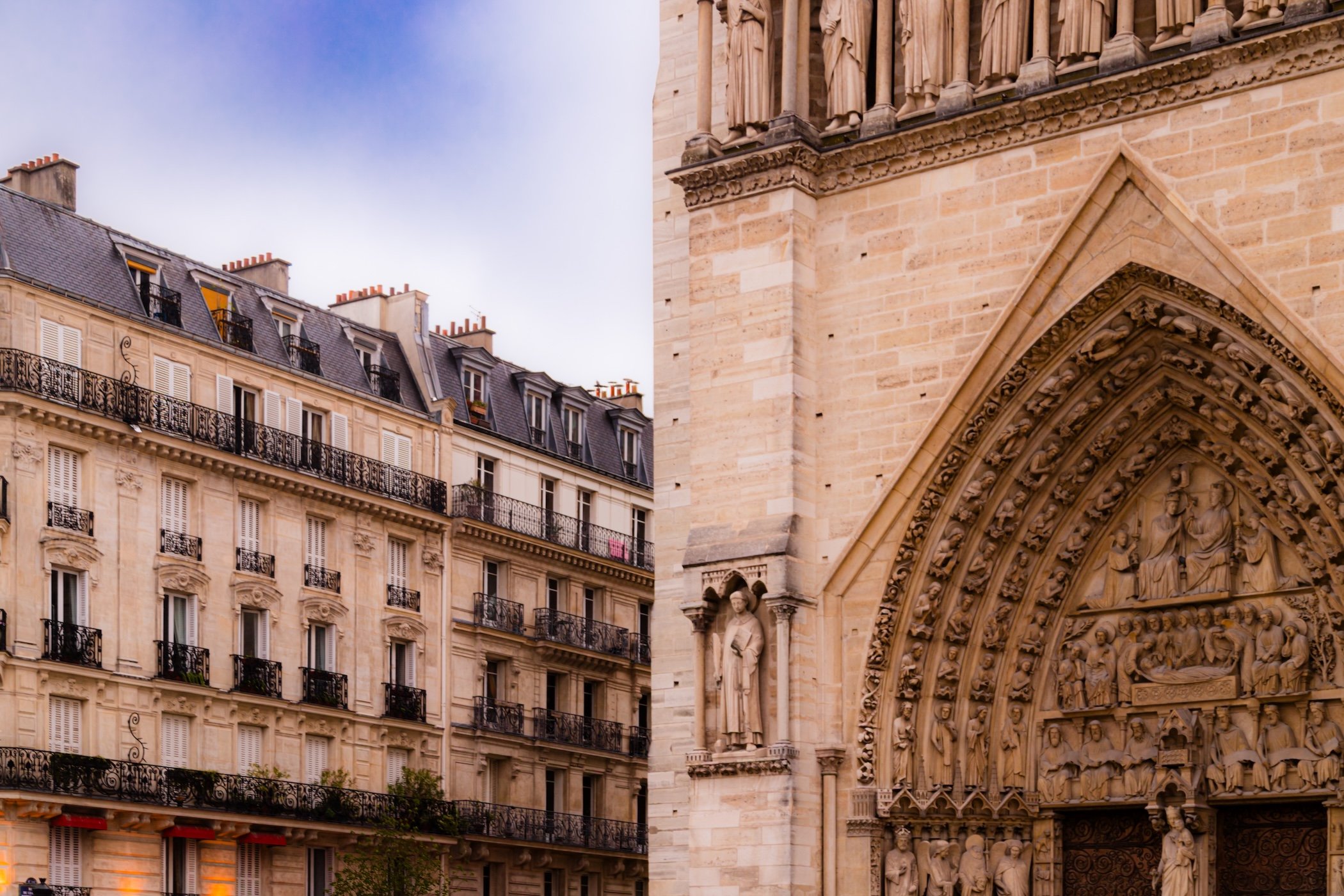
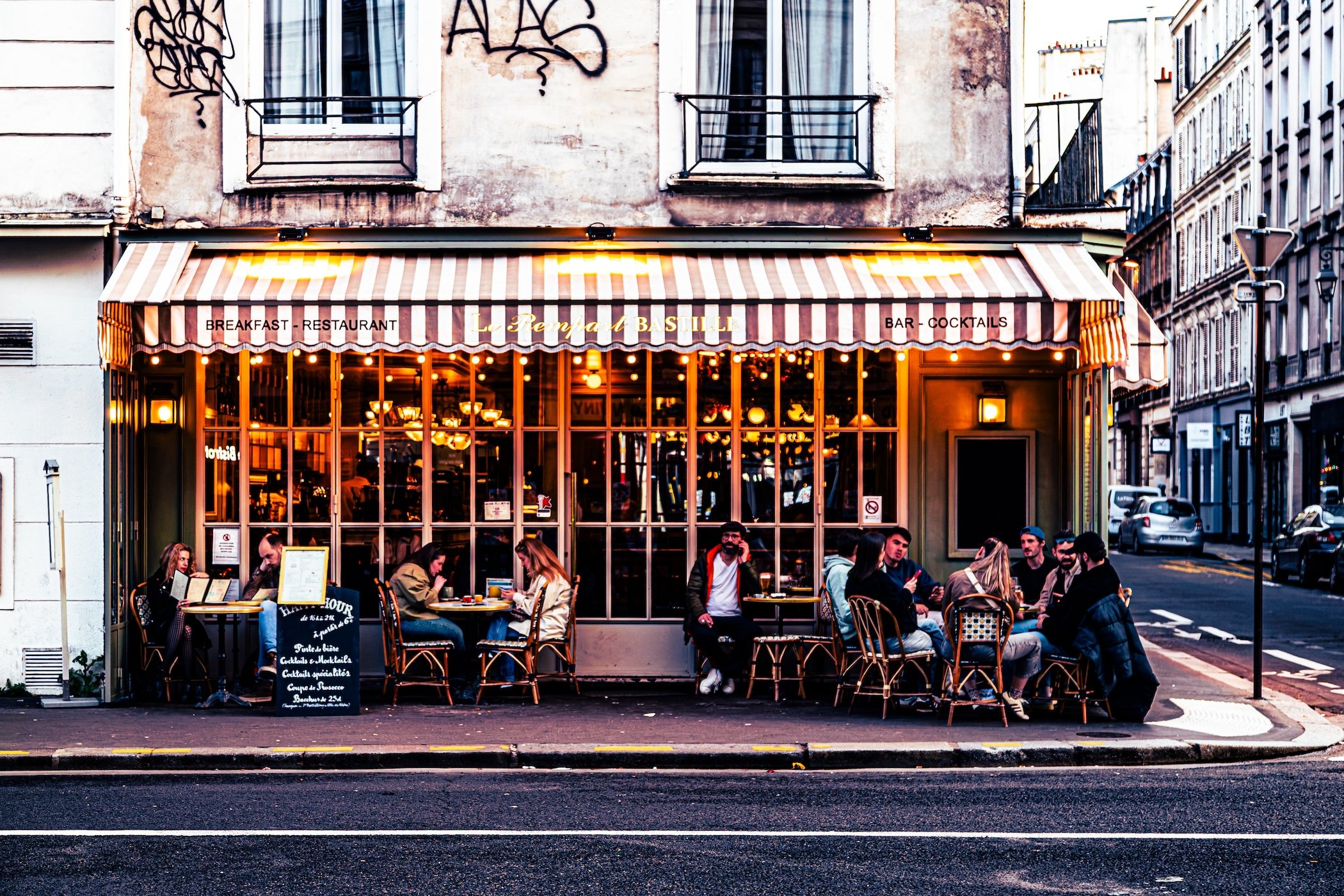
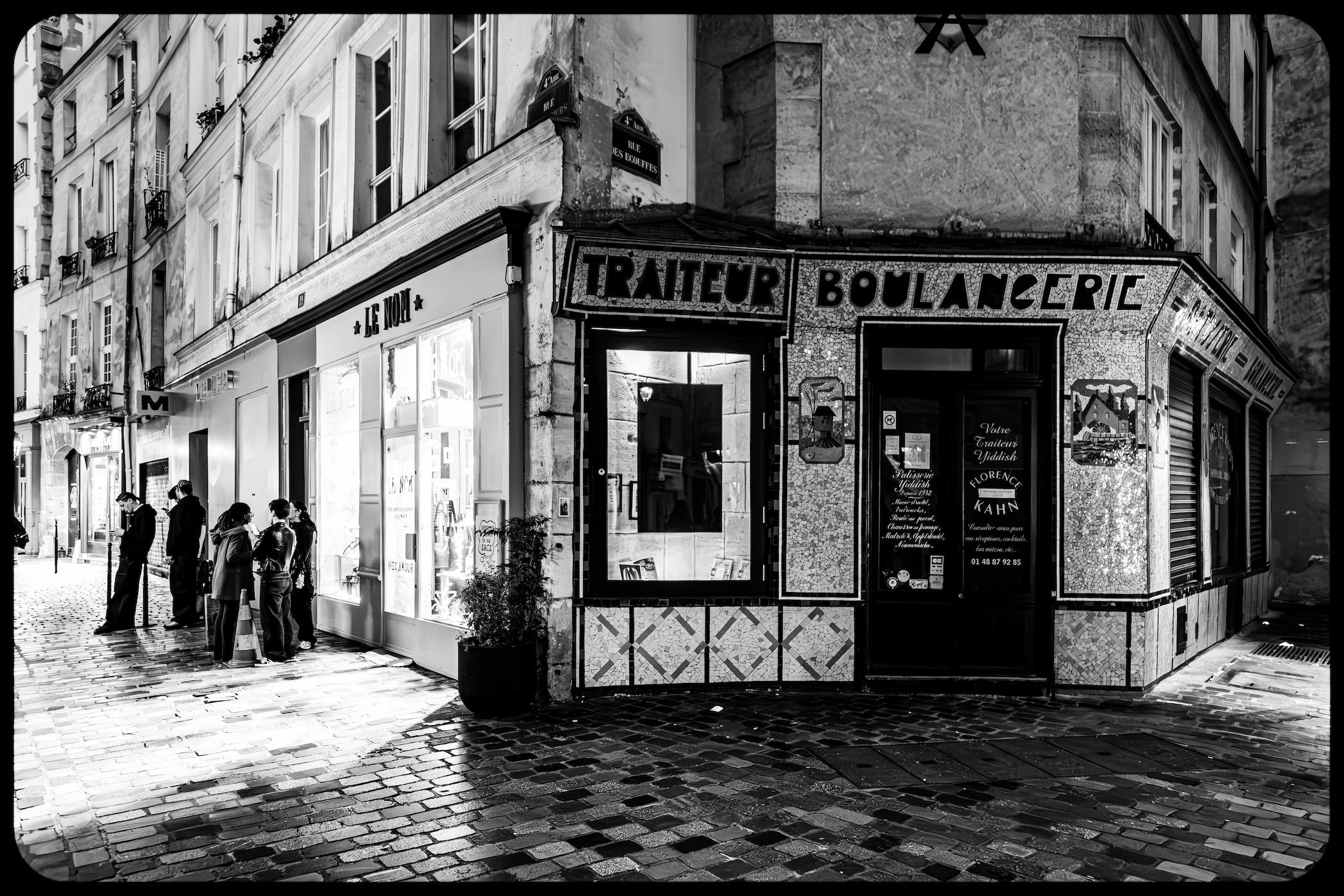
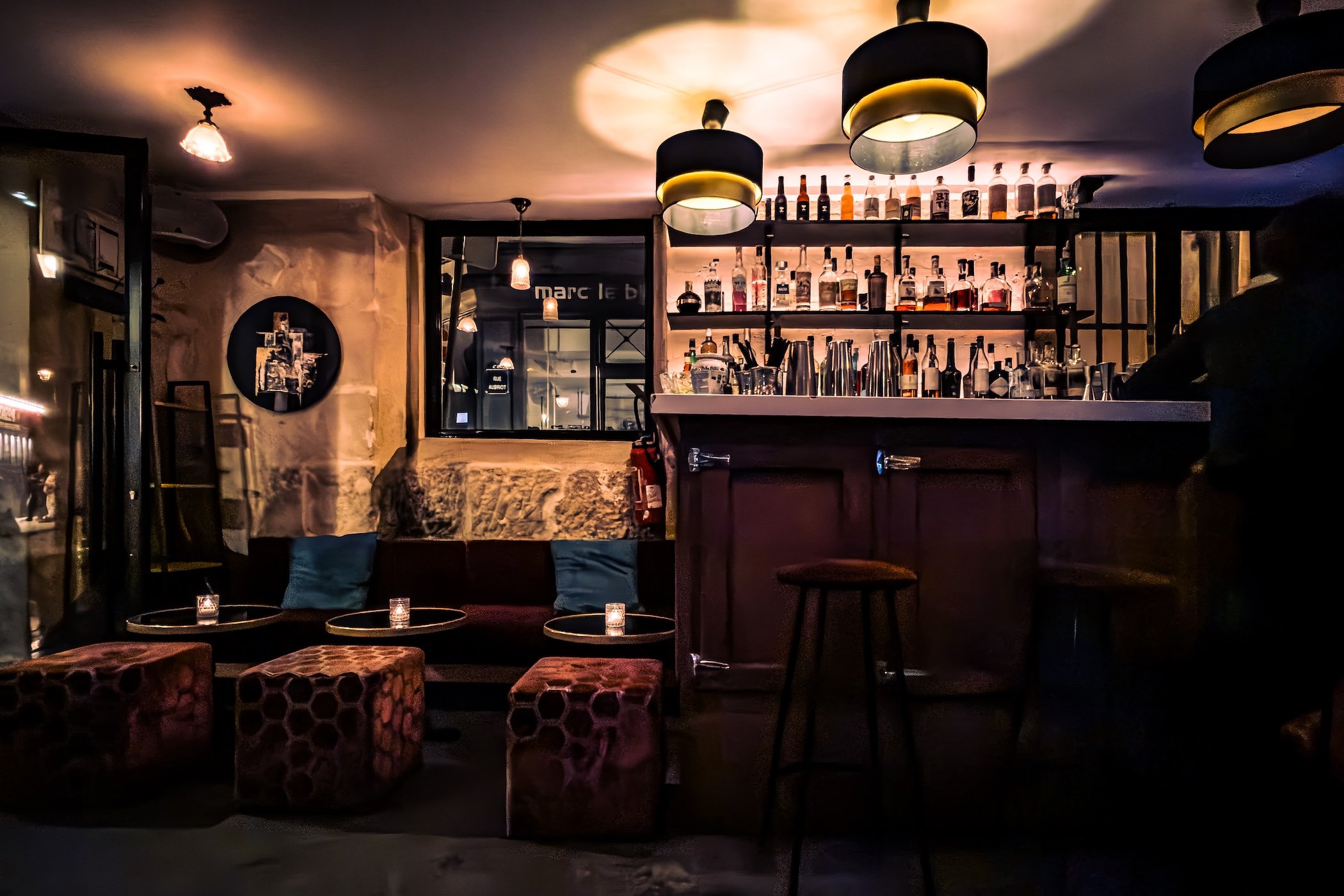
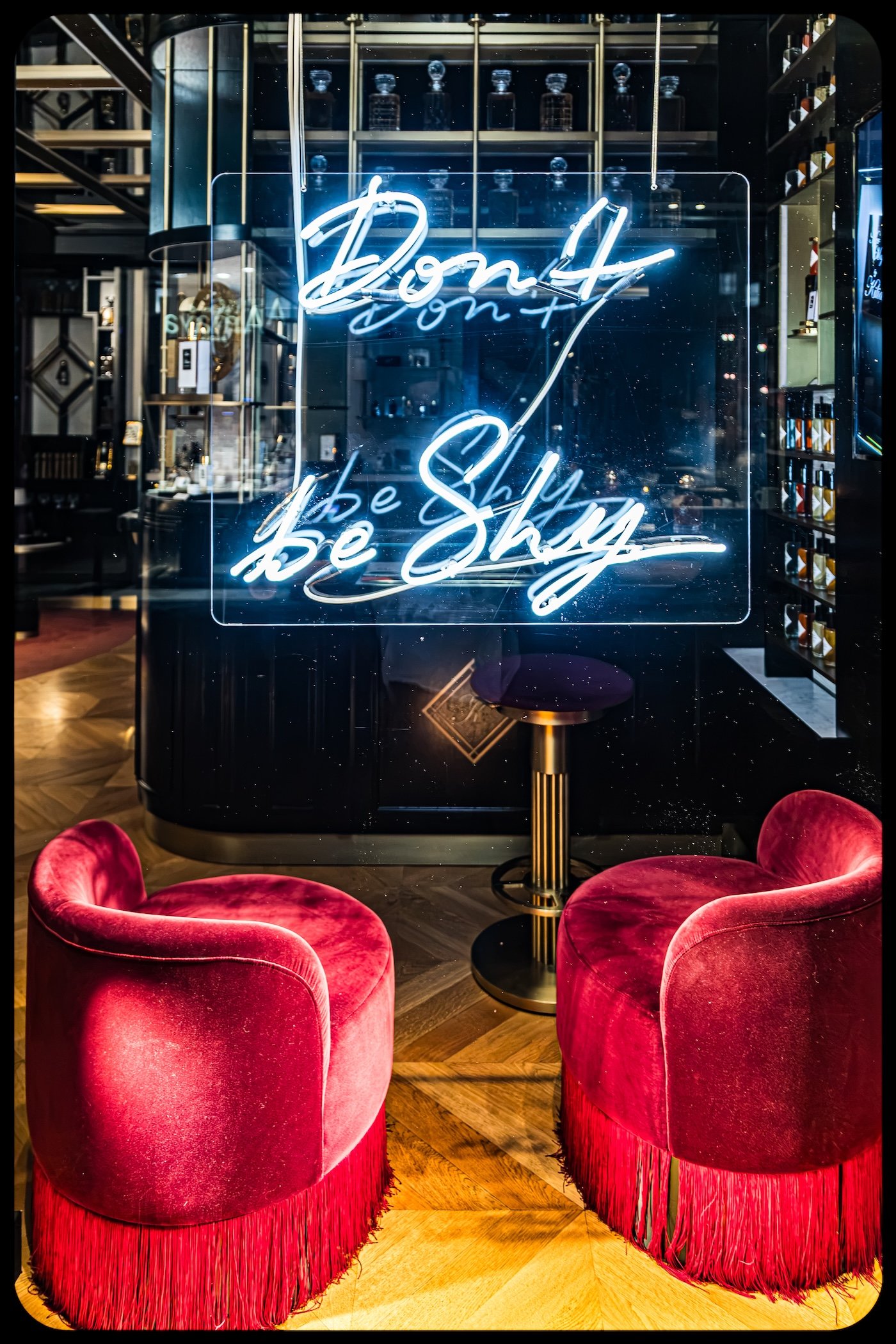
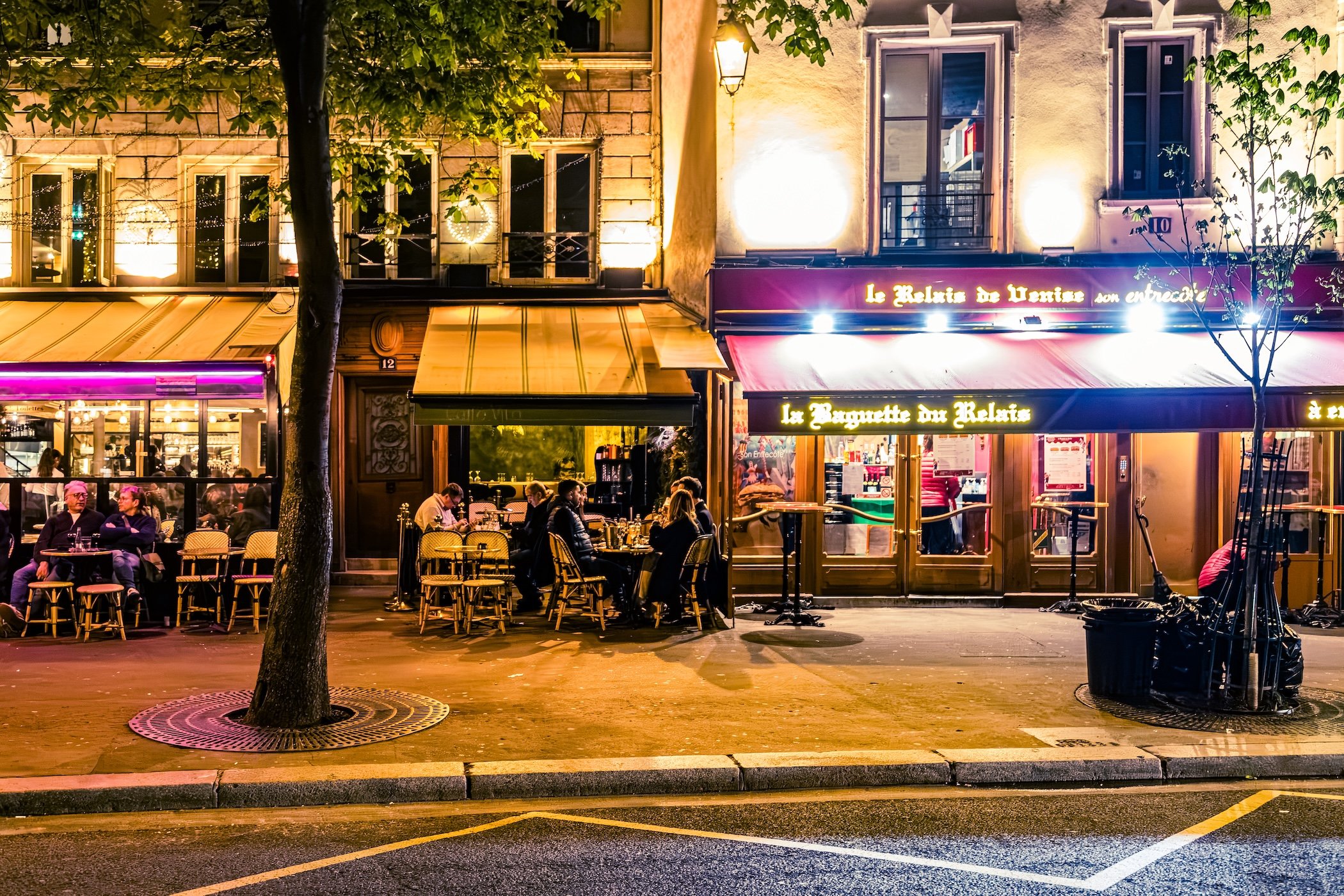
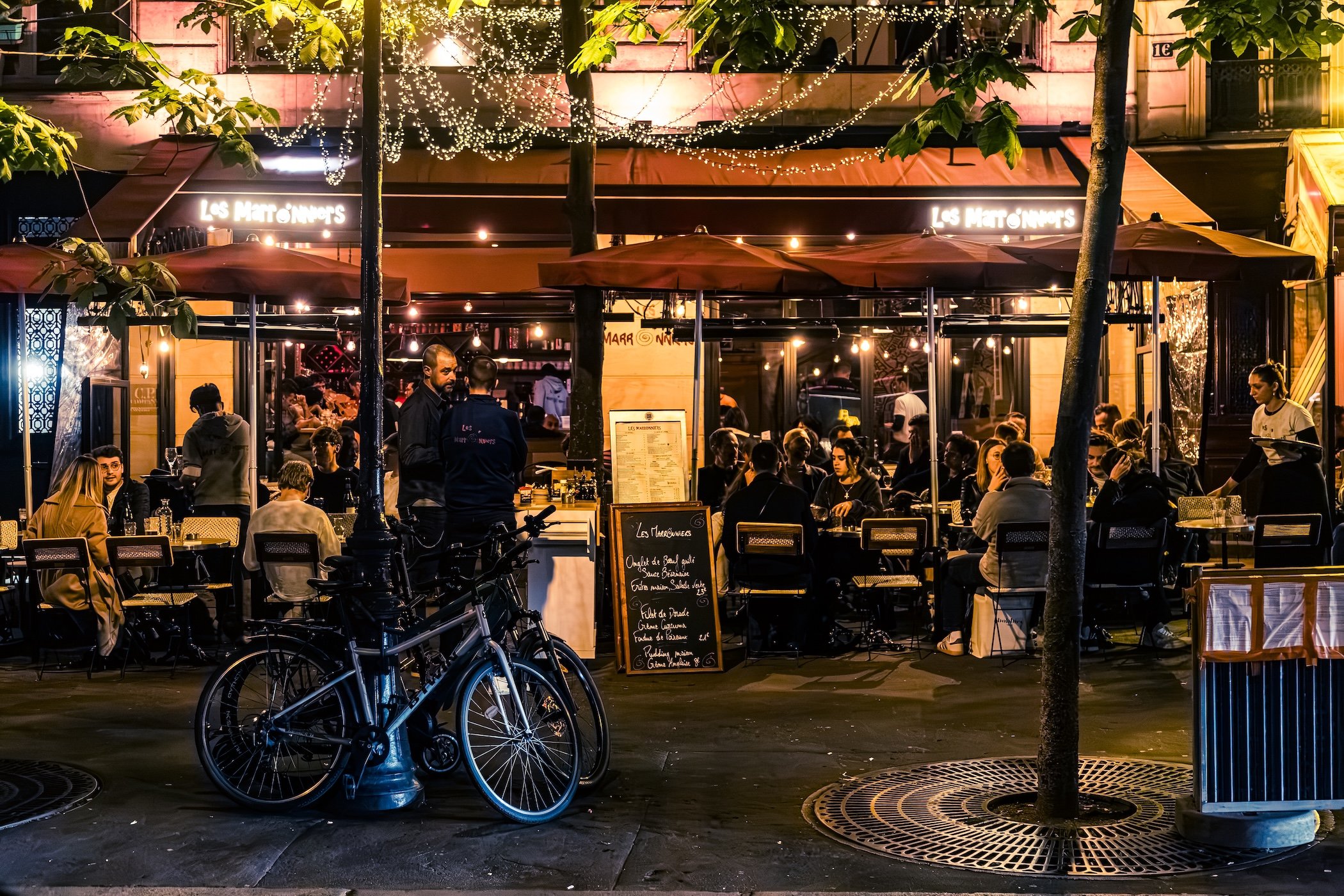
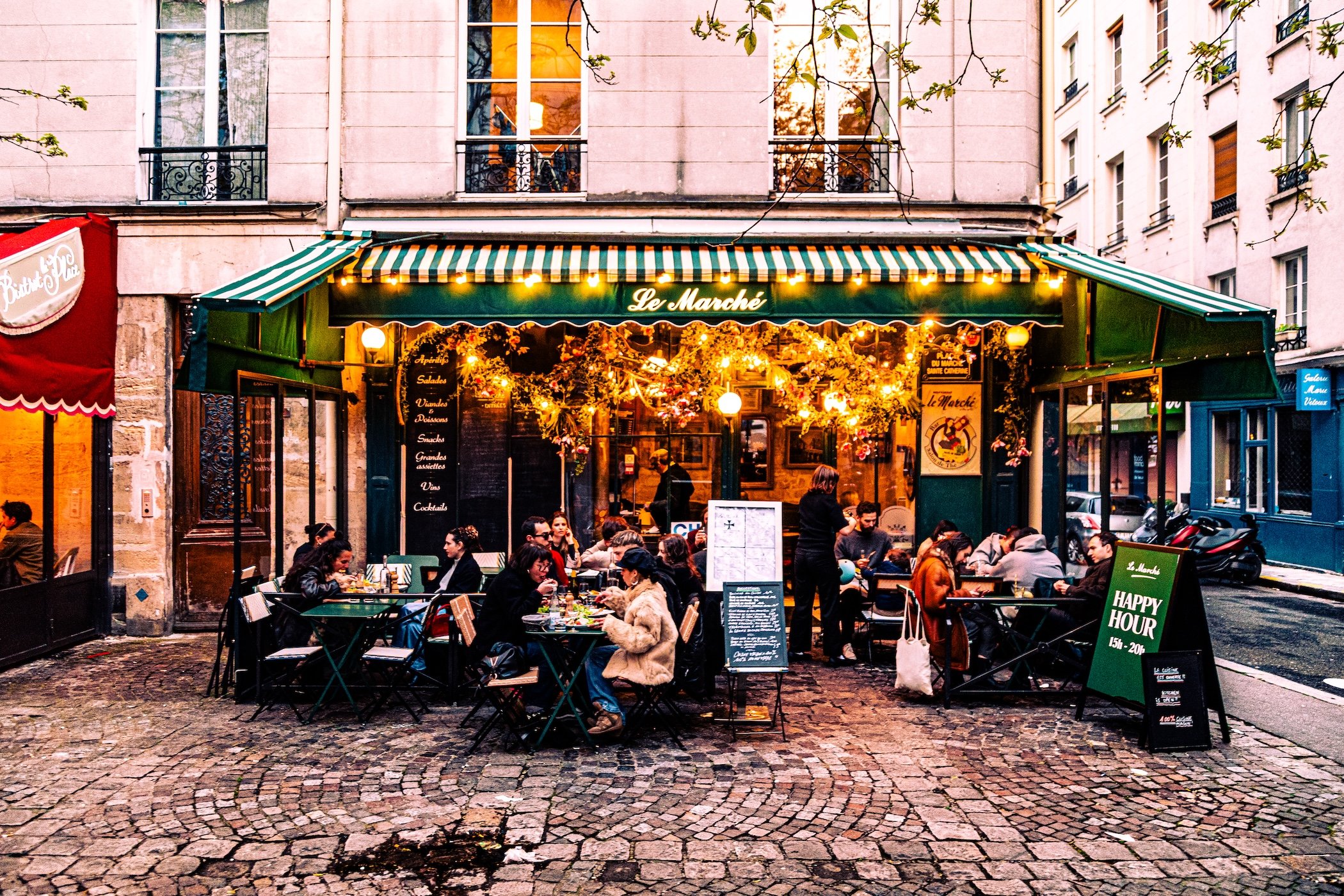
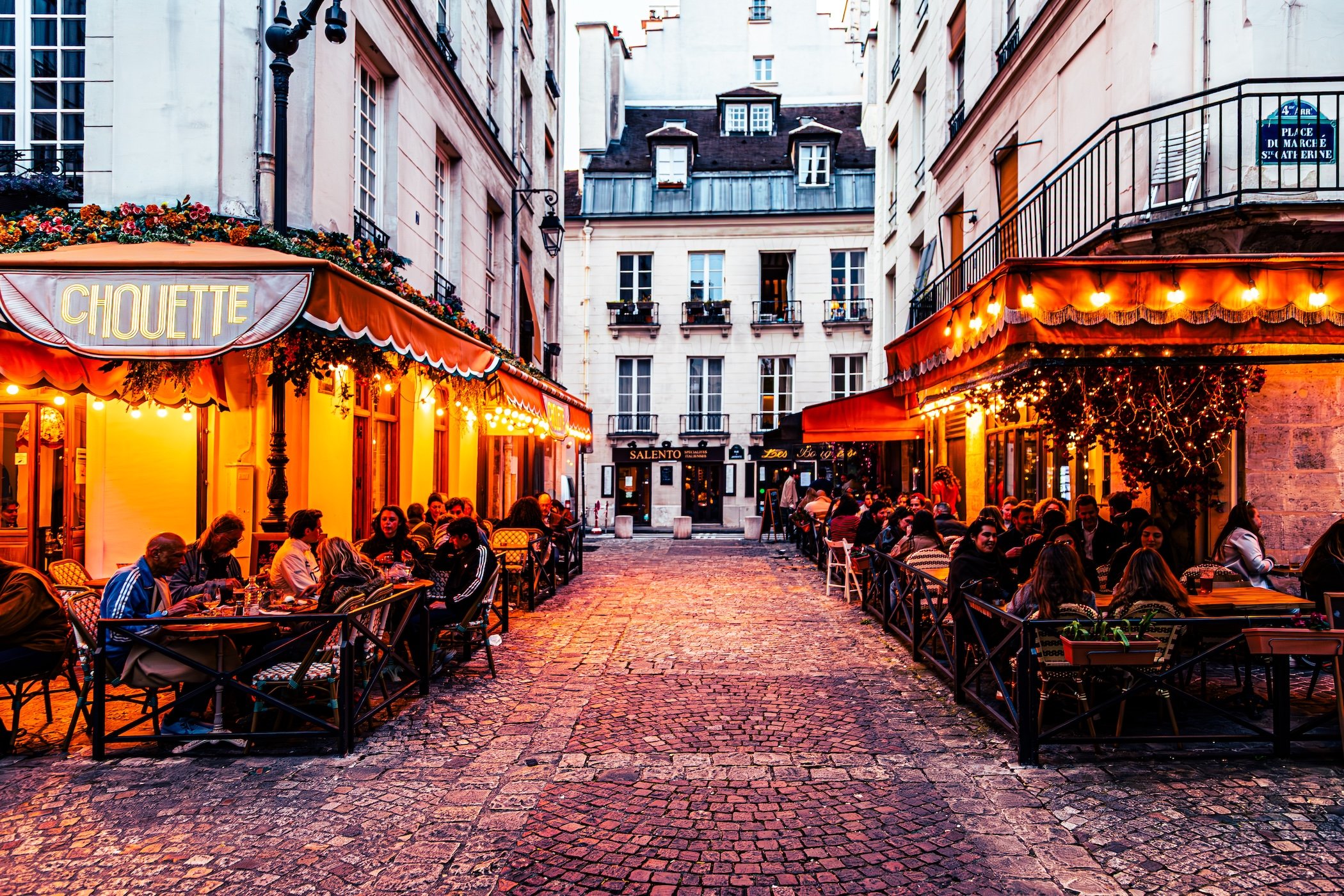
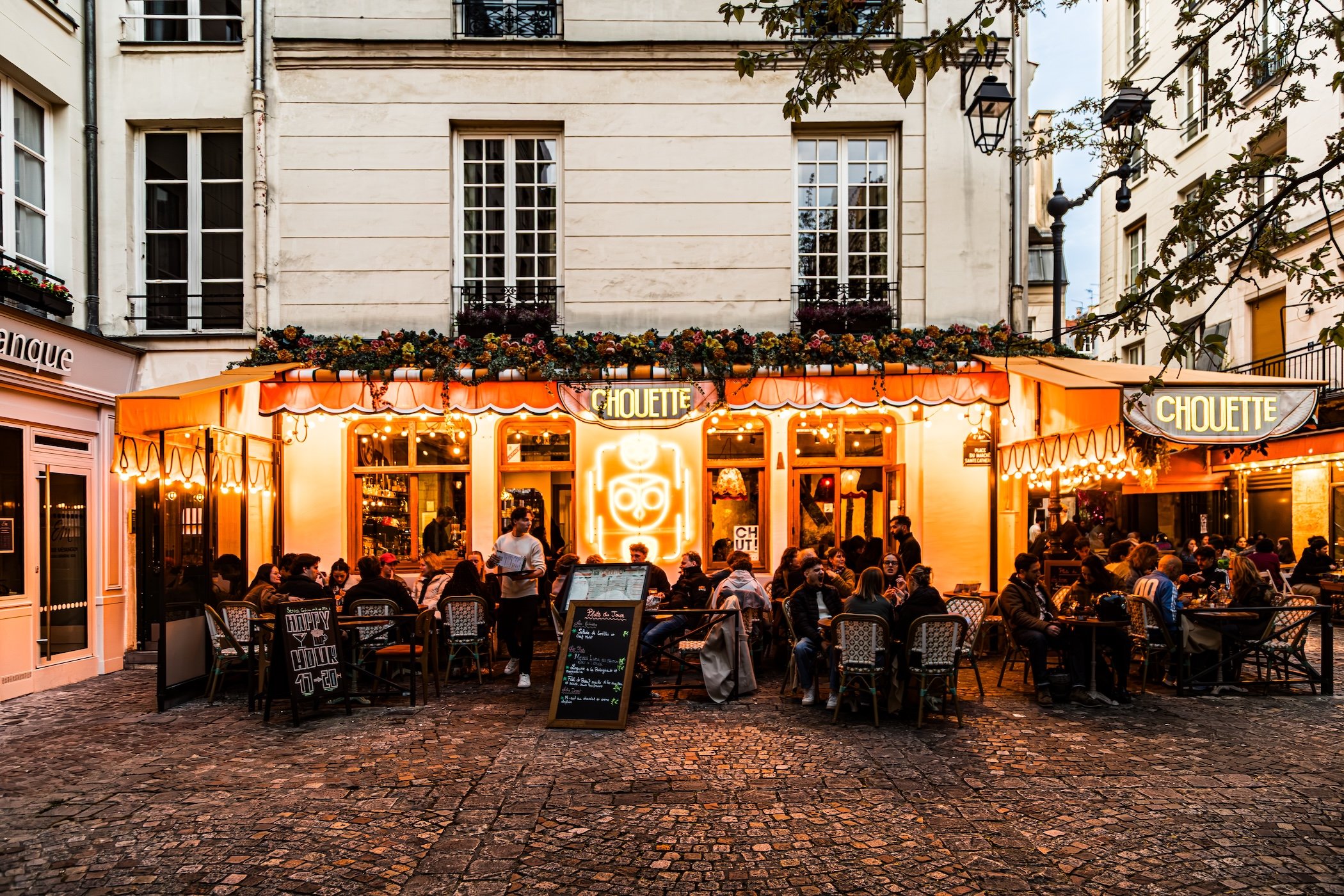
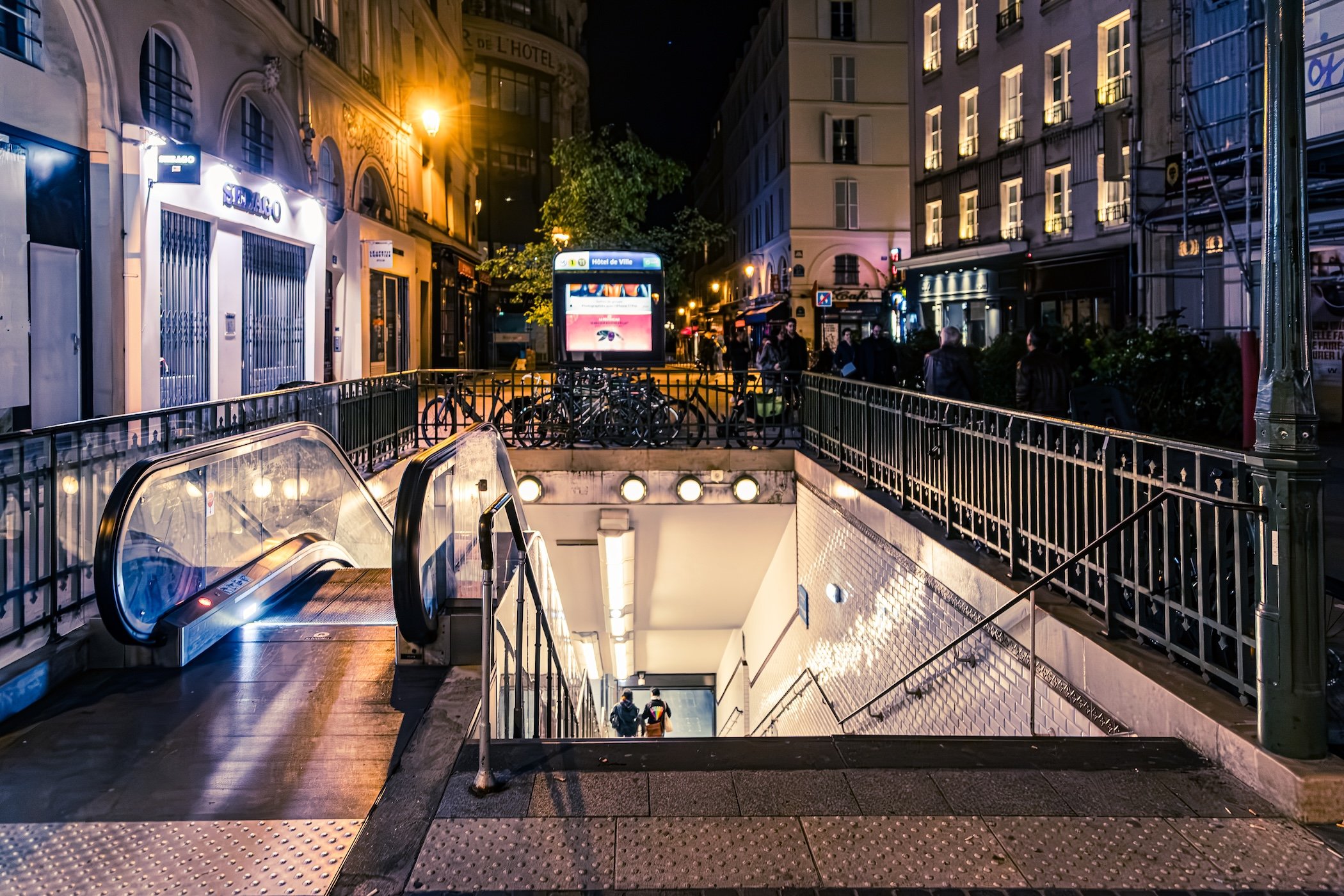
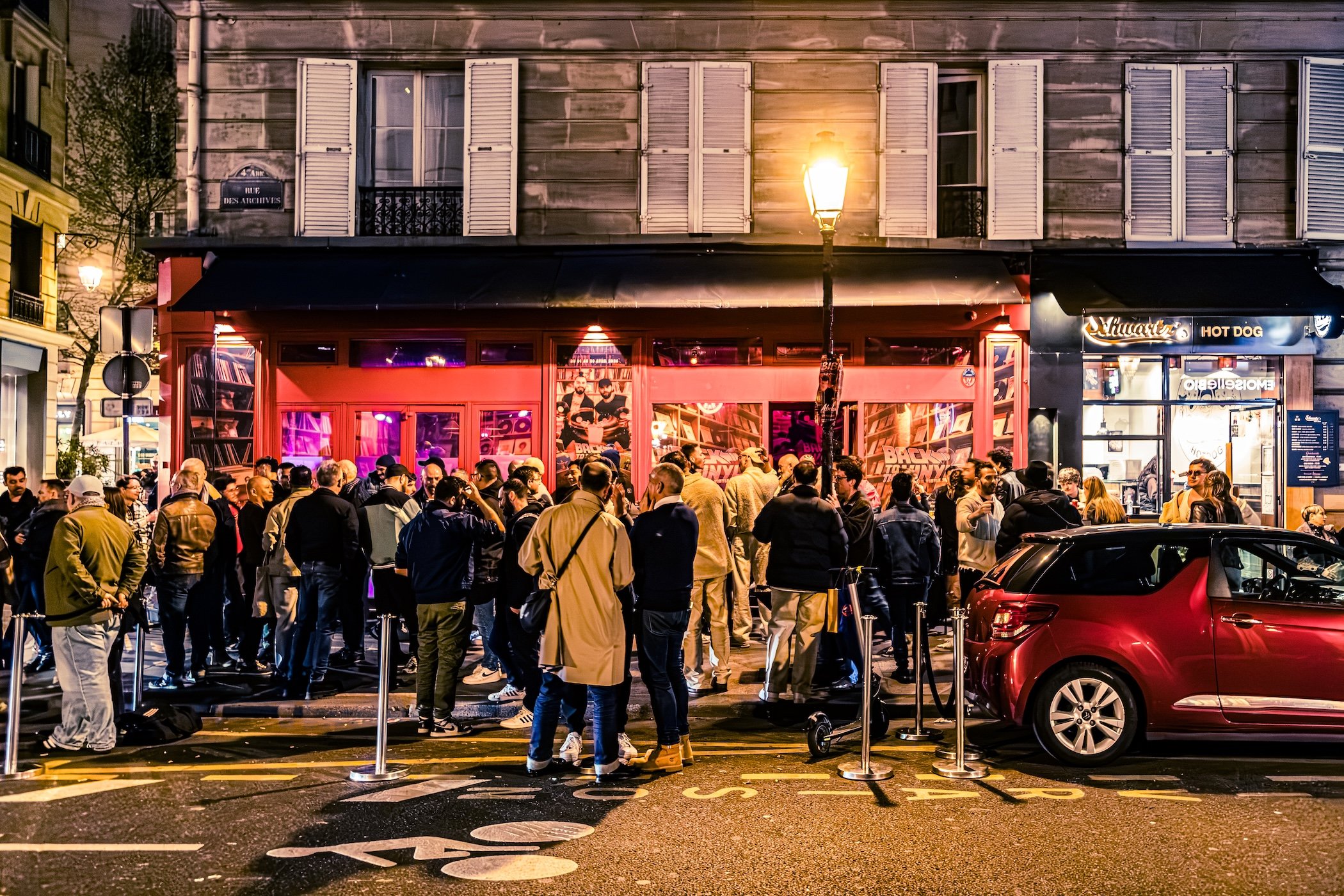
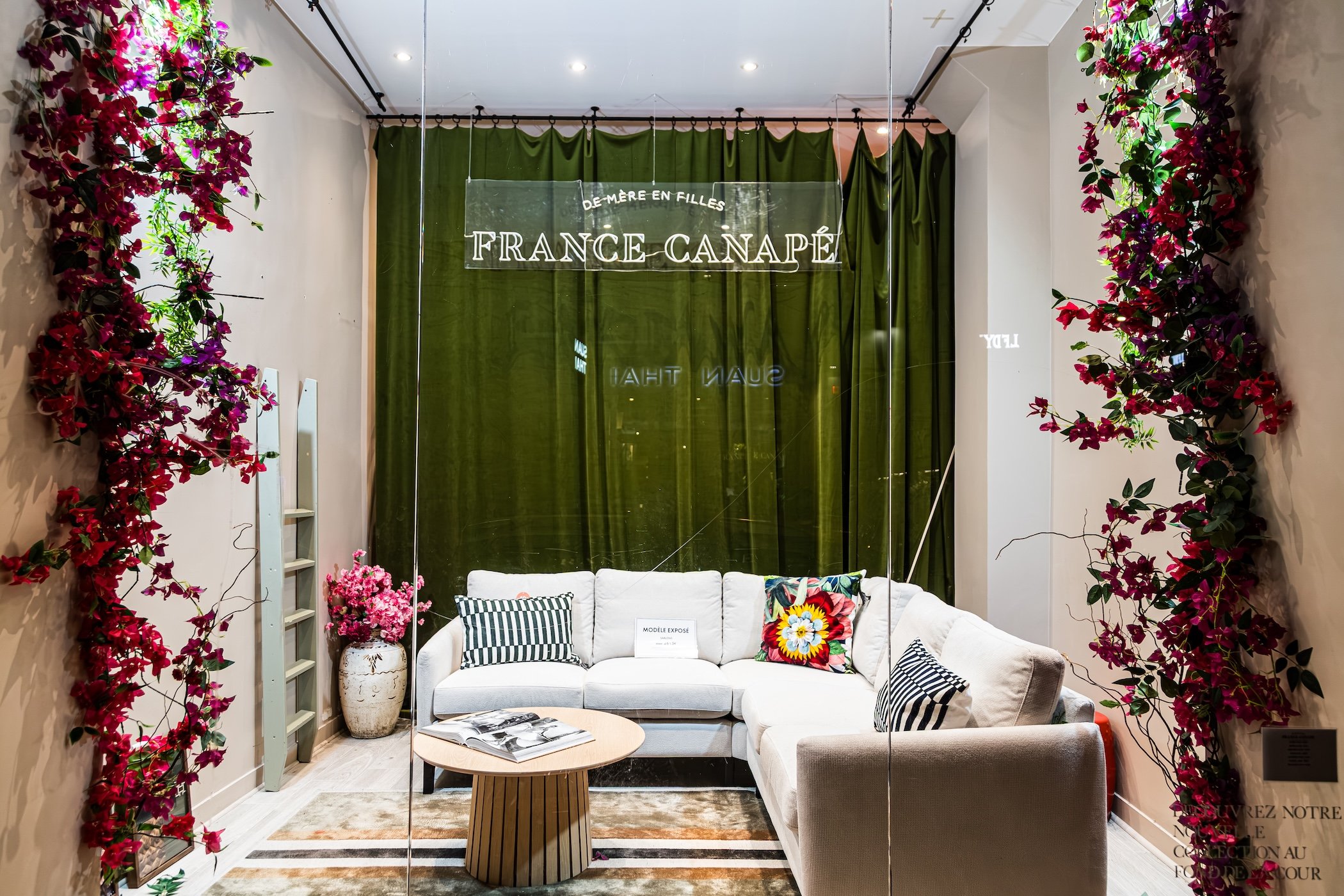
Throughout the arrondissement, monumental Paris remains closely interwoven with everyday life. Cathedral towers and carved portals appear beside souvenir shops and restaurant awnings. Historic façades contain fashionable boutiques, cocktail lounges, convenience stores, hotels, and contemporary nightlife. Place Sainte-Catherine gathers diners beneath café lights, while Rue des Rosiers, Rue des Écouffes, Rue Sainte-Croix de la Bretonnerie, and Rue des Archives draw pedestrians through a dense succession of signs, windows, thresholds, and gathering places. The arrondissement’s history is never isolated from the present; it provides the architecture within which modern Paris continues to socialize, trade, celebrate, and reinvent itself.
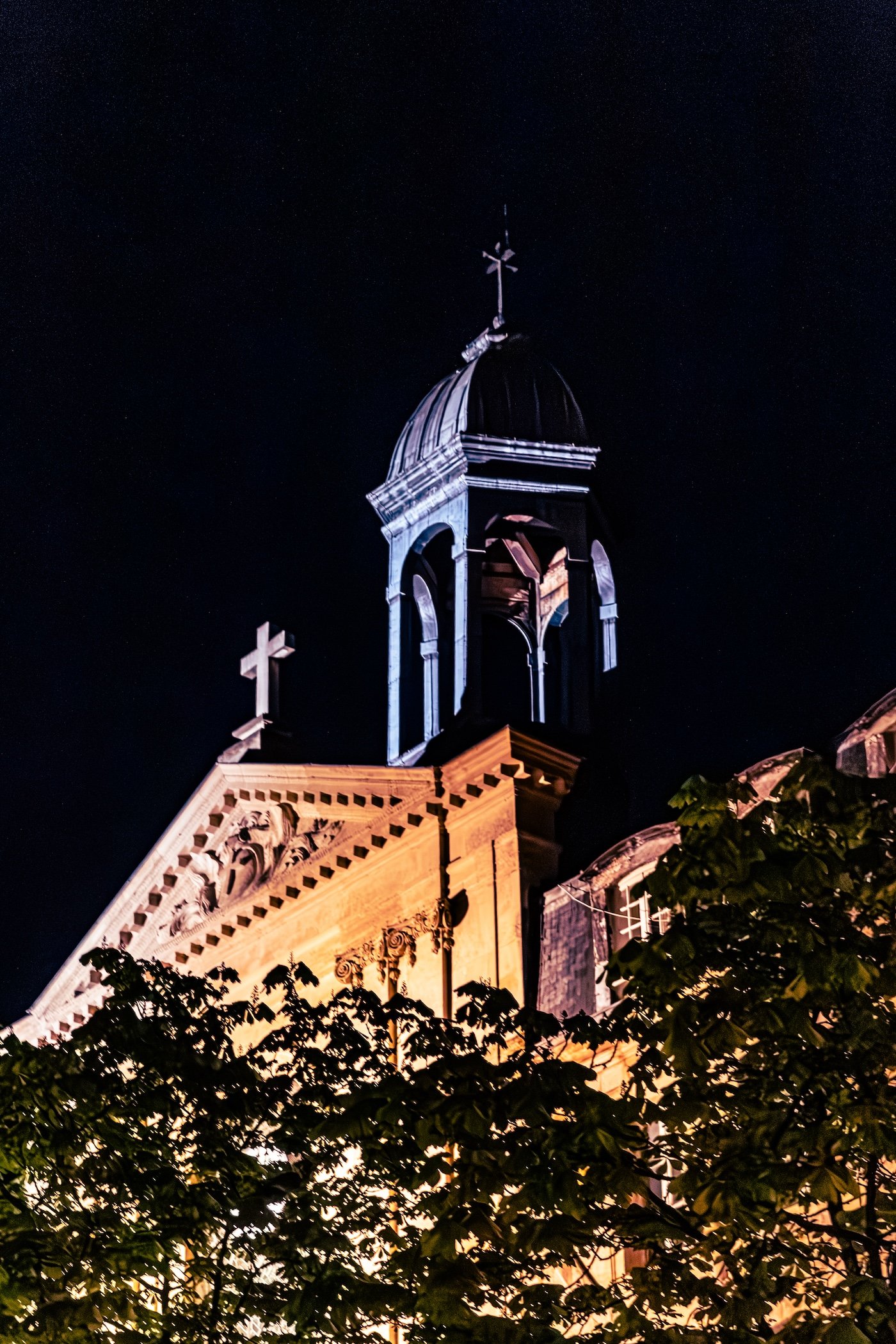
Light became the unifying element across both days. The 4e appeared beneath blue-and-gold spring skies, in the cool interval of twilight, under amber streetlamps and saturated neon, through Easter-morning cloud and misting rain, and finally in the golden illumination of late afternoon. Stone, glass, cobblestones, wet pavement, and the Seine each received and transformed that light differently. The result was an arrondissement at once sacred and secular, monumental and intimate, historic and contemporary—less a single visual identity than a series of closely connected Parisian worlds.
Through The Lens
-
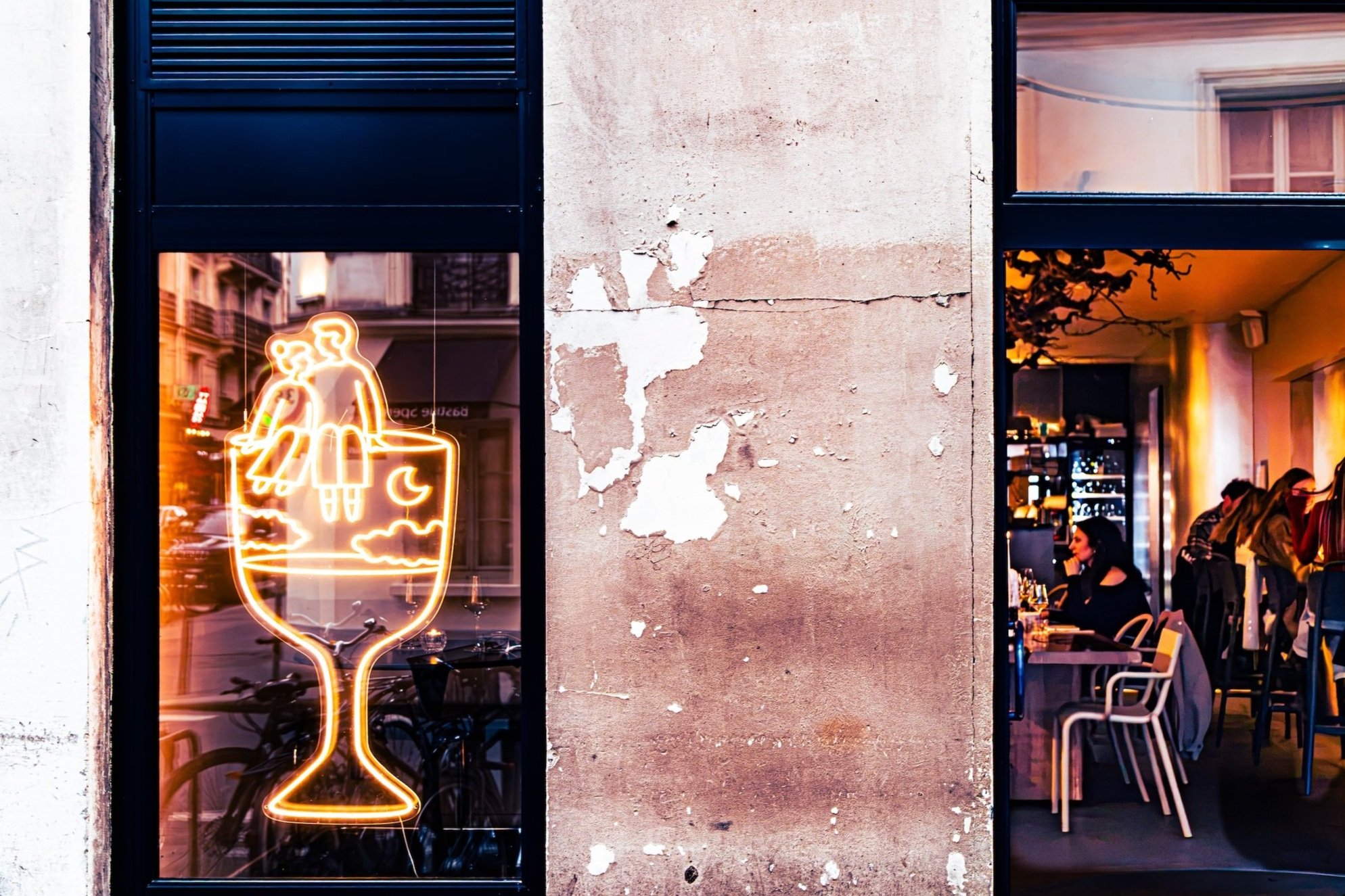
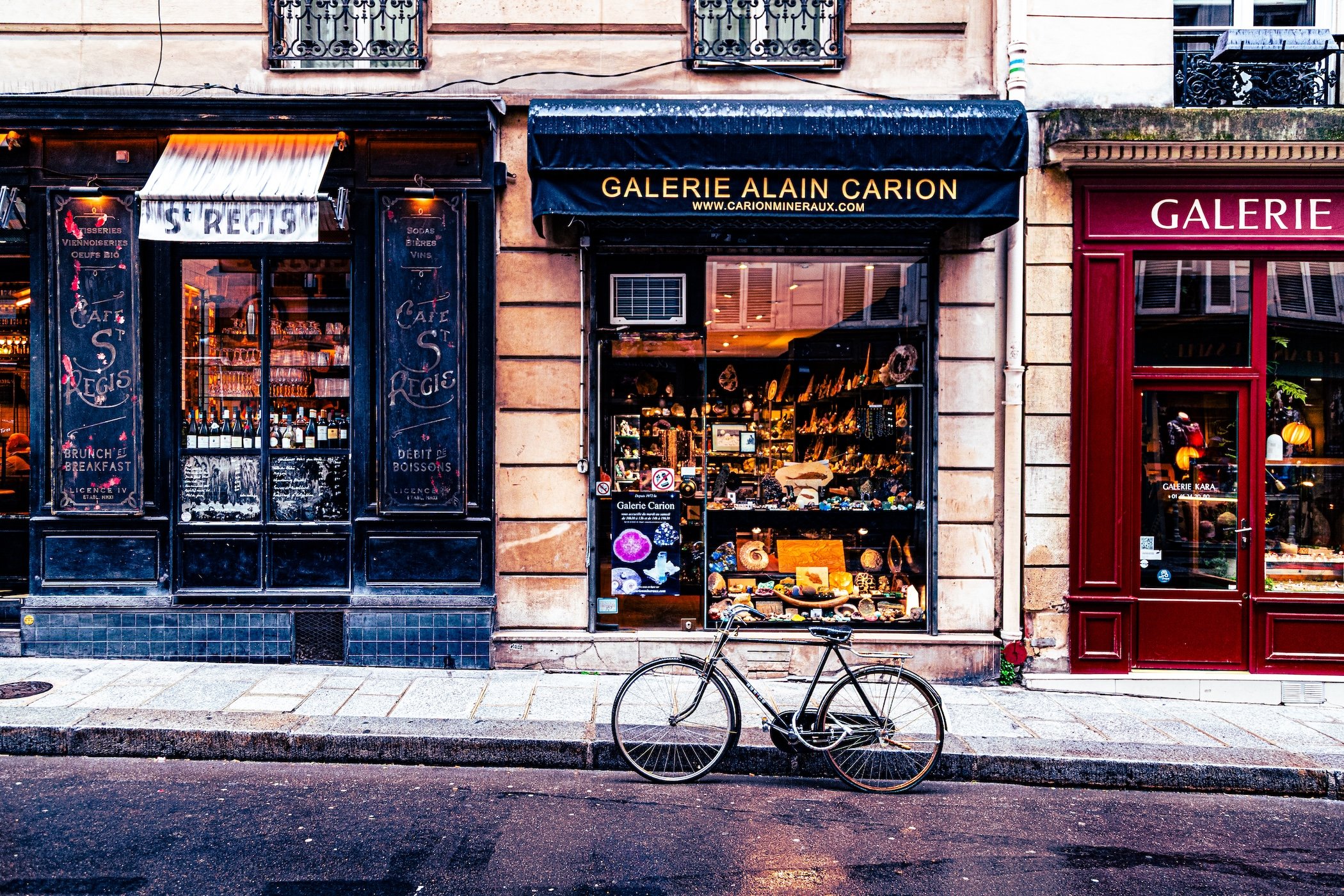
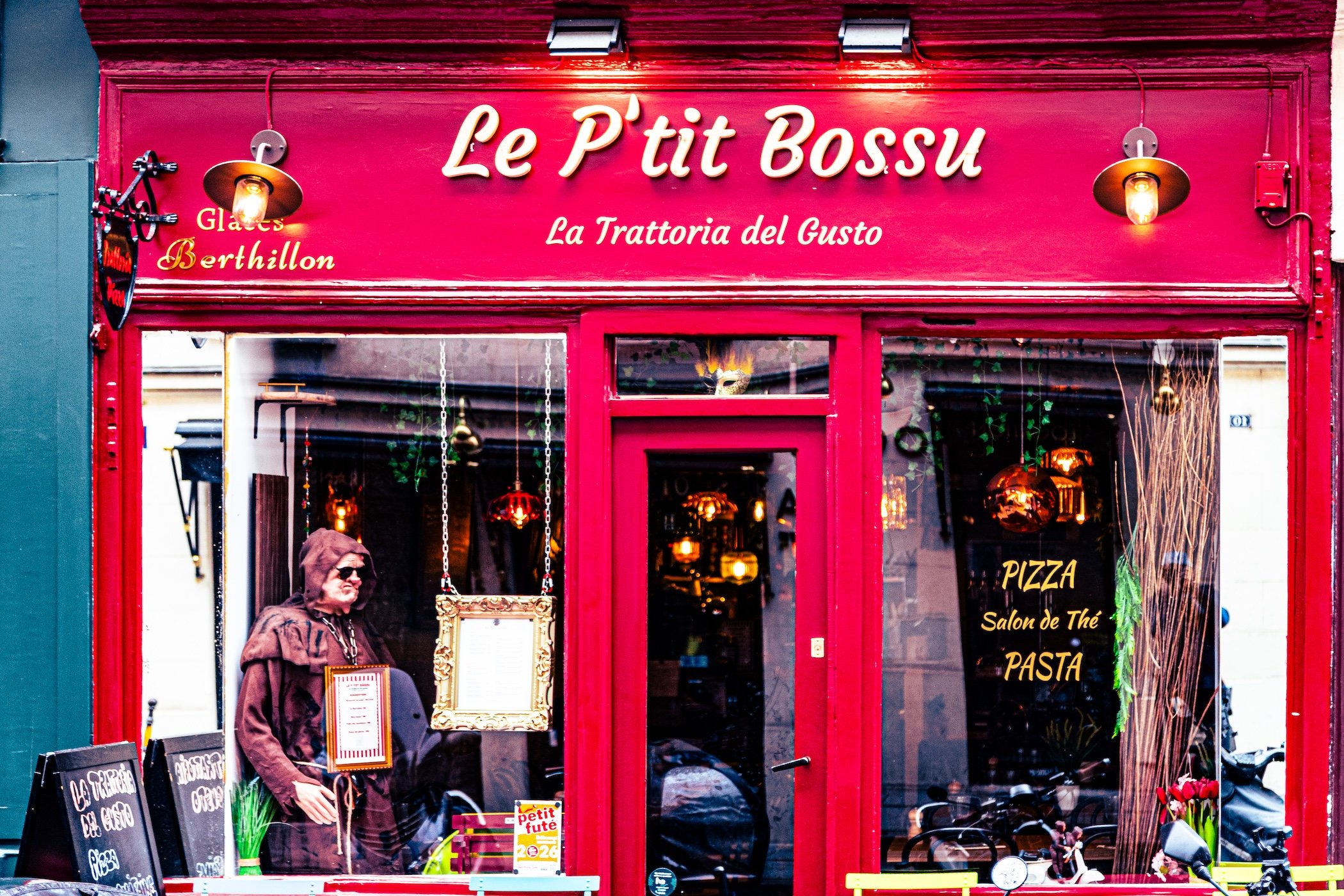
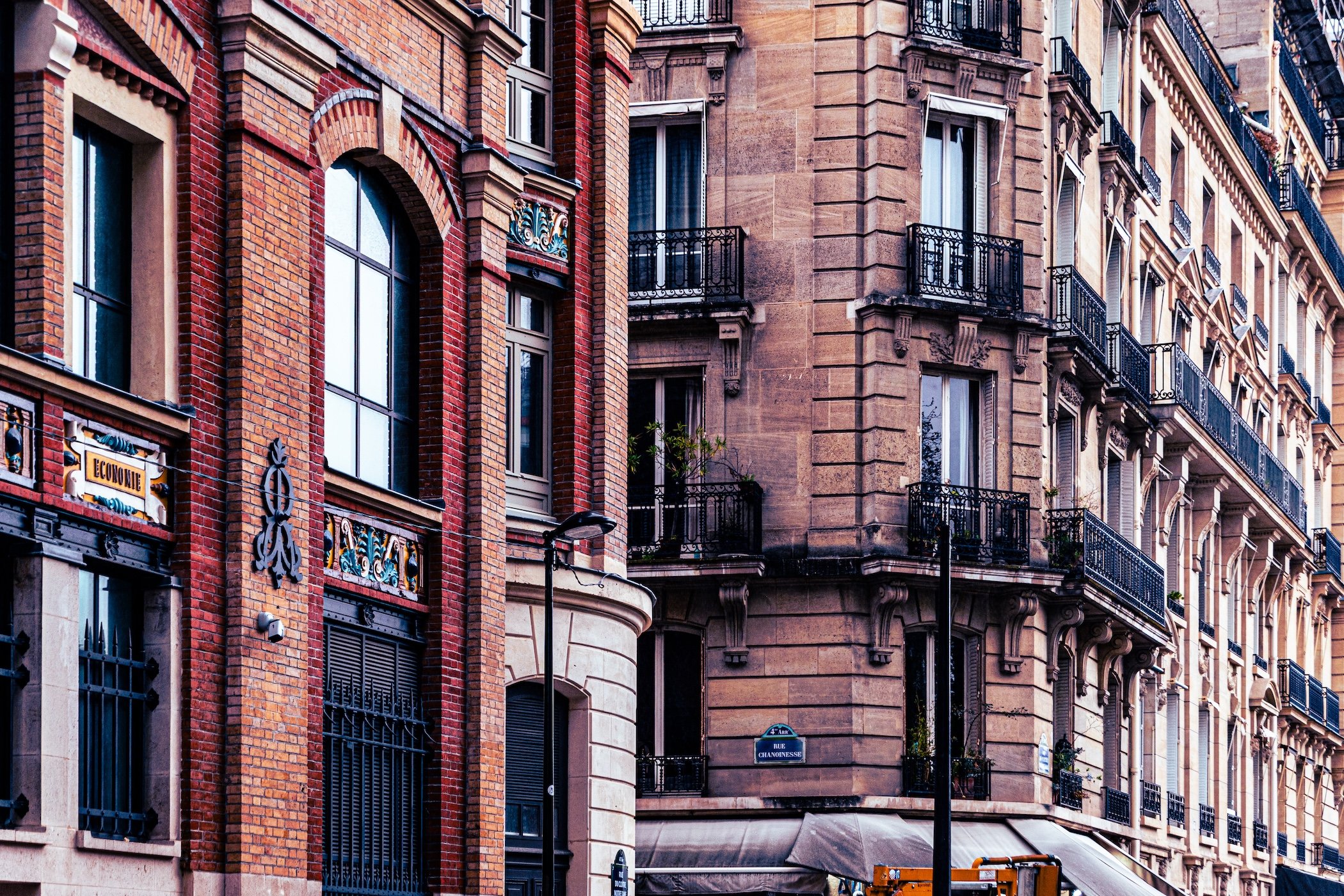
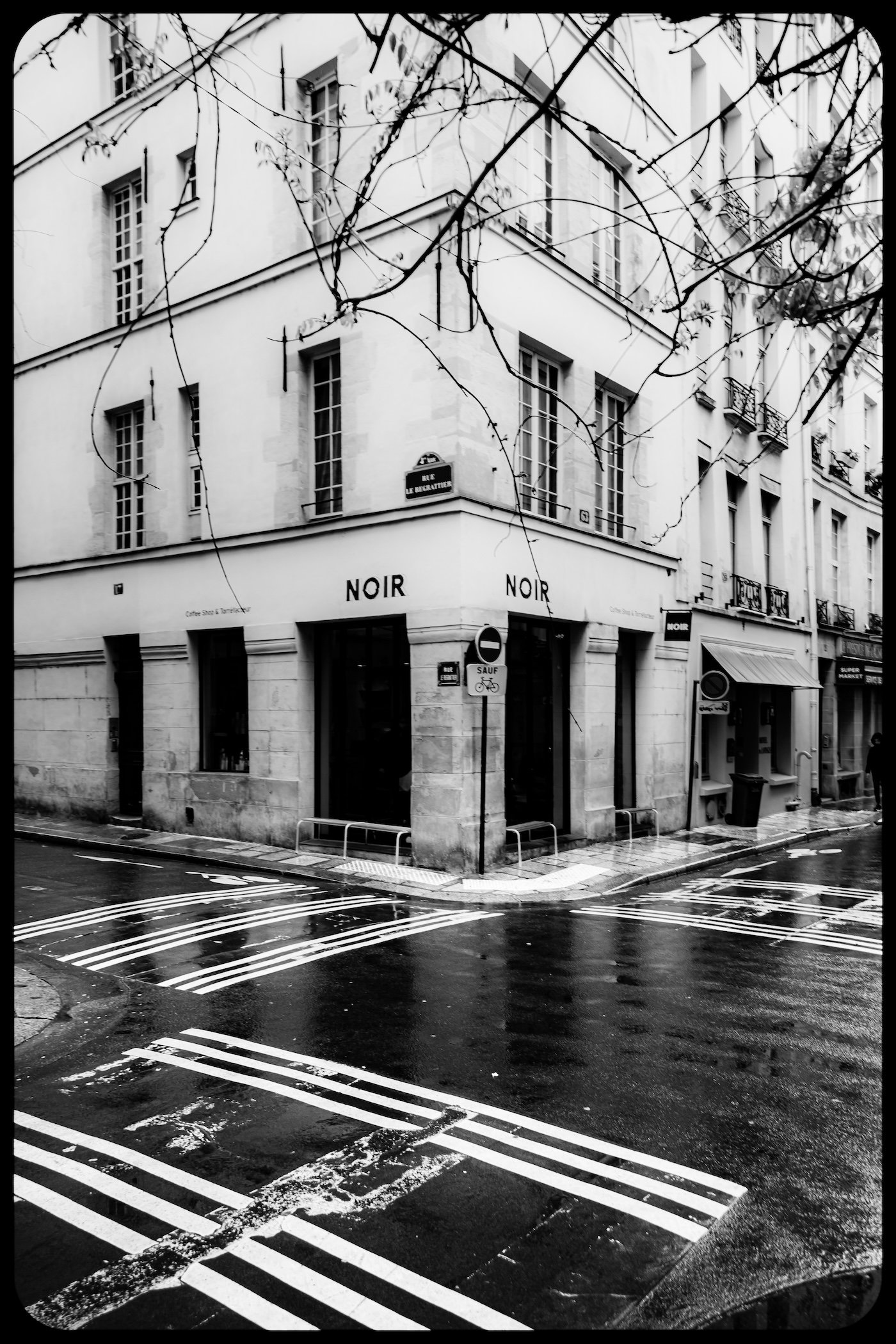
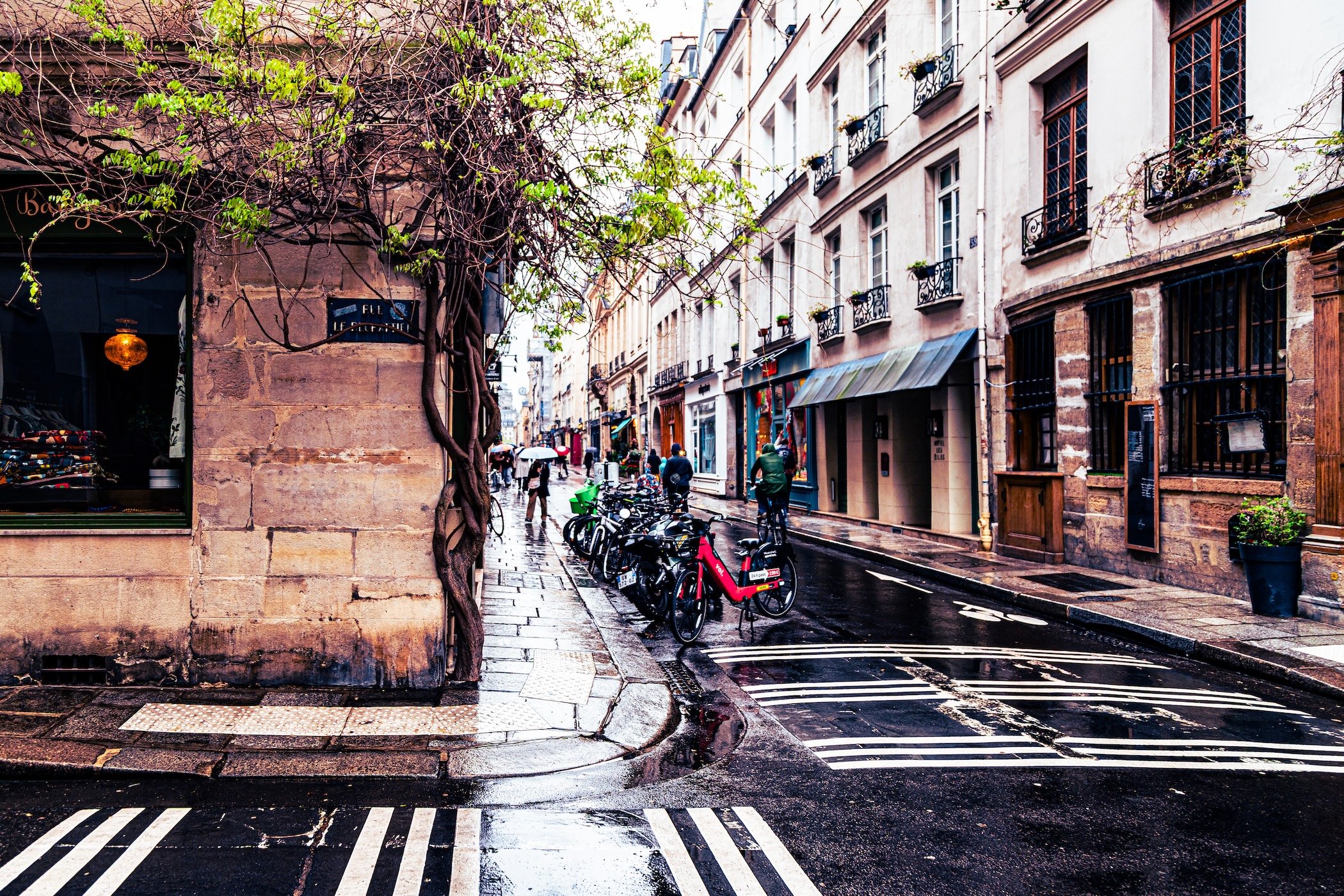
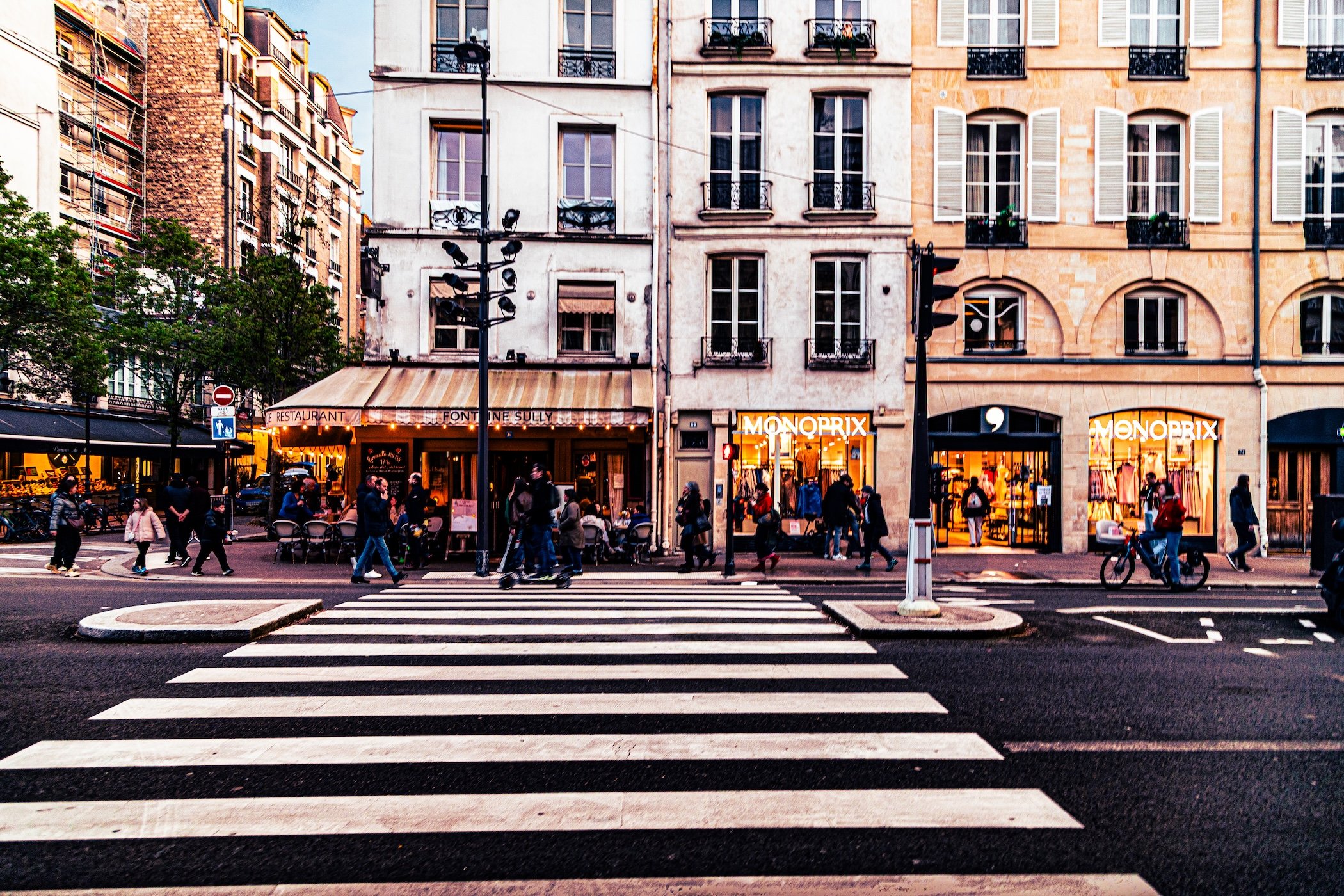
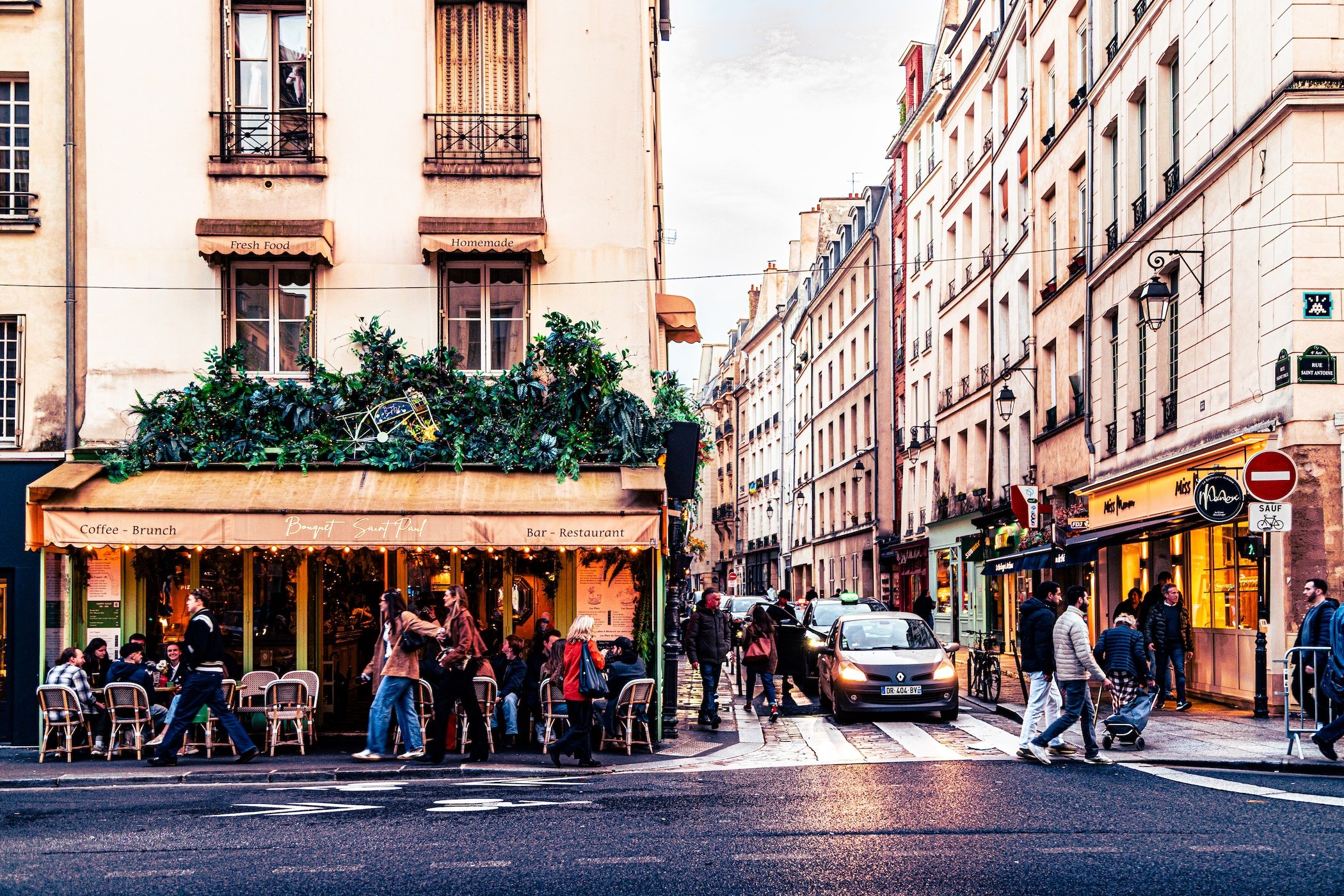
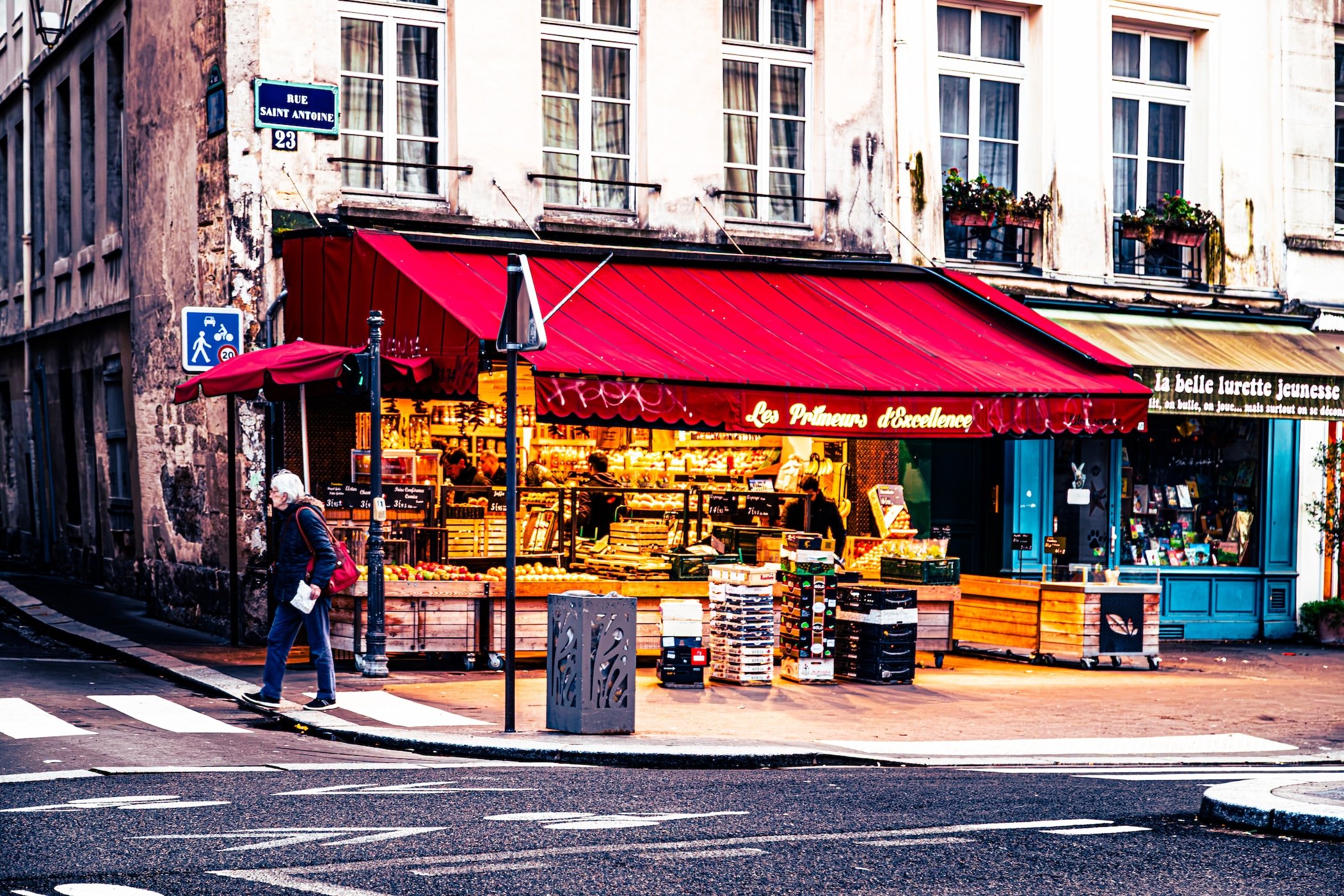
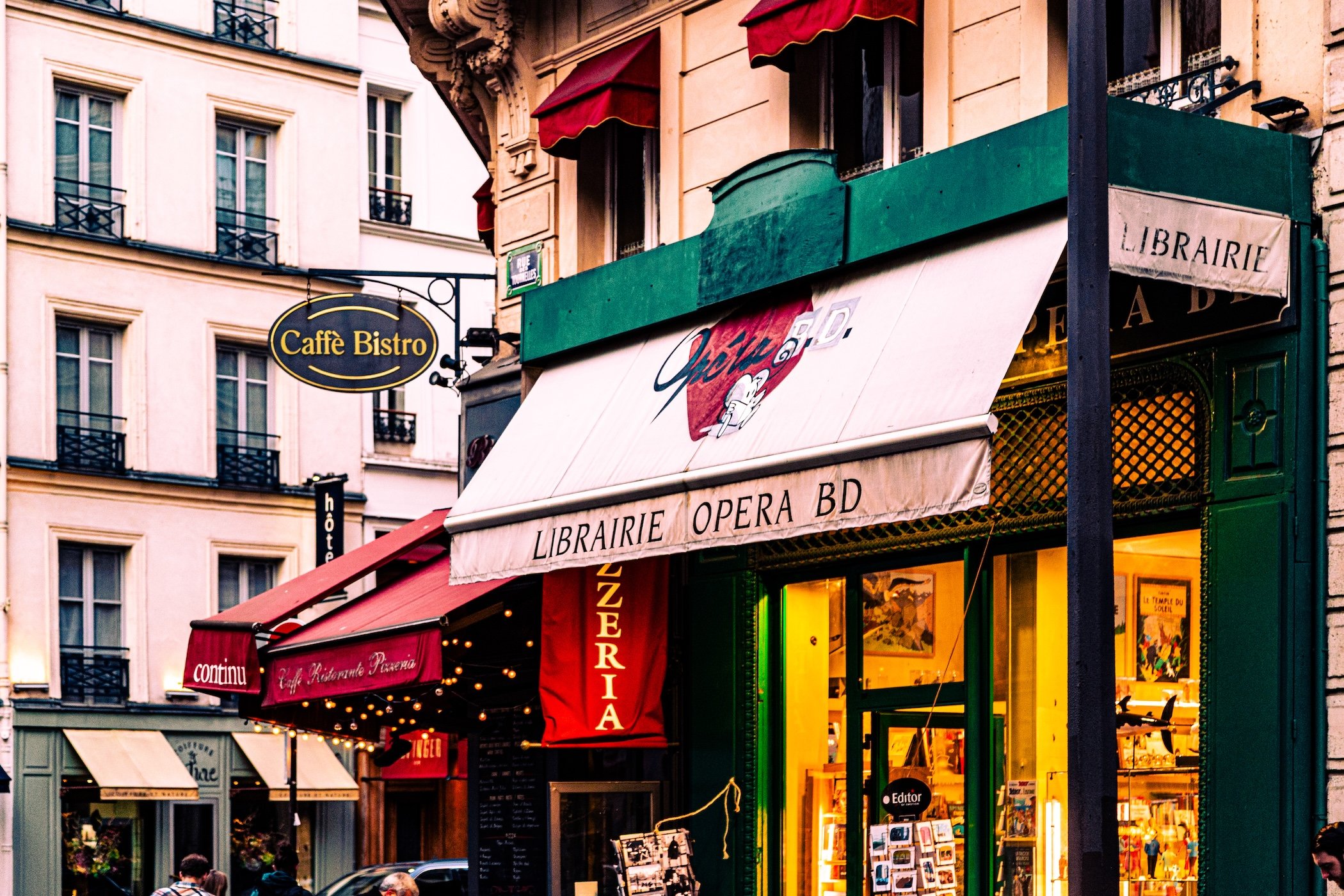
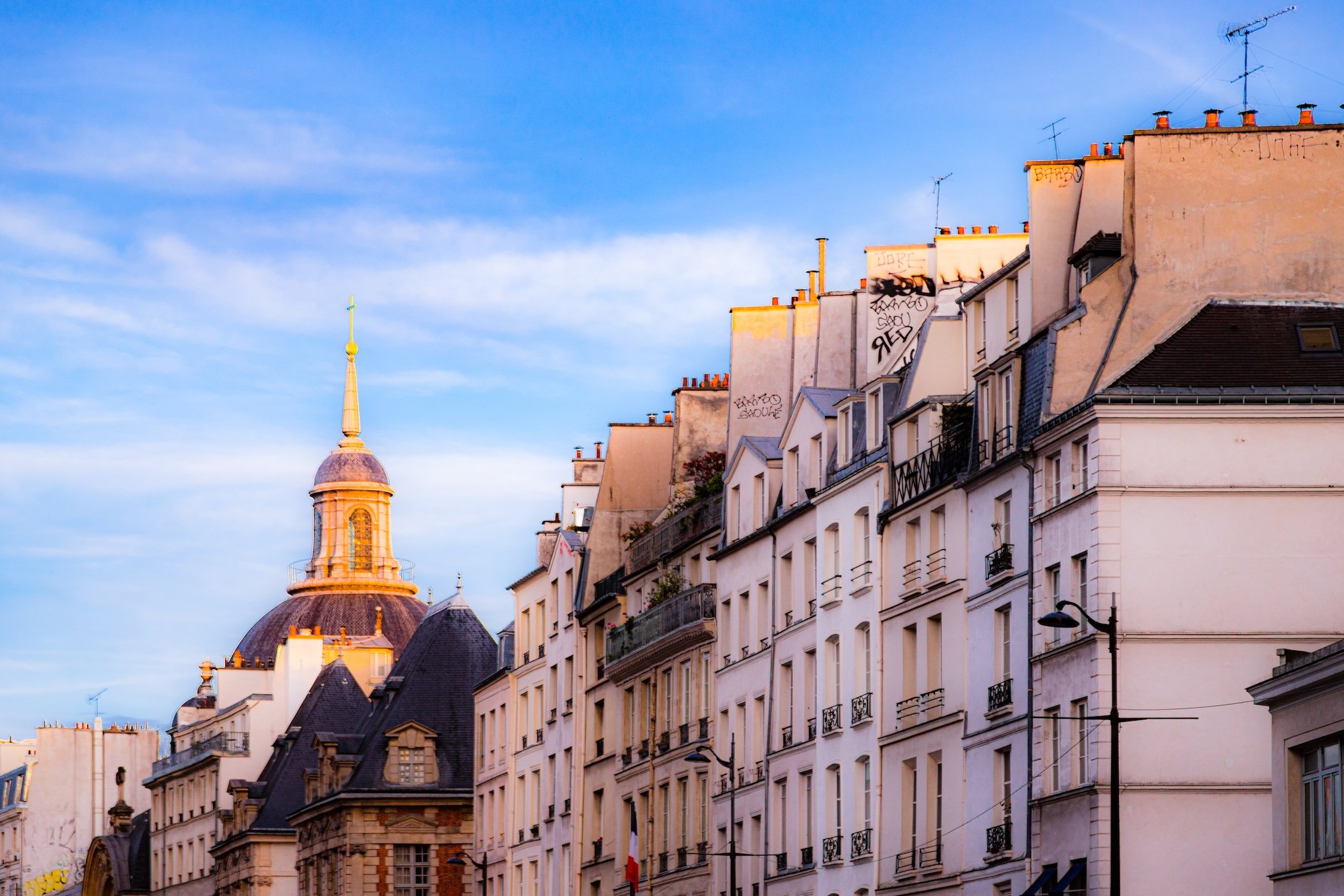
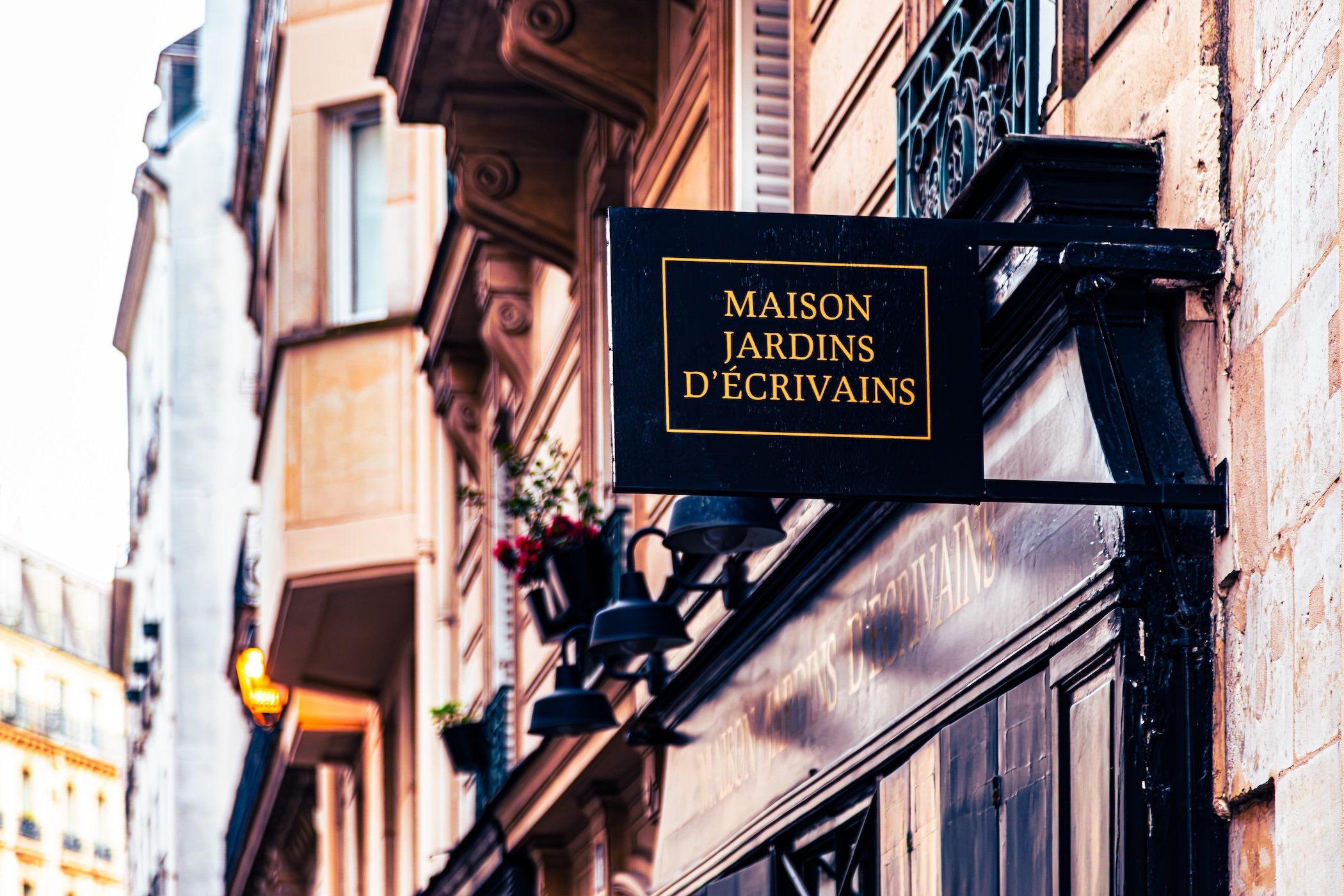
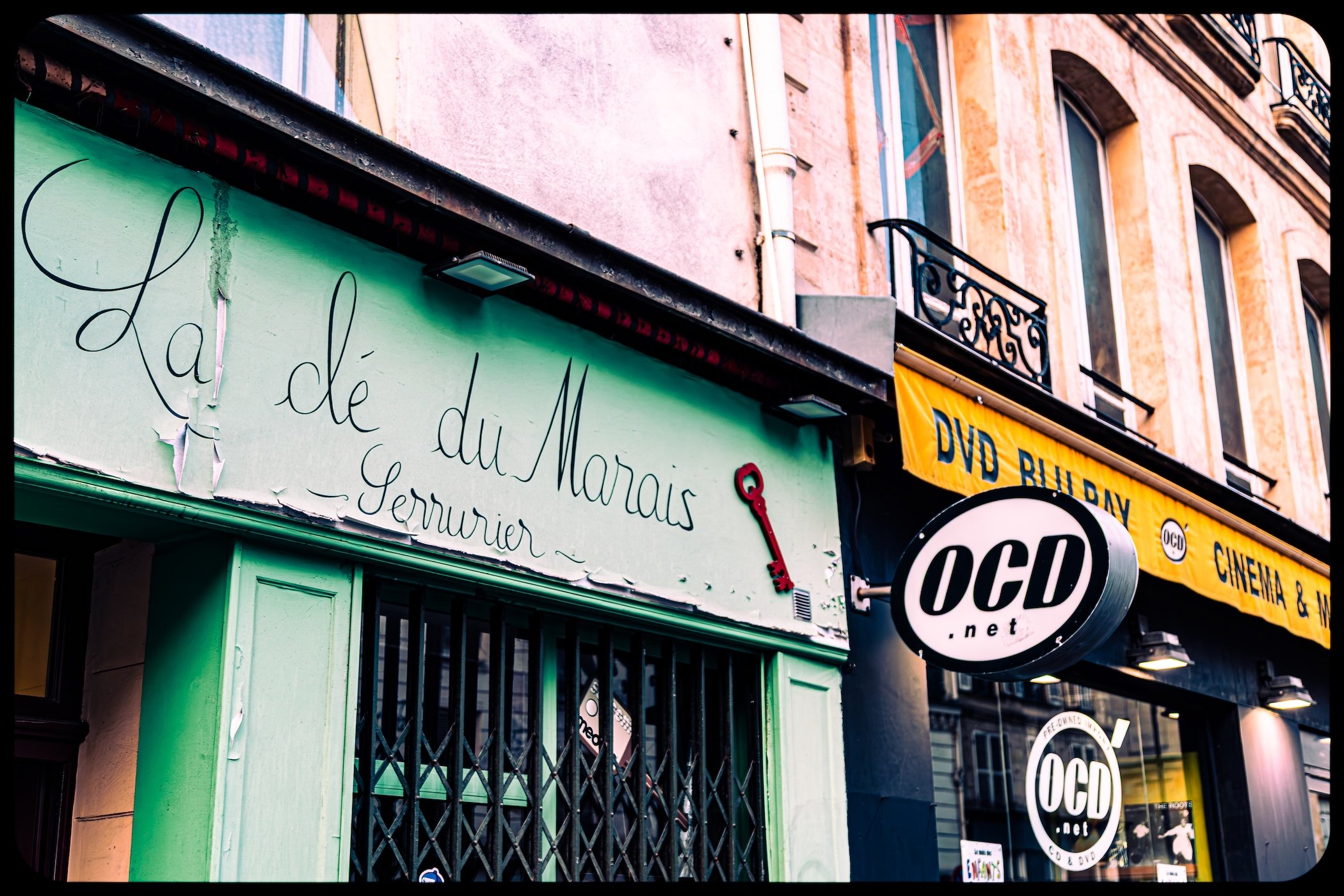
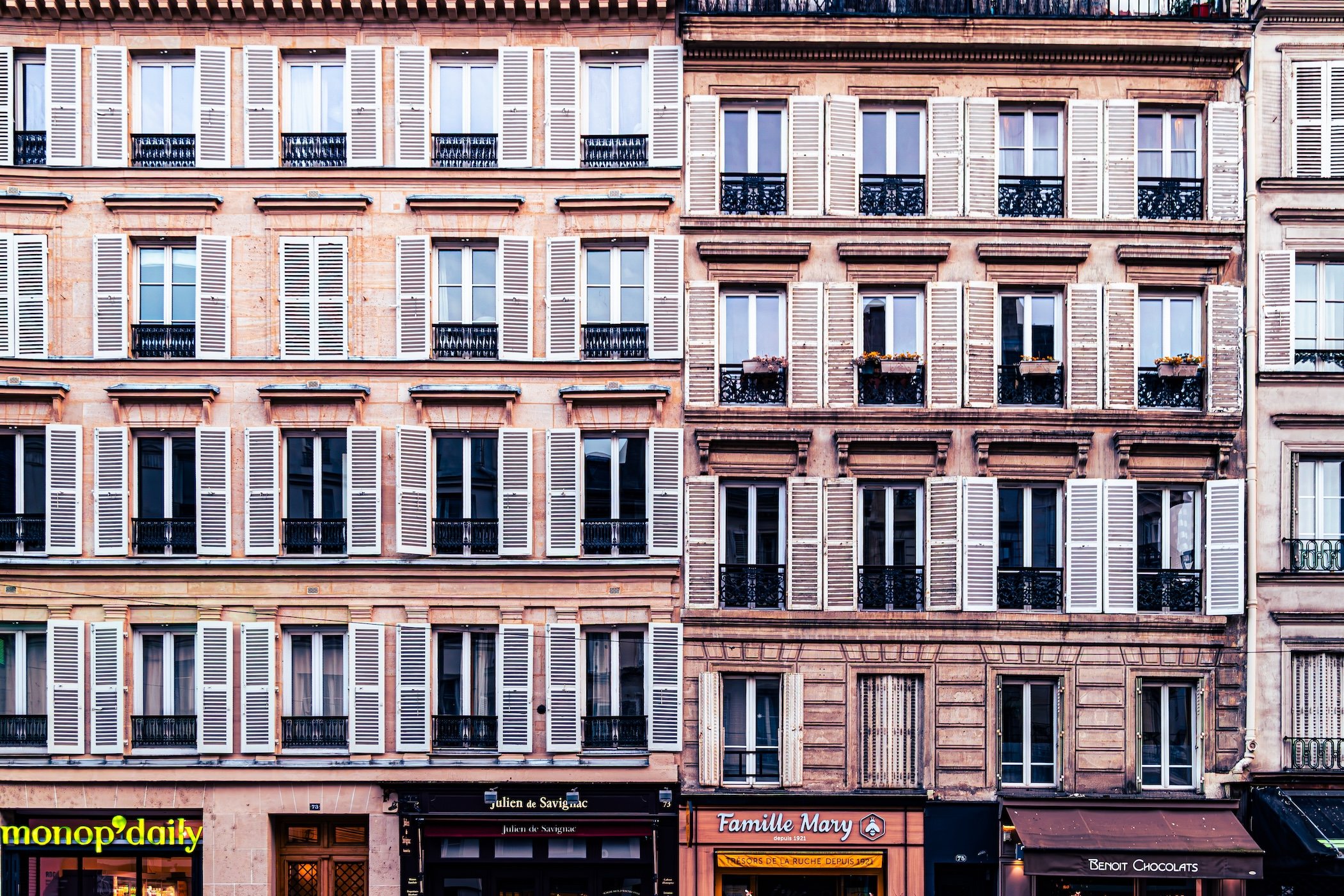
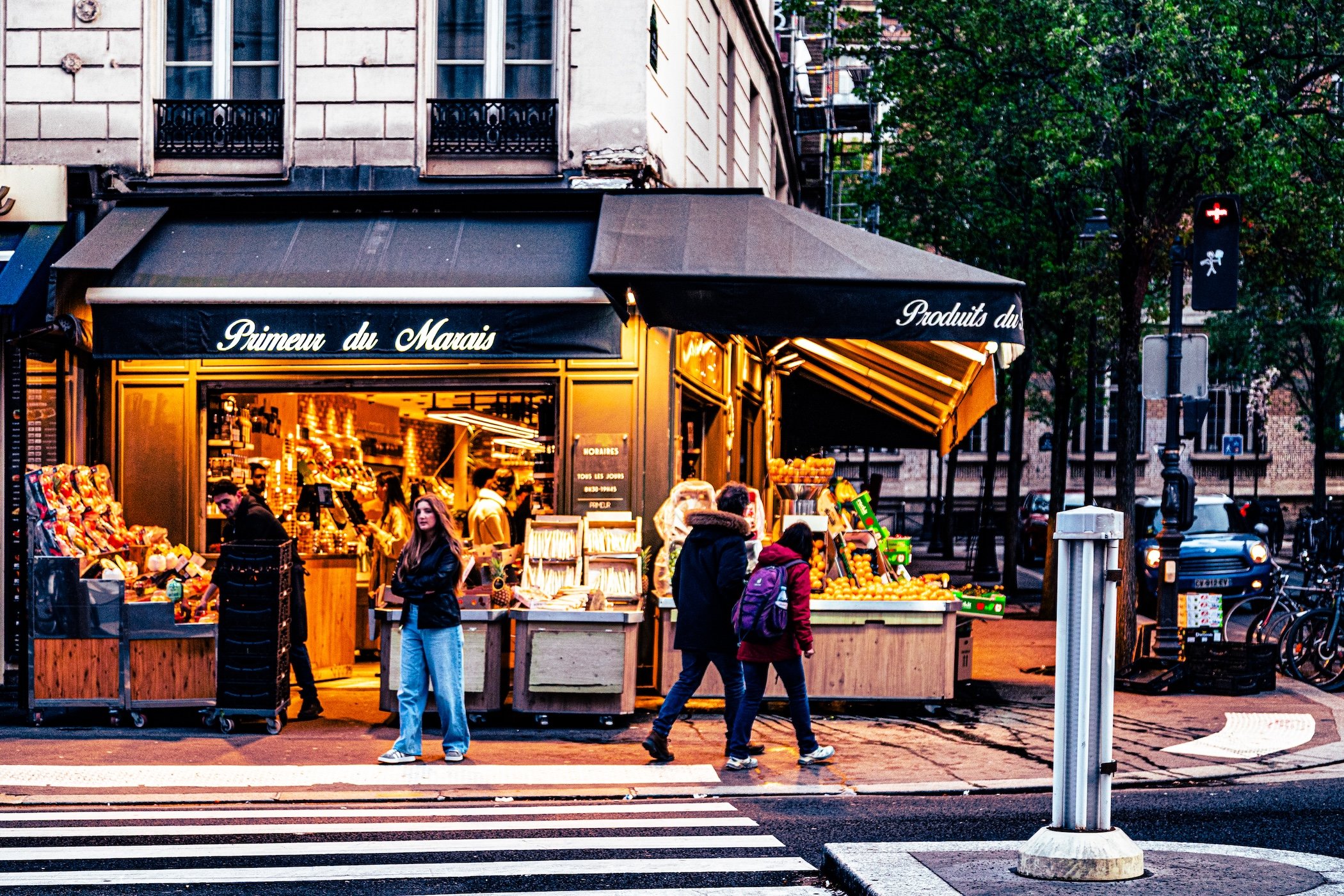
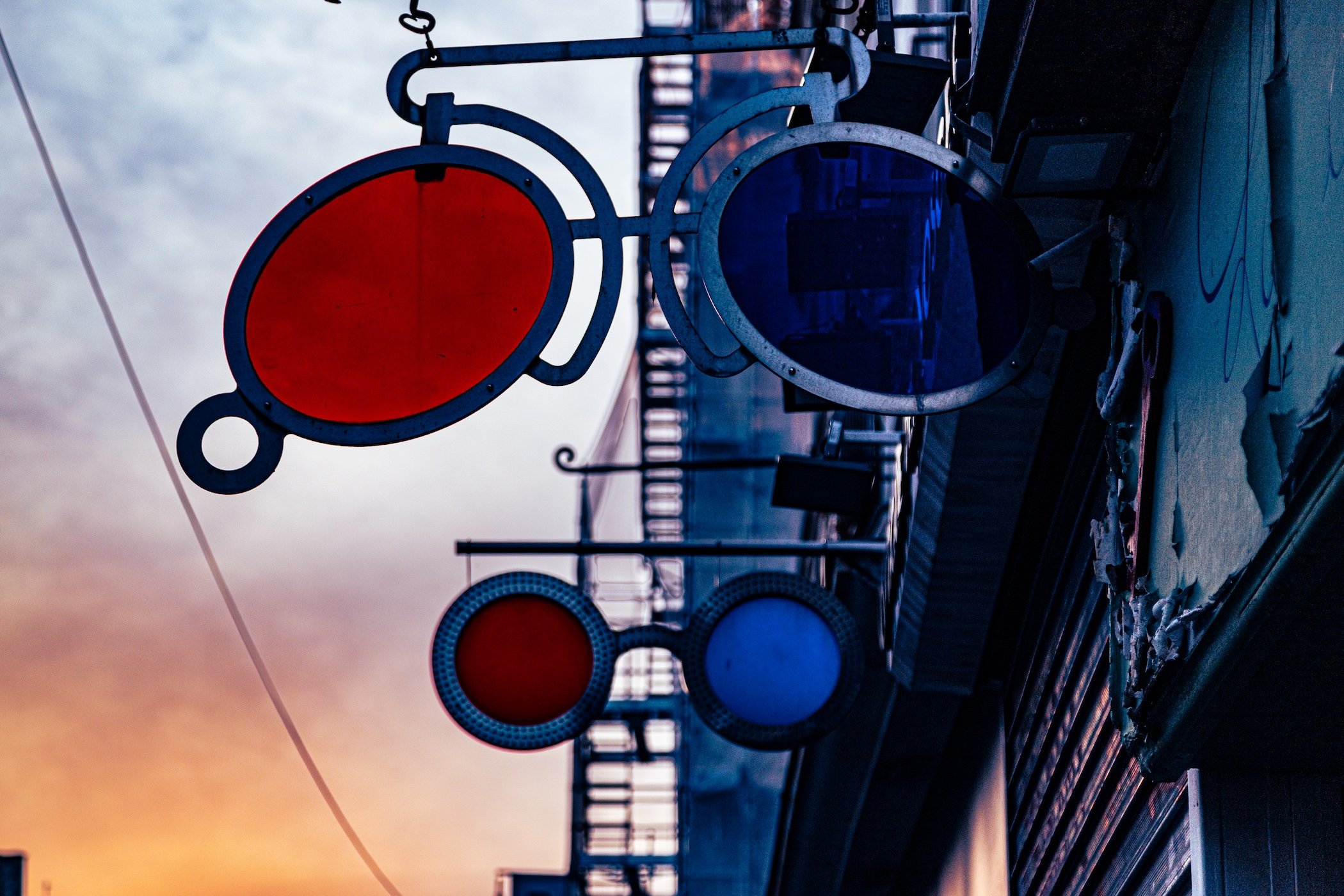
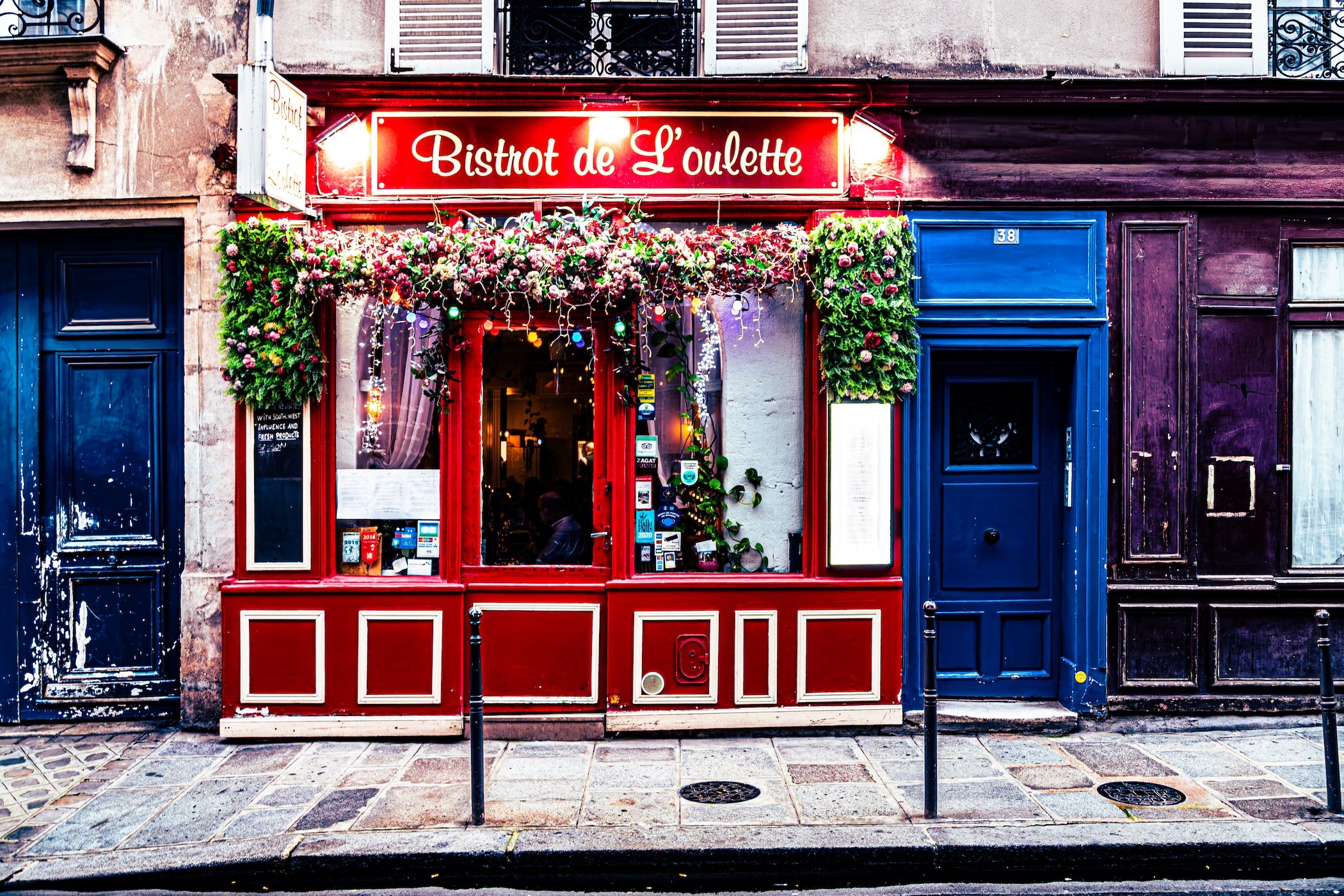
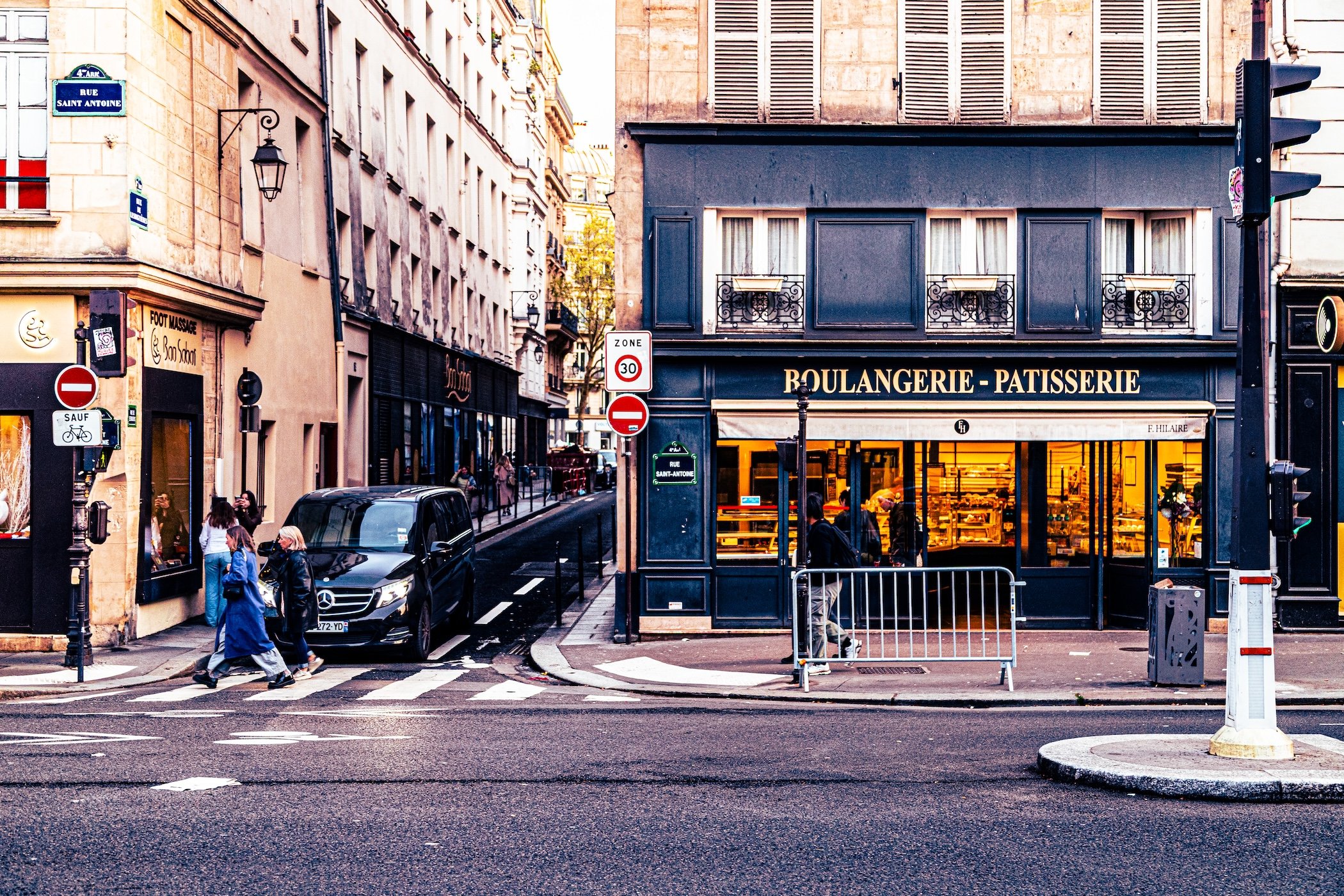
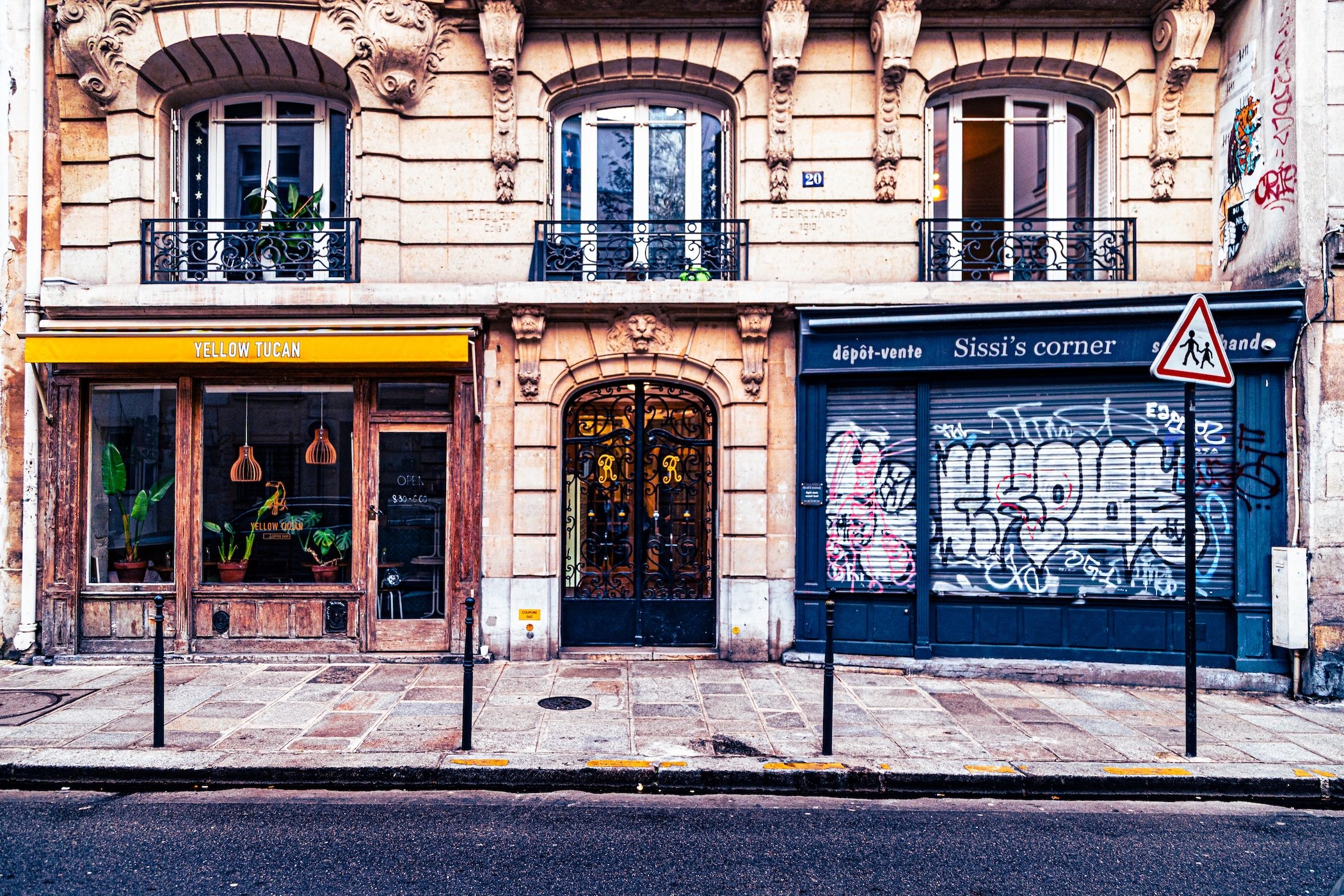
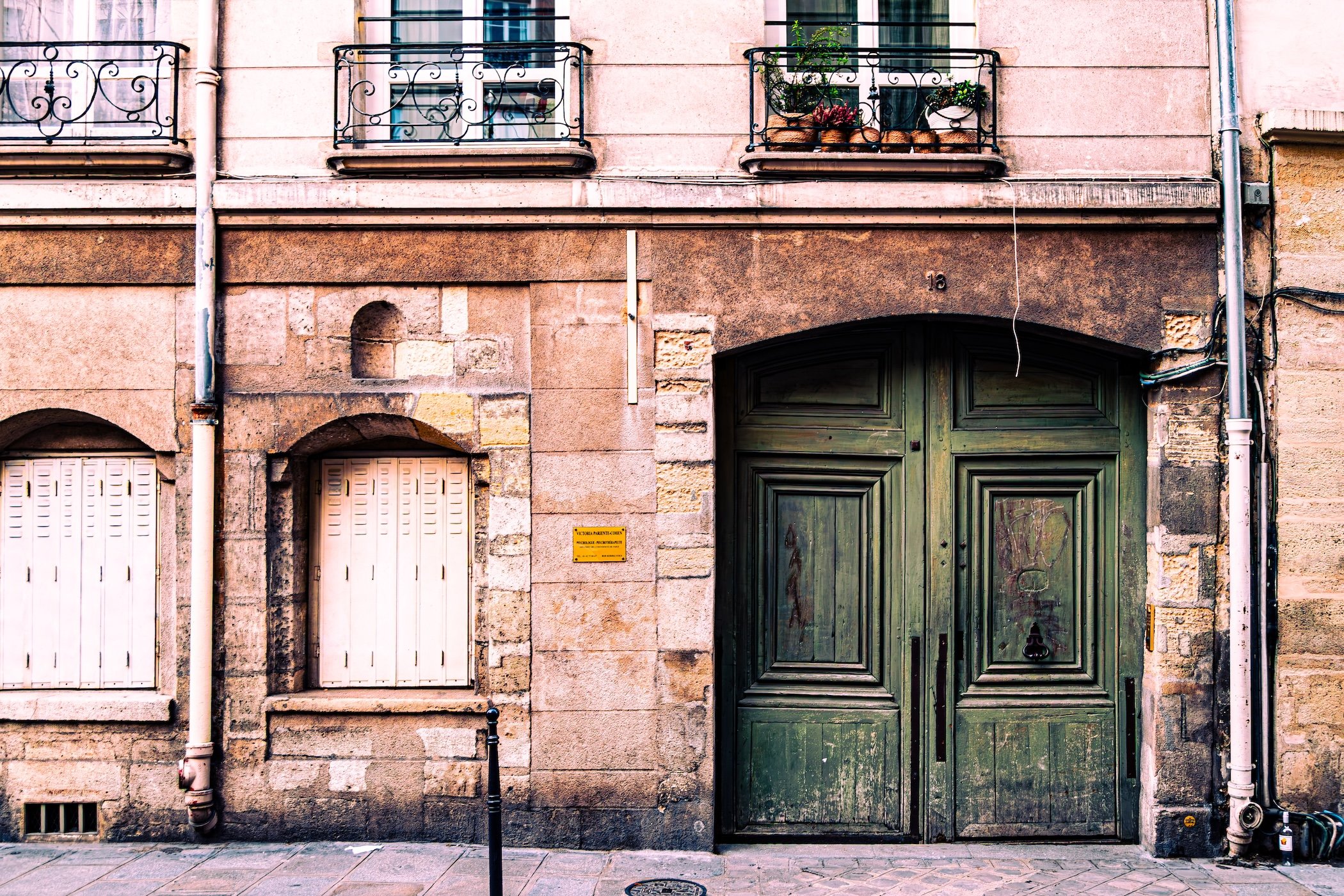
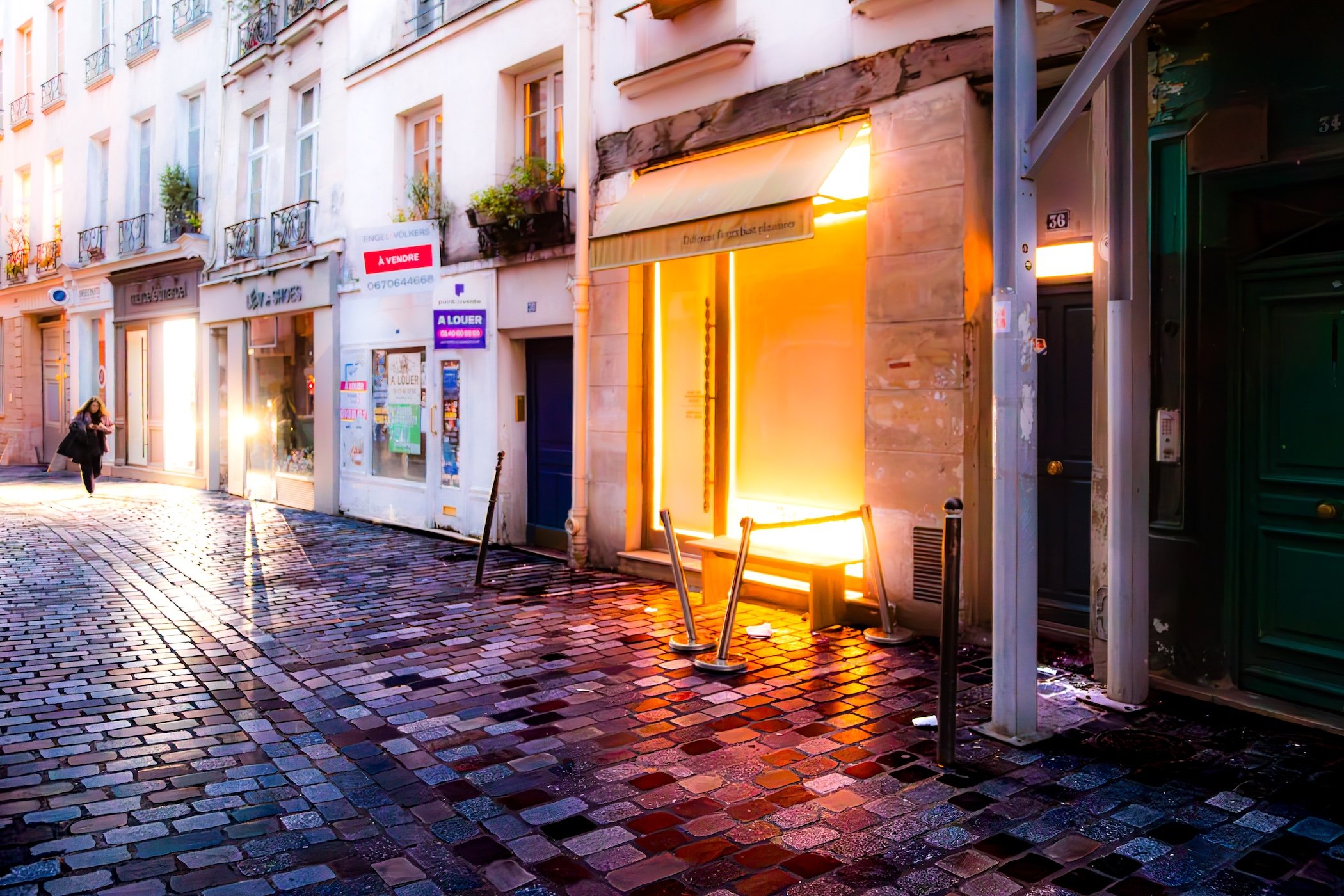
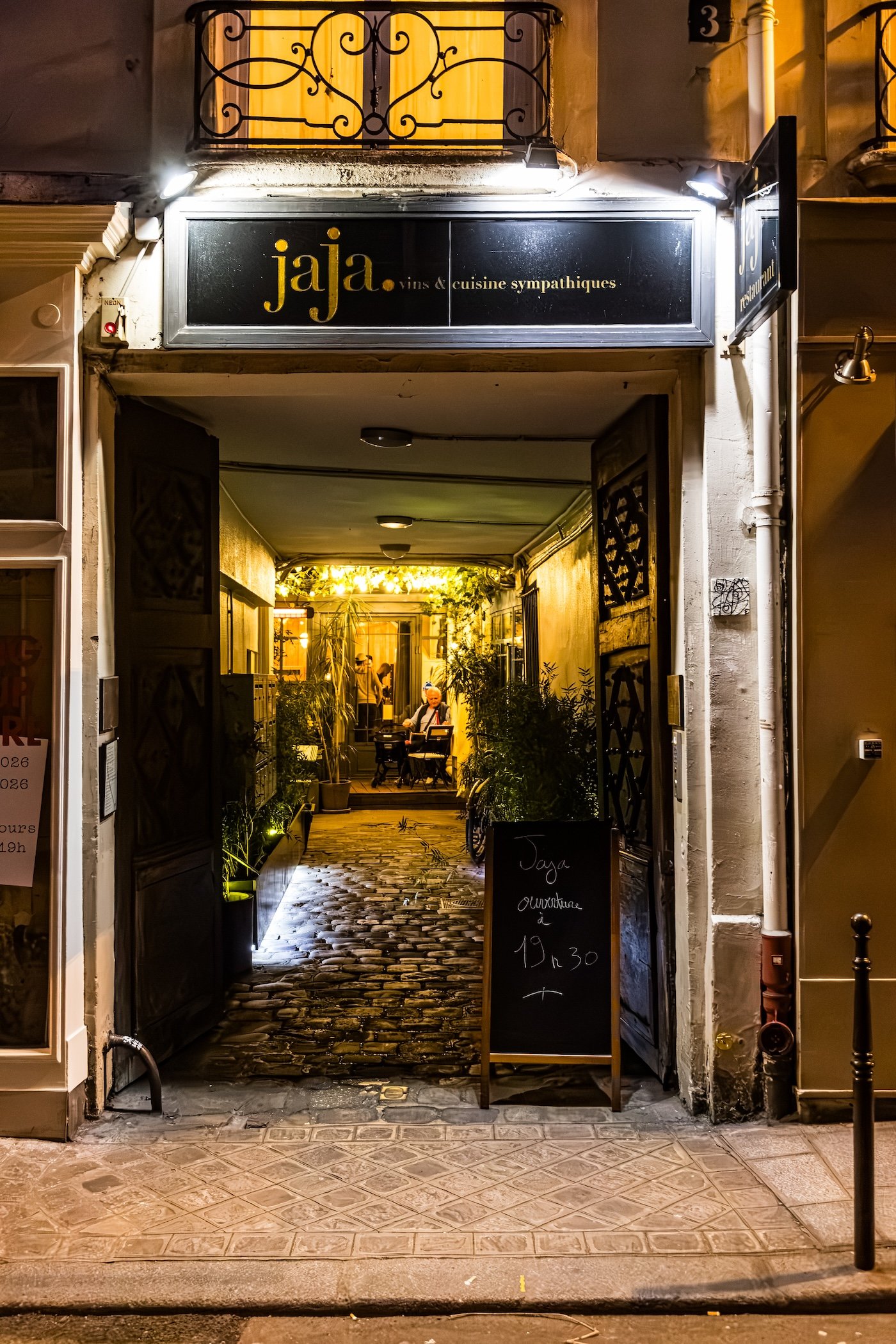
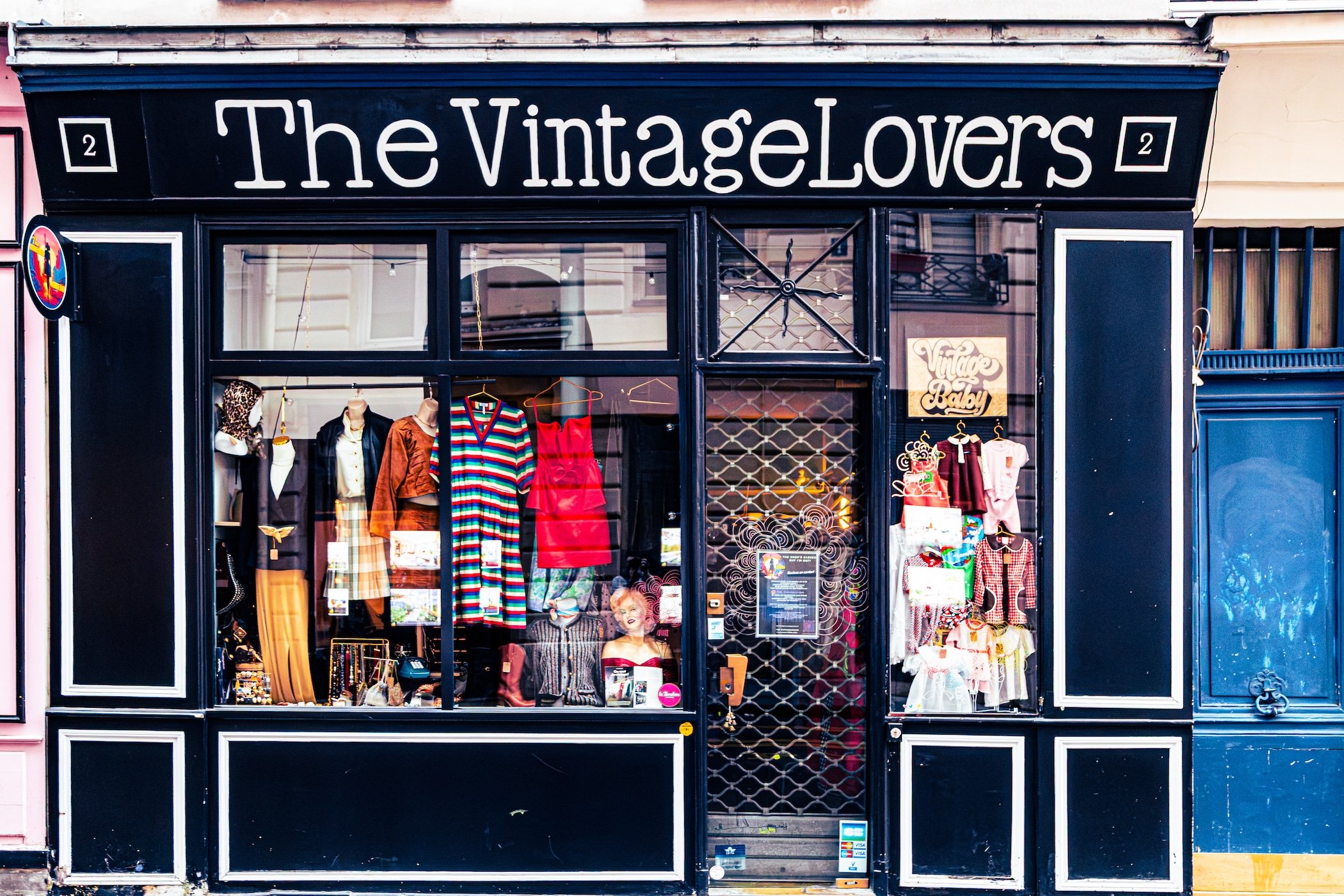
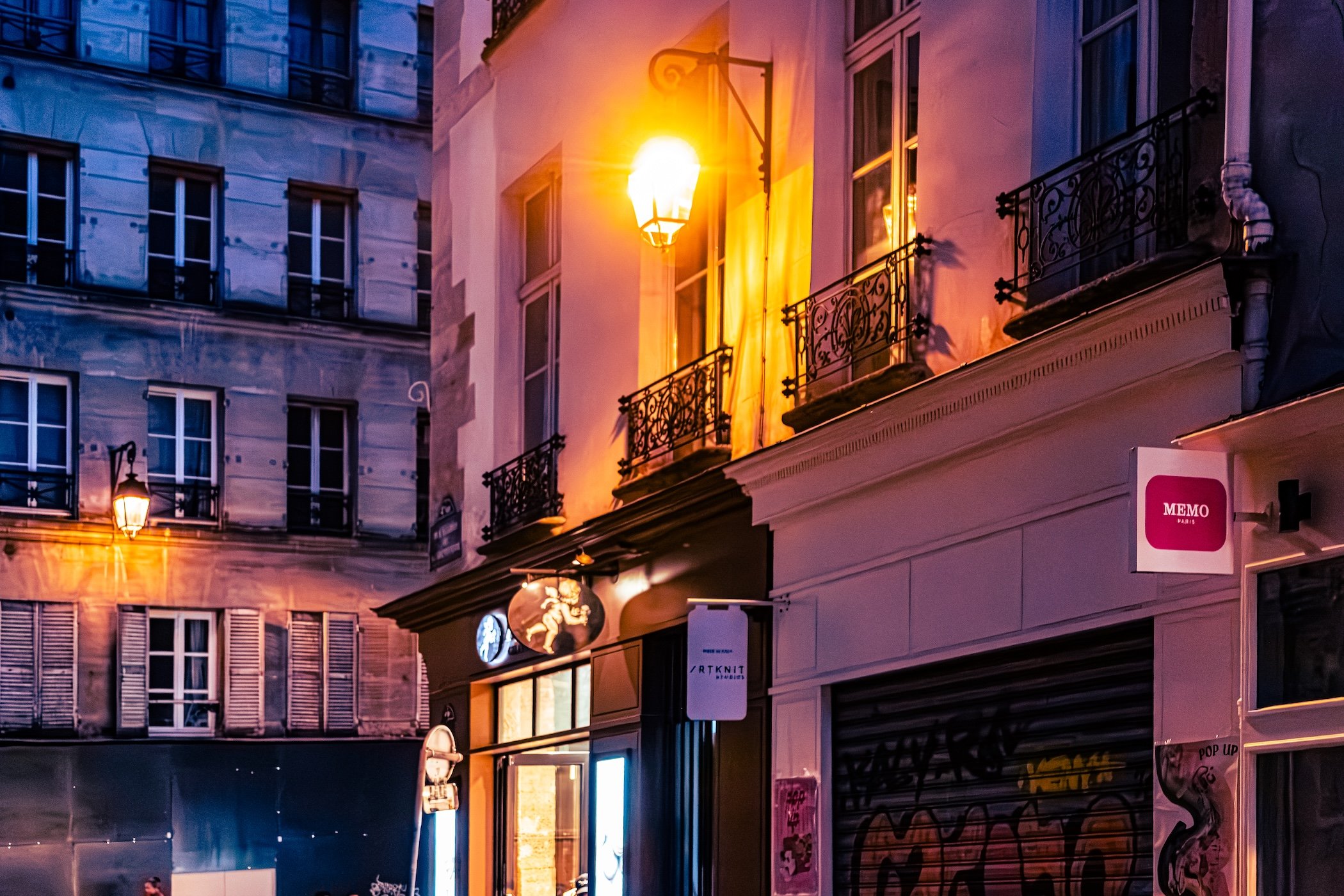
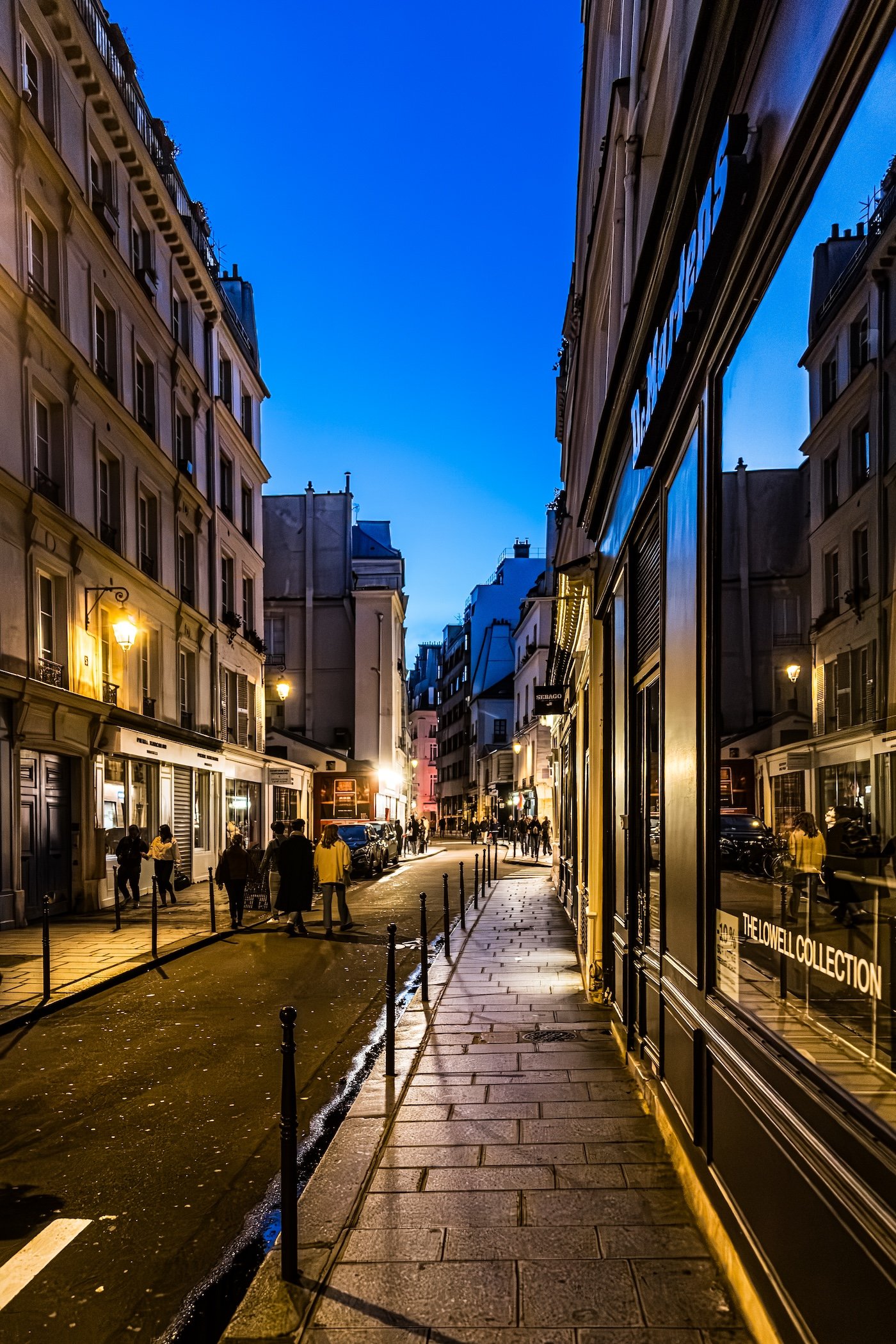
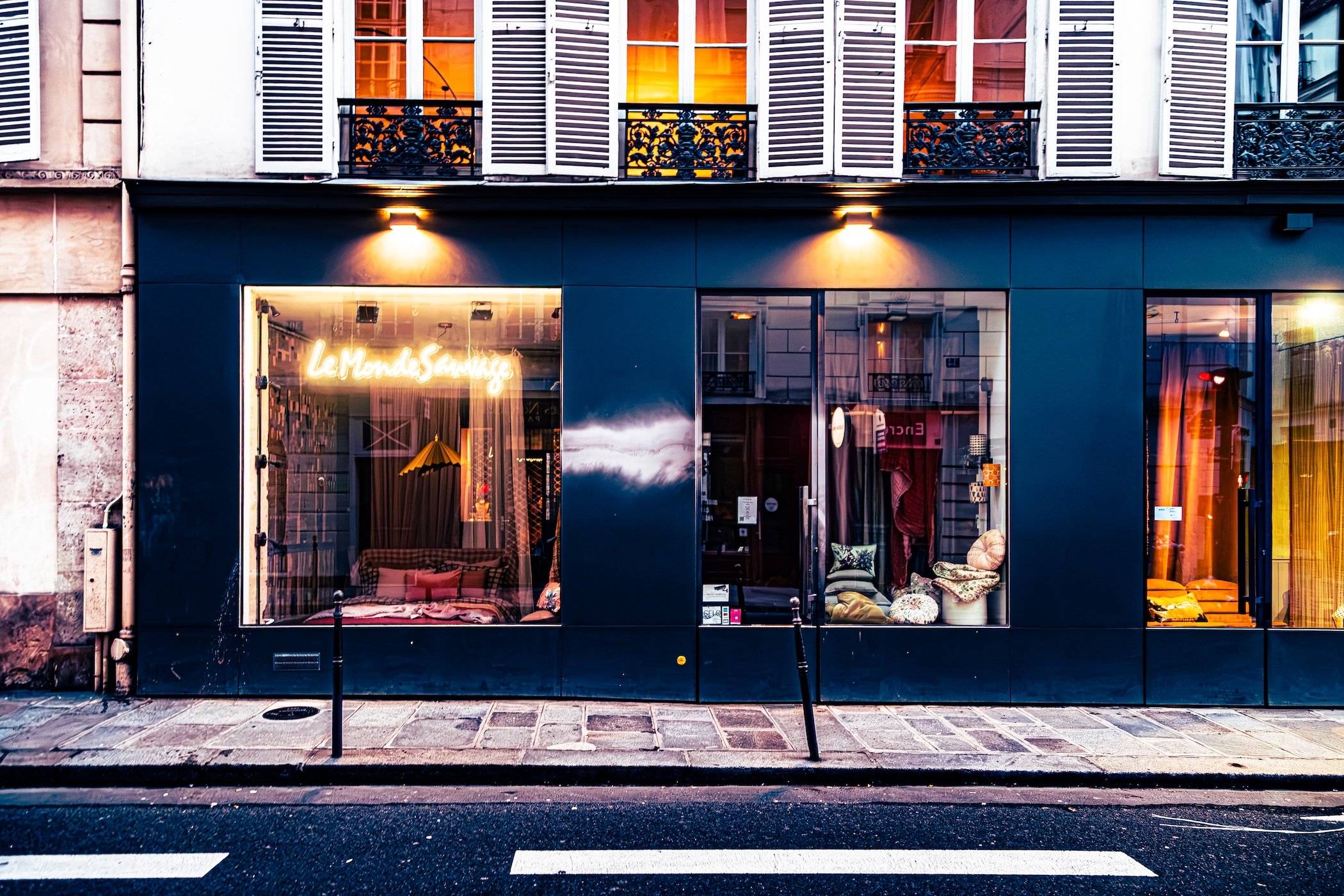
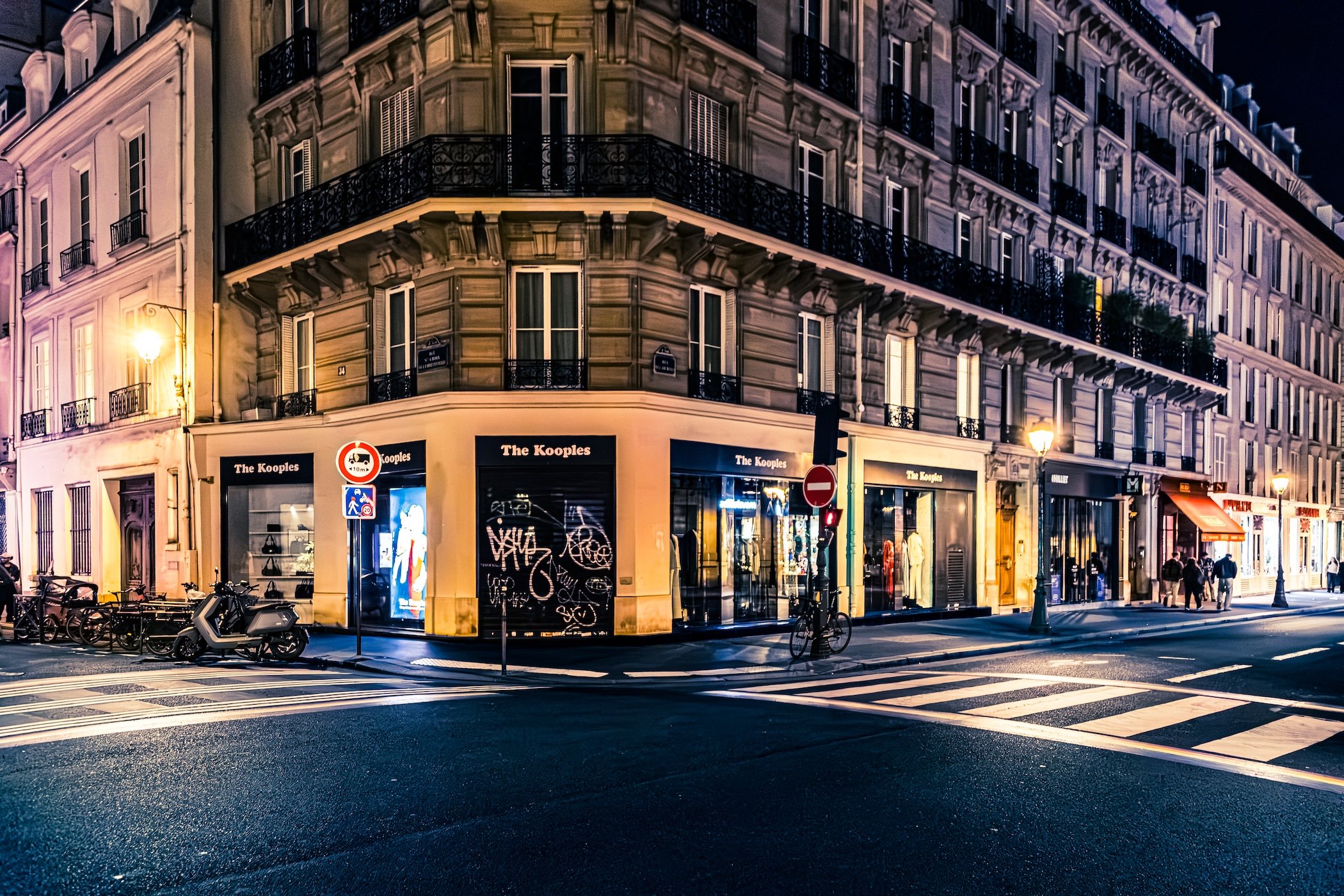
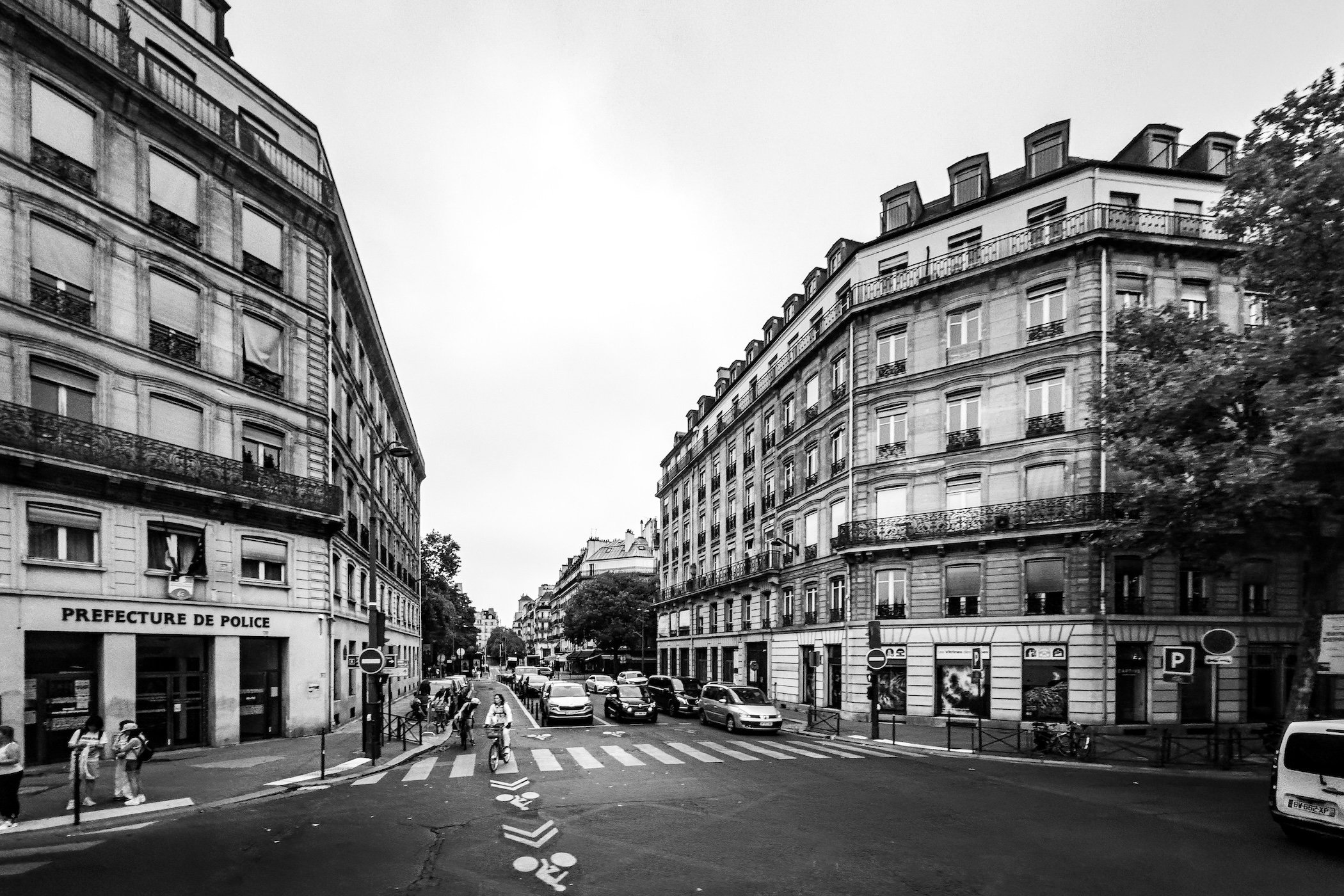
The photographs of April 4 begin with architectural details, painted storefronts, café fronts, signs, windows, and the layered façades of the mainland neighborhoods. As the route moved from Rue des Tournelles toward Rue Saint-Antoine, the camera widened with the streetscape. Intimate compositions gave way to longer façades, broader intersections, traffic, terraces, and the remaining blue and gold of the evening sky. Natural and artificial light briefly coexisted, allowing amber interiors and illuminated signs to emerge while the architecture still retained the color and definition of daylight.
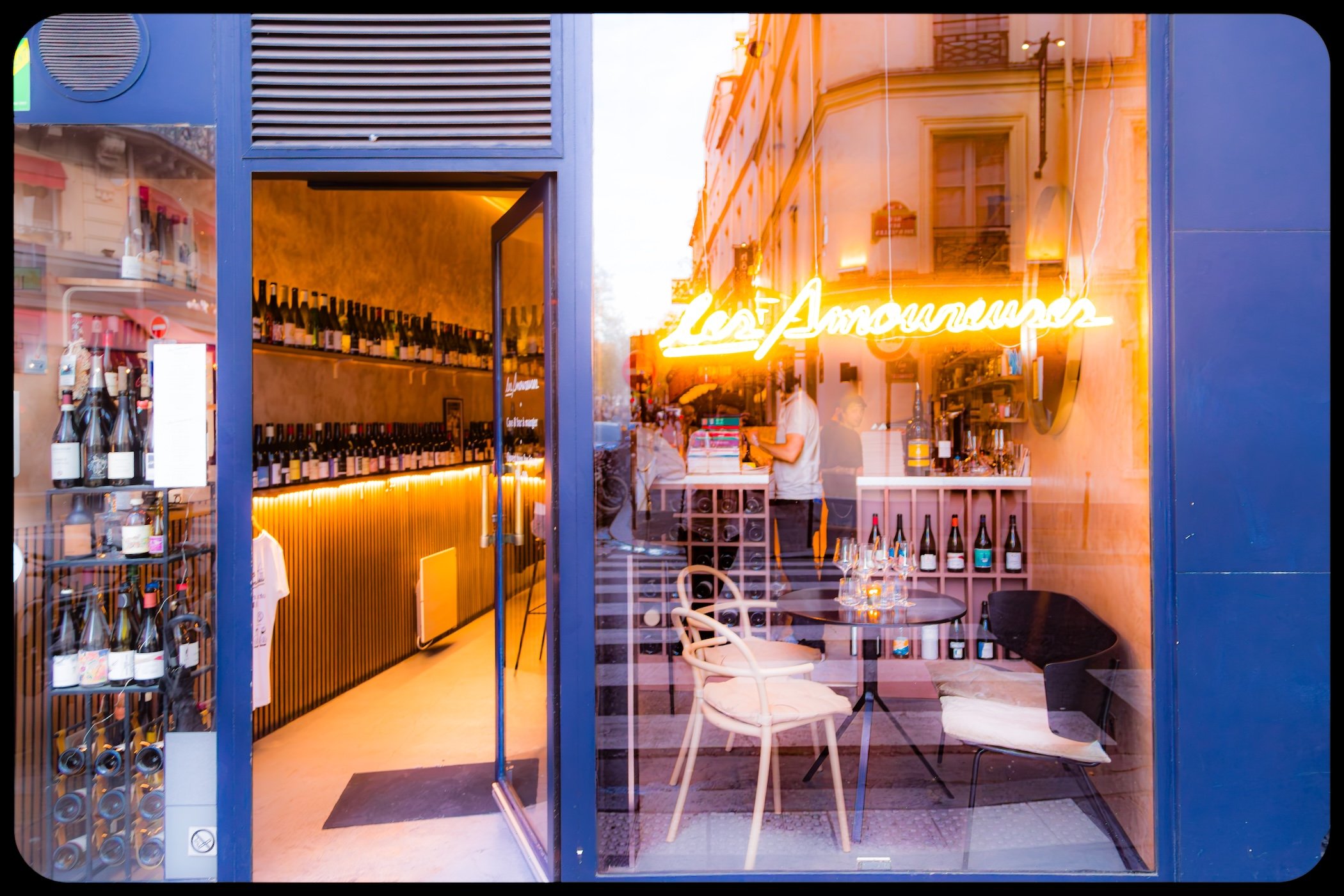
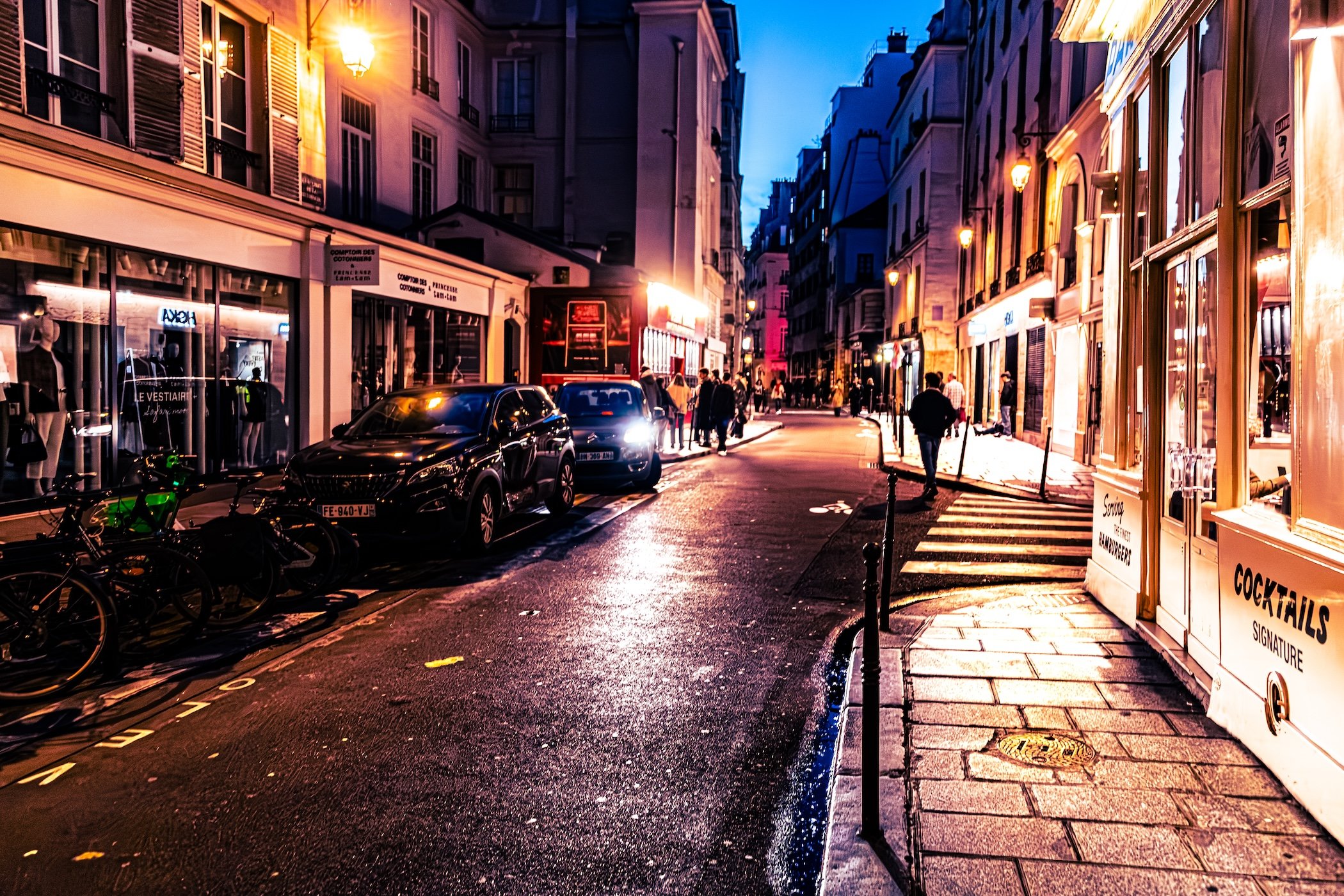
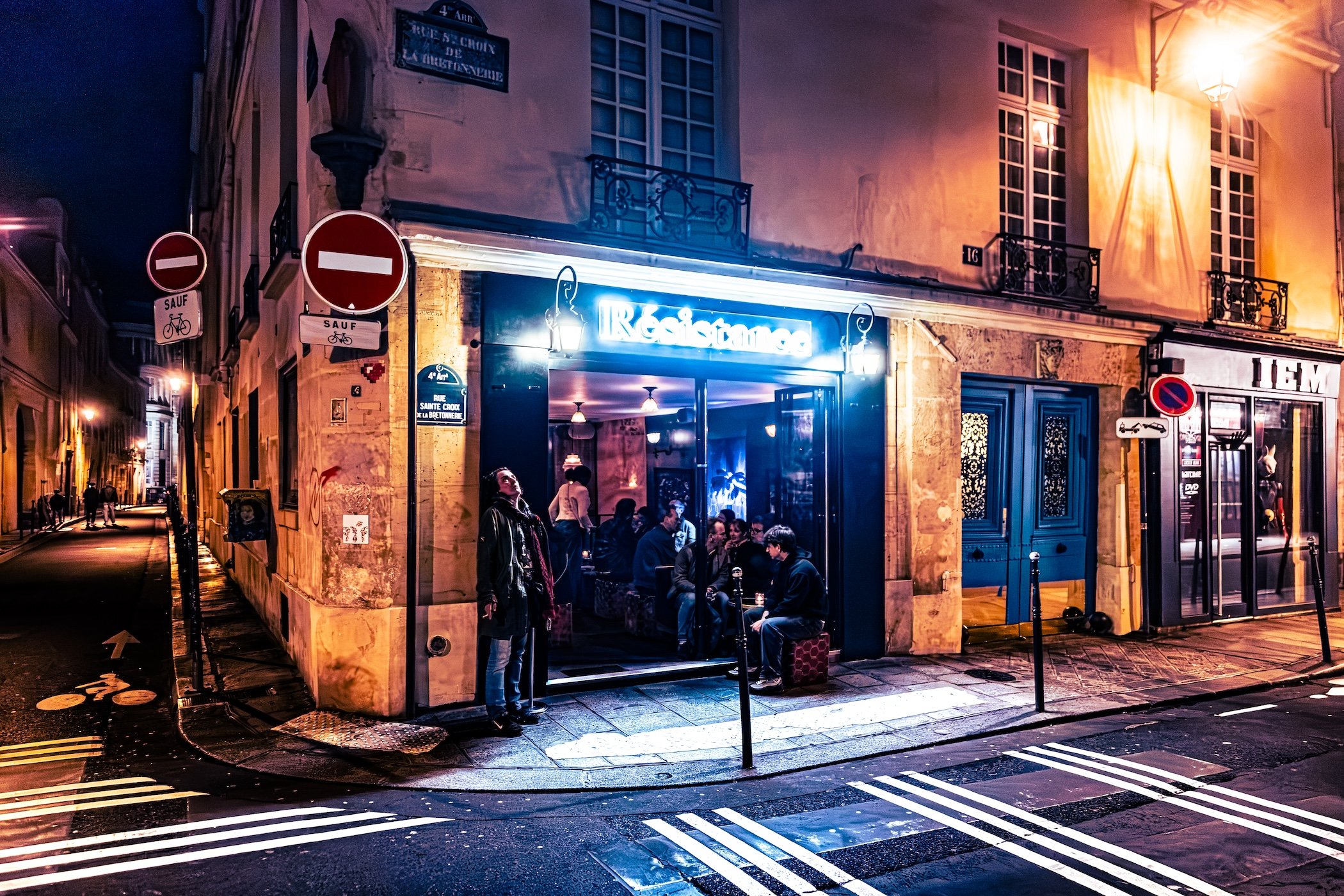
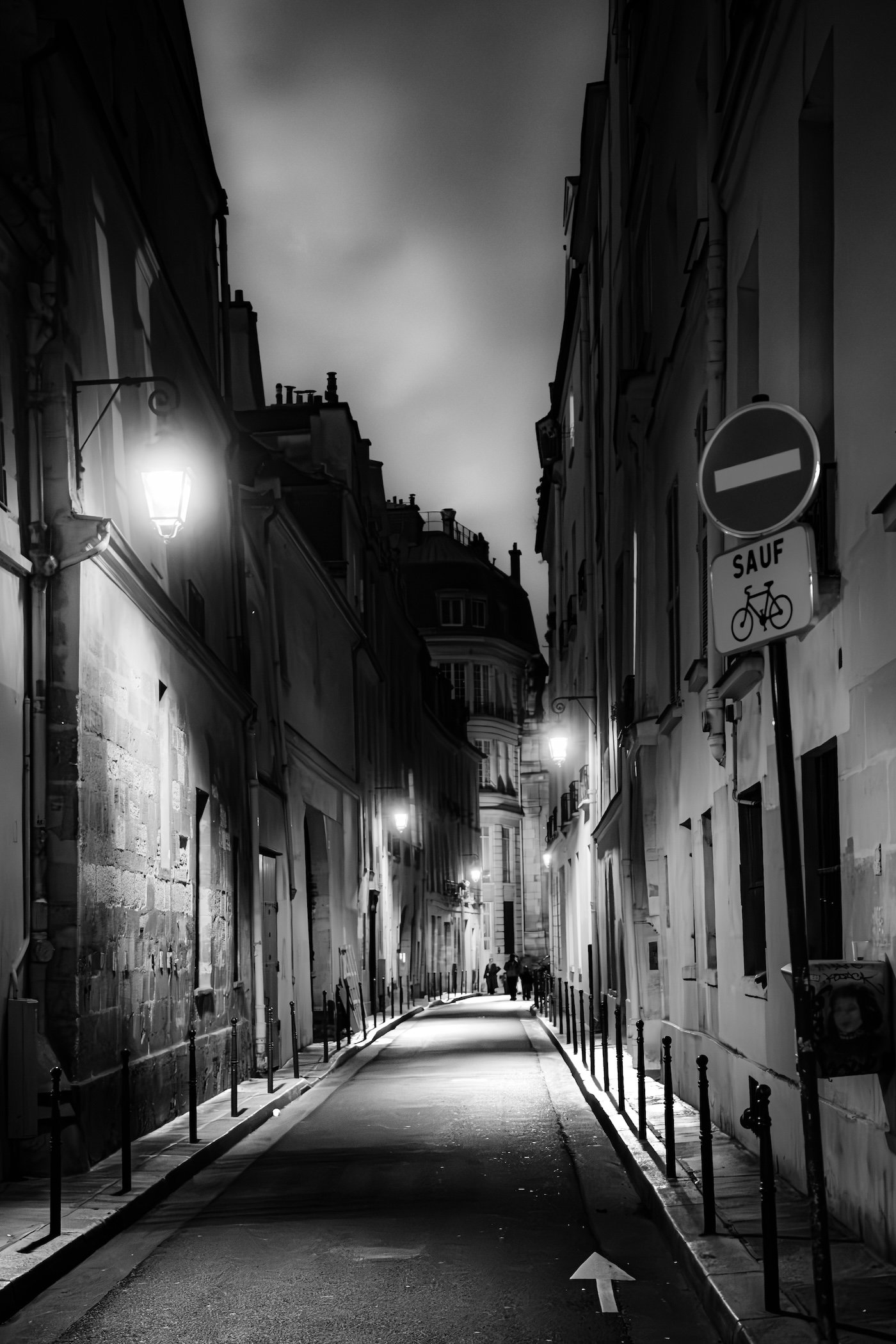
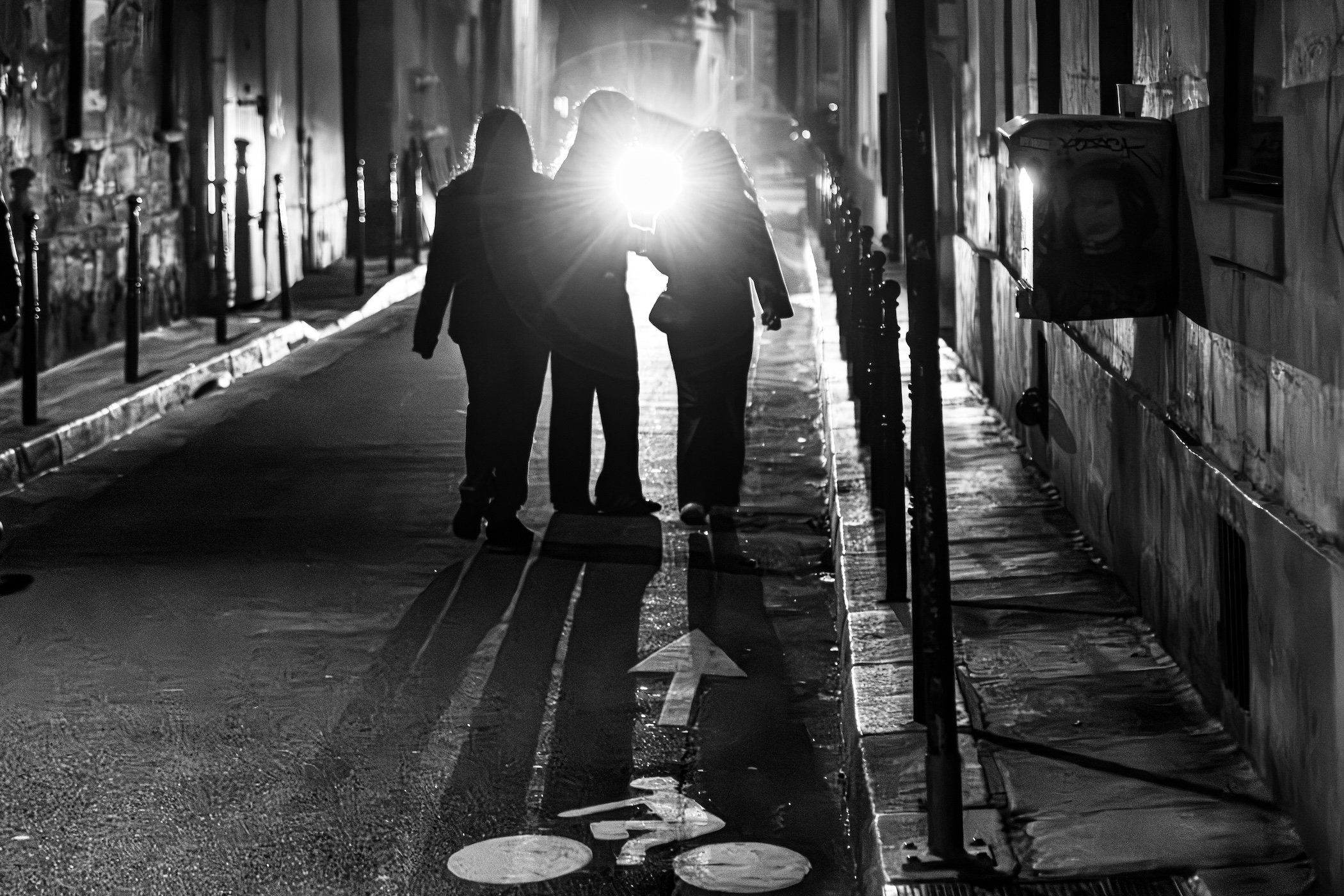
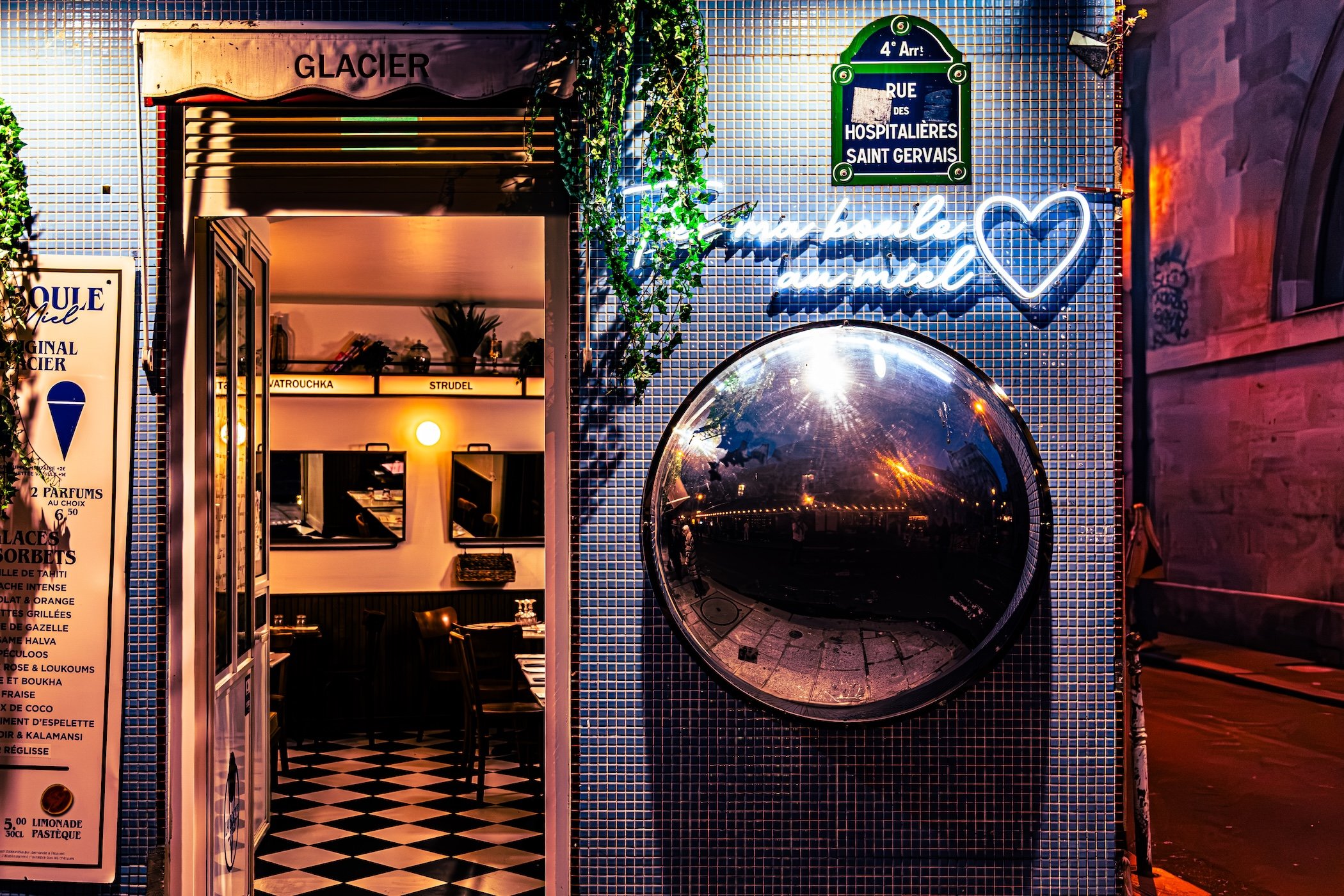
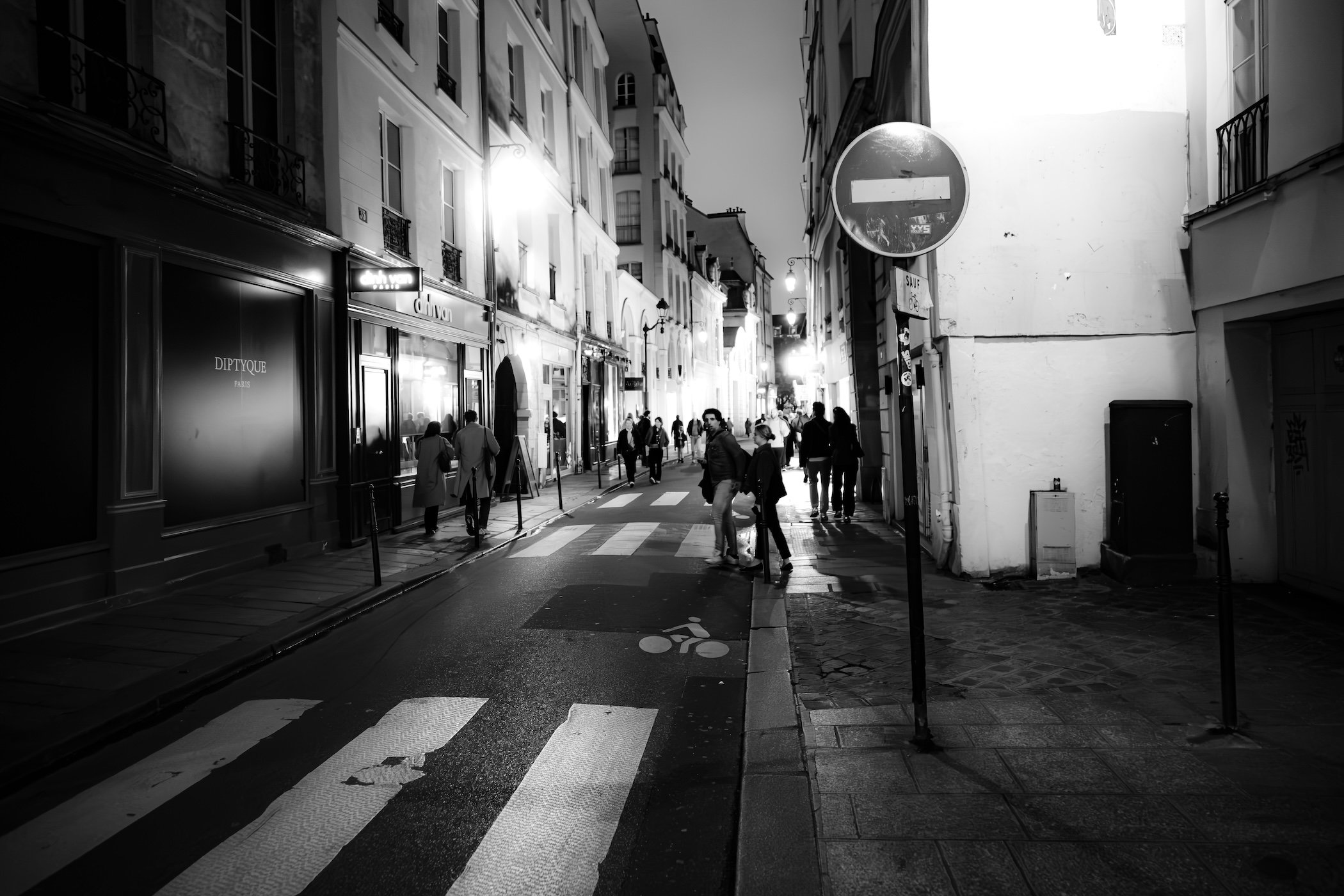
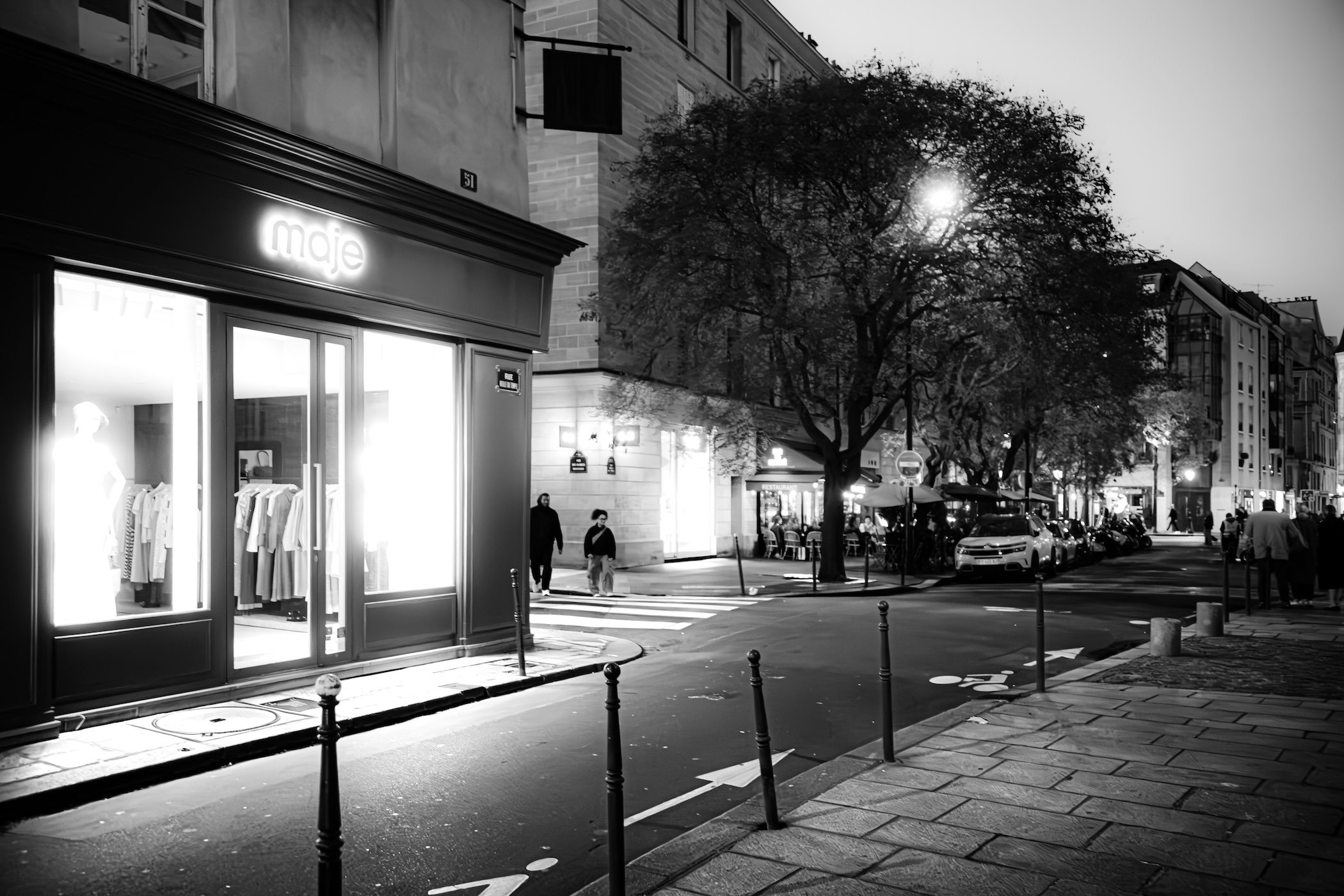
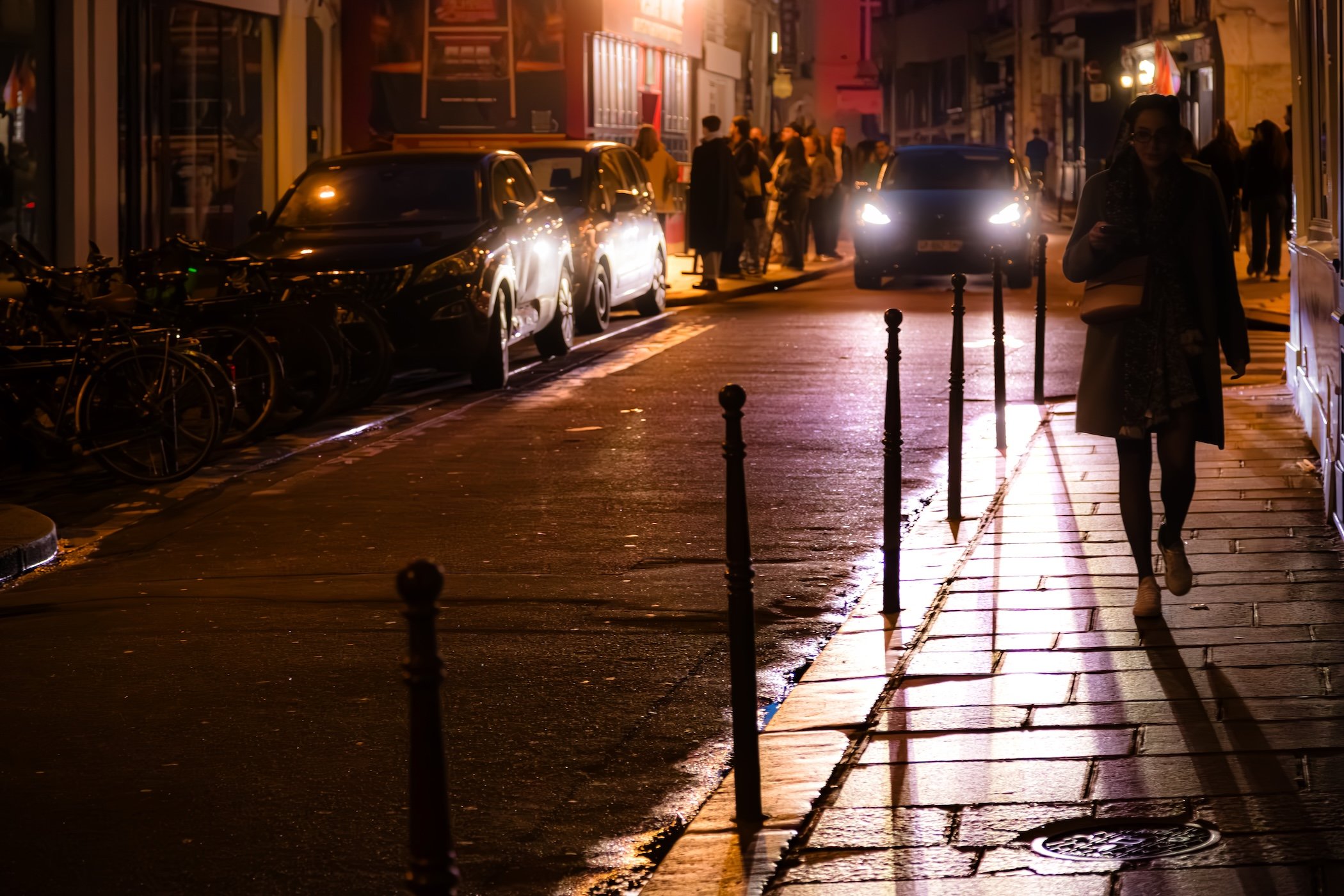
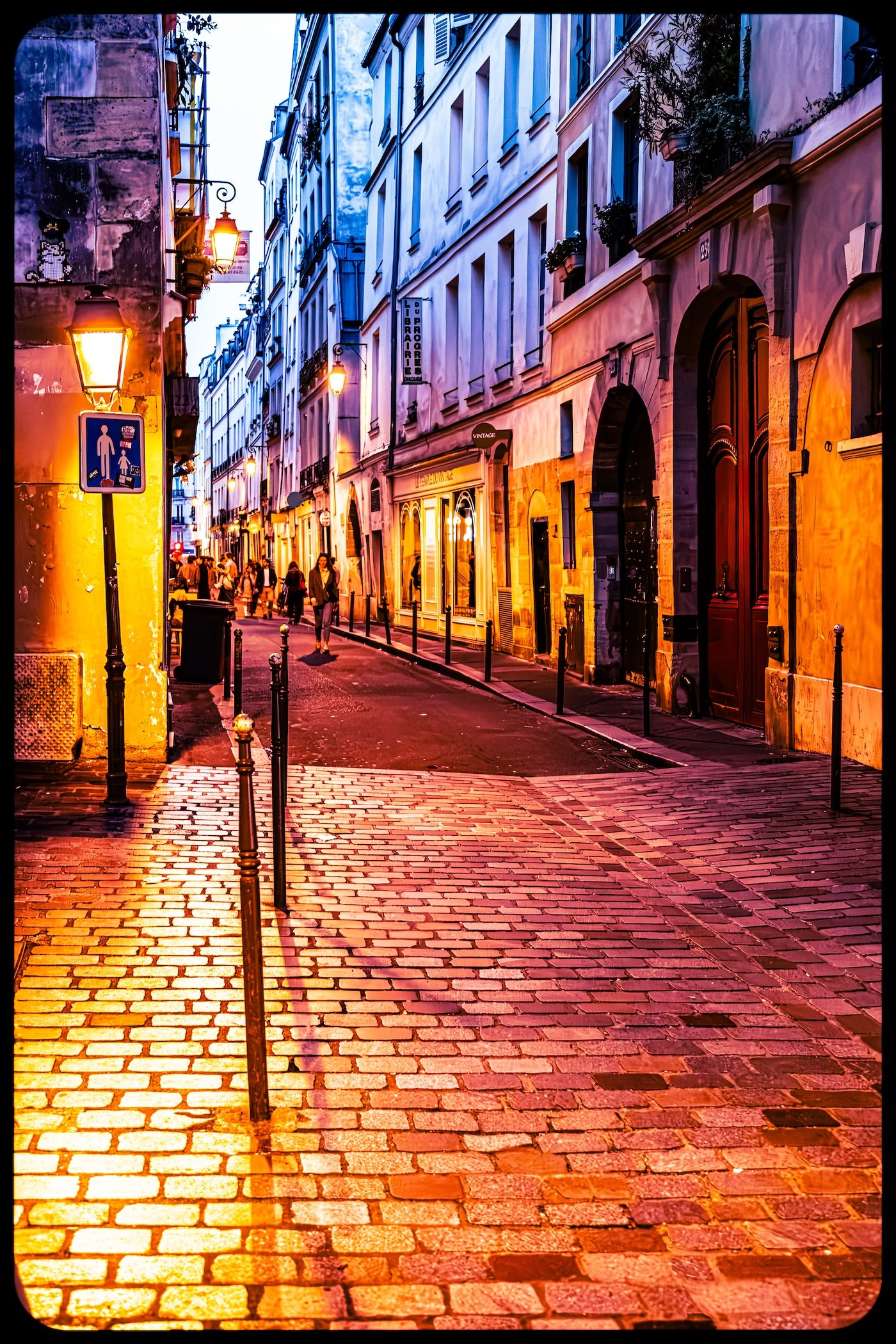
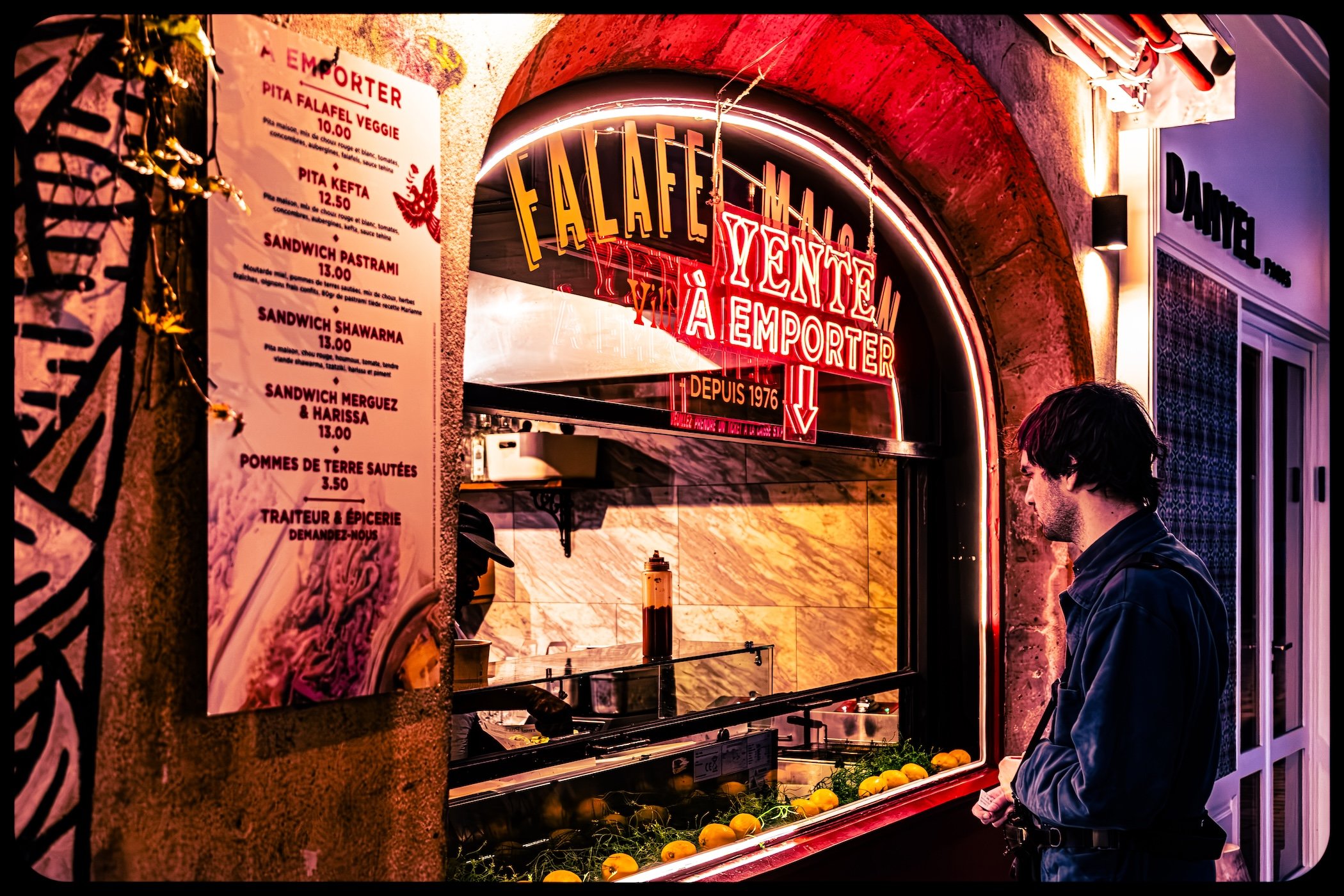
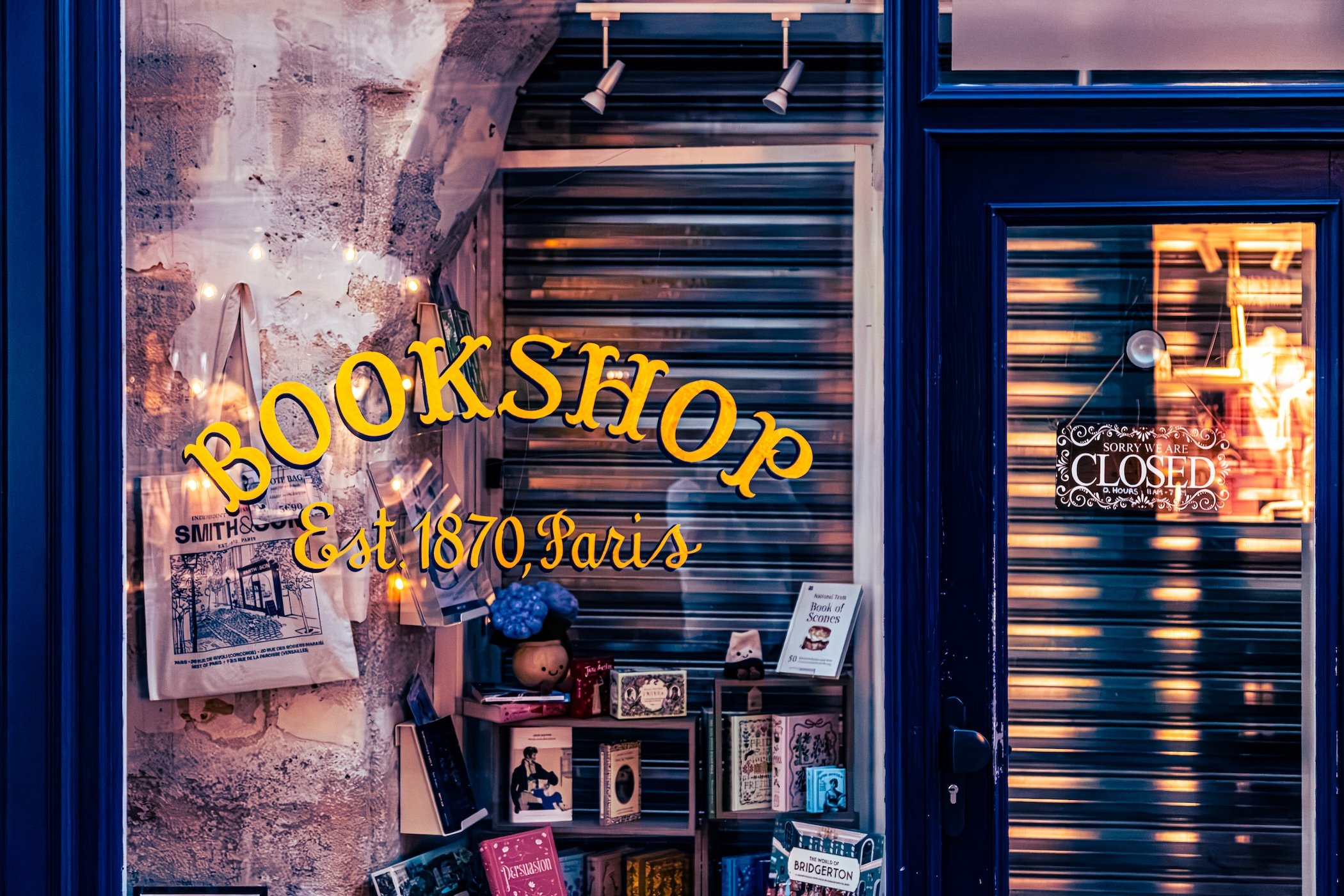
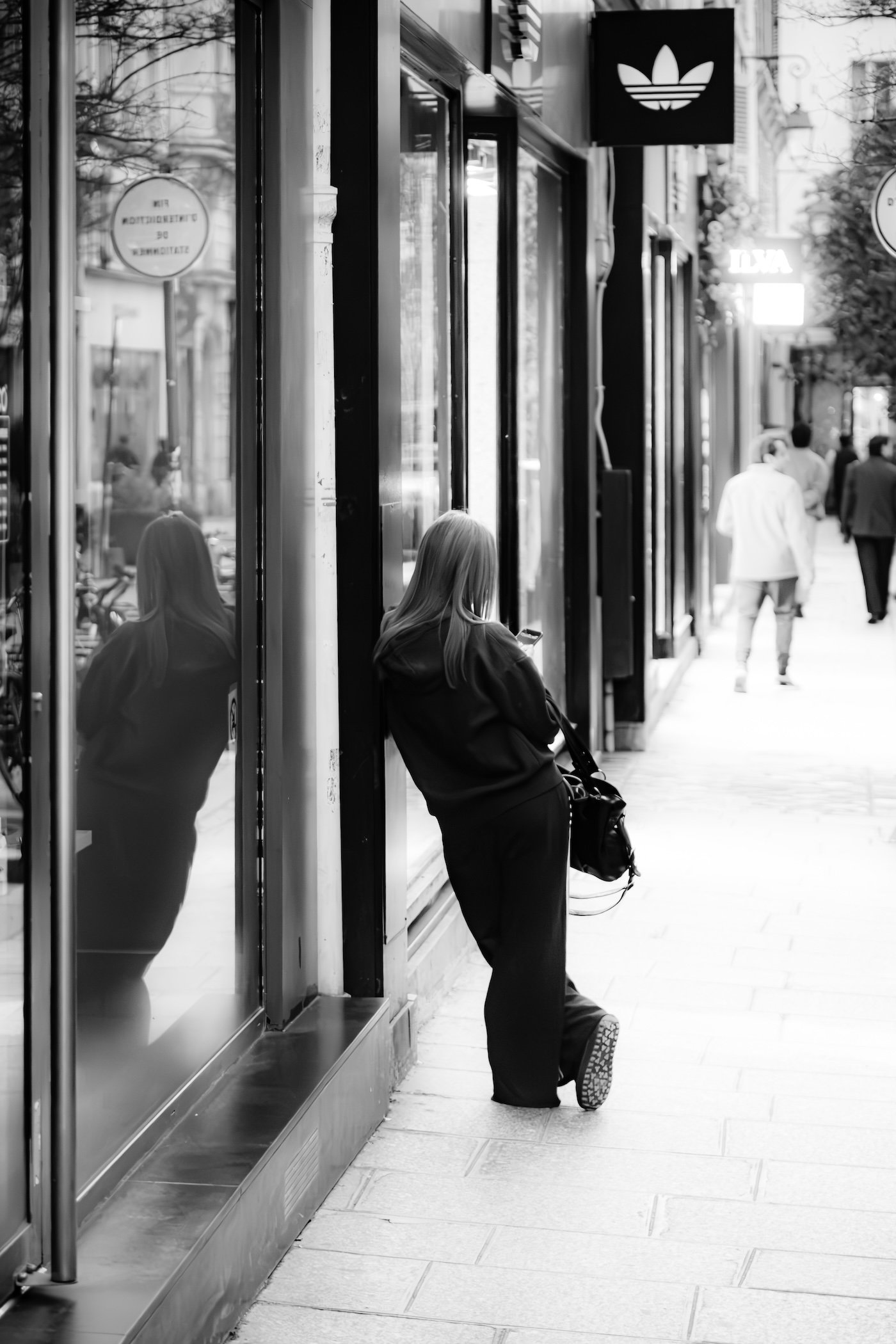
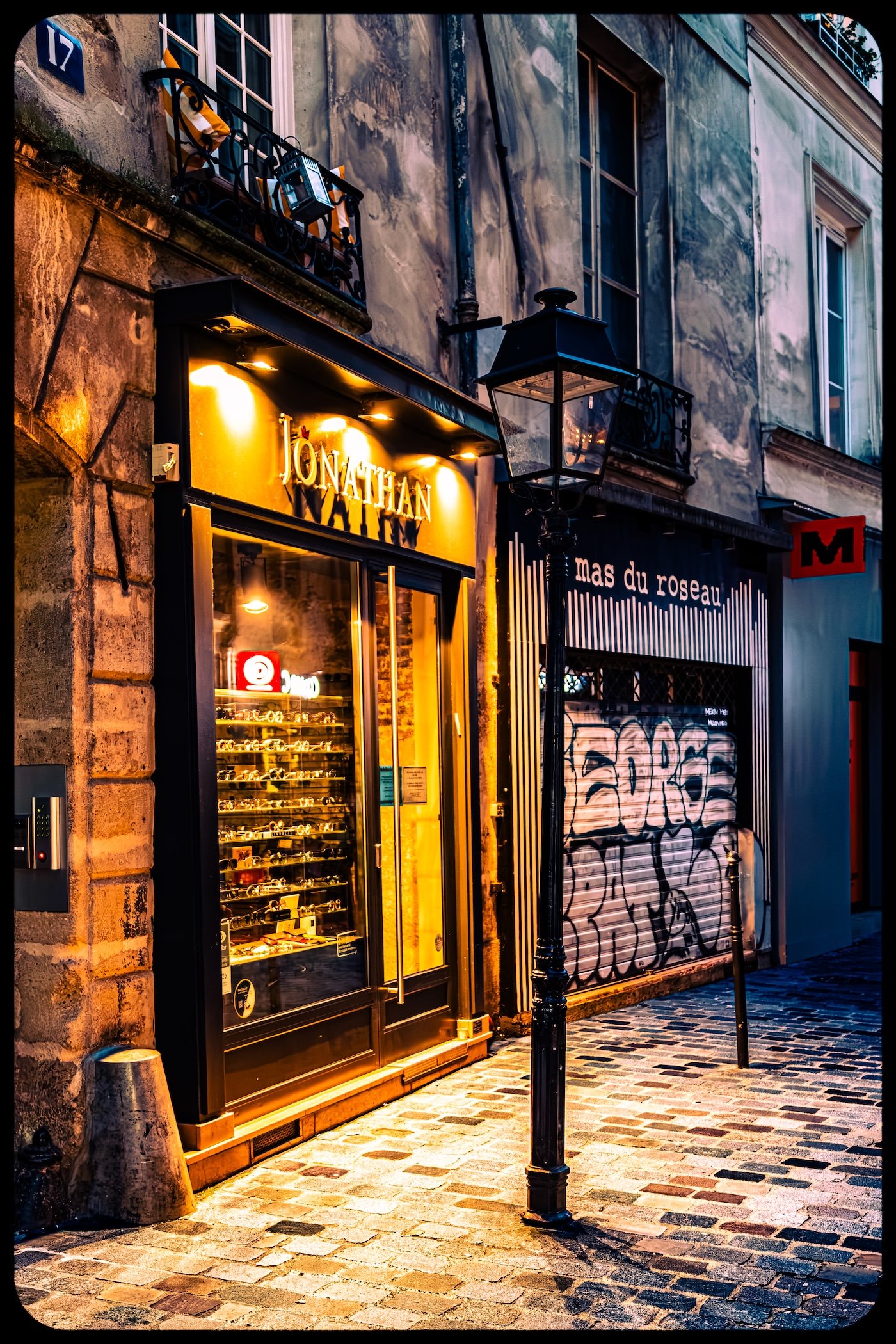
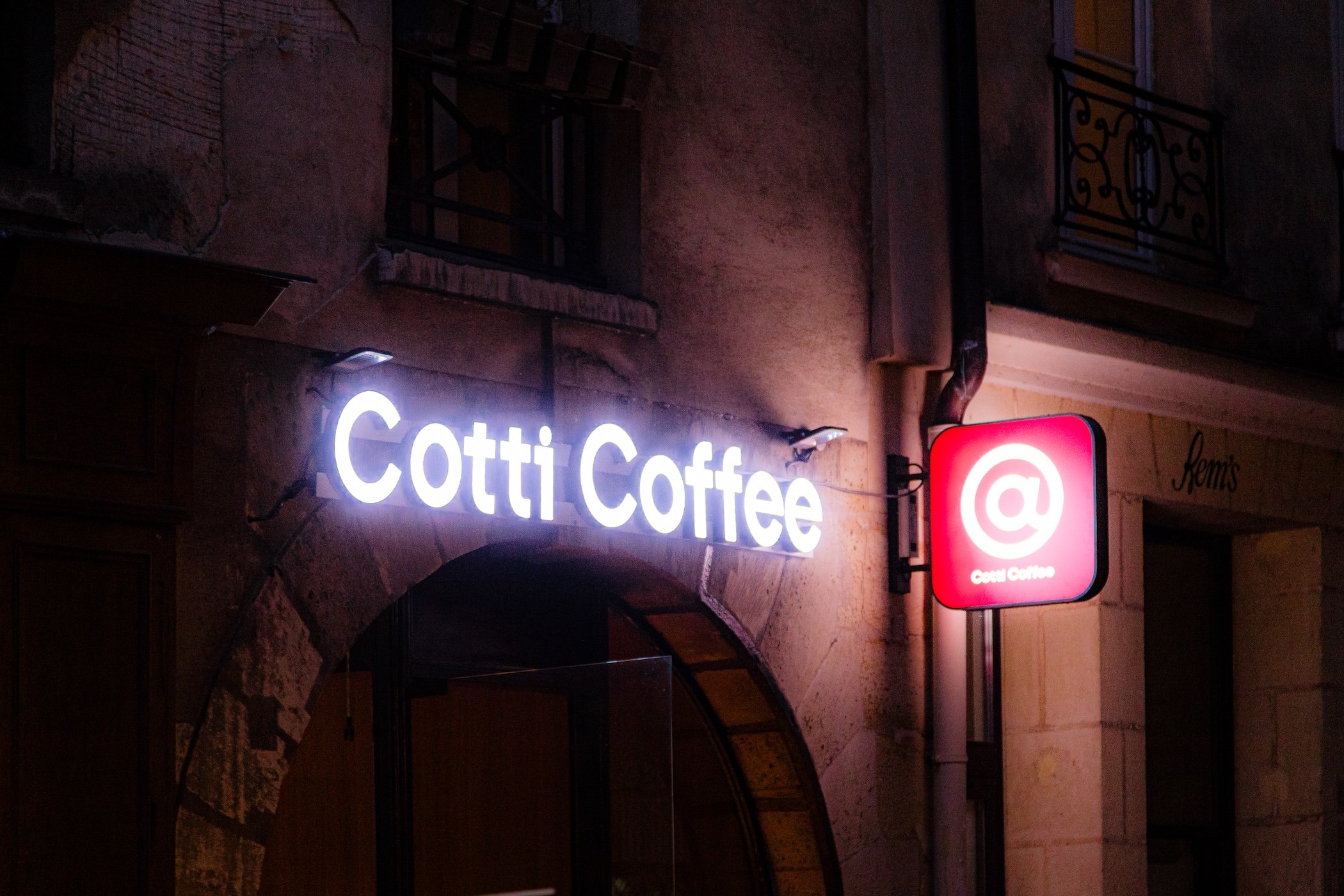
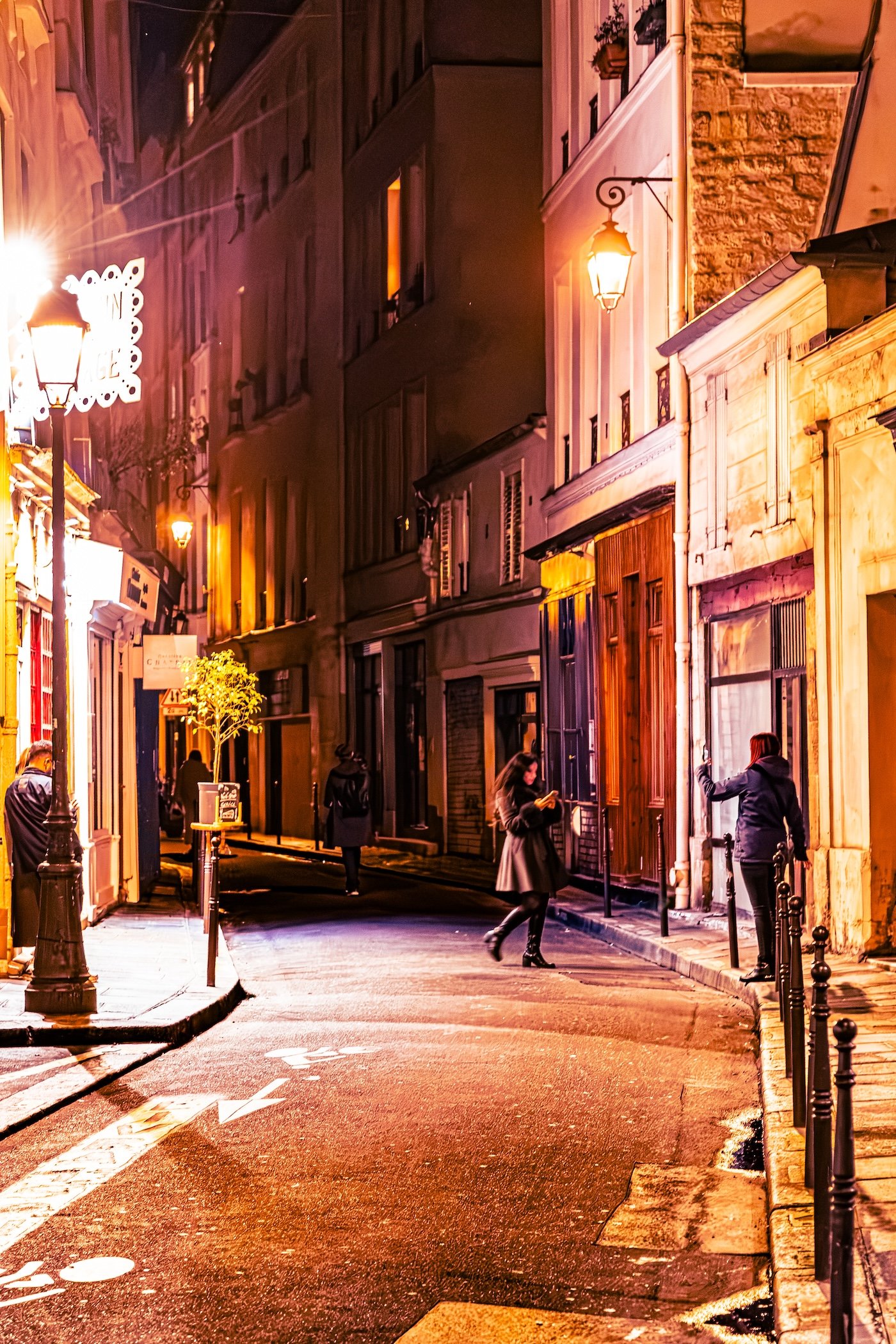
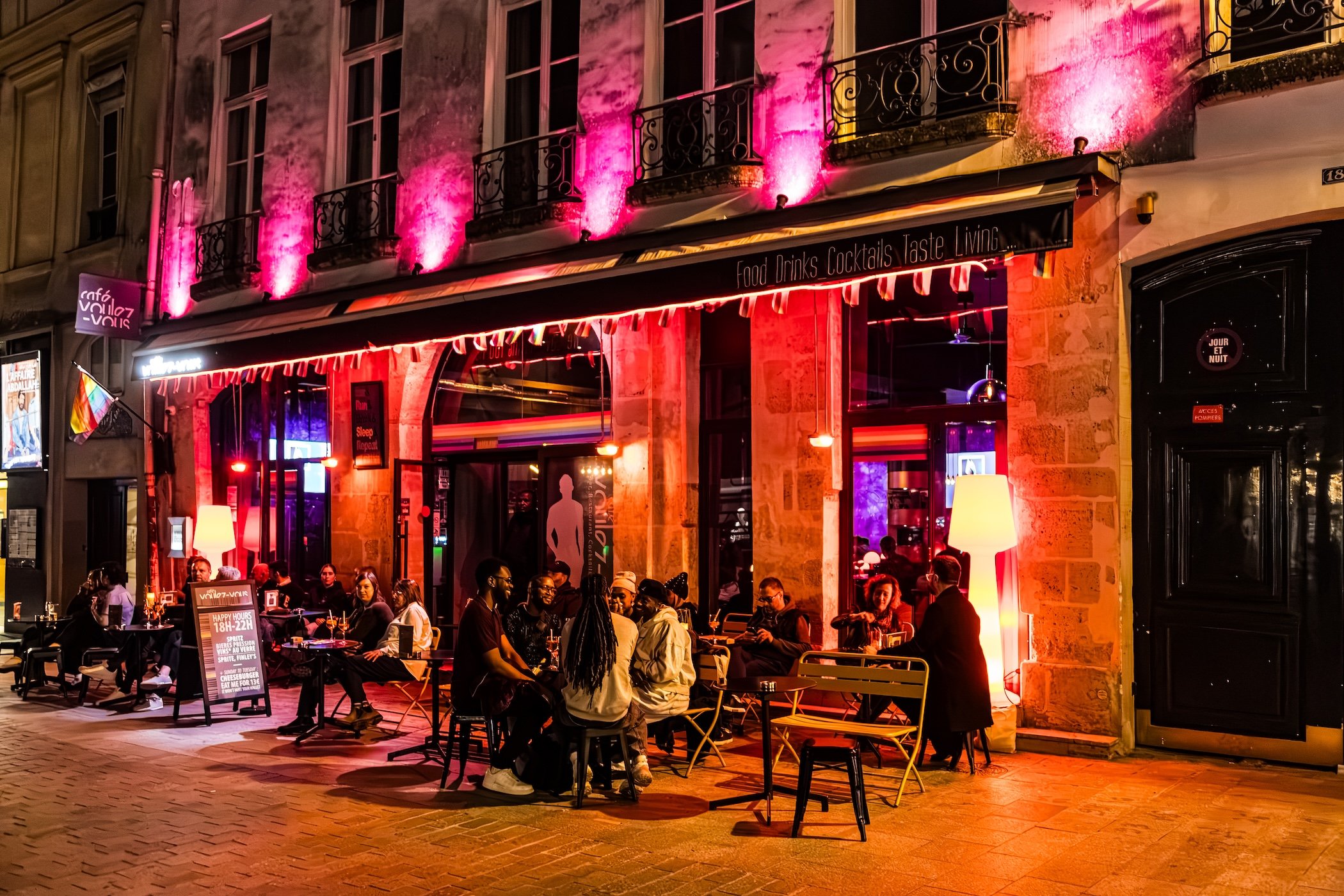
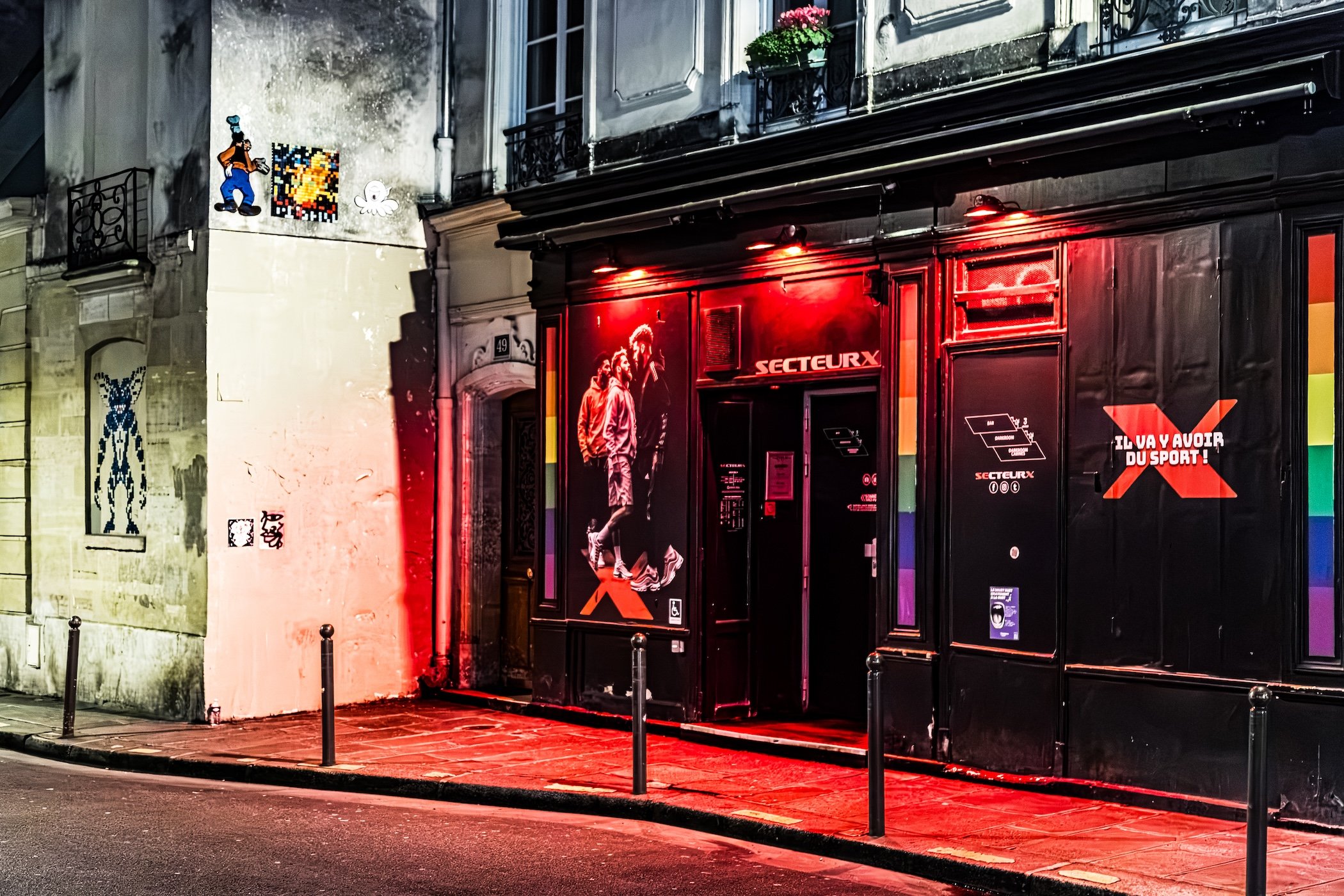
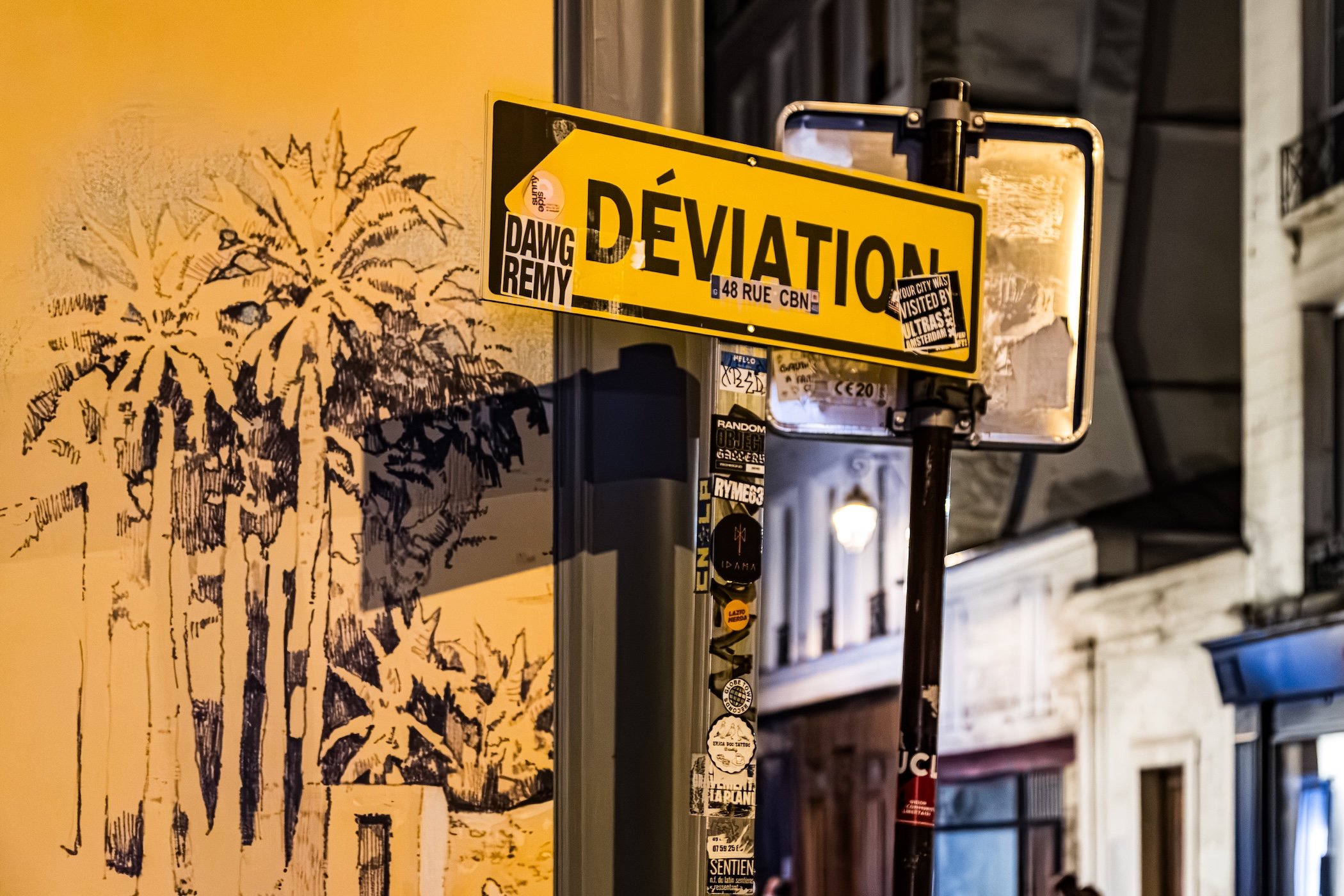
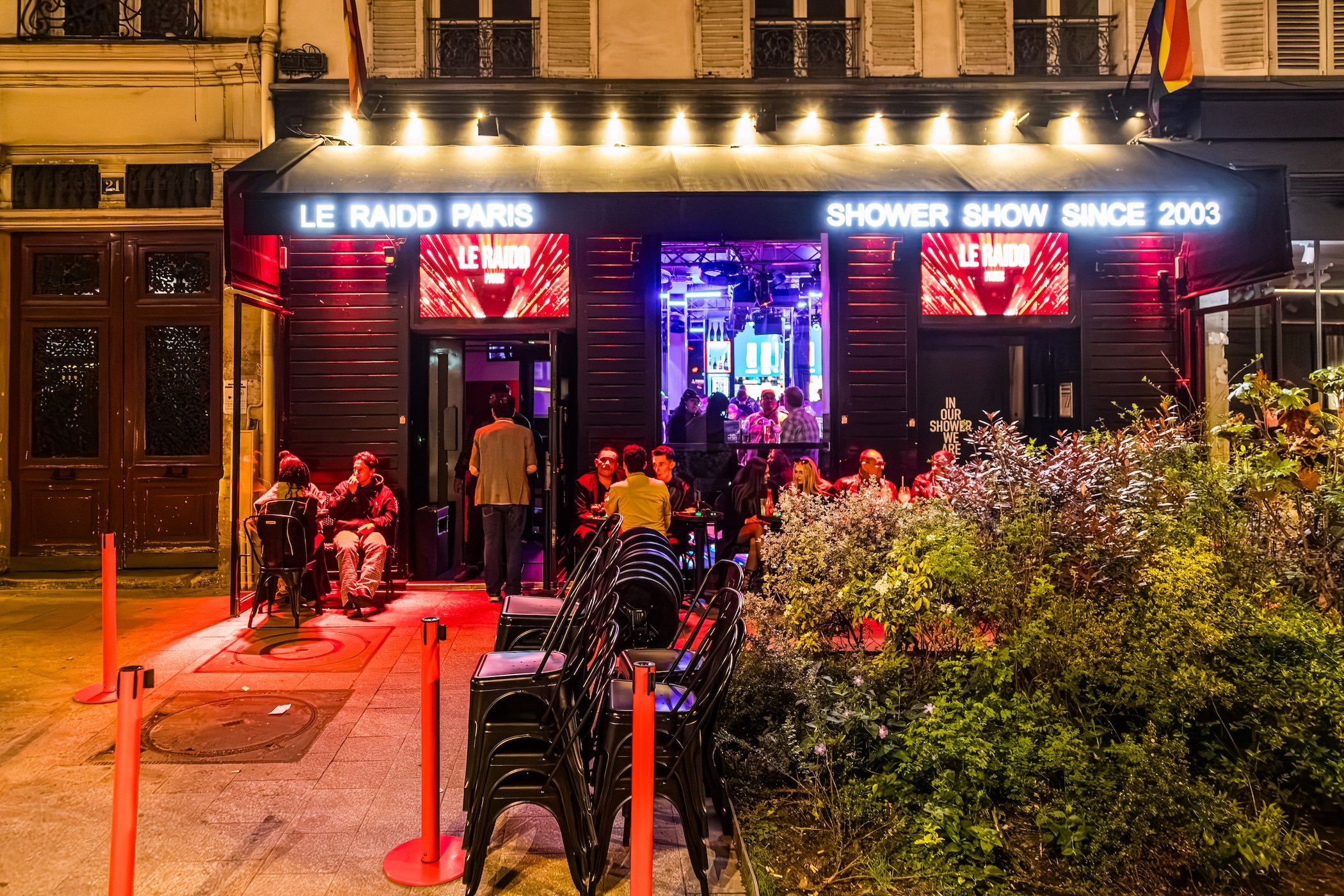
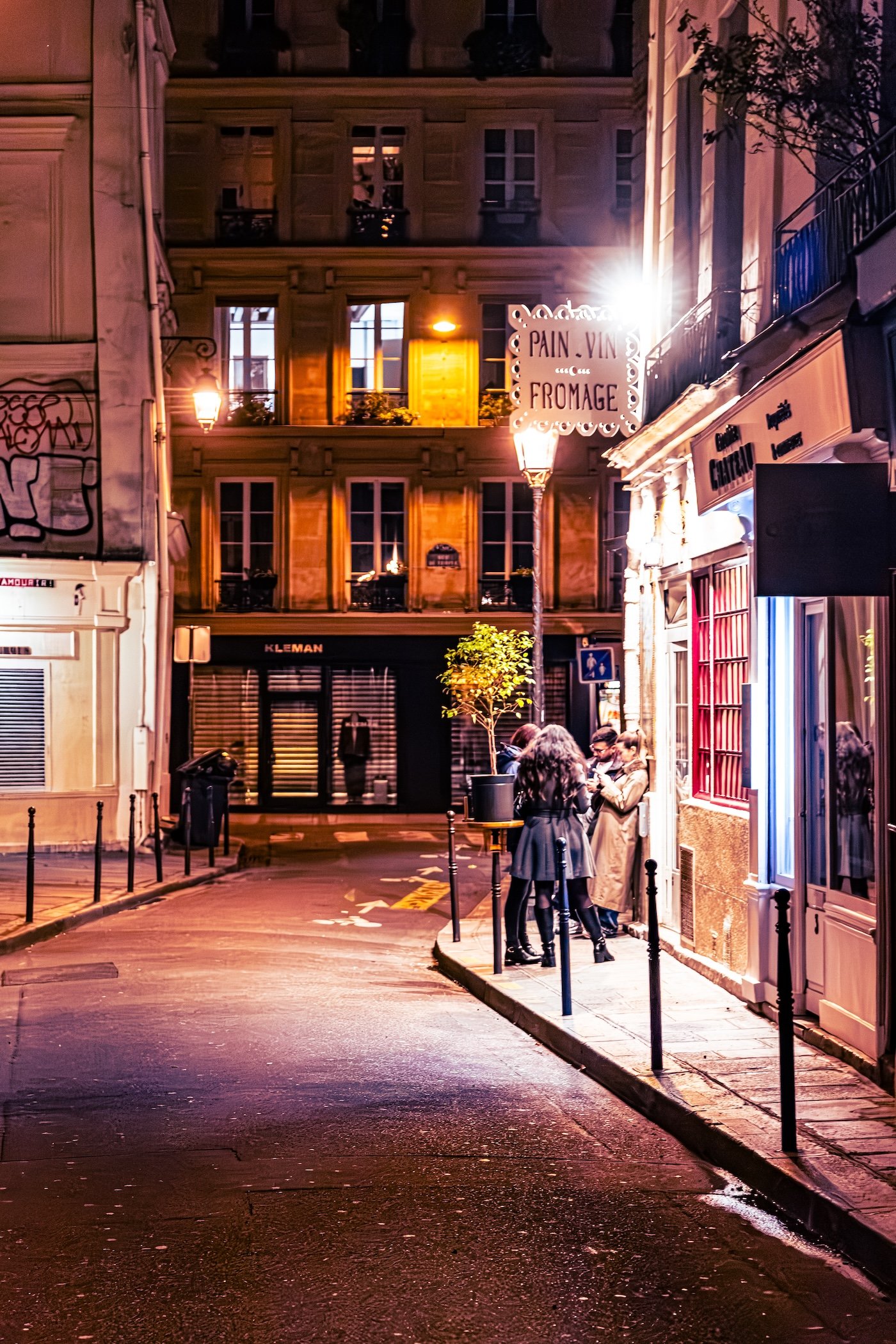
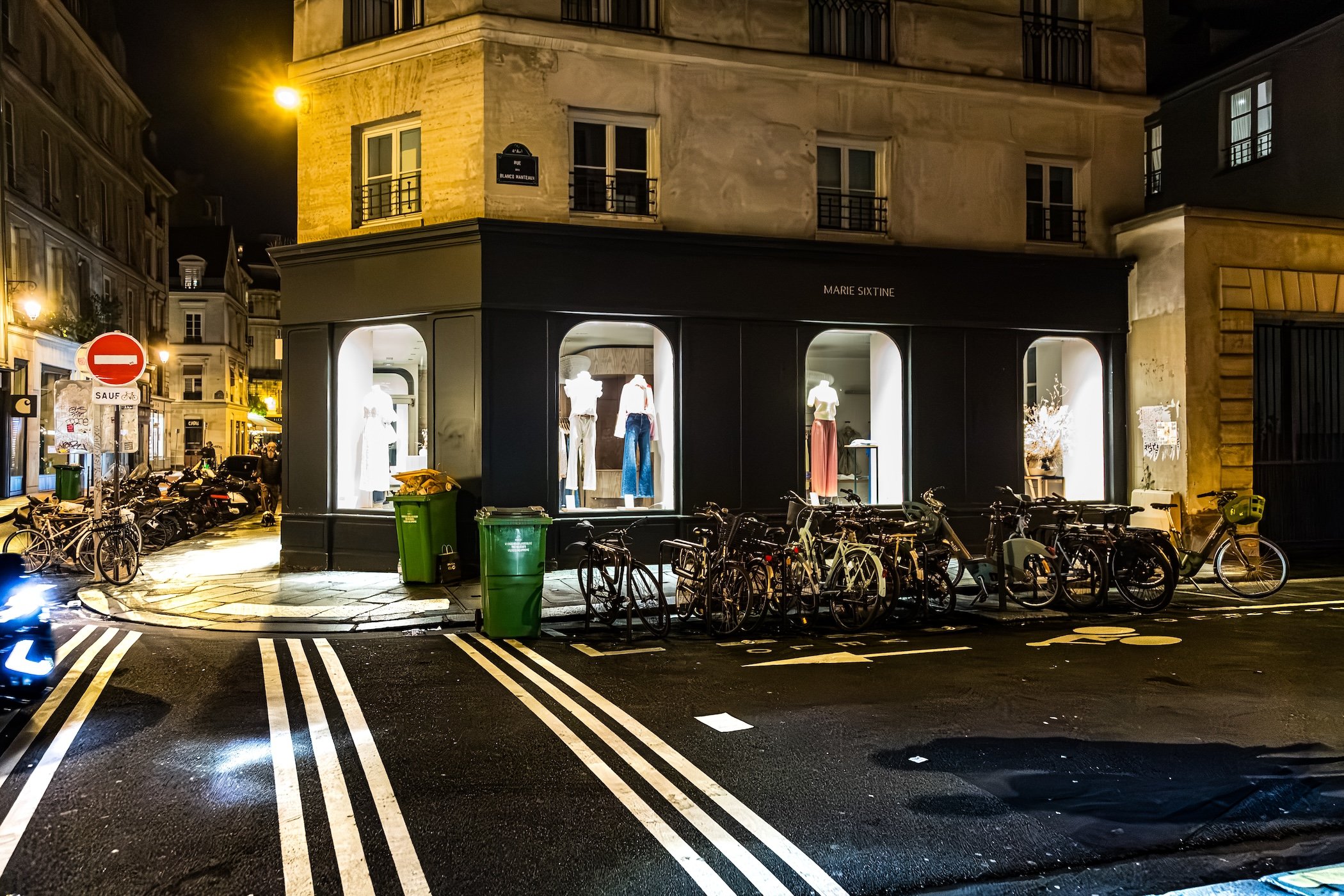
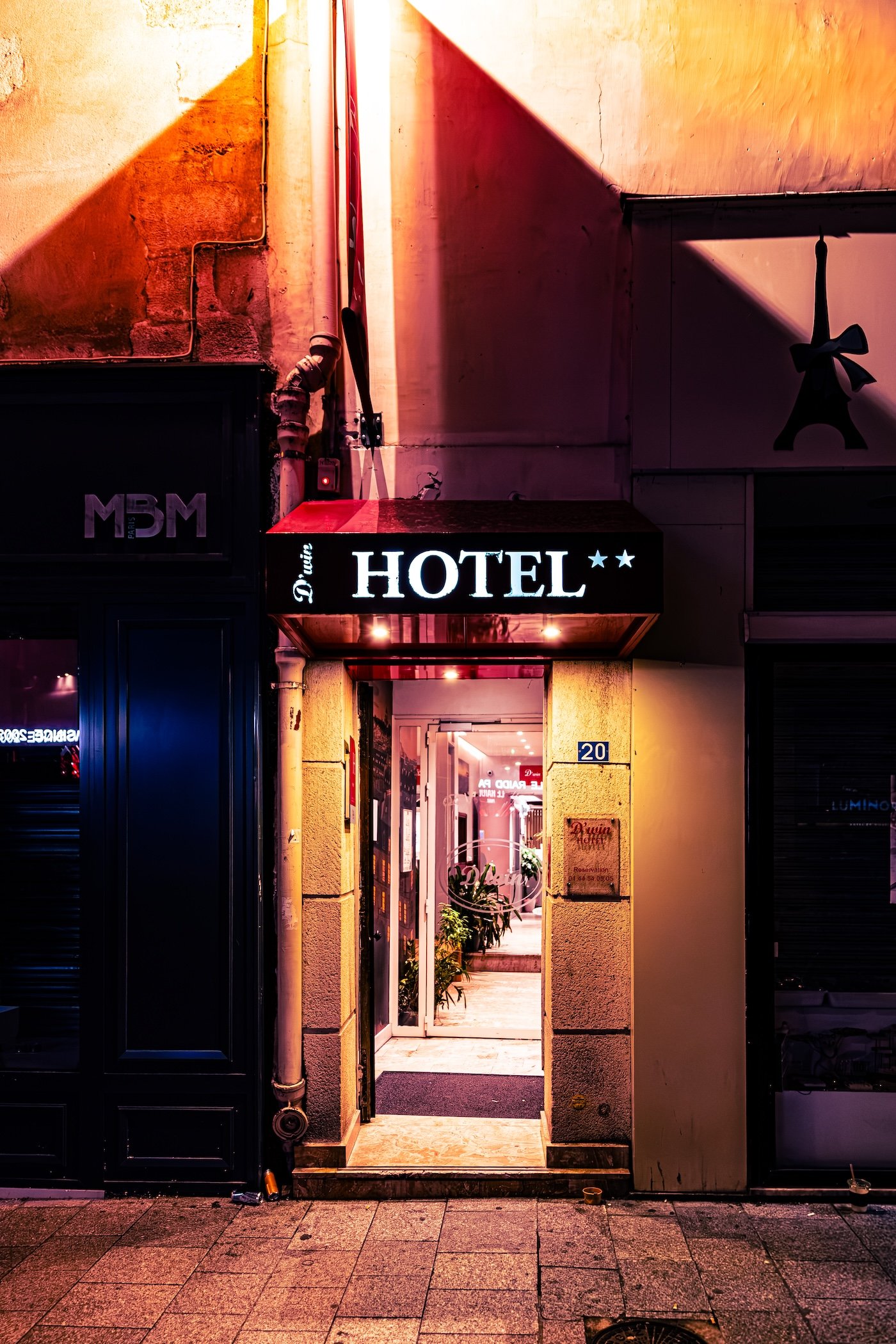
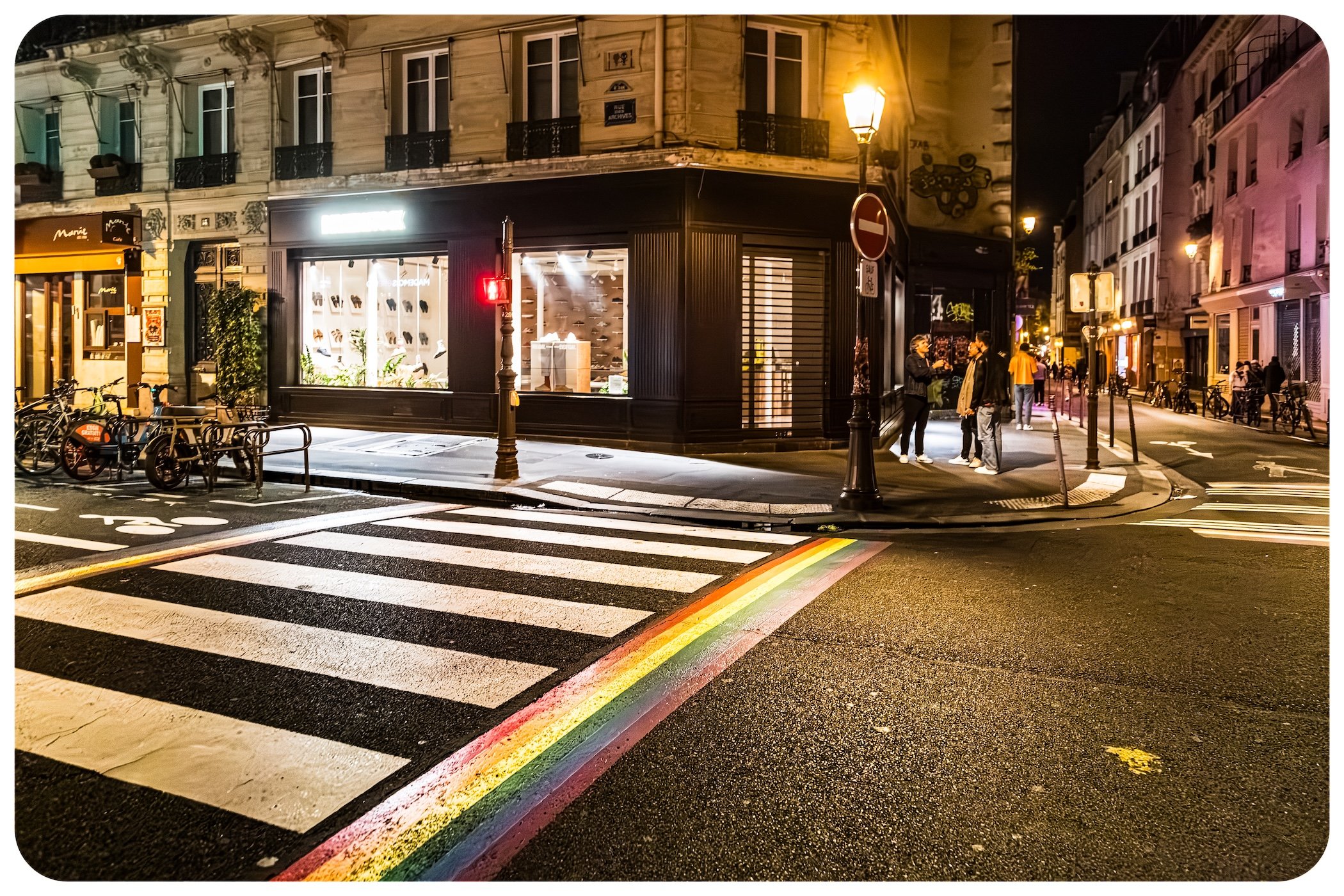
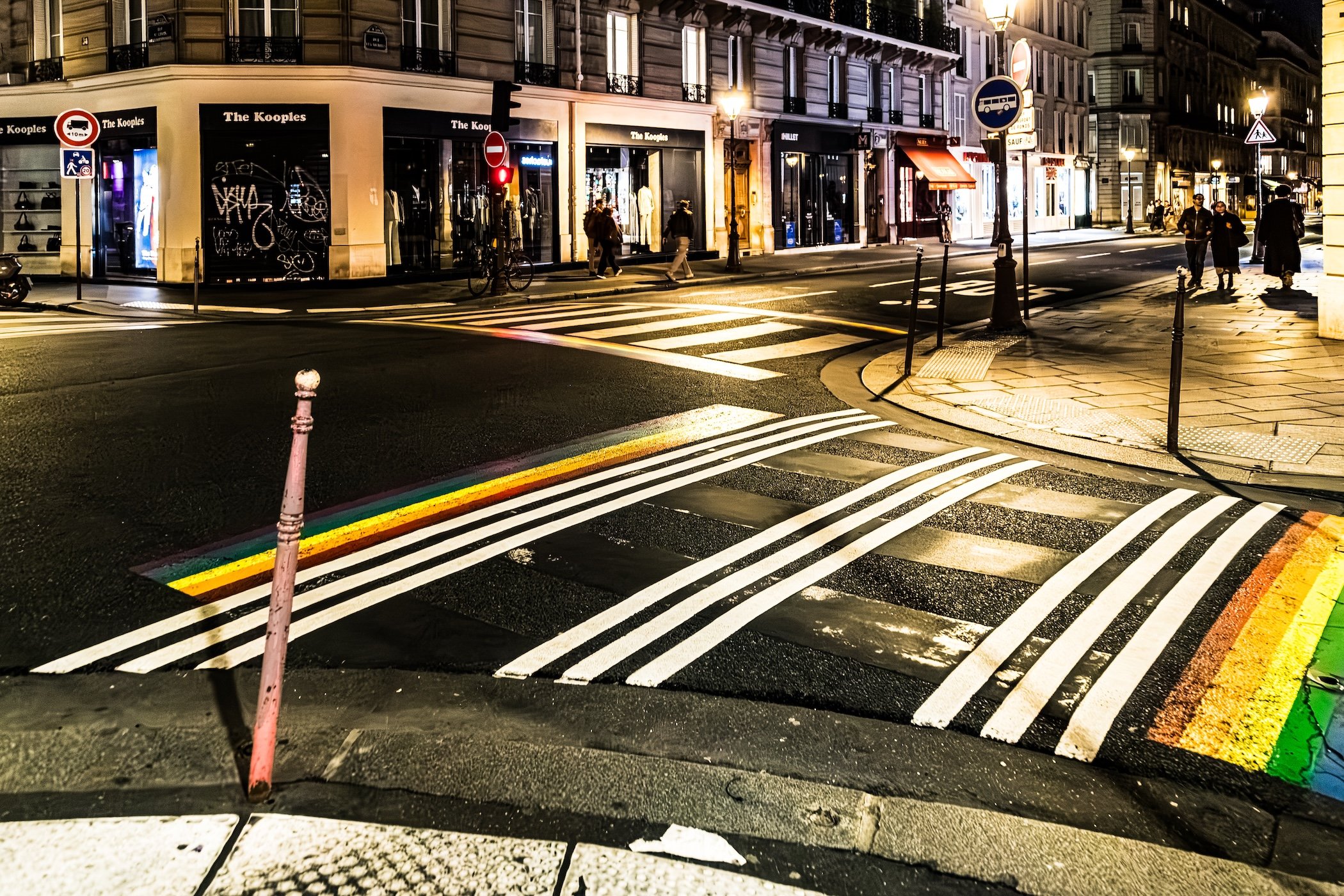
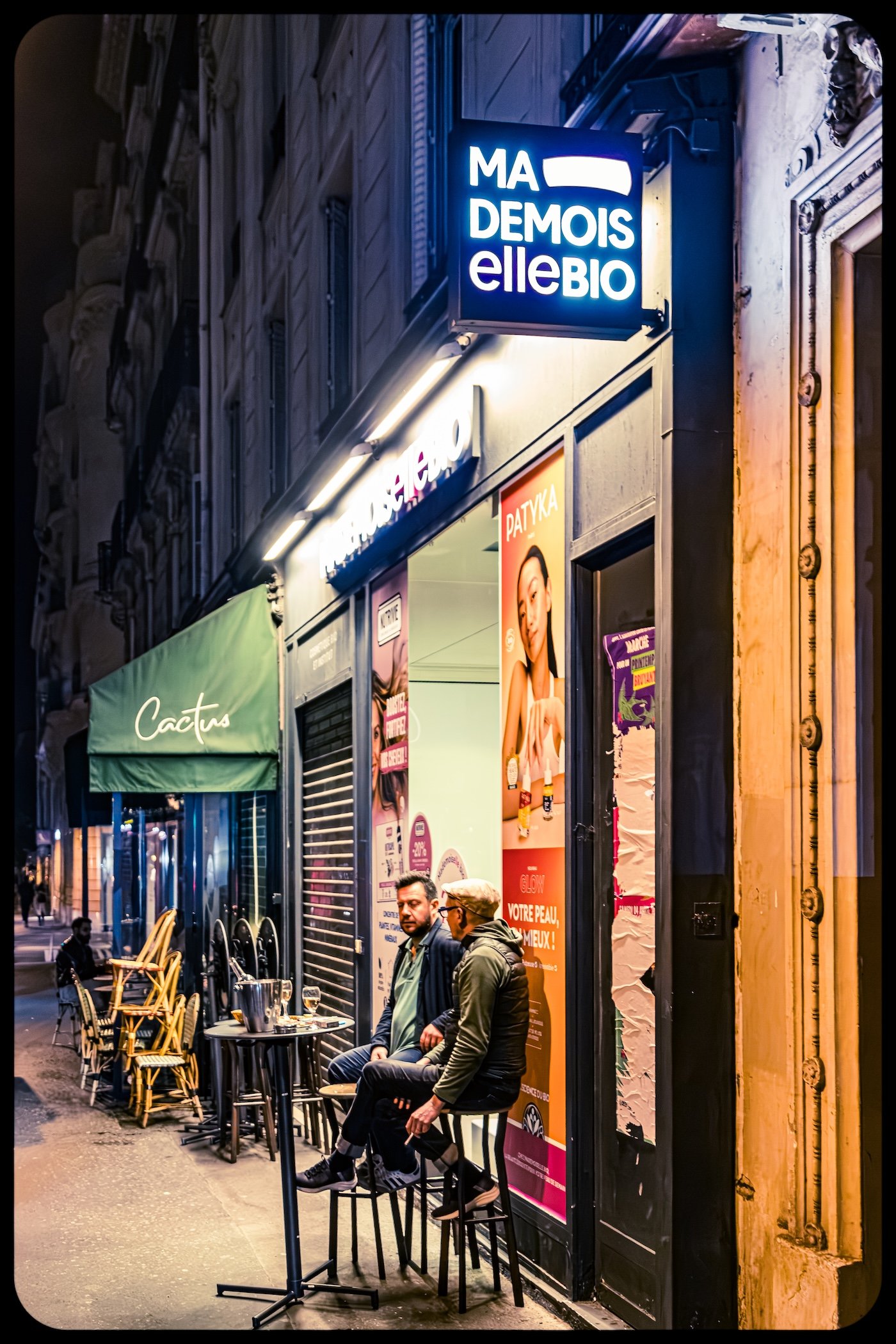
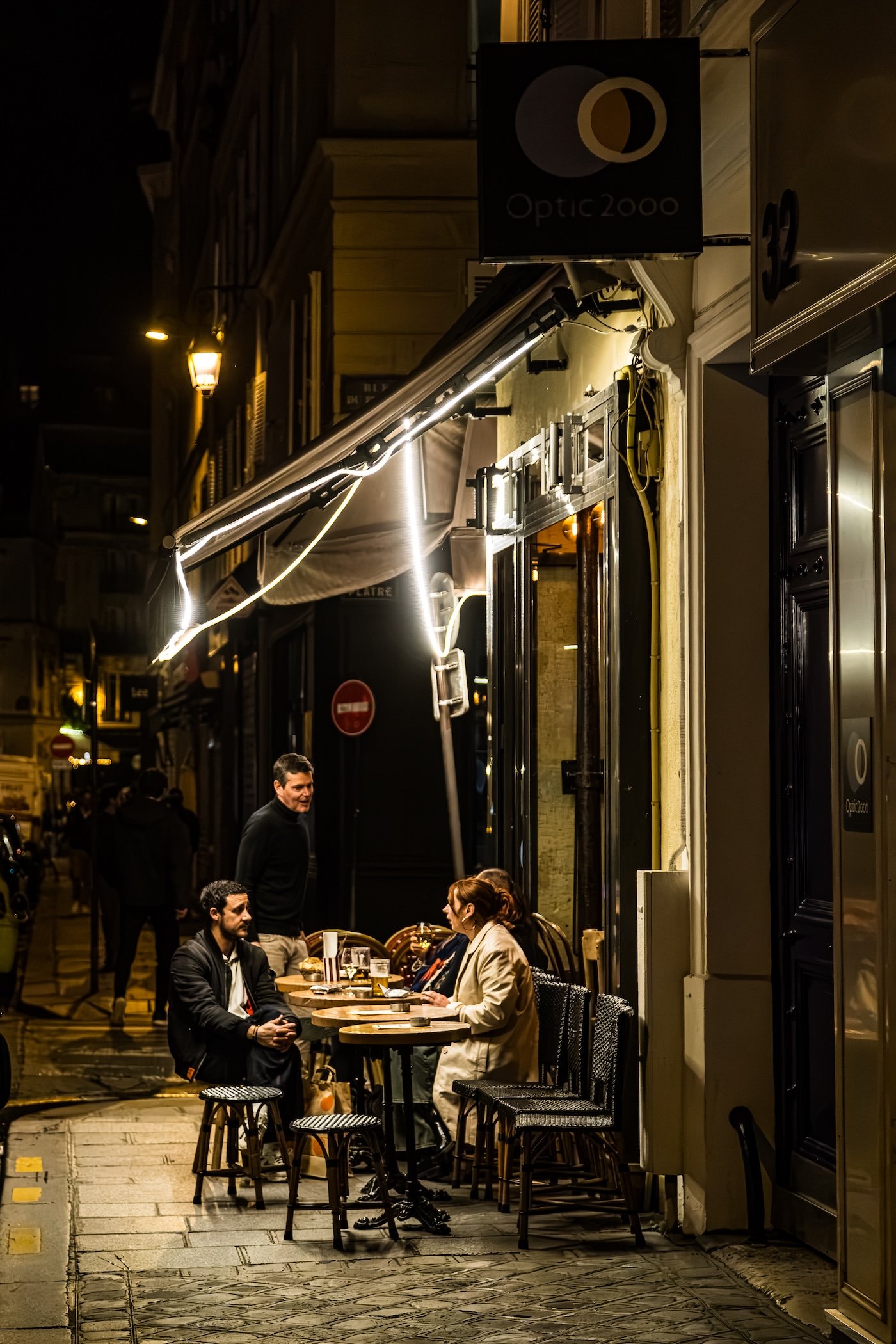
In Saint-Gervais and Saint-Merri, illumination increasingly became the subject. Café terraces glowed around Place Sainte-Catherine; streetlamps transformed cobblestones along Rue des Rosiers and Rue des Écouffes; and bars, boutiques, hotel entrances, convenience shops, neon signs, and brightly painted crossings created successive pockets of color through the darkness. The camera repeatedly found thresholds—doors, windows, awnings, and entrances where interior light spilled into the street. Color recorded the social energy of the evening, while black-and-white photographs isolated silhouettes, geometry, shadow, and the quieter intervals between crowded streets.
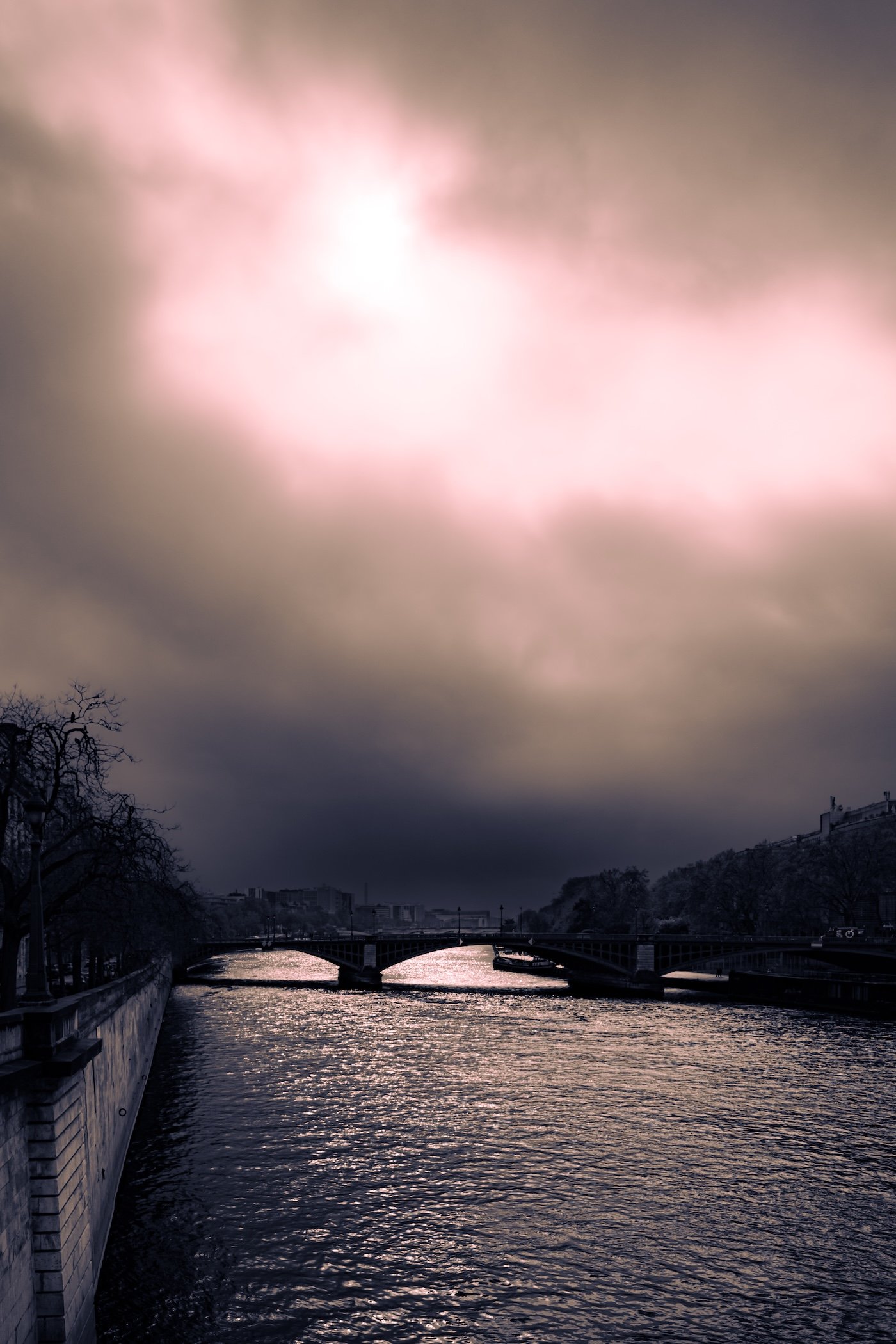
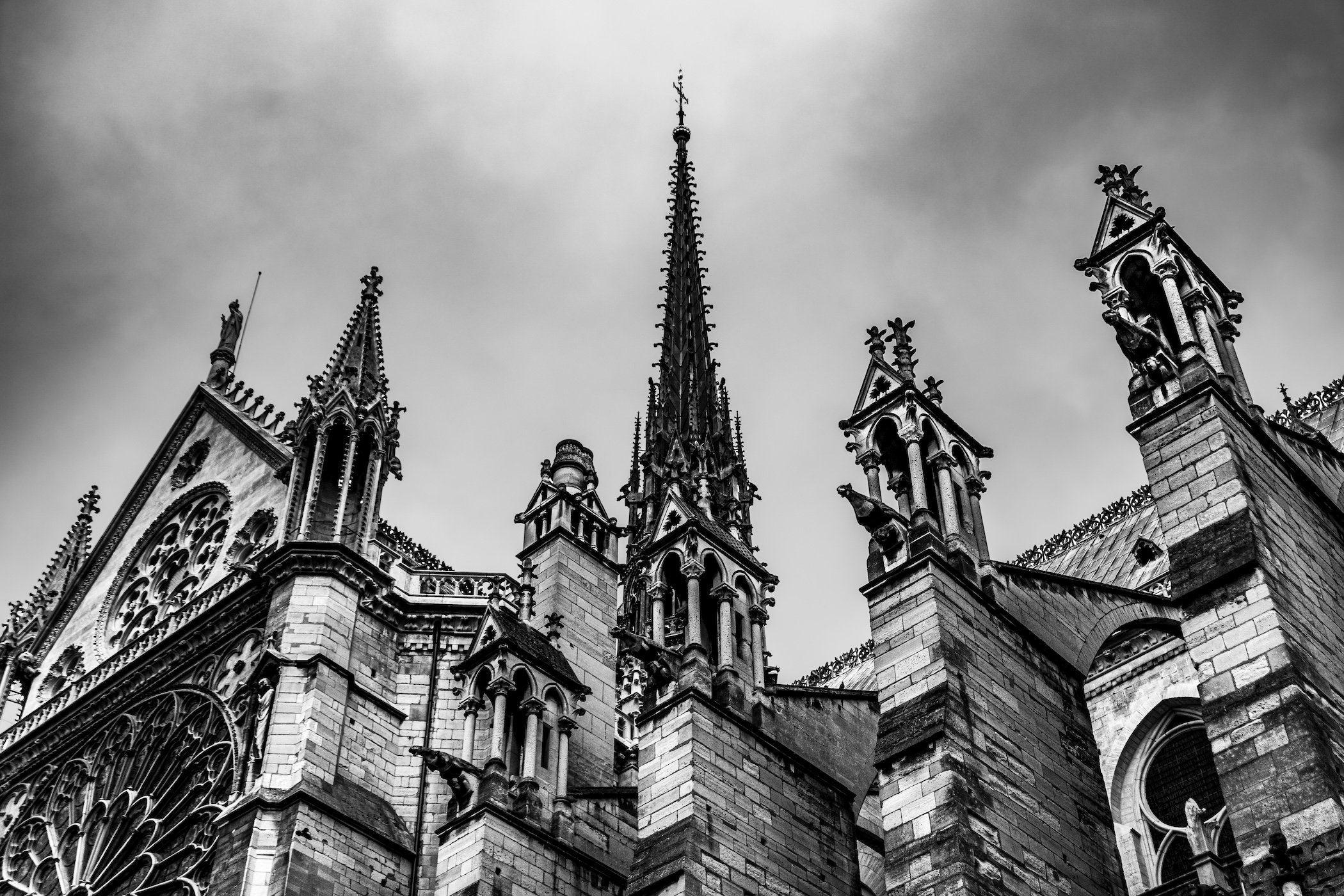
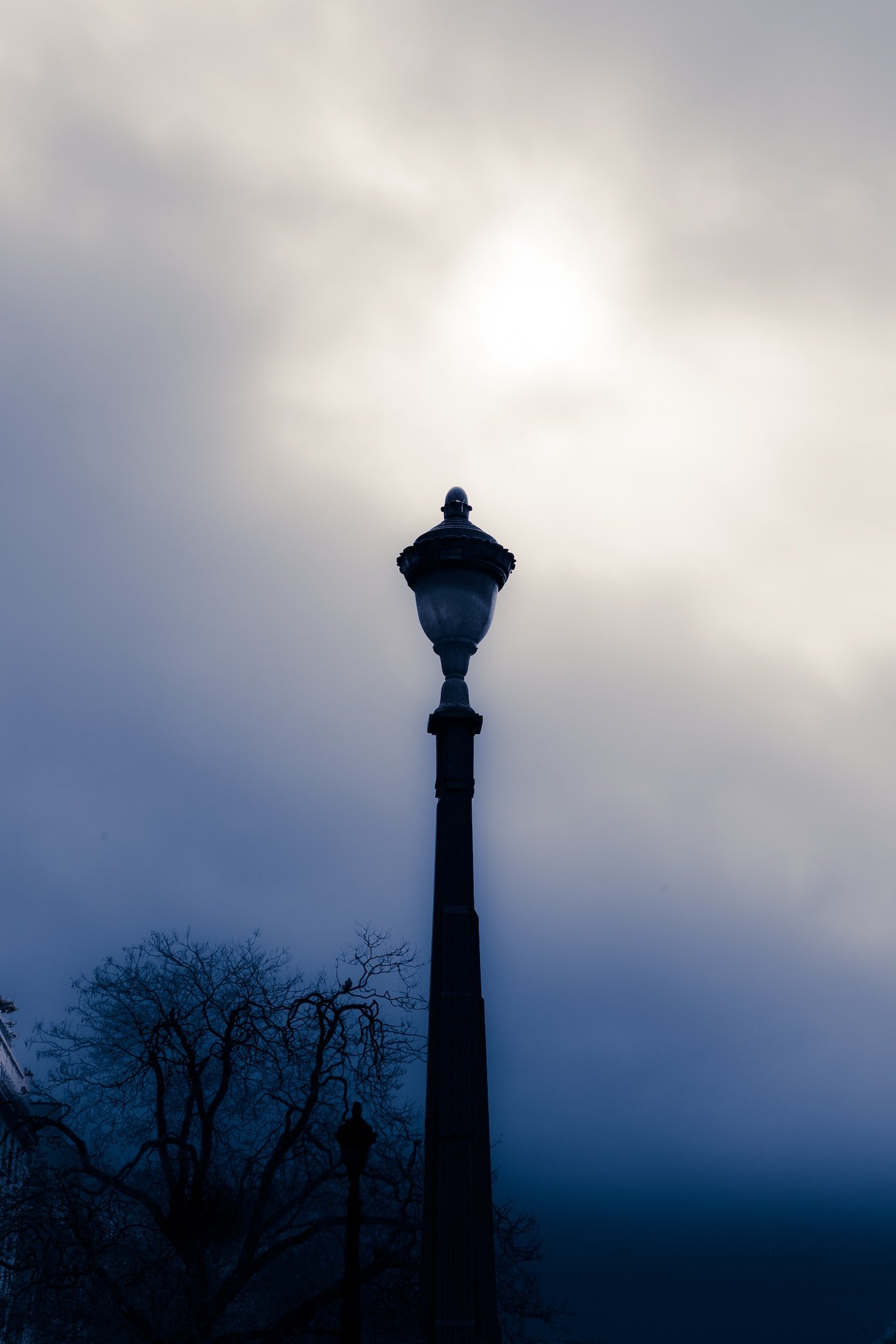
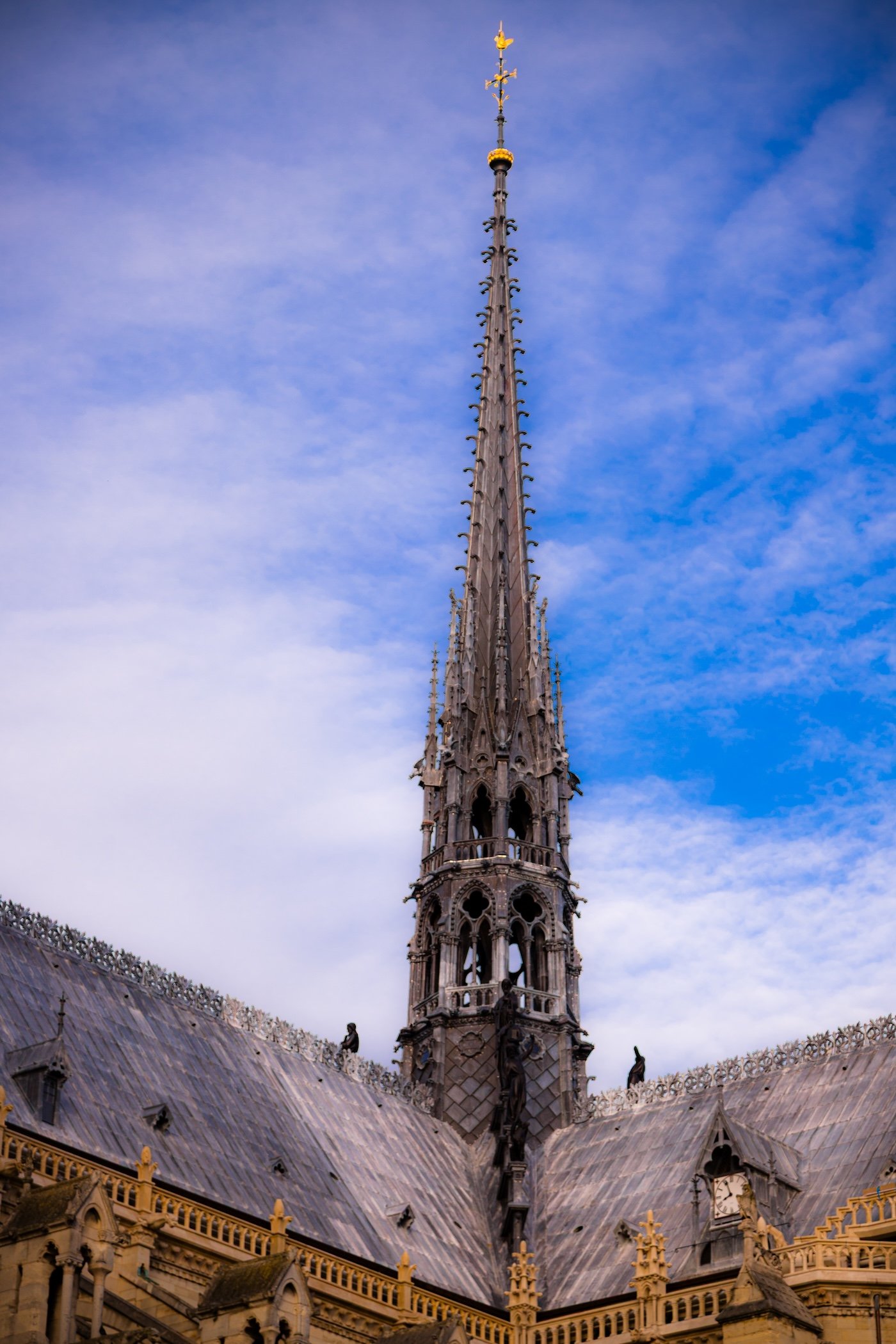
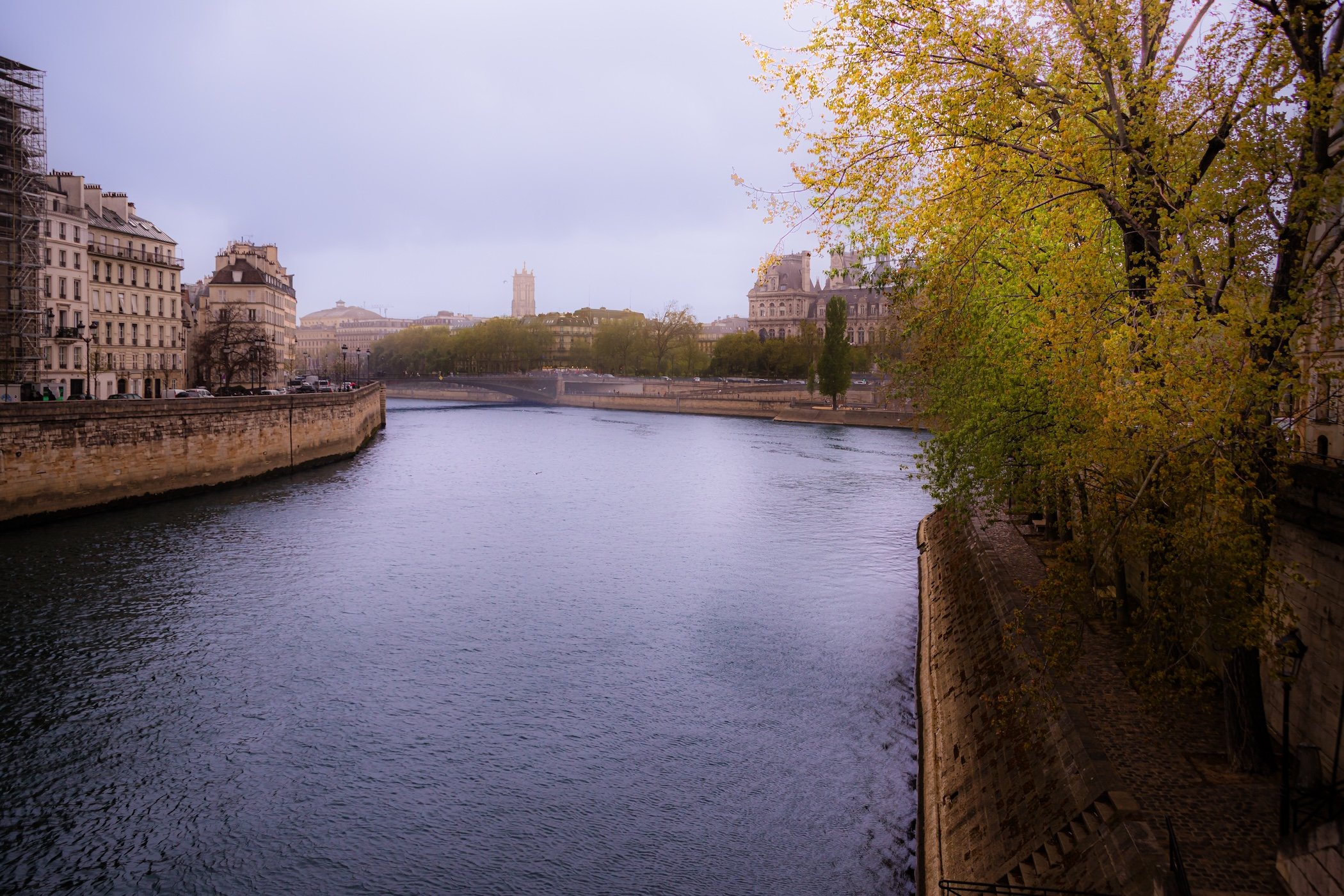
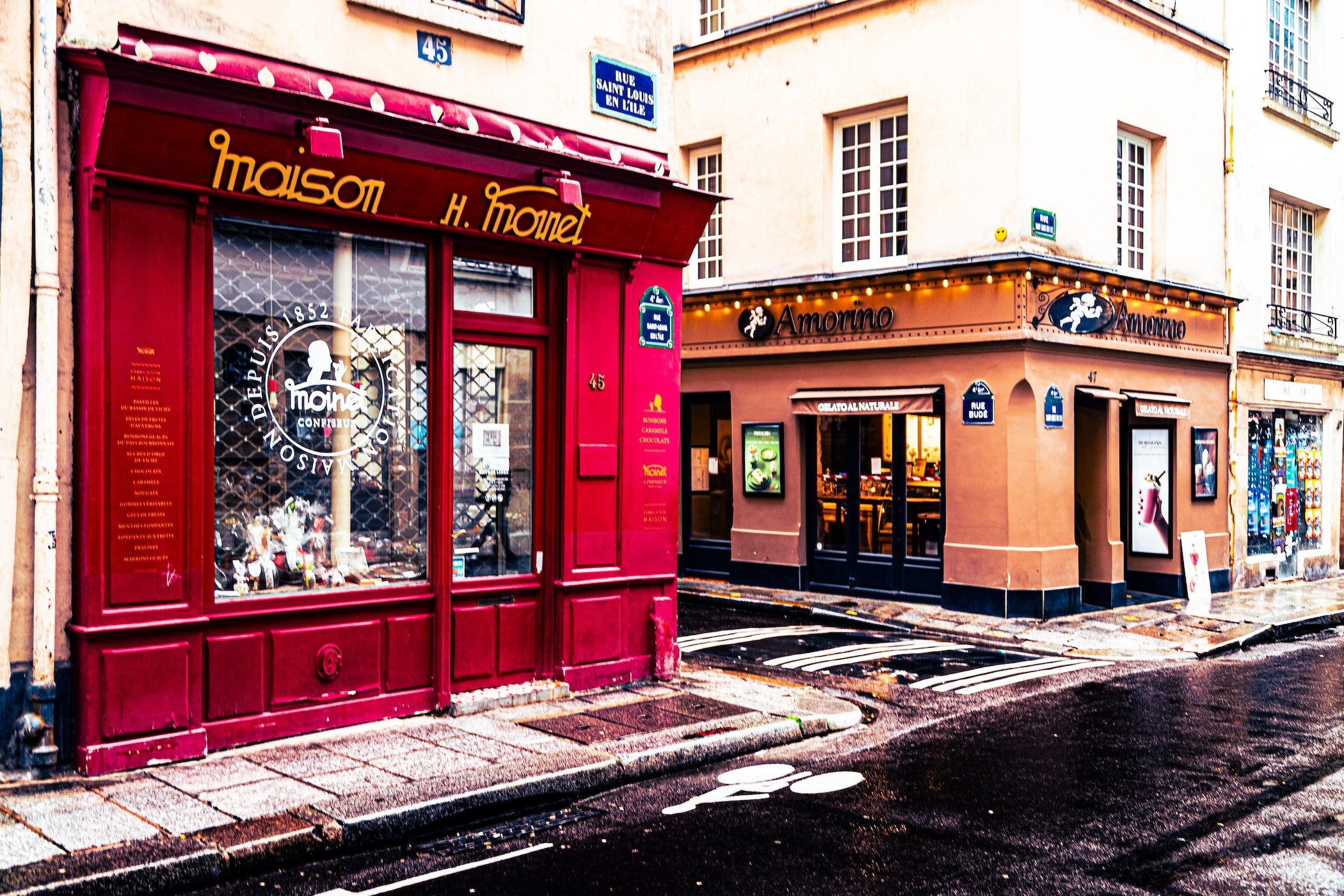
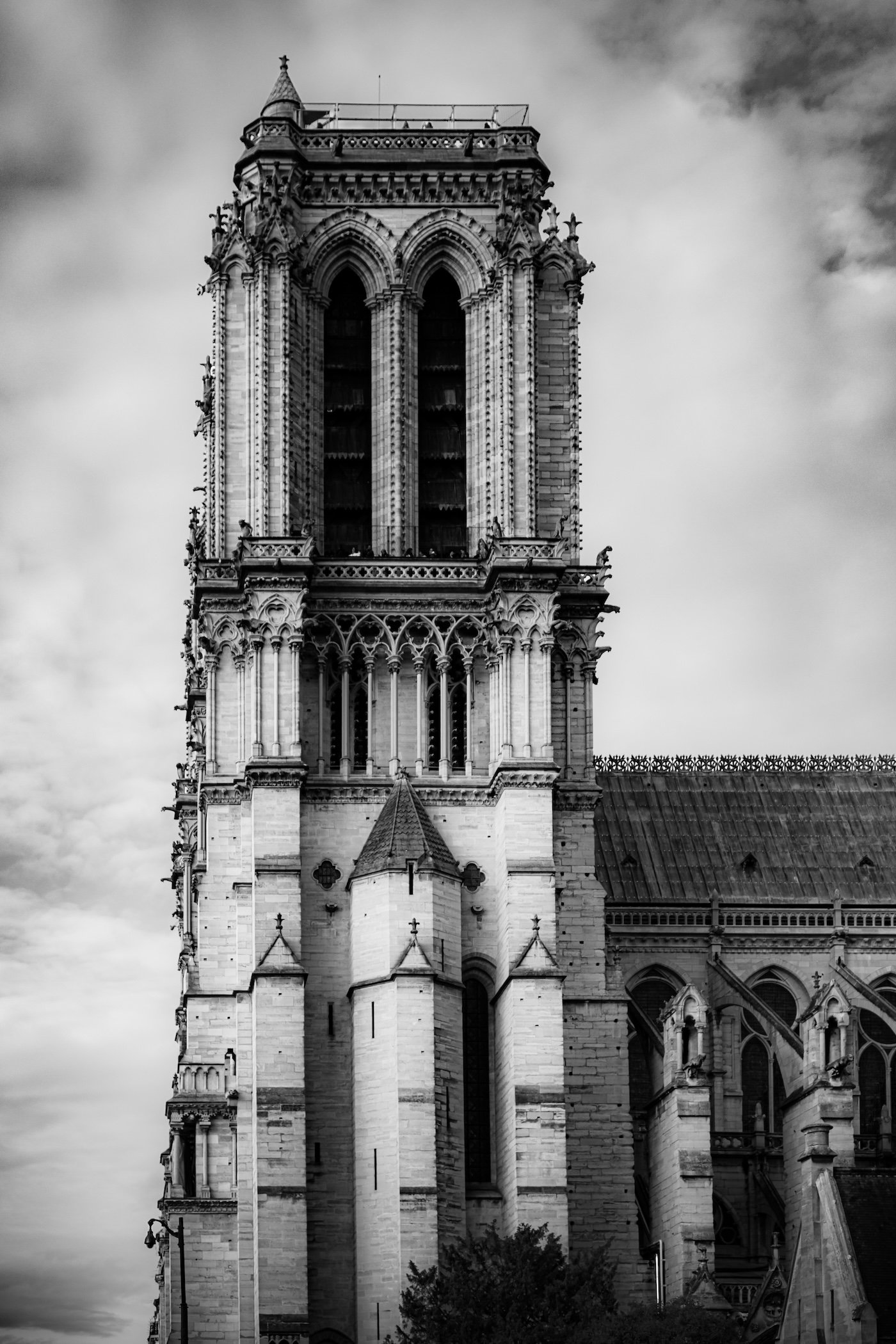
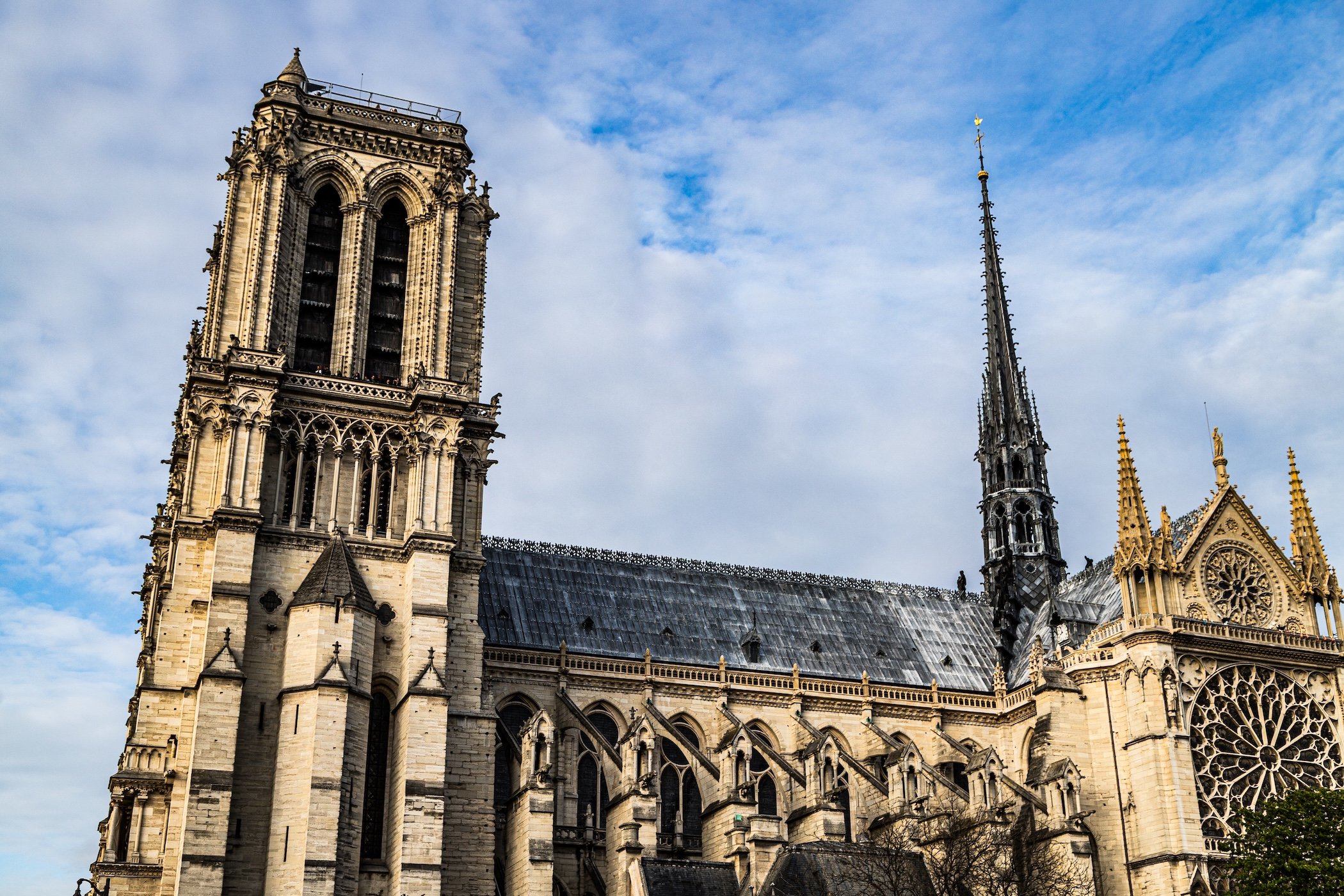
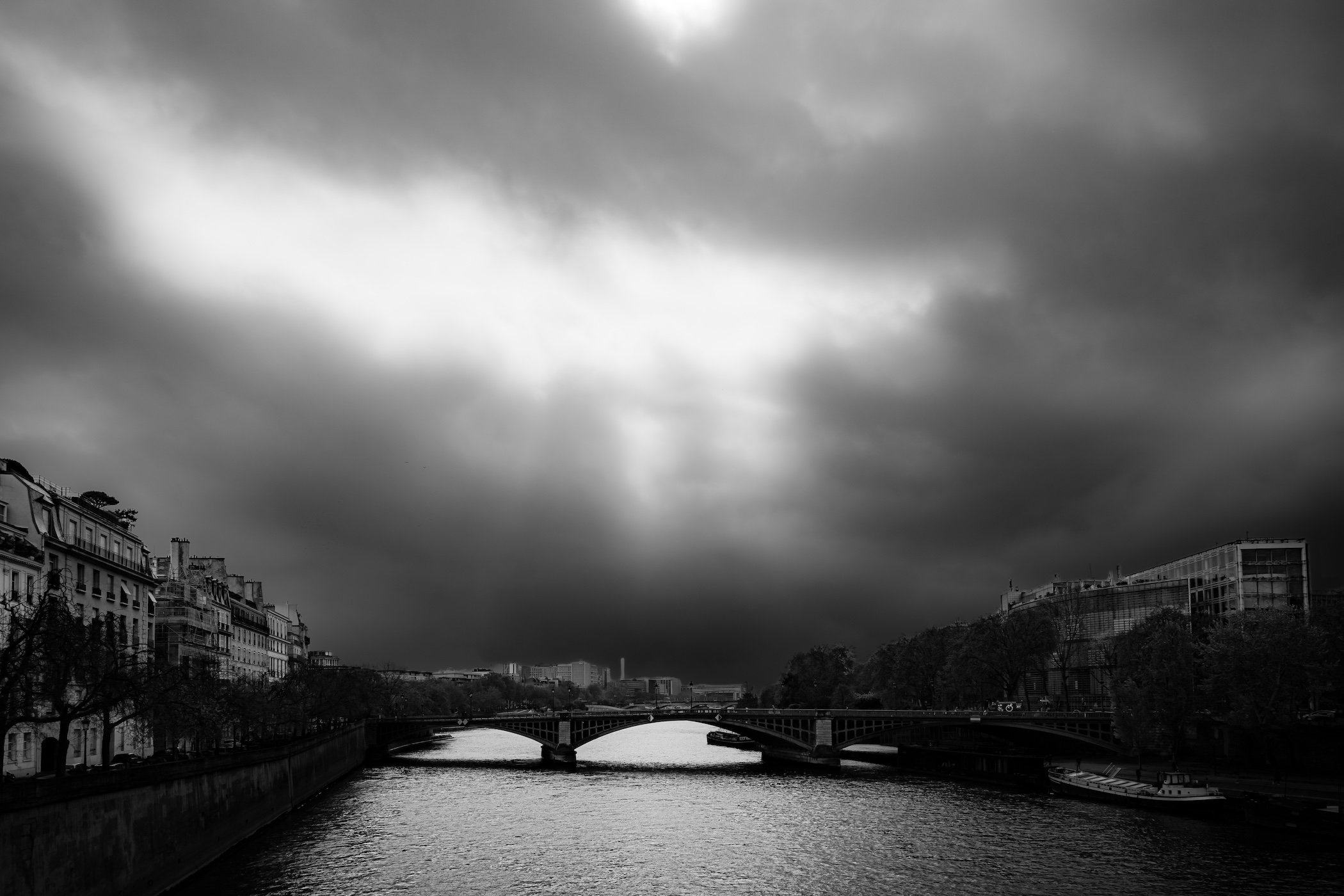
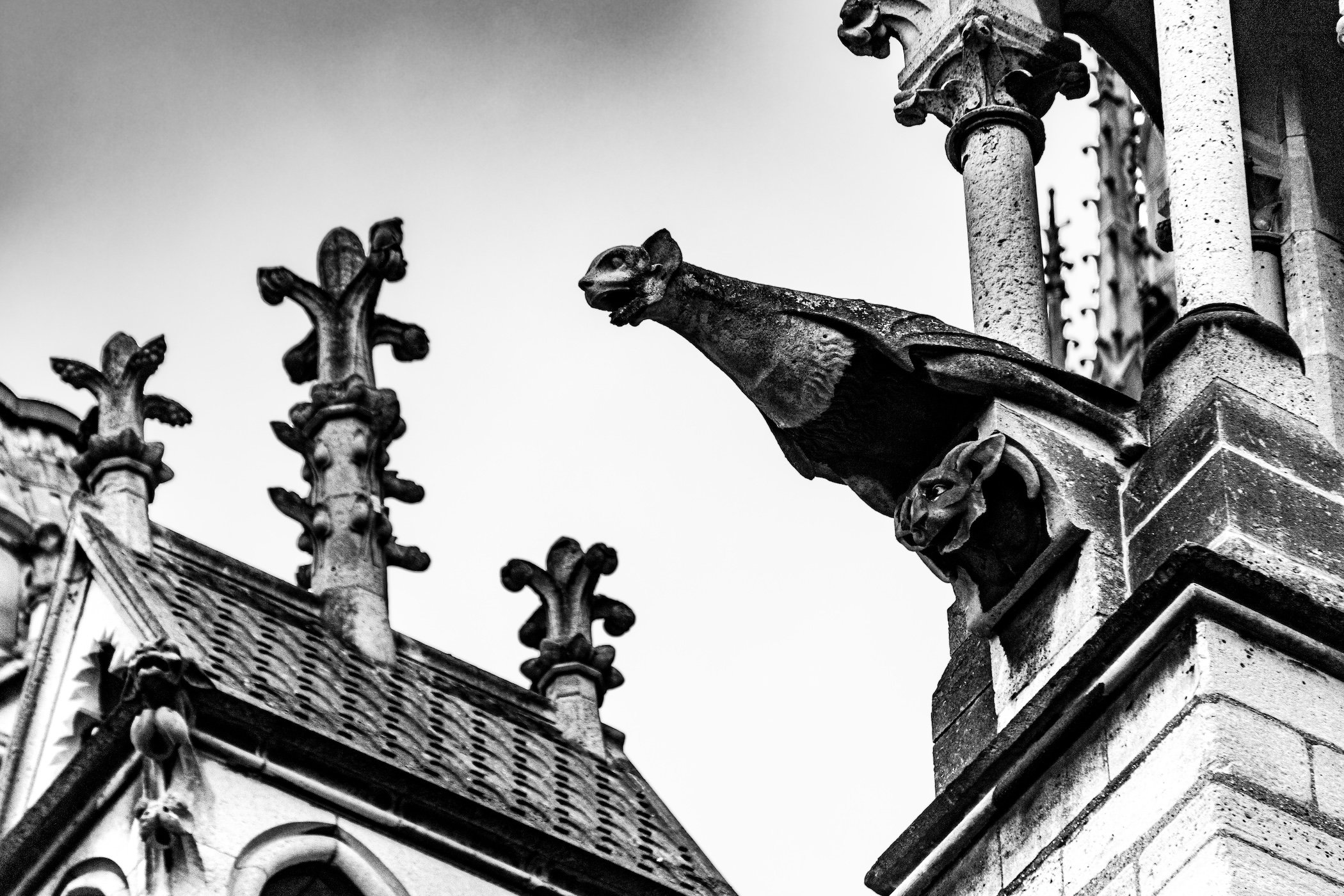
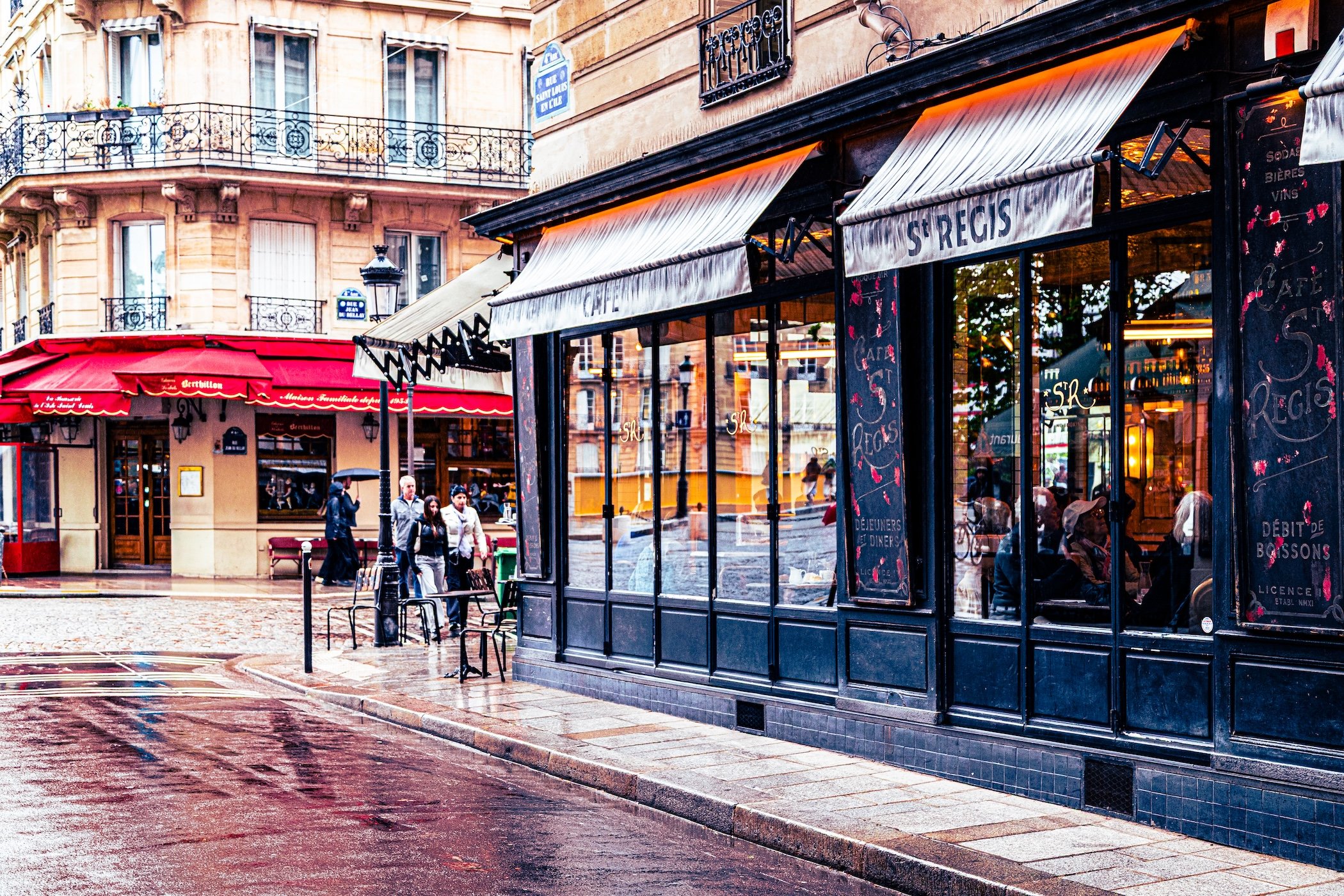
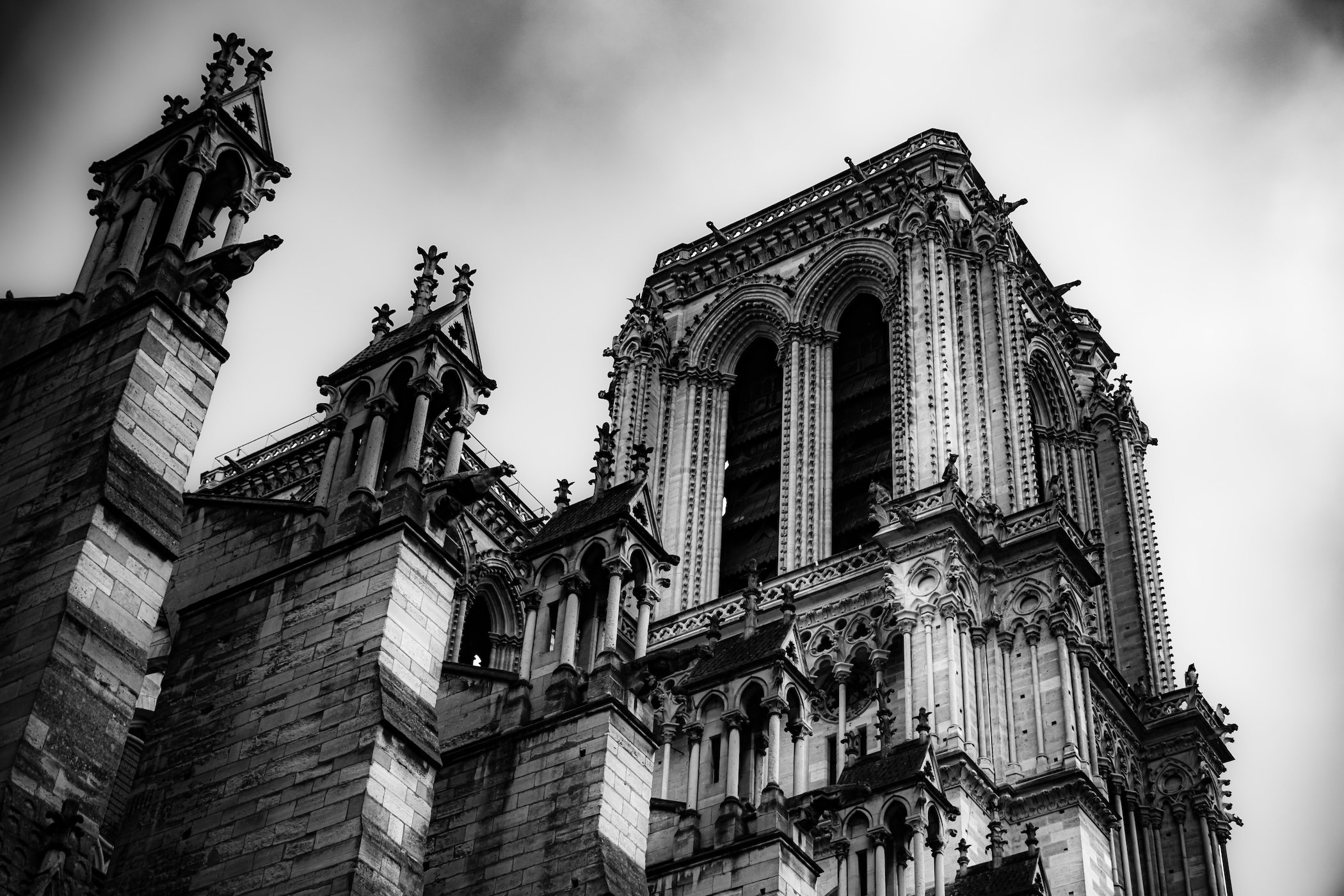
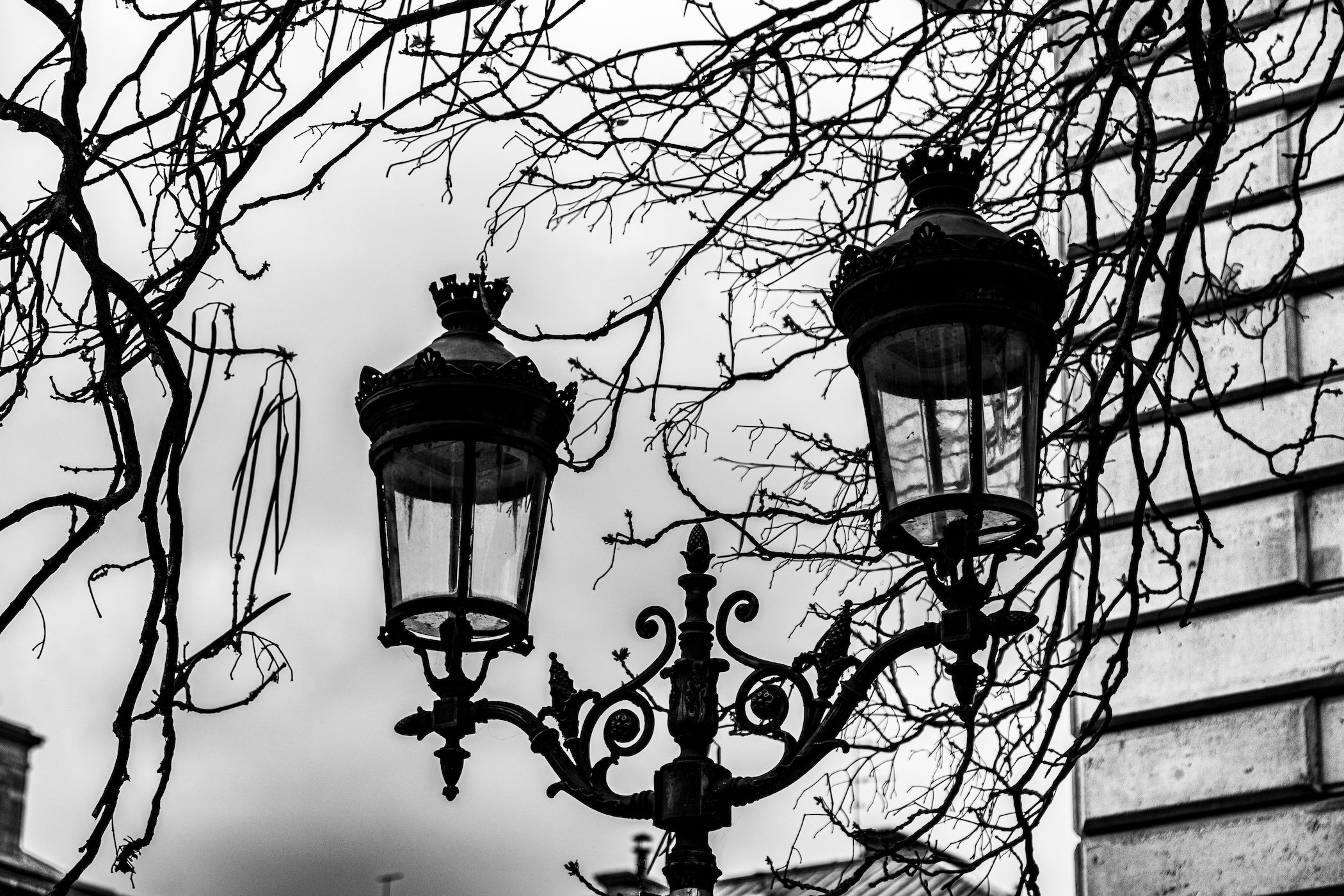
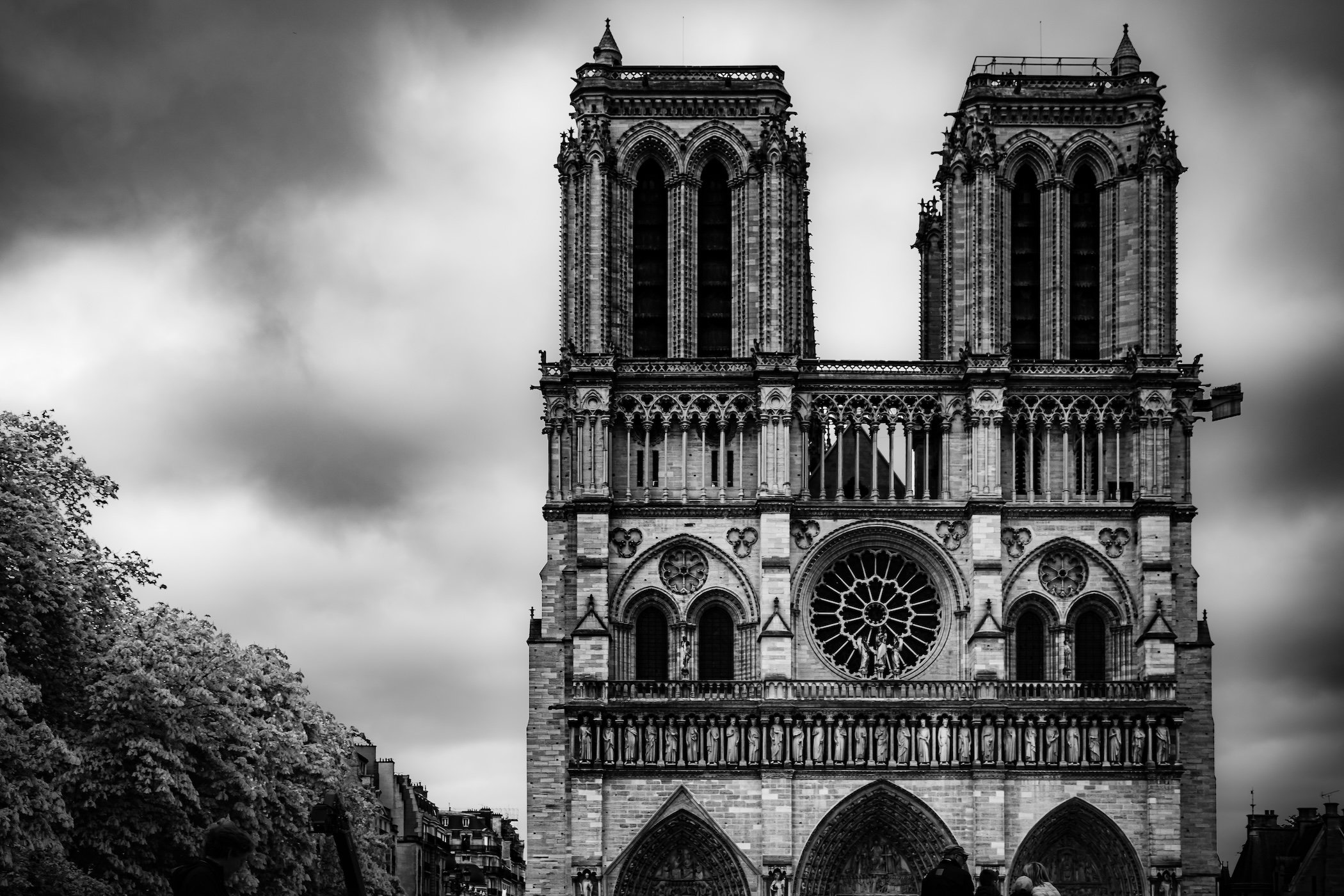
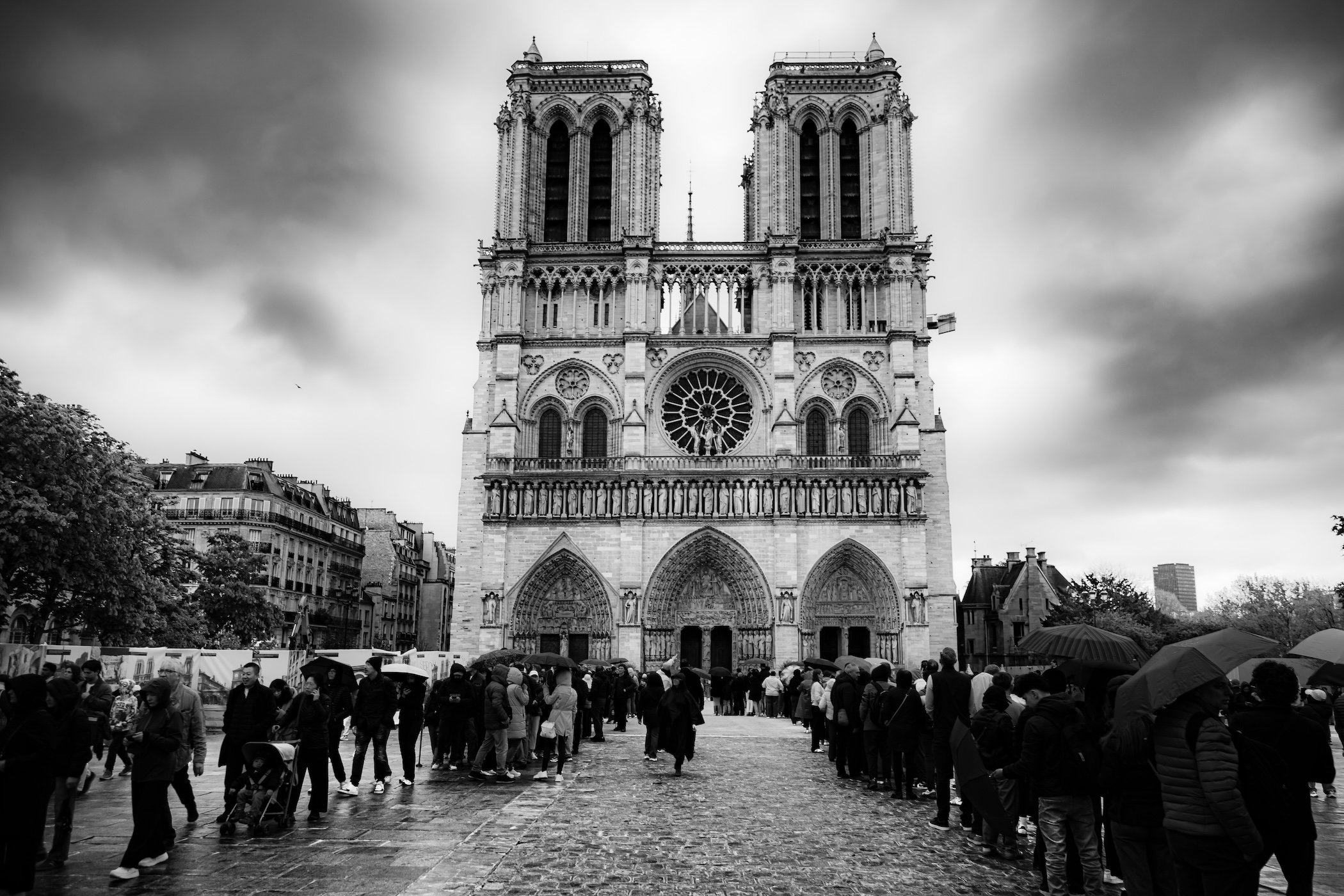
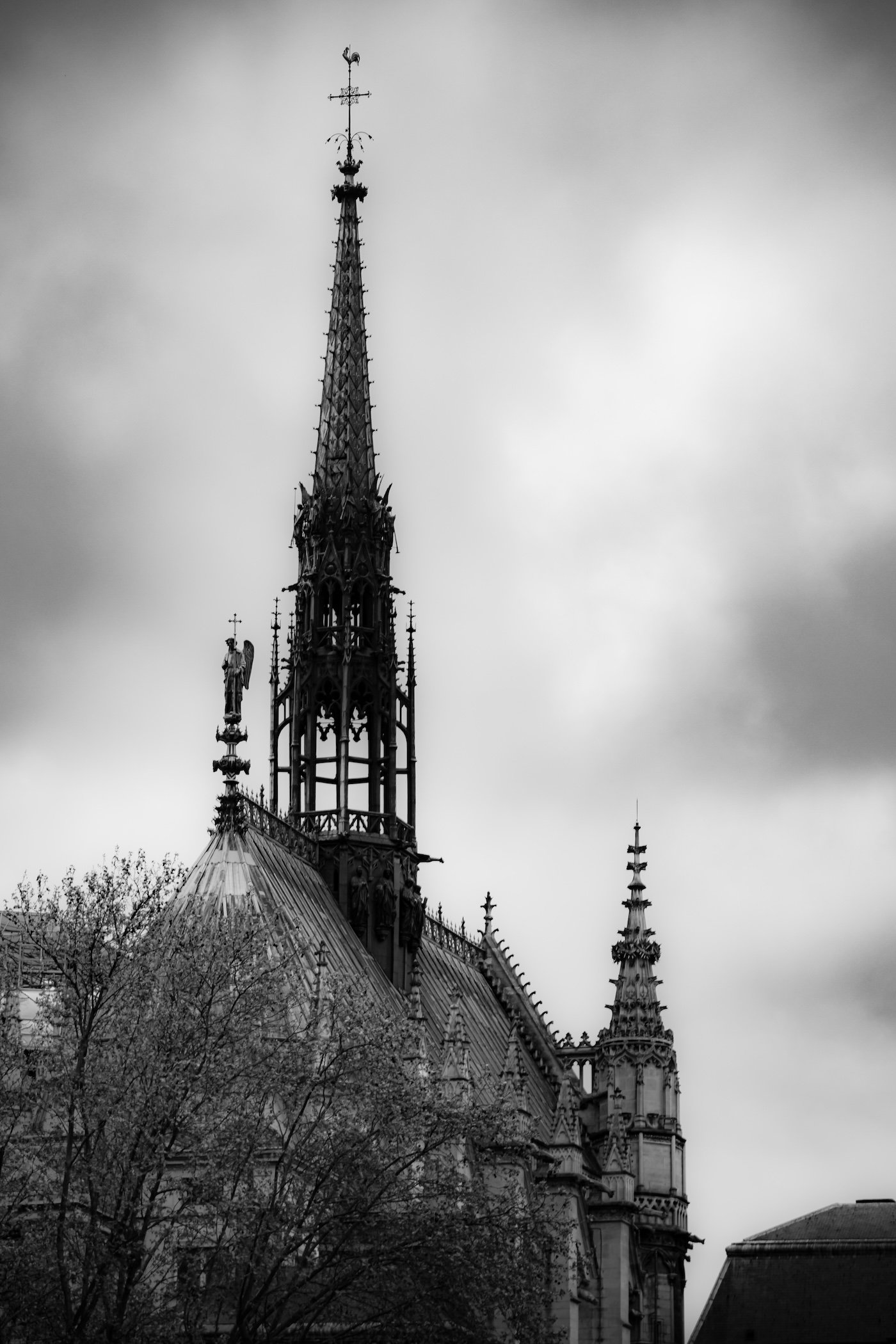
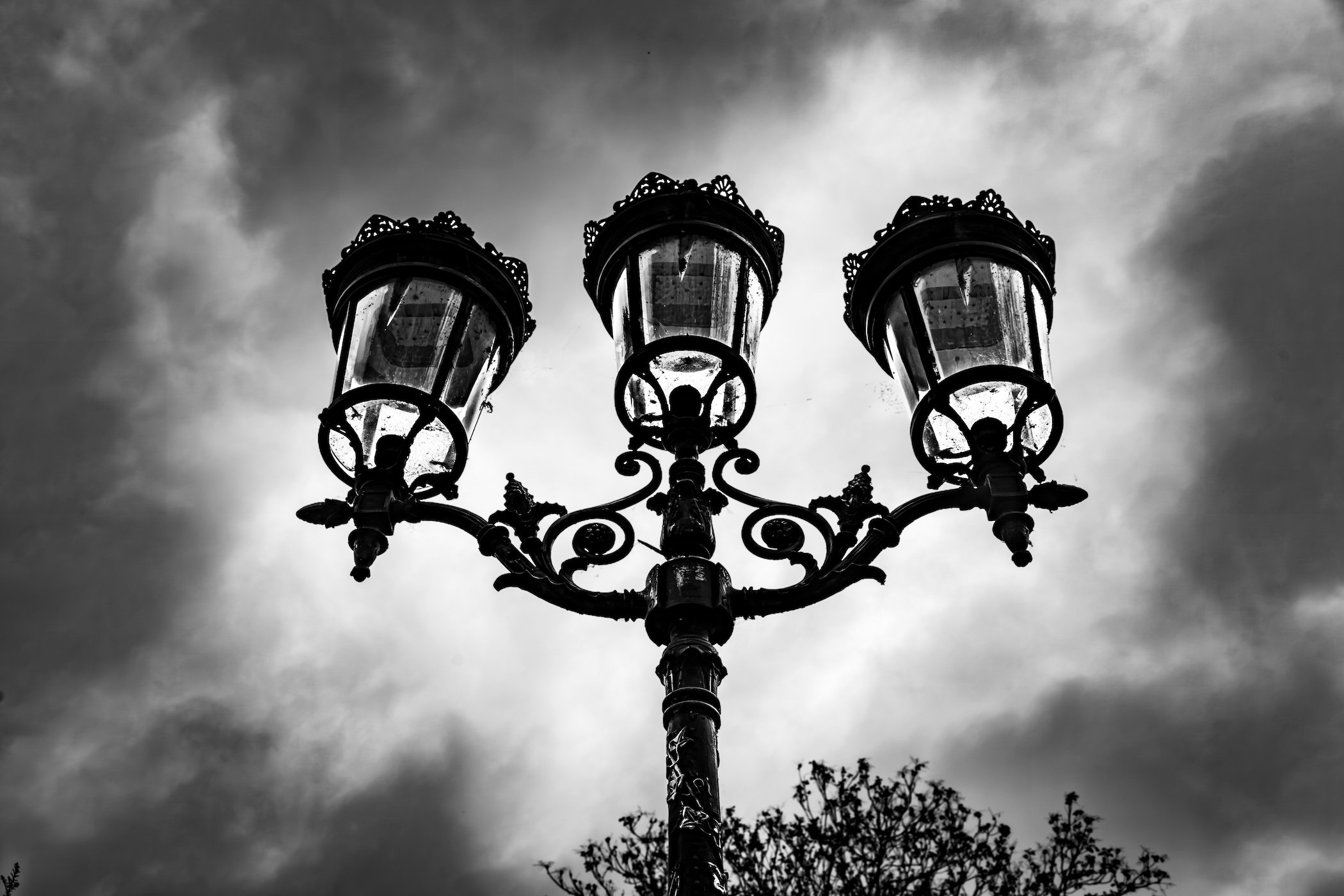
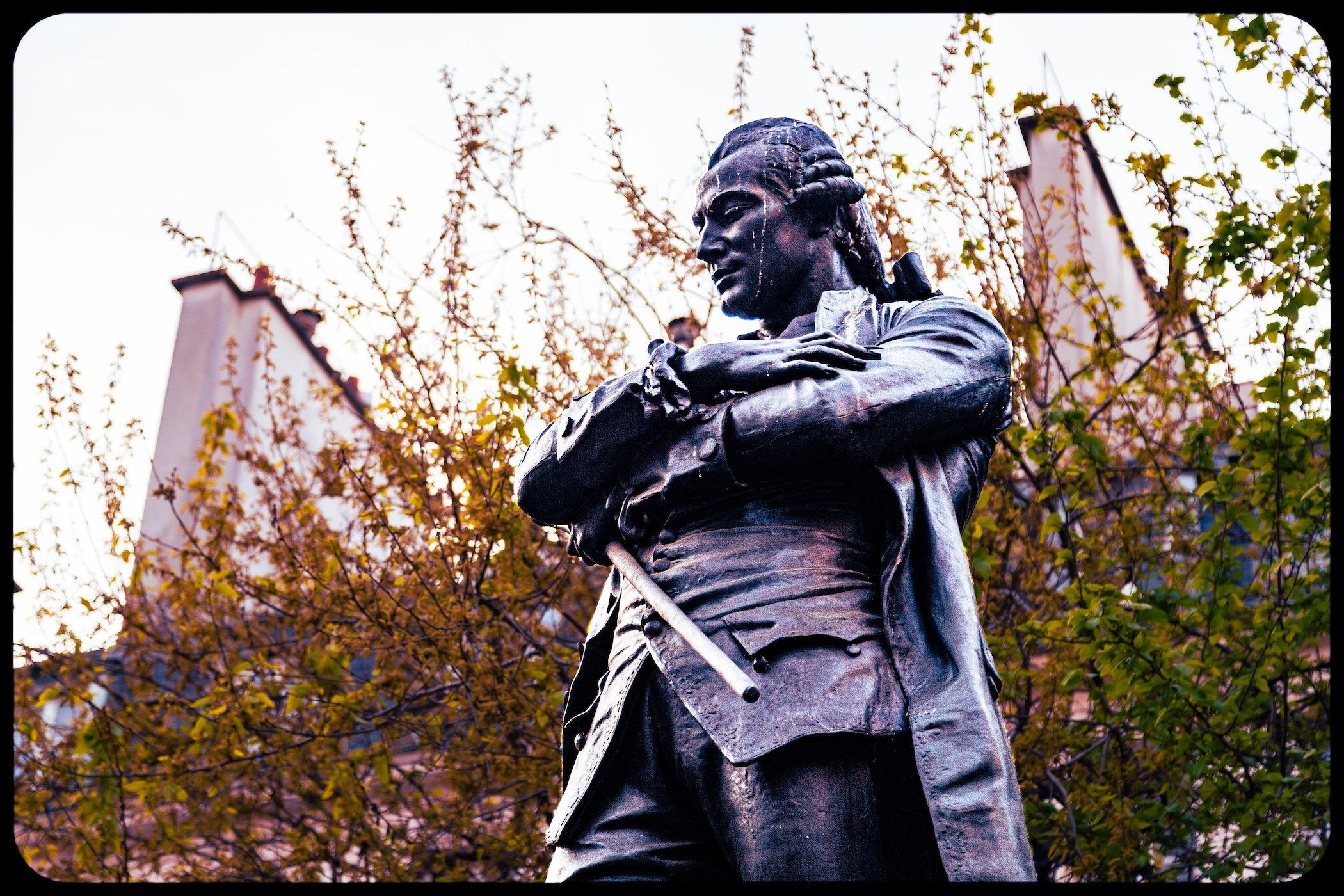
April 5 introduced a different photographic vocabulary. Beneath the dense clouds of Easter morning, Notre-Dame was frequently rendered in black and white, emphasizing towers, portals, statues, rose windows, bare branches, and ornamental lamps as forms of stone and shadow. When rain began near Pont Saint-Louis, distance softened and surfaces became reflective. Color returned through the illuminated shops and painted façades of Île Saint-Louis, then expanded into the silver light of the Seine near Pont de la Tournelle. The final photographs completed the visual arc: Notre-Dame, previously shrouded beneath grey skies, now illuminated in gold. Across both days, the photography moved continually between monument and detail, stillness and social movement, historic form and contemporary color.
If you visit Paris, these ideas can help inspire your own photography.
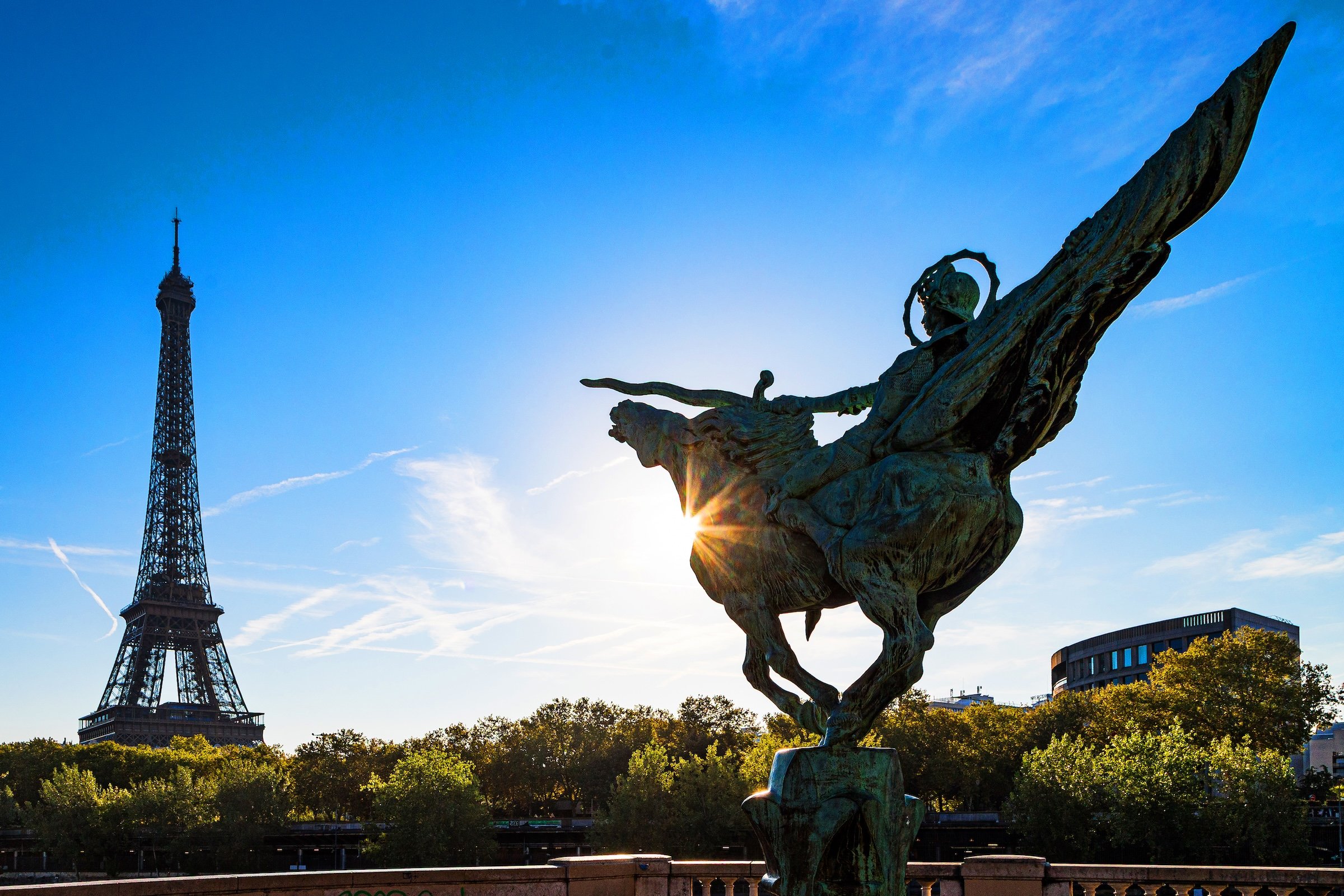
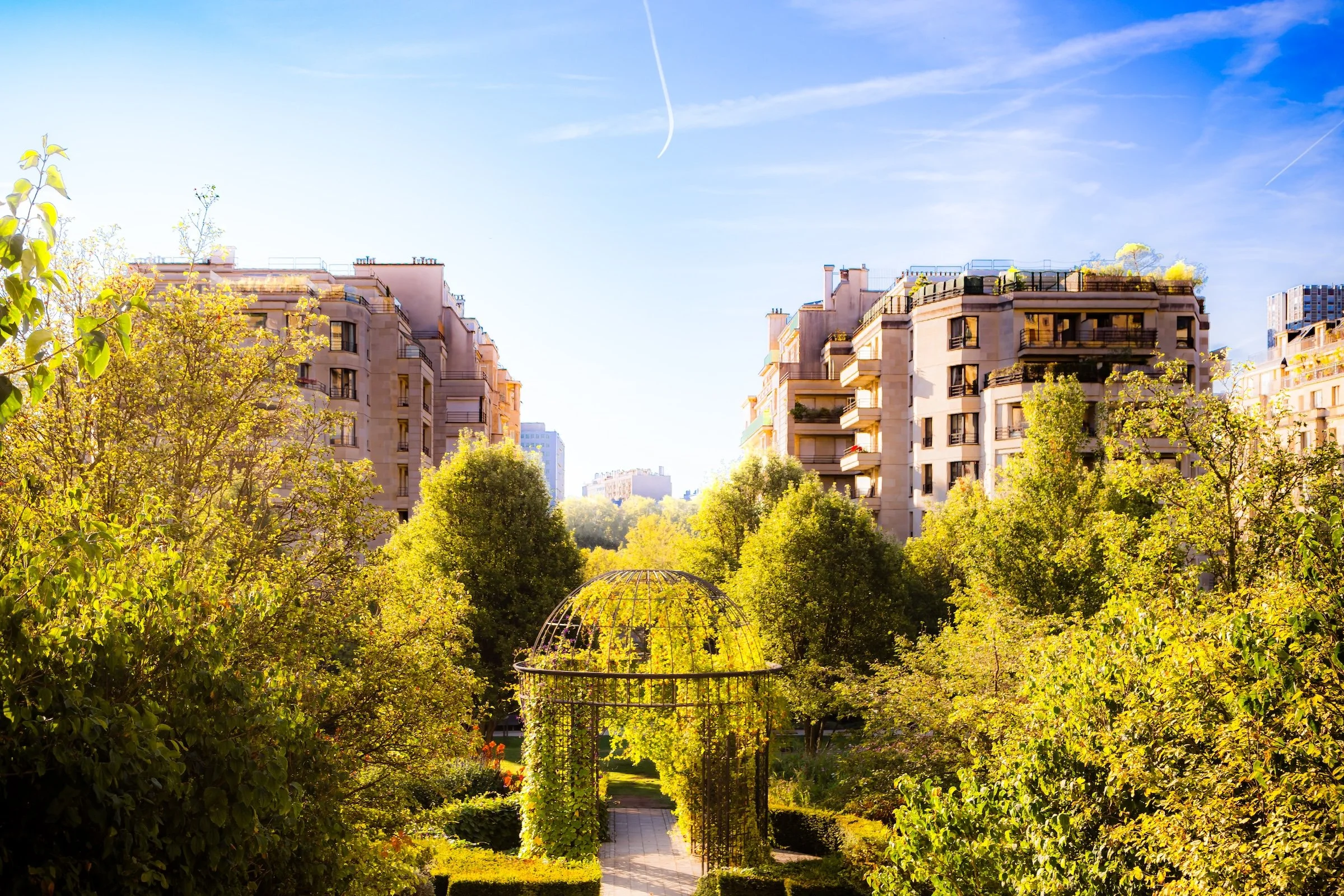
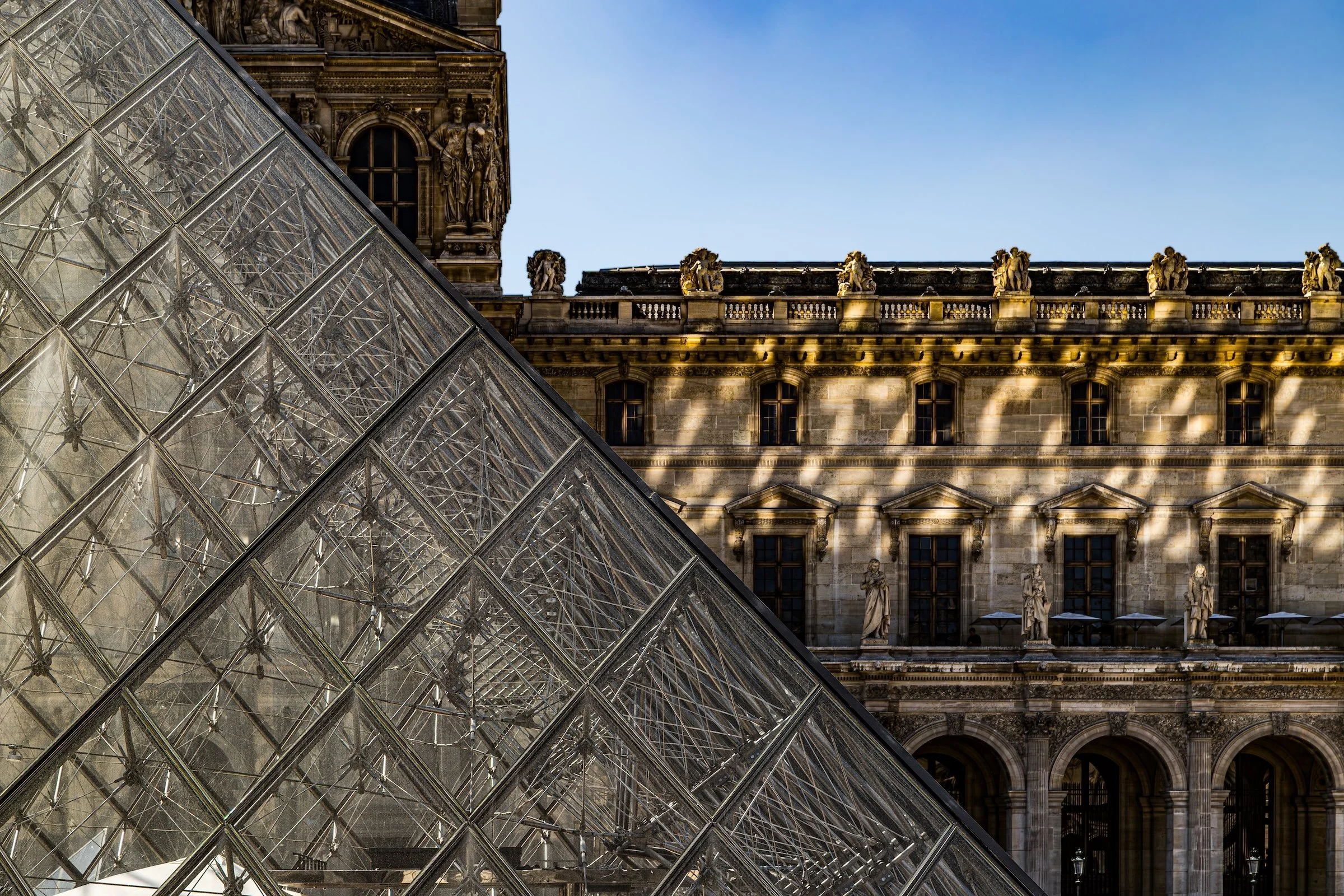
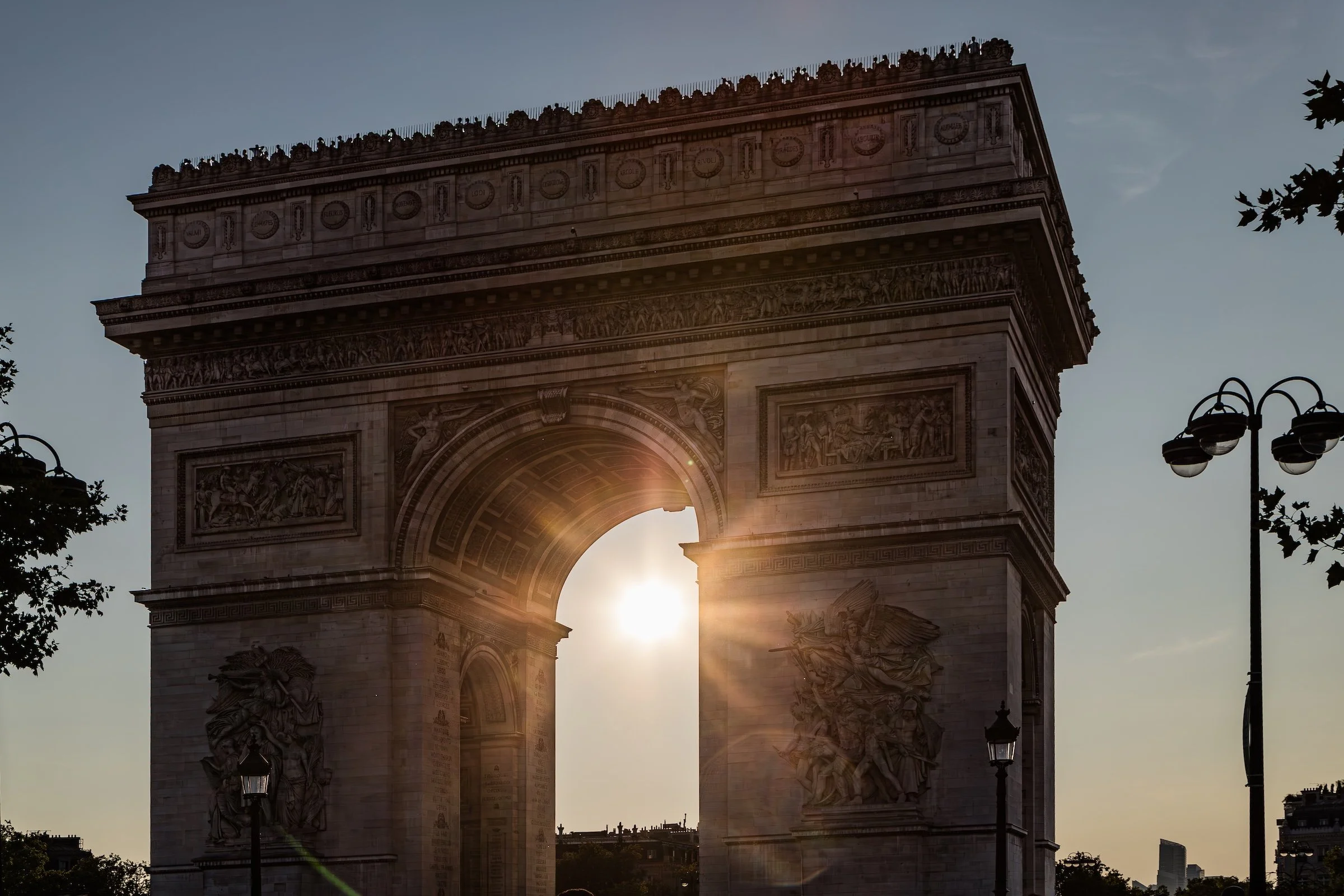
Paris: J’Espere, Je Rêve, Je Vive
Hôtel-de-Ville Photo Gallery
Hôtel-de-Ville Flâneur Notes
-
The 4e did not reveal itself through a single walk. It unfolded across two days and through two markedly different experiences of central Paris: first through the mainland neighborhoods as afternoon passed into nightlife, and then across the islands beneath the shifting weather and light of Easter Sunday.
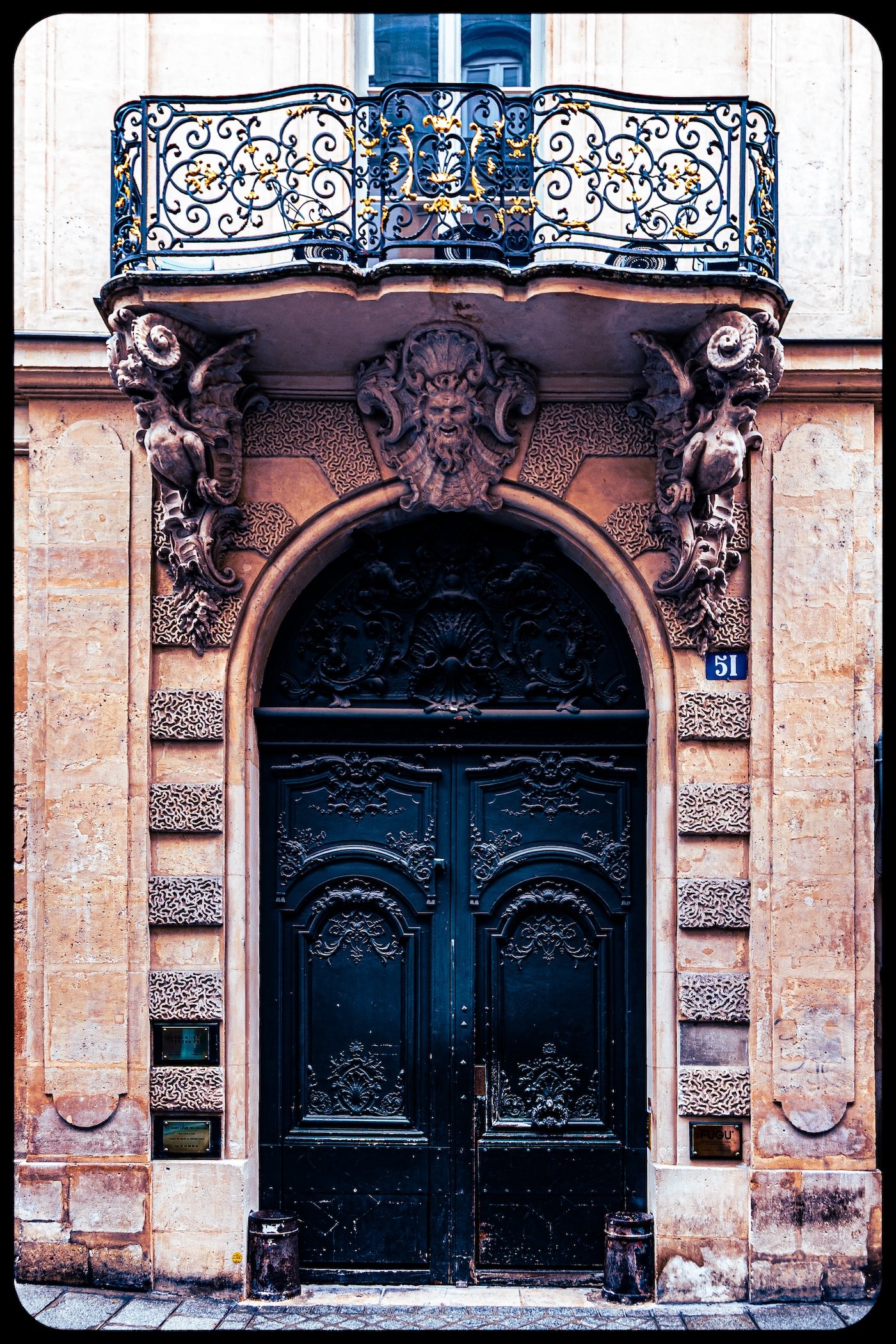
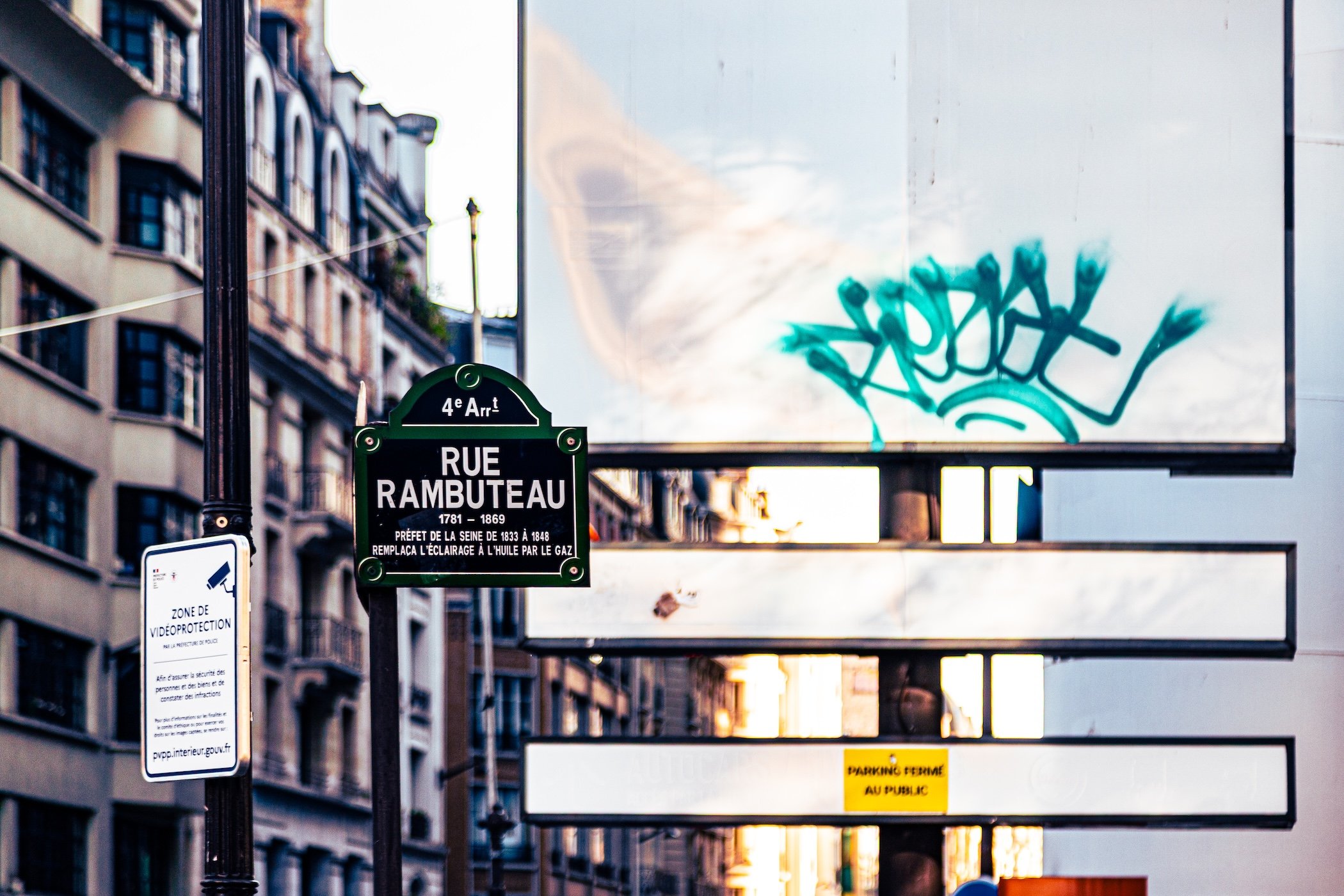
The April 4 passage began in Arsenal at 18:50, continuing south along Rue des Tournelles. Bistros, galleries, boutiques, painted façades, old doorways, and warm interiors gave the first streets a close and detailed character. Turning west onto Rue Saint-Antoine changed both the scale of the walk and the sense of time. The street broadened, façades became more imposing, and the last blue and gold of daylight remained above the rooftops while restaurant windows, signs, headlamps, and storefronts began illuminating the city below. Paris was passing visibly from daytime city into City of Light.
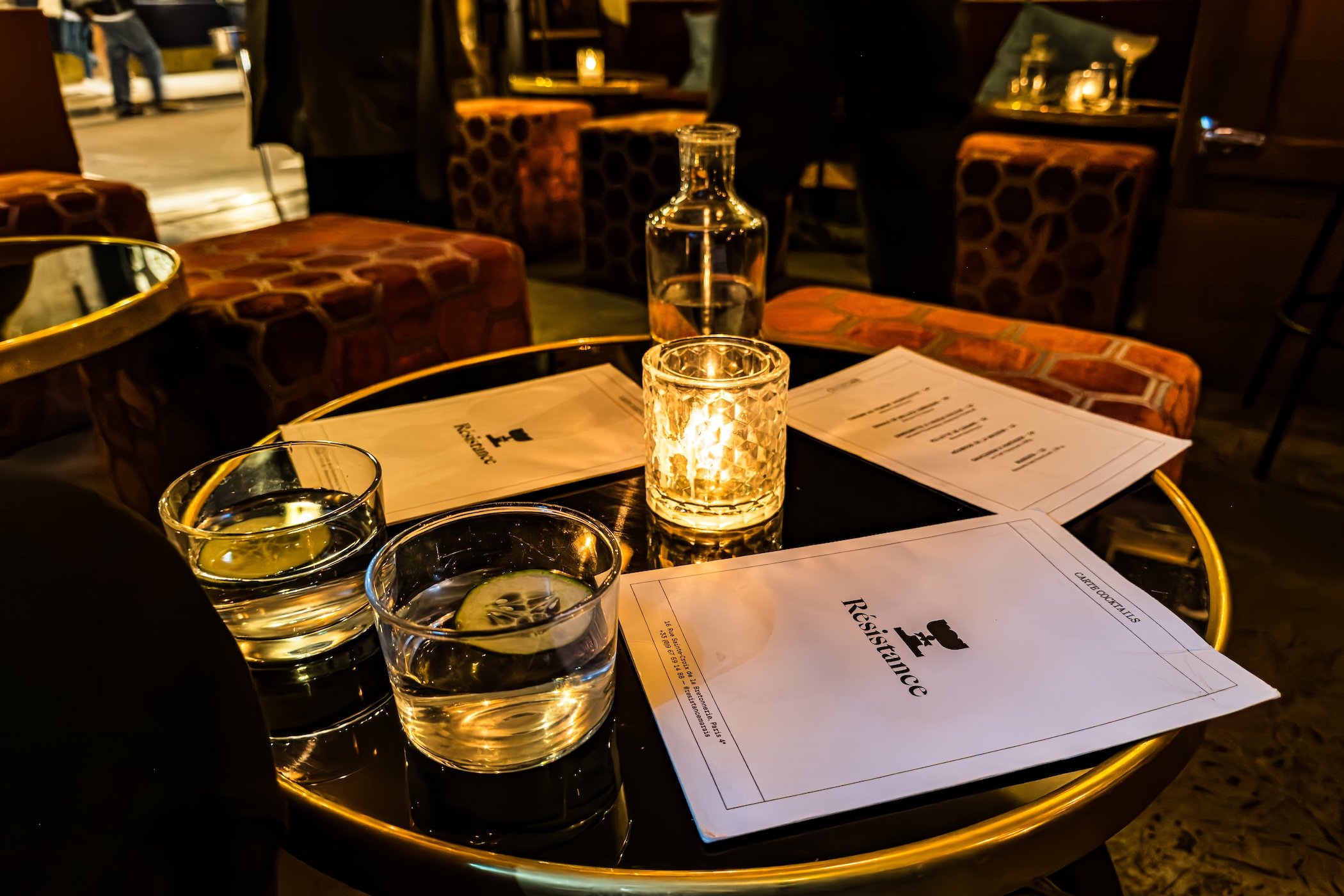
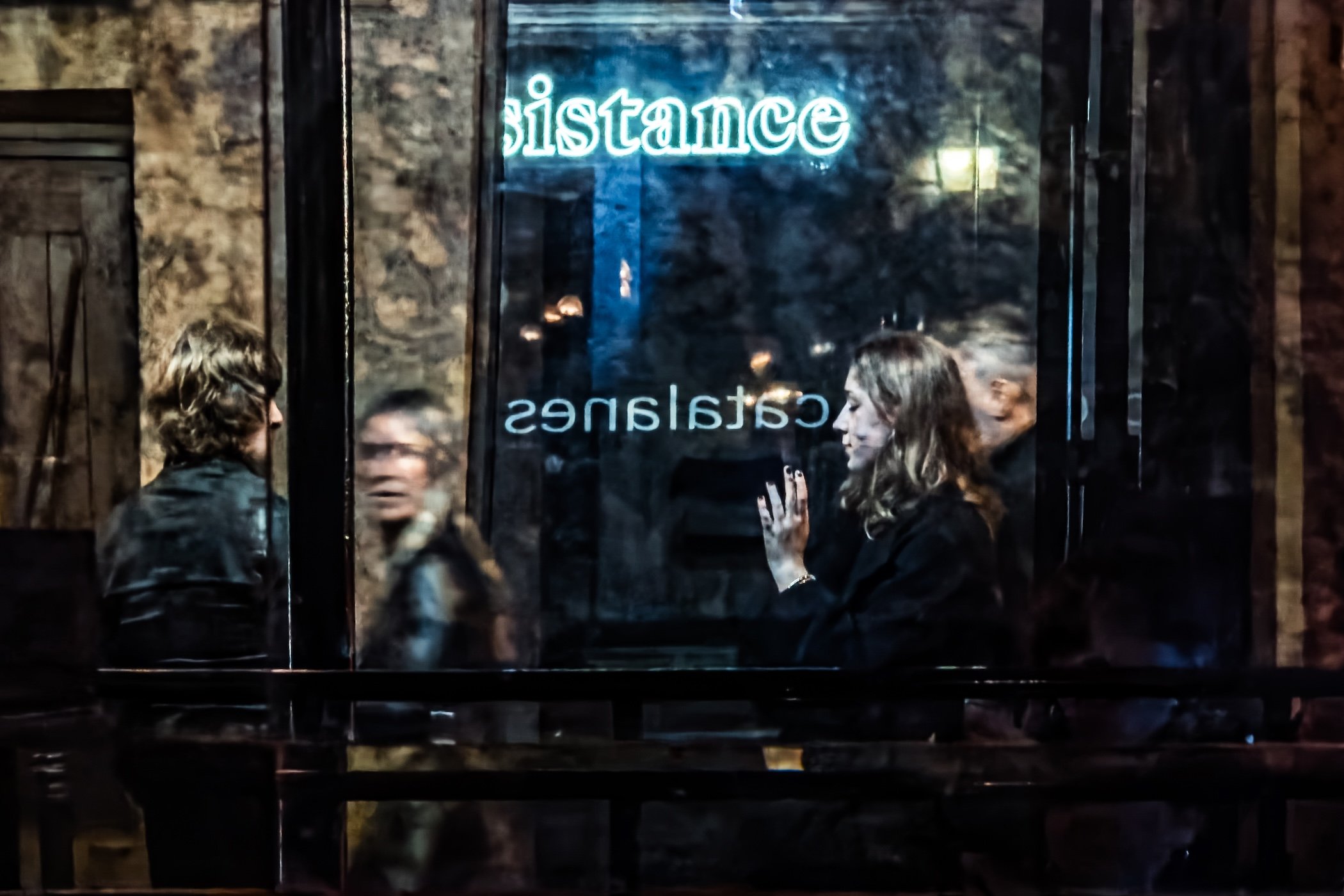
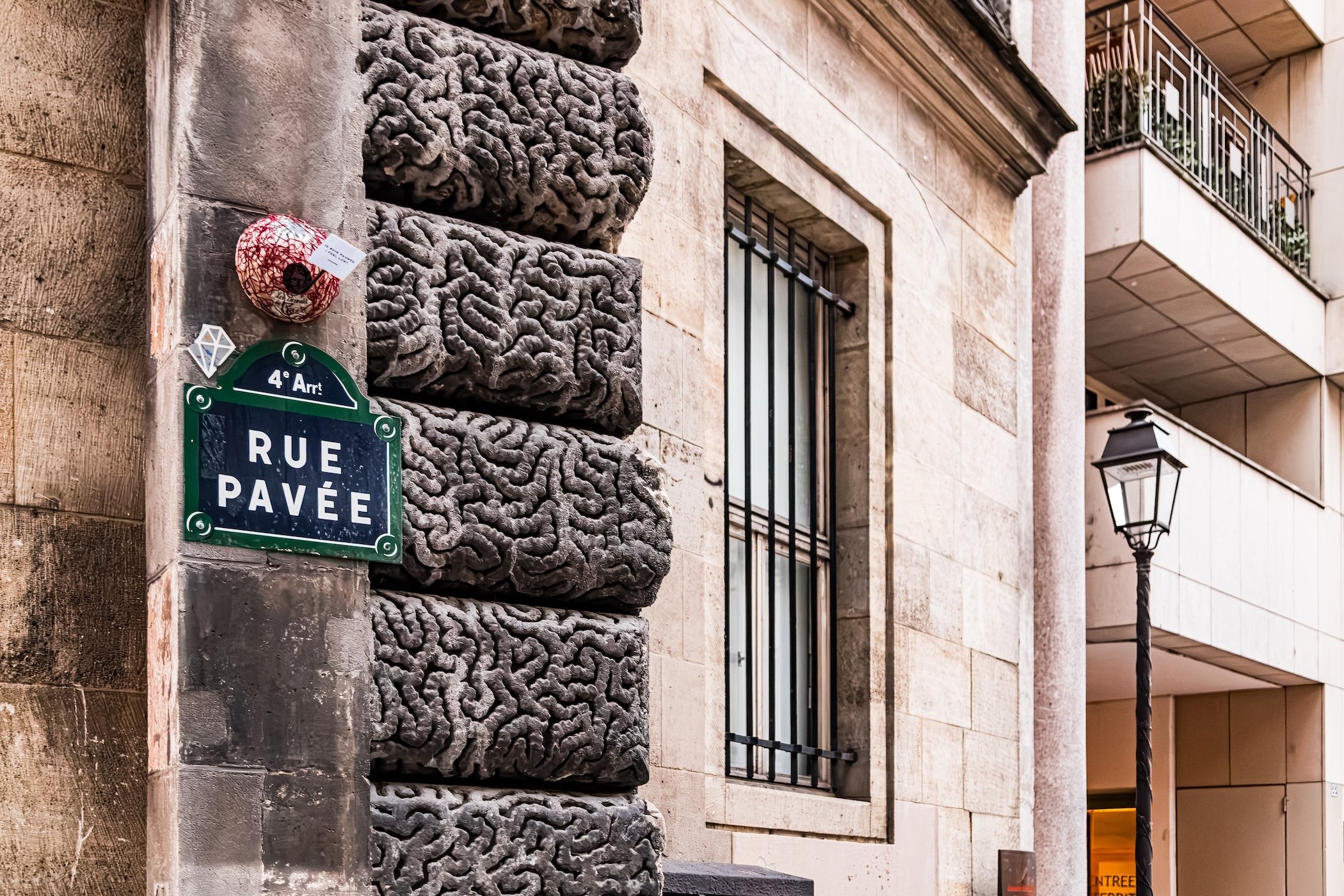
By 19:10, Saint-Gervais had become the emotional center of the evening. Place Sainte-Catherine gathered diners and conversation around its cobbled square, while Rue Pavée and Rue des Rosiers carried the walk into the stylish, increasingly luminous streets of Le Marais. At the intersection of Rue des Rosiers and Rue des Écouffes, the illumination of the streetlamps transformed the neighborhood. Cobblestones and façades began to glow, and the route through Rue des Hospitalières Saint-Gervais, Rue du Marché des Blancs Manteaux, and Rue Sainte-Croix de la Bretonnerie became progressively more atmospheric. A stop at Résistance felt less like an interruption than a full participation in the neighborhood’s evening identity.
The final April 4 passage through Saint-Merri carried that atmosphere into something brighter, faster, and more metropolitan. Along Rue des Archives, Rue de la Verrerie, and Rue du Temple, bars, cafés, clubs, shops, hotels, neon signs, and painted crossings filled the streets with contemporary color and movement. Returning to Rambuteau completed the day’s larger circuit beneath entirely different conditions from those in which it had begun. What had started beneath blue skies and spring blossoms ended amid lamps, glowing windows, nightlife, and streets fully awake after dark.
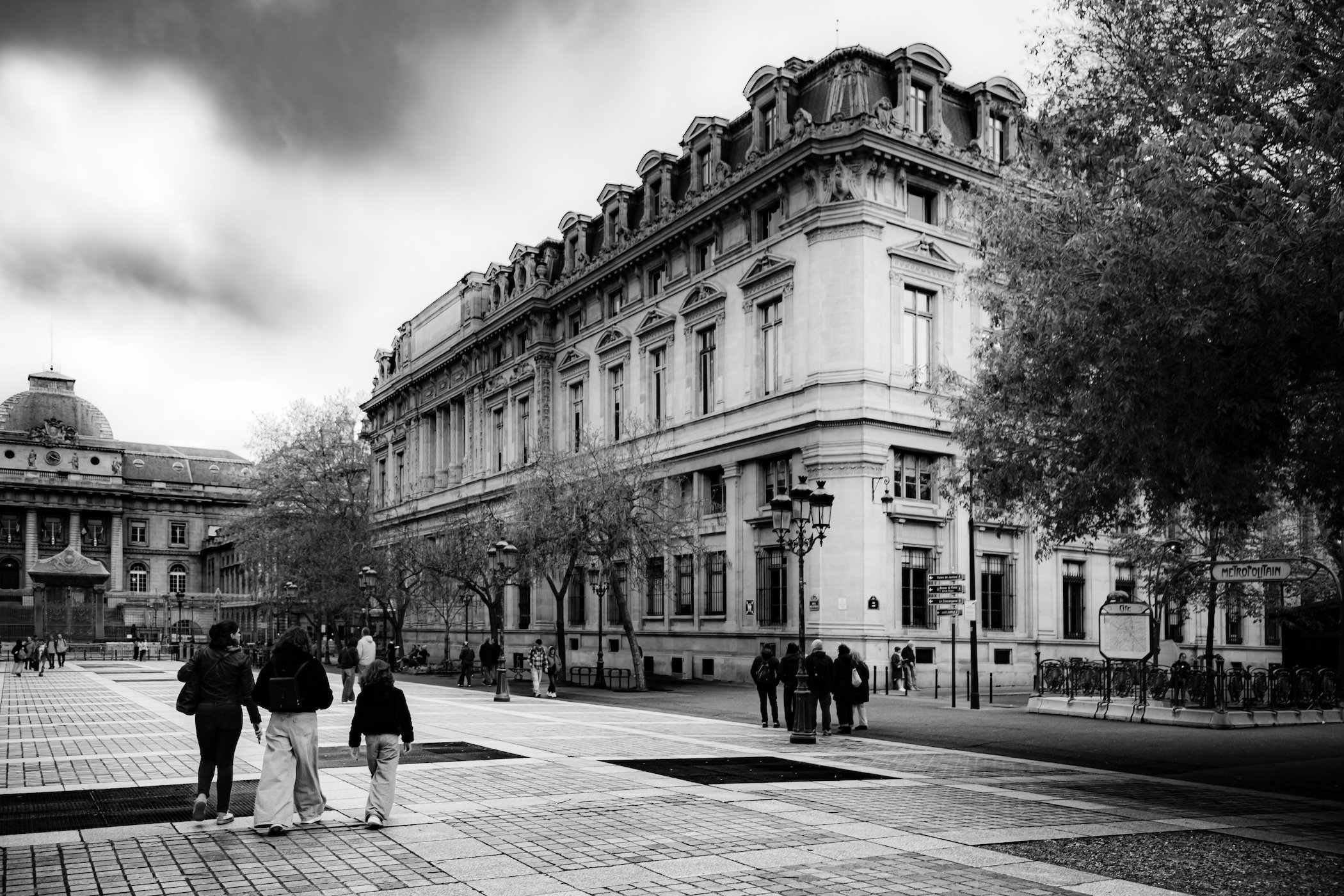
Easter Sunday began from another side of the arrondissement. Ascending from the Cité Métro station into the overcast light of Place Louis-Lépine, I walked toward the parvis where crowds waited to enter Notre-Dame. Beneath the heavy clouds, the cathedral appeared immense and spectral—a concentration of stone and shadow above the activity of Easter morning. Rue du Cloître Notre-Dame brought that monumentality back toward everyday life through cafés, souvenir shops, awnings, and narrow streets still visually tethered to the cathedral.
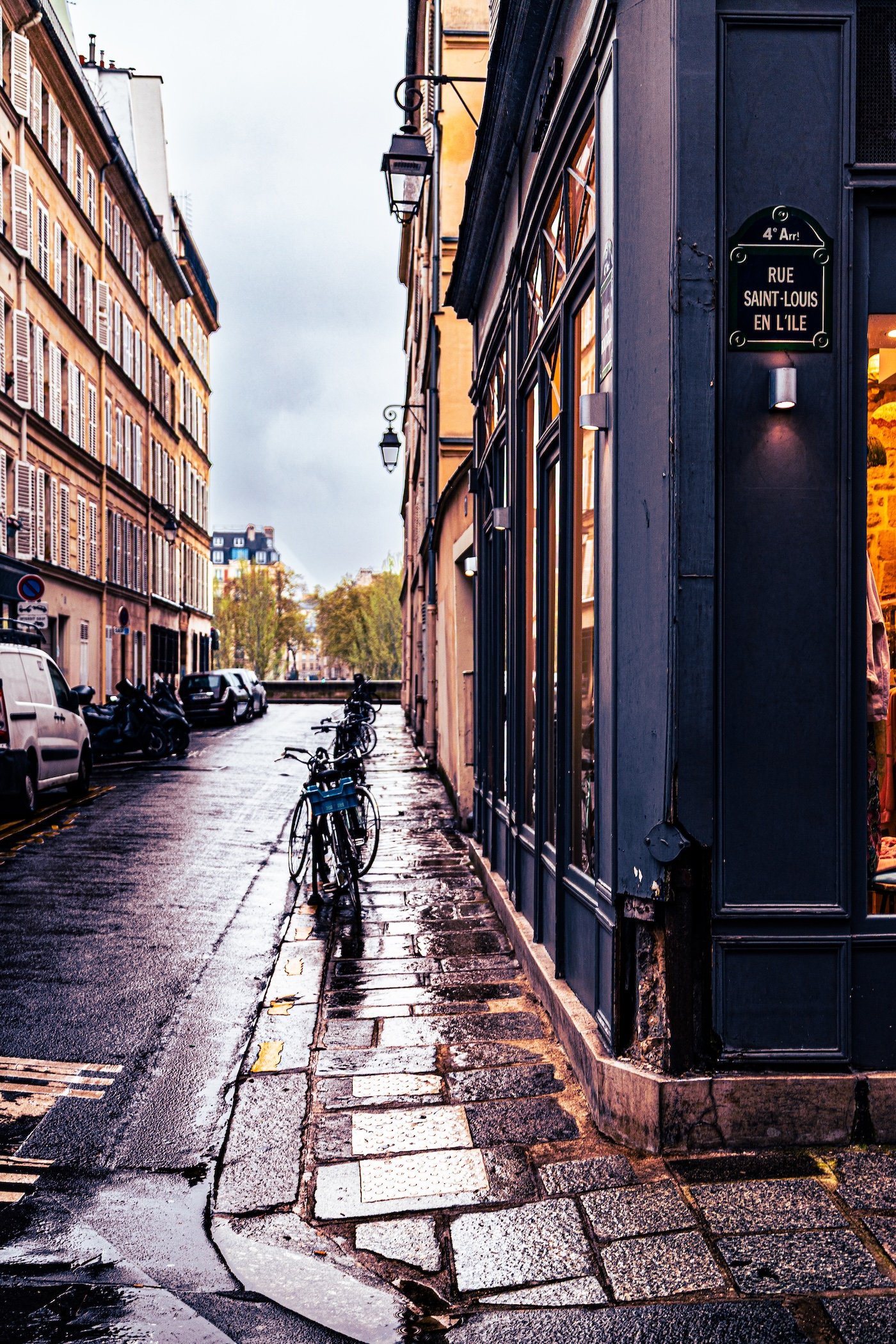
A fine rain began near Pont Saint-Louis, veiling the Seine and softening the buildings beyond it. Across the bridge, Rue Saint-Louis en l’Île glistened beneath the lights of galleries, florists, restaurants, and shop windows. By Pont de la Tournelle, the rain had begun to ease and the clouds separated just enough for the Seine to glitter beneath the still-dark sky. The arrondissement that had appeared the previous night through social energy and artificial illumination now revealed itself through water, weather, distance, and quiet atmospheric change.
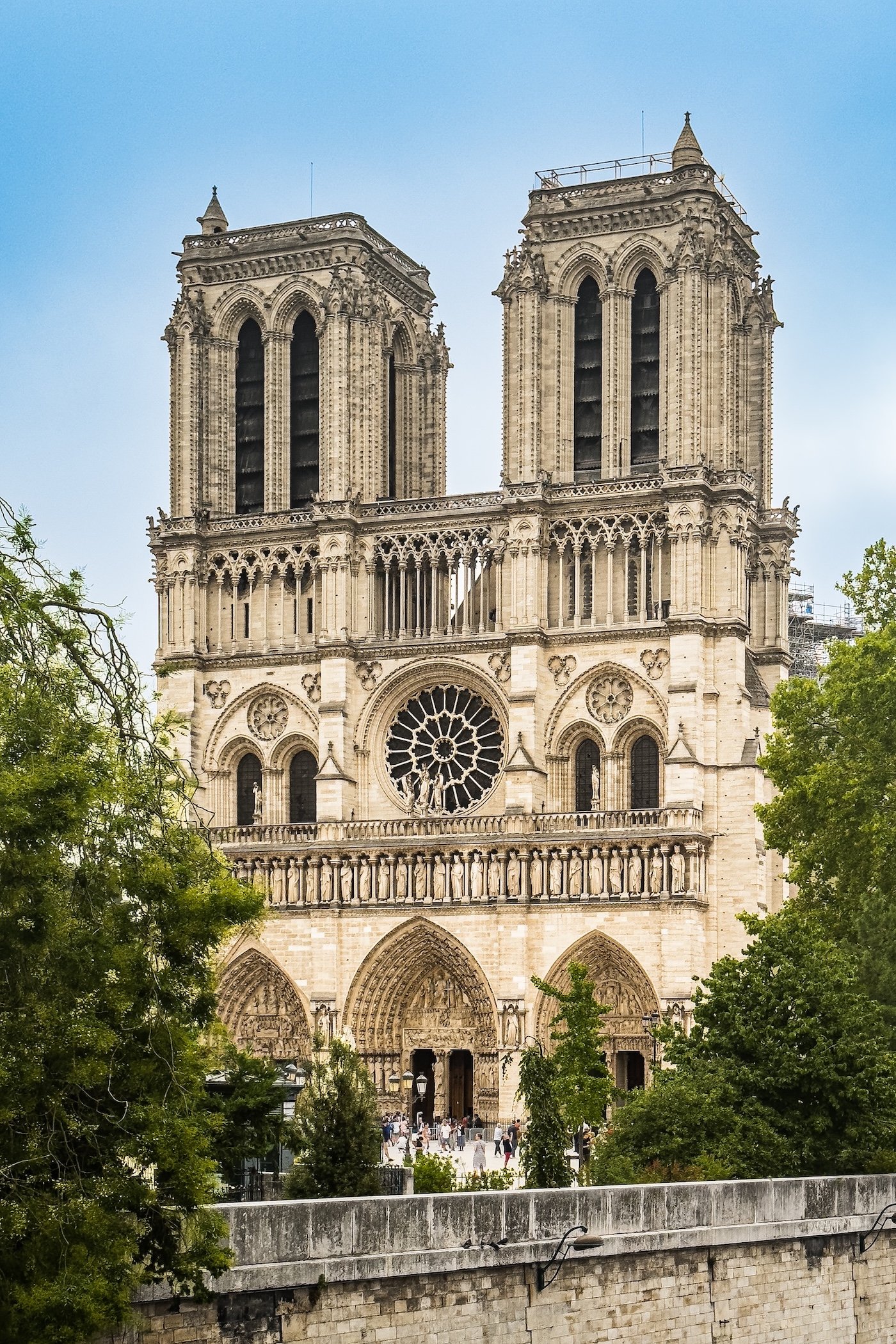
When I returned to Île de la Cité that evening, Notre-Dame stood fully illuminated in golden late-afternoon light. The cathedral provided a final transformation, but not the entire meaning of the two days. Together, the walks had moved from intimate mainland streets into broad thoroughfares, from twilight into nightlife, from the social intensity of Le Marais to the solemnity of Easter morning, and from rain-darkened islands into radiant evening clarity. The 4e emerged not as one fixed vision of historic Paris, but as a place where the city repeatedly changes scale, mood, and identity without ever losing its continuity.
Flâneur Notes document the walks, photographs, light, and street-level observations behind this neighborhood entry. Learn more about the Spirit of the Flâneur.
Explore Paris
-

The twenty arrondissements form the civic spiral of Paris, organizing the city into its broad local districts of government, identity, and daily life.
-

Each arrondissement is divided into four official administrative quarters, giving Paris a more precise civic and geographic framework.
-

The conseils de quartier bring participation to street level, giving residents a voice in neighborhood needs, public space, and local civic life.
-

Les Deux Rives trace Paris through the Seine’s two banks, revealing how the Rive Droite and Rive Gauche shaped the city’s civic power, commerce, learning, art, and cultural identity.
-

Cultural neighborhoods reveal the Paris people recognize through history, cafés, architecture, memory, atmosphere, and local belonging.