
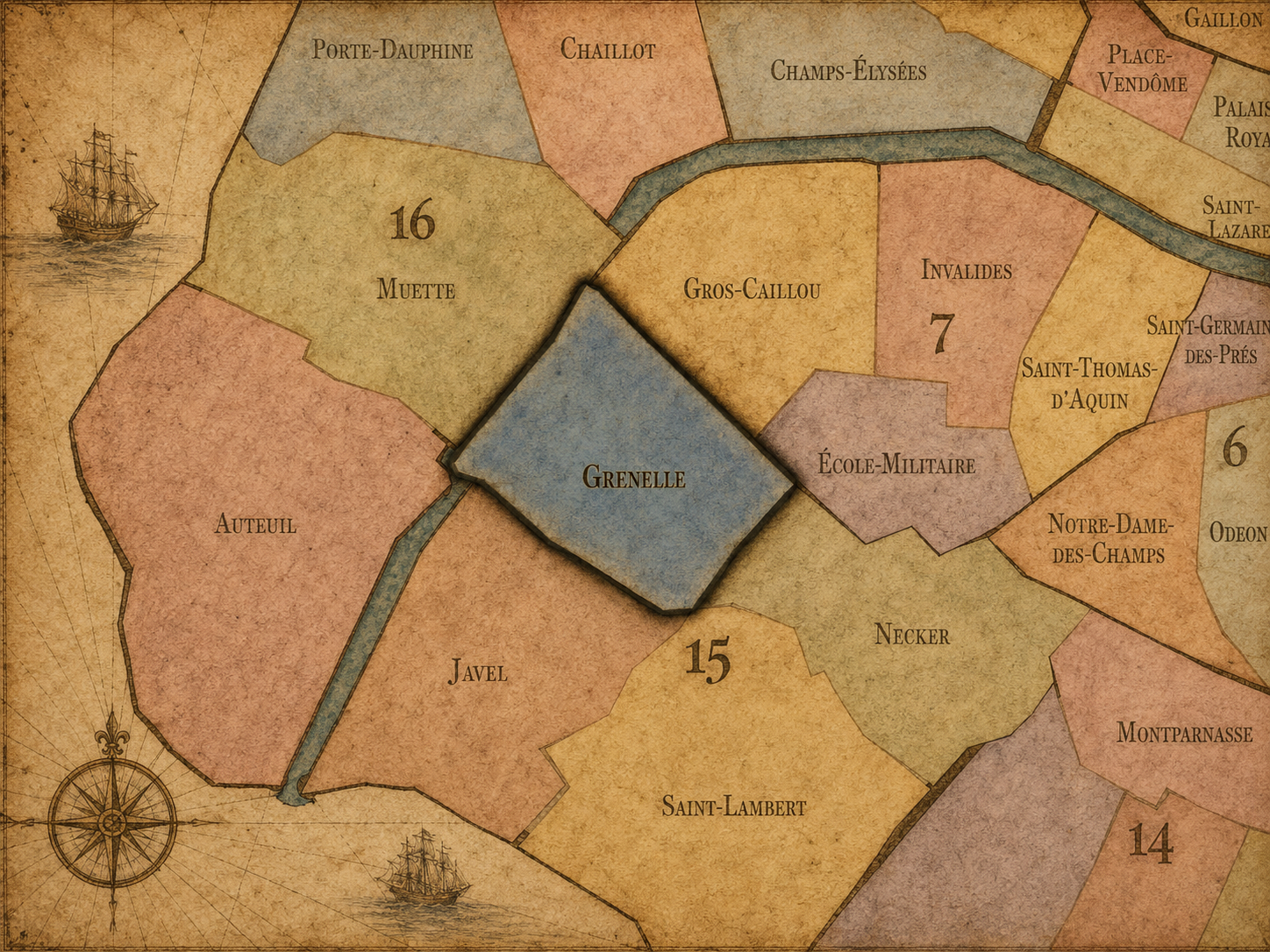
15e - GRENELLE
Quartiers Administratifs
Welcome to the Grenelle neighborhood page! Grenelle is a quartier administratif — the 59th administrative quarter — one of 80 such districts across Paris. As a quartier administratif of the 15e Arrondissement - Vaugirard, Grenelle belongs to a formal layer of Parisian geography and carries the memory of an independent commune and industrial suburb absorbed into Paris, now marked by the Eiffel-facing Seine edge, Beaugrenelle, Avenue Émile Zola, and a dense mix of residential and commercial life.
Part of an ongoing project to walk and photograph every neighborhood in Paris, this page explores 15e Grenelle through maps, district identity, history, and photography.
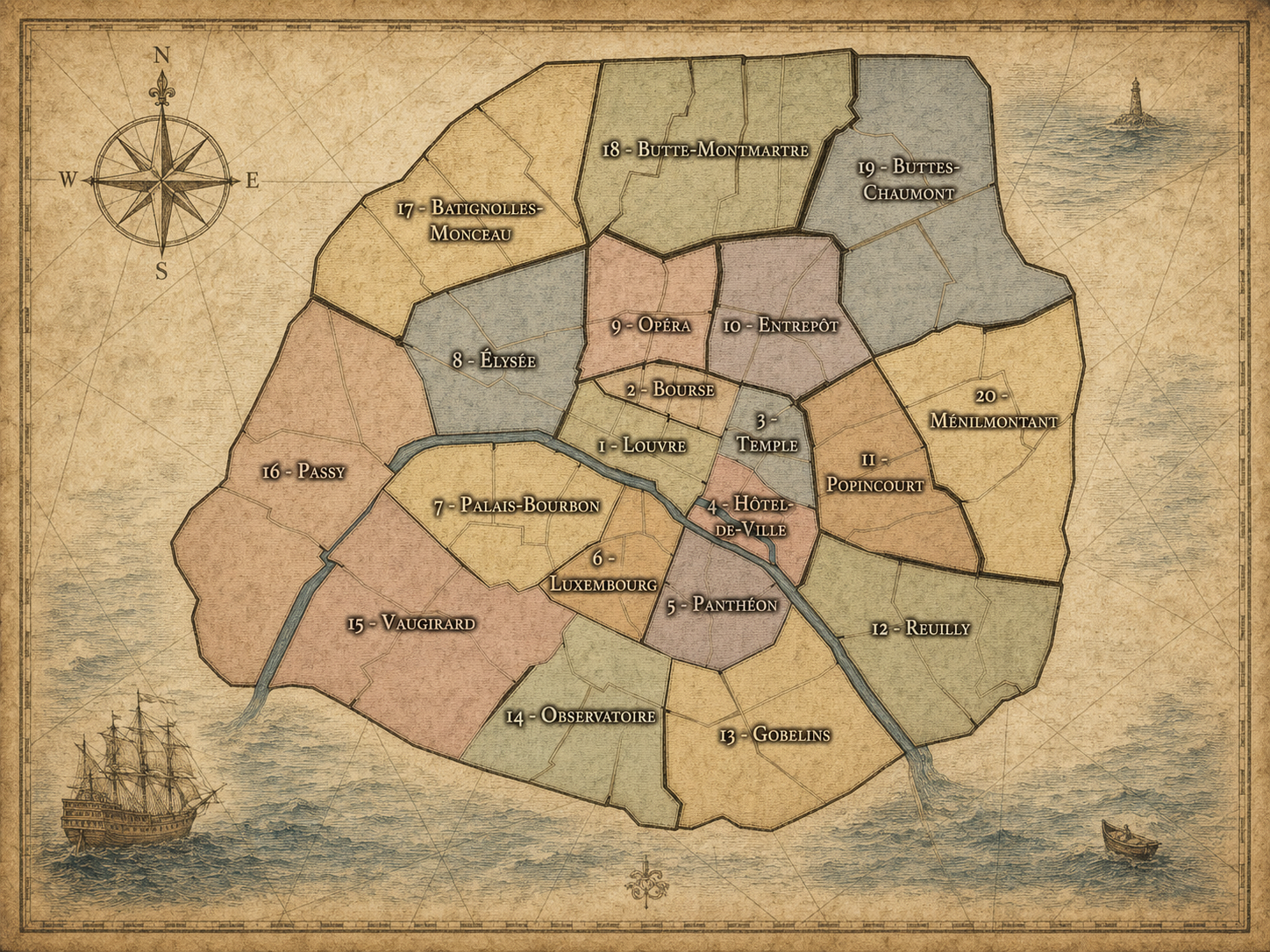
The Map
Geographic Setting


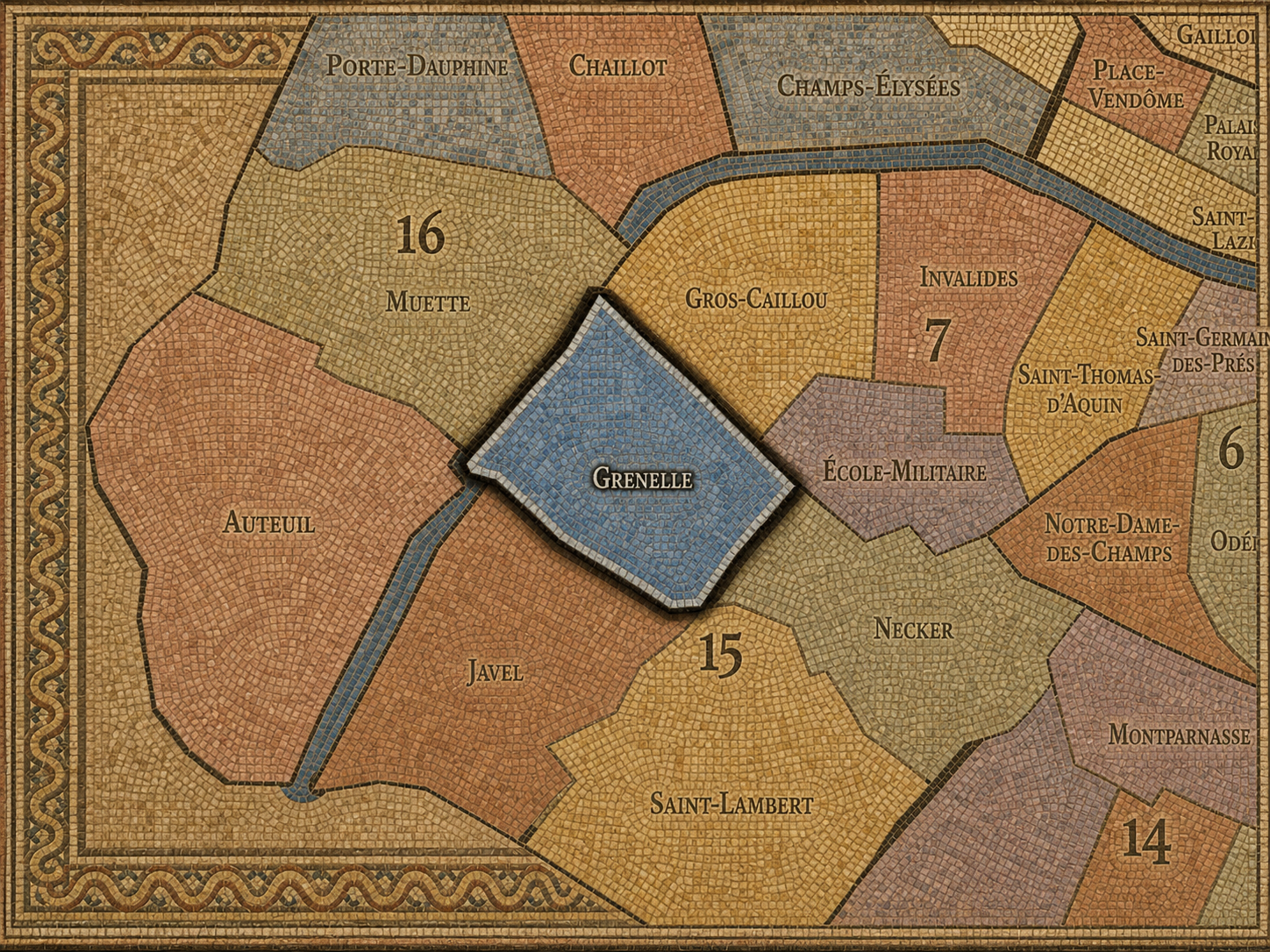
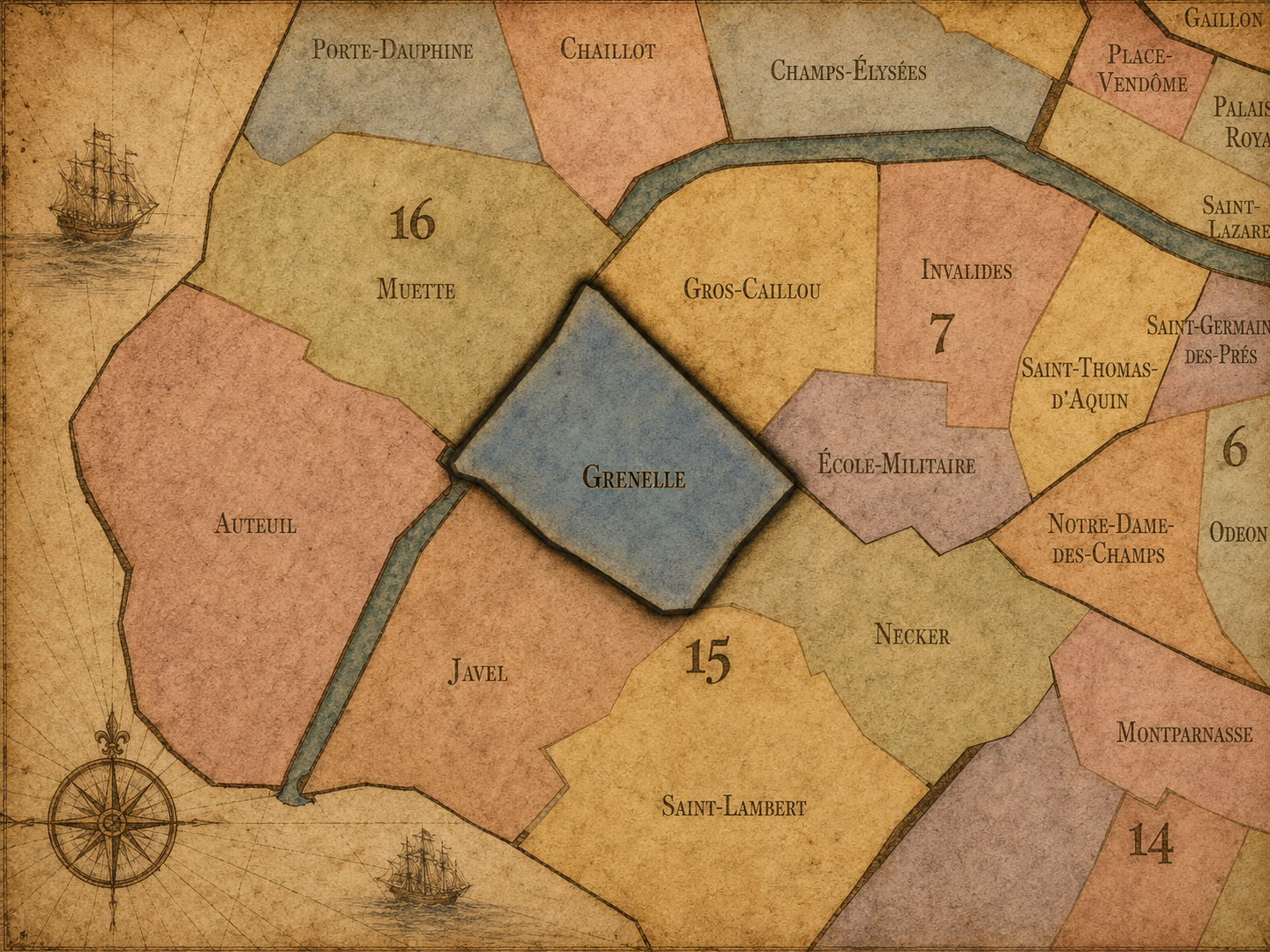
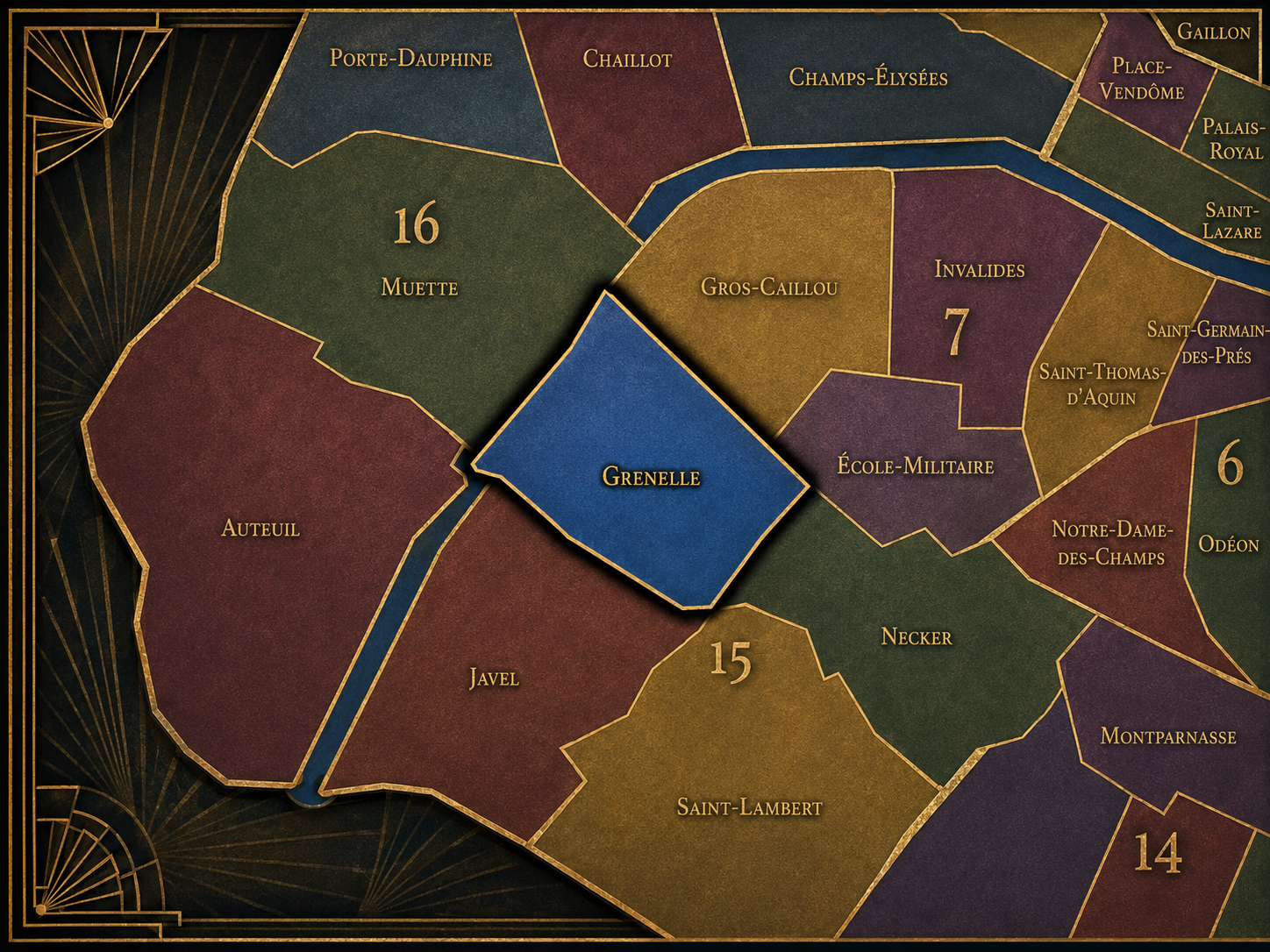
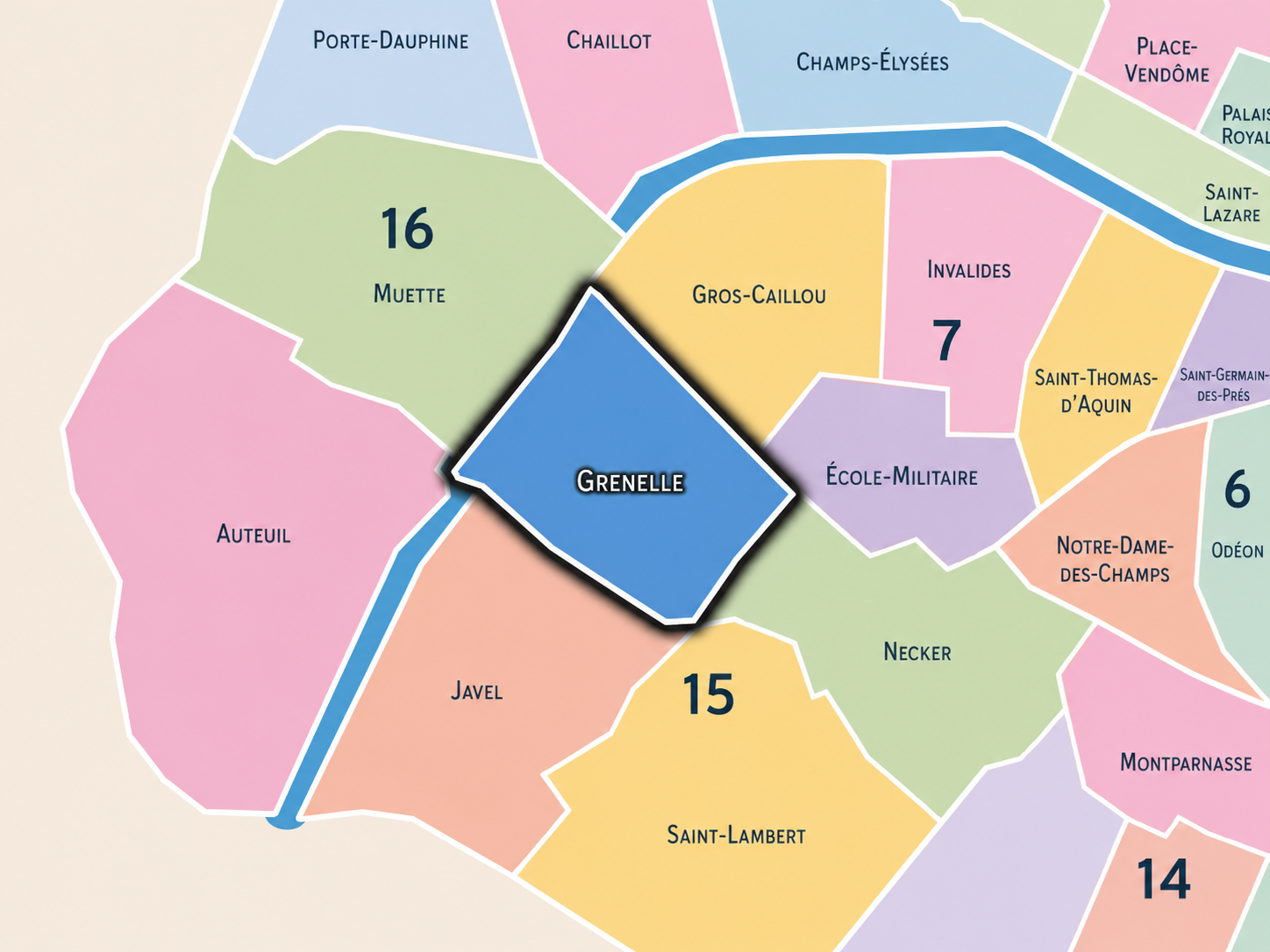
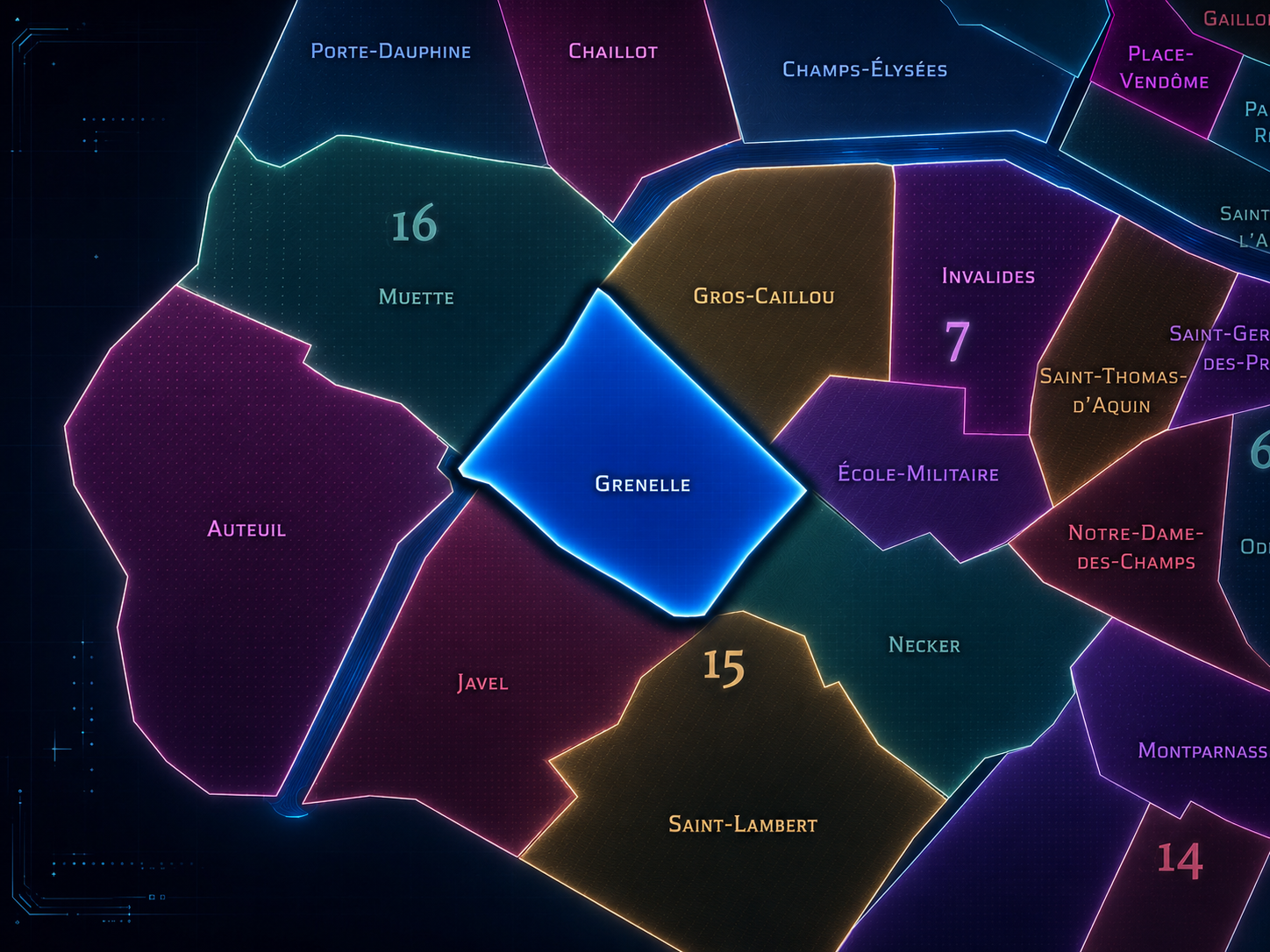
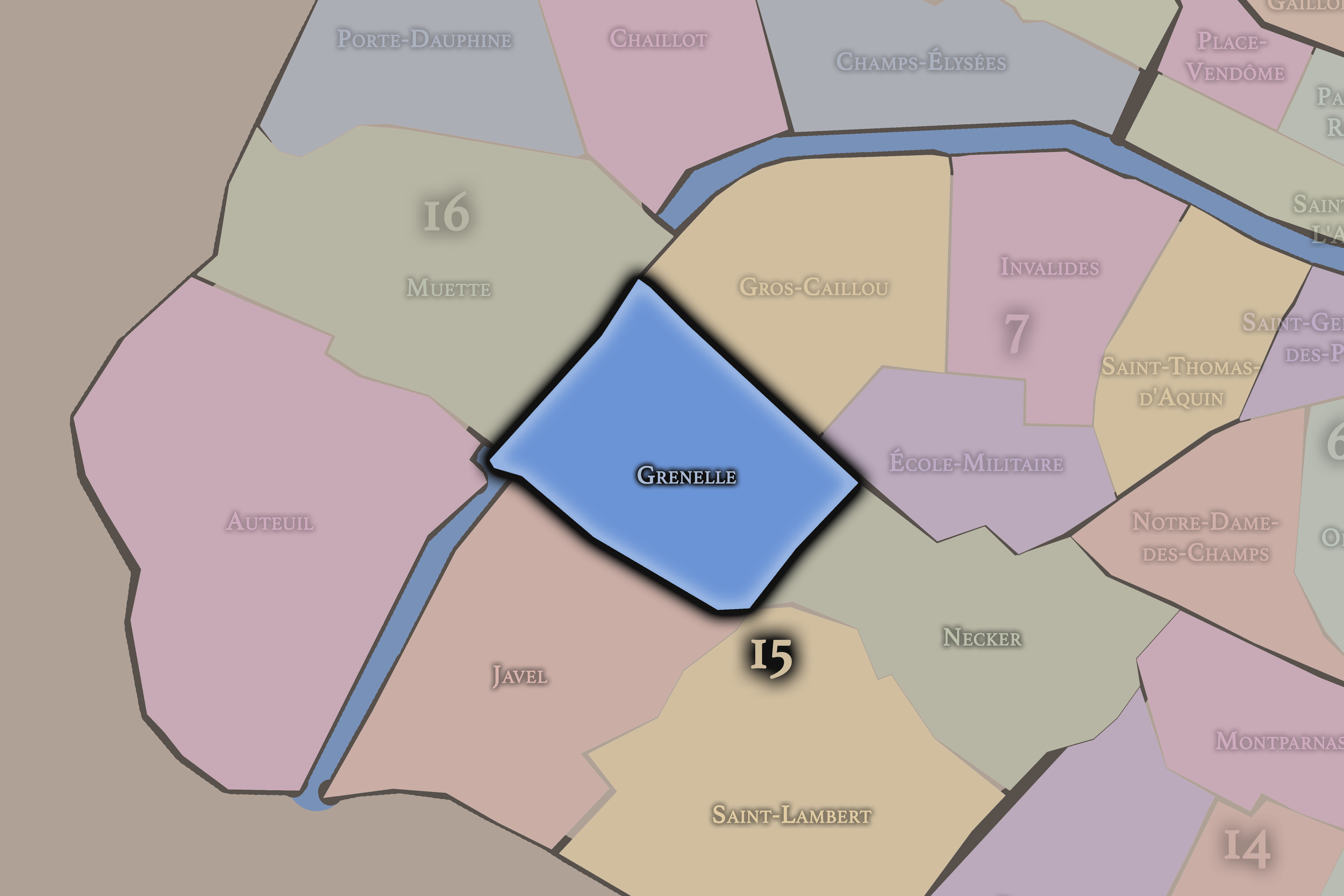
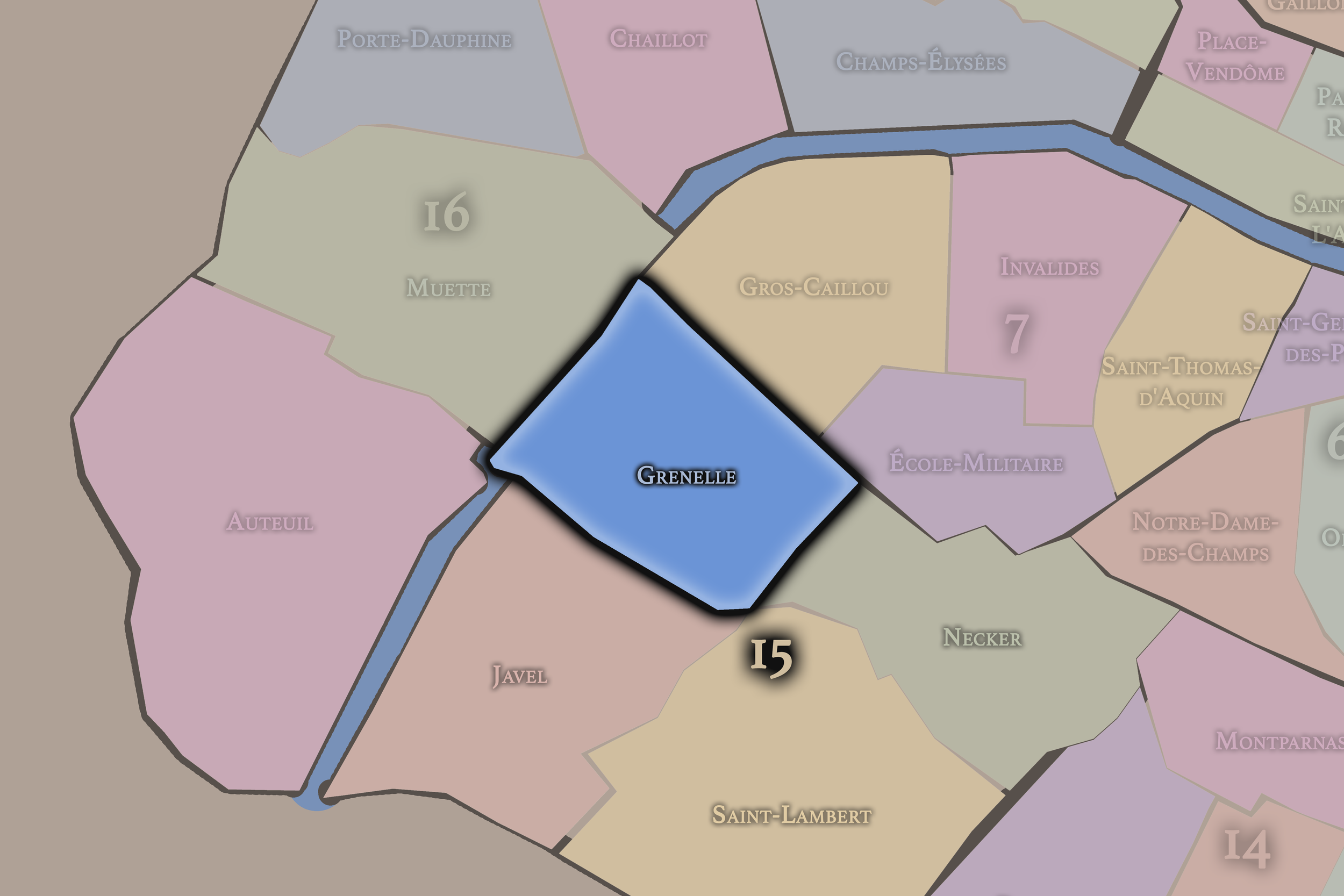
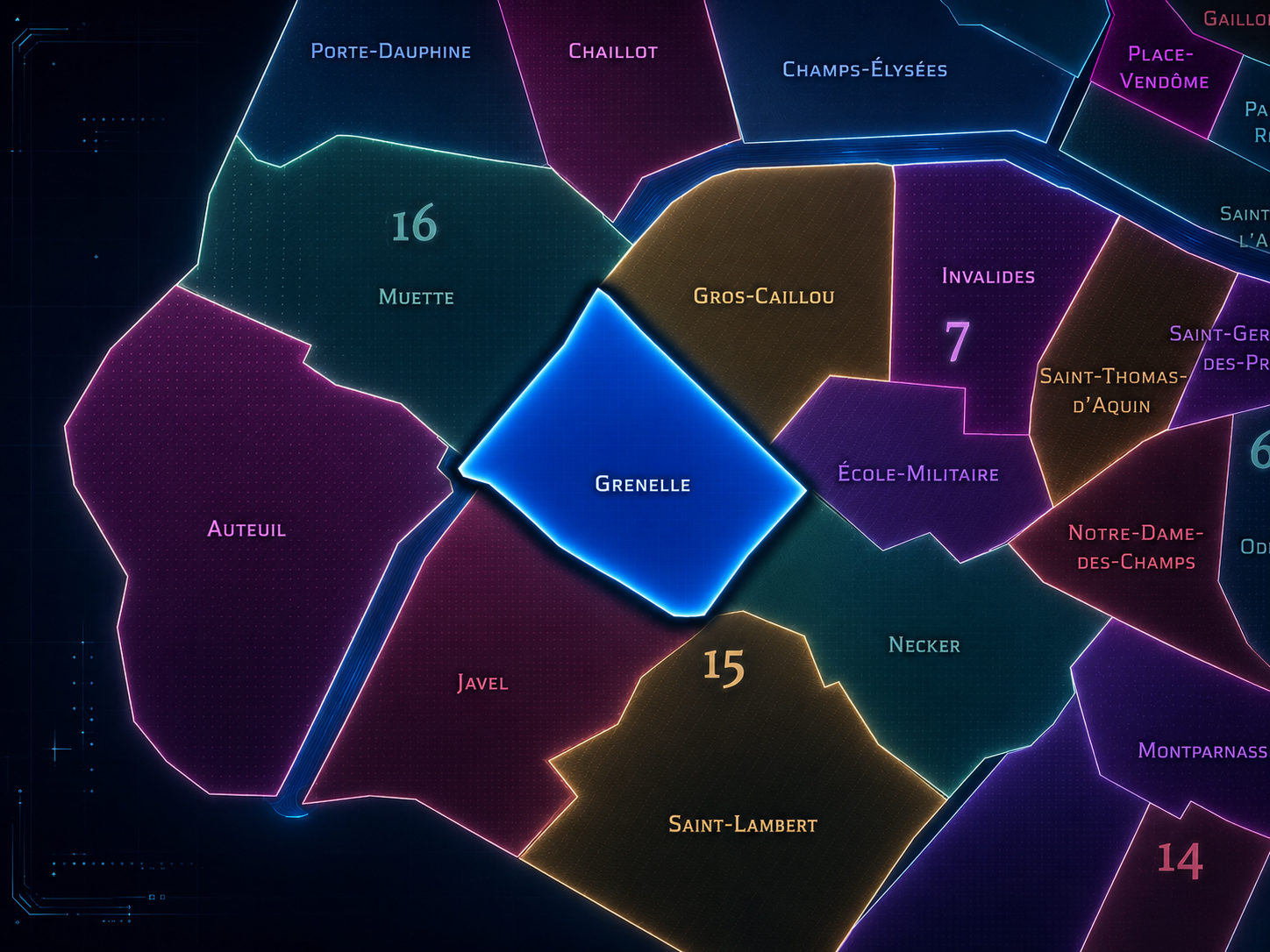
Click any Grenelle neighborhood map above to open the full-size image.
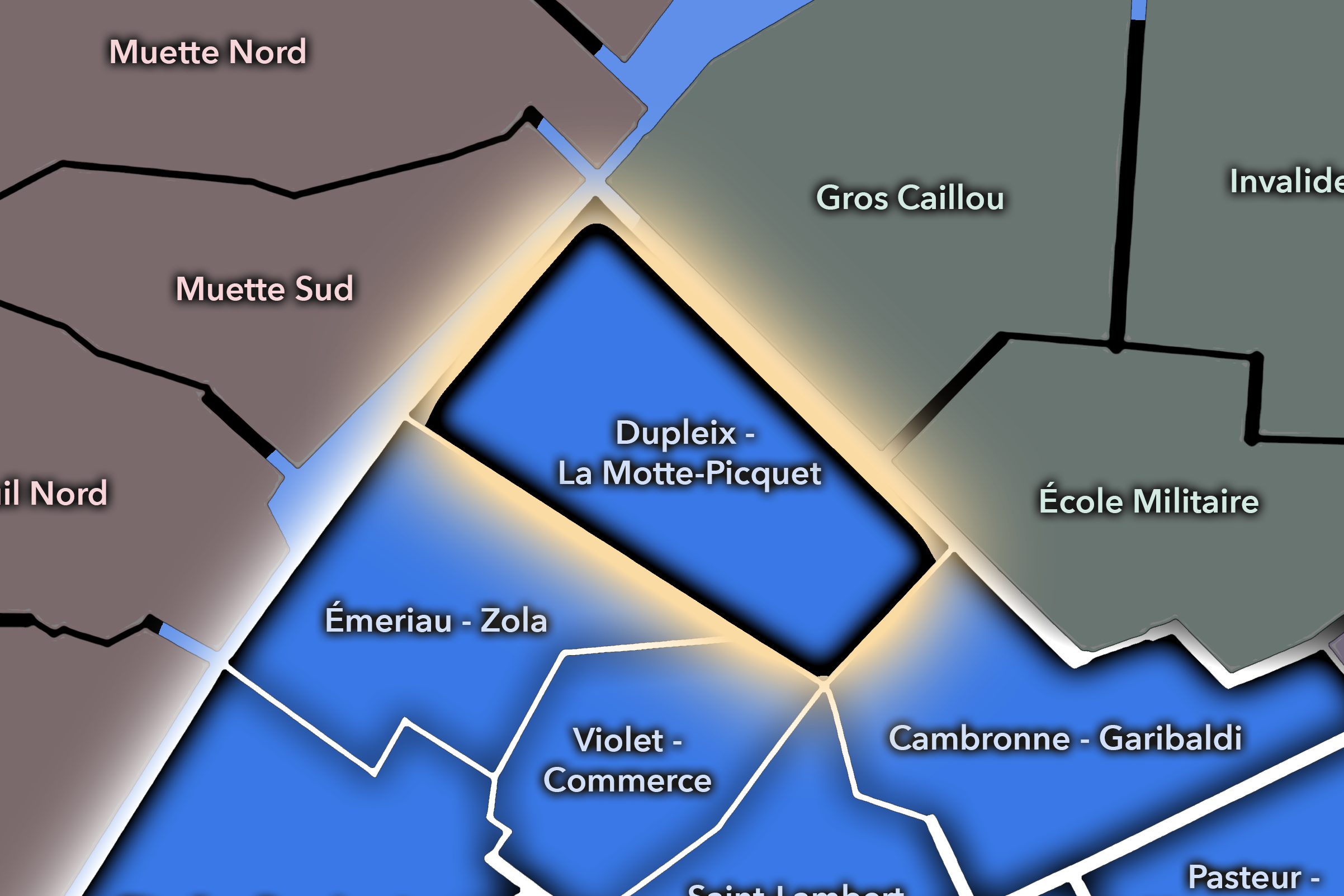
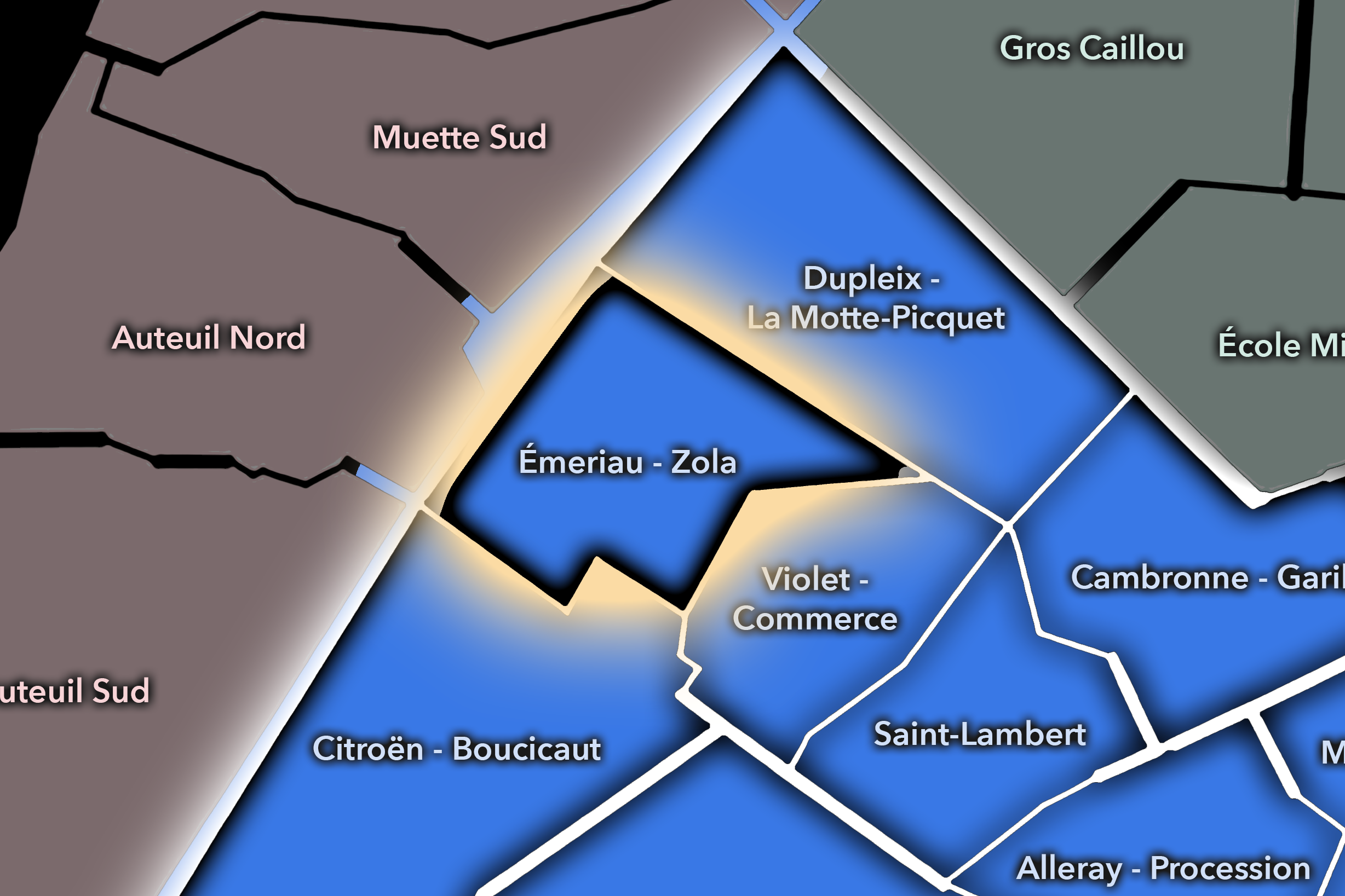
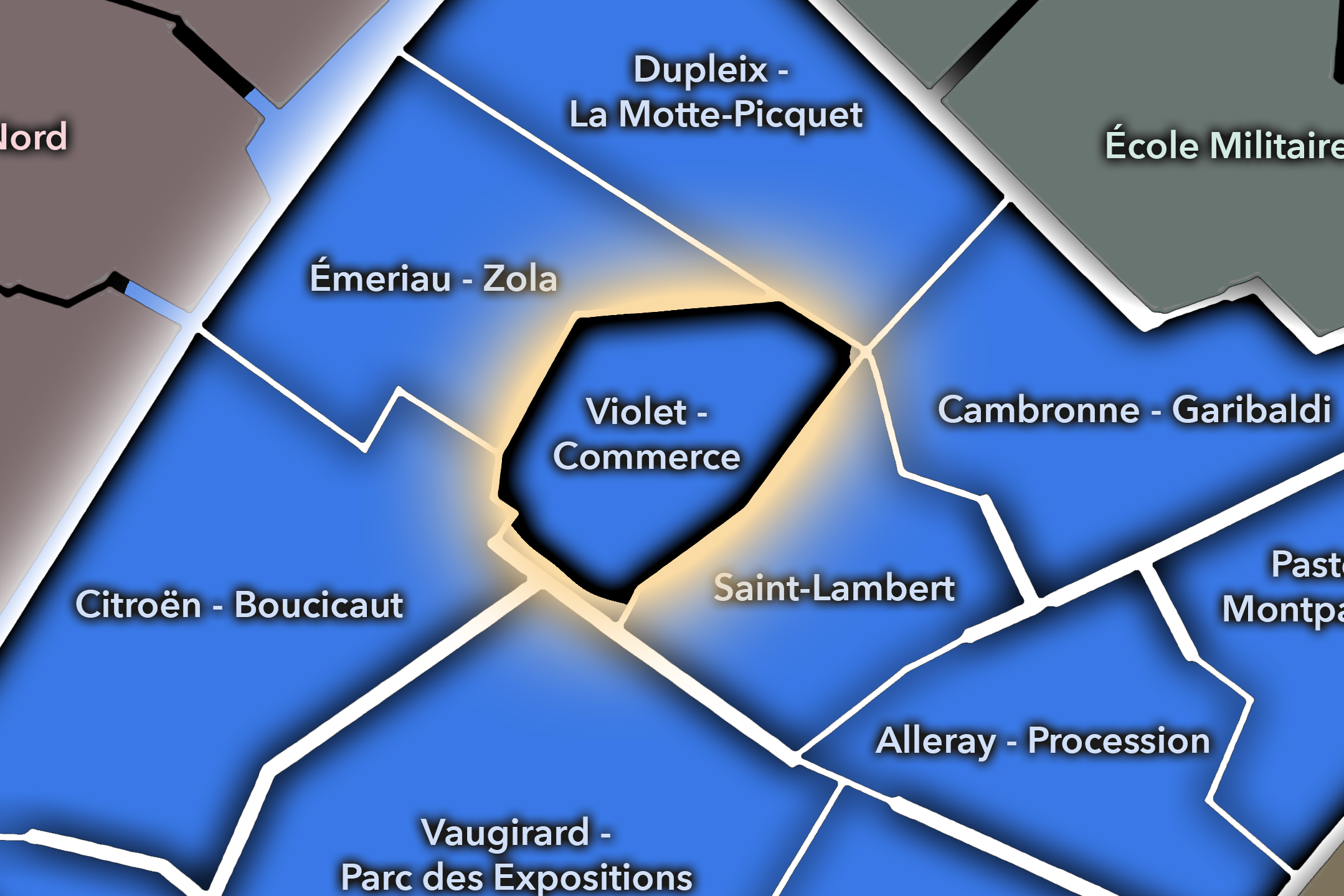
Grenelle occupies the northern and northwestern portion of the 15th arrondissement, where the Left Bank opens toward the Seine, the Eiffel Tower’s southern approaches, the Beaugrenelle / Front de Seine high-rise landscape, the Commerce corridor, and the dense residential fabric between Dupleix, La Motte-Picquet, Charles Michels, and Bir-Hakeim. It lies west of Necker, north of Vaugirard, and east of Javel, forming one of the 15th arrondissement’s most distinctive mixtures of former village, modern residential district, commercial center, riverfront redevelopment, and high-rise experimentation.
The quarter’s geography is shaped by Boulevard de Grenelle, Rue du Commerce, Avenue Émile-Zola, Rue de Lourmel, Rue Saint-Charles, Quai de Grenelle, Pont de Bir-Hakeim, Île aux Cygnes, Place du Commerce, the Beaugrenelle shopping district, and the towers of the Front de Seine. It is a quarter of striking contrasts. Around Rue du Commerce, Grenelle feels like an older neighborhood center of shops, cafés, apartments, and daily errands. Along the Seine, it becomes modern, vertical, and infrastructural, with towers, slabs, river views, shopping complexes, and the monumental proximity of the Eiffel Tower across the 7th arrondissement.
Unlike Vaugirard, whose identity is broader, more residential, and deeply tied to the old village and southern heart of the 15th, or Javel, whose character is shaped by industry, Citroën, riverfront transformation, and the southwestern edge, Grenelle is more concentrated around urban reinvention. It is the 15th arrondissement as former commune, planned neighborhood, commercial high street, and modern riverfront — a place where the ordinary life of western Left Bank Paris meets some of the city’s boldest late-20th-century planning.
Administrative Quarter Identity
Etymology and Origins
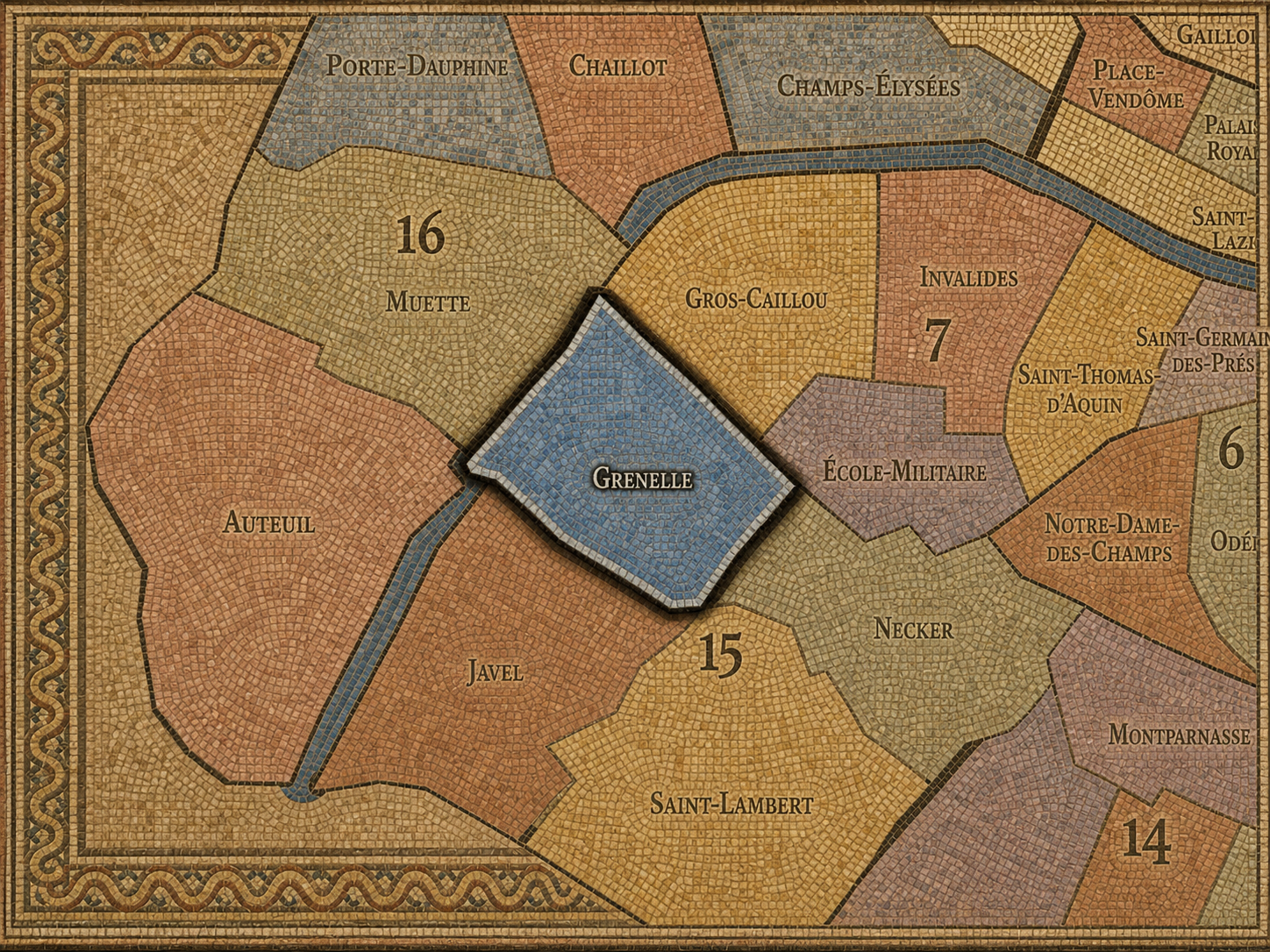
The name Grenelle is usually connected to the old “plaine de Grenelle,” a broad plain west of the older Left Bank and south of the Invalides / École Militaire landscapes. Before its urban development, this area was long difficult to cultivate and only sparsely inhabited. The City of Paris’s 15th arrondissement history notes that the 15th was formed in 1860 largely from the former communes of Vaugirard and Grenelle, and that the plaine de Grenelle was long a challenging landscape before its 19th-century subdivision.
The name therefore preserves an older geographic identity: a plain before a neighborhood, an open stretch before a commune, a peripheral landscape before incorporation into Paris. Grenelle was not born as a medieval parish or royal square. It became urban through development, speculation, subdivision, and annexation. Its name carries the memory of ground transformed by planning.
That transformation is central to the quarter’s identity. In the 1820s, developers Jean-Léonard Violet and Alphonse Letellier began subdividing land in the Grenelle plain, with the City of Paris noting that streets such as Rue des Entrepreneurs preserve the memory of the development companies involved in the operation; in 1830, Grenelle became a separate commune before being annexed to Paris in 1860. The name Grenelle thus belongs to one of the clearest stories of Parisian urbanization: land planned, named, settled, municipalized, and finally absorbed into the capital.
Civic Framework
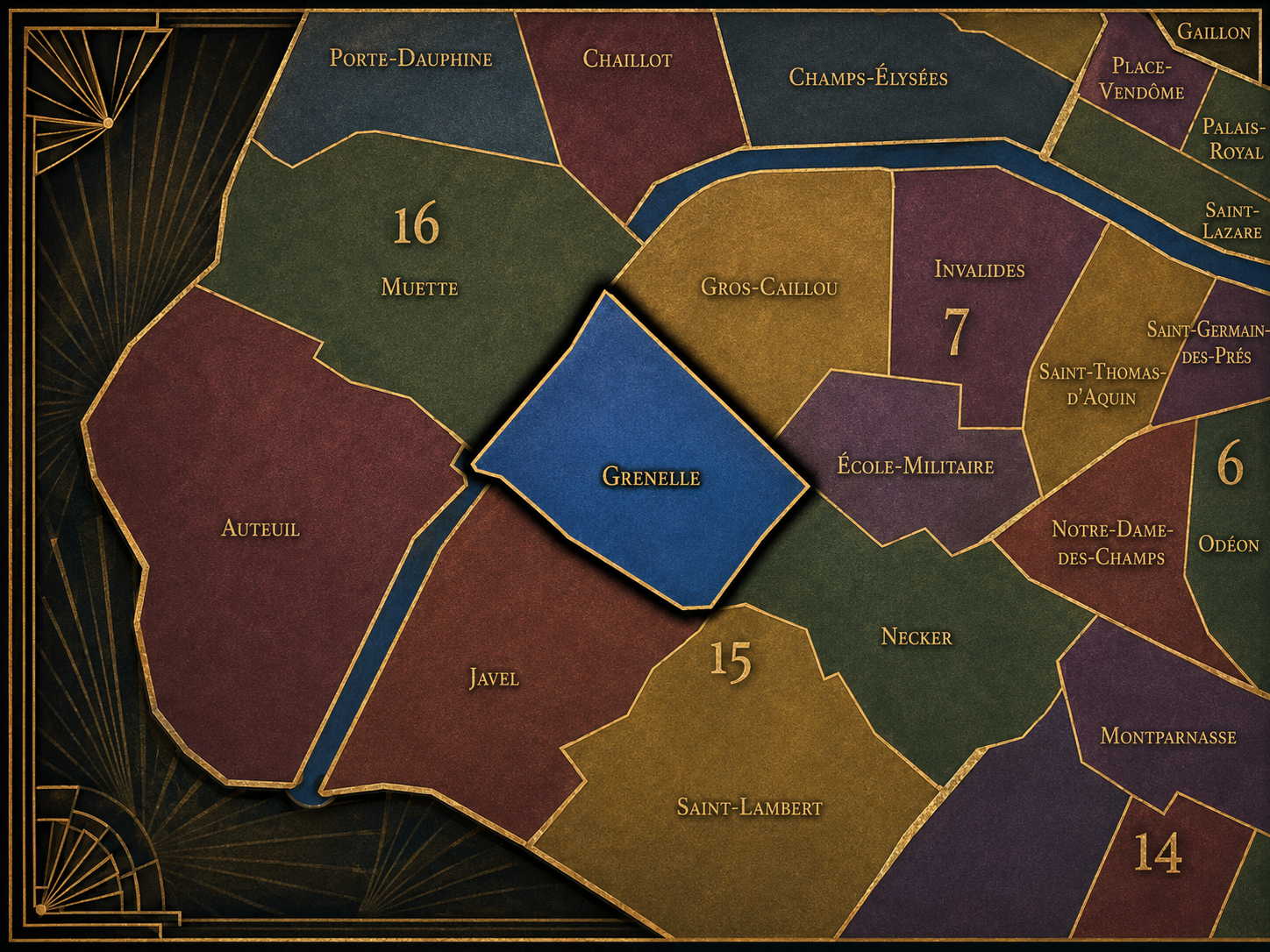
Within the official geography of Paris, Grenelle is one of the four administrative quarters of the 15th arrondissement, alongside Saint-Lambert, Necker, and Javel. It is traditionally counted as the 59th administrative quarter of Paris, and district references identify it as one of the four quarters that form the 15th arrondissement.
As an administrative quarter, Grenelle gives civic shape to an area that is often described through more specific names: Beaugrenelle, Front de Seine, Dupleix, Commerce, Bir-Hakeim, La Motte-Picquet, or the northern 15th. Those names are useful and often more immediately recognizable, but Grenelle is the official frame that holds them together. It connects the local shopping streets, riverfront towers, former commune history, and western Left Bank residential life into one mapped unit.
This frame is especially useful because Grenelle contains several identities that can otherwise feel separate. Rue du Commerce and Place du Commerce preserve the neighborhood-center feeling of older Grenelle. Beaugrenelle and Front de Seine express the late-modern redevelopment of the riverfront. Boulevard de Grenelle and La Motte-Picquet connect the quarter to the military and exposition landscapes of the 7th. The administrative quarter allows these layers to be read as part of one larger urban story.
Neighborhood Distinction
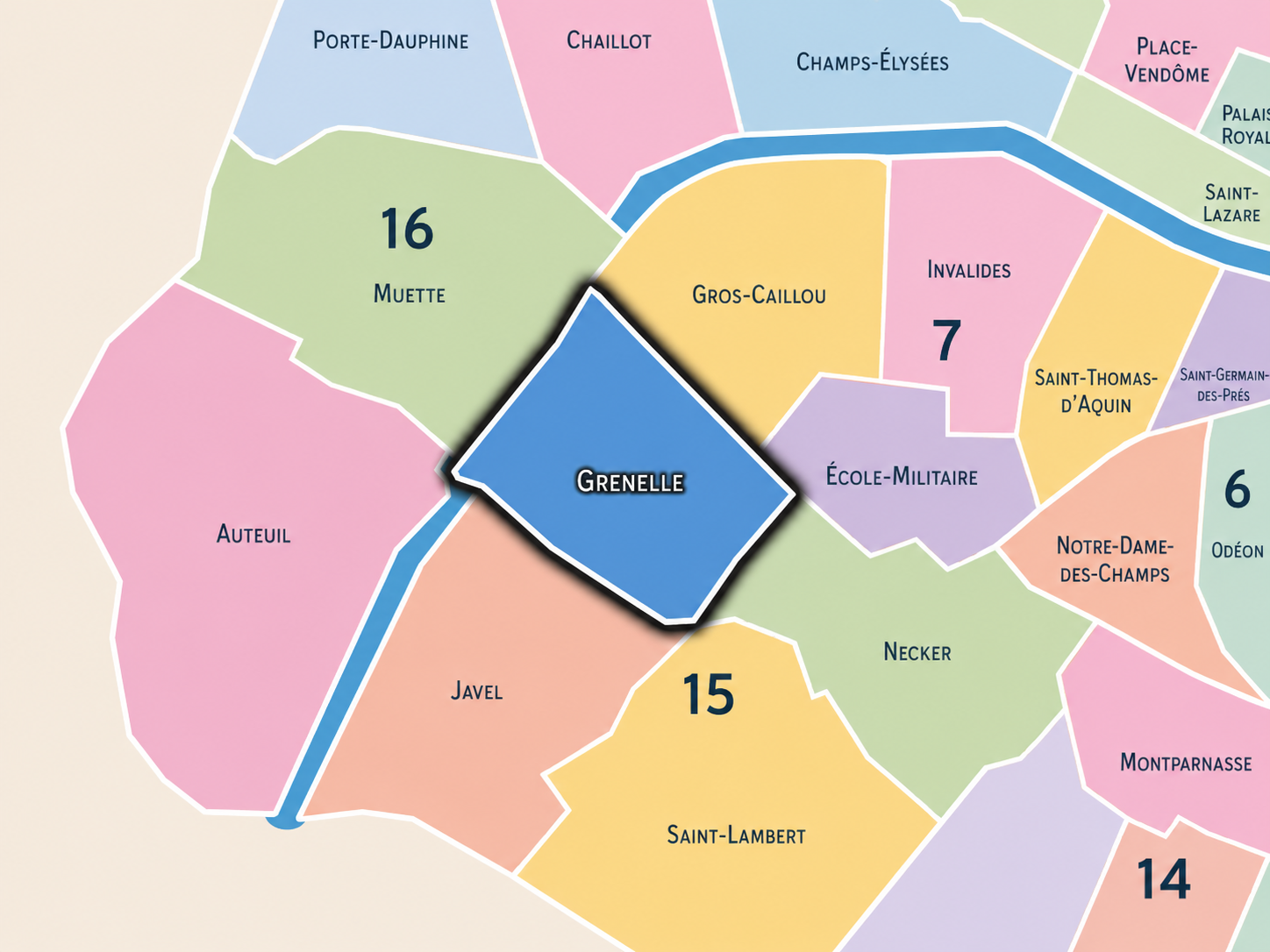
Grenelle differs from the other quarters of the 15th arrondissement through its combination of former commune identity, commercial neighborhood center, and high-rise riverfront modernism. Saint-Lambert is more southern and residential, tied to the former village of Vaugirard, Parc Georges-Brassens, and the quieter interior of the arrondissement. Necker is more northeastern, shaped by Montparnasse, the hospital, Pasteur, and the railway-station edge. Javel is more industrial-riverfront in origin, strongly associated with Citroën, factories, docks, and the later Parc André-Citroën landscape.
Grenelle is more mixed between village-center memory and modern redevelopment. Its distinction lies in the fact that it can feel traditional and contemporary within a few blocks. Rue du Commerce provides one of the 15th’s strongest local shopping spines, while the Front de Seine presents an entirely different image: towers, slabs, open decks, and river-facing urbanism. The Beaugrenelle / Front de Seine sector emerged from a renovation operation begun in the early 1960s along the Seine, according to Paris planning documents.
It should also be distinguished from Beaugrenelle. Beaugrenelle is a powerful local and commercial name within Grenelle, especially for the riverfront and shopping-center landscape, but it is not the whole administrative quarter. Grenelle is broader and older. Beaugrenelle is one modern layer within it — an especially visible layer, but not the origin of the district’s identity.
Parisian Identity
Grenelle expresses Paris as a city of planned absorption. It is one of the places where the capital did not simply inherit an old village unchanged, but actively transformed peripheral land into a modern urban quarter. The Grenelle plain was subdivided, organized, promoted, made into a commune, and then incorporated into Paris. This gives the quarter a very different identity from older central districts whose street patterns grew over centuries.
Its Parisian identity is also strongly residential. The 15th arrondissement is often described as one of Paris’s most lived-in, family-oriented, and locally grounded districts, and Grenelle contributes to that atmosphere through shops, markets, schools, apartment buildings, cafés, transit, and a daily rhythm that is often more local than touristic. Yet the quarter also faces the river and the Eiffel Tower’s visual field, giving it a relationship to global Paris without becoming entirely absorbed by tourism.
The Front de Seine adds another layer. Here, Paris becomes vertical, modernist, and experimental. The towers and slab landscape challenge the older stone-and-boulevard image of the capital, but they also reveal an important truth: Paris is not only preservation. It has repeatedly tried to modernize itself, sometimes controversially, sometimes boldly, and sometimes with results that become part of the city’s complexity. Grenelle is one of the quarters where that modern Paris is impossible to ignore.
Neighborhood Connections
Every neighborhood belongs to a wider Parisian fabric.
-
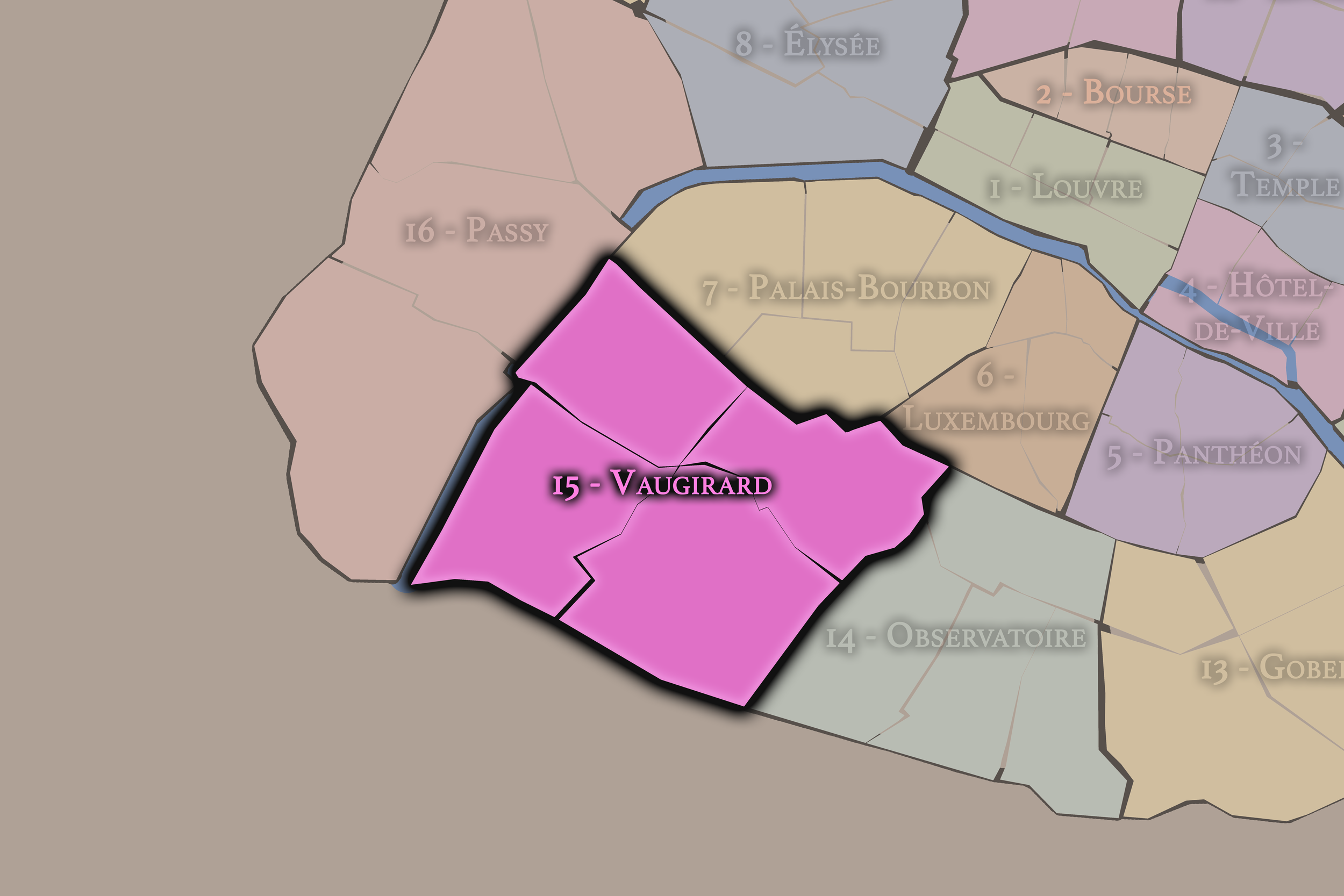
15e — Vaugirard
-
Dupleix - La Motte-Picquet
-
Émeriau - Zola
-
Violet - Commerce
-
Rive Gauche
The History
Origins
The origins of Grenelle lie in the plain west of the older Left Bank, beyond the dense medieval and early modern city. For centuries, the area was sparsely inhabited and difficult to cultivate, more open ground than neighborhood. It stood near major military and institutional landscapes such as the École Militaire and Champ-de-Mars, but it did not yet possess the residential and commercial character that would later define it.
The plain’s openness was crucial. It gave 19th-century developers room to imagine a new settlement rather than merely extend an existing street fabric. In 1824, Jean-Léonard Violet and Alphonse Letellier purchased and began subdividing land in the area, helping create the planned development of Beau-Grenelle and the future commune of Grenelle. The City of Paris connects this subdivision directly to the development of the area and to Grenelle’s emergence as a distinct commune in 1830.
Grenelle’s origin story is therefore less about ancient continuity than modern creation. It began as a peripheral plain, then became a speculative and planned urban settlement. The quarter’s later identity — practical, residential, commercially organized, and open to modern redevelopment — reflects that founding condition.
16th–17th Century
In the 16th and 17th centuries, the future Grenelle quarter remained outside the dense built fabric of Paris. The plain lay beyond the older urban core, closer to fields, military landscapes, roads, and the western Left Bank’s outer ground than to the parish-centered city. It was not yet a village of strong urban identity, nor a quarter with a defined commercial center.
This peripheral condition gave the area a different rhythm from the older Left Bank neighborhoods to the east. Saint-Germain, the Latin Quarter, and the riverfront institutions were already deeply urban, while Grenelle remained open and marginal. Its importance lay more in land and space than in monuments or dense settlement.
By the end of the 17th century, the western Left Bank was becoming increasingly important through royal and military development, especially around Invalides and the future Champ-de-Mars / École Militaire landscapes. Grenelle remained outside the densest activity, but the gradual westward and southward organization of Paris would eventually make its open plain valuable.
18th Century
In the 18th century, Grenelle’s relationship to the city changed as the military and ceremonial landscapes nearby grew in importance. The École Militaire and Champ-de-Mars gave the western Left Bank a vast formal and public presence, while the Grenelle plain remained largely open and only partially developed. This proximity mattered: the future quarter lay beside one of the great open spaces of Paris, yet remained distinct from it.
The area’s sparse settlement and difficult agricultural conditions continued to define it. Grenelle was still not the dense residential district it would become. It belonged to the outer ground around Paris — useful, visible, but not yet fully urban. Its later transformation would depend on the availability of land and the growing pressure for development outside the older city.
The French Revolution and later administrative reforms changed the civic landscape of Paris and its surroundings, but Grenelle’s decisive transformation did not occur until the 19th century. In the 18th century, the quarter remained more potential than place: a plain waiting for the city to arrive.
19th Century
The 19th century created modern Grenelle. In 1824, Jean-Léonard Violet and Alphonse Letellier launched the subdivision of the plain, and in 1830 Grenelle became an independent commune separated from Vaugirard. The City of Paris’s 15th arrondissement history identifies this 1830 moment as the birth of Grenelle as a distinct commune.
The new commune developed with streets, houses, commerce, workshops, and a growing population. Its planned character set it apart from older organic villages. Names such as Rue des Entrepreneurs still preserve the memory of development companies and the speculative urbanization of the area. Grenelle became a place made by 19th-century expansion: practical, modern, and deliberately organized.
In 1860, Paris annexed Grenelle along with Vaugirard and other surrounding territories to create the modern 15th arrondissement. This changed Grenelle from an independent commune into a Parisian quarter. Yet the older municipal identity did not disappear. The name remained, and with it the memory of a brief but meaningful autonomy between subdivision and annexation.
Early–Mid 20th Century
In the early and mid 20th century, Grenelle consolidated its identity as a residential and commercial quarter of the 15th arrondissement. Rue du Commerce and nearby streets became strong local corridors, while apartment buildings, schools, shops, cafés, and transit gave the area a durable neighborhood rhythm. Grenelle was no longer a new commune or outer plain; it had become a settled part of western Left Bank Paris.
The quarter also stood close to the great modern images of the city. The Eiffel Tower, Champ-de-Mars, Bir-Hakeim, and Seine crossings gave the northern edge of Grenelle a powerful visual relationship to monumental Paris. Yet the quarter itself remained more residential and local than spectacular. It was the Paris of daily life within sight of global icons.
During the wars, occupation, liberation, and postwar reconstruction, Grenelle shared the experiences of residential Paris: scarcity, continuity, rebuilding, and the persistence of neighborhood routines. Its history in this period is less about a single dramatic monument than about the stabilization of a district built from 19th-century planning and 20th-century daily use.
Late 20th Century
In the late 20th century, Grenelle became one of the most visibly modernized quarters of the 15th arrondissement through the development of Beaugrenelle and the Front de Seine. The riverfront sector was reshaped by a major renovation operation launched in the early 1960s, producing a landscape of towers, slabs, elevated circulation, offices, housing, shopping, and open spaces along the Seine.
This transformation gave Grenelle a radically different visual language from much of traditional Paris. The Front de Seine towers created a skyline of high-rise modernism just south of the Eiffel Tower, making the quarter one of the city’s most striking examples of postwar urban planning. For some, this was bold modernization; for others, a difficult rupture with the older scale of Paris. That tension remains part of the quarter’s identity.
At the same time, older Grenelle continued around Rue du Commerce, Rue Saint-Charles, and the surrounding residential streets. This coexistence is crucial. Late-20th-century Grenelle was not simply modernized into one form. It became a quarter of contrast: local street life beside high-rise urbanism, former commune memory beside redevelopment, daily neighborhood commerce beside metropolitan-scale planning.
21st Century
In the 21st century, Grenelle remains one of the 15th arrondissement’s most layered quarters. Rue du Commerce continues to function as a major neighborhood shopping street, while Beaugrenelle and the Front de Seine provide a more contemporary commercial and residential identity along the river. The Beaugrenelle shopping center was redeveloped and reopened in the 2010s, reinforcing the quarter’s role as a modern retail and river-adjacent destination.
Today, Grenelle balances several versions of Paris. It is residential and commercial, local and river-facing, historically rooted in a former commune yet marked by high-rise modernism. It offers views toward the Eiffel Tower and Île aux Cygnes, but also the lived routine of one of Paris’s largest and most residential arrondissements. It is neither purely picturesque nor purely modern. It is both.
For CityNeighborhoods: Paris, Grenelle is essential because it shows how an administrative quarter can hold the full arc of modern urbanization: open plain, planned subdivision, independent commune, annexed Parisian district, commercial neighborhood, high-rise redevelopment, and contemporary mixed-use riverfront. Grenelle is one of the places where Paris’s expansion and modernization can be read almost chapter by chapter.
Spirit and Legacy
Grenelle is the quarter where the western Left Bank turns planned ground into lived city. Its spirit is practical, residential, modern, and quietly ambitious. It belongs to the old plain and the brief commune, to Rue du Commerce and the Seine towers, to developers’ streets and neighborhood shops, to Bir-Hakeim views and the modern vertical edge of the Front de Seine.
Its legacy is transformation through planning. A difficult plain became a subdivision. A subdivision became a commune. A commune became Paris. A residential quarter became a site of high-rise experimentation. Through each change, Grenelle retained its essential character as a place made by the city’s need to expand, house, organize, and reinvent itself.
To walk Grenelle is to encounter Paris as both neighborhood and project. The quarter does not fit a single inherited image of the capital. It is older and newer at once, local and metropolitan, modest and vertical, familiar and experimental. In Grenelle, neighborhood identity becomes urban conversion — the long process by which open land becomes home, and home becomes part of the changing city.
The Photography
Visual Identity
-
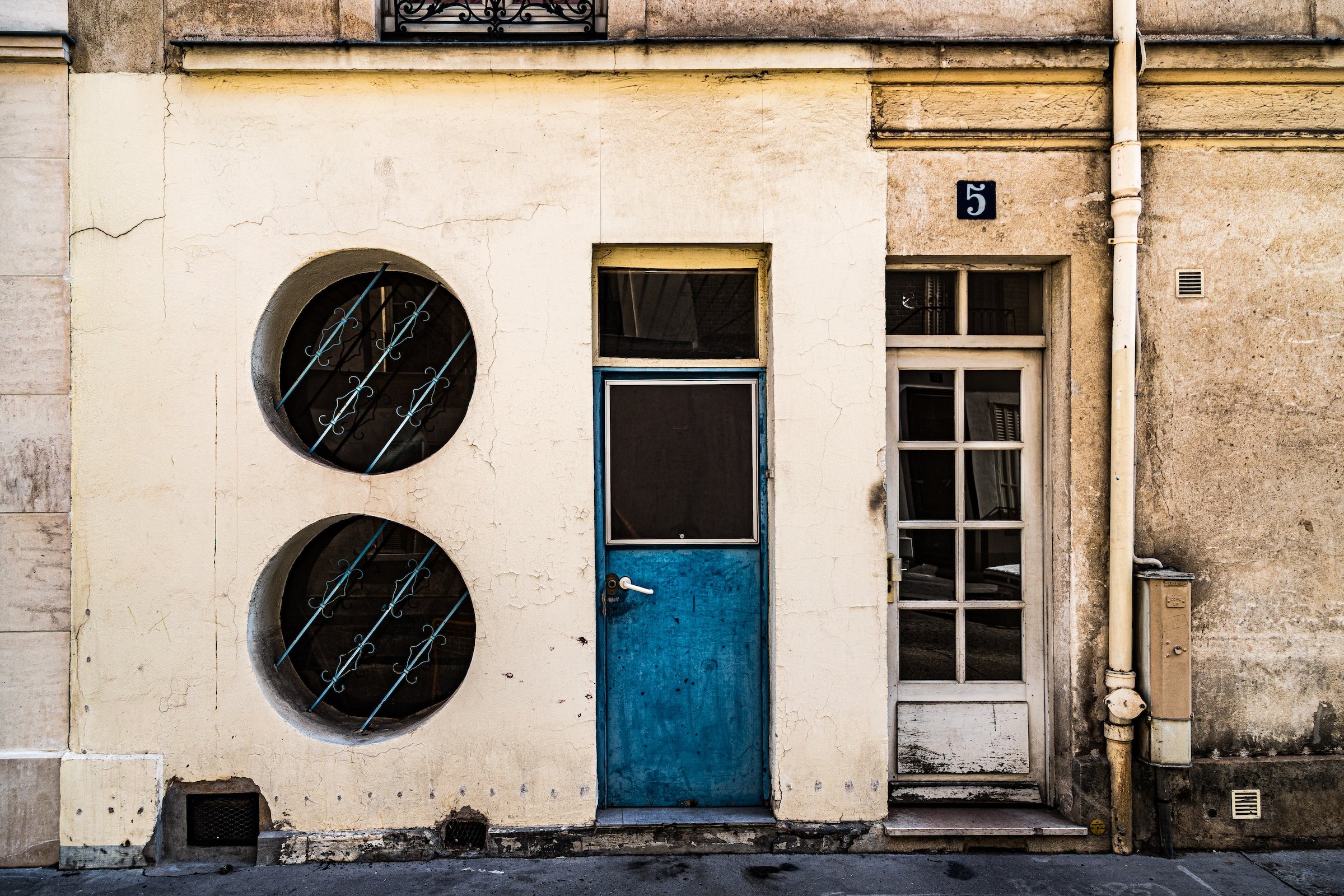
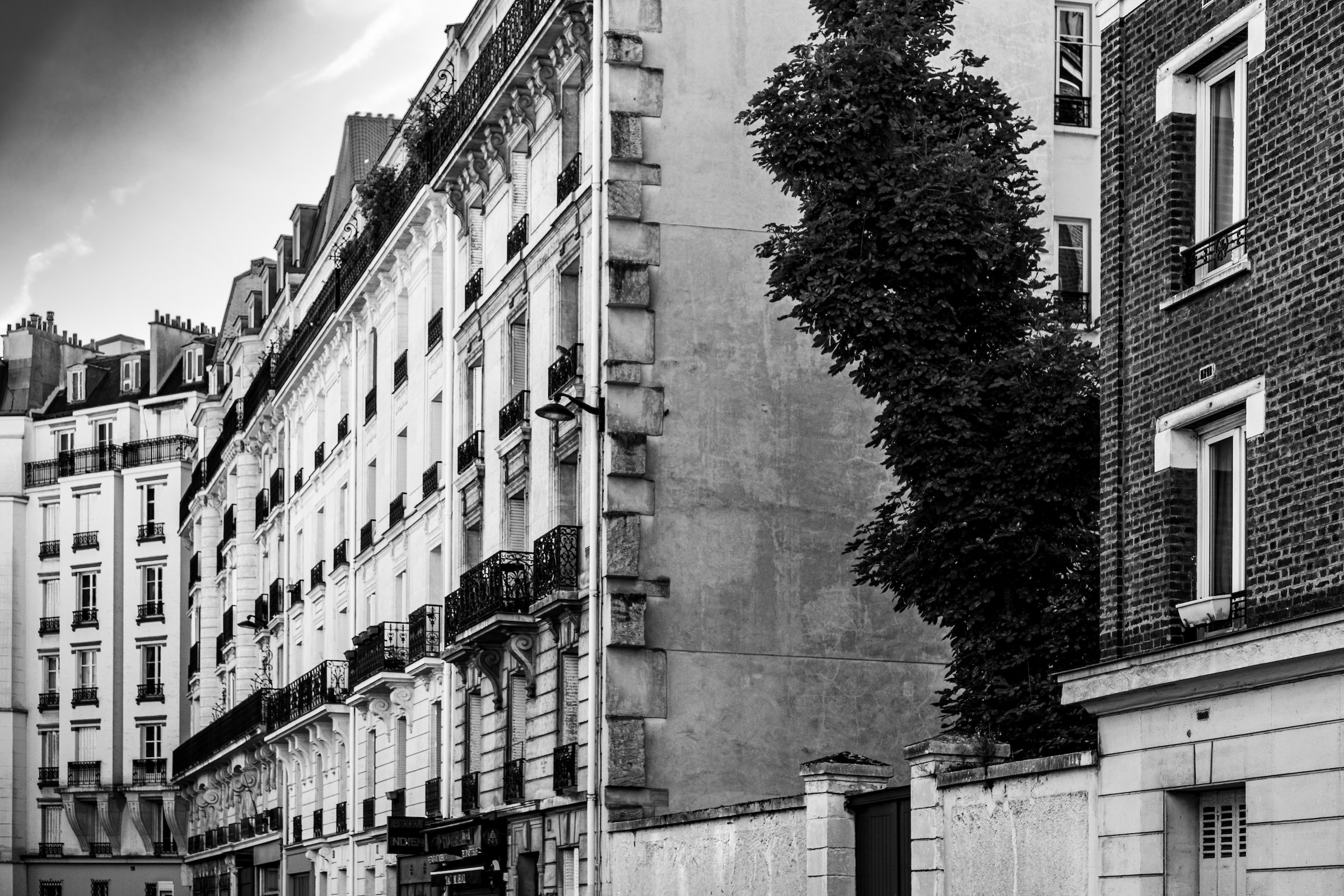
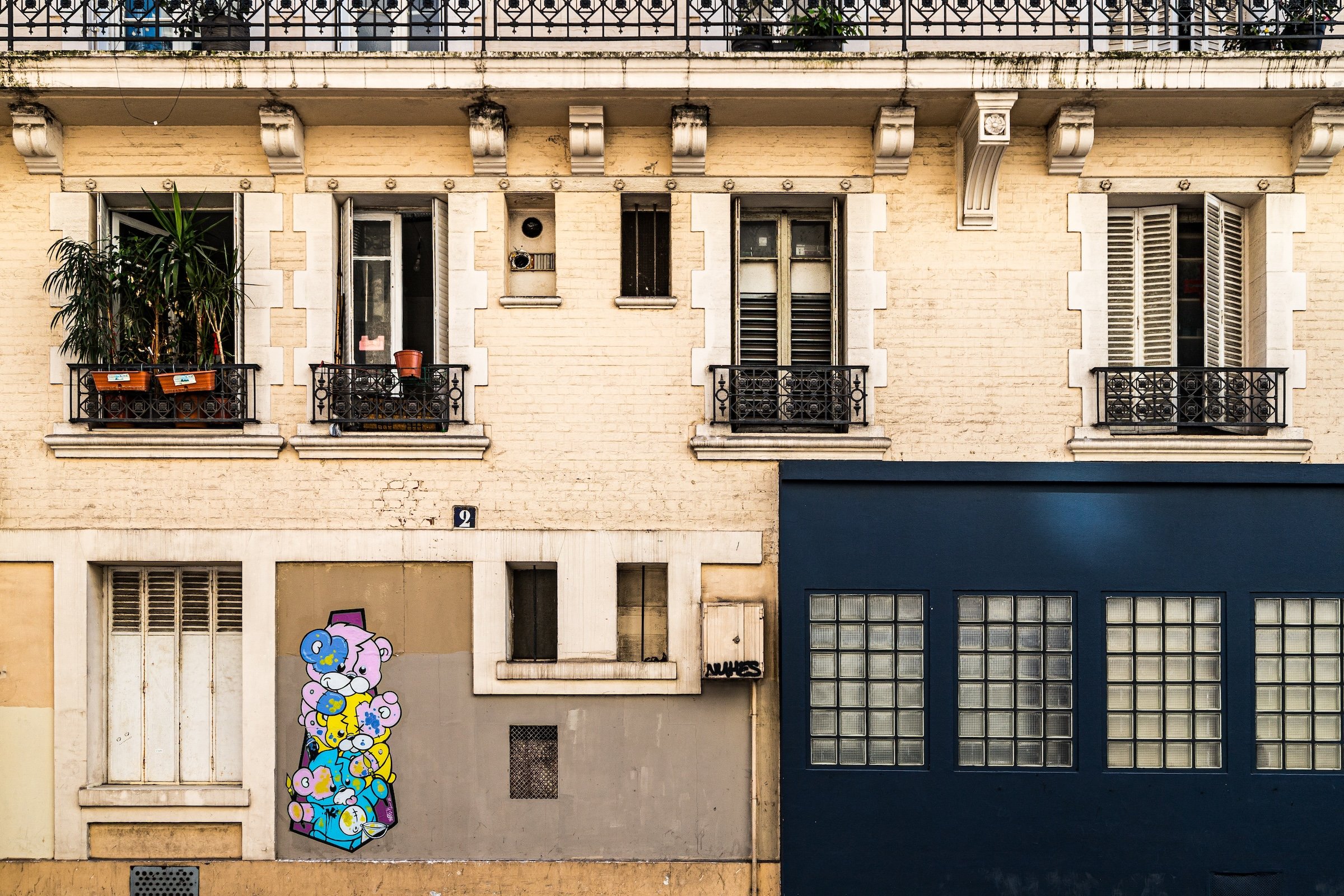
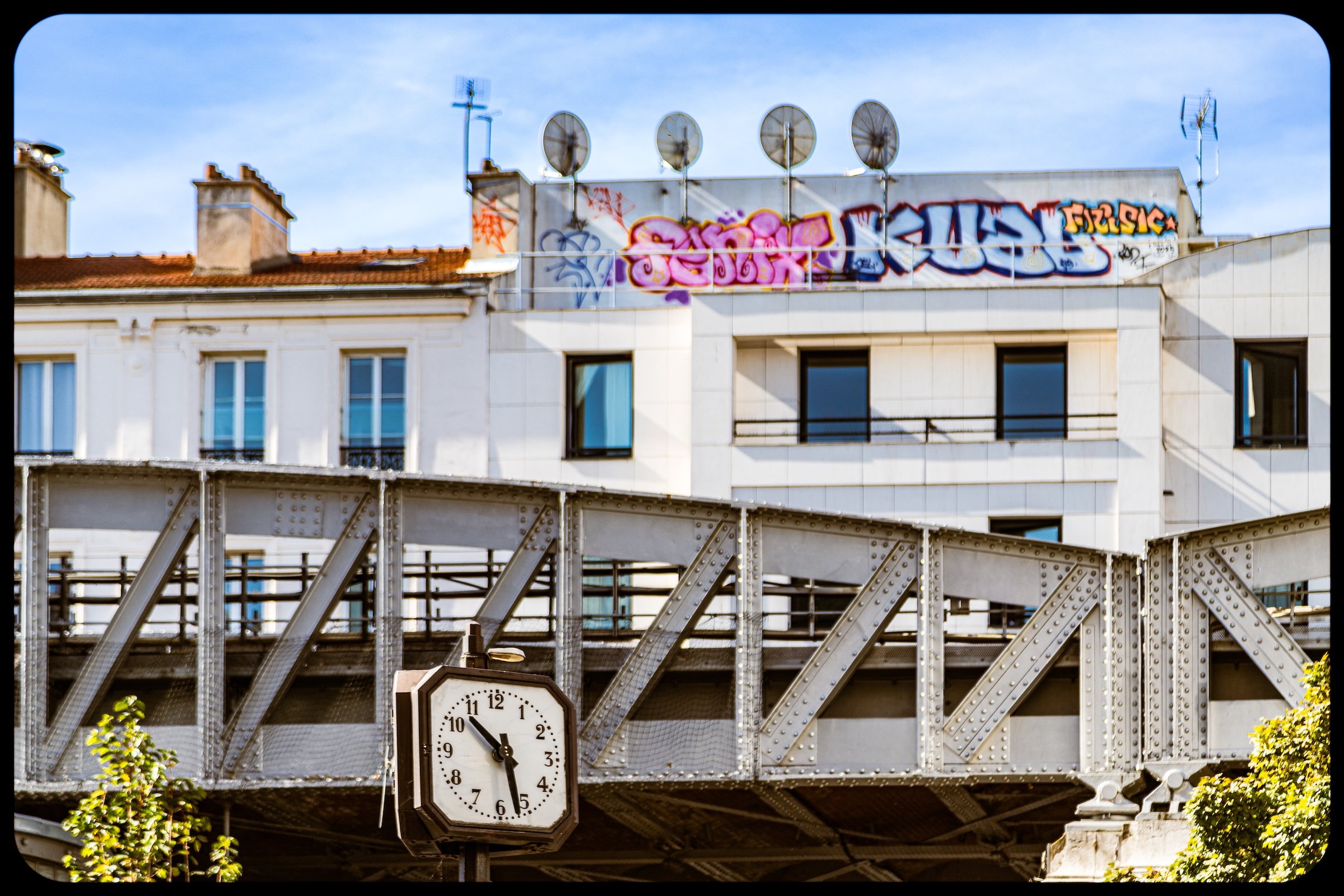
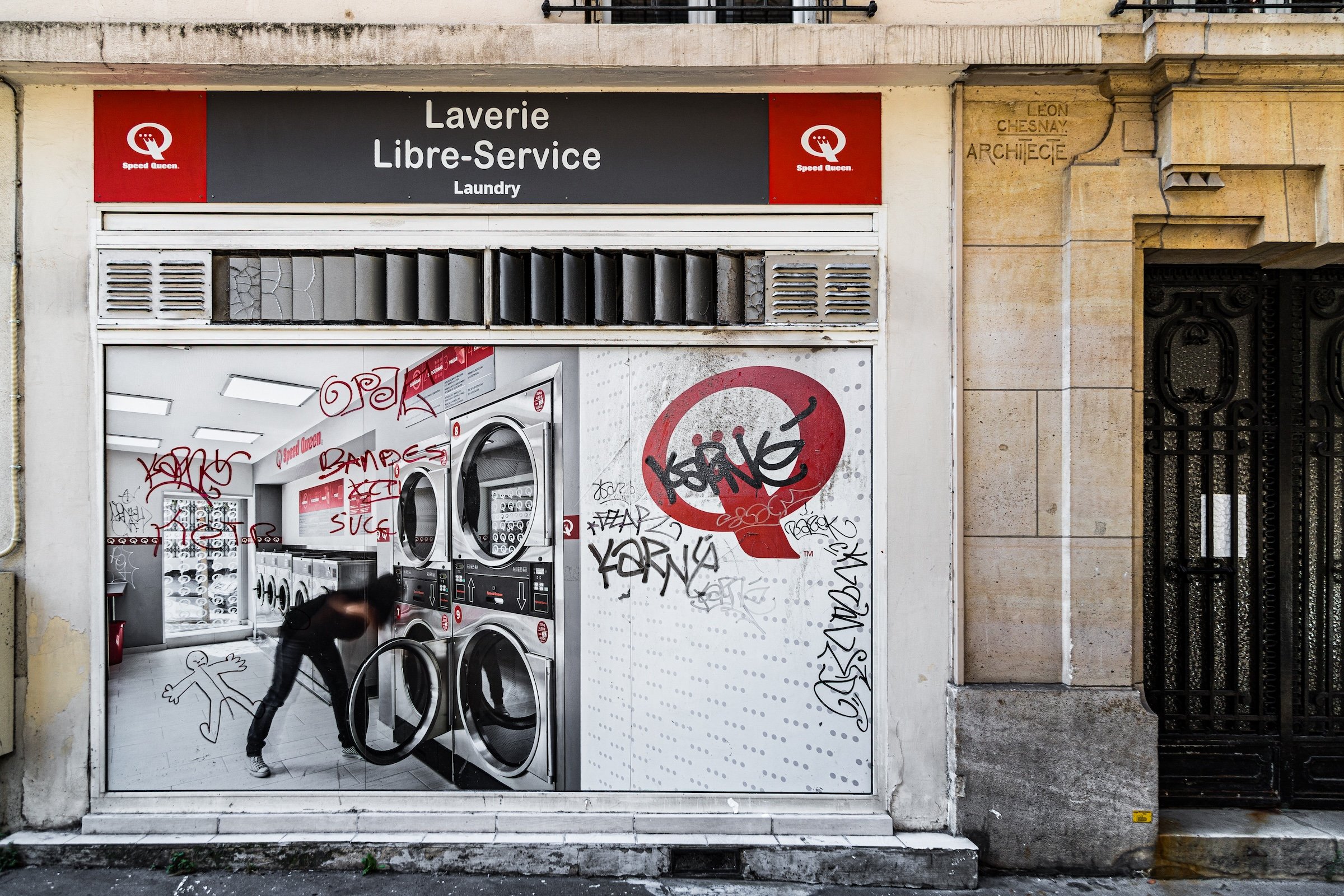
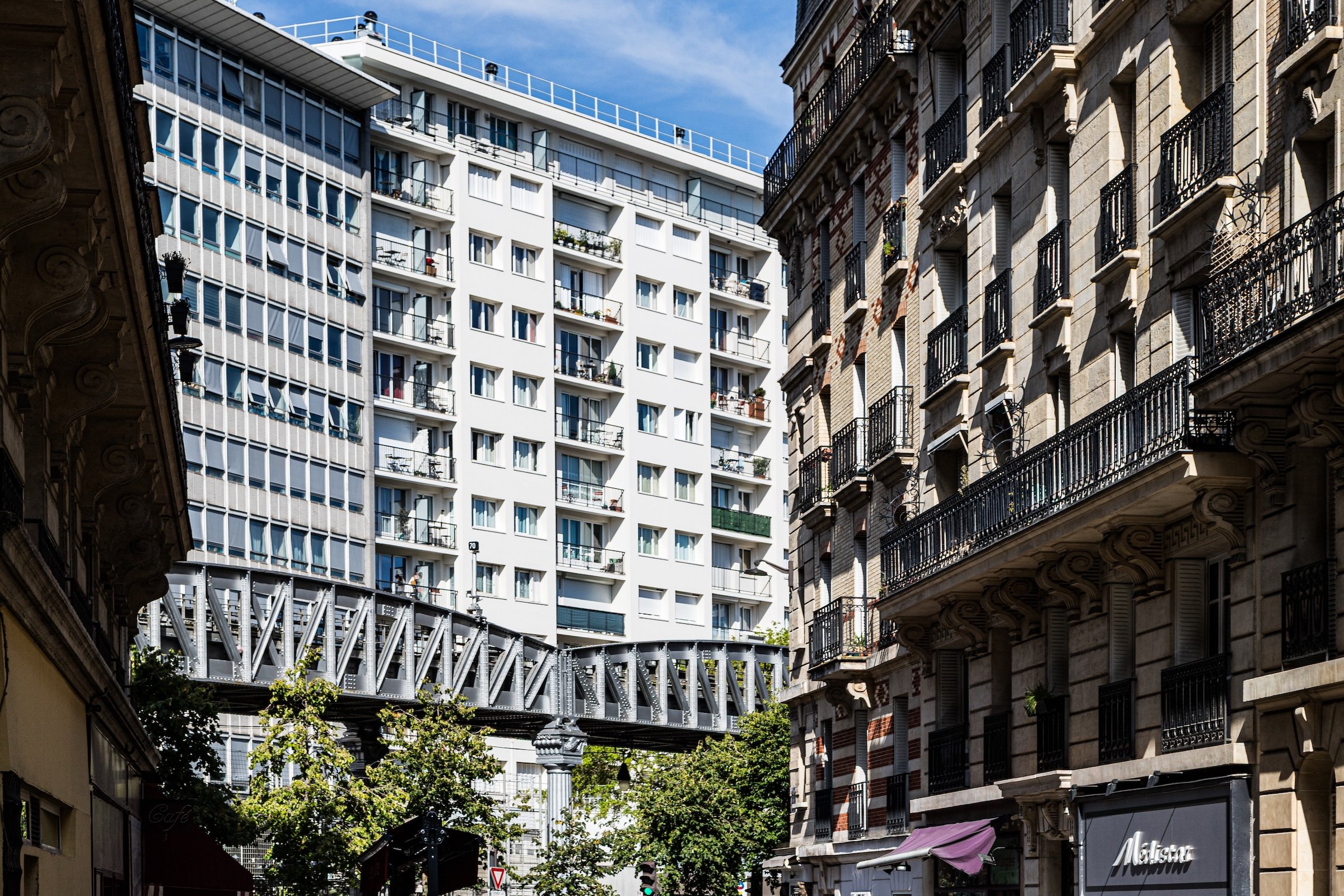
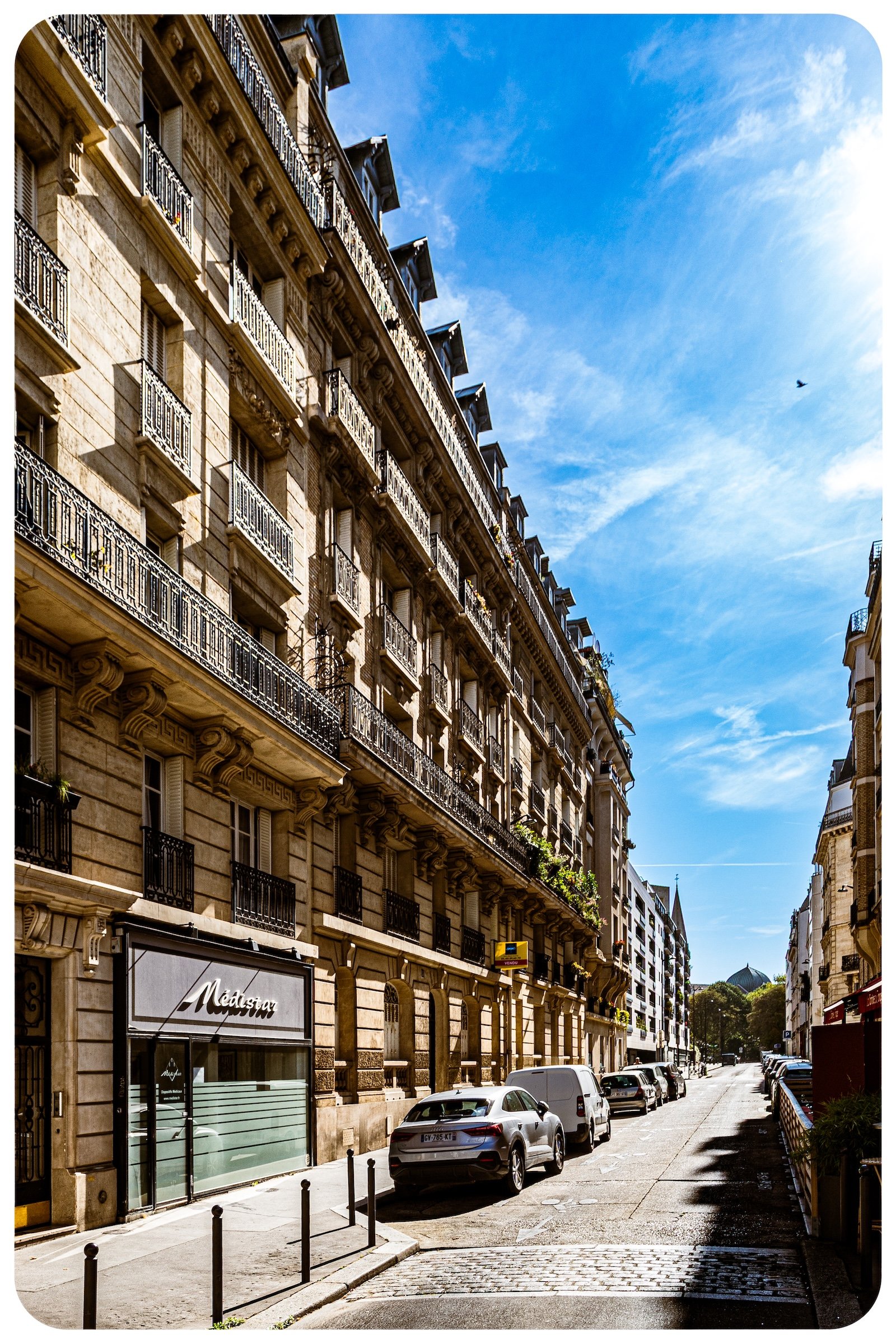
Grenelle’s visual identity is unusually layered: residential streets, market corridors, Eiffel Tower views, Art Deco buildings, riverfront infrastructure, and the modernist presence of Beaugrenelle and the Front de Seine. Depending on where it is encountered, the quarter can feel intimate, commercial, monumental, or starkly modern.
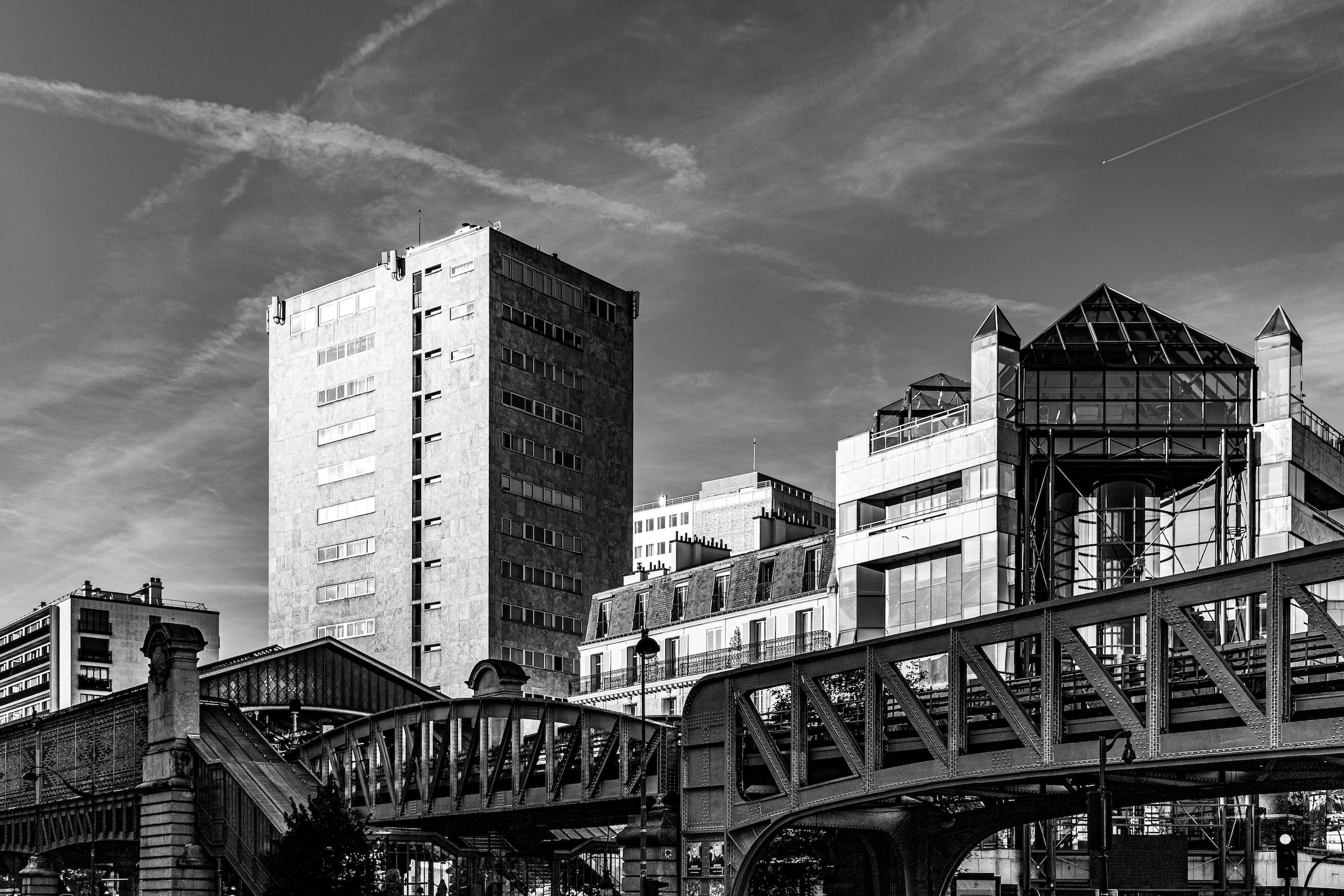
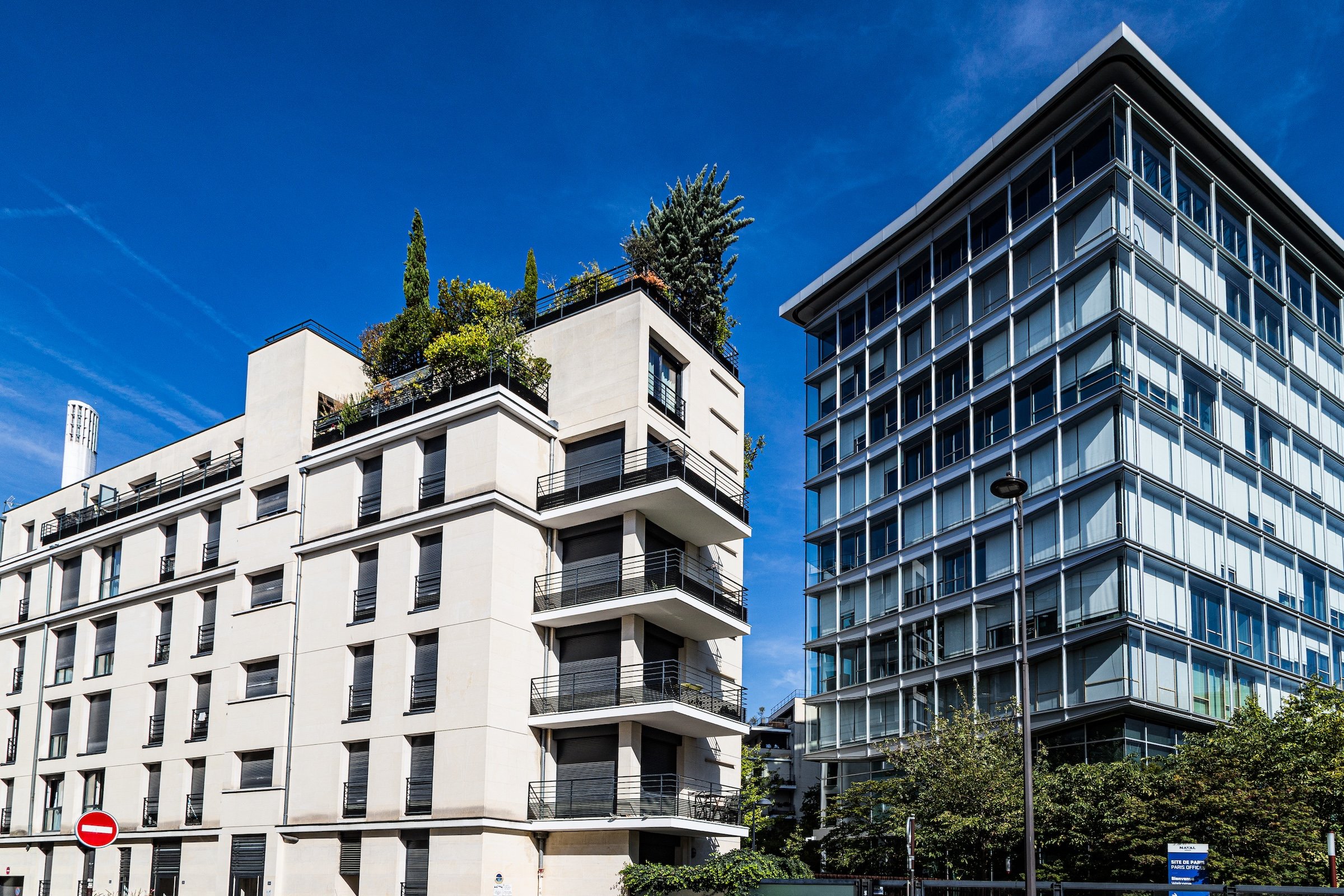
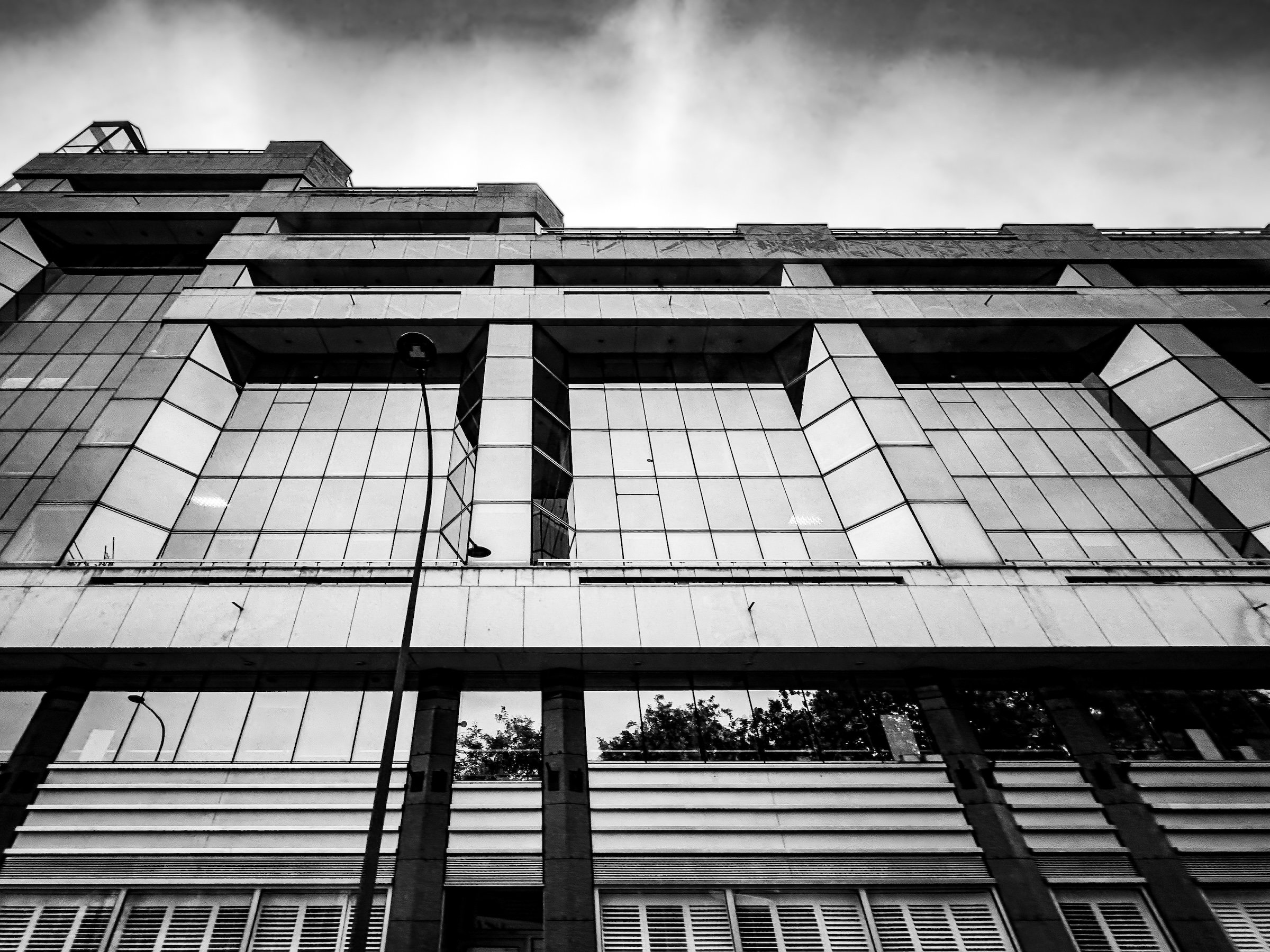
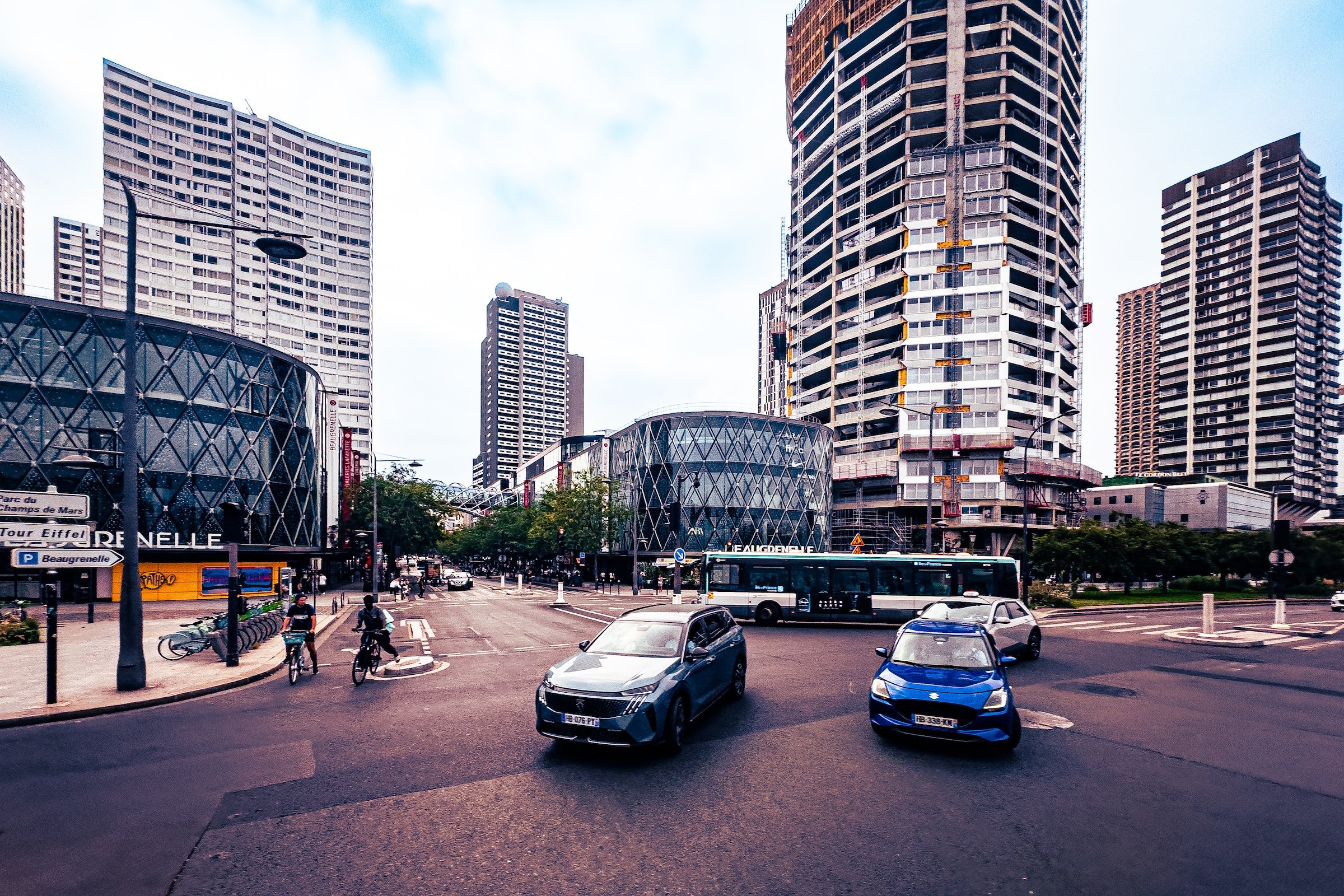
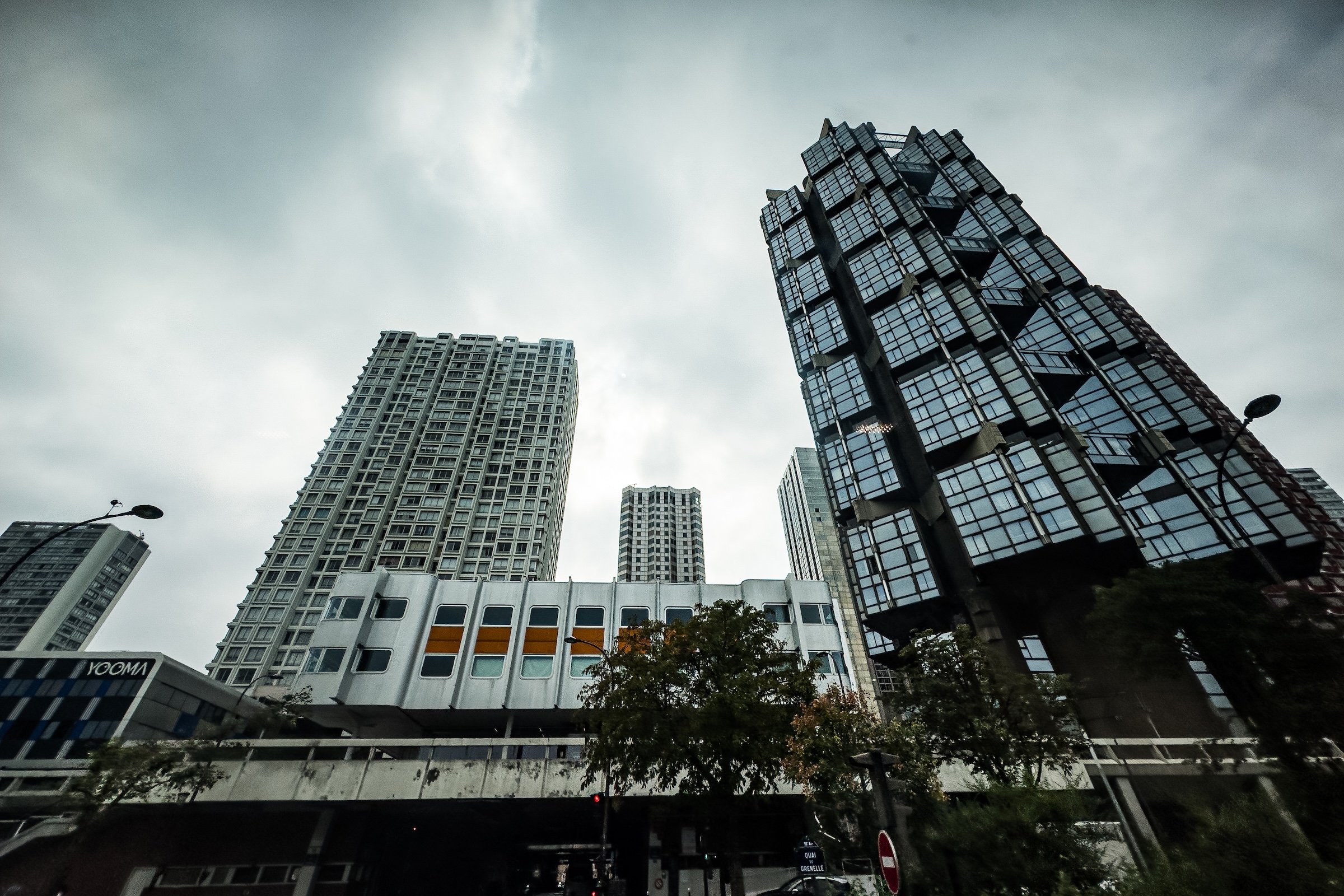
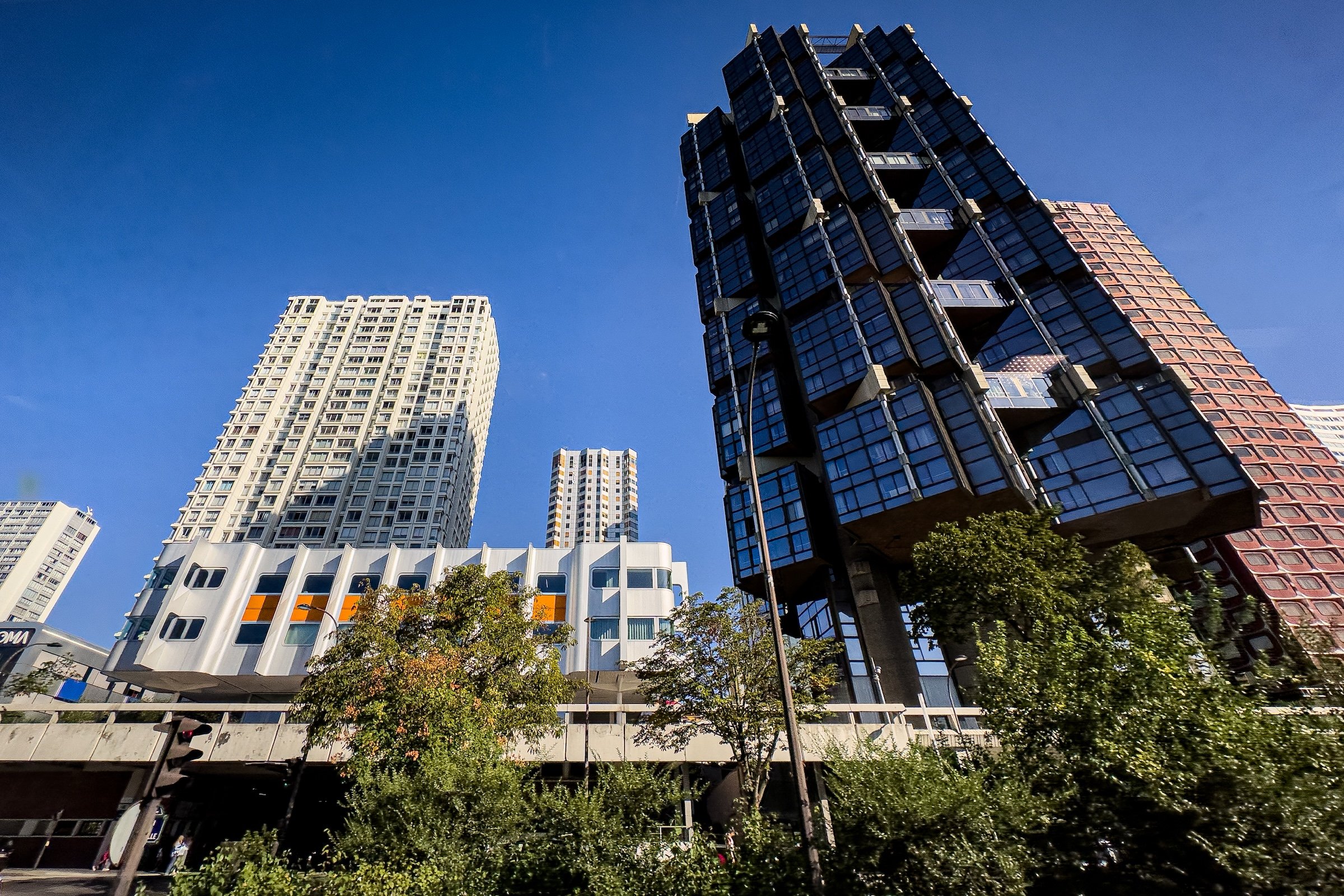
On August 16, the bus route emphasized Grenelle’s modern riverfront face. Quai de Grenelle, Beaugrenelle, and Pont de Grenelle presented the quarter as glass, height, traffic, and urban redevelopment. This does not define all of Grenelle, but it captures one of its essential visual layers: western Paris where neighborhood life meets modern massing along the Seine.
-
In this morning sequence, Grenelle’s visual identity is tied to departure, transit, and the Eiffel Tower’s continued presence near the hotel district. The quarter appears less as a neighborhood interior than as a threshold: the place where the day begins, where the Metro becomes accessible, and where the wider Paris itinerary opens.
This is an important visual role. Grenelle often photographs as a district where everyday life and monumentality overlap, but here it also becomes practical Paris — a place of stations, routes, transfers, and movement. The images suggest that a neighborhood’s identity is not only what is seen within it, but also what it enables: departure, return, and connection.
*****
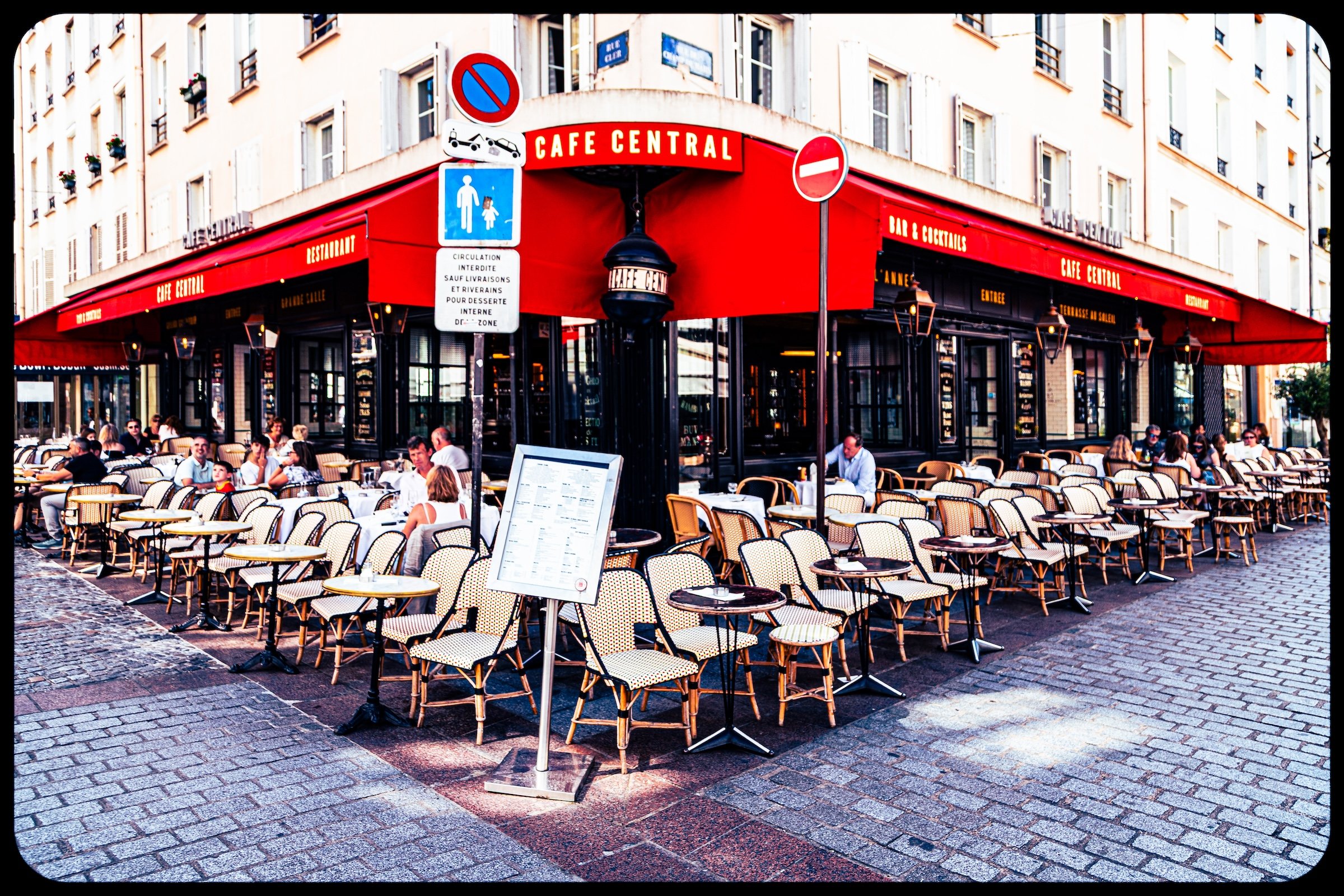
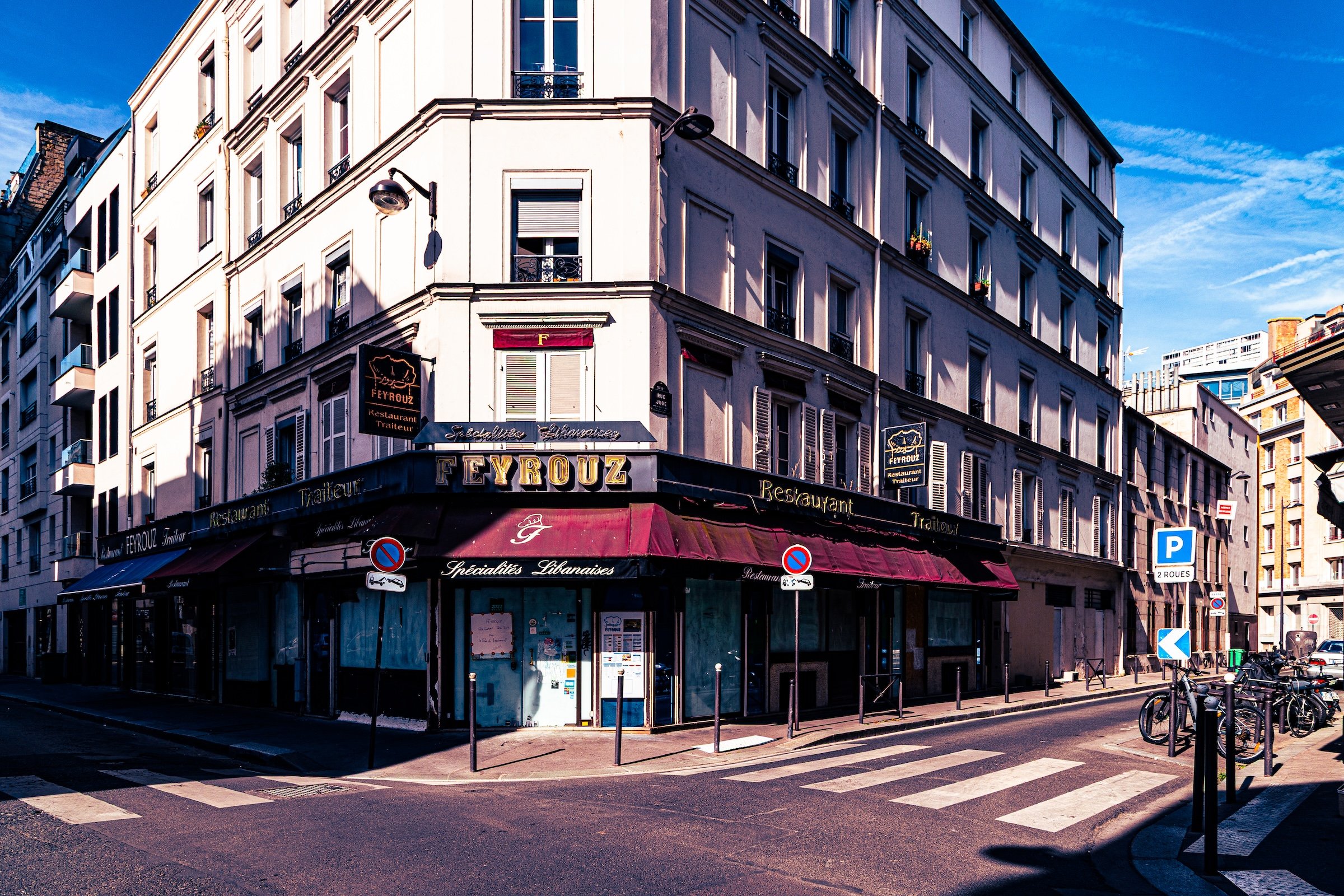
In the evening sequence, Grenelle’s visual identity is shaped by transit, commerce, and neighborhood return. Rue Linois, Avenue Émile Zola, Rue Frémicourt, Avenue de Lowendal, and Avenue de Suffren present the district as lived infrastructure: bus routes, restaurants, façades, intersections, and the everyday westward fabric of the 15th arrondissement.
This is not the monumental Grenelle of Bir-Hakeim or the farewell Grenelle of August 18. It is Grenelle as an evening base — practical, inhabited, and connected. The photographs suggest a district that does not always need to perform; sometimes it simply receives the walker back.
-
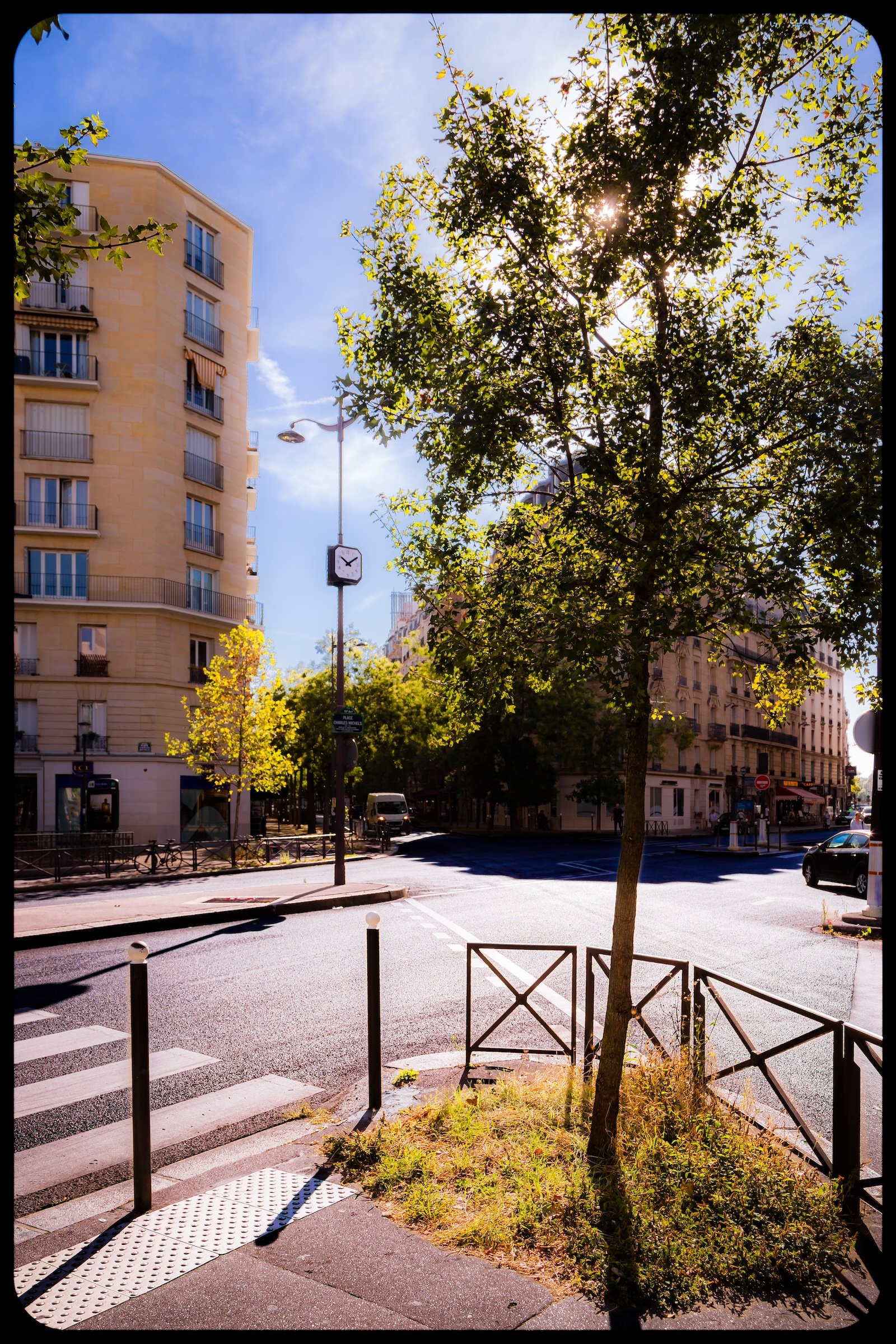
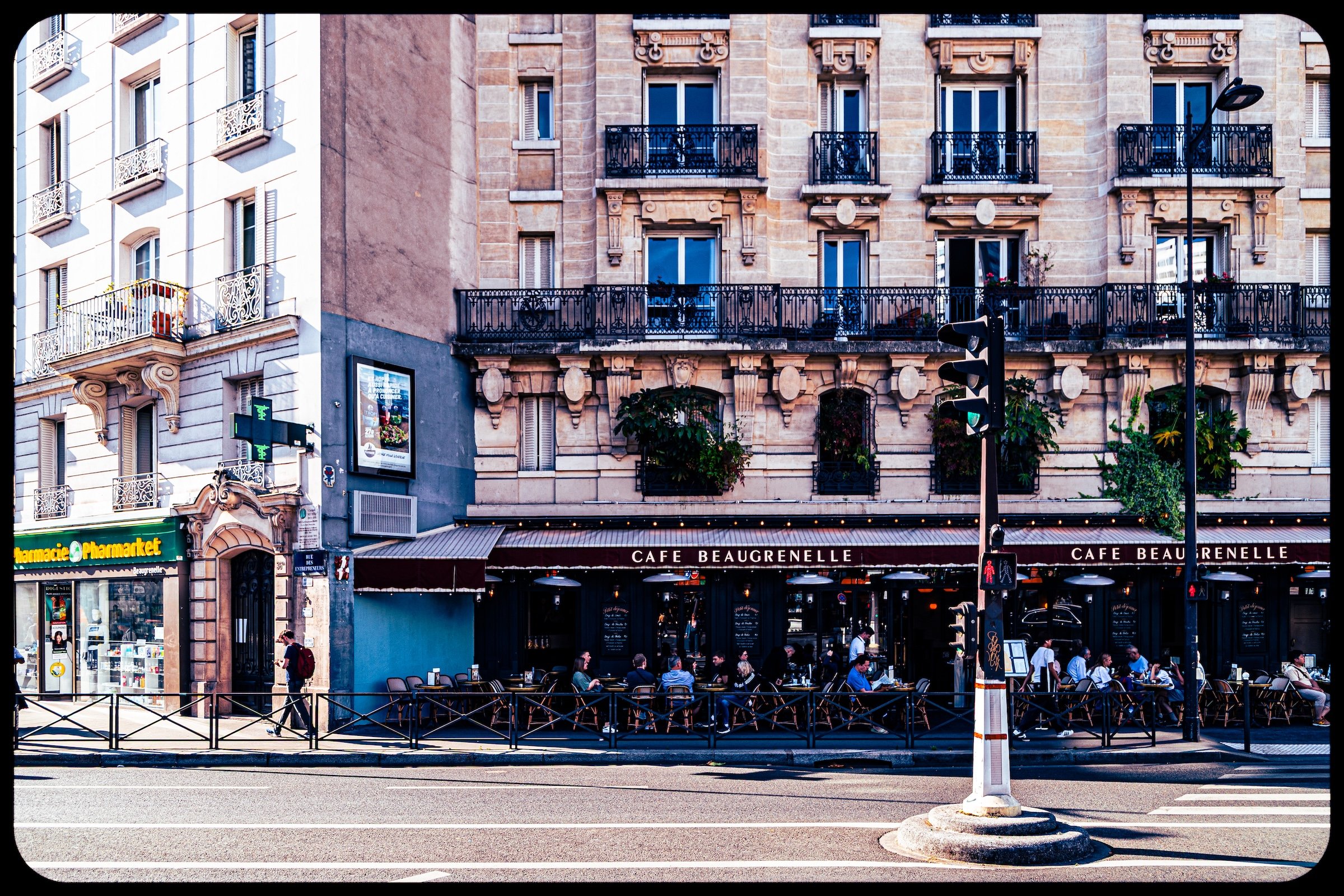
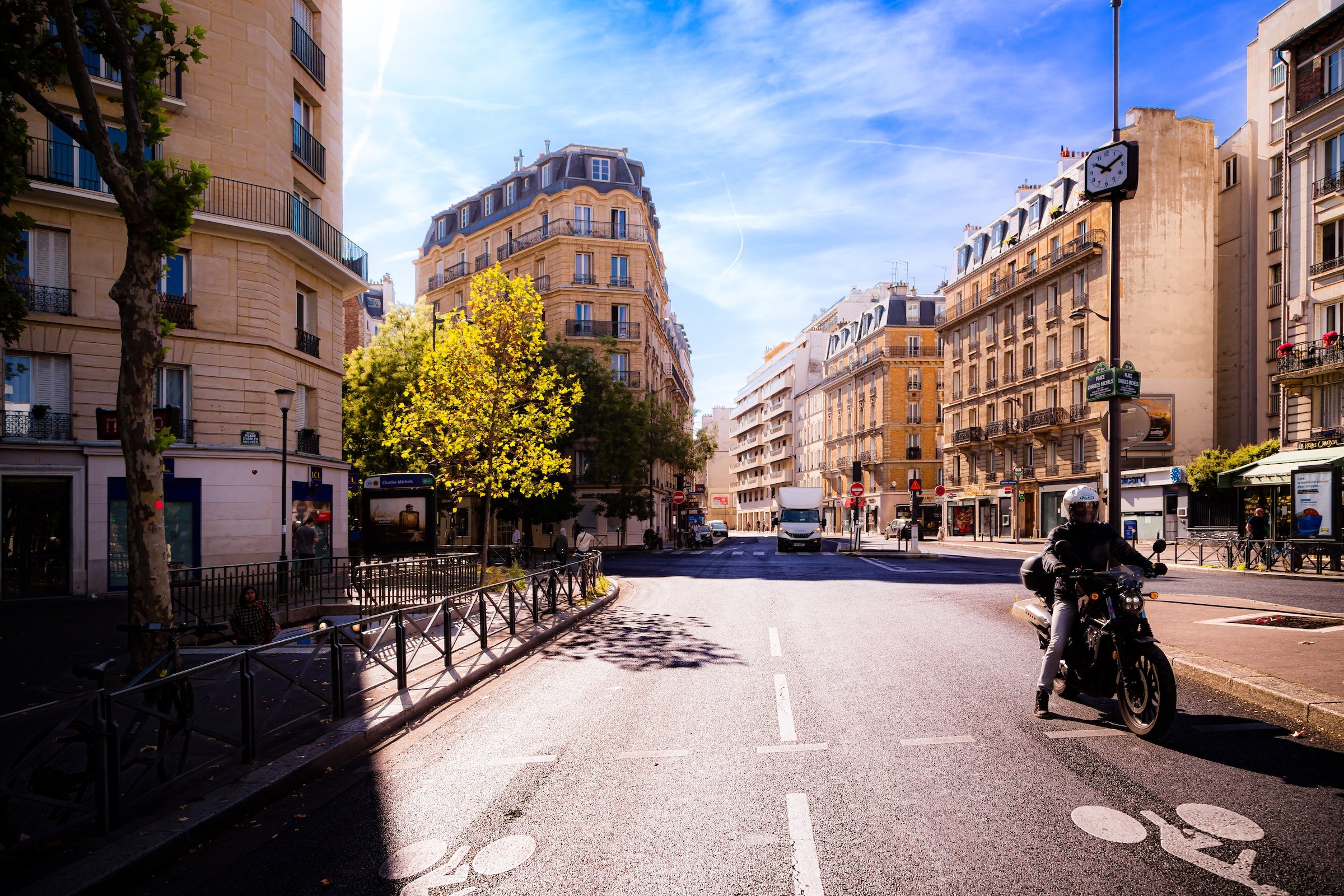
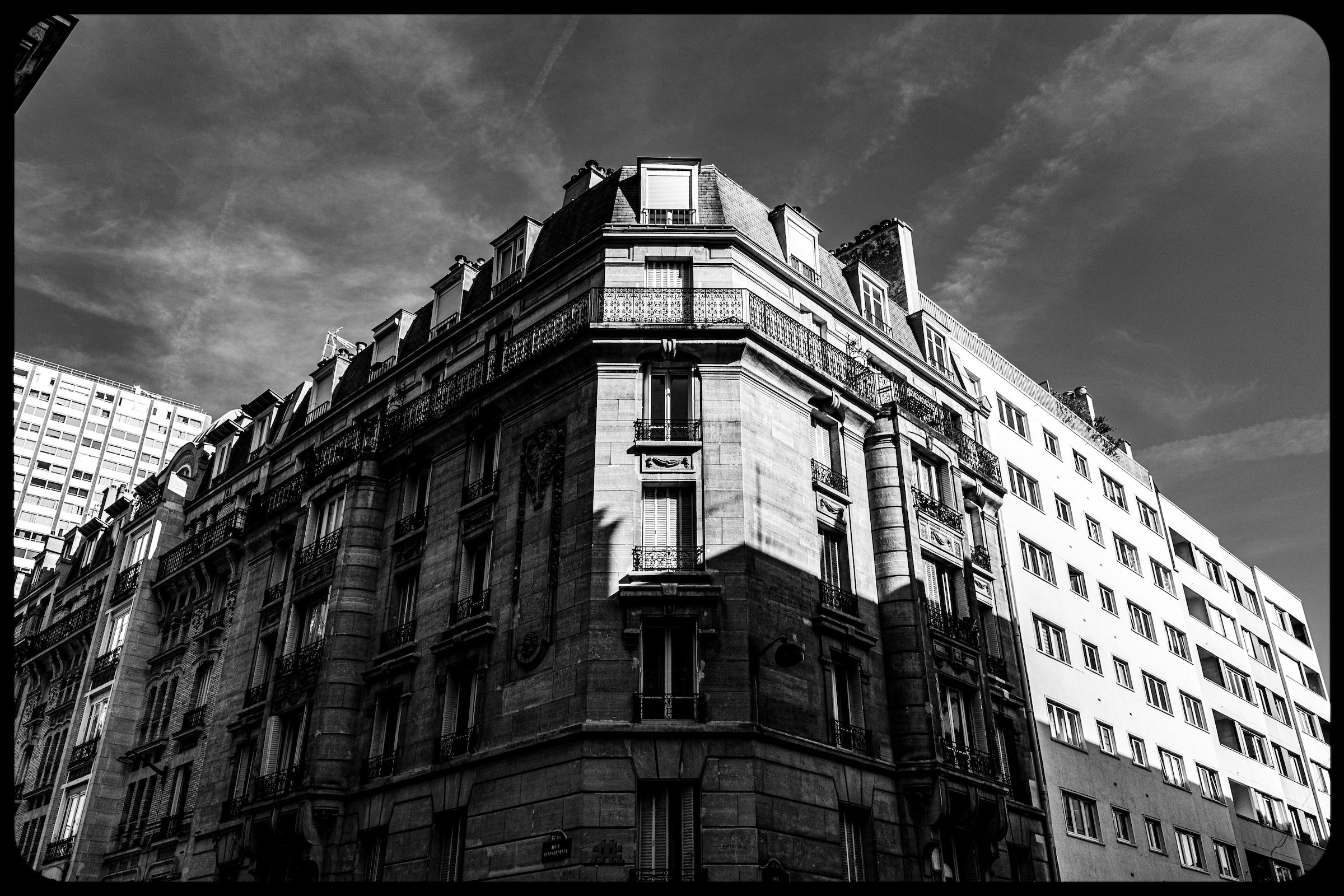
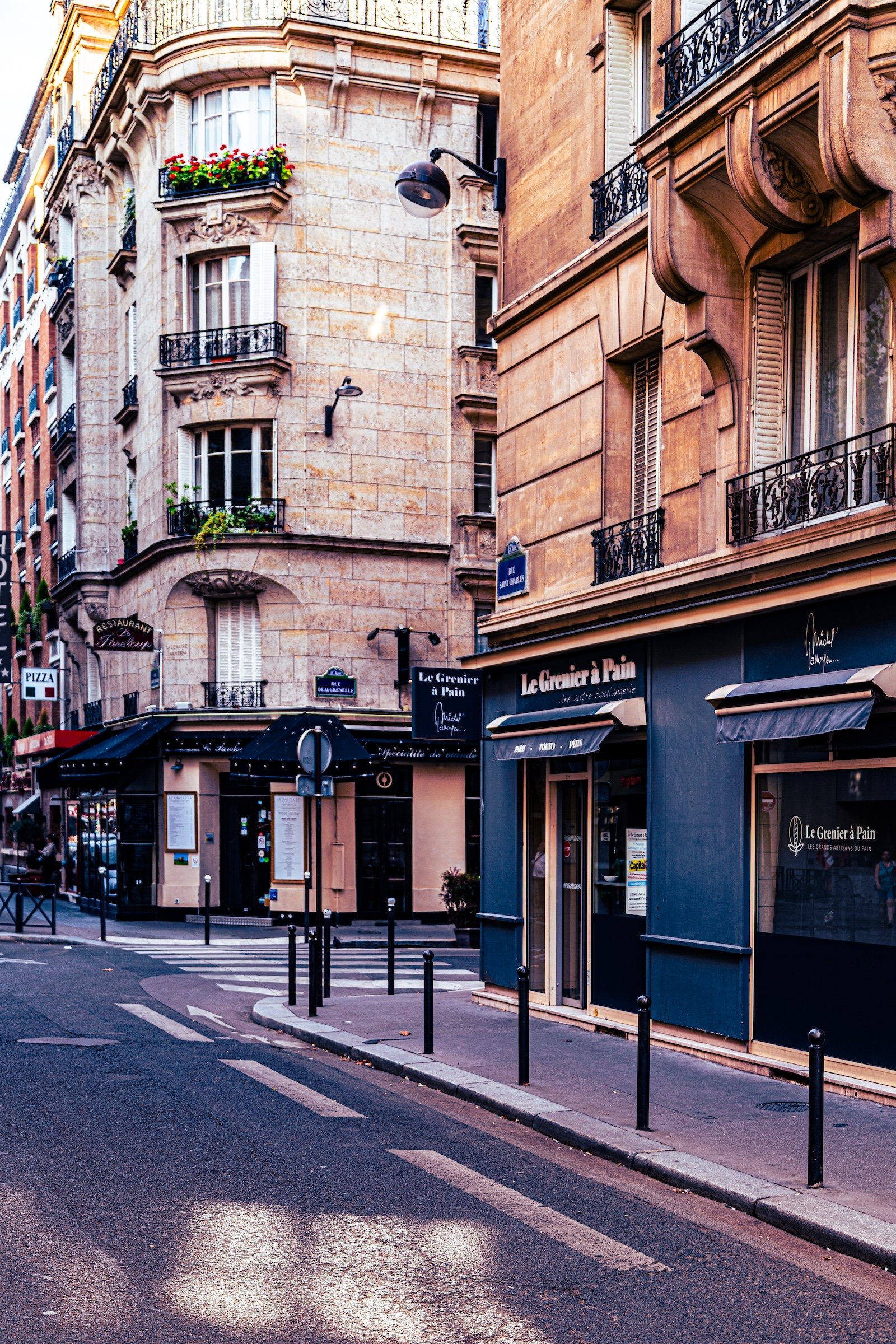
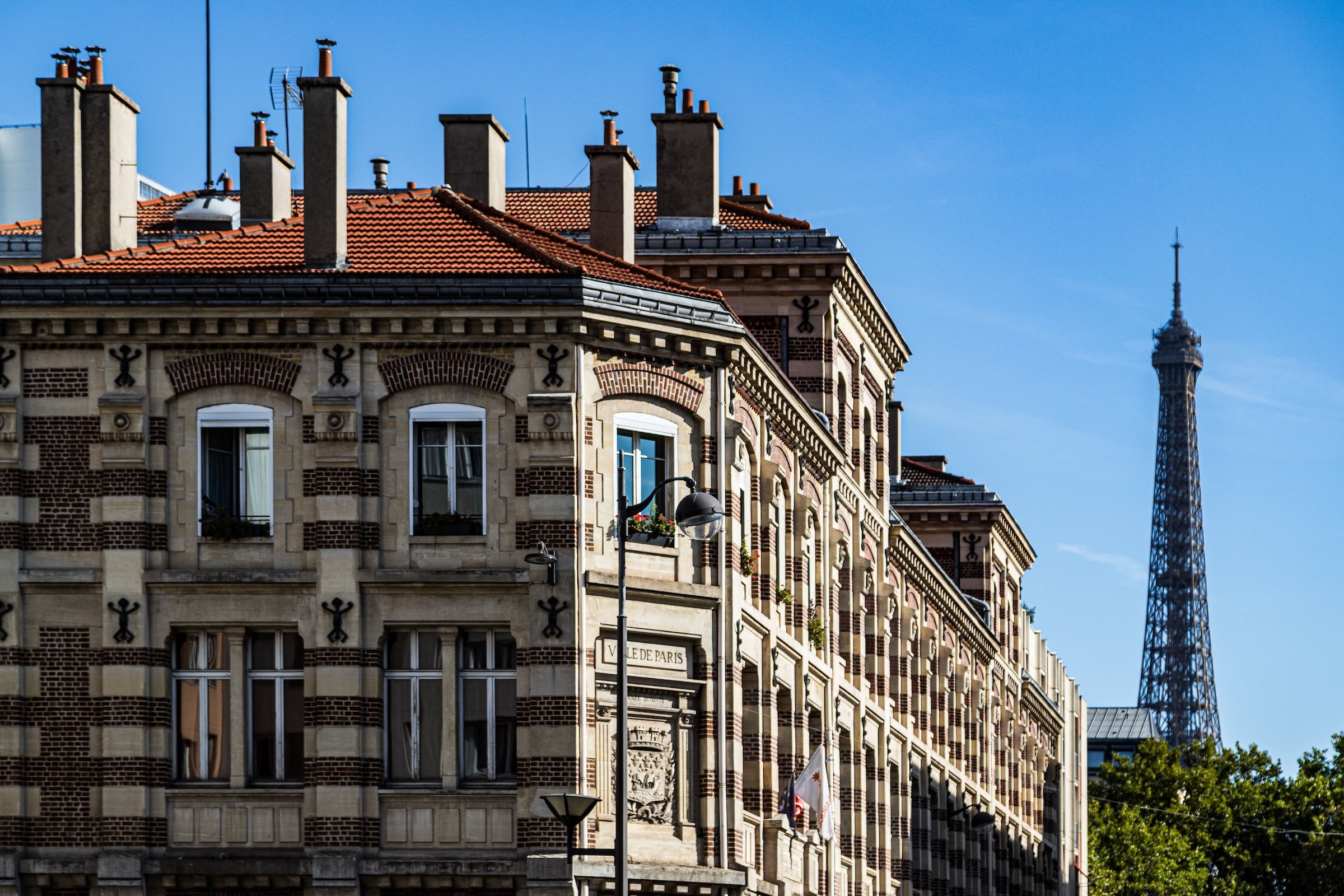
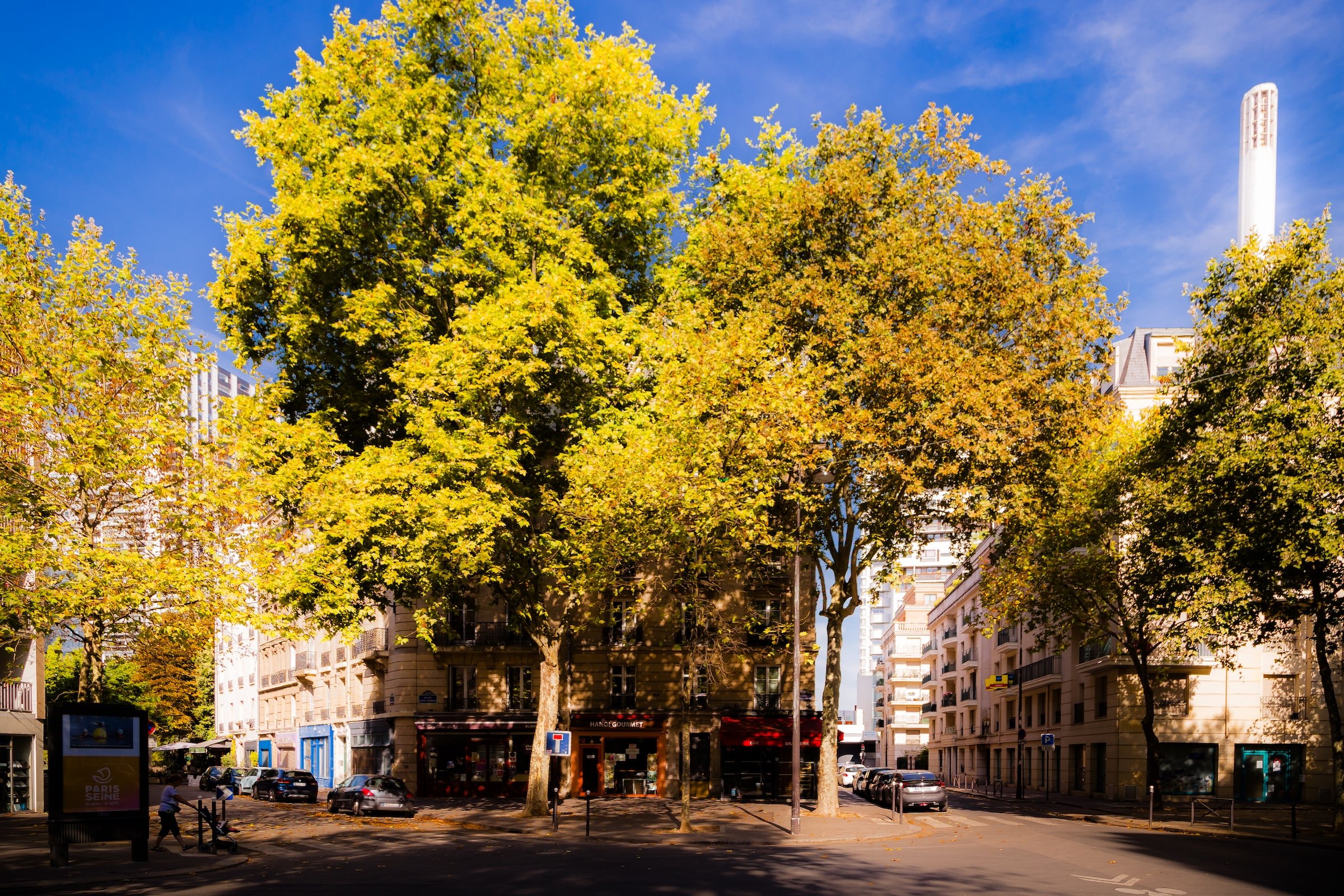
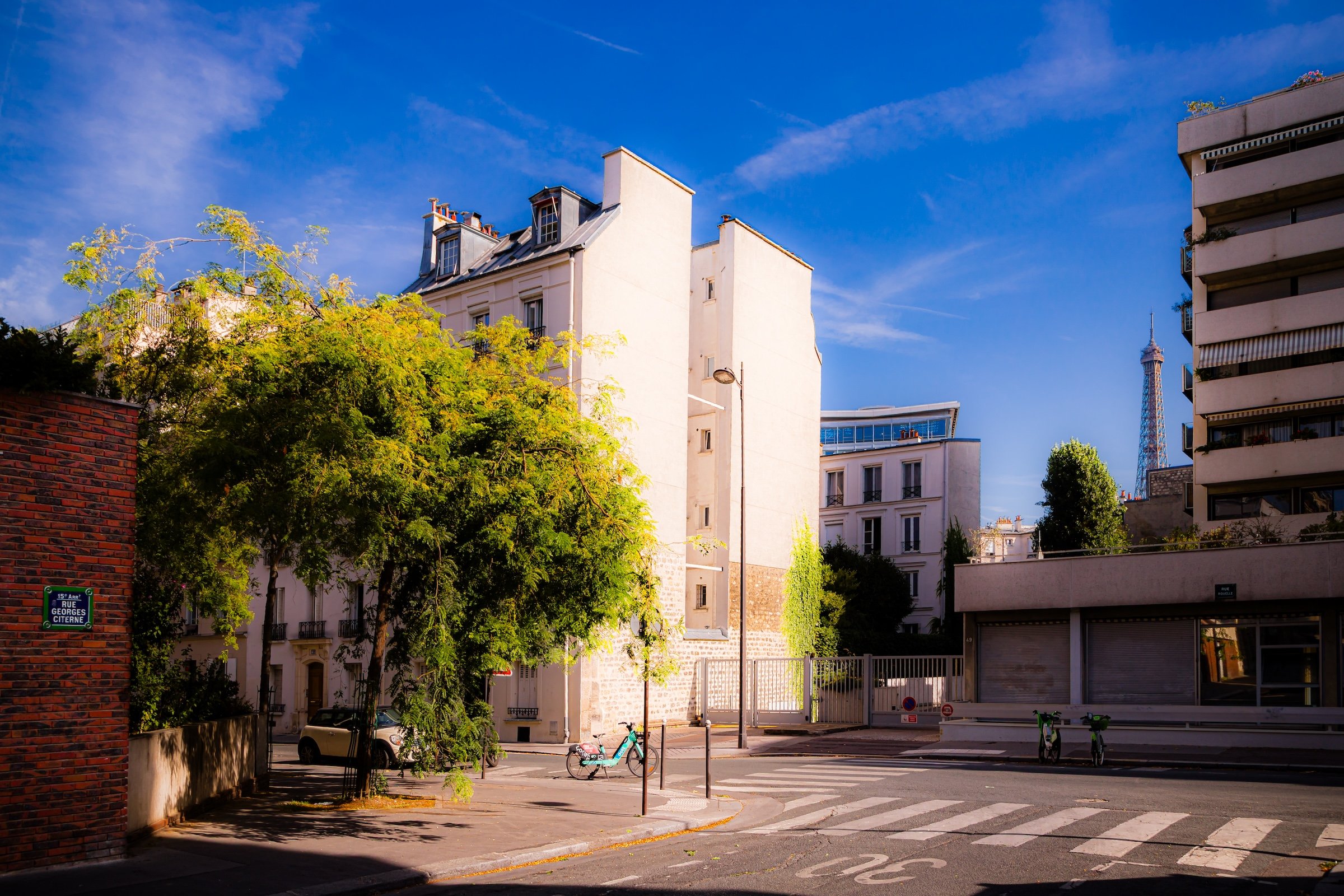
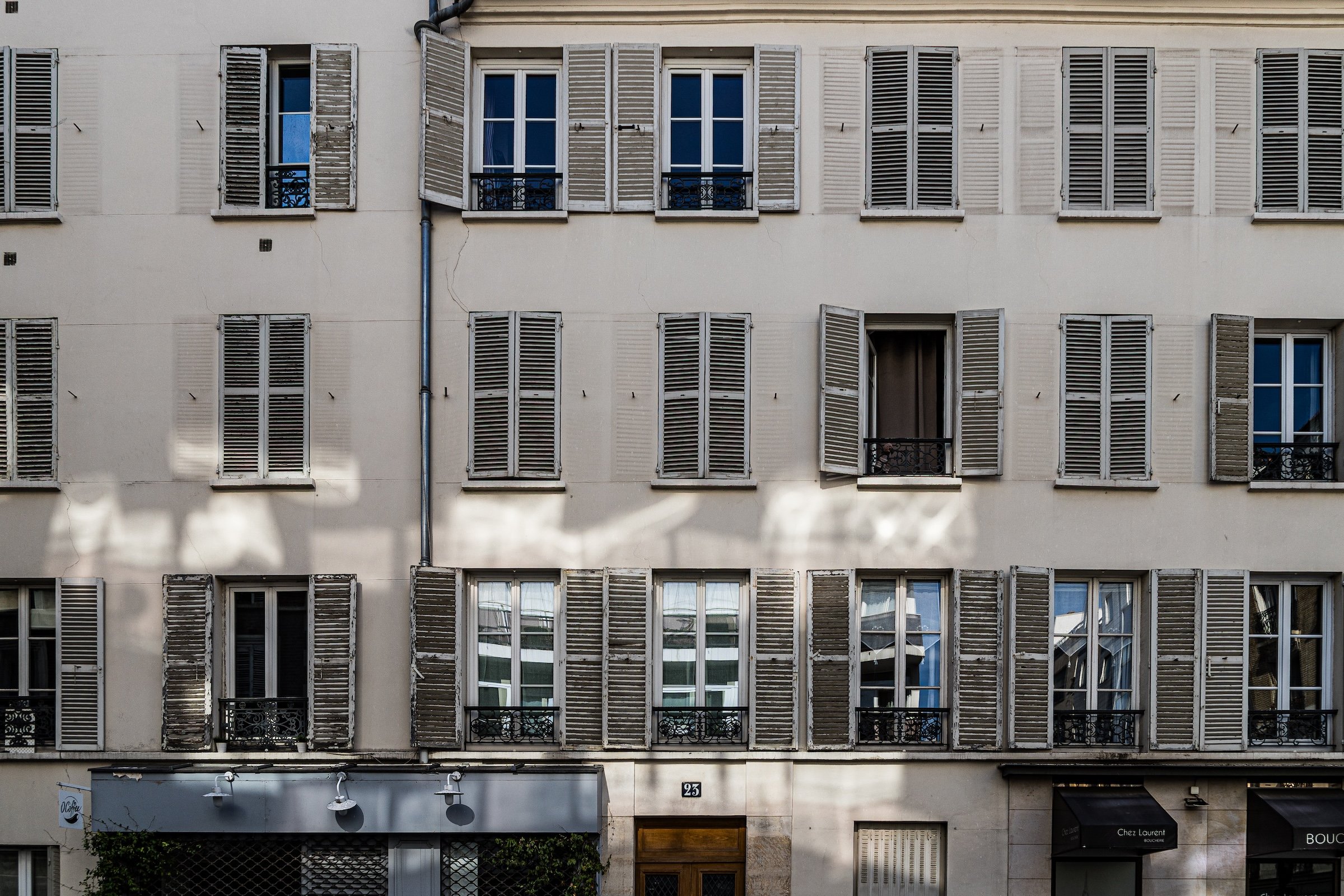
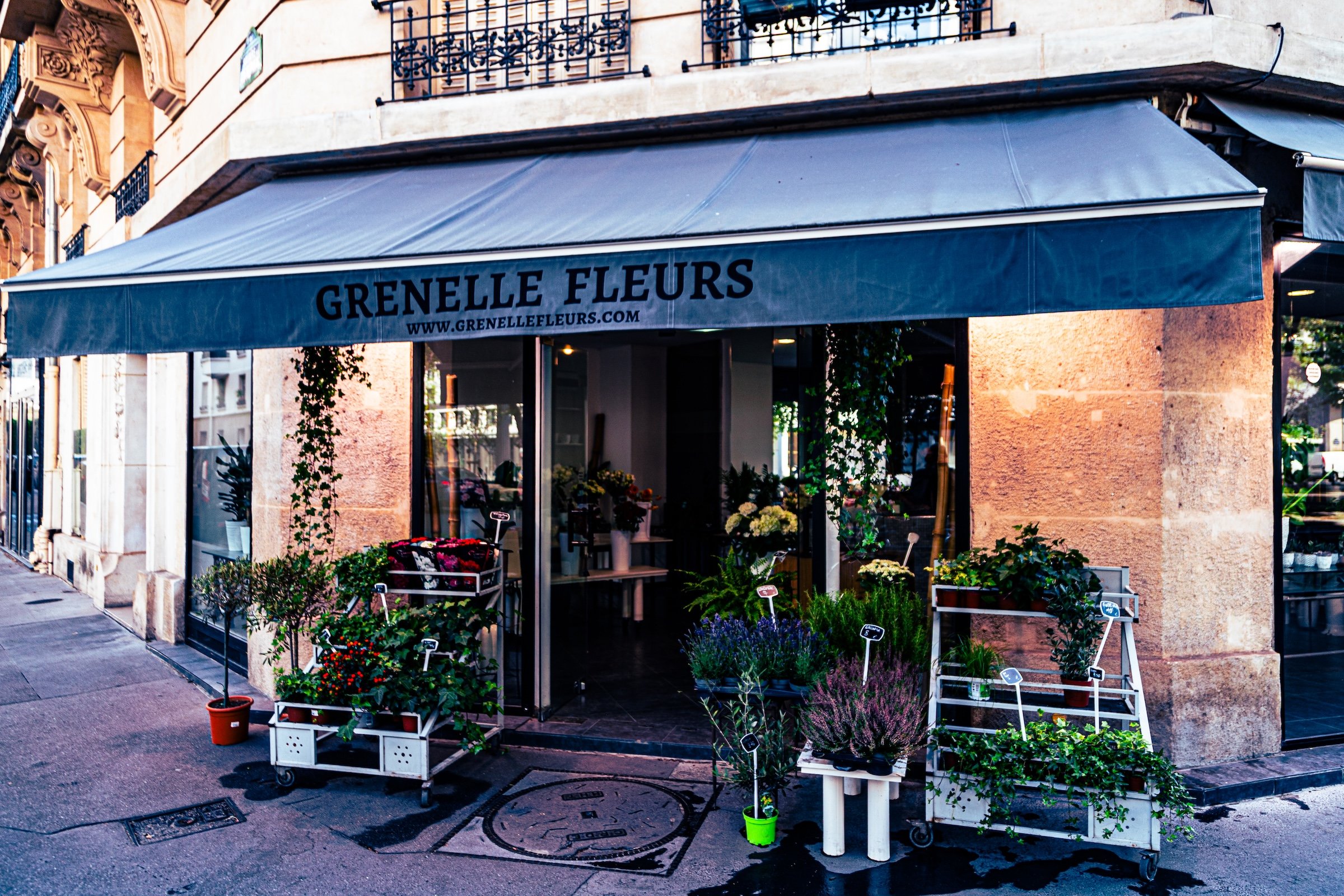
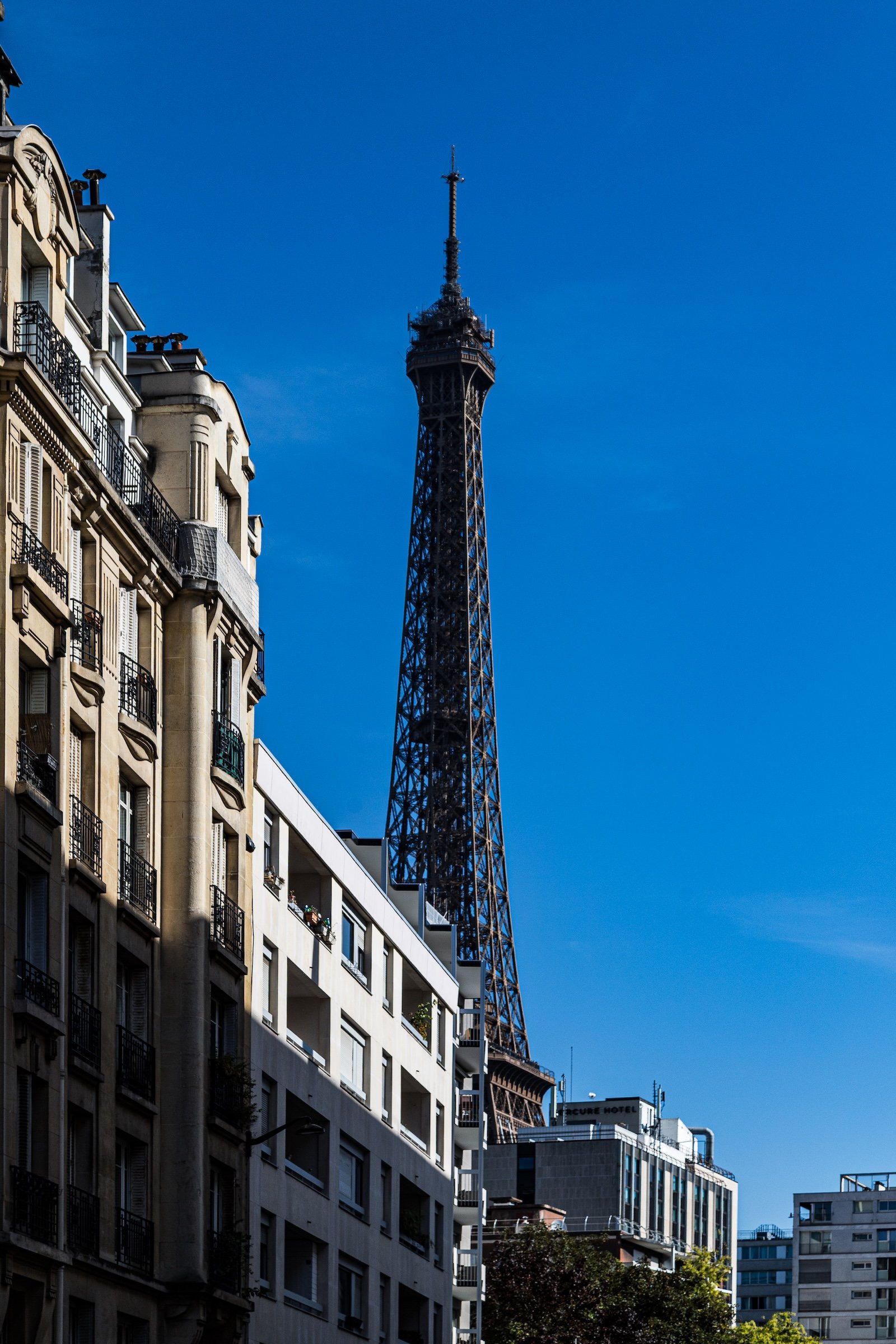
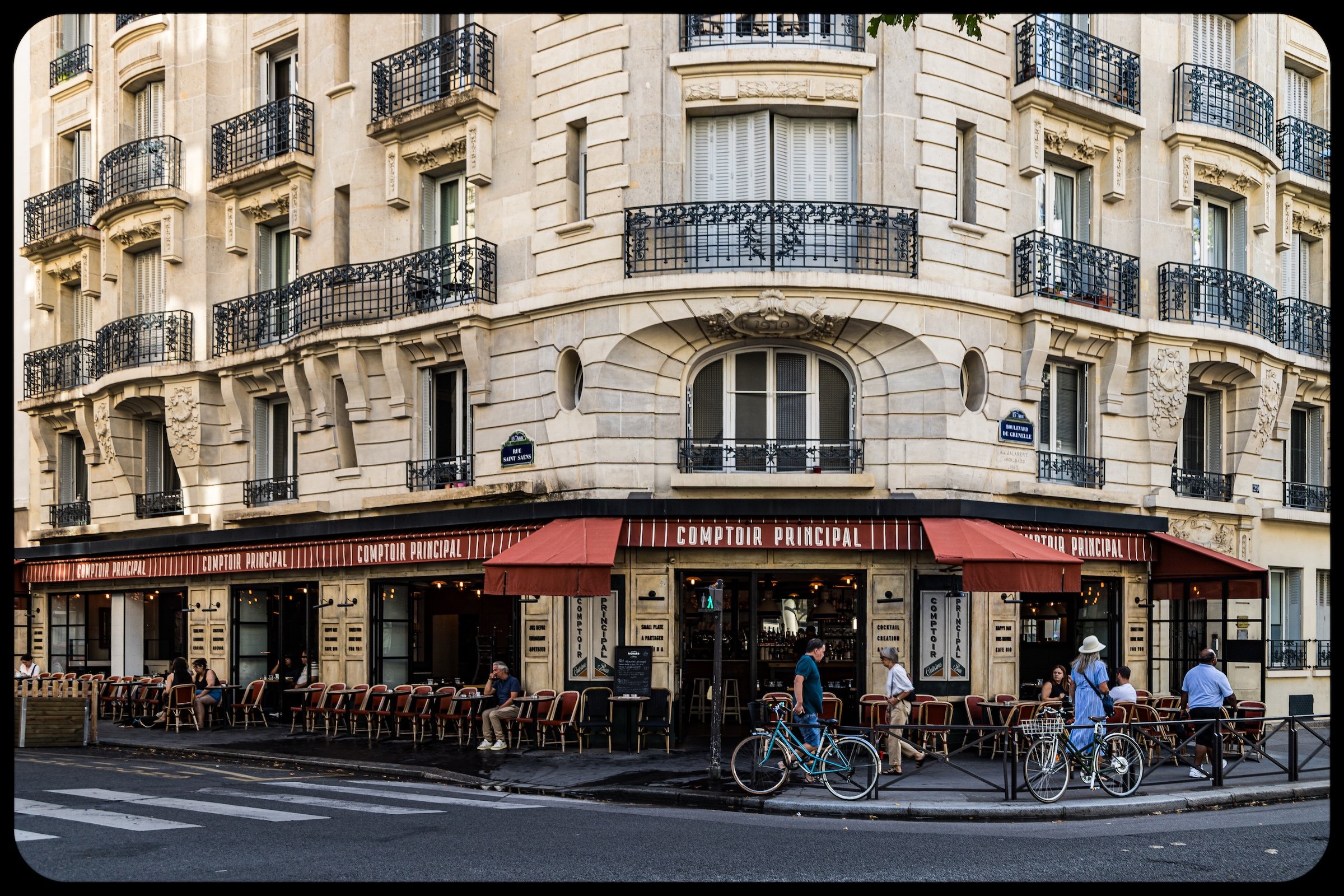
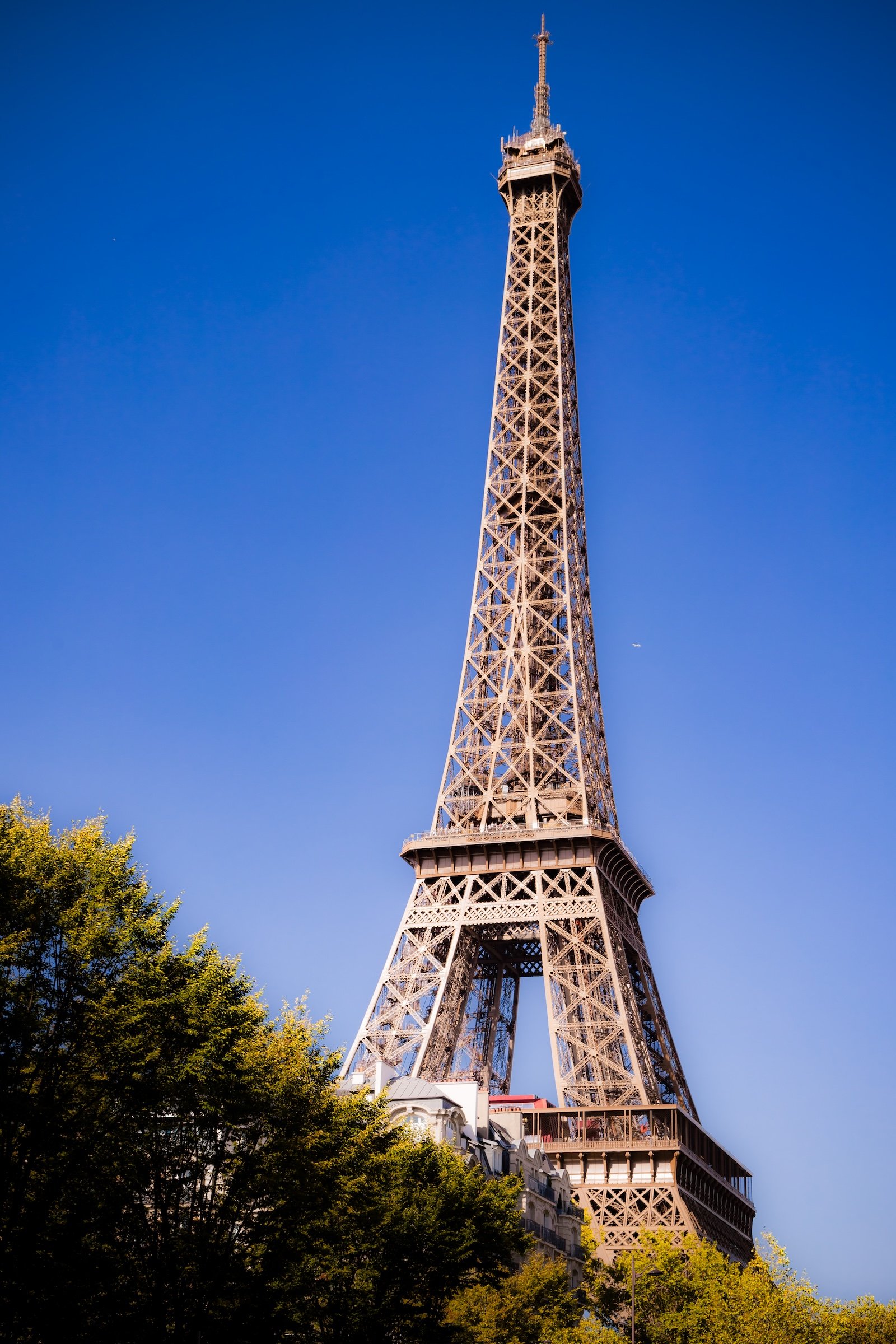
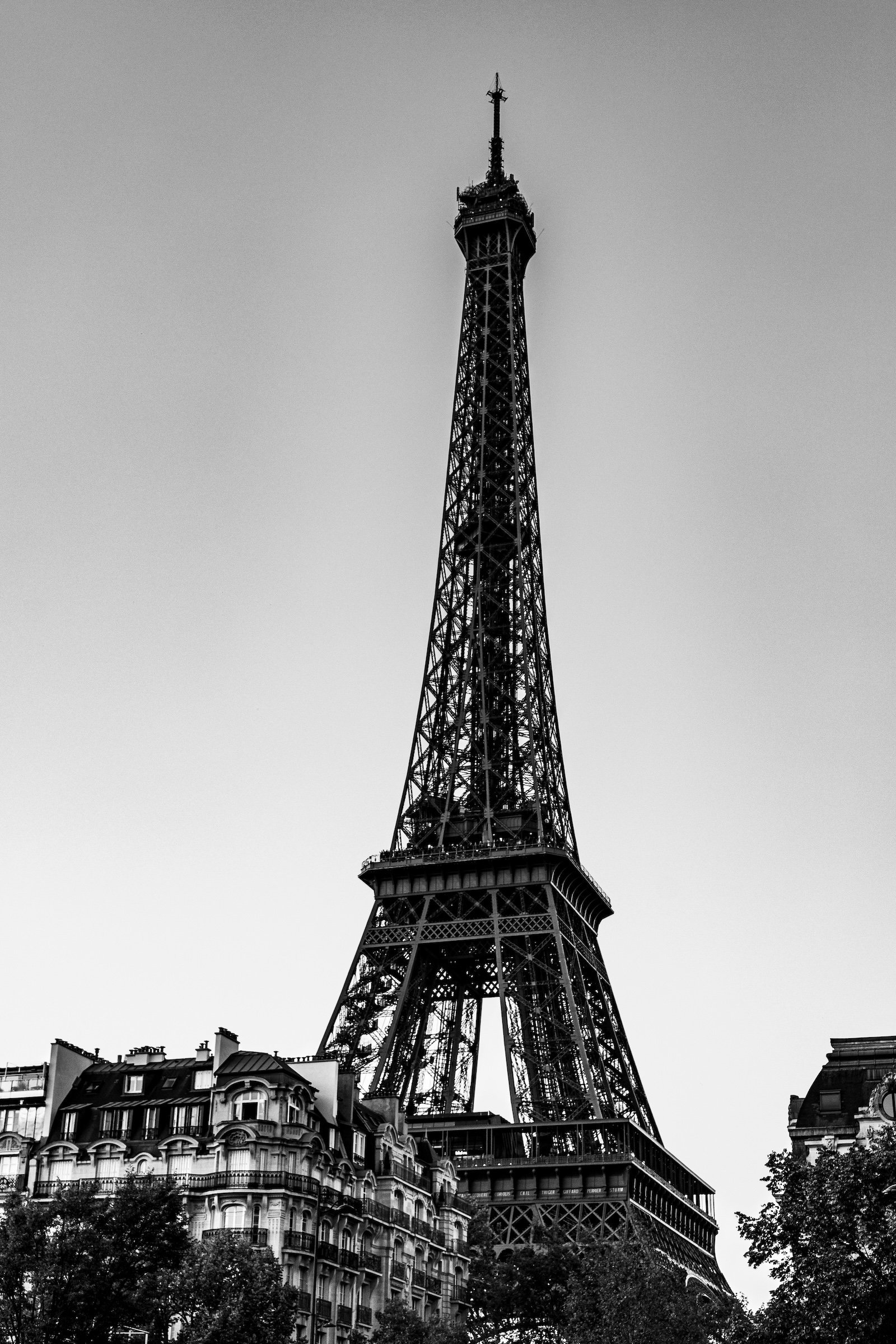
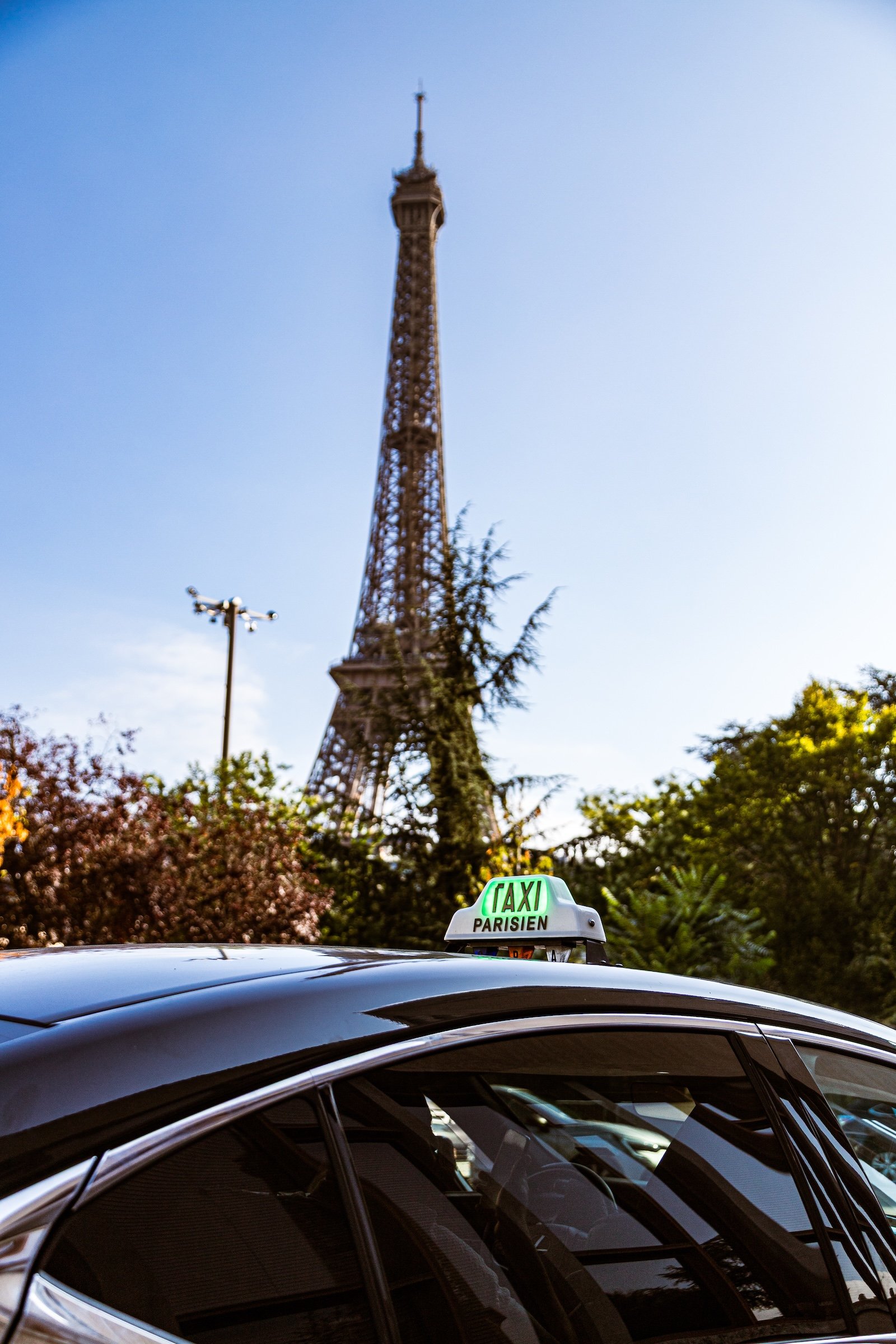
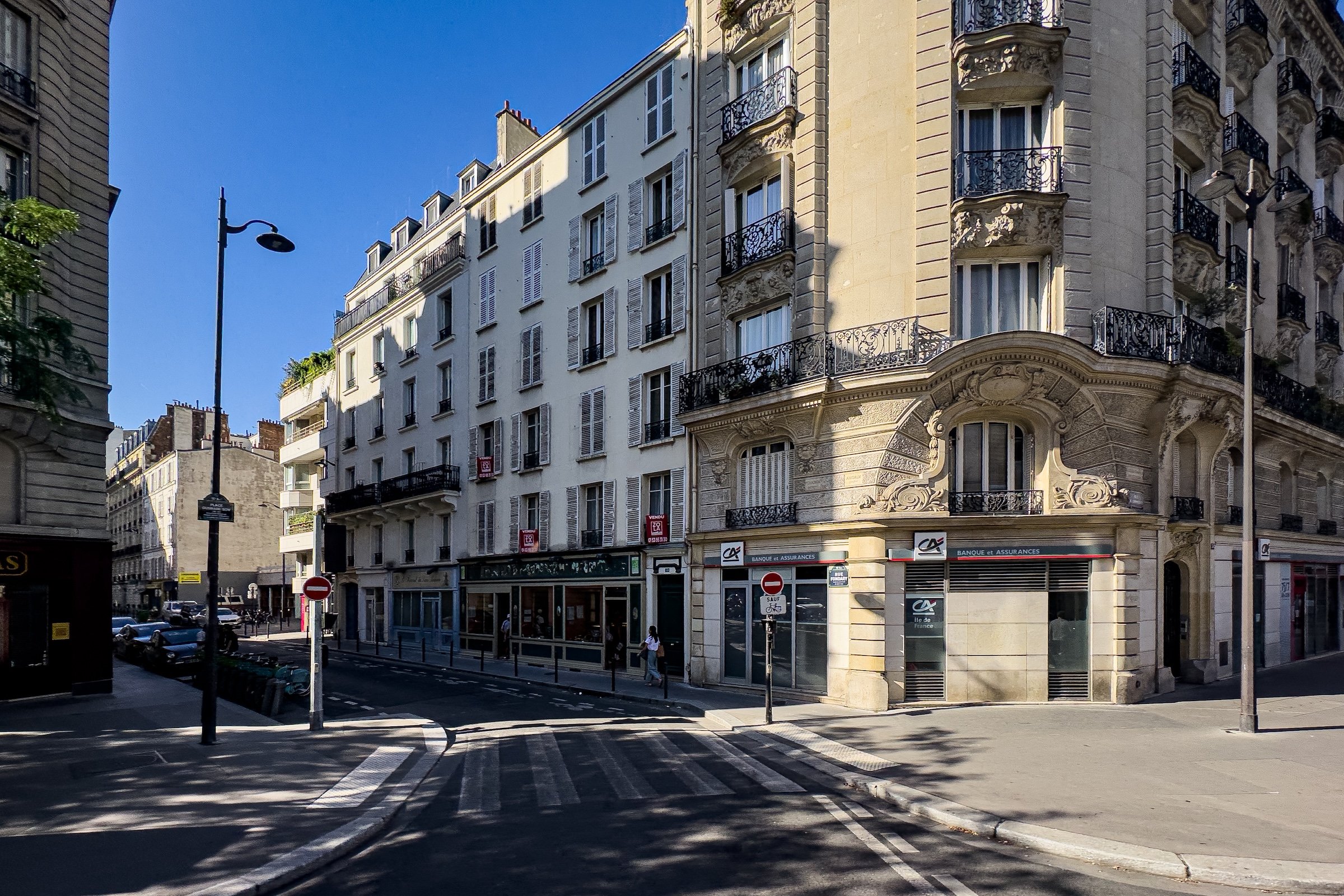
Grenelle presents itself through a balance of neighborhood intimacy and monumental interruption. Its visual field is shaped by apartment façades, café corners, tree-lined streets, market-like intersections, and the steady geometry of western Parisian residential life. Yet the Eiffel Tower repeatedly alters the scale of the district, appearing at the end of streets or above rooftops as both landmark and orientation point. In Grenelle, the everyday and the iconic do not compete; they coexist, with the tower transforming ordinary street views into compositions of unmistakable Parisian identity.
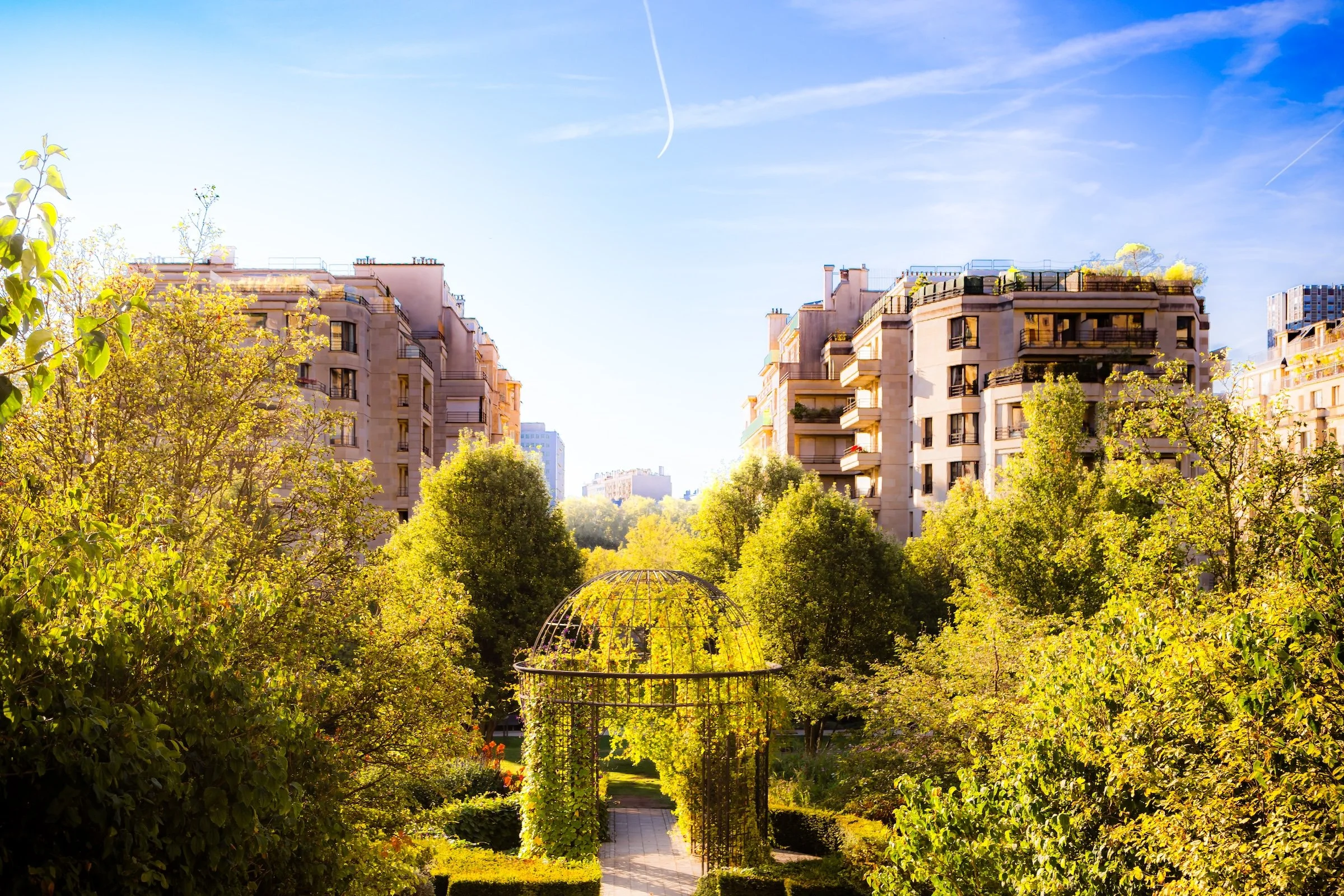
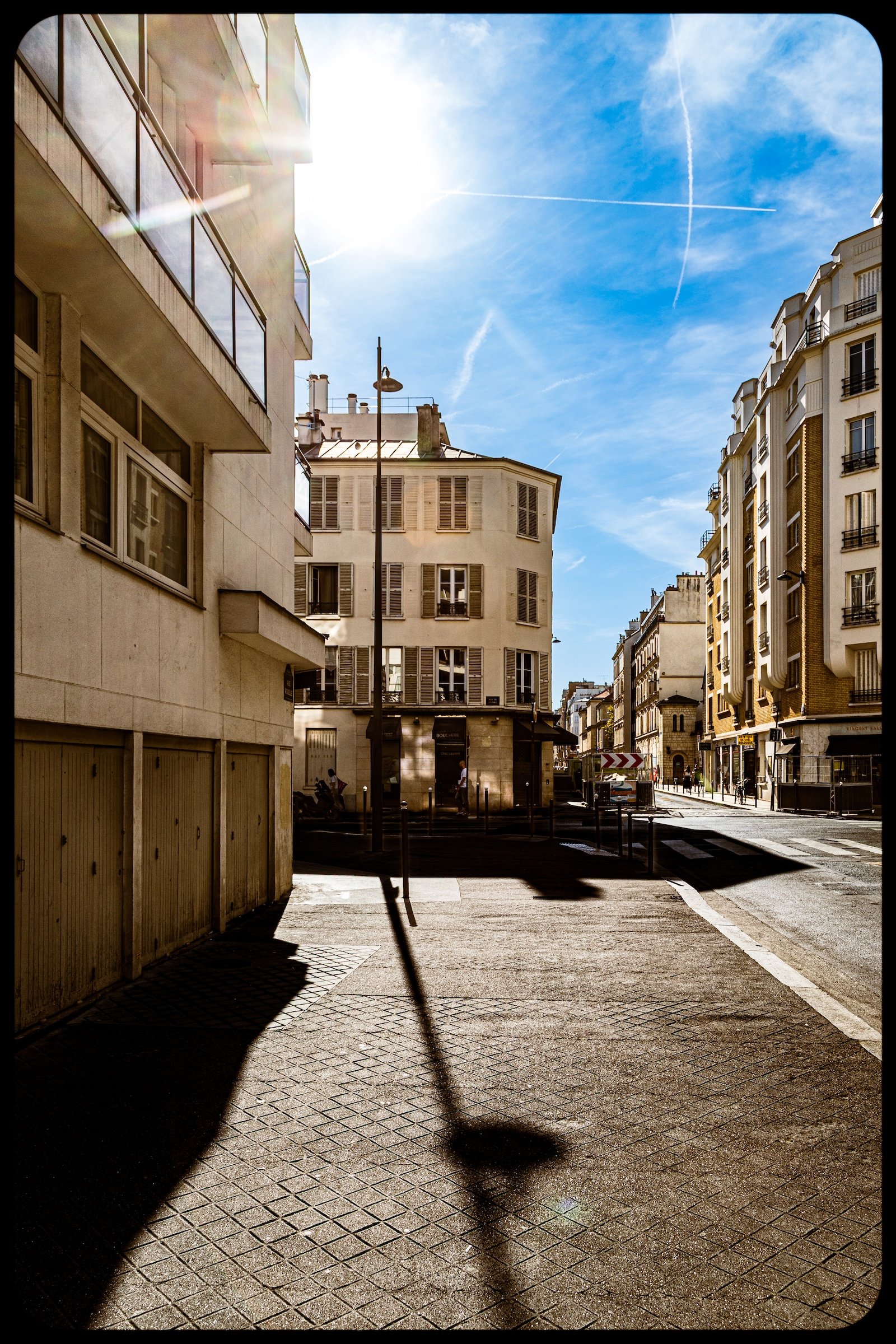
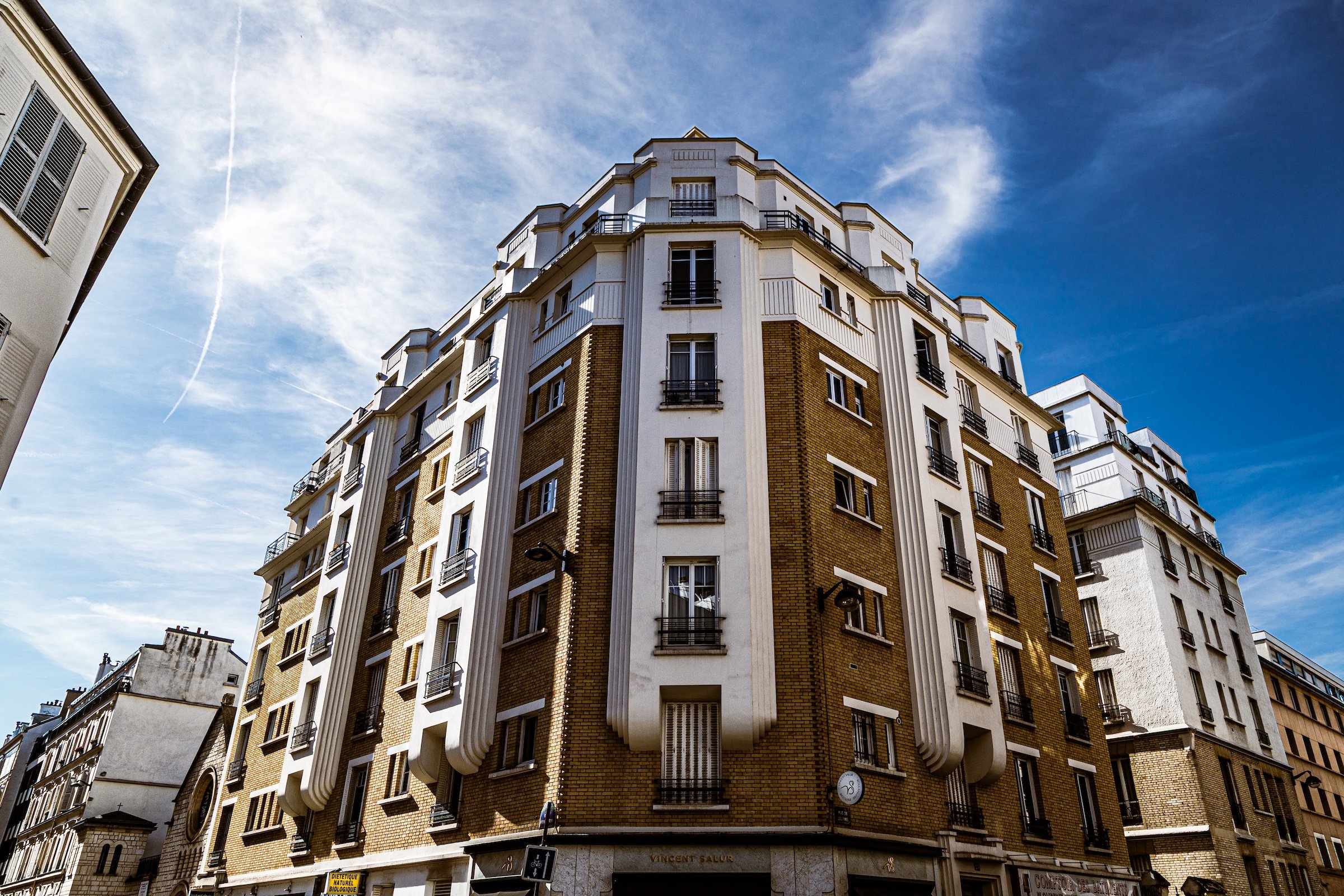
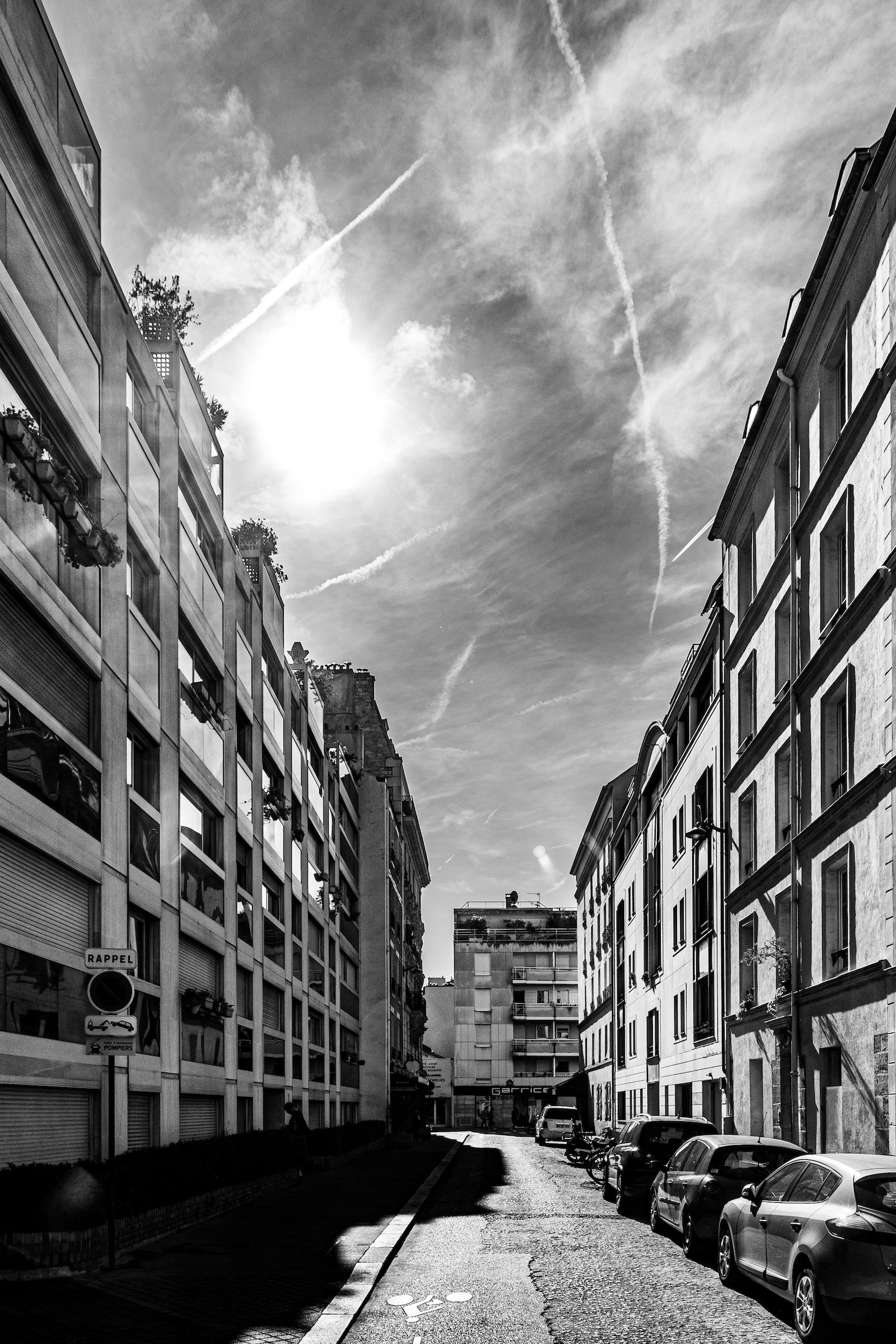
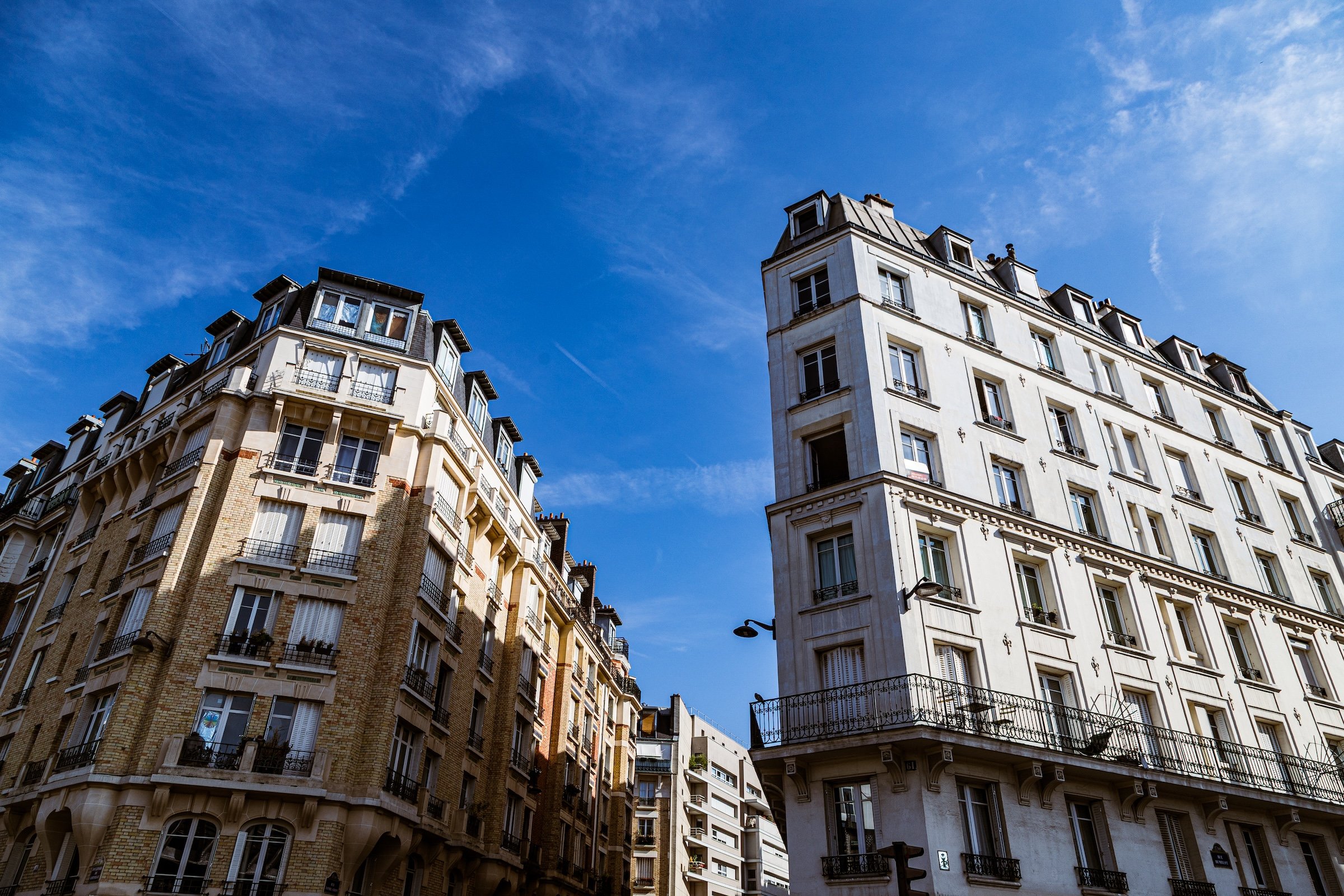
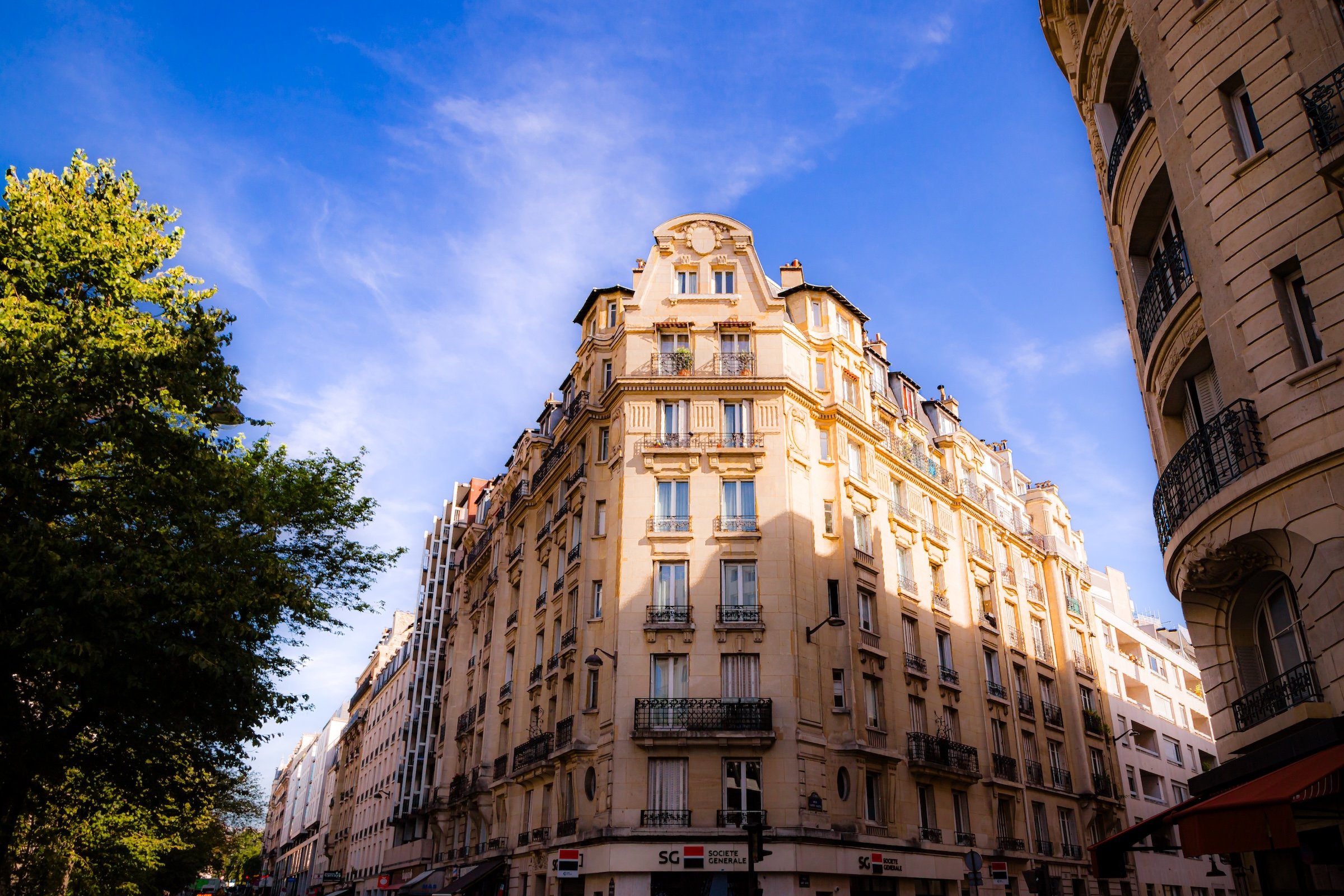
The district’s strongest visual character emerges in light and structure: Art Deco buildings, long façades, balconies, shopfronts, and leafy sidewalks set against flashes of iron, sky, and distant monumentality. Morning sun gives Grenelle a reflective, almost cinematic clarity, especially where shadows fall across corners or where trees soften the built environment. It is a neighborhood that photographs as both lived-in and symbolic — a place of errands, cafés, crossings, and homes, but also one where Paris continually reminds the viewer of its larger image.
Through The Lens
-
Through the lens, Grenelle’s transit sequence is dominated by modernity and scale. The Beaugrenelle area photographs as vertical, reflective, and urban in a late-20th-century sense. The bus perspective emphasizes its height and frontage, making the district feel less like a neighborhood interior and more like a modern riverfront threshold.
-
The morning Grenelle images read as movement and orientation. The Eiffel Tower appears near the beginning as a familiar anchor, but the contact sheet quickly shifts toward transit: station space, Metro platforms, and the clean rhythm of Parisian public transportation. The photographs preserve the feeling of departure — not yet the full day, but the mechanism that made the day possible.
*****
The evening Grenelle images preserve a quieter, more transitional encounter: buses, streets, façades, restaurants, and the warm drift of late-day movement. The photographs are less formally composed than the major walking sequences, but they hold the practical rhythm of the day.
Through the lens, Grenelle appears as return and routine. It is the place where the itinerary slows, where dinner enters the archive, and where the day begins turning toward night.
-
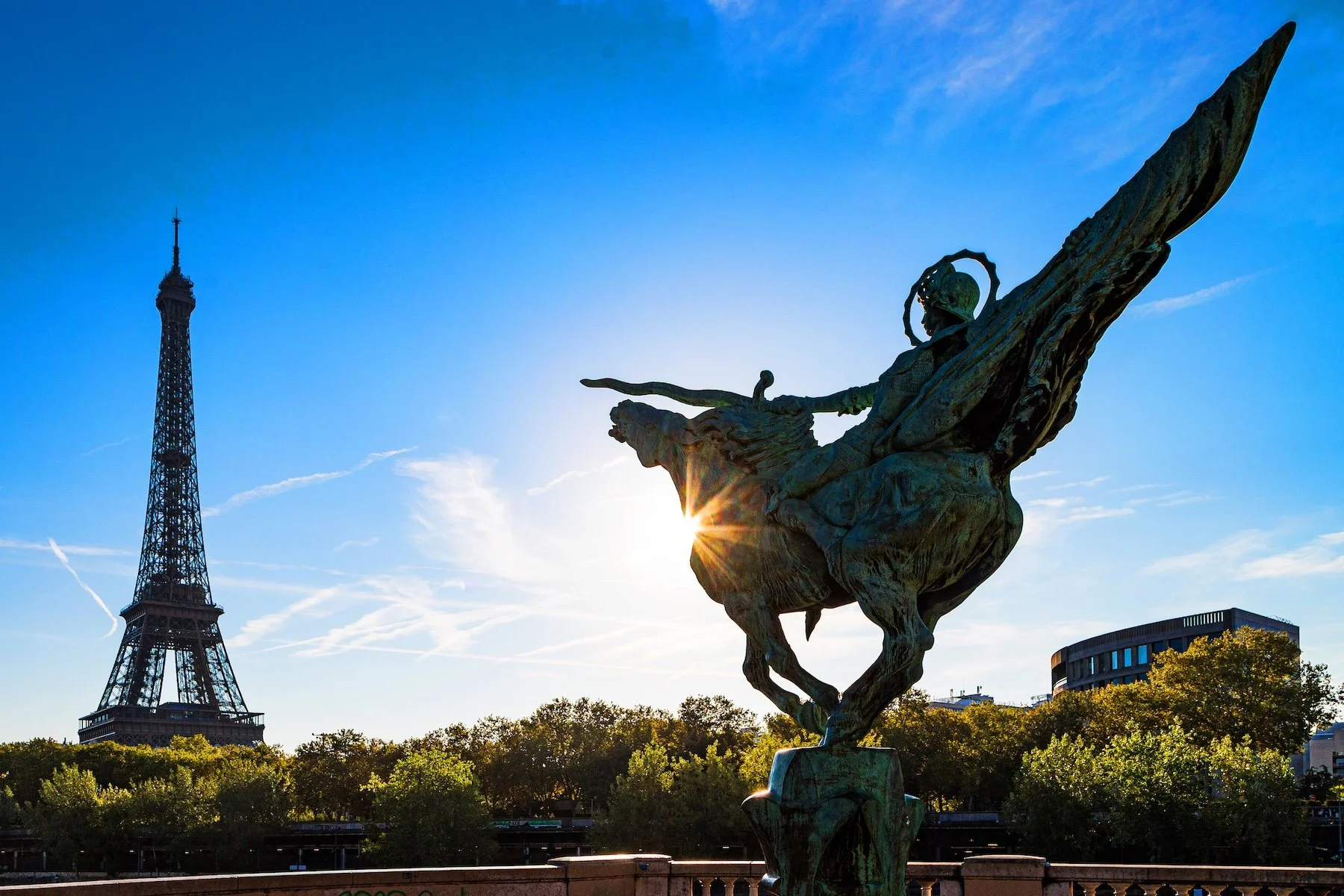
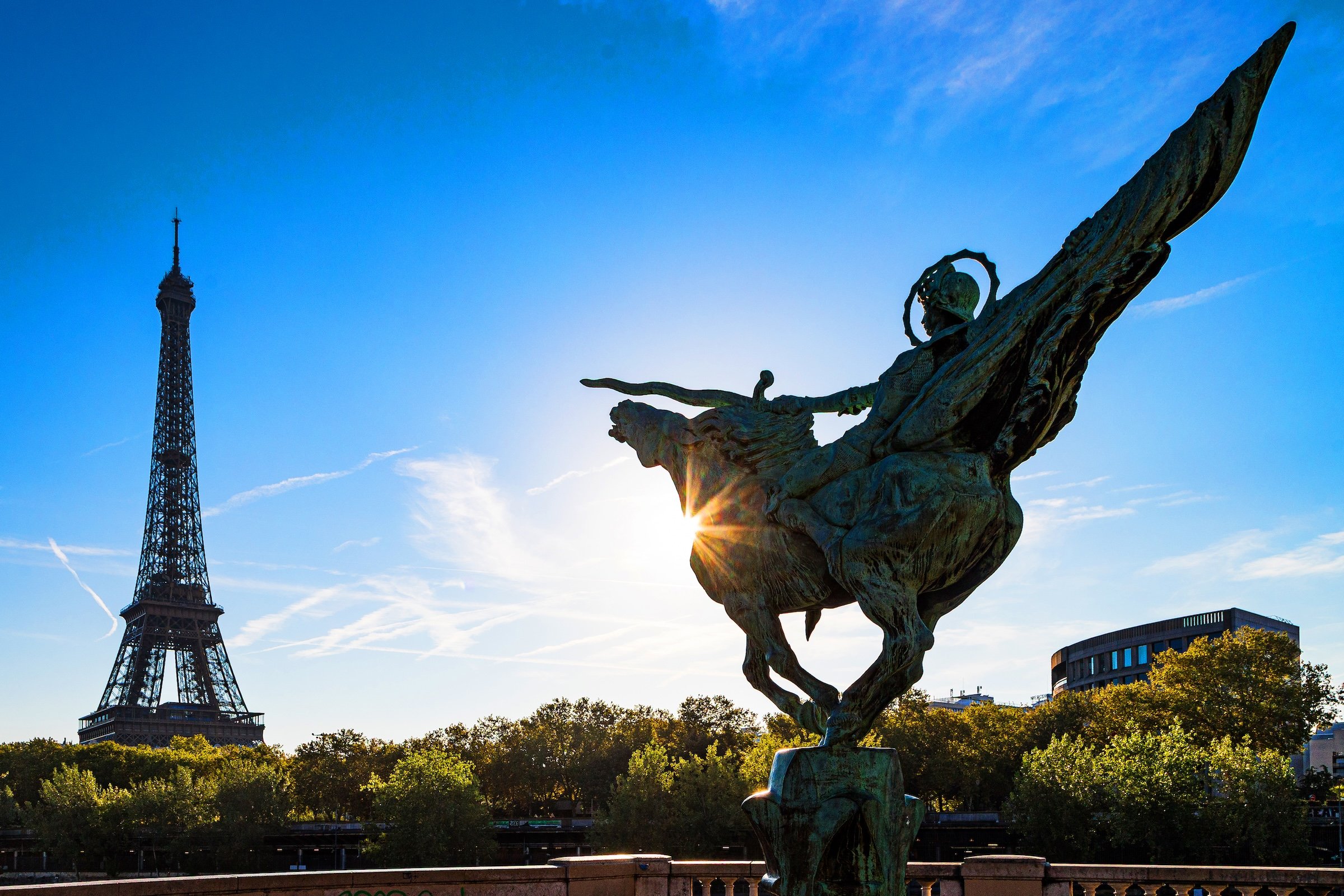
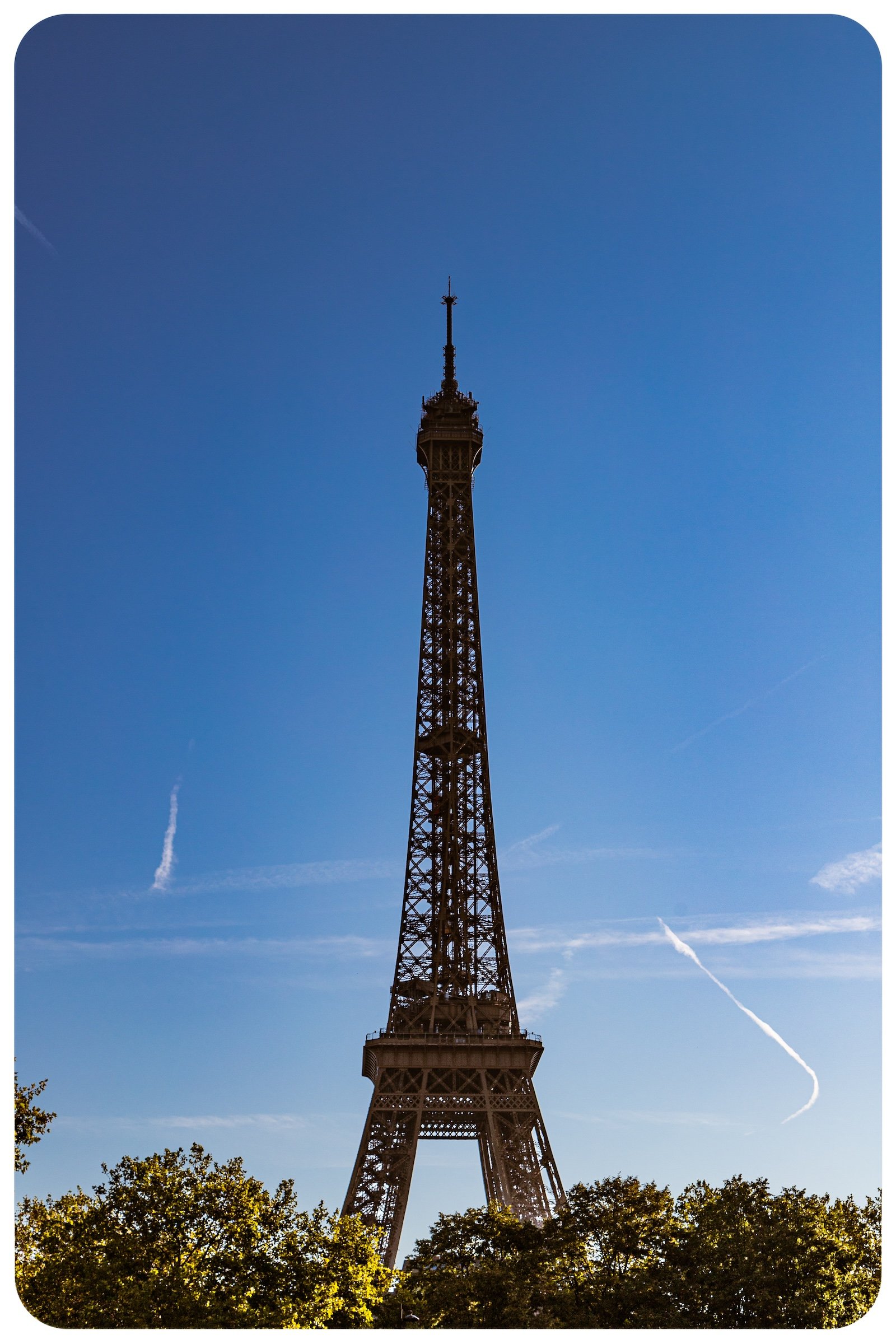
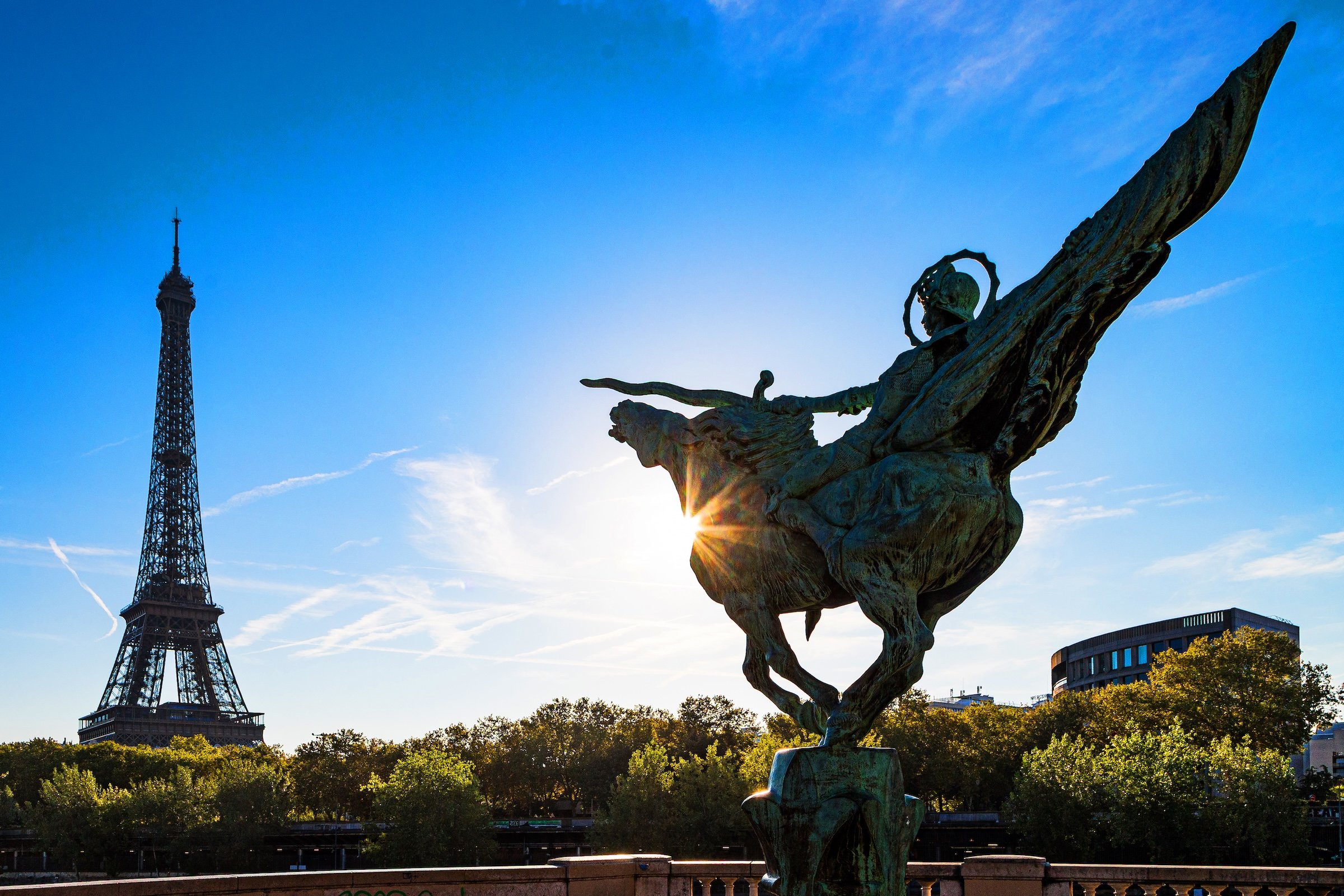
Grenelle photographed as a threshold: bright, monumental, and charged with arrival even though the day itself was a departure. The strongest images from this opening sequence appear to work through alignment and punctuation — the Eiffel Tower held in relation to the sun, the bridge, the river, and the heroic figure of La France Renaissante. The camera seems drawn less to documentation than to declaration: Paris, in one early-morning frame, offering its most recognizable forms in an unexpectedly personal way.
The second Grenelle sequence photographed as farewell. The images appear more reflective than the opening shots: less about the instant drama of sunrise and more about the accumulated feeling of a final walk. The lens found the Eiffel Tower at a distance, Art Deco forms at the corners, trees and leaves in the streets, and sunlight pressing more firmly into the city. This was not simply “more Grenelle.” It was Grenelle transformed by time, by return, and by the knowledge that these were the last frames of the trip.
If you visit Paris, these ideas can help inspire your own photography.
Grenelle: August 18, 2025
Grenelle Photo Gallery
Grenelle Flâneur Notes
-
11:29 AM
Conditions: 22°C (72°F) | Humidity: 71%.
Grenelle appeared later in the morning along Quai de Grenelle, where the bus passed the modern buildings of Beaugrenelle and continued toward Pont de Grenelle. This was a very different Grenelle from the intimate final walk of August 18. Here the district presented its riverfront modernism: towers, glass, commercial massing, traffic, and the Seine-side edge of the 15th arrondissement.
-
09:30 AM
Conditions: 16°C (61°F) | Humidity: 57%
The day began in Grenelle with a first ride on the Paris Metro. After the grit and complexity of New York’s subway system, the Metro felt refreshing in its clarity: clean, direct, smooth, and easy to navigate. From Bir-Hakeim, the route connected through Charles de Gaulle–Étoile and continued toward Anvers, making the morning feel less like a logistical challenge than a quiet initiation into another way of moving through a city.
This was Grenelle as point of departure rather than destination. The quarter did not yet reveal itself through streets, cafés, or façades, but through infrastructure — the station, the line, the act of leaving the hotel district and entering the larger city. For a project rooted in walking, the Metro became the bridge between neighborhood and expedition, carrying the day toward Montmartre.
*****
17:00 PM
Conditions: 28°C (83°F) | Humidity: 53%
The early evening returned to Grenelle by bus, moving along Rue Linois and Avenue Émile Zola toward dinner at Le Café du Commerce. This was not a full walked study, but a lived neighborhood experience of another kind: transit, dinner, streets seen in motion, and the practical movement of evening.
The return followed Rue Frémicourt, Avenue de Lowendal, and Avenue de Suffren, giving Grenelle and its surrounding western Paris streets a softer after-hours quality. After a day of Montmartre, the Louvre, and the Left Bank, this passage felt like settling back toward the hotel district — not an ending yet, but the beginning of the day’s long closing movement.
Other neighborhoods visited:
-
08:25-08:33 & 10:09-10:36 AM
Conditions: 21°C (70°F) to 26°C (78°F) | Humidity: 65%.
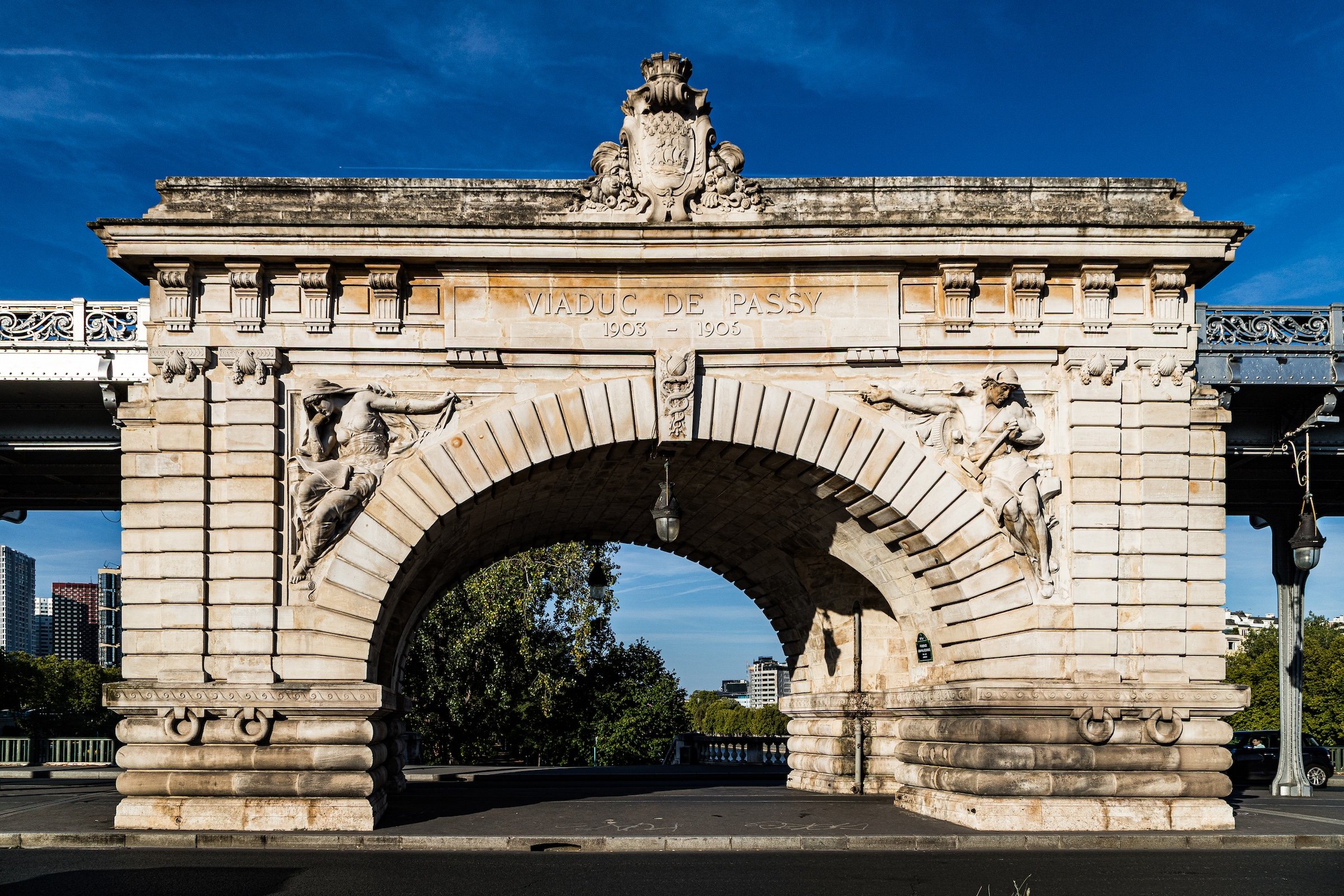
The morning began in Grenelle with the day still young and the light already decisive. This first passage was brief, but it opened the walk with unusual force: the approach to Pont de Bir-Hakeim, the Seine, the Eiffel Tower, and the sculptural presence of La France Renaissante all gathered into the same visual field. In a matter of minutes, Grenelle became not merely the starting point of the route, but the threshold through which the final Paris walk announced itself.
The sun gave the scene its drama. Rather than sitting gently behind the city, it seemed to punctuate the composition — an exclamation point beside the Eiffel Tower, a burst of gold against stone, iron, water, and sky. Grenelle’s role here was both geographic and cinematic: it stood at the crossing between the hotel and the wider city, between the 15th and 16th arrondissements, between departure and discovery. The first images of the day already carried the feeling of a finale.
Other neighborhoods visited:
Flâneur Notes document the walks, photographs, light, and street-level observations behind this neighborhood entry. Learn more about the Spirit of the Flâneur.
Explore Paris
-

The twenty arrondissements form the civic spiral of Paris, organizing the city into its broad local districts of government, identity, and daily life.
-

Each arrondissement is divided into four official administrative quarters, giving Paris a more precise civic and geographic framework.
-

The conseils de quartier bring participation to street level, giving residents a voice in neighborhood needs, public space, and local civic life.
-

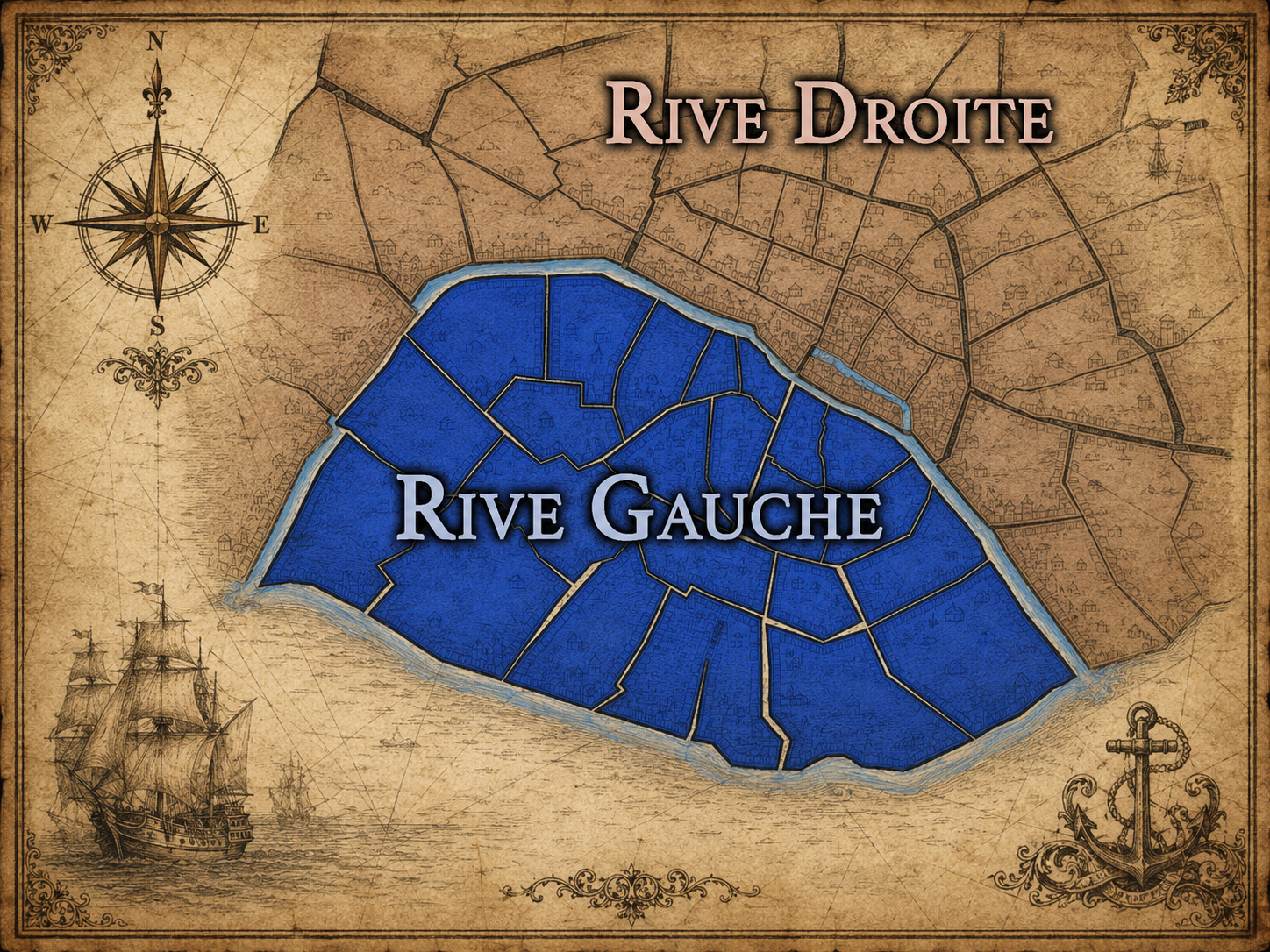
Les Deux Rives trace Paris through the Seine’s two banks, revealing how the Rive Droite and Rive Gauche shaped the city’s civic power, commerce, learning, art, and cultural identity.
-

Cultural neighborhoods reveal the Paris people recognize through history, cafés, architecture, memory, atmosphere, and local belonging.