
17e - TERNES
Quartiers Administratifs
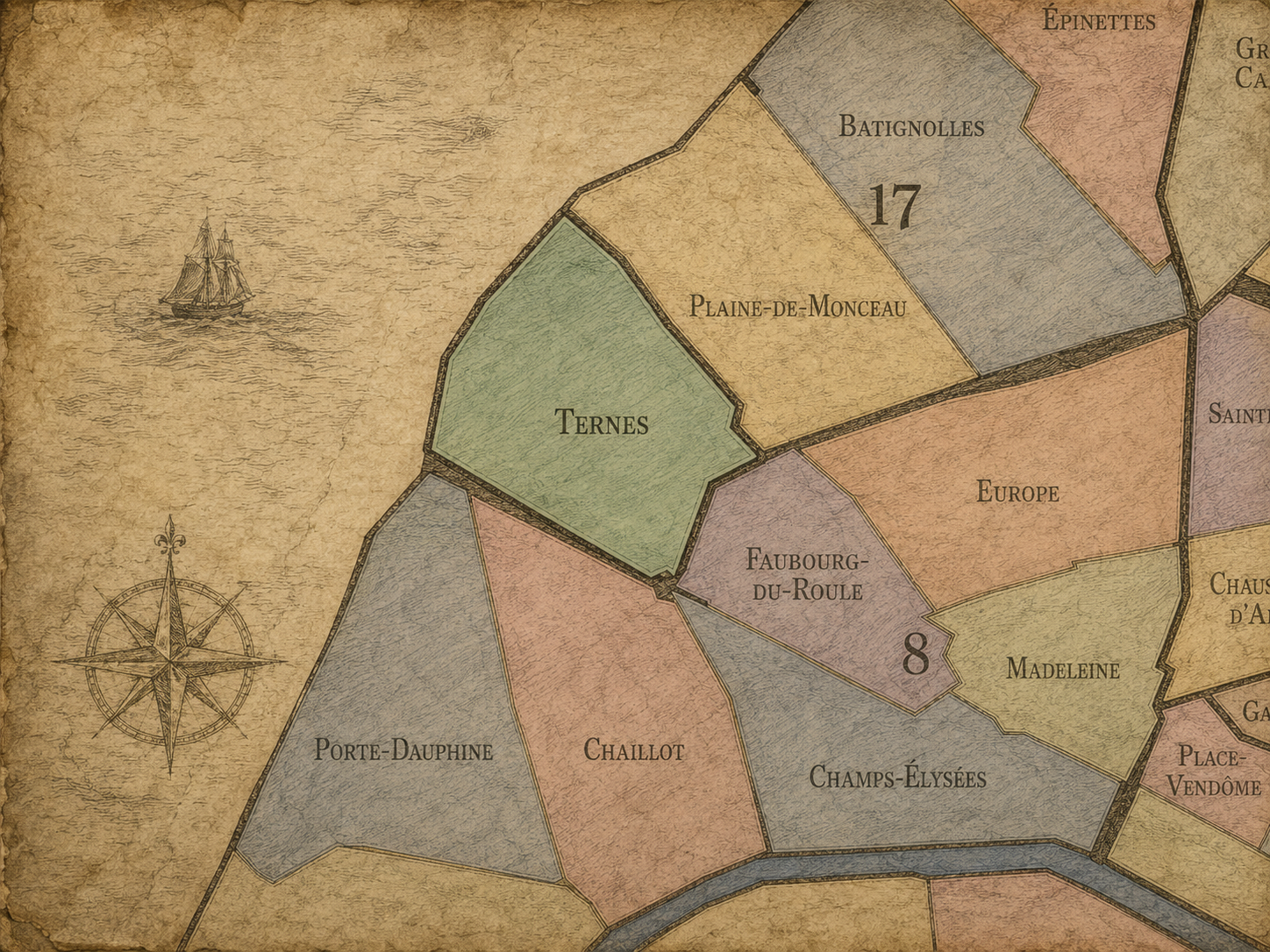
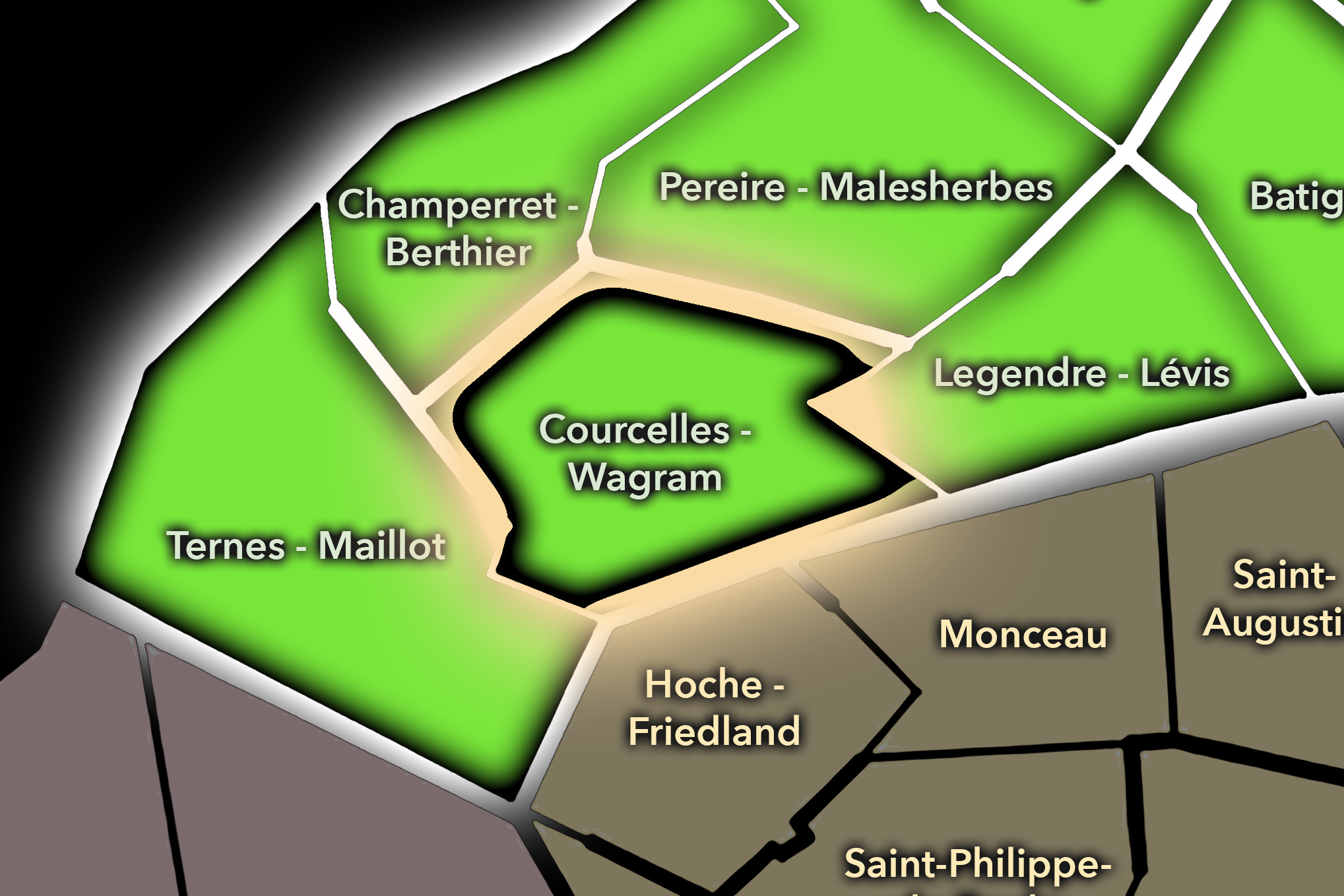
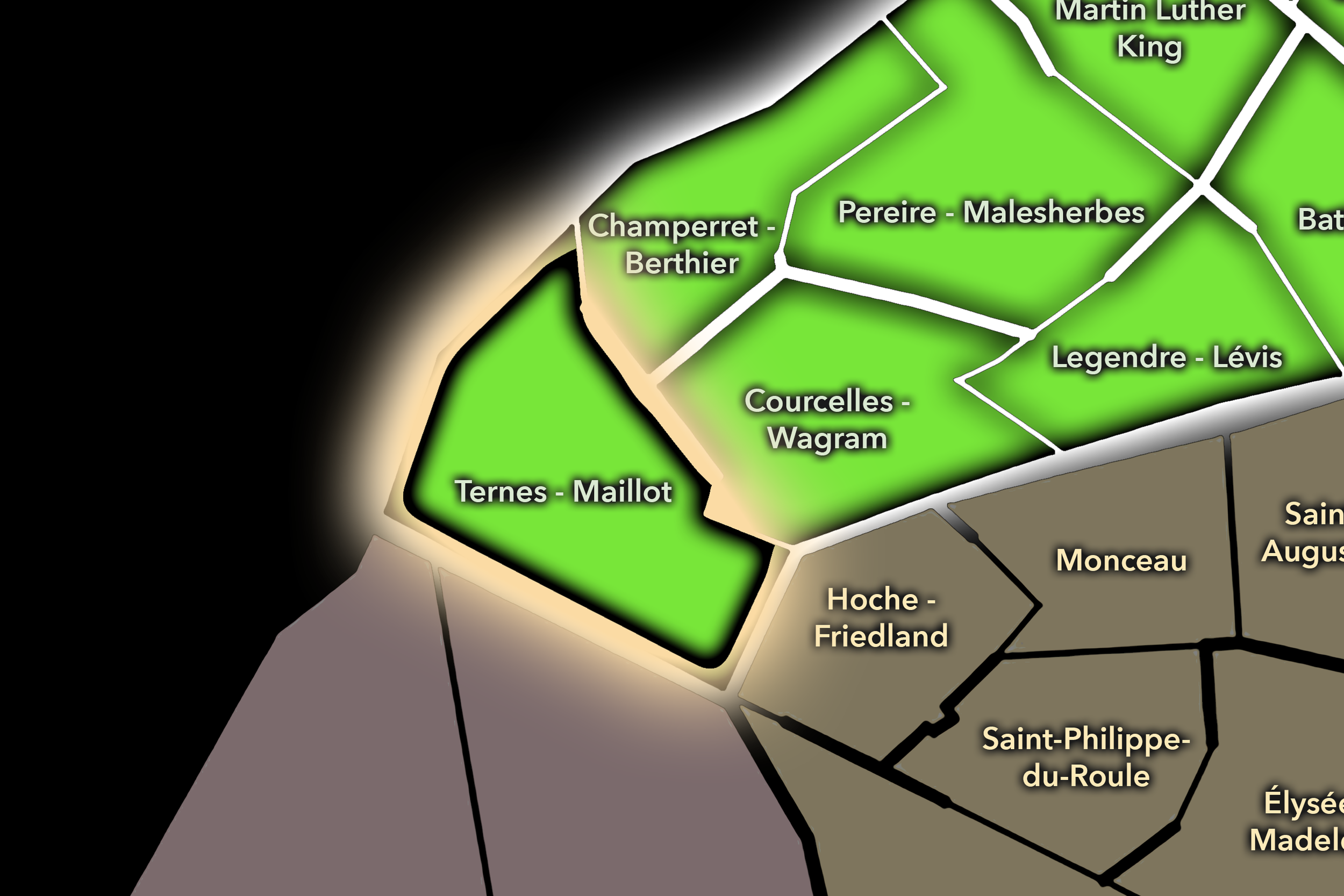
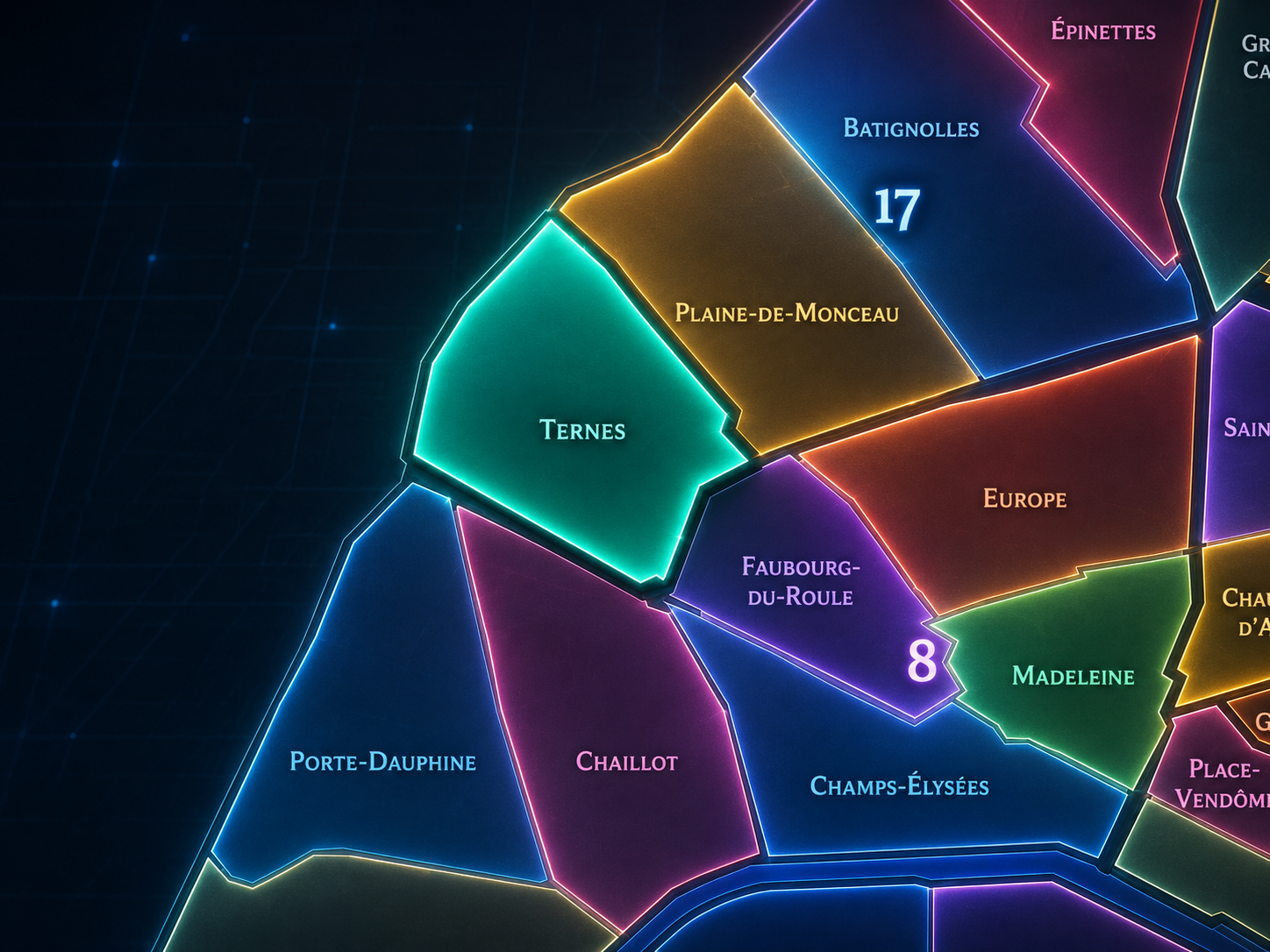
Welcome to the Ternes neighborhood page! Ternes is a quartier administratif — the 65th administrative quarter — one of 80 such districts across Paris. As a quartier administratif of the 17e Arrondissement - Batignolles-Monceau, Ternes belongs to a formal layer of Parisian geography and extends from the Arc de Triomphe toward Porte Maillot. Ternes is shaped by Avenue des Ternes, market streets, hotels, offices, and the western gateways of the capital.
Part of an ongoing project to walk and photograph every neighborhood in Paris, this page explores 17e Ternes through maps, district identity, history, and photography.

The Map
Geographic Setting
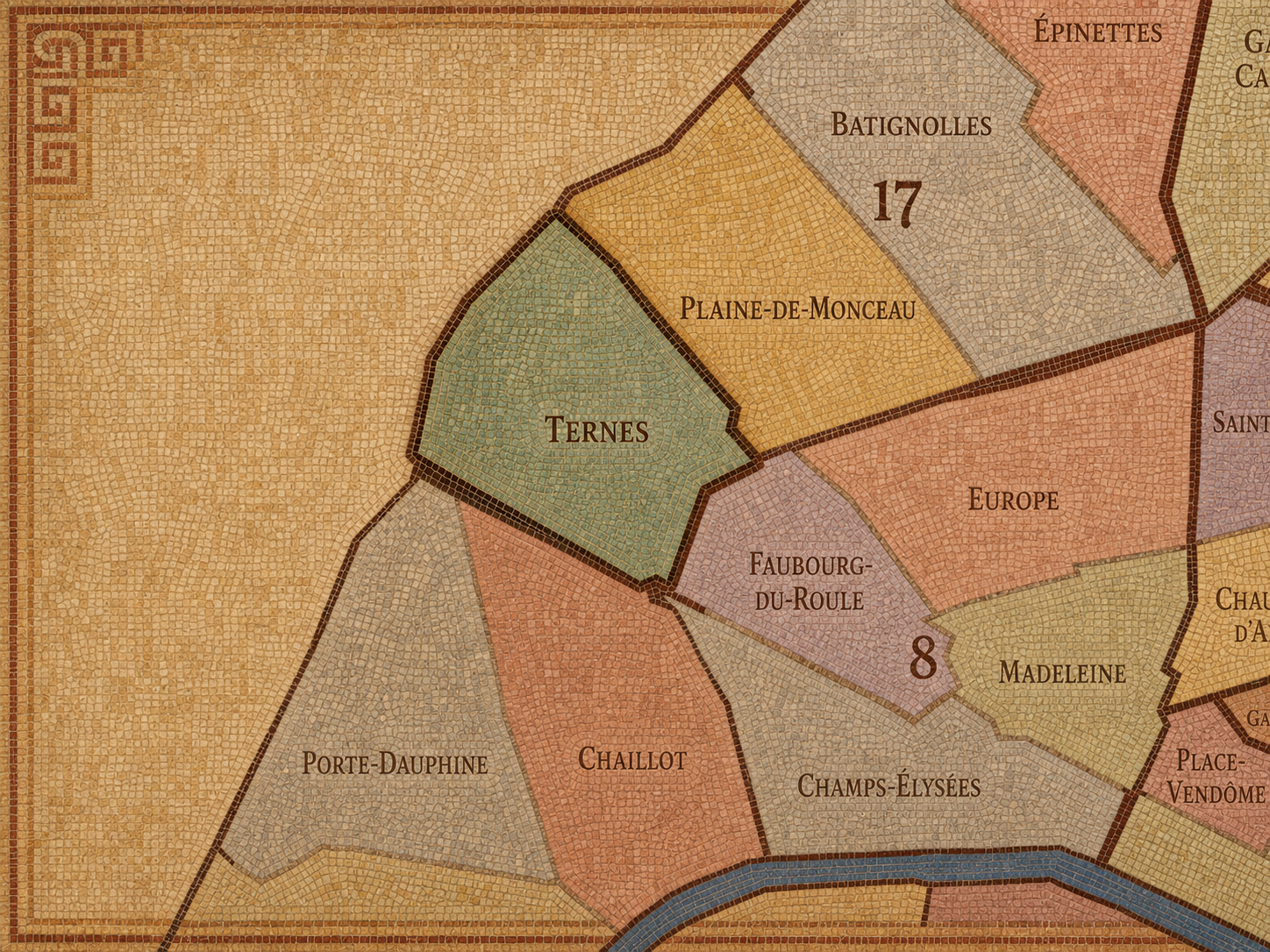
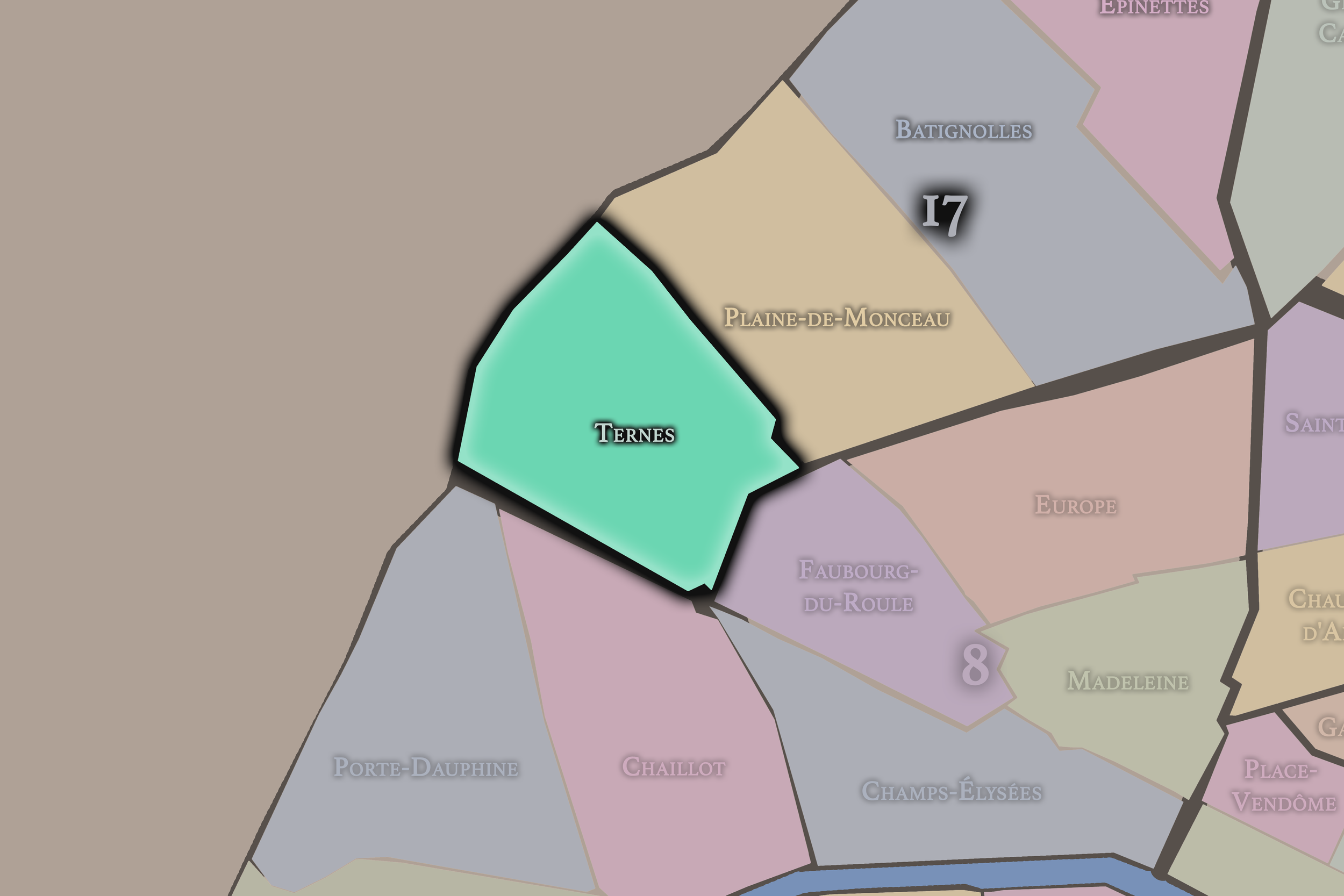
Ternes occupies the southwestern portion of the 17th arrondissement, where the arrondissement meets the Arc de Triomphe, Avenue des Ternes, Porte Maillot, Boulevard Pereire, and the prestigious western routes leading toward Neuilly-sur-Seine. It lies west of Plaine-de-Monceaux, southwest of Batignolles and Épinettes, north of the 8th arrondissement’s Faubourg-du-Roule and Champs-Élysées landscapes, and east of the metropolitan edge around Porte Maillot. This is the 17th arrondissement at its most western-facing: residential, commercial, well-connected, and shaped by the grand geography of arrival into Paris from the northwest.
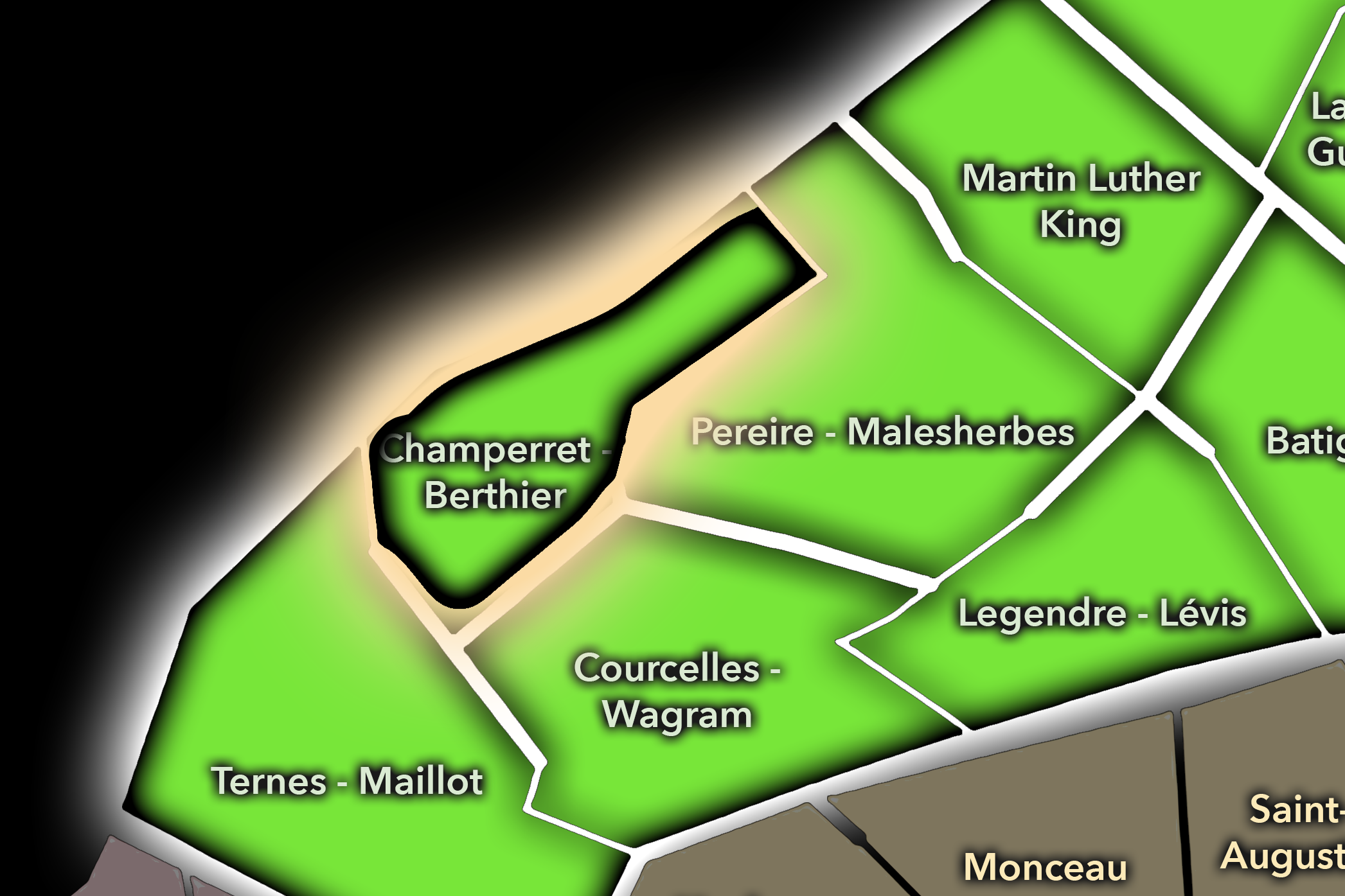
The quarter’s defining streets and landmarks include Avenue des Ternes, Place des Ternes, Boulevard de Courcelles, Avenue de Wagram, Boulevard Pereire, Rue Bayen, Rue Poncelet, Rue Laugier, Rue Guersant, Rue Pierre-Demours, Porte Maillot, and the approaches to the Arc de Triomphe. Rue Poncelet and the surrounding market streets give Ternes one of its strongest lived identities, balancing the grandeur of nearby avenues with a more local, food-market and neighborhood-commerce rhythm.
Unlike Plaine-de-Monceaux, whose identity is more purely residential, Haussmannian, and park-adjacent, or Batignolles, whose character is more village-like and sociable, Ternes is more openly a threshold quarter of western Paris. It gathers the energy of major roads, business movement, affluent residential streets, and local commercial life into one district. It is the 17th as western gateway — not quite the ceremonial center, not quite the suburb, but a composed and active passage between the two.
Administrative Quarter Identity
Etymology and Origins
The name Ternes comes from the old locality of Les Ternes, a settlement that developed outside the former limits of Paris before being absorbed into the capital. The name predates the modern arrondissement system and preserves the memory of a place that once belonged to the outer western approaches rather than to the dense historic core of the city.
Its exact origin is less immediately transparent than names tied to saints, gates, markets, or churches, which gives it the quality of an old local place-name. Like Batignolles, Auteuil, Passy, or Monceau, Ternes reminds us that the modern map of Paris is built from formerly separate settlements, plains, roads, and villages that were gradually drawn into the capital. The name carries that pre-annexation life forward.
Over time, Ternes became associated less with a village atmosphere and more with a western Parisian crossroads: Avenue des Ternes, Place des Ternes, Porte Maillot, Wagram, and the approaches to the Arc de Triomphe. The old locality became a neighborhood of movement, commerce, residence, and prestige, while the name remained as a quiet marker of the earlier settlement beneath the modern avenues.
Civic Framework
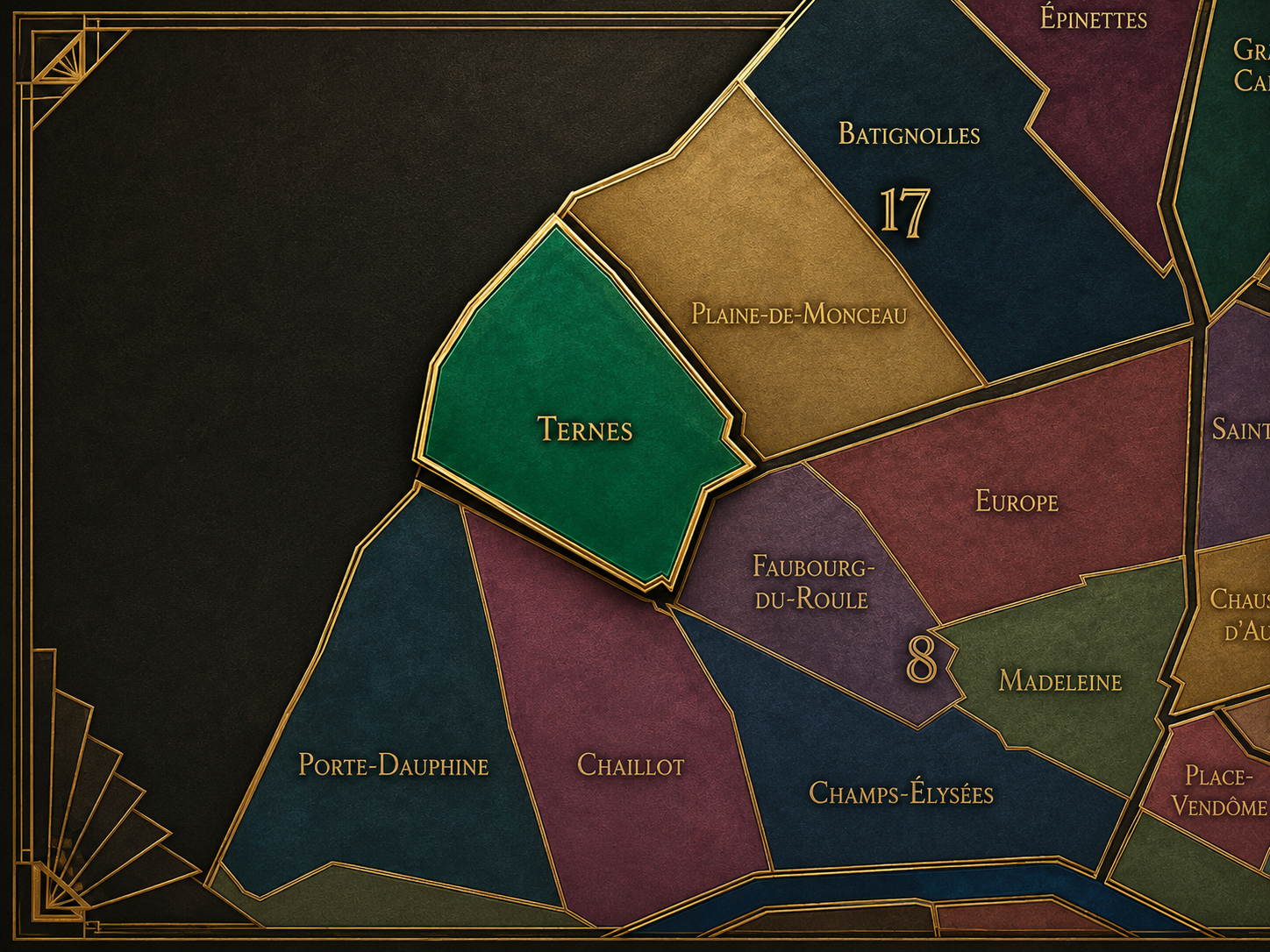
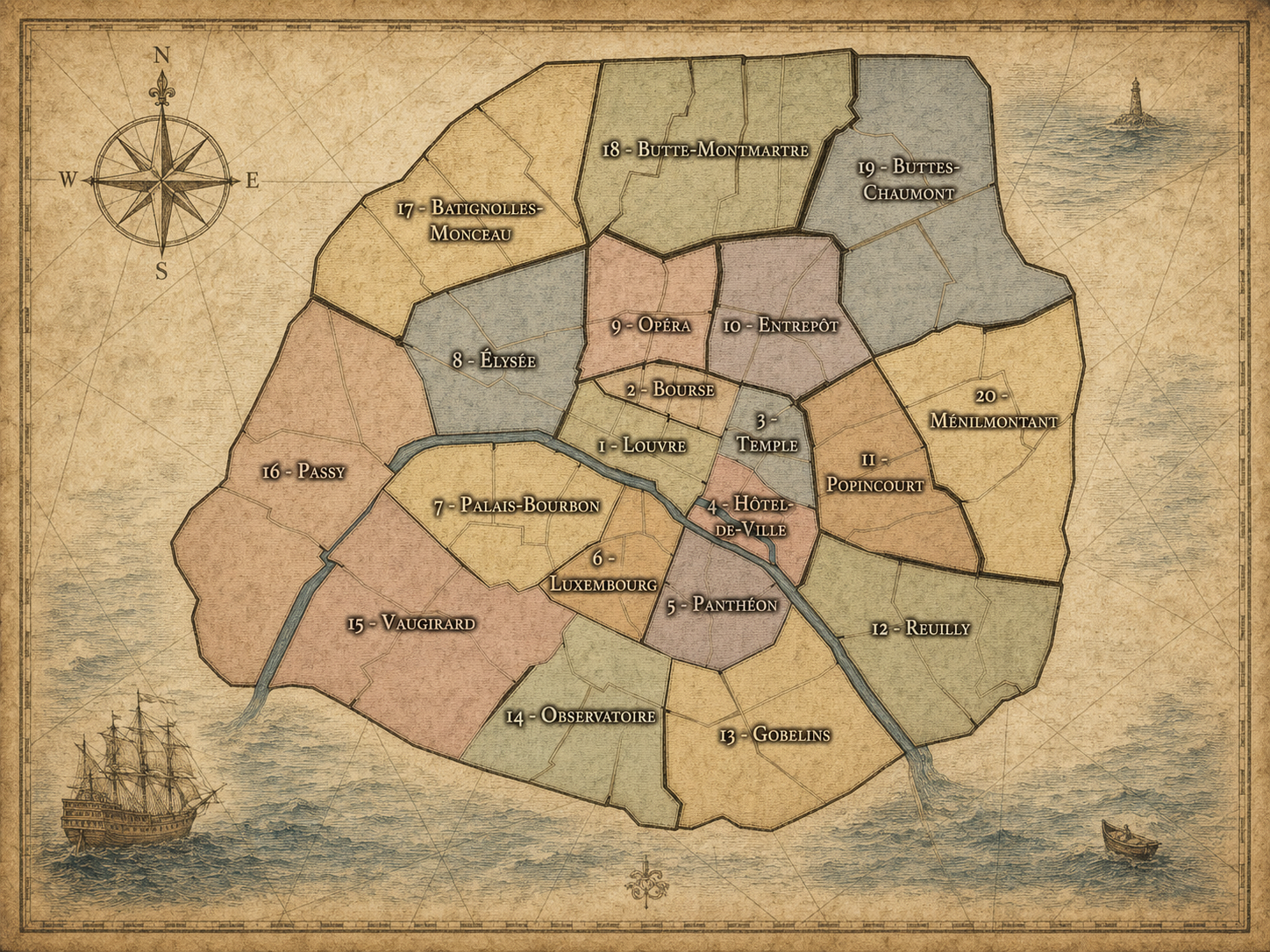
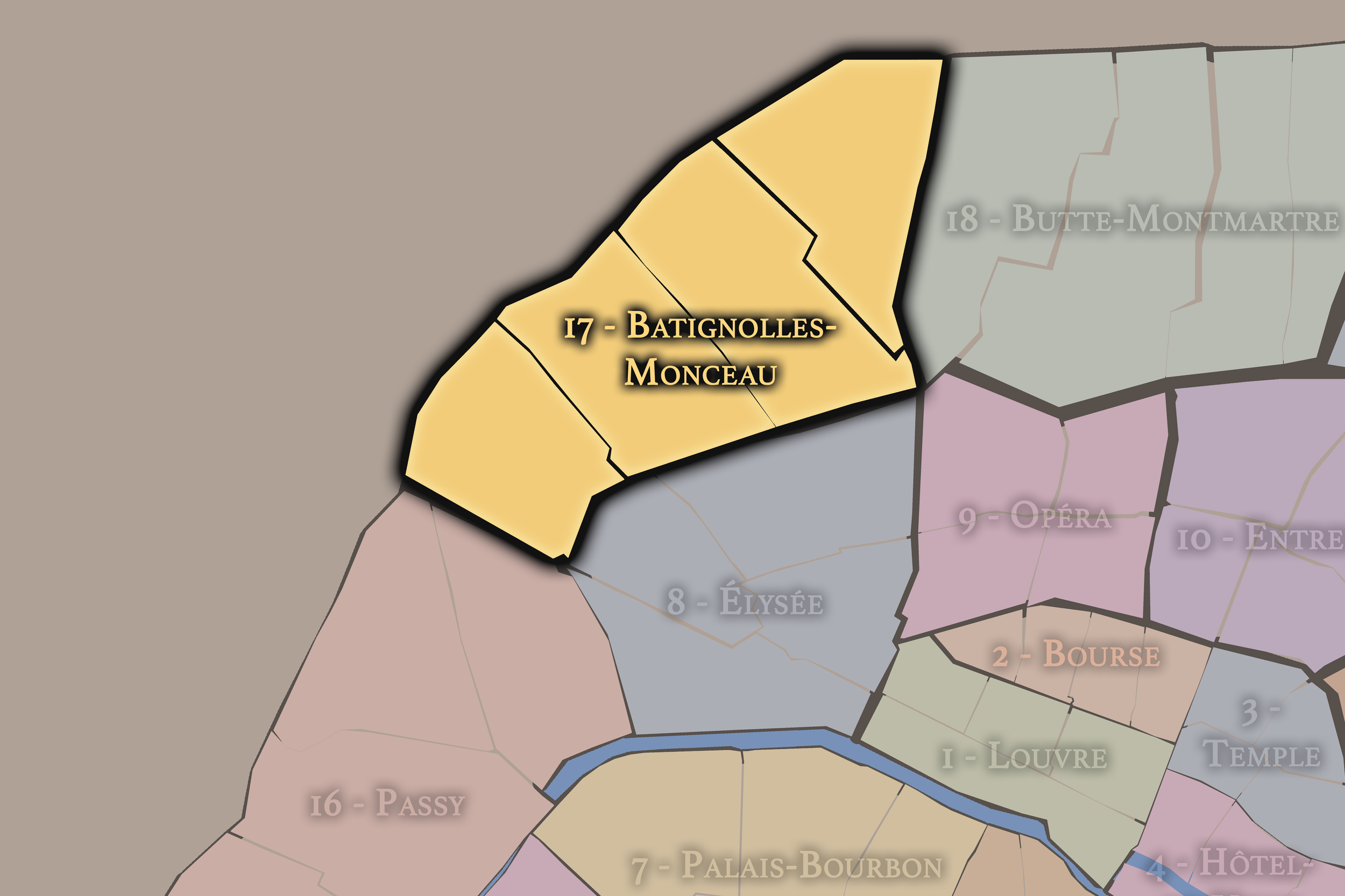
Within the official geography of Paris, Ternes is one of the four administrative quarters of the 17th arrondissement, alongside Batignolles, Épinettes, and Plaine-de-Monceaux. It occupies the arrondissement’s southwestern sector, giving civic shape to the area between the Arc de Triomphe edge, Avenue des Ternes, Porte Maillot, Boulevard Pereire, and the western approaches toward Neuilly.
As an administrative quarter, Ternes clarifies a district often described through stronger local or transit names: Wagram, Porte Maillot, Poncelet, Pereire, Courcelles, or the Arc de Triomphe edge. Each of these names captures part of the neighborhood’s identity, but Ternes is the official frame that gathers them together. It connects the old locality, the market streets, the western gateway, the residential avenues, and the commercial corridors into one mapped unit.
This civic frame is especially useful because Ternes can easily be overshadowed by neighboring icons. The Arc de Triomphe pulls attention just south of the quarter. Porte Maillot draws attention westward. Parc Monceau and Plaine-de-Monceaux shape the eastern imagination. Ternes sits between these stronger landmarks, but it has a distinct civic identity of its own: a western Paris quarter built from commerce, residence, and passage.
Neighborhood Distinction
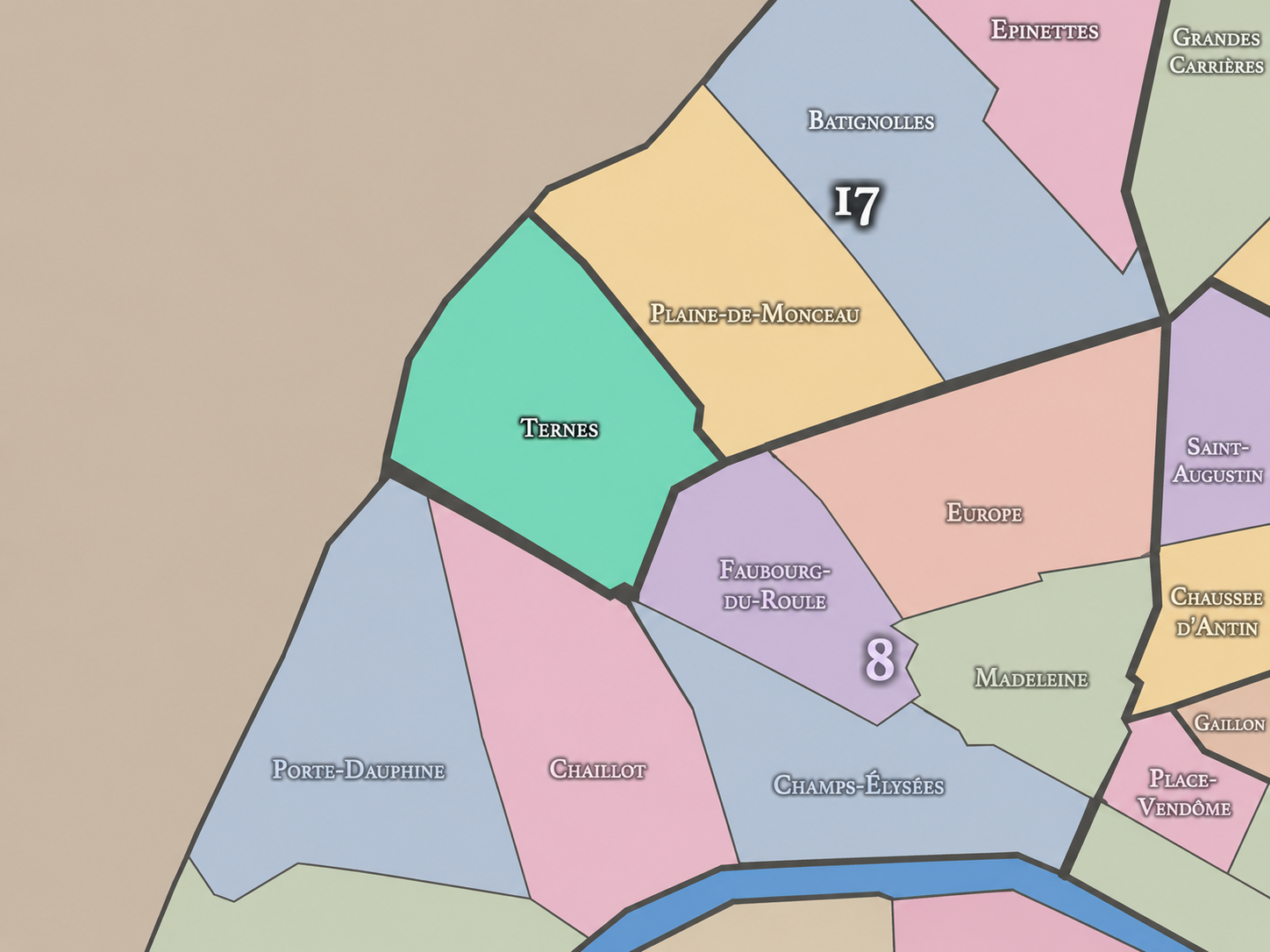
Ternes differs from the other quarters of the 17th arrondissement through its western gateway position, its relationship to Porte Maillot and the Arc de Triomphe, and its mixture of affluent residence with active commercial streets. Plaine-de-Monceaux is more interior, bourgeois, and architecturally composed around the Monceau / Malesherbes / Villiers world. Batignolles is more local, village-like, and associated with cafés, family life, and the newer Clichy-Batignolles transformation. Épinettes is more northern, working-class in memory, and tied to the edge landscapes near Clichy and Saint-Ouen.
Ternes is more outward-facing. Its identity is shaped by roads that move people into and out of Paris: Avenue des Ternes, Avenue de Wagram, Boulevard Pereire, Porte Maillot, and the larger axis toward Neuilly and La Défense. It is a quarter where the city feels residential and local on one street, then immediately metropolitan on the next.
It should also be distinguished from the Champs-Élysées / Arc de Triomphe district. Ternes is adjacent to that monumental western axis, but it is not identical to it. The Arc de Triomphe is ceremonial, touristic, and symbolic; Ternes is more lived, practical, and neighborhood-scaled. It receives the prestige of the western axis, but translates it into market streets, apartment blocks, cafés, offices, and everyday commerce.
Parisian Identity
Ternes expresses Paris as a city of elegant thresholds. It is not a former working faubourg in the eastern sense, nor a deeply bohemian district, nor a monumental quarter dominated by one official institution. Its Parisian identity lies in the balance between access and address: a place close to major western landmarks and transport routes, but still grounded in residential and commercial neighborhood life.
The quarter’s strongest lived identity often gathers around Rue Poncelet and its surrounding market streets. There, Ternes becomes less about grand western movement and more about daily Paris: produce stands, fromageries, bakeries, cafés, florists, restaurants, residents shopping, workers passing through, and the recurring rituals of local commerce. This gives the quarter warmth beneath its polished western setting.
At the same time, Ternes belongs unmistakably to affluent western Paris. Its buildings, avenues, professional offices, schools, and proximity to the 8th and 16th arrondissements give it a tone of stability and respectability. It is Paris without bohemian myth or working-edge roughness — composed, connected, and shaped by the long prestige of the northwest.
Neighborhood Connections
Every neighborhood belongs to a wider Parisian fabric.
-
17e — Batignolles-Monceau
-
Champerret - Berthier
-
Courcelles - Wagram
-
Ternes - Maillot
-
Rive Droite
The History
Origins
The origins of Ternes lie in the western outskirts beyond old Paris, where roads, fields, estates, hamlets, and suburban settlements developed outside the city’s older limits. Before it became part of the modern 17th arrondissement, the area belonged to a landscape connected to Neuilly, Monceau, Batignolles-Monceau, and the routes leading toward the western approaches of the capital.
Its early identity was shaped by proximity without incorporation. Ternes was close enough to Paris to be tied to its traffic, commerce, and population growth, but far enough from the historic center to develop as part of the city’s outer belt. Like many former edge settlements, it grew because Paris needed space beyond itself: places for housing, gardens, services, roadside commerce, and movement along major routes.
Ternes’ origin story is therefore one of gradual absorption. It was not founded as a monumental district. It emerged from the city’s expanding edge, then became increasingly urban as roads, residences, commerce, and annexation pulled it into the Parisian map.
16th–17th Century
In the 16th and 17th centuries, the future Ternes quarter lay outside the dense urban core of Paris. The area formed part of the northwestern plain and western approaches, shaped by rural land, roads, scattered settlement, and the broader geography of villages and estates beyond the city walls. It was not yet a formal urban district, but a landscape of movement and open ground.
This position gave Ternes a different origin from the older central quarters. It did not grow from medieval streets, royal squares, or long-established parish density. It belonged to the outskirts — land that was useful because it lay near Paris, but not yet inside it.
By the end of the 17th century, the western and northwestern approaches to the capital were gaining importance. Elite residences, roads, and the early forms of suburban expansion began to make the area more connected to the city. Ternes’ later identity as a western gateway rested on this long history of being just beyond the urban edge.
18th Century
In the 18th century, Ternes became more closely tied to the expansion of Paris and the growth of its western approaches. Roads toward Neuilly and the northwest gained greater importance, while the surrounding area developed through residences, gardens, services, and small-scale settlement. The district remained outside the dense center, but it was increasingly shaped by the capital’s movement and social geography.
This was also the period when the western side of Paris became more attractive for elite and bourgeois residence. The area around Monceau, the Champs-Élysées, and the routes toward Neuilly gained prestige, gradually transforming the meaning of the outer northwest. Ternes stood near this emerging geography, positioned to benefit from its later urbanization.
The French Revolution disrupted older property structures and aristocratic landscapes, but the western approaches remained valuable. The roads, open land, and proximity to Paris continued to prepare Ternes for the major 19th-century transformations that would bring it fully into the urban fabric.
19th Century
The 19th century transformed Ternes into a Parisian quarter. The expansion of Paris in 1860 incorporated the surrounding communities and former outer lands into the capital, creating the modern 17th arrondissement. Ternes became part of official Paris, but its identity remained strongly tied to the western threshold between the city and Neuilly.
Haussmannian and post-Haussmannian development gave the quarter much of its modern structure. Avenue des Ternes, Avenue de Wagram, Boulevard Pereire, and the surrounding streets became part of a growing residential and commercial district linked to the Arc de Triomphe and the western expansion of Paris. The arrival and development of rail and road infrastructure around Pereire and Porte Maillot strengthened the quarter’s role as a place of circulation.
The 19th century also established Ternes as a bourgeois and commercial neighborhood. Apartment buildings, shops, markets, cafés, and professional life developed alongside the prestige of nearby western axes. Ternes became urban without losing its threshold character: a Parisian district facing outward toward the west.
Early–Mid 20th Century
In the early and mid 20th century, Ternes remained an active residential and commercial quarter of the 17th arrondissement. Its proximity to the Arc de Triomphe, Porte Maillot, and the western avenues made it both prestigious and practical. Residents, office workers, shopkeepers, travelers, and visitors all moved through a district that balanced neighborhood routine with metropolitan movement.
The market streets around Poncelet reinforced the quarter’s local identity. In a district associated with broad avenues and western prestige, the Poncelet area provided a finer-grained urban texture: food shops, cafés, daily errands, and the social life of commercial streets. This helped keep Ternes from becoming merely a transit or prestige corridor.
During the wars, occupation, liberation, and postwar recovery, Ternes shared the complex experiences of western Paris: requisitions, shortages, displacement, continuity, and eventual rebuilding. Its location near major routes and affluent districts gave it a history shaped by both ordinary residential endurance and the larger strategic geography of the city.
Late 20th Century
In the late 20th century, Ternes continued to hold its position as one of the more stable and desirable quarters of the 17th arrondissement. Its residential streets, commercial corridors, access to western Paris, and proximity to major business and transport nodes made it attractive to families, professionals, and businesses. It remained less showy than the Champs-Élysées, but closely connected to that world.
Porte Maillot and the broader western metropolitan corridor became increasingly important during this period, especially with the growth of La Défense and the strengthening of the Paris–Neuilly–western business axis. Ternes stood on the Parisian side of that movement, retaining neighborhood life while being drawn into the larger geography of corporate and commuter Paris.
The quarter’s identity became one of continuity amid growing metropolitan pressure. Traffic, offices, tourism nearby, property values, and commercial change all affected Ternes, but its market streets and residential blocks preserved a strong local structure. It remained a neighborhood, not merely a passage.
21st Century
In the 21st century, Ternes remains one of the 17th arrondissement’s most connected and livable western quarters. It combines affluent residential streets, active shopping corridors, the Rue Poncelet market area, proximity to the Arc de Triomphe, access to Porte Maillot, and strong links toward Neuilly and La Défense. Its location gives it both local stability and metropolitan reach.
Today, the quarter’s identity is shaped by balance. It is prestigious without being as ceremonial as the Champs-Élysées, commercial without being as overwhelming as central shopping districts, and residential without being secluded. Ternes is one of those Parisian places where ordinary life occurs within immediate reach of national and metropolitan symbols.
For CityNeighborhoods: Paris, Ternes is essential because it shows how an administrative quarter can function as both neighborhood and gateway. It is not simply the edge of the Arc de Triomphe, nor merely the approach to Porte Maillot, nor only the market streets around Poncelet. It is the civic frame where these layers meet: old locality, western avenue, local commerce, residential prestige, and metropolitan passage.
Spirit and Legacy
Ternes is the quarter where northwestern Paris turns movement into address. Its spirit is composed, commercial, residential, and western-facing. It belongs to Avenue des Ternes and Rue Poncelet, to Porte Maillot and Boulevard Pereire, to market stalls and apartment façades, to the Arc de Triomphe’s nearby gravity and the road outward toward Neuilly.
Its legacy is the transformation of outer approach into Parisian neighborhood. A locality beyond the old city became a quarter of avenues, markets, residences, and western passage. The threshold did not disappear; it became livable. Ternes retained the energy of movement while grounding it in daily commerce and domestic life.
To walk Ternes is to encounter Paris at a polished edge. The city is not ending here, but turning outward — toward the suburbs, toward business districts, toward the western horizon. Yet the quarter remains unmistakably Parisian in its shops, streets, façades, and routines. In Ternes, neighborhood identity becomes passage made familiar: the western gate transformed into home.
The Photography
Visual Identity
-
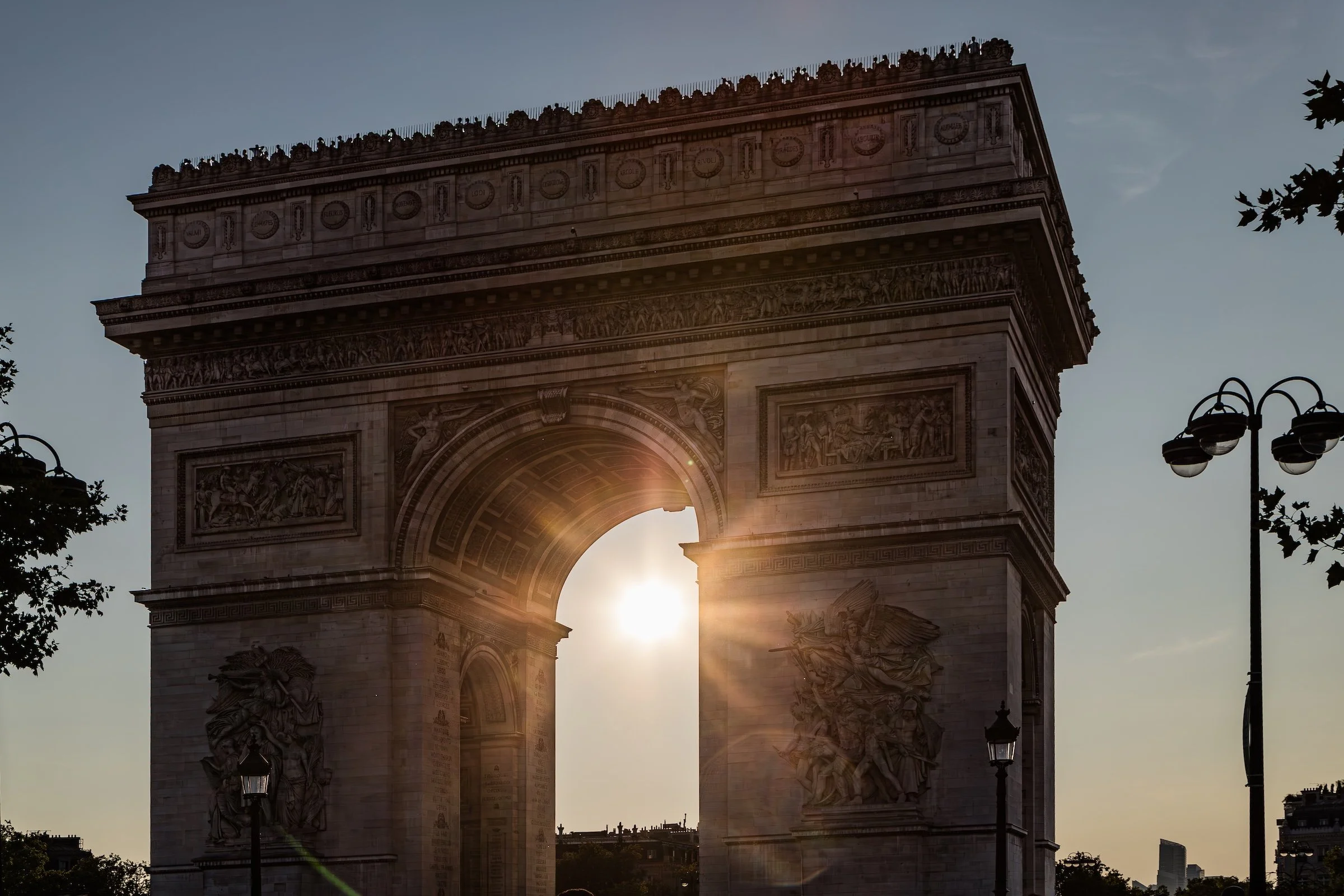
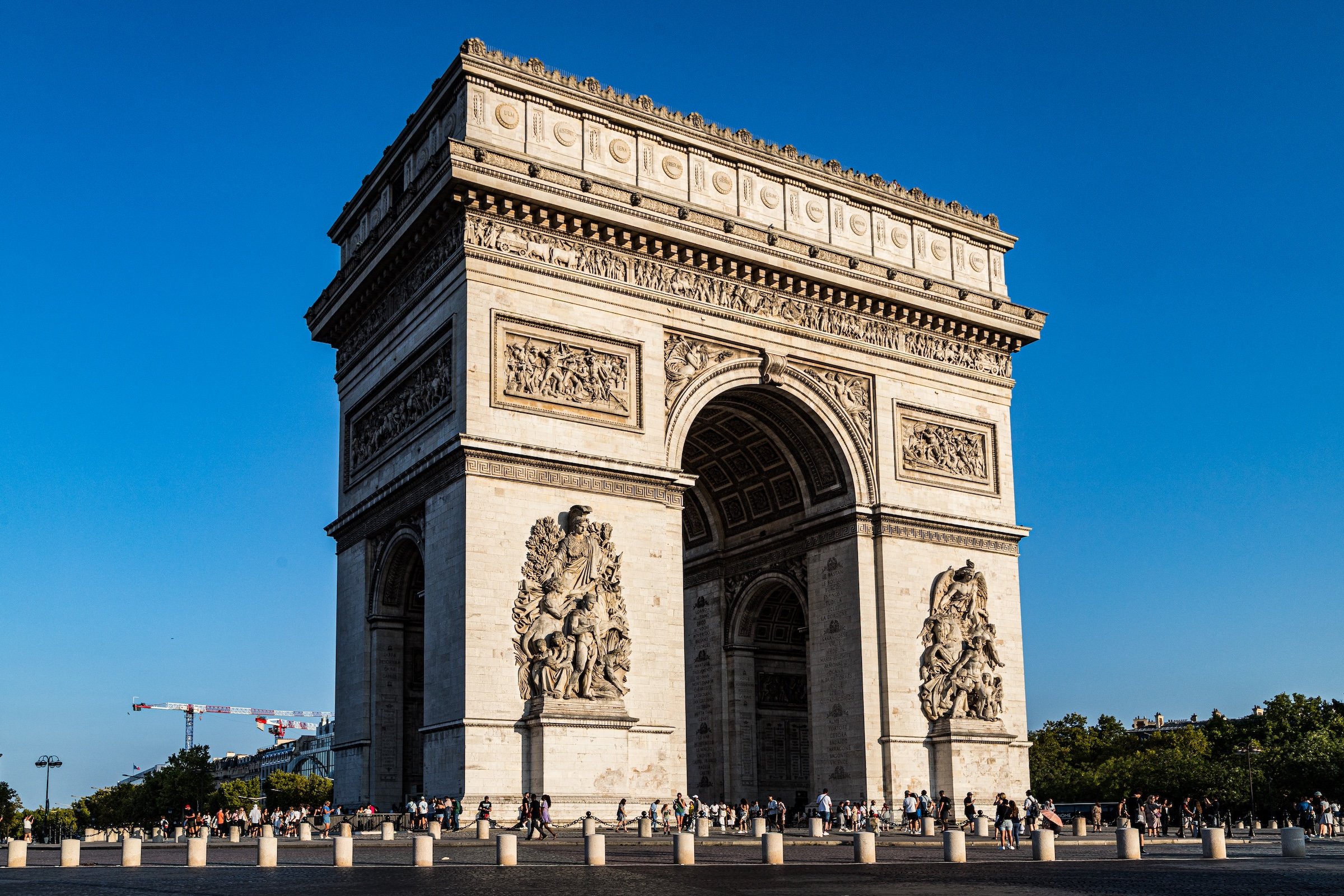
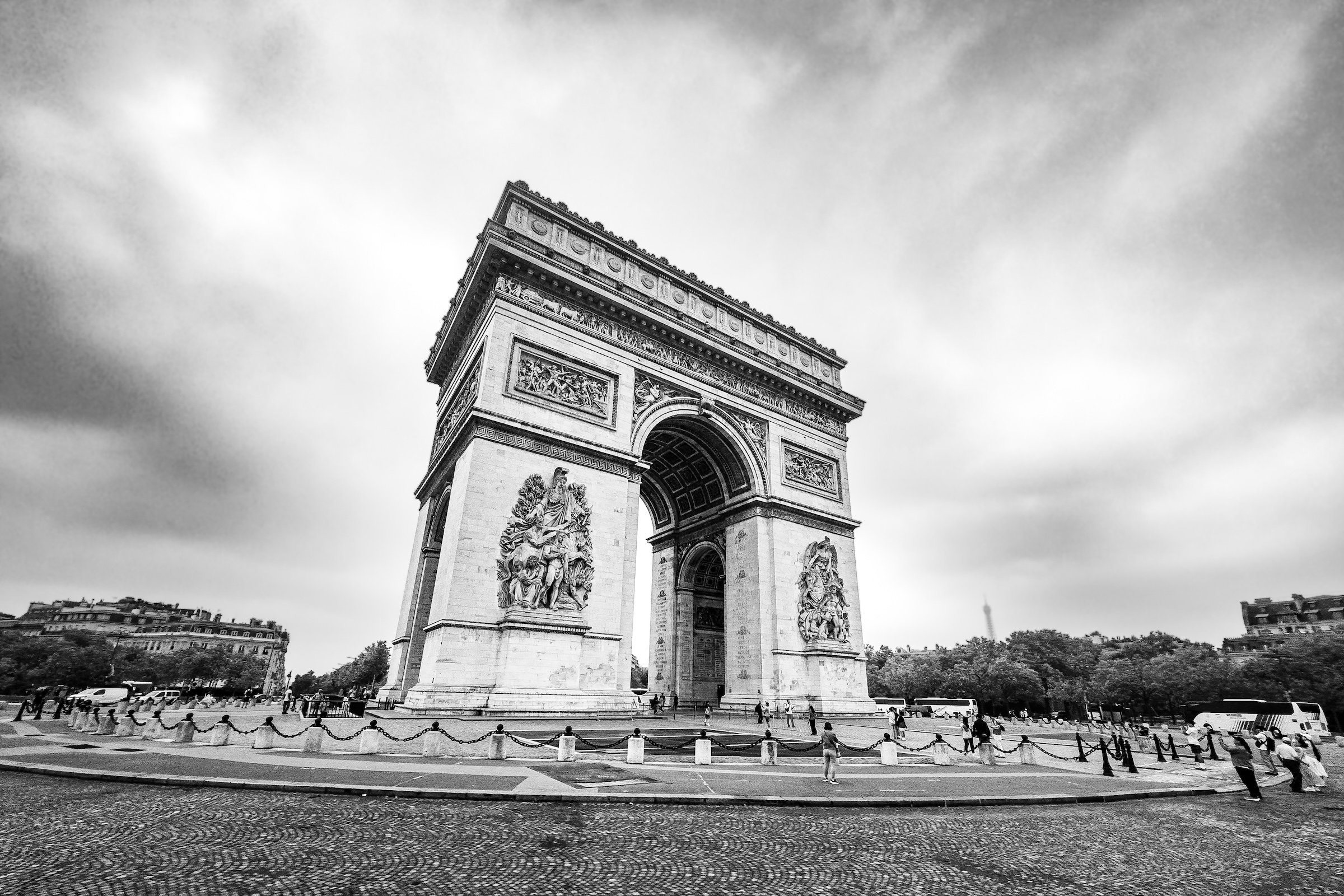
Ternes was encountered only briefly on August 15, but even in passing its visual identity was shaped by the powerful geometry of the Arc de Triomphe and Place Charles de Gaulle. At the quarter’s edge, the city radiates outward in avenues, traffic, stone, sky, and monument. Ternes appears here as part of a grand circular choreography — less as an intimate neighborhood study than as one of the urban fronts that receive and frame the Arc.
Because the visit touched only the quarter’s furthest reach, Ternes remains visually provisional in this record. Its first impression is one of monumentality, motion, and perspective: façades glimpsed from the orbit of the Arc, streets defined by approach and departure, and the sense of a district whose deeper character lies beyond the immediate spectacle. Its visual identity, for now, is that of a threshold — a place seen in the shadow of an icon, marked for future return and fuller exploration.
-
Ternes, in this encounter, appears as part of the monumental machinery of western Paris. Its visual identity is tied to Place Charles de Gaulle, where avenues, traffic, façades, and the Arc de Triomphe converge into a single theatrical urban system. The quarter’s deeper residential and commercial patterns remain beyond the frame, waiting for a slower future walk.
As photographed from the bus, Ternes becomes an edge condition: the city experienced through rotation and perspective. Its visual presence is not intimate, but powerful. It belongs to the circumference of the Arc, to the sense of Paris radiating outward from a central monument, and to the promise that the streets beyond the circle contain a fuller district still to be explored.
Through The Lens
-
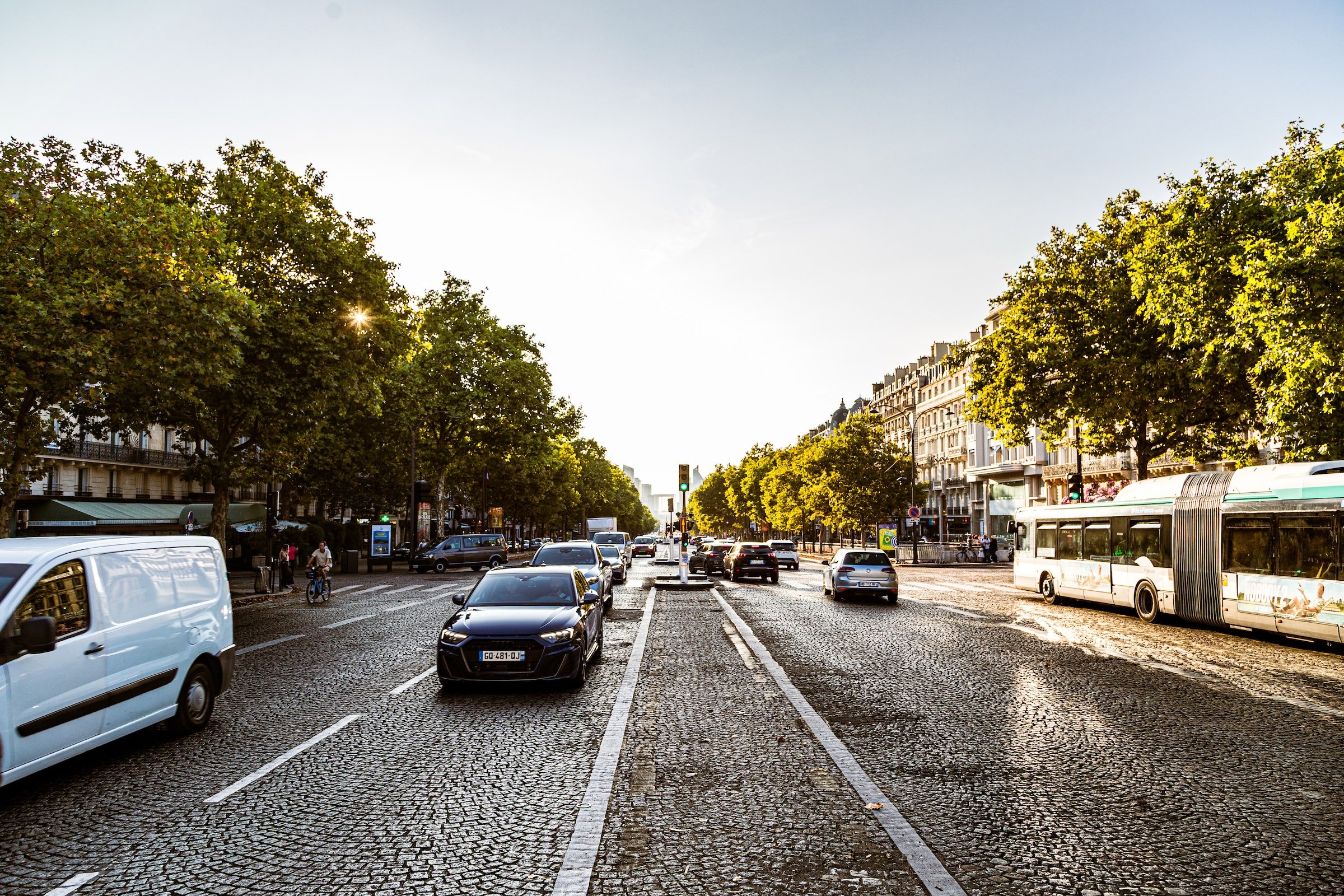
Through the lens, Ternes appears as an edge condition: Paris experienced from the orbit of the Arc de Triomphe. The photographs are not yet about the district’s interior character; they are about its relationship to one of the city’s most commanding visual anchors.
That limitation is also useful. The images preserve Ternes as first impression rather than completed study — a district glimpsed through monument, traffic, light, and anticipation. It remains visually unfinished in the best sense: marked for return.
-
The Ternes images are shaped almost entirely by the Arc’s gravitational pull. The photographs catch the monument from the motion of the roundabout, emphasizing angle, repetition, and the sensation of circling. Through the lens, Ternes is not yet a neighborhood study, but a record of visual orbit — Paris seen while rotating around one of its most commanding anchors.
If you visit Paris, these ideas can help inspire your own photography.

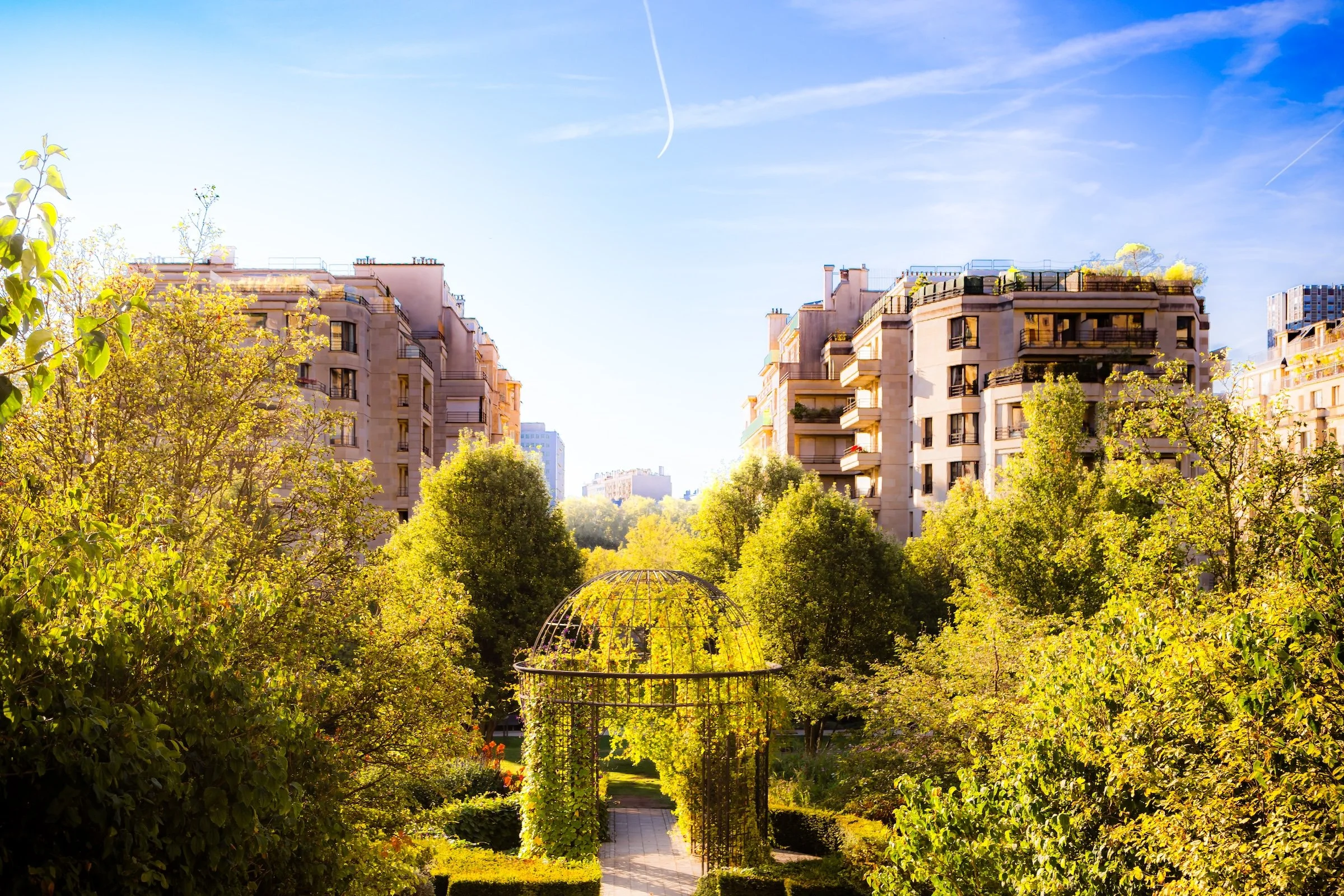
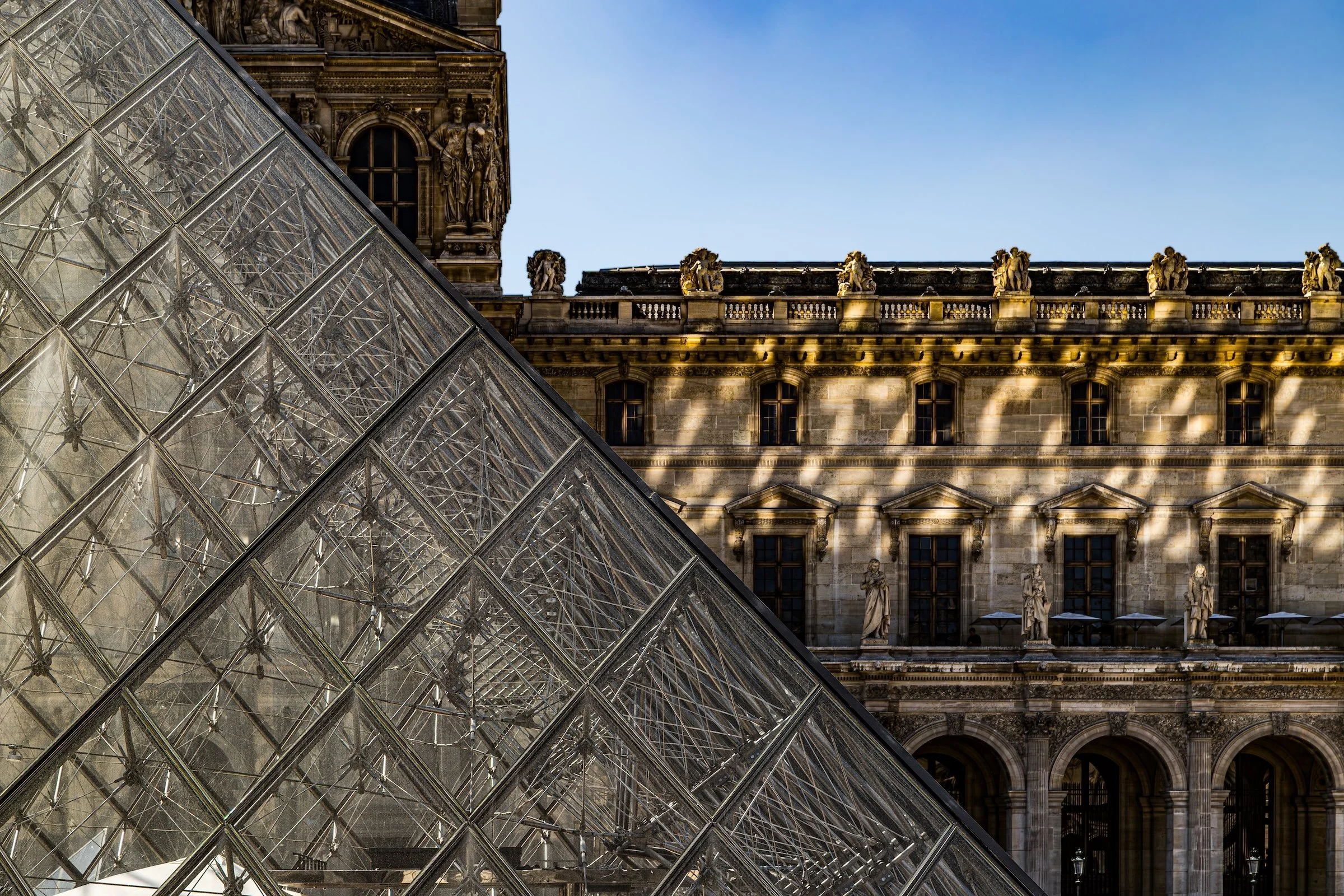
Ternes: August 15, 2025
Ternes Photo Gallery
Ternes Flâneur Notes
-
19:42–19:55
Conditions: 32°C / 89°F | Humidity: 35%.
Ternes appeared only briefly, at the edge of the Arc de Triomphe, but even that brief contact carried visual force. The walk around the monument touched the district in passing, not as a full exploration but as part of the circular geography of Place Charles de Gaulle. In that setting, Ternes was less a neighborhood encountered in depth than one of the great urban thresholds radiating from the Arc.
The limited passage made one thing clear: this is a district to return to. Its first impression was shaped by monumentality, traffic, late-day light, and the drama of the Arc seen from shifting angles. Even a few steps were enough to suggest that Ternes deserves a slower future walk, away from the gravitational center of the monument and into its own streets.
Other neighborhoods visited:
-
09:33-10:21 AM
Conditions: 22°C (72°F) | Humidity: 71%.
Ternes was encountered through the circular motion around the Arc de Triomphe, where the bus entered the orbit of Place Charles de Gaulle. The district appeared not through its interior streets, but through its role in the great radial system surrounding the monument. This was a passing encounter with Ternes as edge, threshold, and viewing position.
Other neighborhoods visited:
Flâneur Notes document the walks, photographs, light, and street-level observations behind this neighborhood entry. Learn more about the Spirit of the Flâneur.
Explore Paris
-

The twenty arrondissements form the civic spiral of Paris, organizing the city into its broad local districts of government, identity, and daily life.
-

Each arrondissement is divided into four official administrative quarters, giving Paris a more precise civic and geographic framework.
-

The conseils de quartier bring participation to street level, giving residents a voice in neighborhood needs, public space, and local civic life.
-

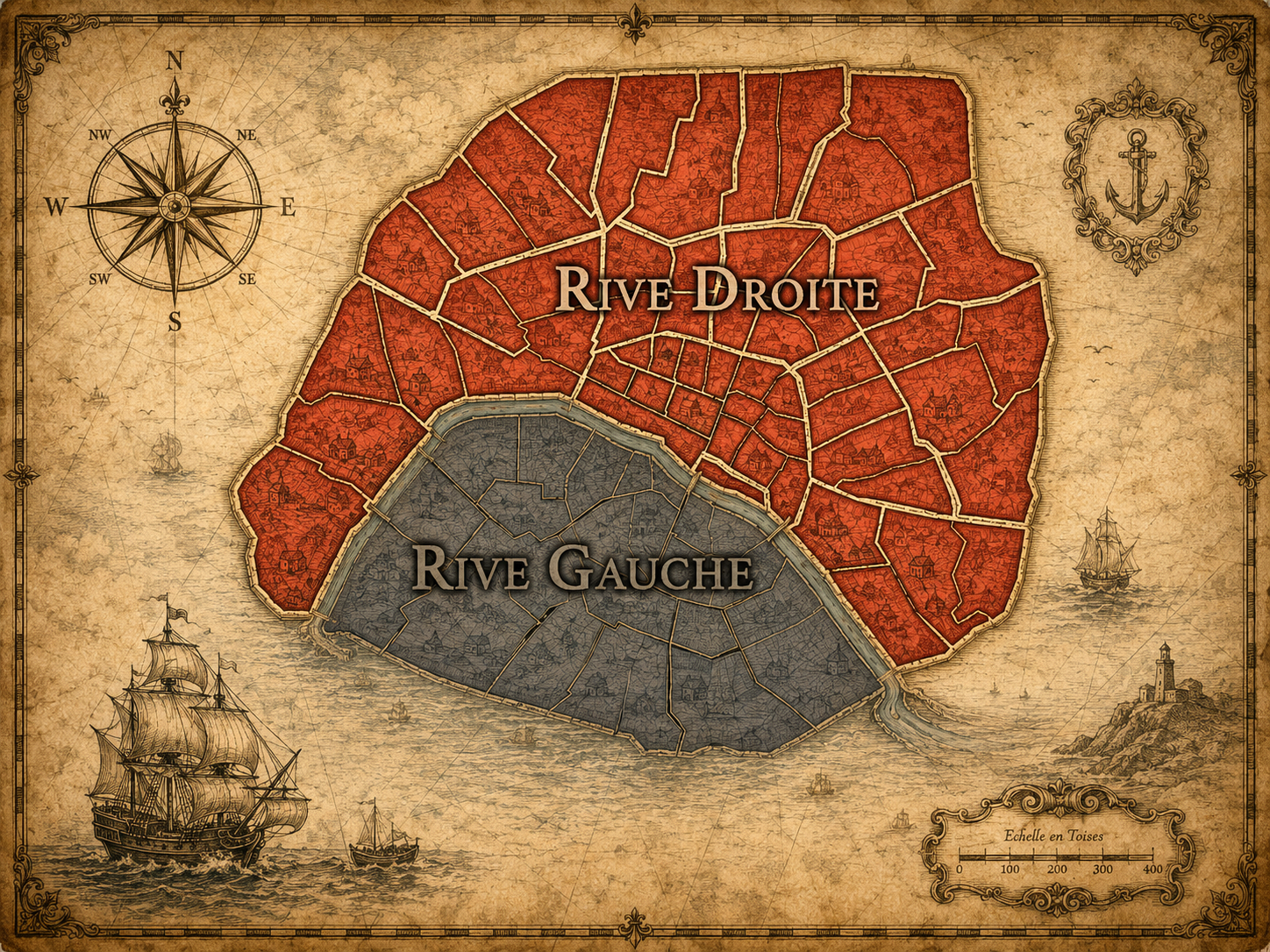
Les Deux Rives trace Paris through the Seine’s two banks, revealing how the Rive Droite and Rive Gauche shaped the city’s civic power, commerce, learning, art, and cultural identity.
-

Cultural neighborhoods reveal the Paris people recognize through history, cafés, architecture, memory, atmosphere, and local belonging.