
6e - MONNAIE
Quartiers Administratifs
Welcome to the Monnaie neighborhood page! Monnaie is a quartier administratif — the 21st administrative quarter — one of 80 such districts across Paris. As a quartier administratif of the 6e Arrondissement - Luxembourg, Monnaie belongs to a formal layer of Parisian geography and is located along the Seine between the Pont Neuf, the Institut de France, and the old riverfront streets of the Left Bank. Monnaie carries one of Paris’s most historic connections to booksellers, bridges, academies, and civic memory.
Part of an ongoing project to walk and photograph every neighborhood in Paris, this page explores 6e Monnaie through maps, district identity, history, and photography.
The Map
Geographic Setting
Monnaie Neighborhood Maps
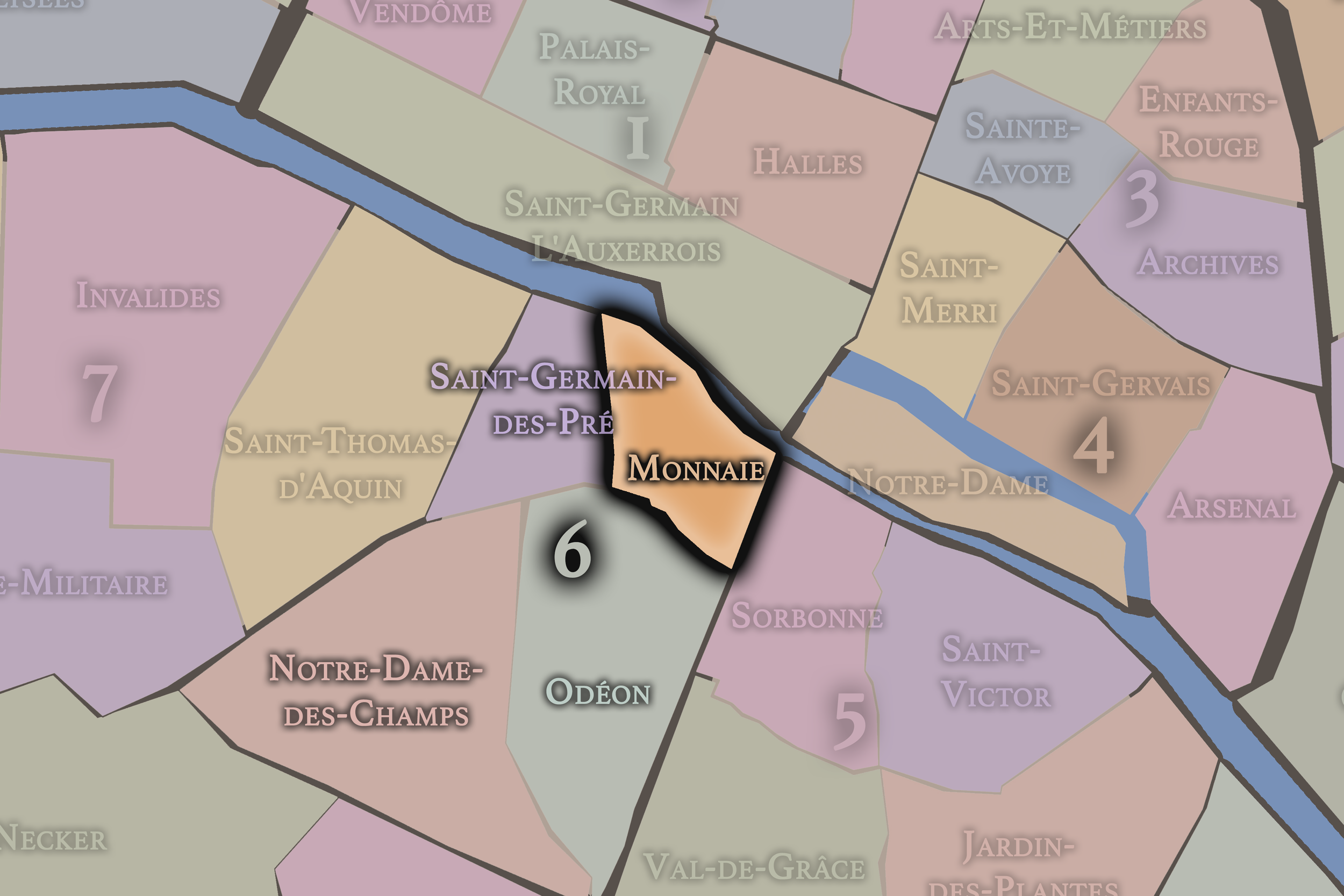
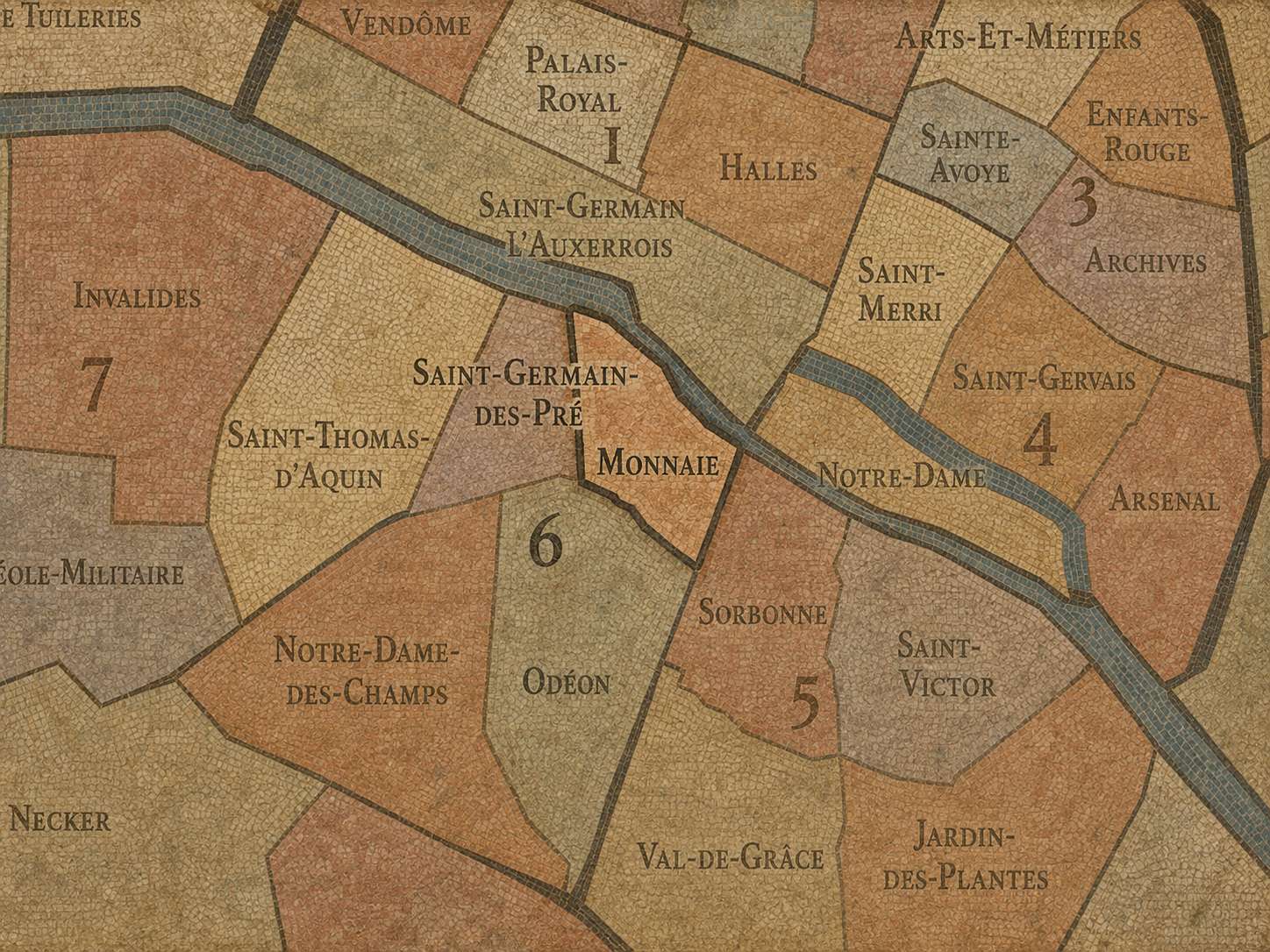
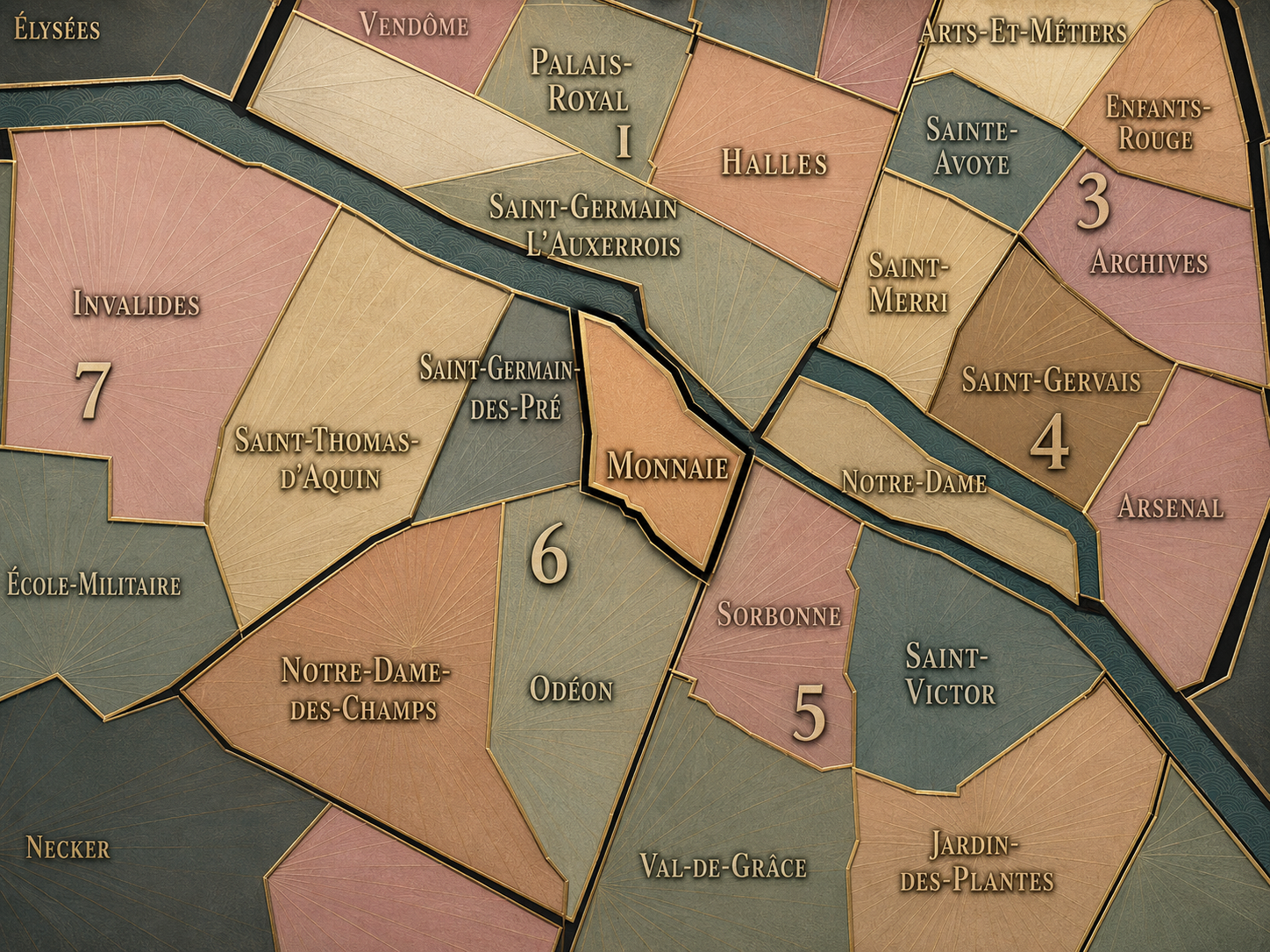
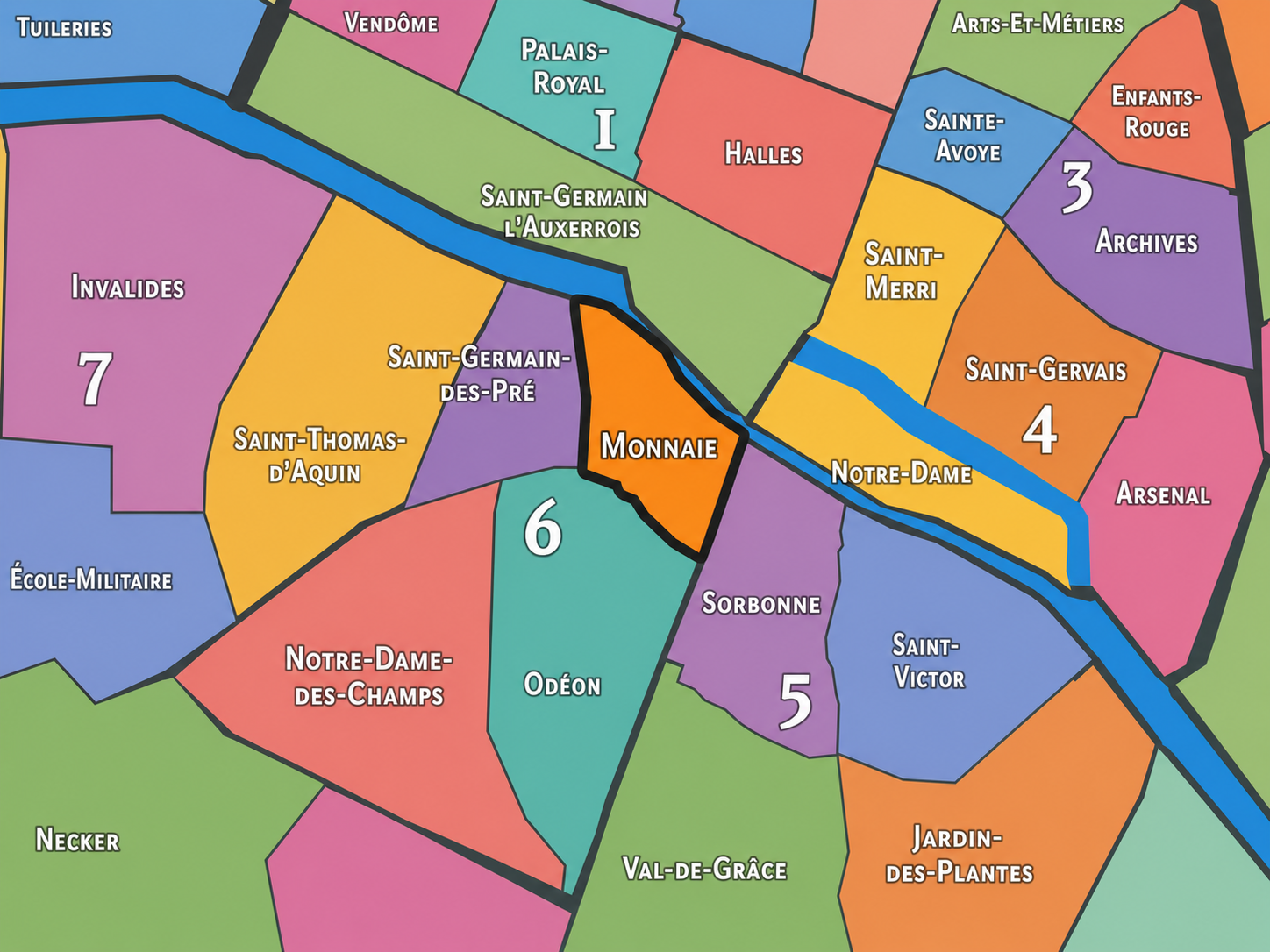
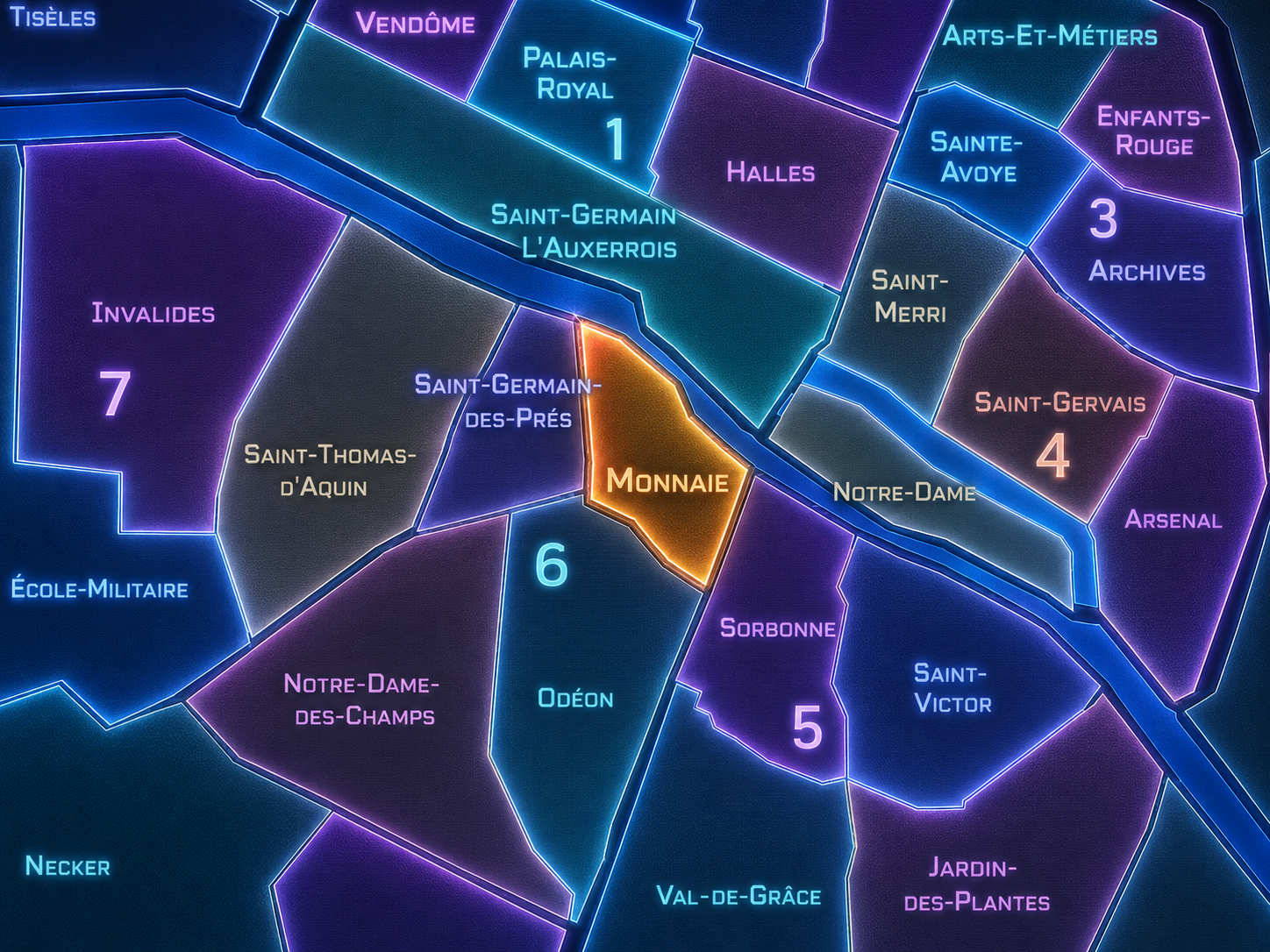
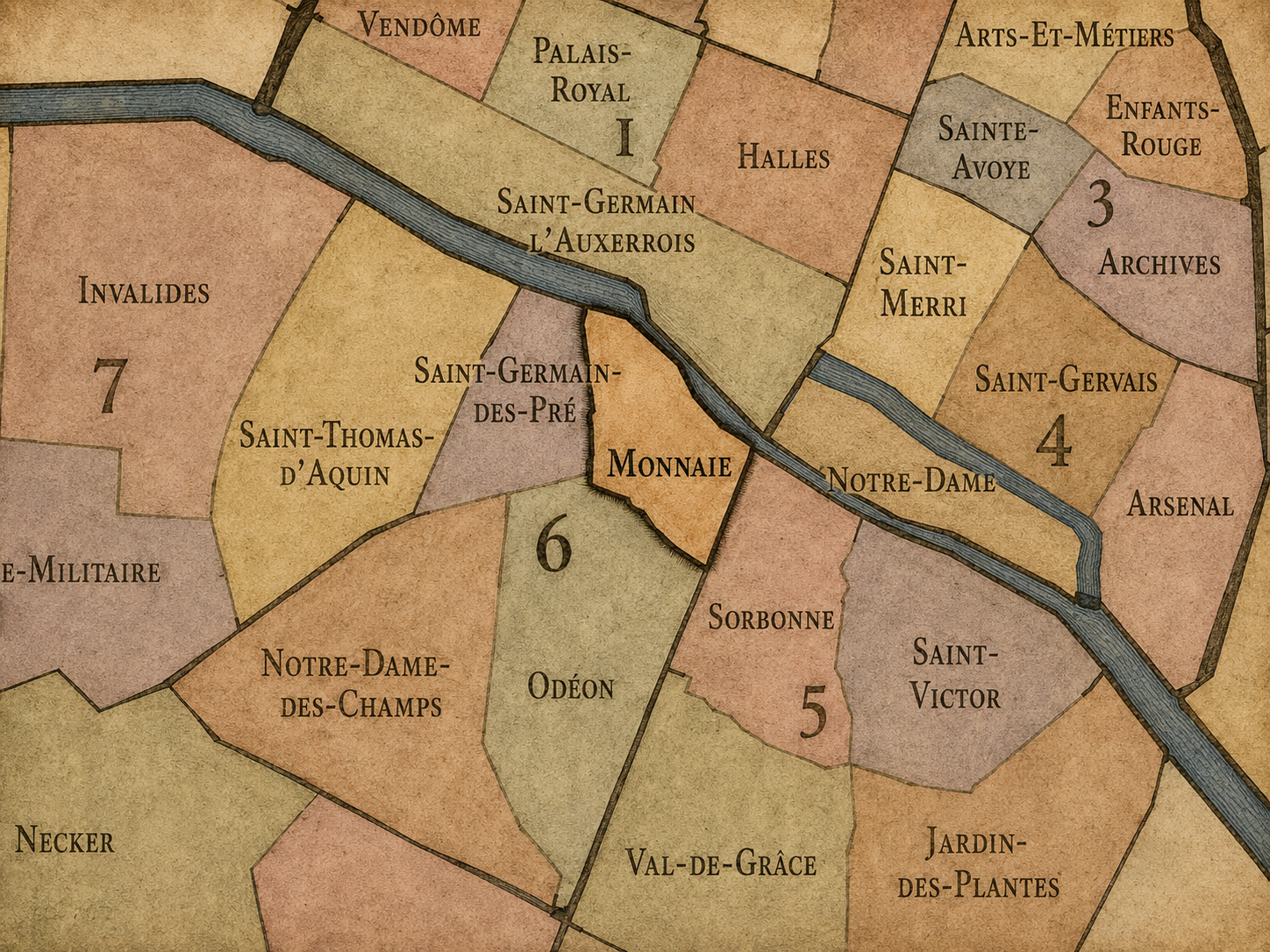
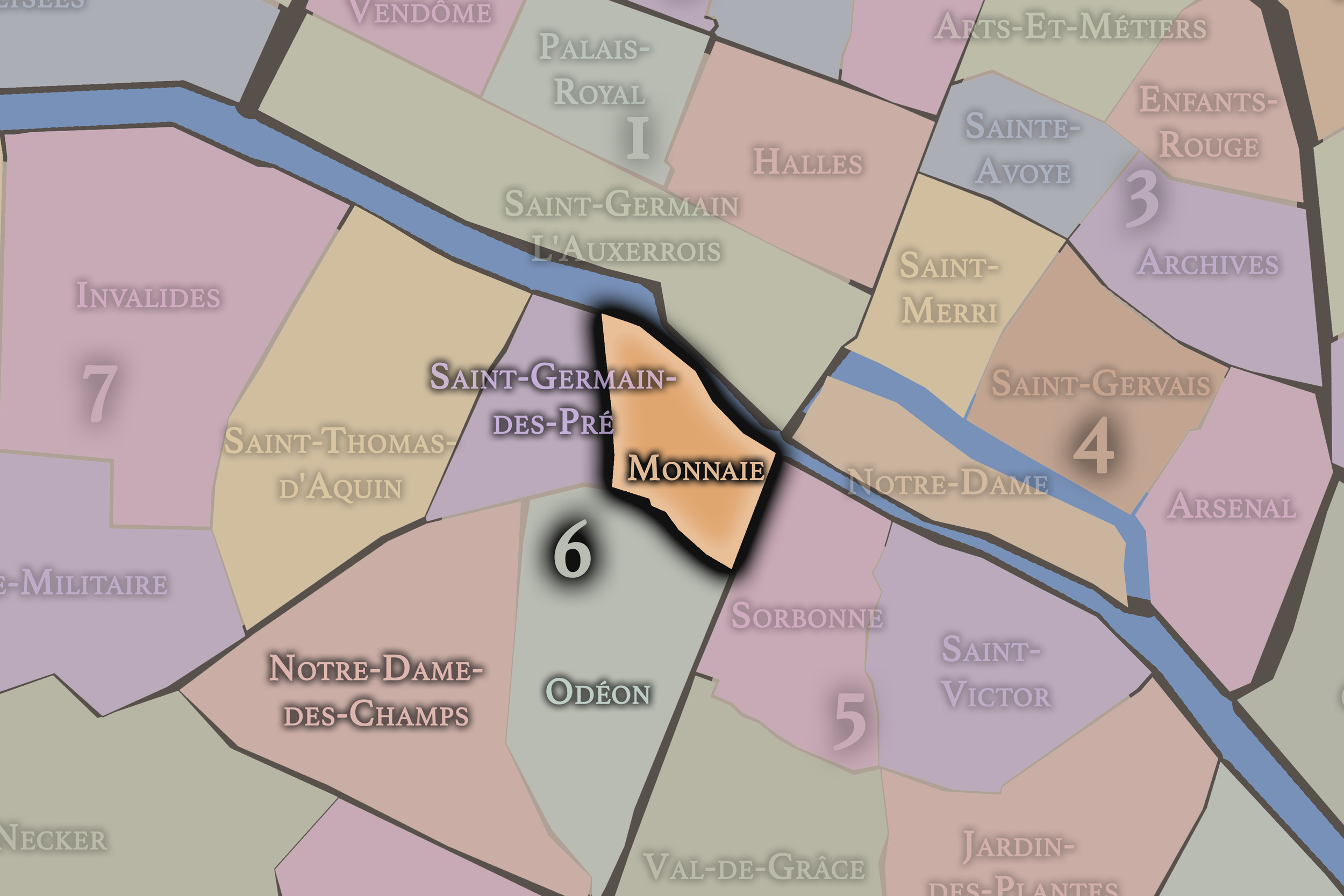
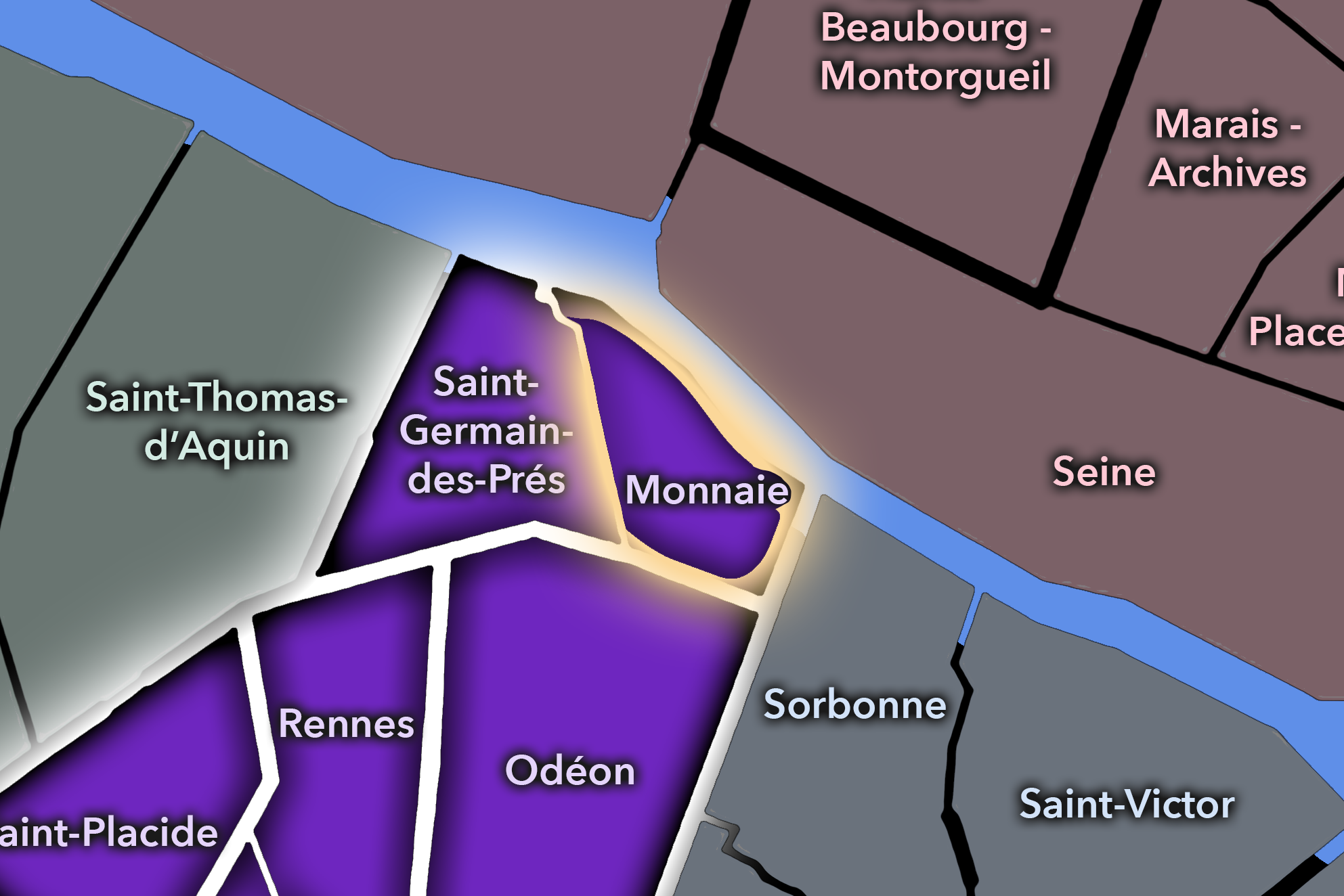
Monnaie occupies the northern riverfront of the 6th arrondissement, where the Left Bank faces the Seine, the Louvre, the Île de la Cité, and the western edge of old Paris. It is one of the most centrally placed quarters of the Left Bank, set between Odéon to the south, Saint-Germain-des-Prés to the west, the river to the north, and the Latin Quarter / Saint-Michel threshold to the east. Its geography is shaped by quays, bridges, institutions, publishers, bookshops, galleries, cafés, and the long cultural corridor between the Pont Neuf and Saint-Germain-des-Prés.
The quarter’s defining landmarks include the Monnaie de Paris, the Institut de France, the Pont des Arts, the Pont Neuf, the Quai de Conti, the Quai des Grands-Augustins, the Rue Dauphine, the Cour du Commerce-Saint-André, the Place Saint-Michel edge, and the streets that lead south toward Odéon and west toward Saint-Germain. This is a quarter of crossing and address: bridges connecting it to the Louvre and the islands, quays opening long views over the Seine, and narrow streets pulling the riverfront into the intellectual and literary life of the Left Bank.
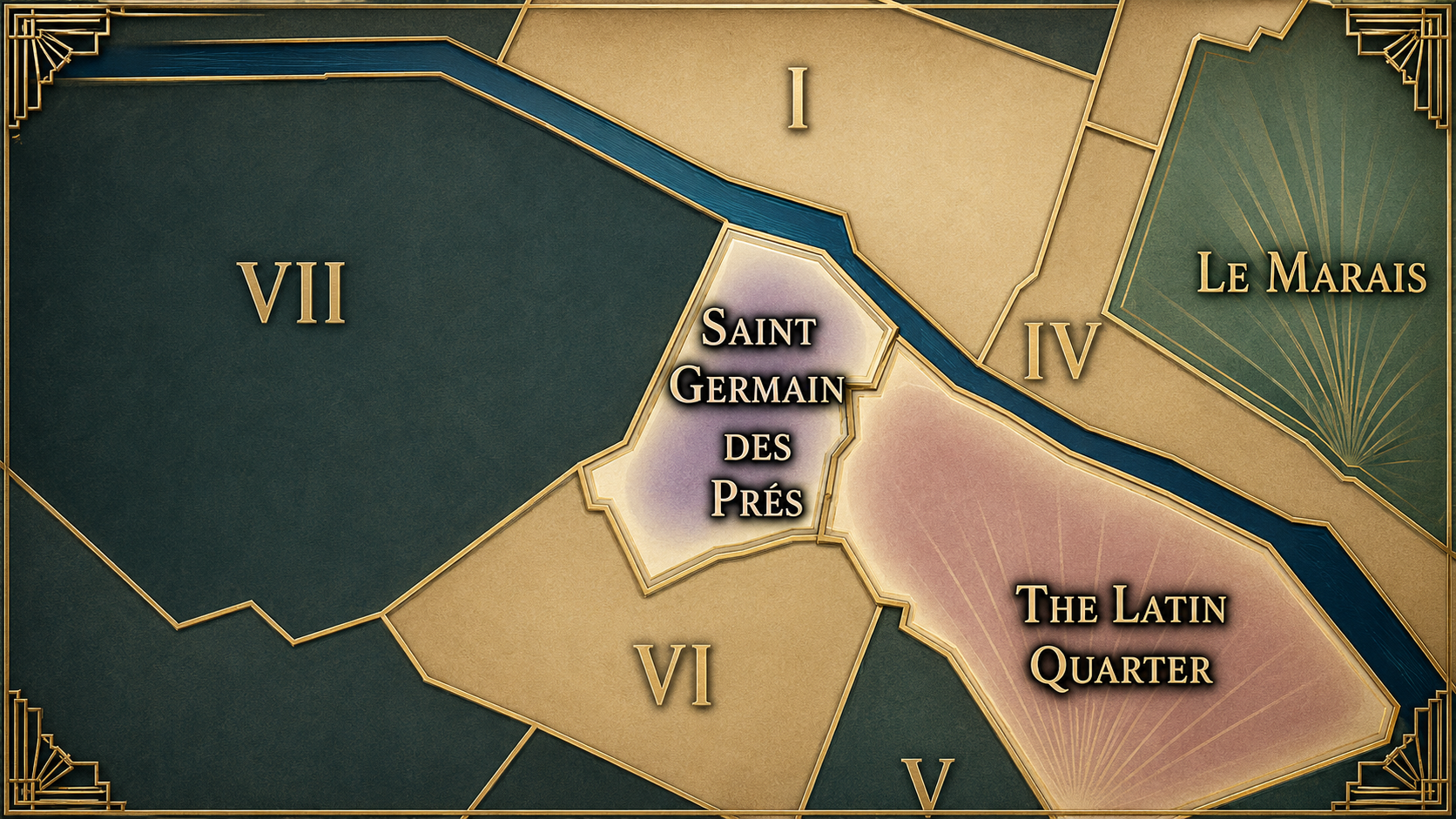
Unlike Odéon, whose identity turns more strongly toward theater, cafés, revolution, and the Luxembourg edge, or Saint-Germain-des-Prés, whose name carries the great literary and artistic mythology of the Left Bank, Monnaie is more river-facing and institutional. It is the Left Bank as frontage — the place where scholarship, coinage, academies, book culture, and river views meet the older heart of Paris.
Administrative Quarter Identity
Etymology and Origins
The name Monnaie comes from the Monnaie de Paris, the historic mint of France, located on the Quai de Conti. “Monnaie” means coinage or currency, and in this quarter the word refers to one of the oldest state institutions in France, responsible for the production of coins, medals, and related forms of monetary and artistic craft. The administrative quarter takes its name from that institution, giving the neighborhood an identity tied to value, metal, sovereignty, and the material expression of the state.
The name is striking because it is both practical and symbolic. A mint is a working institution, but coinage carries authority. It marks legitimacy, exchange, empire, republic, portraiture, national identity, and the circulation of power through everyday objects. In this sense, Monnaie is not simply named for a building. It is named for one of the ways a state makes itself visible and tangible.
The quarter’s name also fits its location. Along the Seine, facing the Louvre and near the Institut de France, Monnaie occupies a landscape where knowledge, authority, art, and value have long been intertwined. The name gives the quarter a metallic precision: it is Paris as mint, measure, inscription, and exchange.
Civic Framework
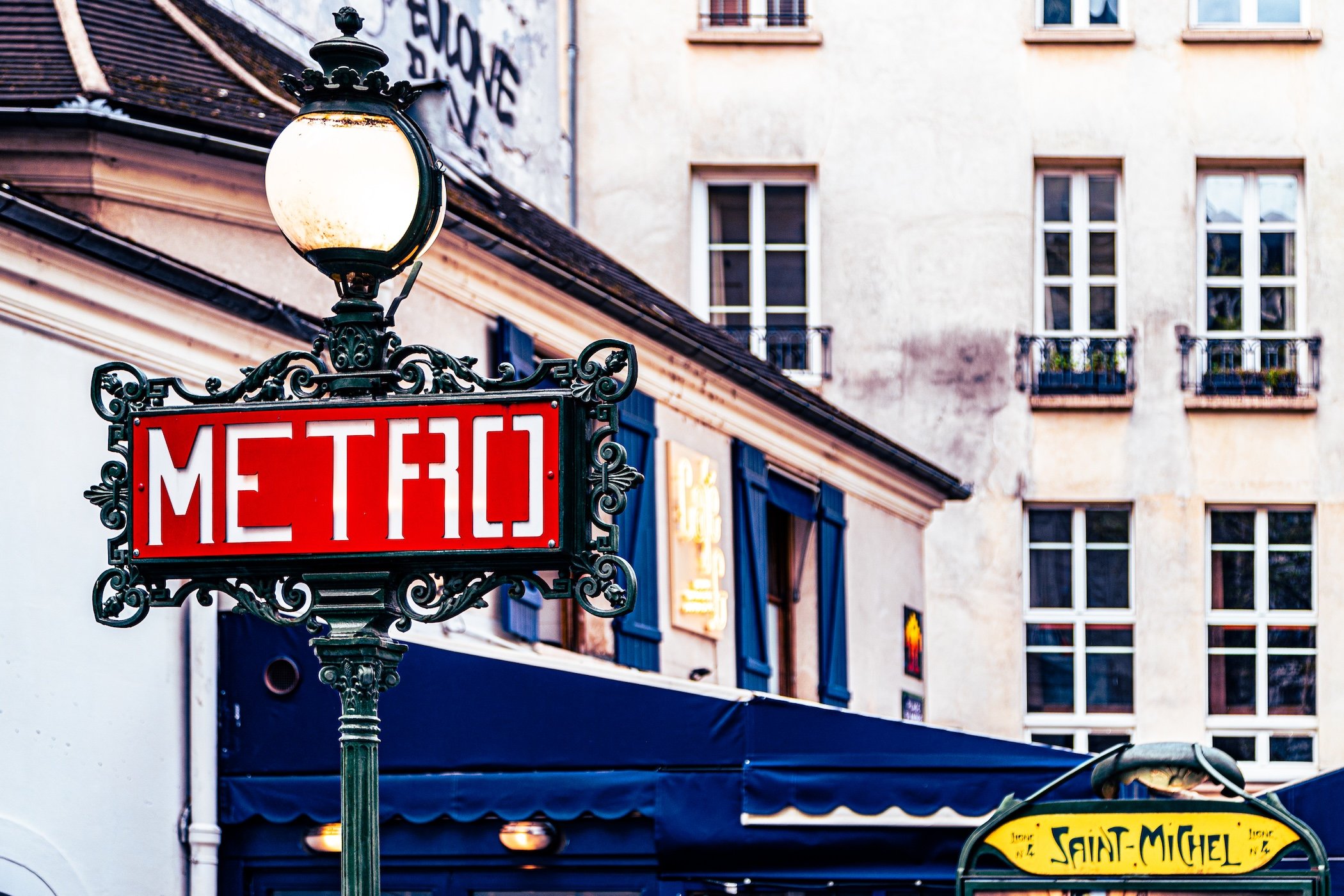
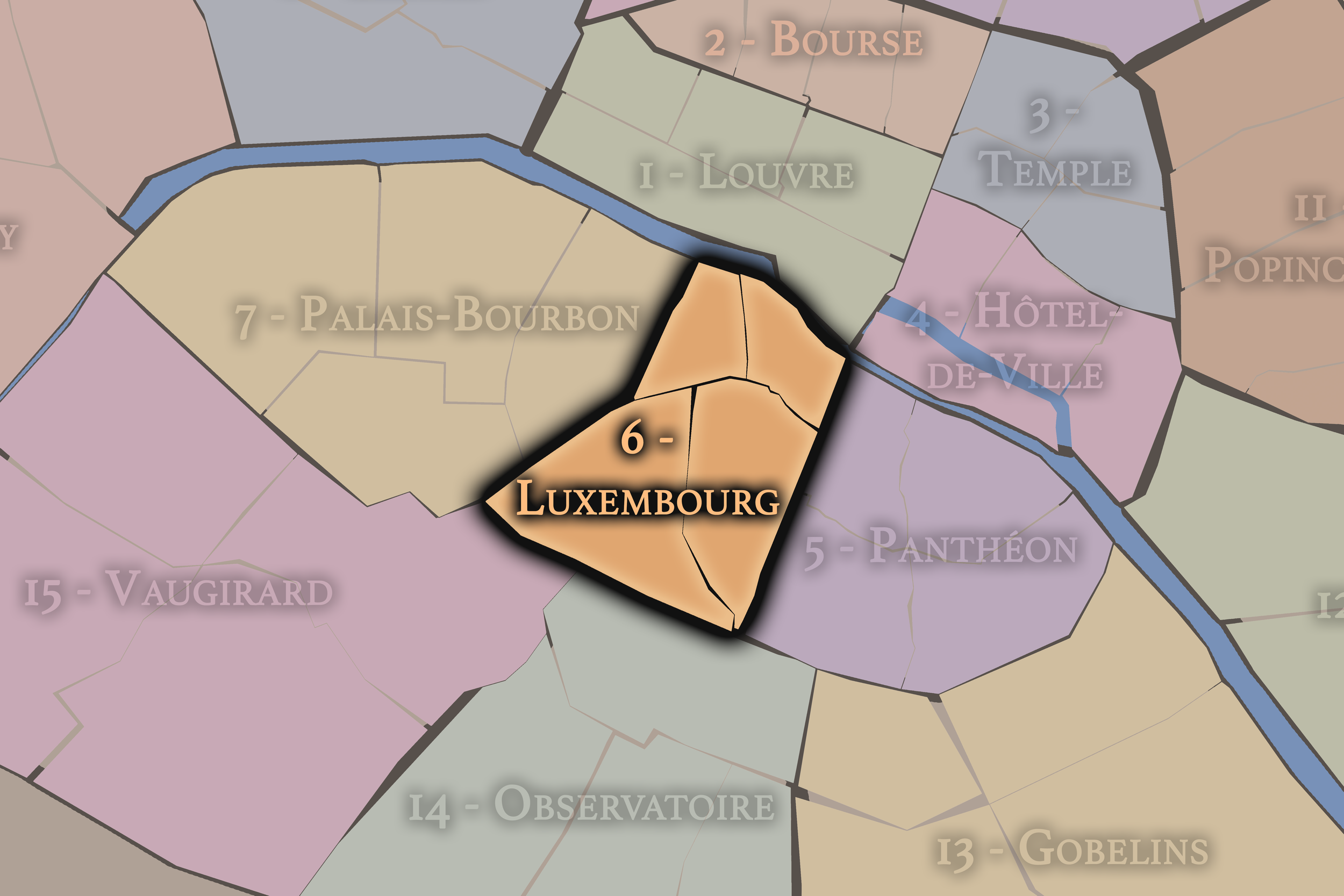
Within the official geography of Paris, Monnaie is one of the four administrative quarters of the 6th arrondissement, alongside Odéon, Notre-Dame-des-Champs, and Saint-Germain-des-Prés. It occupies the arrondissement’s northern and eastern riverfront sector, placing it at the threshold between the Latin Quarter, Saint-Germain, the islands, and the royal / institutional landscapes across the Seine.
As an administrative quarter, Monnaie gives formal shape to an area that could easily be described by several better-known names: Saint-Michel, the Pont Neuf, Quai de Conti, the Institut, the Seine quays, the edge of Saint-Germain, or the eastern Left Bank. The official name gathers this riverfront and institutional landscape into one civic unit, anchored by the Monnaie de Paris but extending beyond it.
Its civic role is especially useful because this part of the 6th arrondissement is a place of overlap. It belongs partly to the intellectual Left Bank, partly to the ceremonial riverfront, partly to the world of academies and institutions, and partly to the old commercial and publishing corridors near Saint-Michel and Odéon. The administrative quarter makes that overlap legible without reducing it to a single cultural shorthand.
Neighborhood Distinction
Monnaie differs from the other quarters of the 6th arrondissement through its riverfront position and its connection to institutions of value, knowledge, and national culture. Saint-Germain-des-Prés is the great cultural and artistic name of the arrondissement, associated with abbey memory, cafés, writers, galleries, jazz, publishing, and postwar intellectual life. Odéon is more theatrical and political, shaped by the Théâtre de l’Odéon, revolutionary-era streets, cafés, and the approach to Luxembourg. Notre-Dame-des-Champs is more residential, school-centered, and southward-facing, with a quieter Left Bank character.
Monnaie is more frontal and civic. It faces the Seine and the monuments across it. It contains the mint, the Institut de France, major bridges, quays, and streets that place the Left Bank in direct conversation with the Louvre, the Île de la Cité, and the Right Bank. Its identity comes not from one village-like center, but from proximity to the river and to institutions that hold symbolic weight.
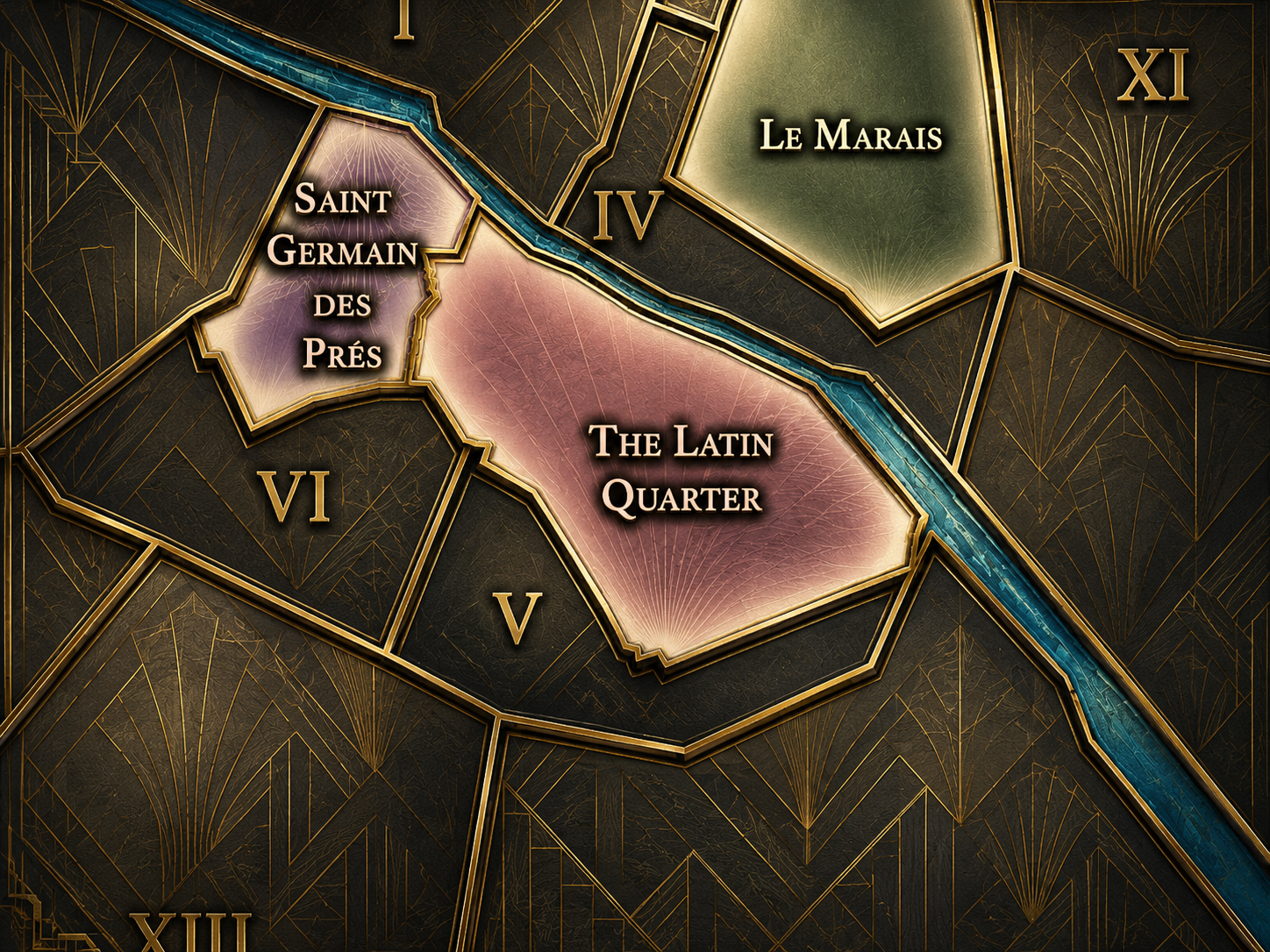
It should also be distinguished from the broader idea of the Latin Quarter. The eastern edge of Monnaie touches the Saint-Michel world, and its streets lead quickly toward the university district, but Monnaie is not primarily scholastic in the Sorbonne sense. It is more mixed: academic, literary, institutional, monetary, artistic, and riverine. It is the Left Bank at the point where intellect meets ceremony.
Parisian Identity
Monnaie expresses Paris as a city of exchange. This exchange is not only financial, though the mint gives that meaning literal form. It is also intellectual, artistic, political, and spatial. Bridges connect the quarter to the Louvre and the islands. Quays connect walkers to the river and to the long memory of the city. Institutions connect craft, scholarship, and national authority. Bookshops, cafés, publishers, galleries, and schools connect the quarter to the cultural life of the Left Bank.
The quarter’s Parisian identity is therefore built from circulation. Coins circulate. Books circulate. Ideas circulate. People cross bridges, walk the quays, enter courtyards, leave lectures, pass from Saint-Michel to Saint-Germain, and move between the old city and the cultivated Left Bank. Monnaie is a quarter of passage, but not empty passage. It is passage through meaning.
This gives the neighborhood a refined but active character. It is not as inwardly literary as Saint-Germain-des-Prés, nor as student-centered as Sorbonne, nor as theatrical as Odéon. It is Paris as contact point: river and academy, mint and museum, bridge and bookshop, institution and street.
Neighborhood Connections
Every neighborhood belongs to a wider Parisian fabric.
-
6e - Luxembourg
-
Monnaie
-
Latin Quarter
-
Saint-Germain-des-Prés
-
Rive Gauche
The History
Origins
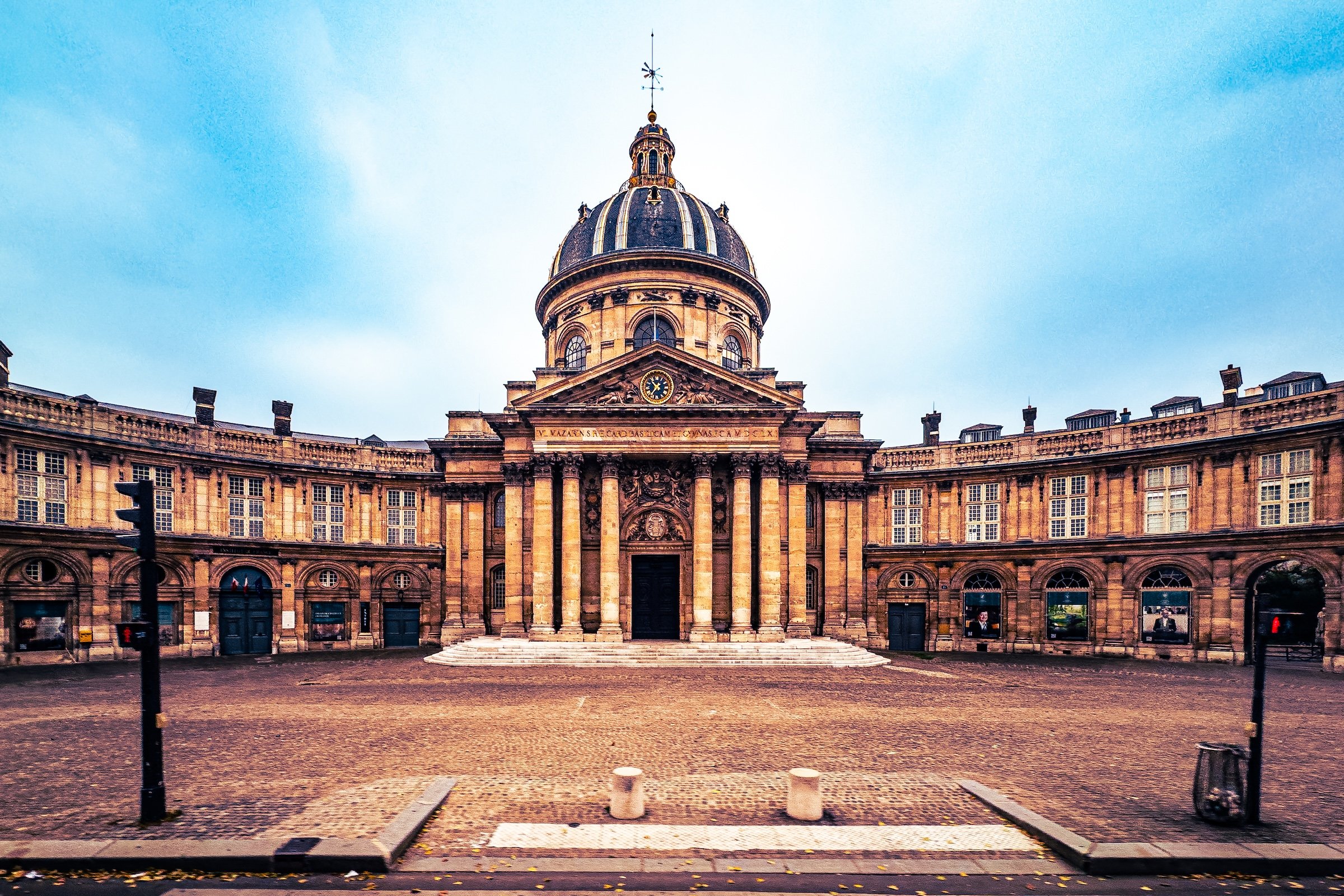
The origins of Monnaie lie in the early development of the Left Bank opposite the royal and civic heart of Paris. Long before the modern administrative quarter existed, the riverfront south of the Seine was tied to bridges, religious institutions, schools, markets, and roads connecting the Latin Quarter to the western Left Bank. The area’s location near the Pont Neuf and the Île de la Cité made it part of the city’s central geography from an early period.
The quarter’s later identity emerged from the gradual concentration of institutions along the Seine. The riverfront was not simply scenic; it was strategic, ceremonial, and connective. It offered access to the royal center, the law courts, the Louvre, and the intellectual Left Bank. This made it a natural setting for institutions that required both prominence and proximity.
Monnaie’s deeper origin story is therefore one of centrality through the river. The quarter grew not from isolation, but from facing. It faced the old city, the royal city, the island city, and the scholarly city all at once. That orientation remains one of its defining traits.
16th–17th Century
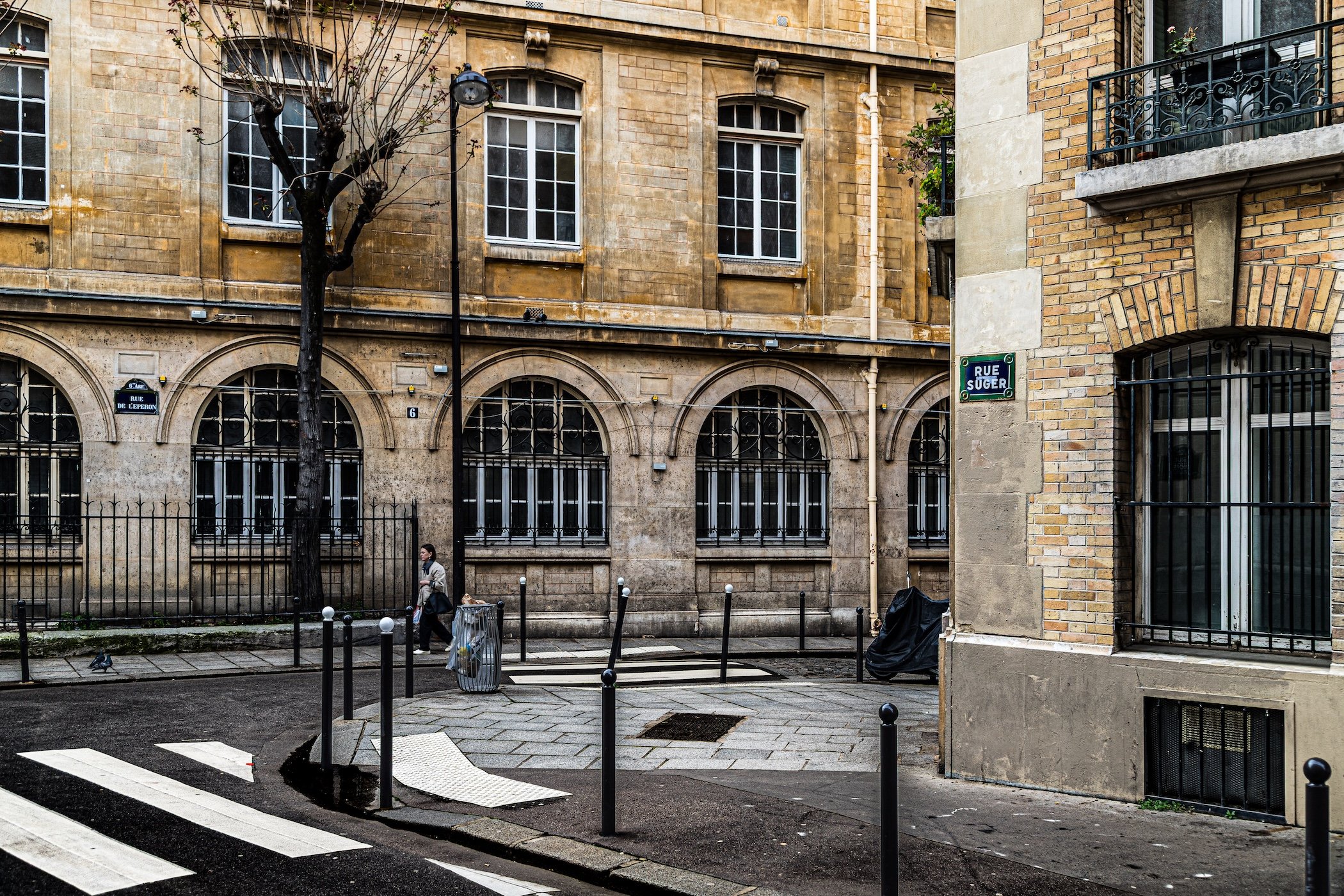
In the 16th and 17th centuries, the future Monnaie quarter became increasingly tied to the consolidation of central Paris around the Seine. The Pont Neuf, completed in the early 17th century, transformed the experience of crossing the river and placed the surrounding Left Bank streets into a more prominent relationship with the Île de la Cité and the Louvre. Unlike earlier bridges crowded with houses, the Pont Neuf opened views and made the bridge itself a civic stage.
The surrounding streets developed as part of a lively Left Bank district of students, printers, booksellers, religious institutions, and residences. Rue Dauphine, laid out in connection with the Pont Neuf and Place Dauphine, strengthened the relationship between the Left Bank and the island center. The quarter became a threshold between the scholarly world to the south and the royal-civic world across the water.
During this period, the area’s future institutional identity was prepared, though not yet fixed by the Monnaie de Paris in its later Quai de Conti form. The riverfront was becoming a place where Paris displayed authority and connection. Monnaie would eventually inherit that role through coinage, academies, bridges, and quays.
18th Century
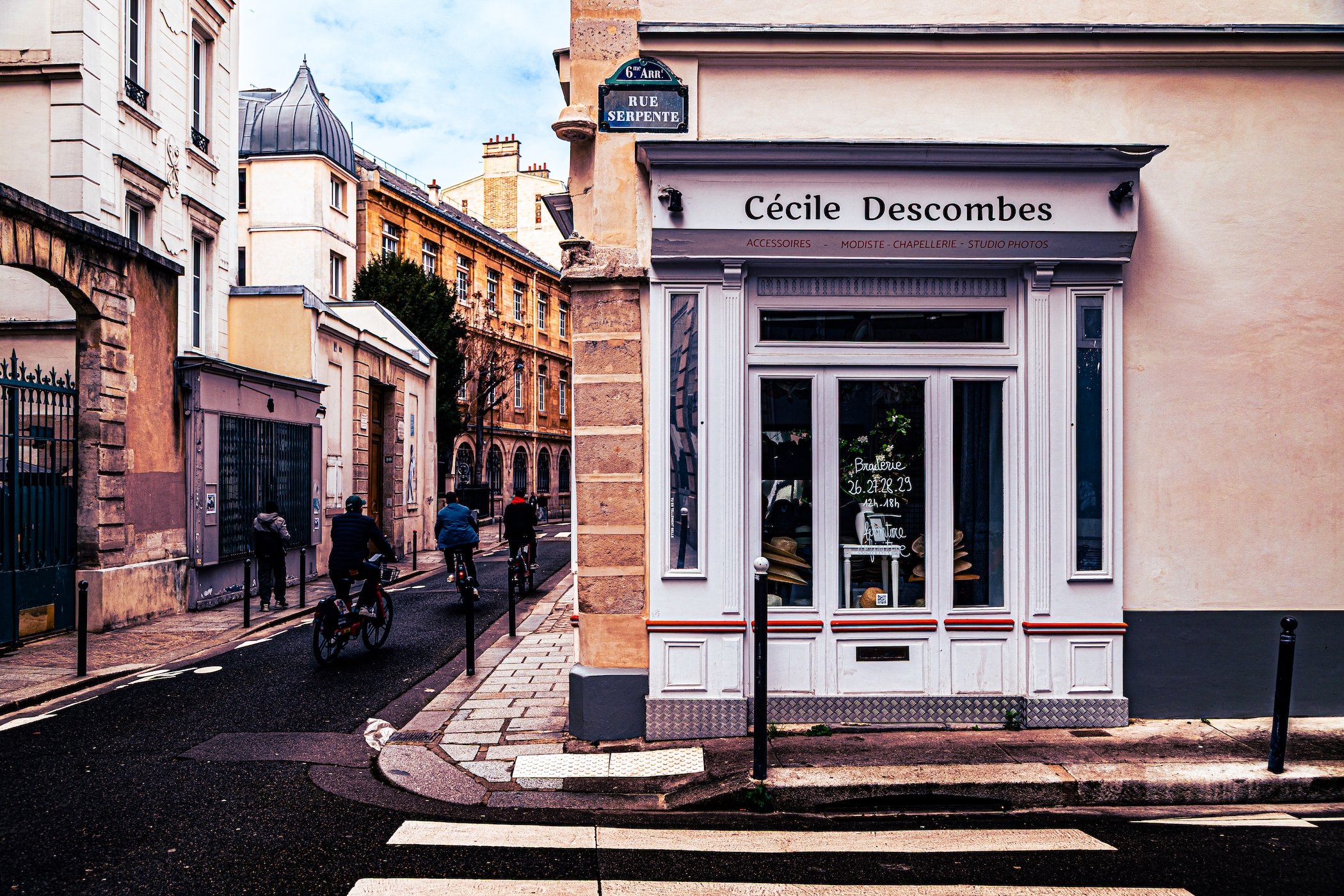
In the 18th century, Monnaie became more fully associated with the institutional and cultural life of the Left Bank riverfront. The construction of the Hôtel de la Monnaie on the Quai de Conti gave the quarter its defining monument and name. The building combined state function, architectural presence, and technical craft, placing the mint in a prominent location facing the Seine.
This was also a century when the Left Bank’s intellectual and publishing life remained highly active. The streets around Saint-Michel, Odéon, and Saint-Germain formed part of a broader world of books, cafés, pamphlets, academies, and public debate. Monnaie stood near the heart of that circulation, close to both institutions of authority and spaces of argument.
The French Revolution gave the quarter’s institutions and streets new meanings. Coinage, state authority, academies, and public space were all transformed by revolutionary politics. The mint’s function became newly charged in a nation redefining sovereignty, citizenship, and public symbols. In Monnaie, the material objects of value and authority were inseparable from the political reinvention of France.
19th Century
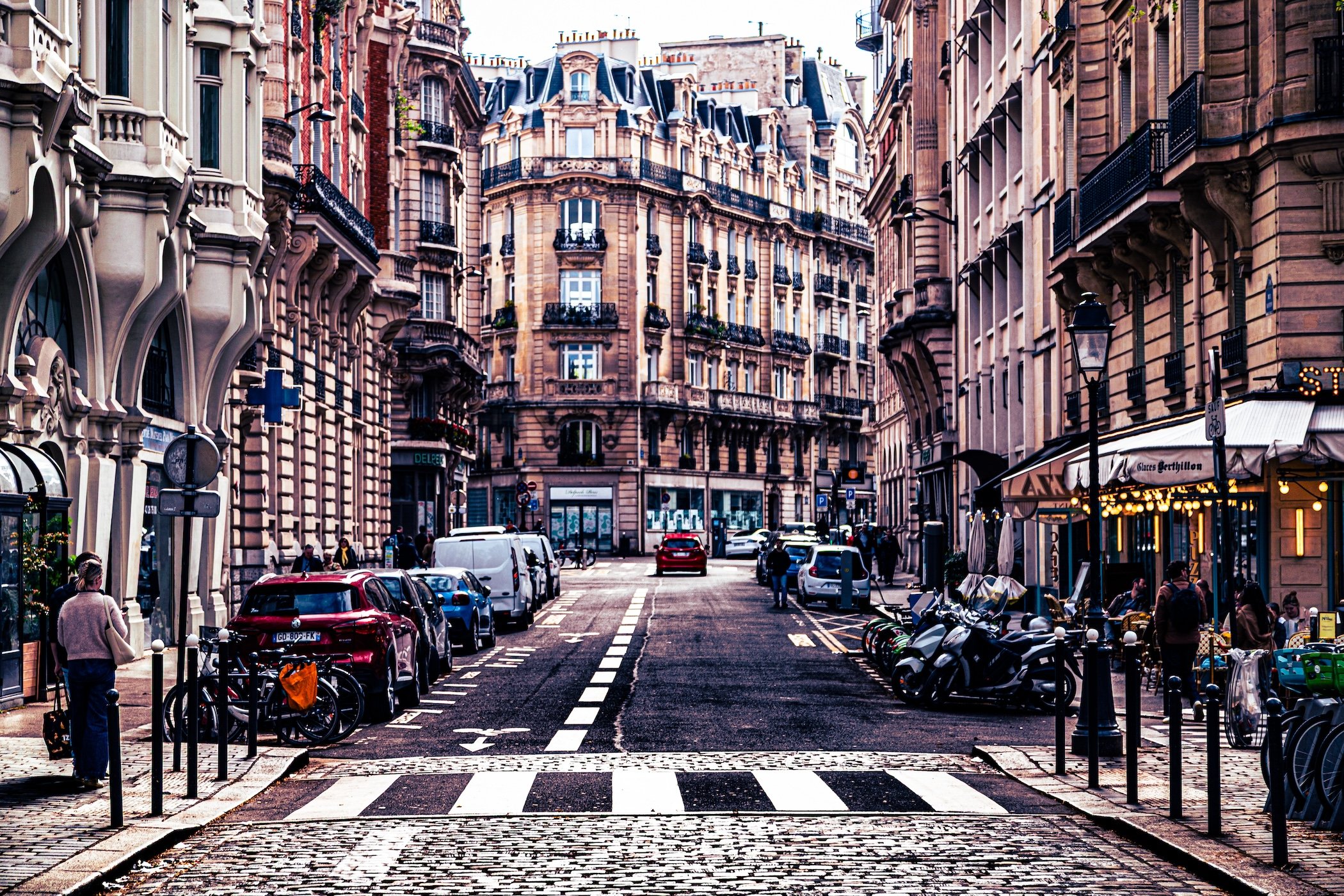
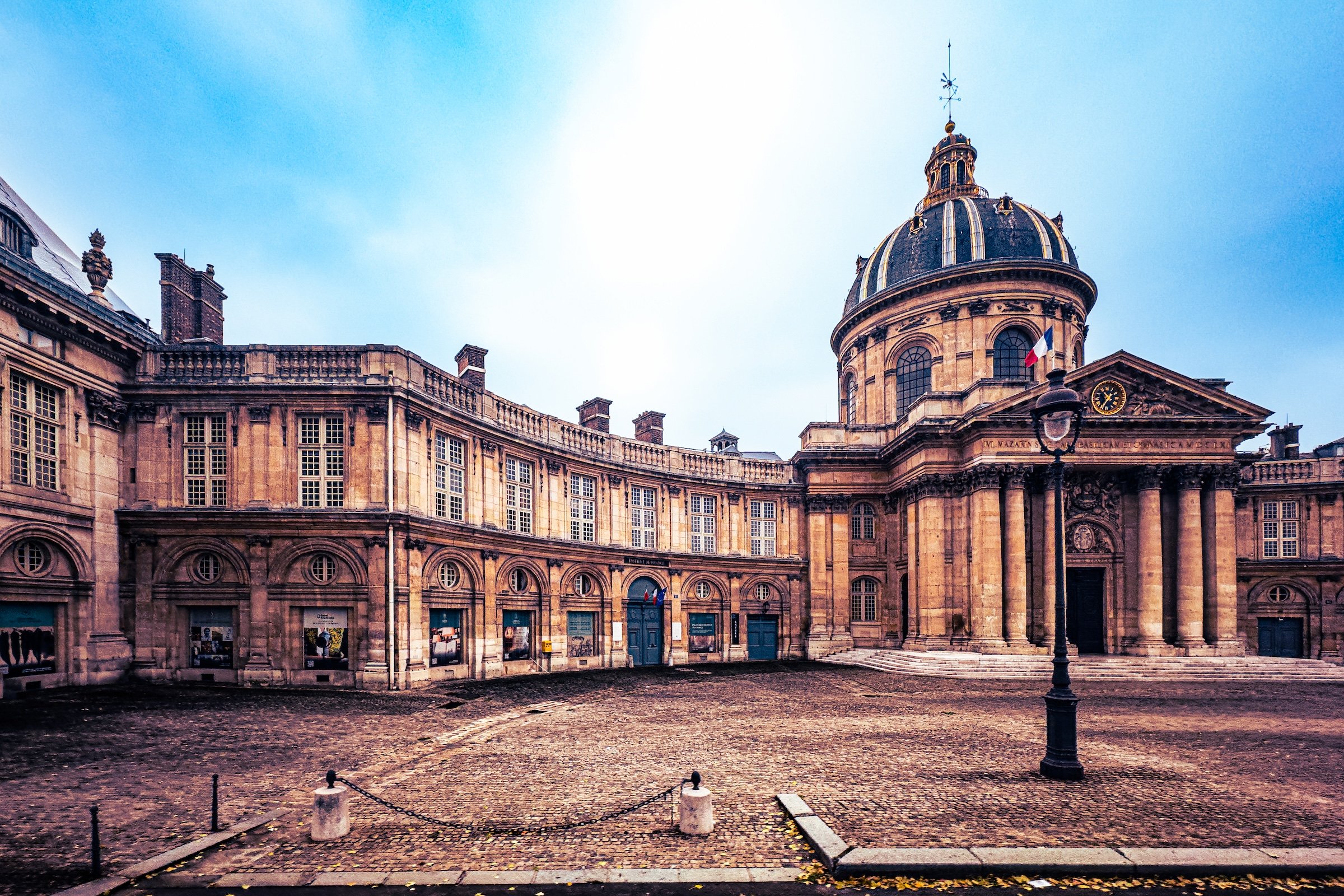
The 19th century deepened Monnaie’s identity as a quarter of institutions, bridges, quays, and literary-cultural exchange. The Institut de France, housed in the former Collège des Quatre-Nations opposite the Louvre, became one of the great intellectual landmarks of the riverfront. Its dome, facing the Seine and the Pont des Arts, gave the quarter a powerful architectural image of knowledge, academy, and national culture.
The Pont des Arts, built in the early 19th century as a pedestrian bridge, strengthened the symbolic link between the Institut and the Louvre. This connection between art, scholarship, and the river is central to Monnaie’s identity. The quarter became one of the places where the Left Bank and Right Bank did not simply face each other, but entered into dialogue.
The surrounding streets also participated in the cultural and political life of the Left Bank. Cafés, publishers, booksellers, schools, and theaters nearby made the district part of the broader intellectual atmosphere of 19th-century Paris. Monnaie did not become the emblem of bohemian literary life in the way Saint-Germain later would, but it provided one of the institutional and geographic foundations for that world.
Early–Mid 20th Century
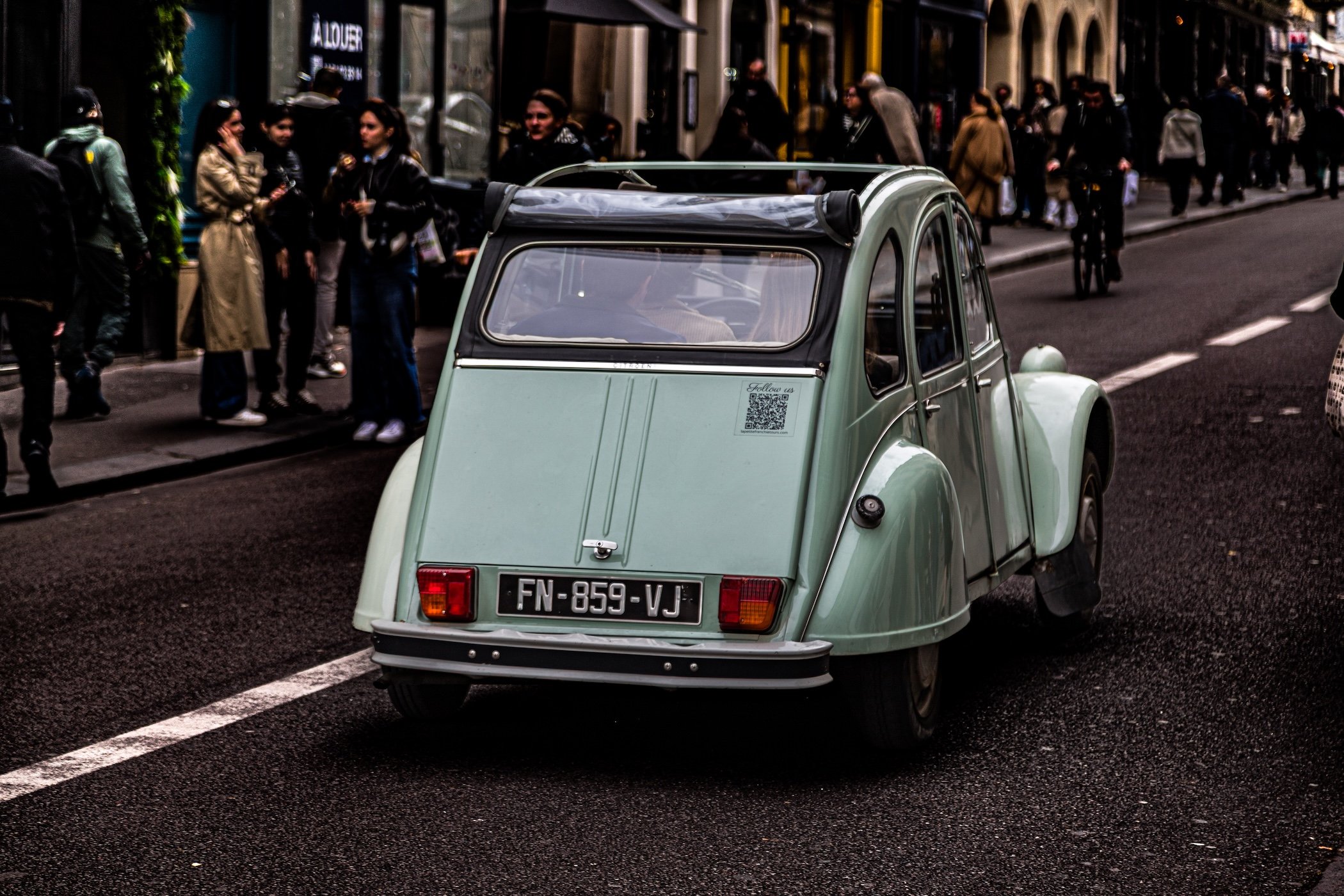
In the early and mid 20th century, Monnaie remained a quarter of riverfront prestige and Left Bank culture. The Monnaie de Paris, the Institut de France, the Pont des Arts, the Pont Neuf, the quays, and the surrounding streets kept the district tied to institutions of national importance and to the daily life of writers, students, publishers, artists, and intellectuals moving through the 6th arrondissement.
The quarter’s proximity to Saint-Germain-des-Prés and Odéon made it part of the broader Left Bank cultural environment, even when its own identity remained more institutional and river-facing. During the years surrounding the Second World War, occupation, liberation, and postwar renewal, the Left Bank became a powerful symbolic landscape of resistance, debate, literature, philosophy, and artistic exchange. Monnaie stood at the edge of that world, linking it to the Seine and the old center of the city.
Its riverfront also gave it a visual continuity through upheaval. Bridges and quays often serve as images of Parisian endurance, and Monnaie’s northern edge carried that role: a place of crossing, reflection, and return.
Late 20th Century
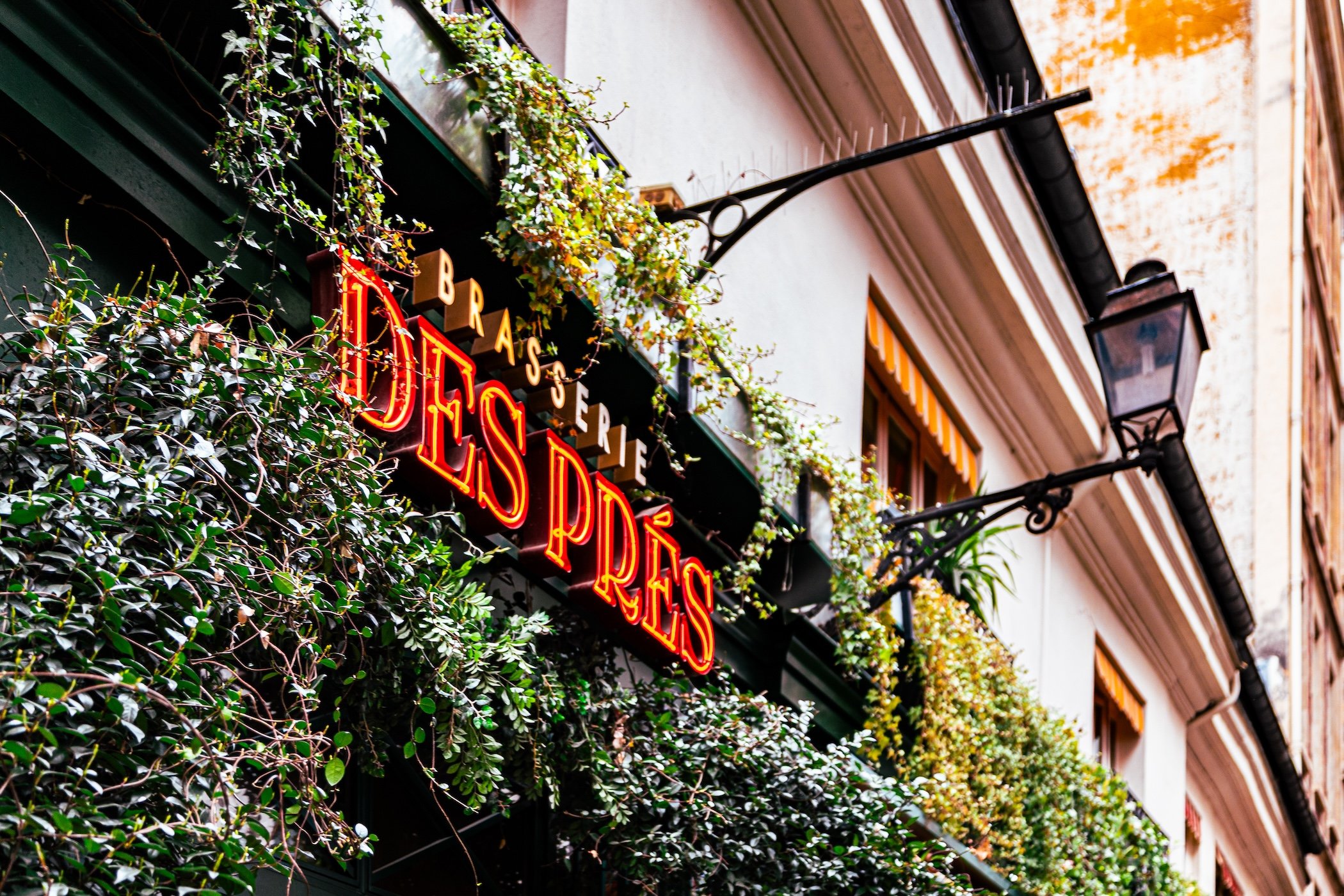
In the late 20th century, Monnaie became increasingly shaped by heritage, culture, tourism, and the continued prestige of the Left Bank. The quarter’s institutions remained active, but the surrounding area also became more strongly associated with galleries, cafés, restaurants, antiquarian booksellers, and the cultivated atmosphere of central Paris. The riverfront grew ever more iconic as a walking and photographic landscape.
The Pont des Arts took on a special cultural identity as a pedestrian space and romantic crossing, while the Pont Neuf and Quai de Conti remained among the most recognizable approaches to the historic center. Monnaie became one of the quarters where Paris’s visual identity — river, bridge, dome, stone, bookstalls, and long views — felt especially concentrated.
At the same time, the quarter faced the transformations common to central Paris: rising costs, changing commerce, tourism pressures, institutional restoration, and the gradual shift from ordinary local use toward heritage and cultural consumption. Its challenge was to remain a living piece of the city while also carrying a heavy symbolic load.
21st Century
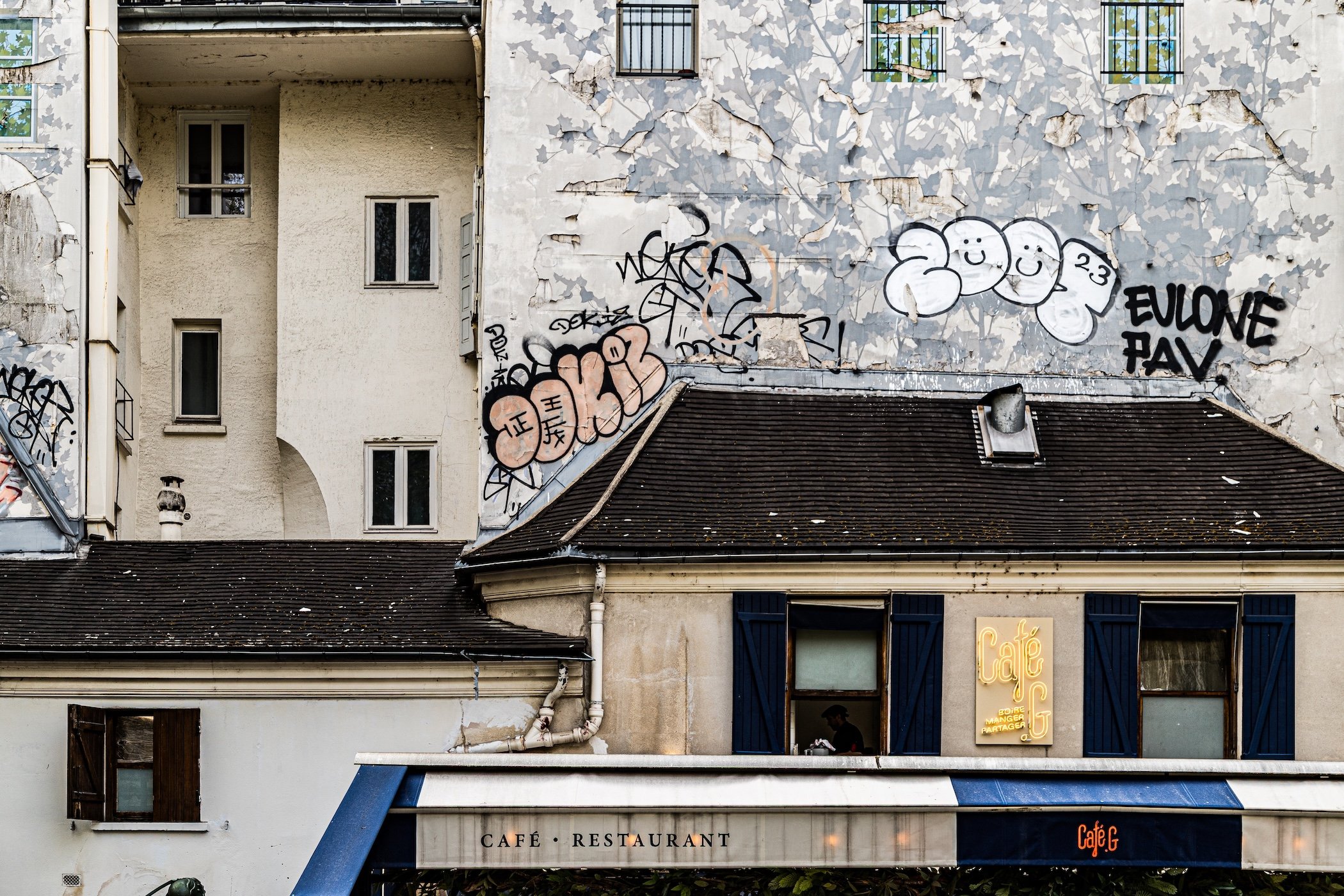
In the 21st century, Monnaie remains one of the most elegant and symbolically dense quarters of the 6th arrondissement. The Monnaie de Paris continues to combine historic function, museum space, craft, exhibitions, and public-facing cultural programming. The Institut de France remains a major intellectual landmark. The Pont des Arts, Pont Neuf, quays, bookstalls, galleries, cafés, and streets toward Saint-Germain and Odéon continue to draw walkers, readers, students, photographers, and visitors.
Today, the quarter’s identity lies in its balance between institution and atmosphere. It is official but not cold, cultural but not purely touristic, central but still walkable at a human scale. Its streets hold some of the Left Bank’s most refined transitions: from river to bookshop, bridge to courtyard, academy to café, mint to museum, monument to conversation.
For CityNeighborhoods: Paris, Monnaie is essential because it reveals a different form of neighborhood identity. It is not a village absorbed into the city, not a market district, not a purely residential quarter, and not a single monumental site. It is a network of symbolic exchanges arranged along the river — one of the places where Paris turns value, knowledge, and beauty into urban form.
Spirit and Legacy
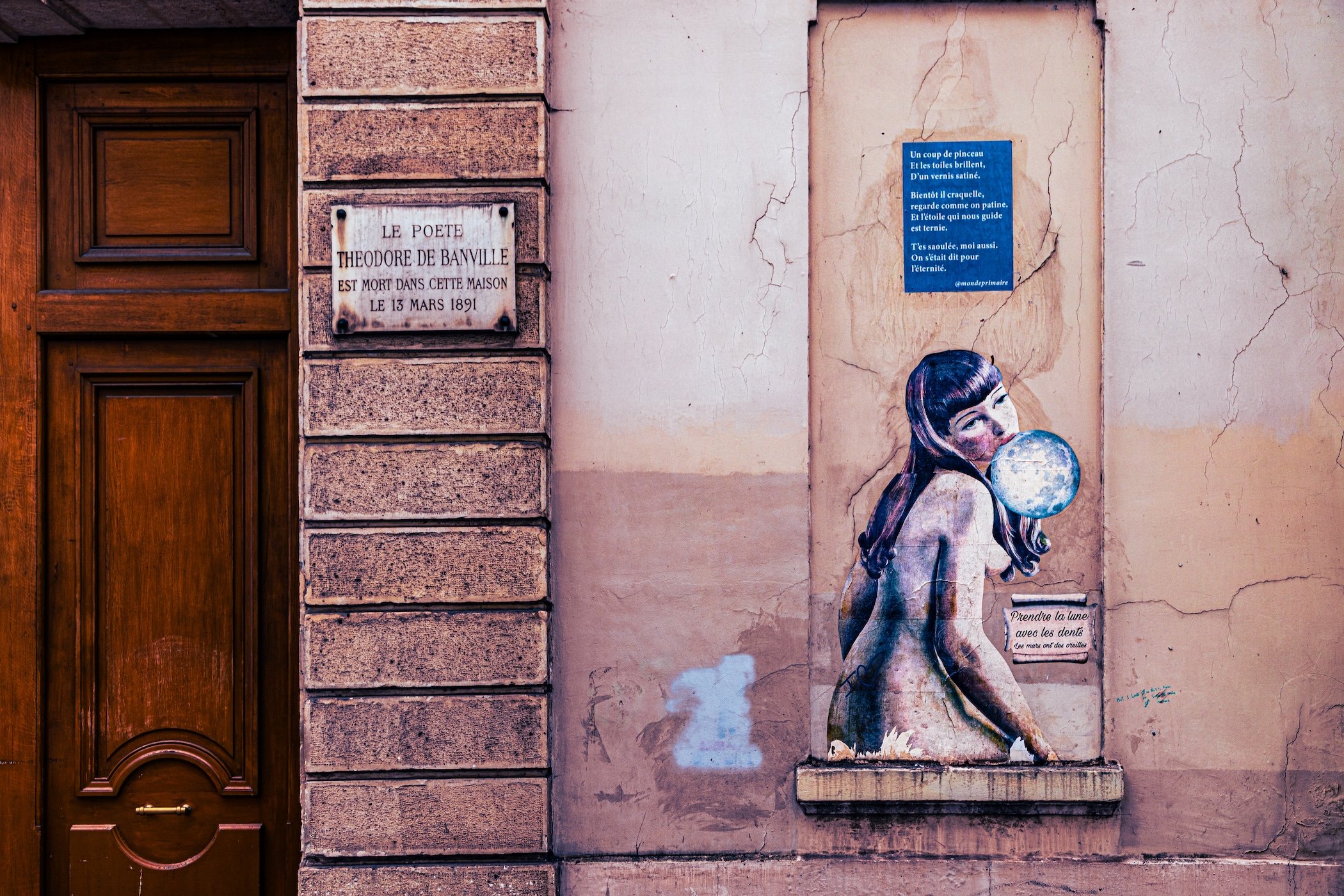
Monnaie is the quarter of value and exchange. Its spirit is river-facing, intellectual, ceremonial, and precise. It belongs to coins and books, bridges and academies, quays and cafés, old institutions and passing conversations. It is a place where Paris seems to measure itself — through money, knowledge, art, memory, and the long reflective surface of the Seine.
Its legacy is the union of material and symbolic value. The mint gives form to currency. The Institut gives form to learning. The bridges give form to connection. The quays give form to memory. Together, they make Monnaie one of the Left Bank’s most quietly powerful quarters.
To walk Monnaie is to move through Paris as exchange: between banks, between eras, between institutions, between public life and private thought. It reminds us that neighborhoods are not only made from residence or commerce. They can also be made from circulation itself — from the things a city chooses to mint, preserve, study, cross, and carry forward.
The Photography
Visual Identity
-
Monnaie’s visual identity is anchored by the Left Bank’s relationship to the Seine, the Institut de France, the old intellectual geography of Saint-Germain, and the formal quays that face central Paris across the river. It is a quarter of stone, institutions, bookstores, bridges, and layered cultural memory.
On August 16, Monnaie appeared through motion along boulevards and quays, giving the district a processional quality. The bus route emphasized its linear elegance: Boulevard Saint-Germain, Boulevard Saint-Michel, Quai des Grands Augustins, Quai de Conti. Visually, Monnaie became a river-facing corridor of Left Bank culture.
-
Monnaie revealed a visual identity shaped by convergence. Situated between the cultural pull of Saint-Germain-des-Prés and the historic-intellectual geography of the Latin Quarter, the quarter might easily seem defined by the better-known places around it. Instead, its character emerged precisely through the way those neighboring worlds meet: lively commercial streets, historic passages, literary associations, intimate cafés, Haussmannian boulevards, and narrow corridors that repeatedly alter the scale and mood of the walk.
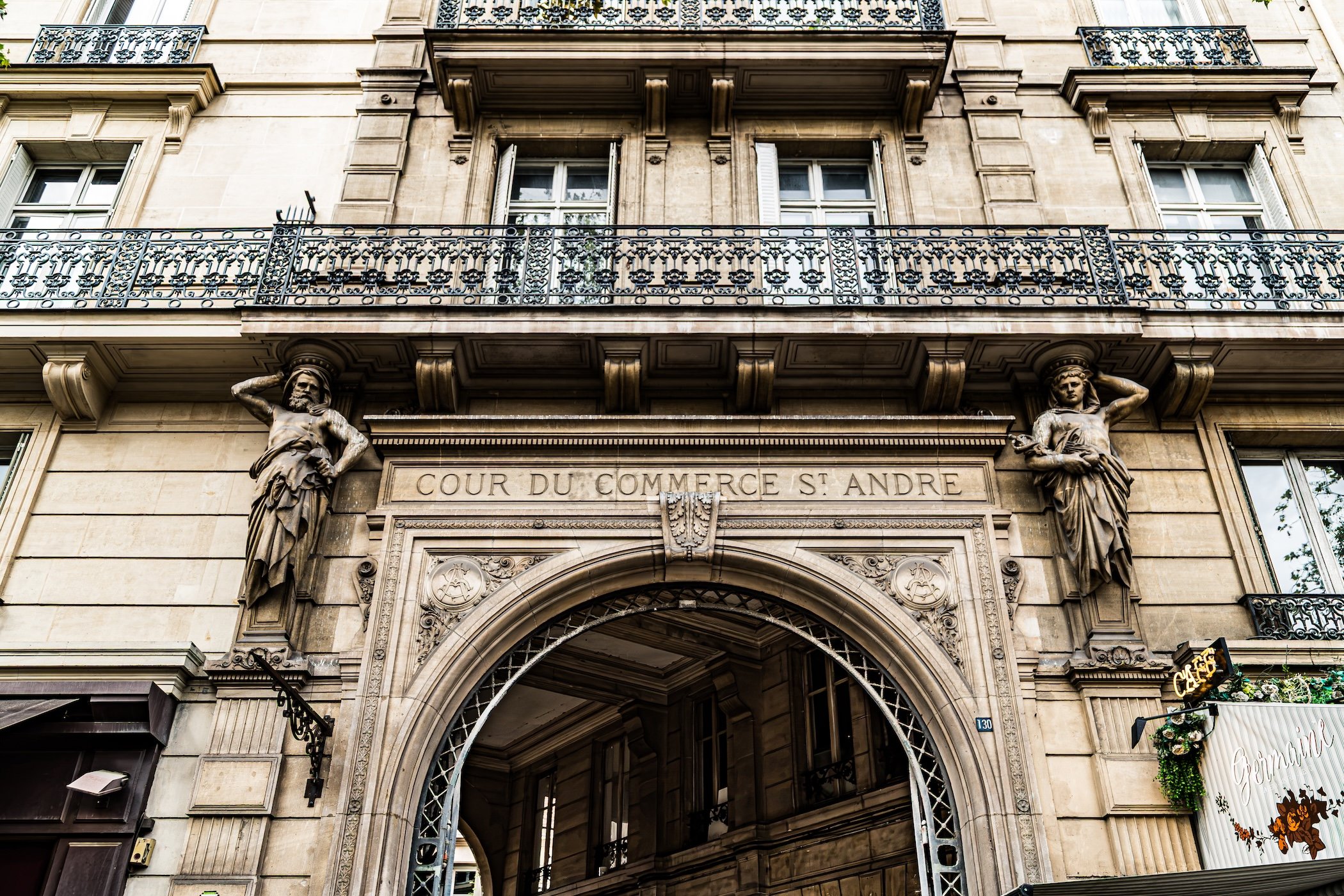
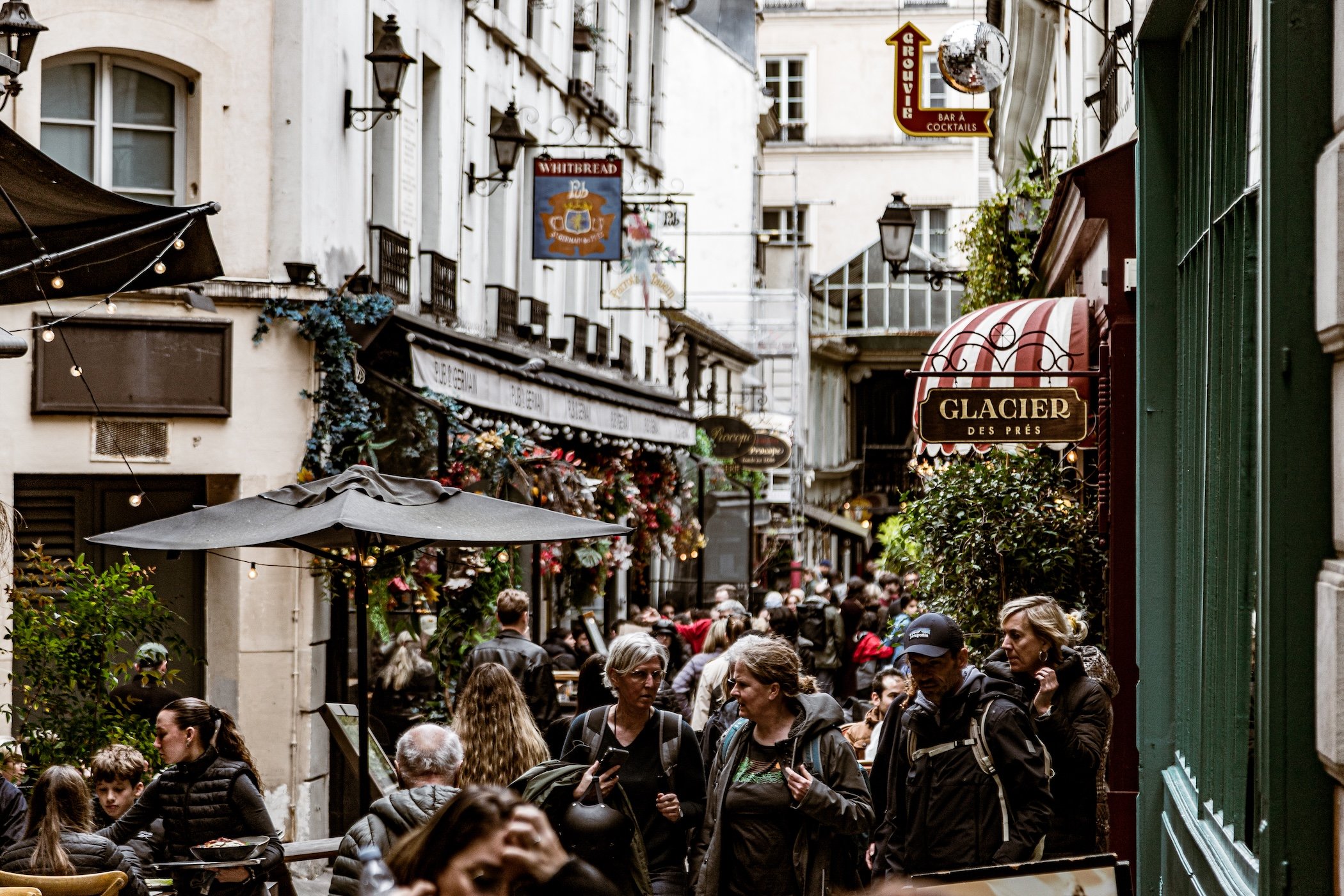
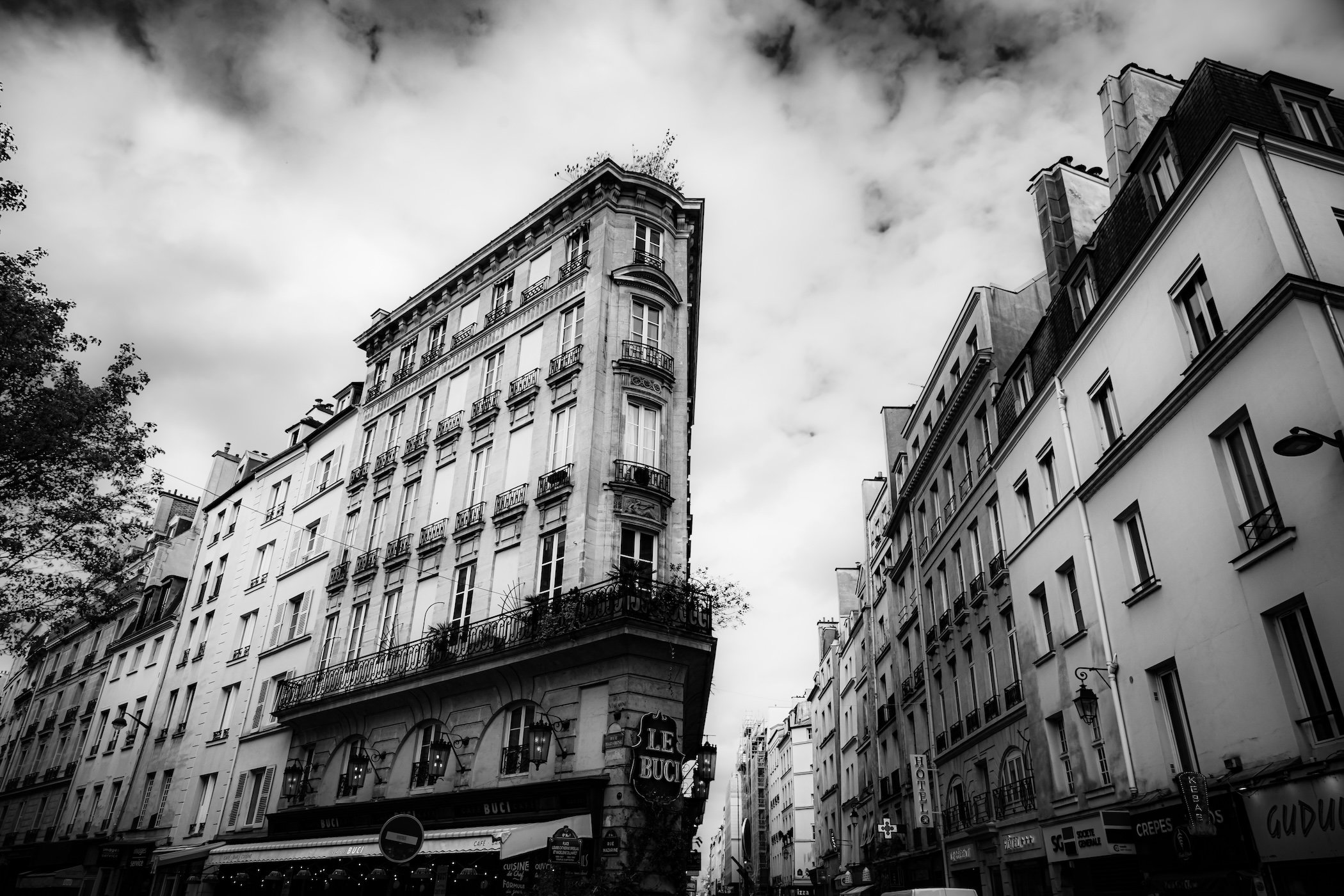
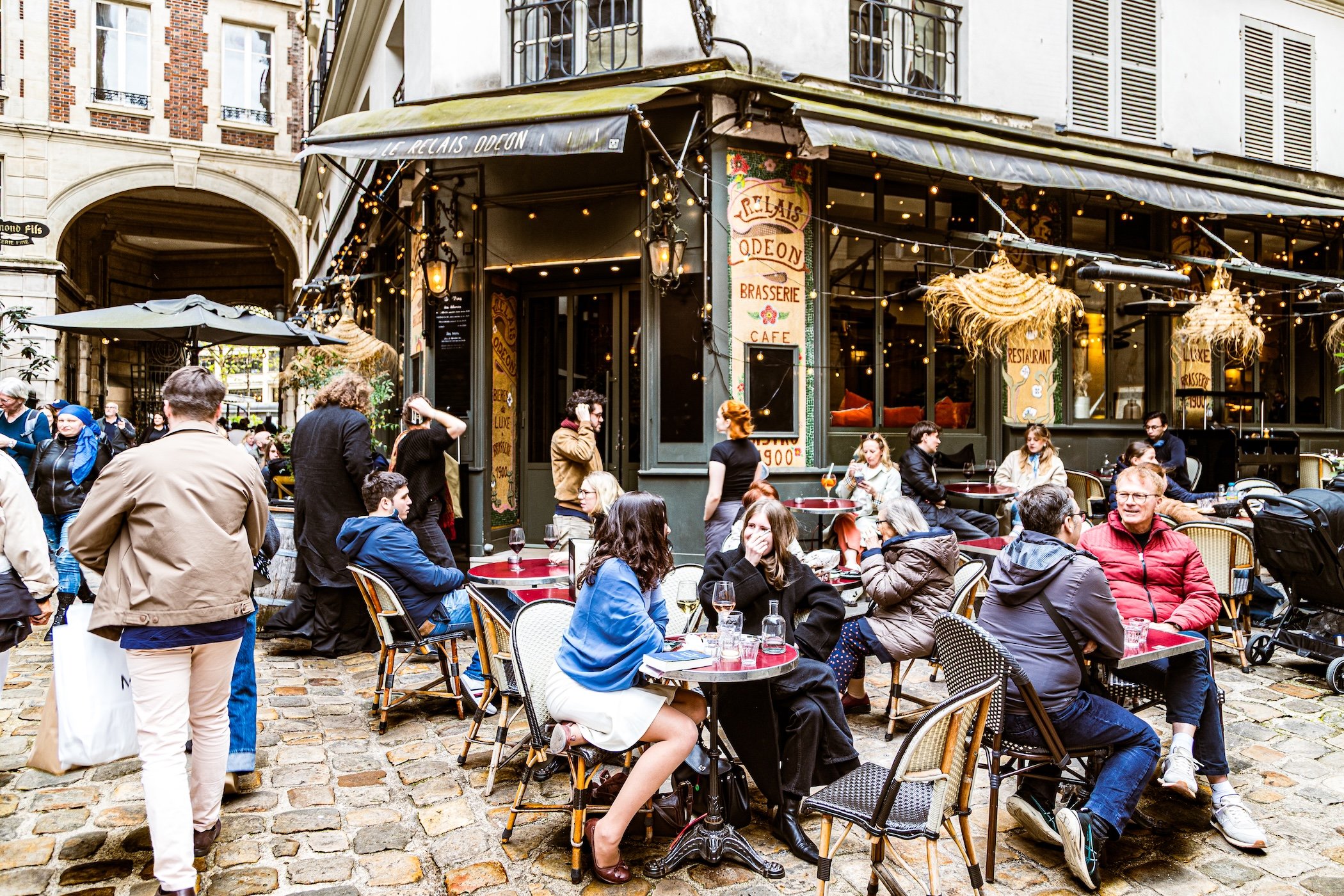
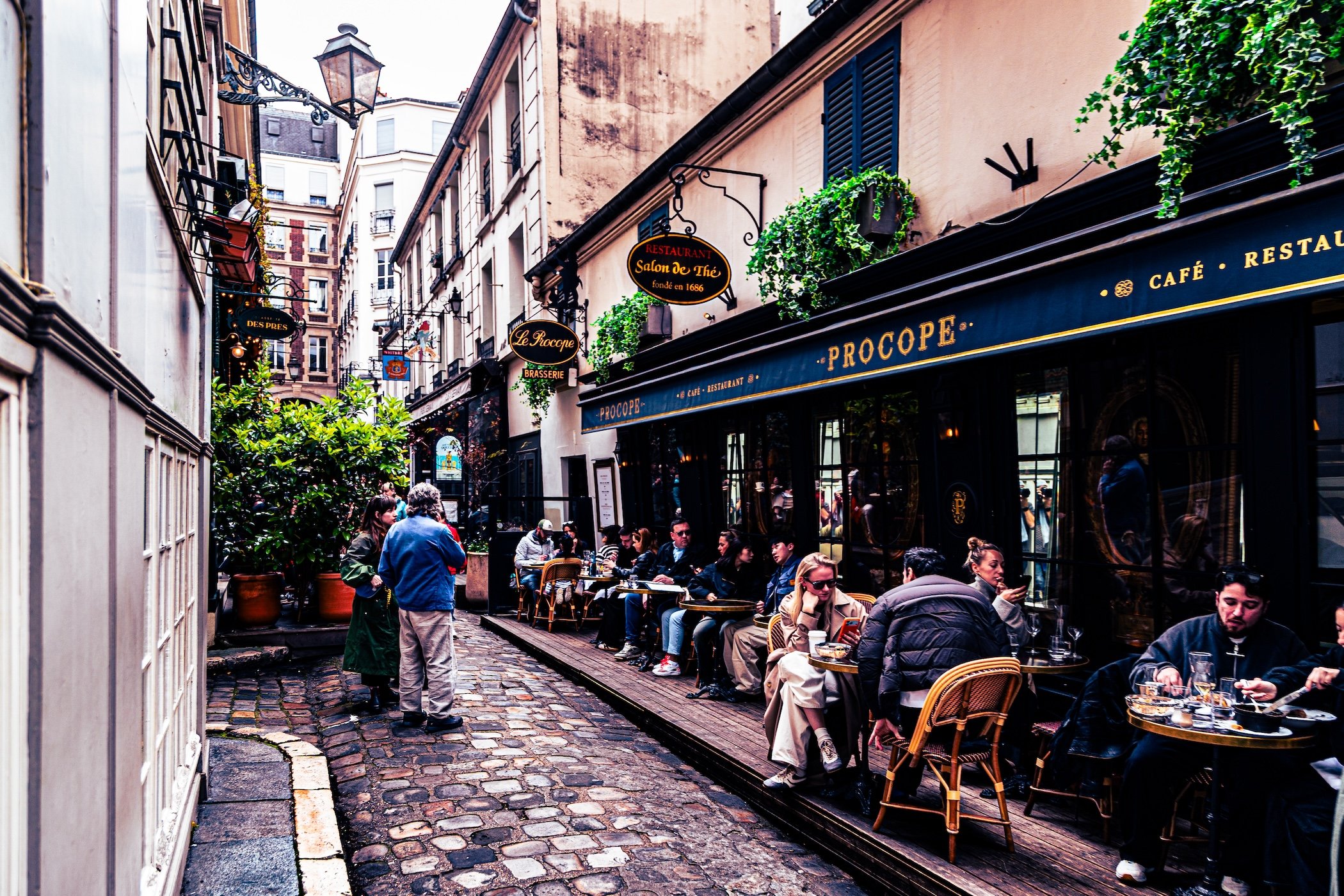
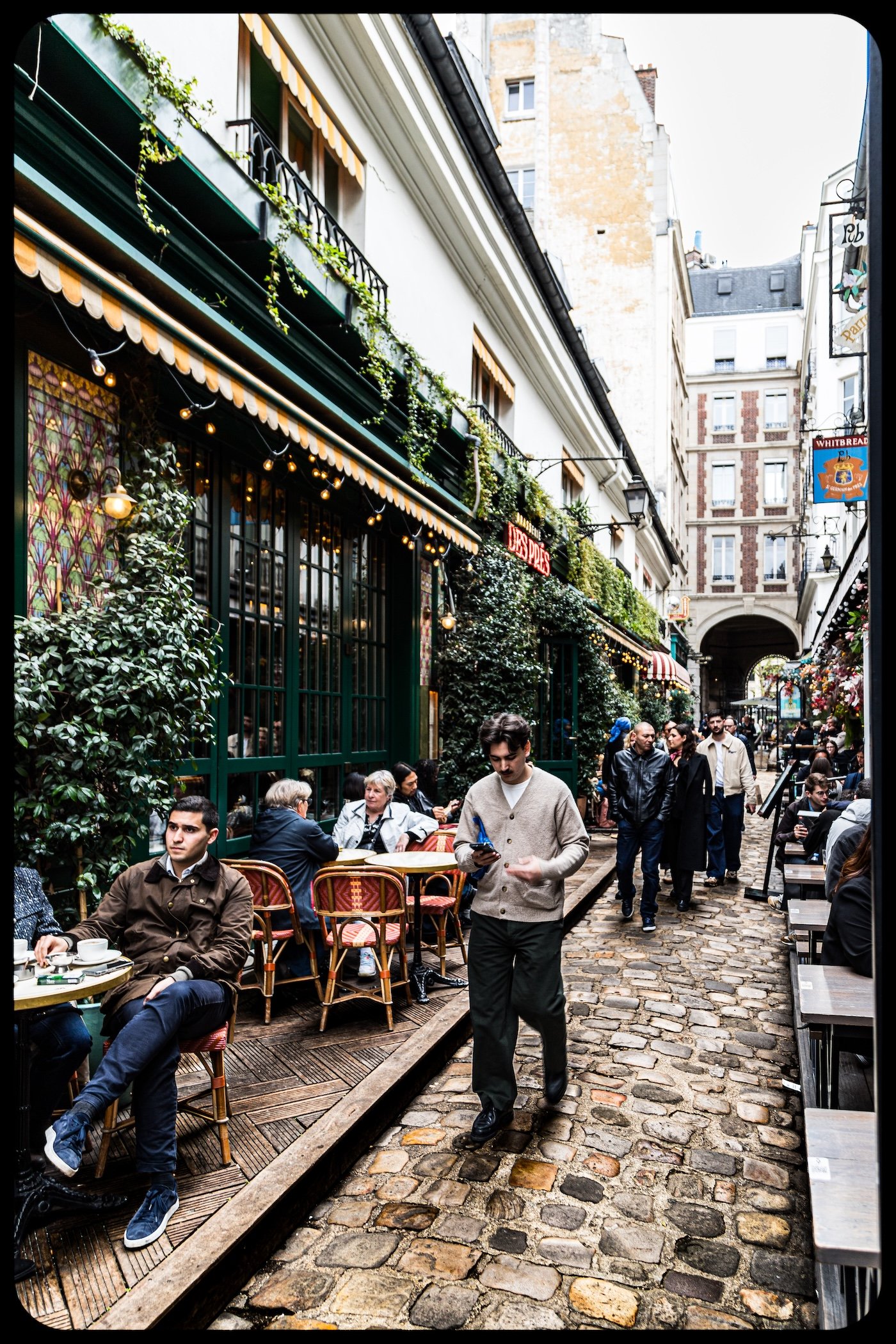
Around the confluence of Rue Mazarine, Rue de Buci, Rue Dauphine, and Rue Saint-André-des-Arts, the quarter appeared dense, social, and unmistakably Left Bank. Restaurant terraces, specialty shops, salons, painted façades, signs, awnings, and streams of pedestrians filled the streets with activity. Cour du Commerce Saint-André condensed that atmosphere into an especially vivid form. Its cobblestones and enclosed proportions preserved the physical character of an older Paris, while its breweries, restaurants, cafés, and crowded terraces made the passage feel fully occupied by the present.
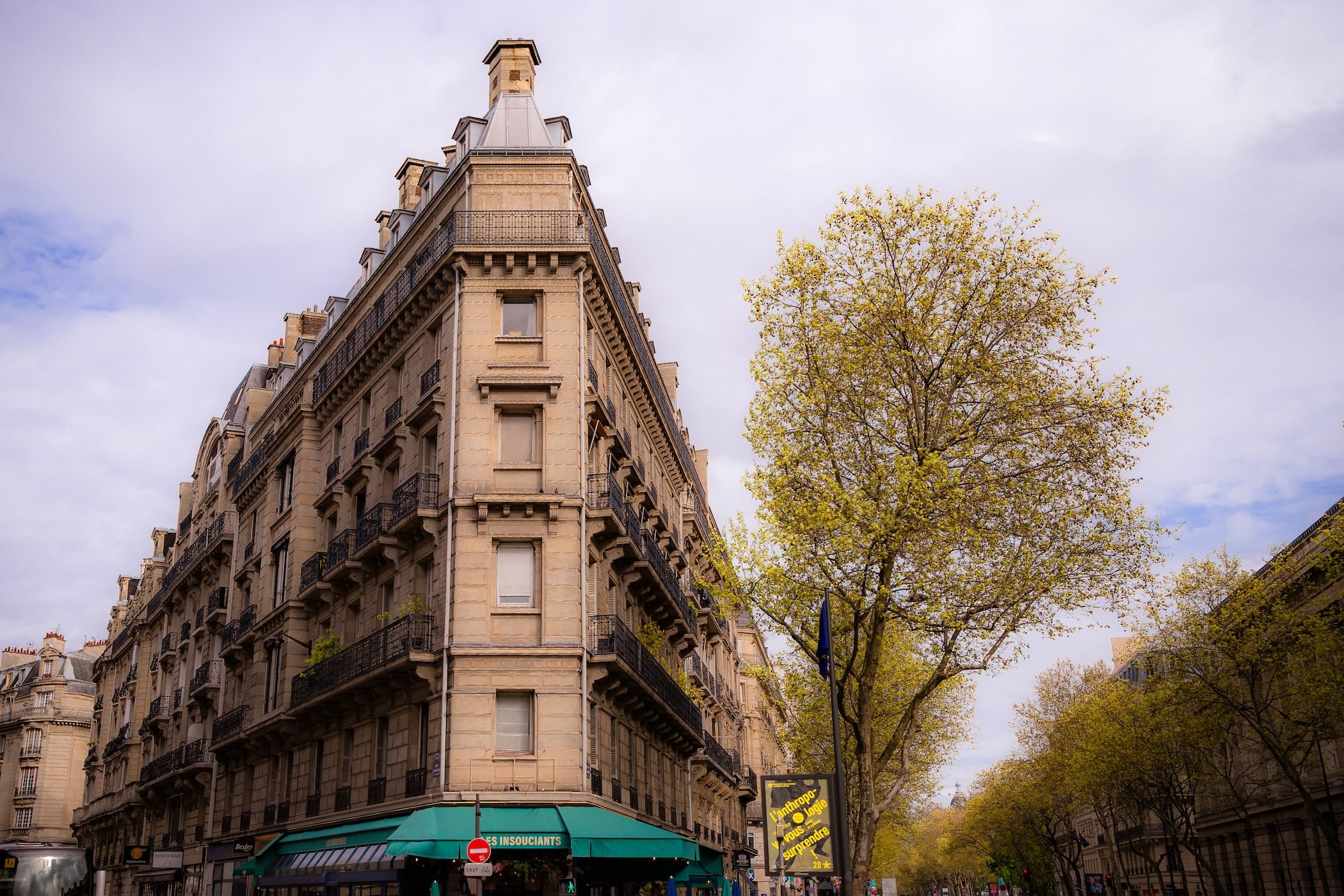
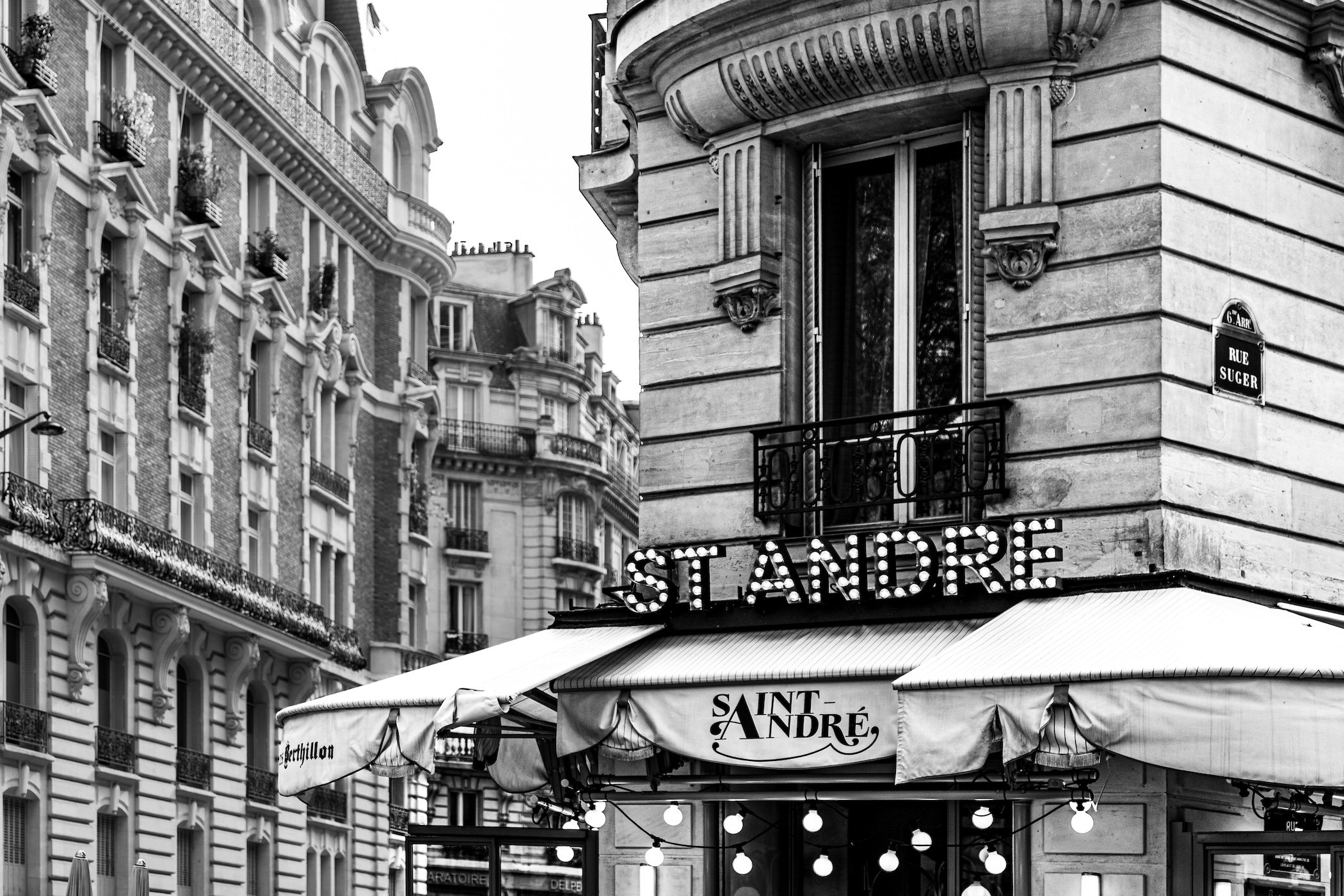
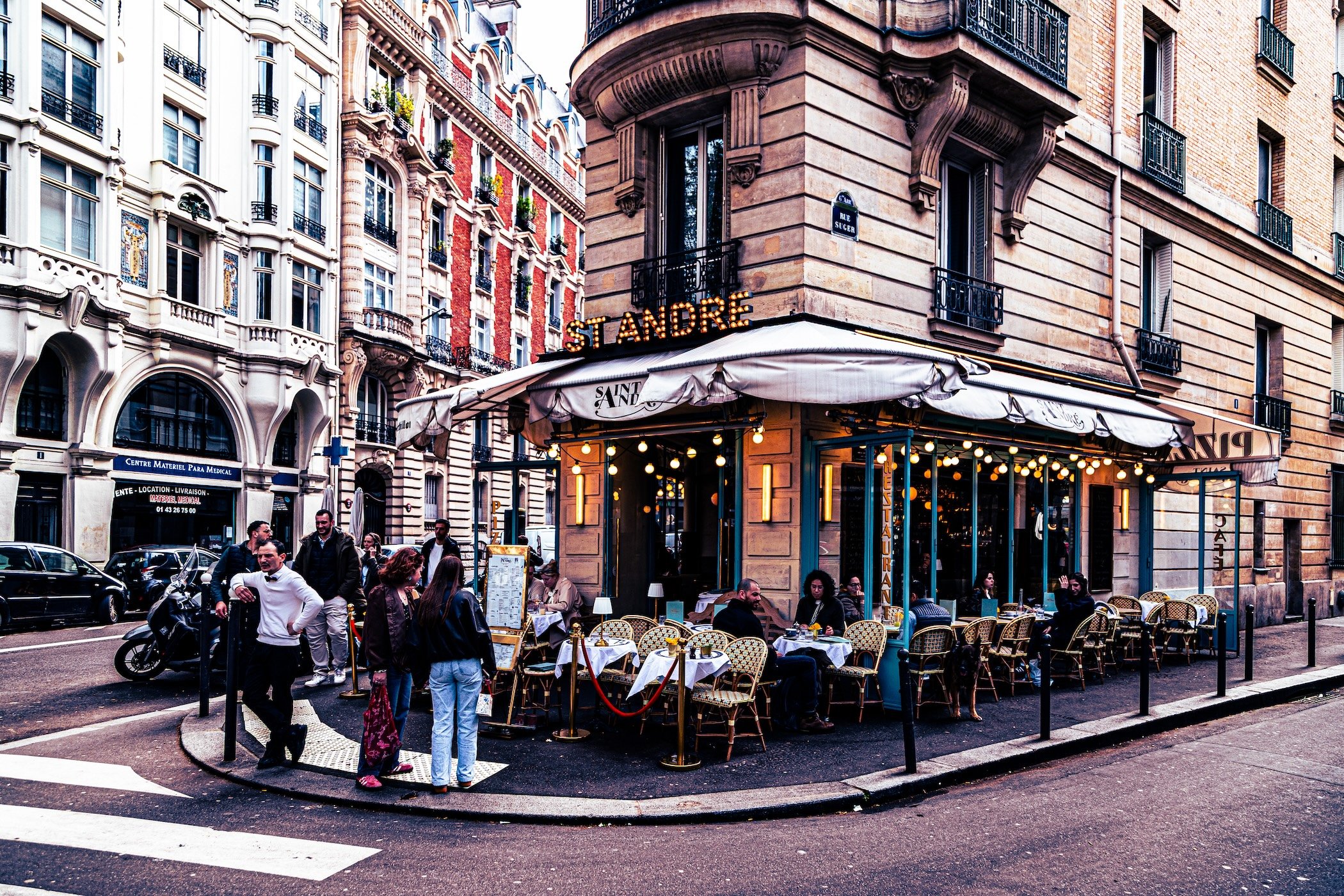
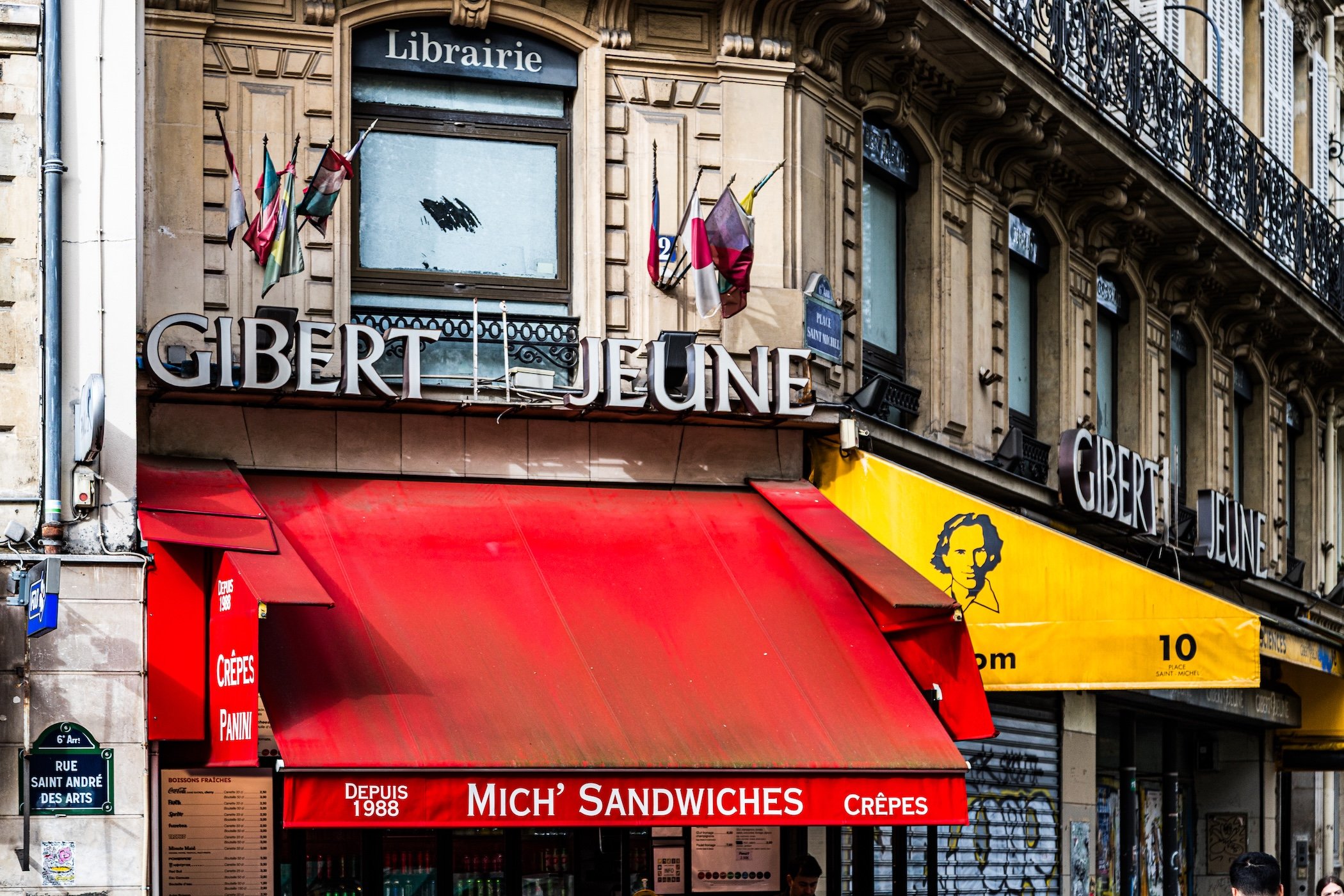
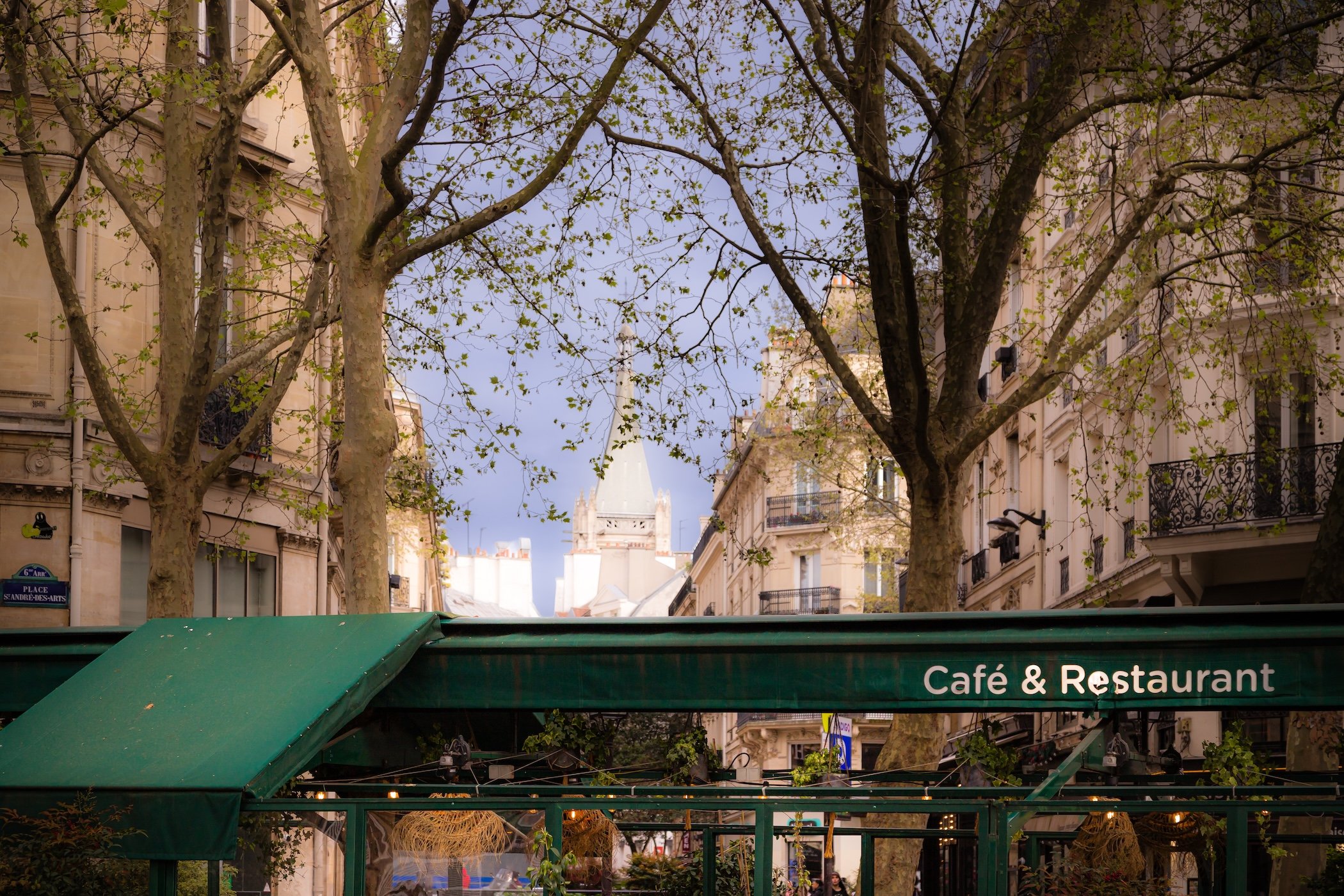
Farther east, Monnaie’s visual language became quieter and more transitional. Boulevard Saint-Germain briefly introduced broad façades and Haussmannian scale before Rue de l’Éperon and Rue Suger drew the route back into narrow streets, irregular perspectives, weathered walls, and small commercial thresholds. Place Saint-André-des-Arts then opened as a hinge between cultural geographies: westward toward Odéon and Saint-Germain-des-Prés, eastward toward Saint-Michel and the Latin Quarter. Monnaie’s identity therefore rests not in choosing between its neighbors, but in embodying the urban and cultural passage between them.
Through The Lens
-
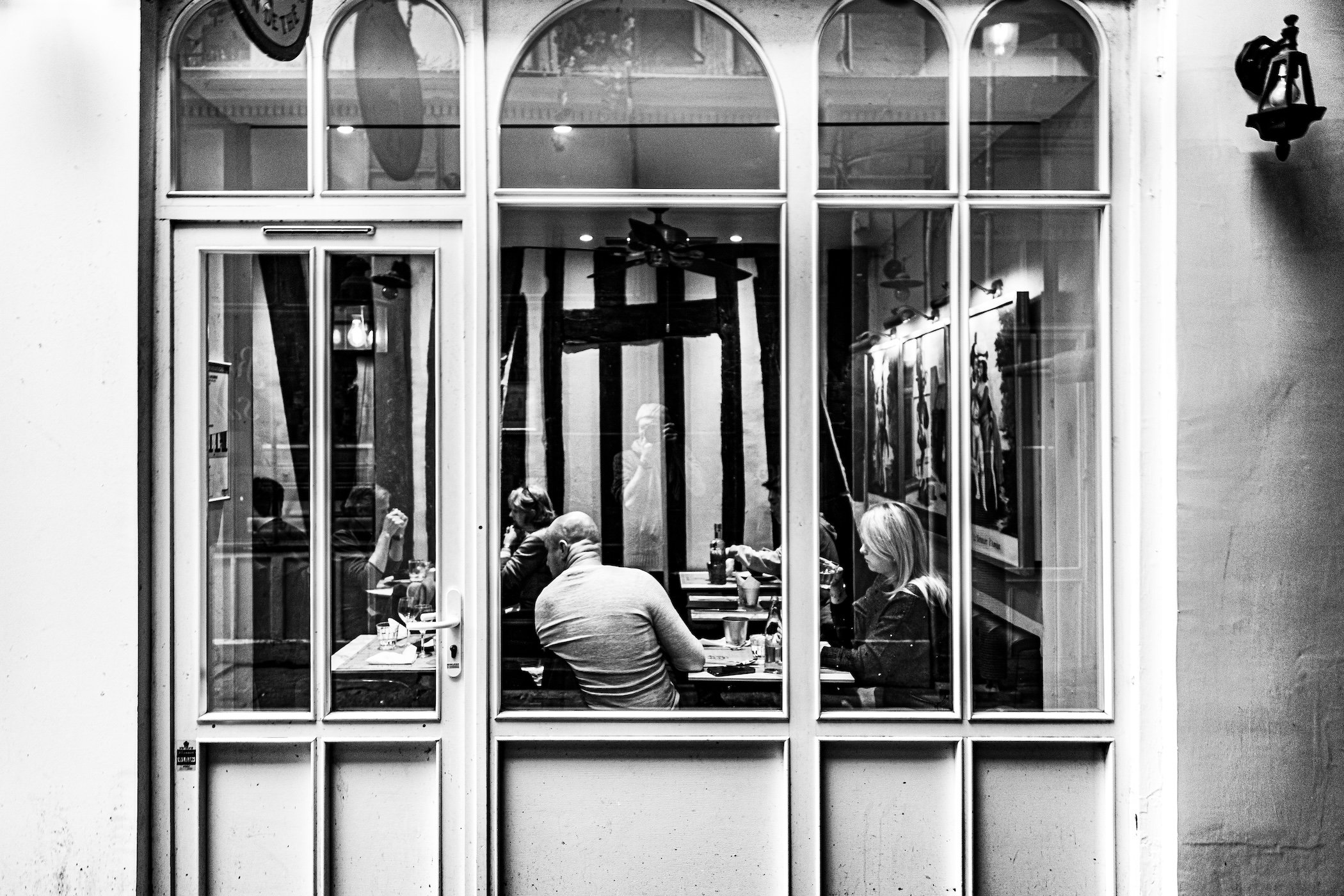
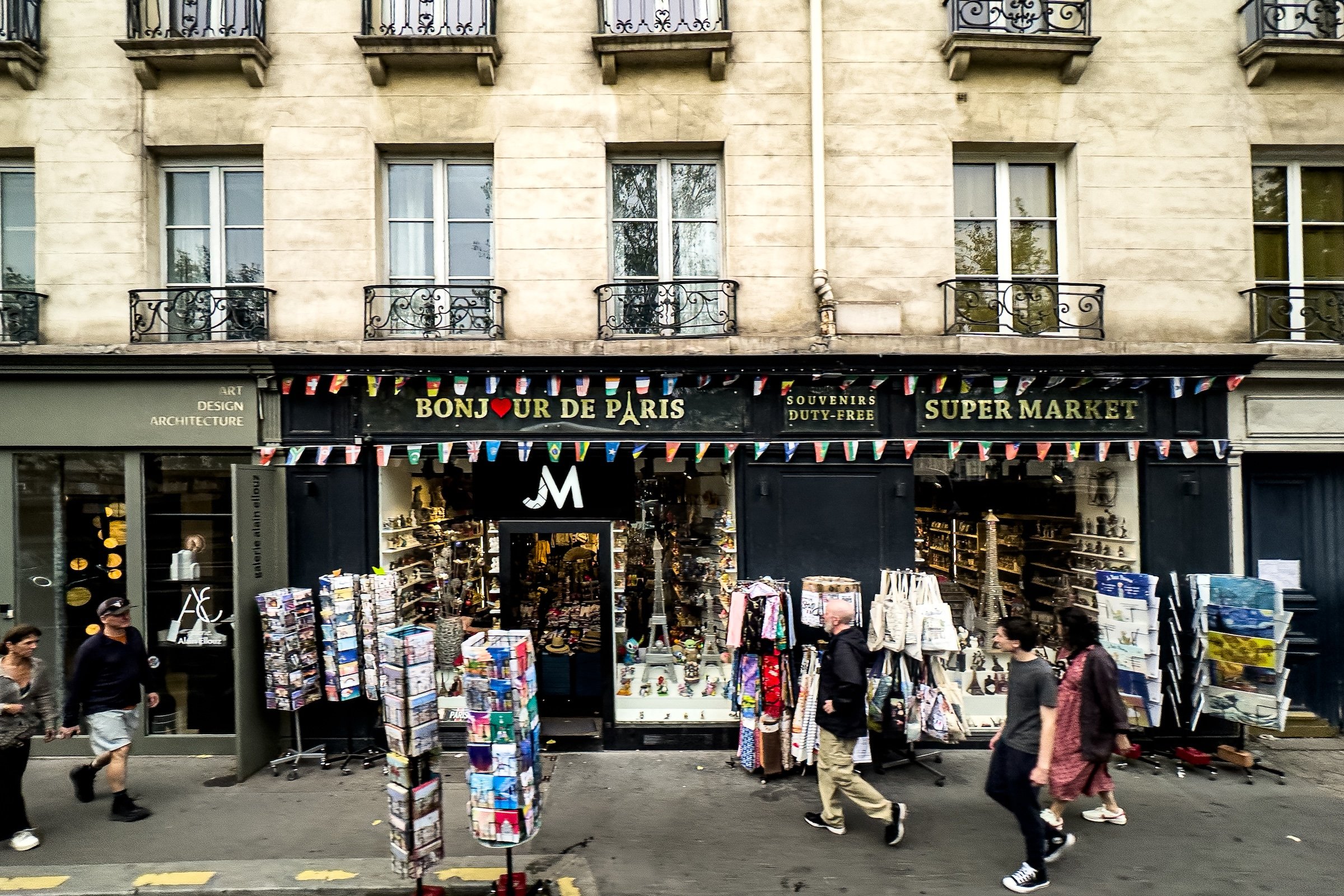
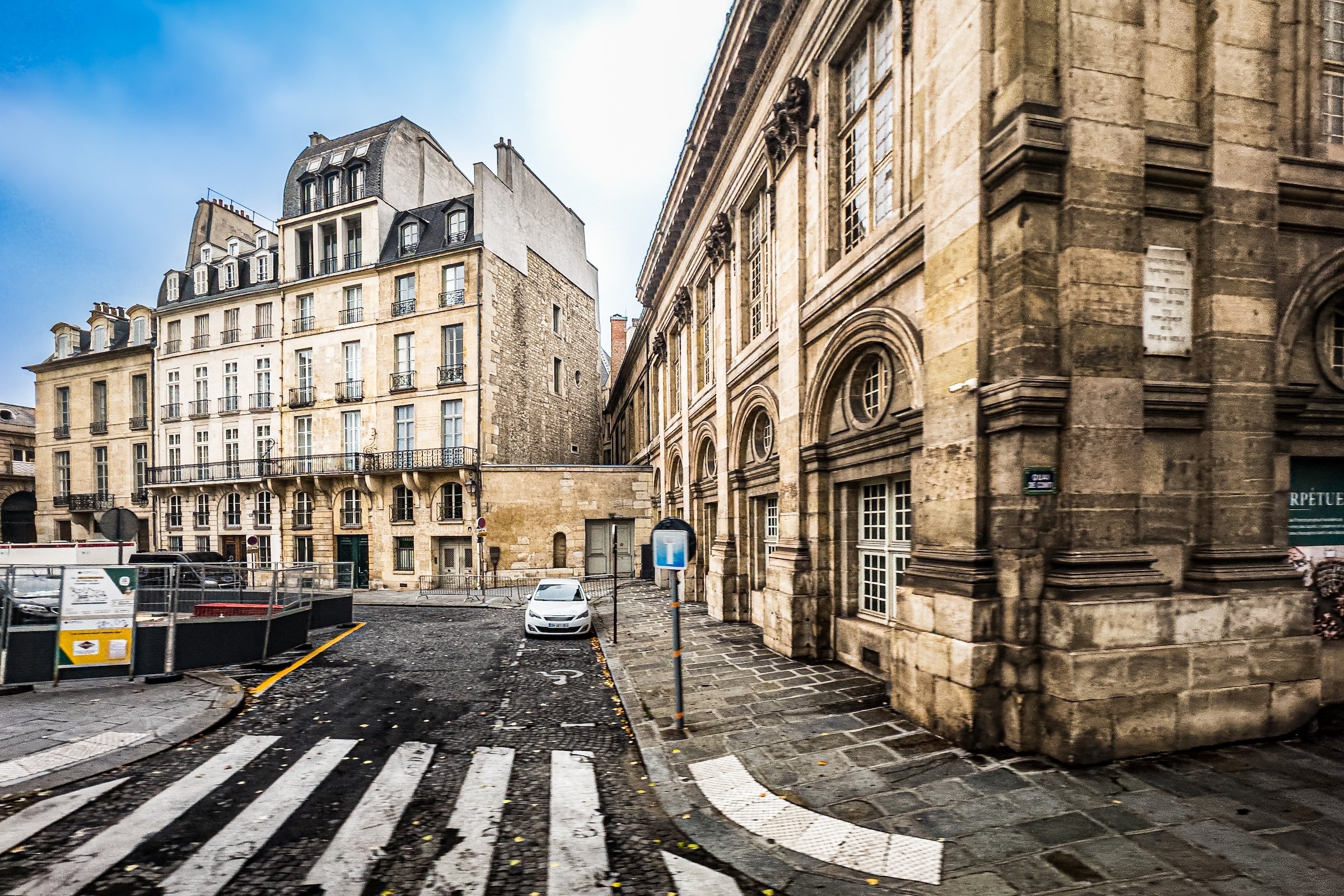
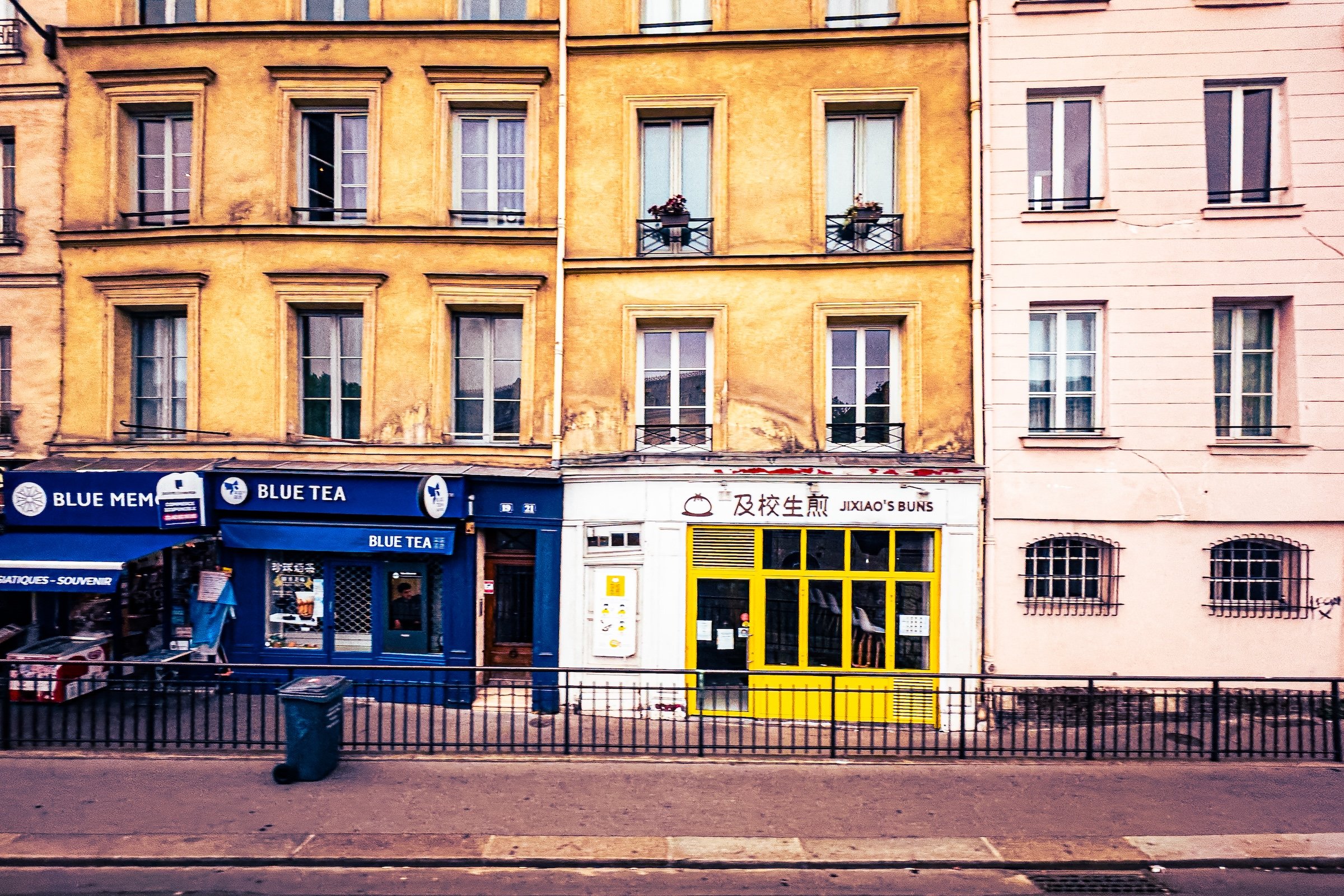
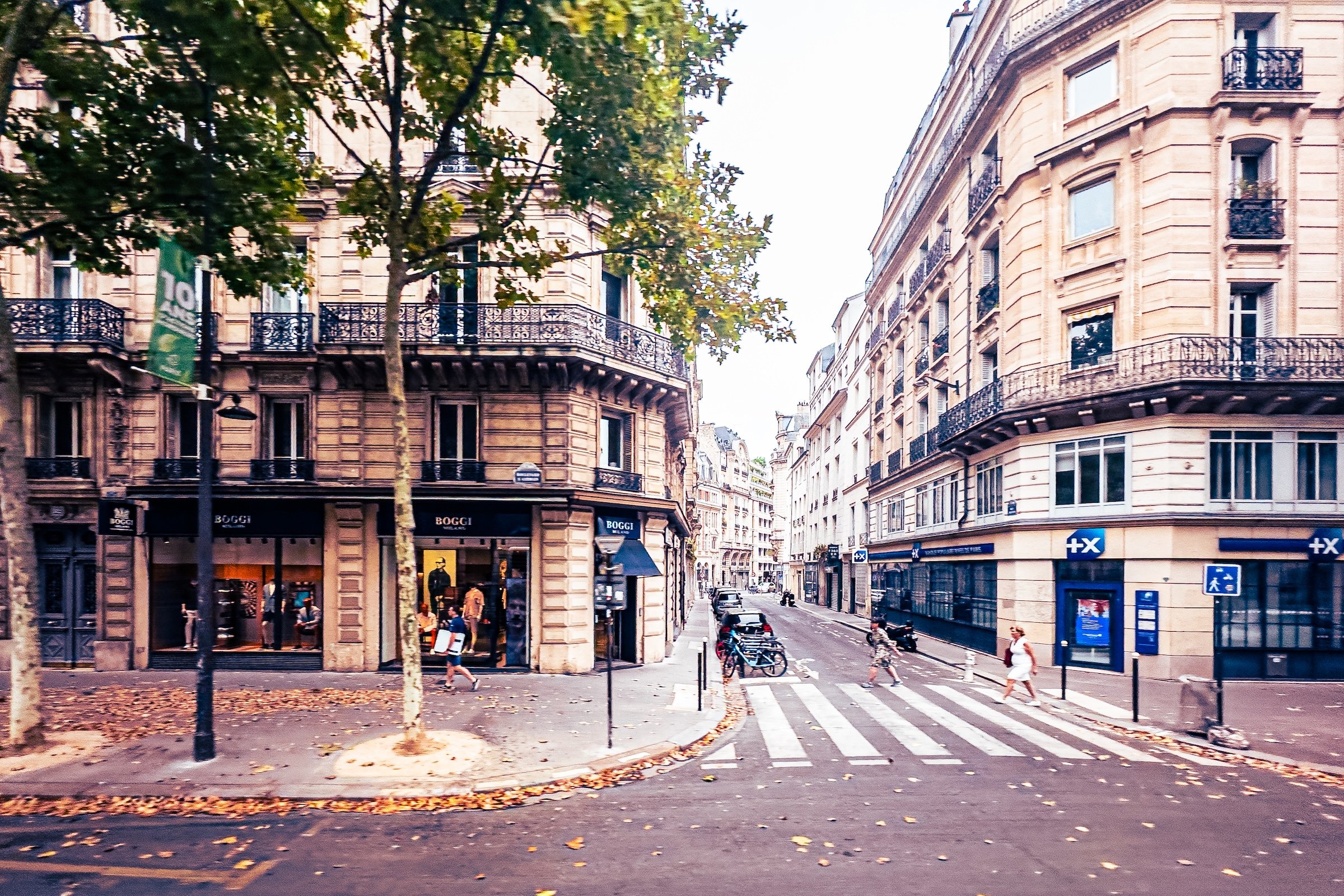
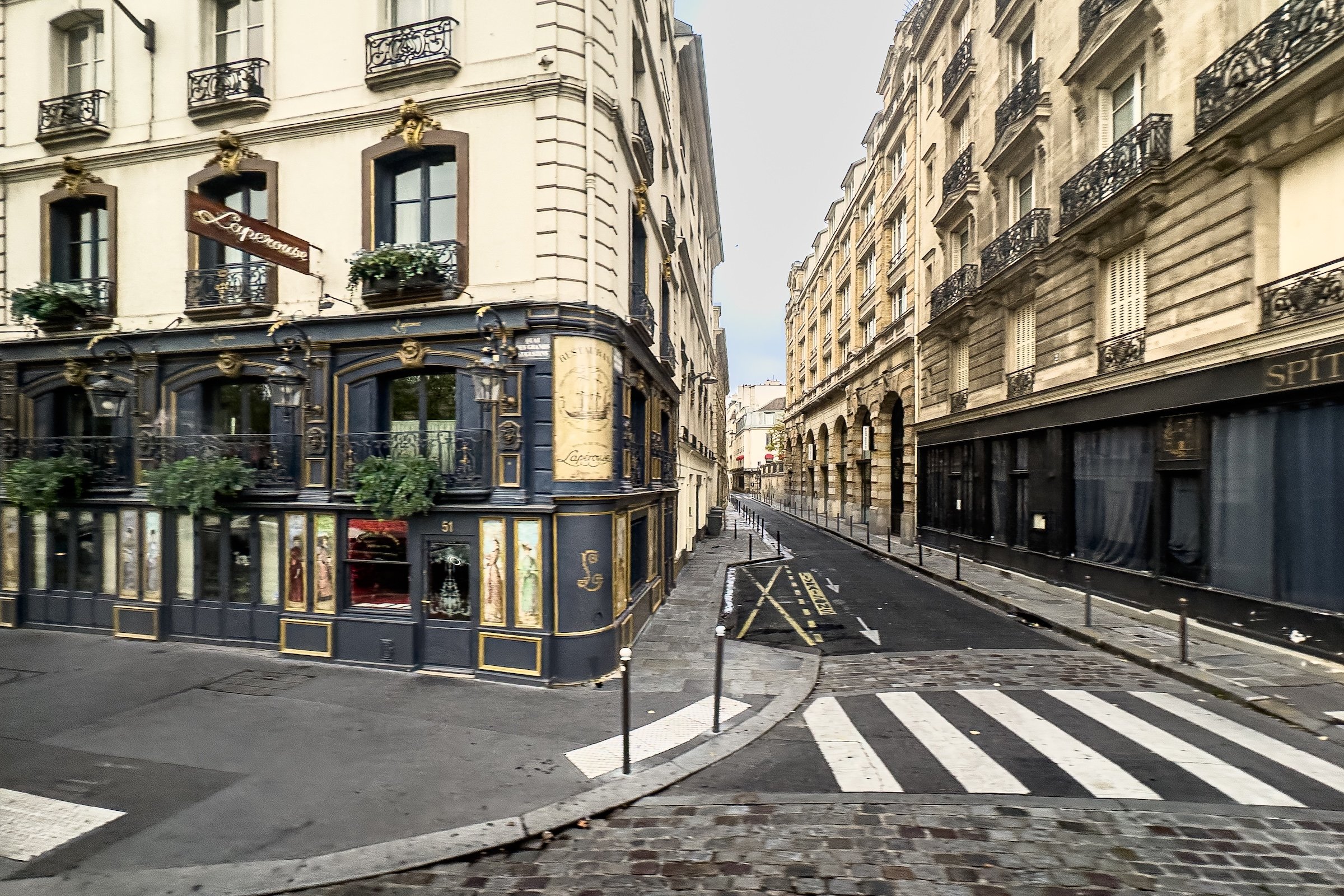
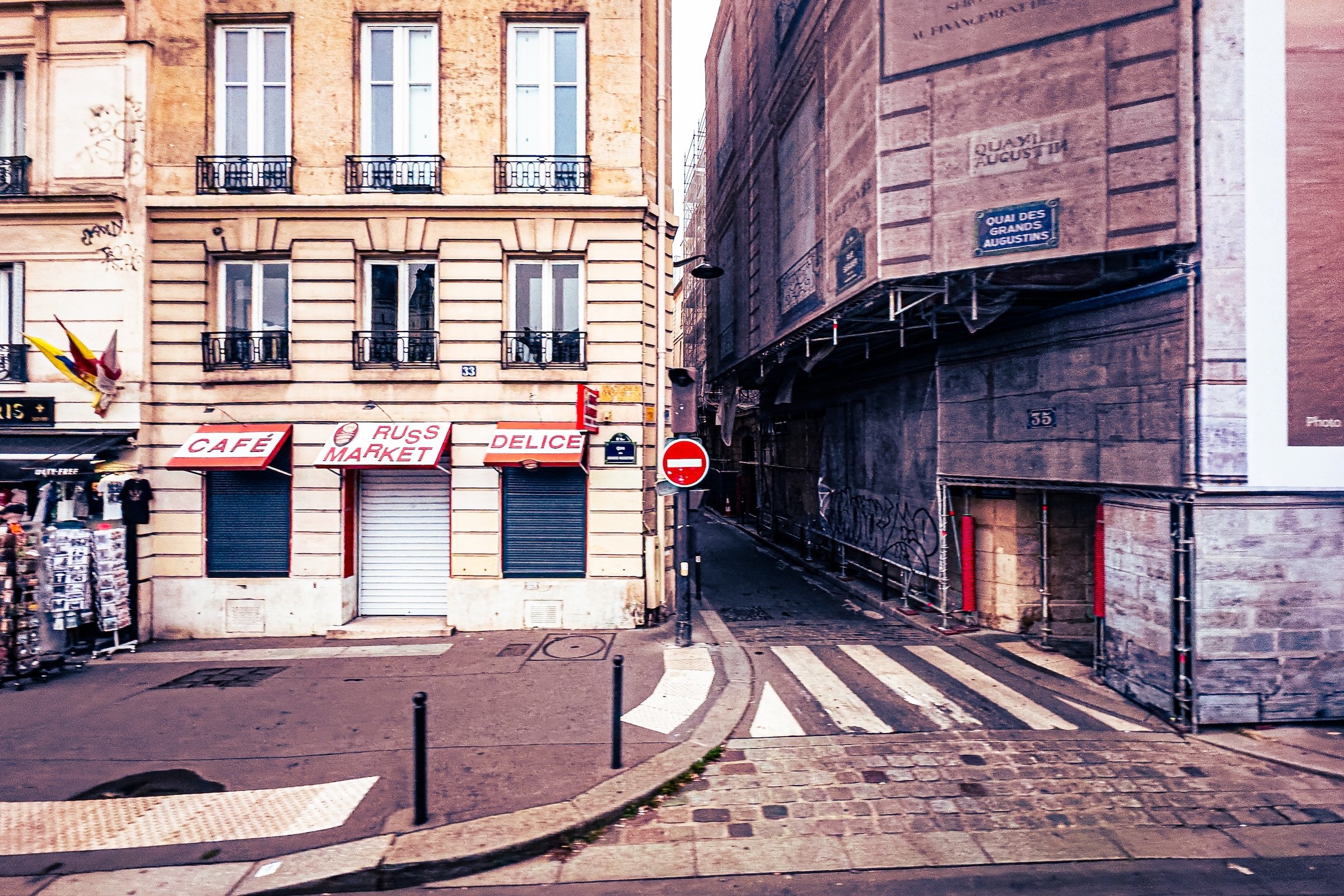
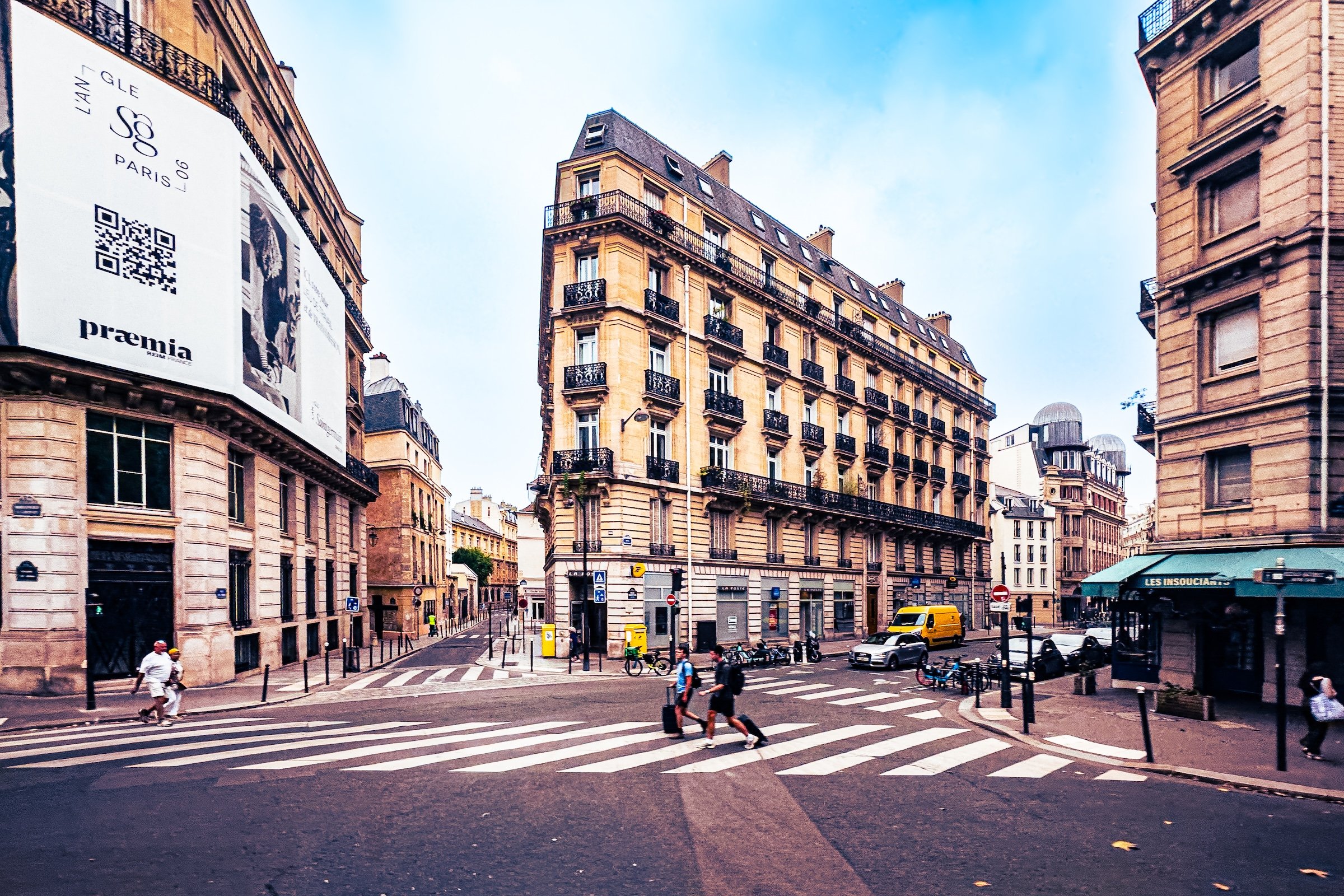
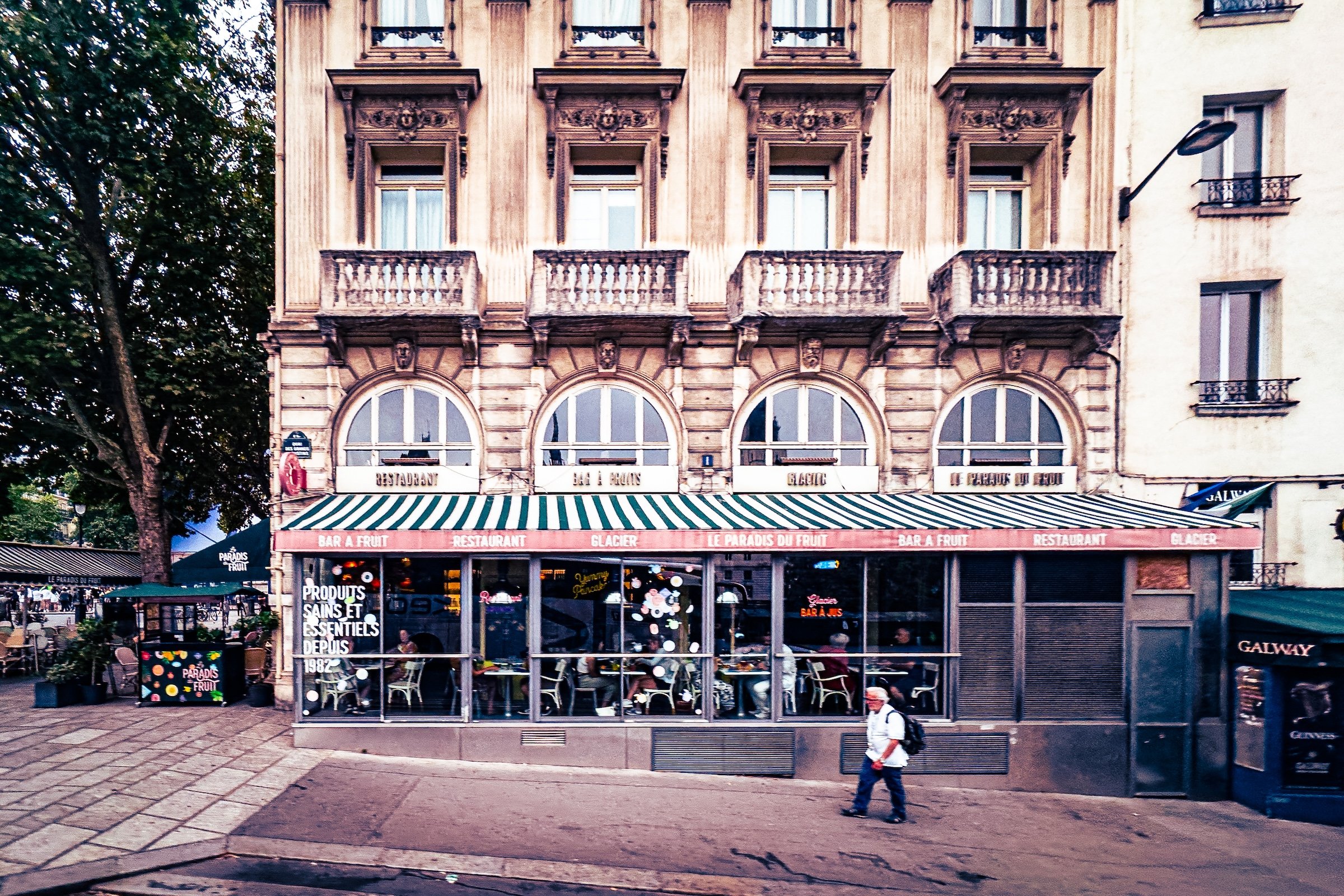
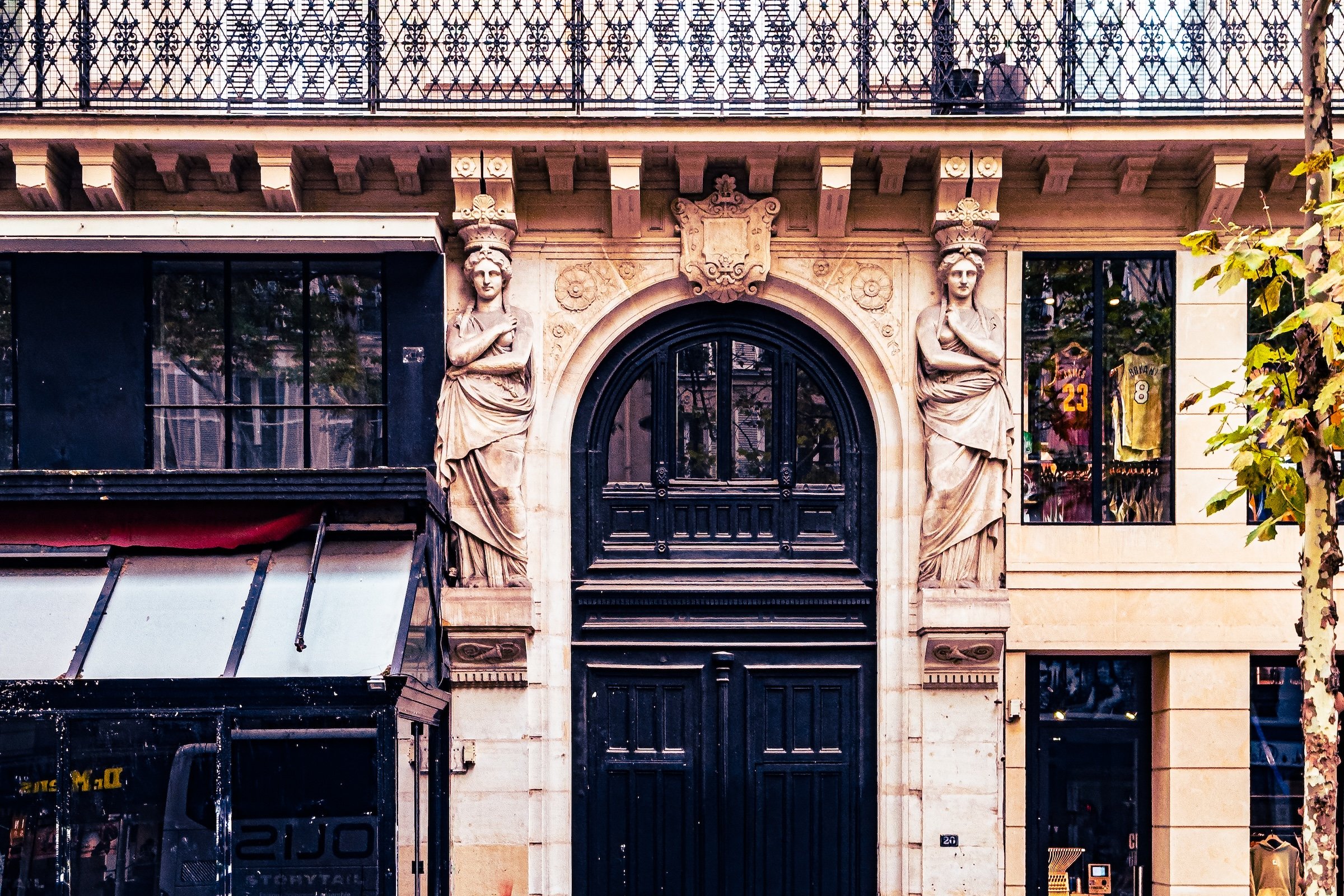
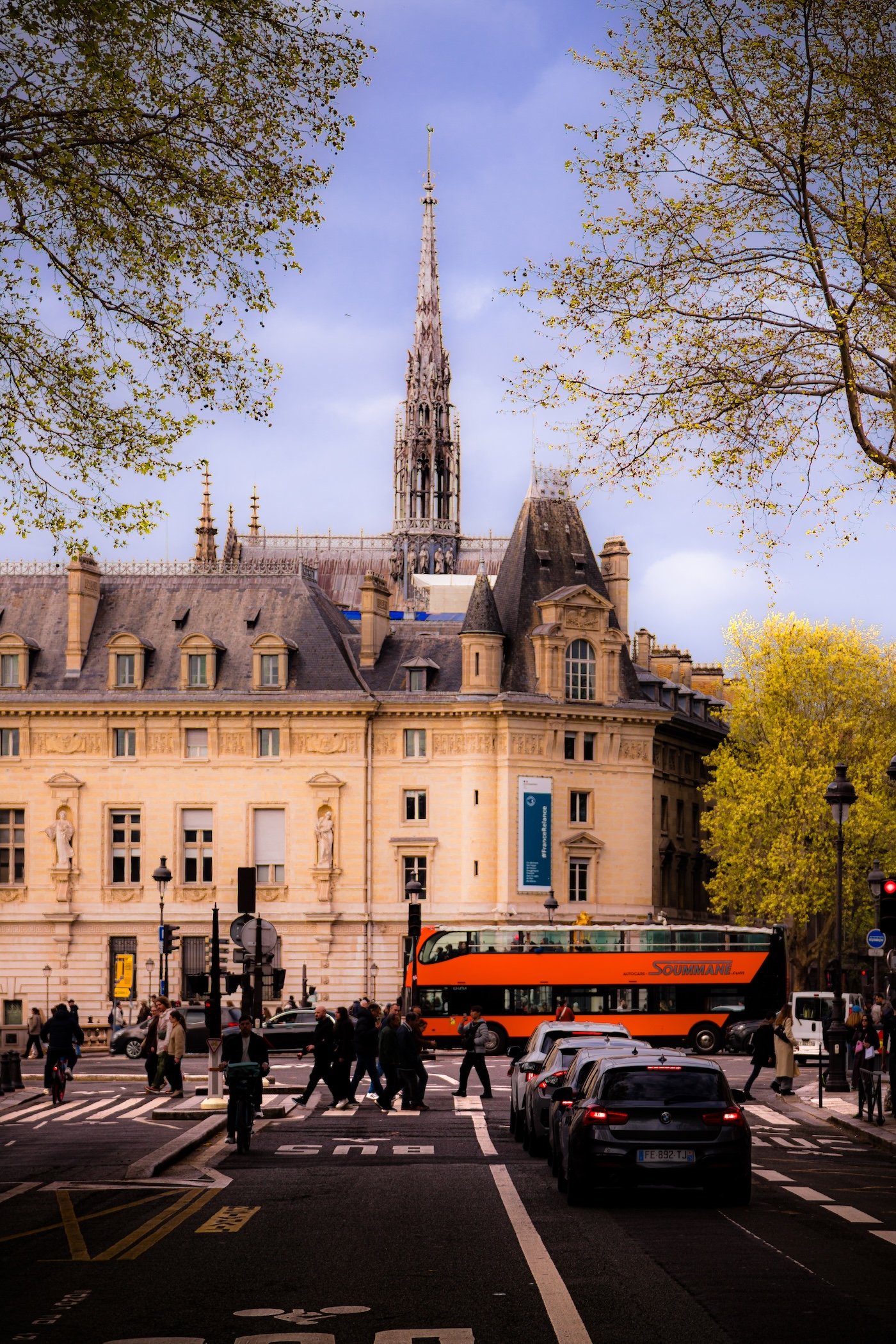
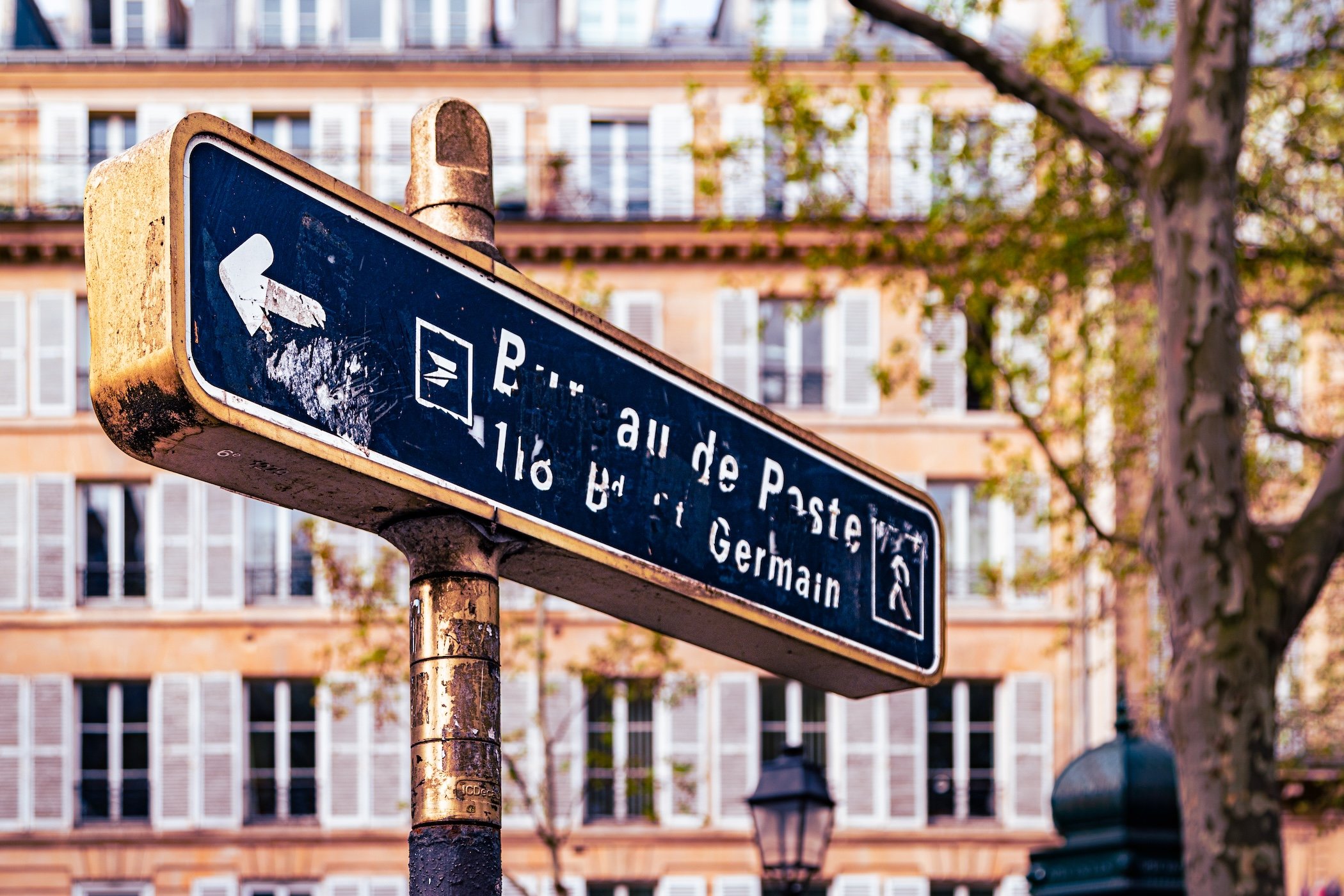
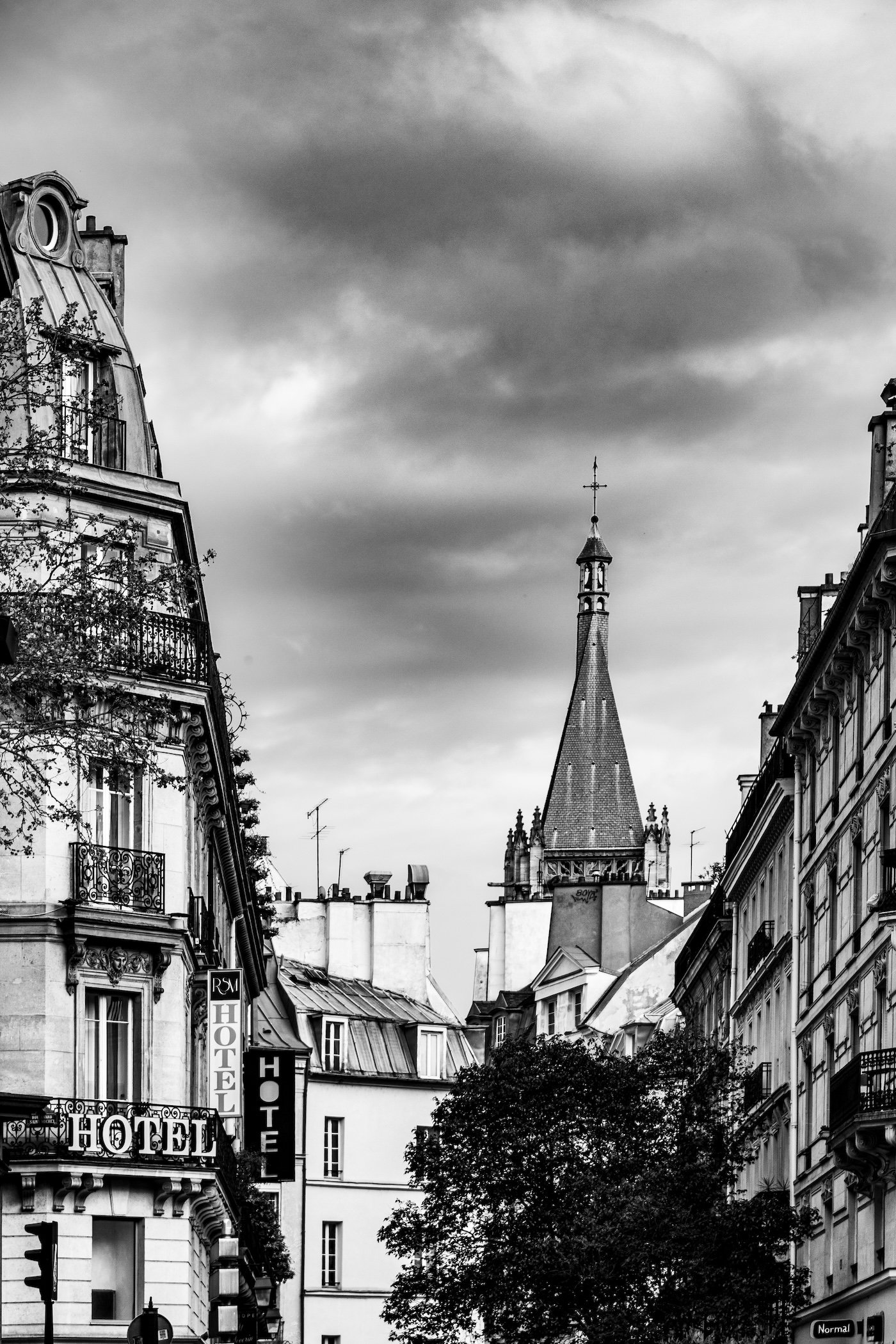
The Monnaie images show a district of façades, quays, and institutional presence. From the bus, the camera catches both street-level Paris and the more formal riverfront. The images feel transitional, but also composed by the city itself: long lines, stone buildings, trees, river proximity, and the movement westward along the Seine.
-
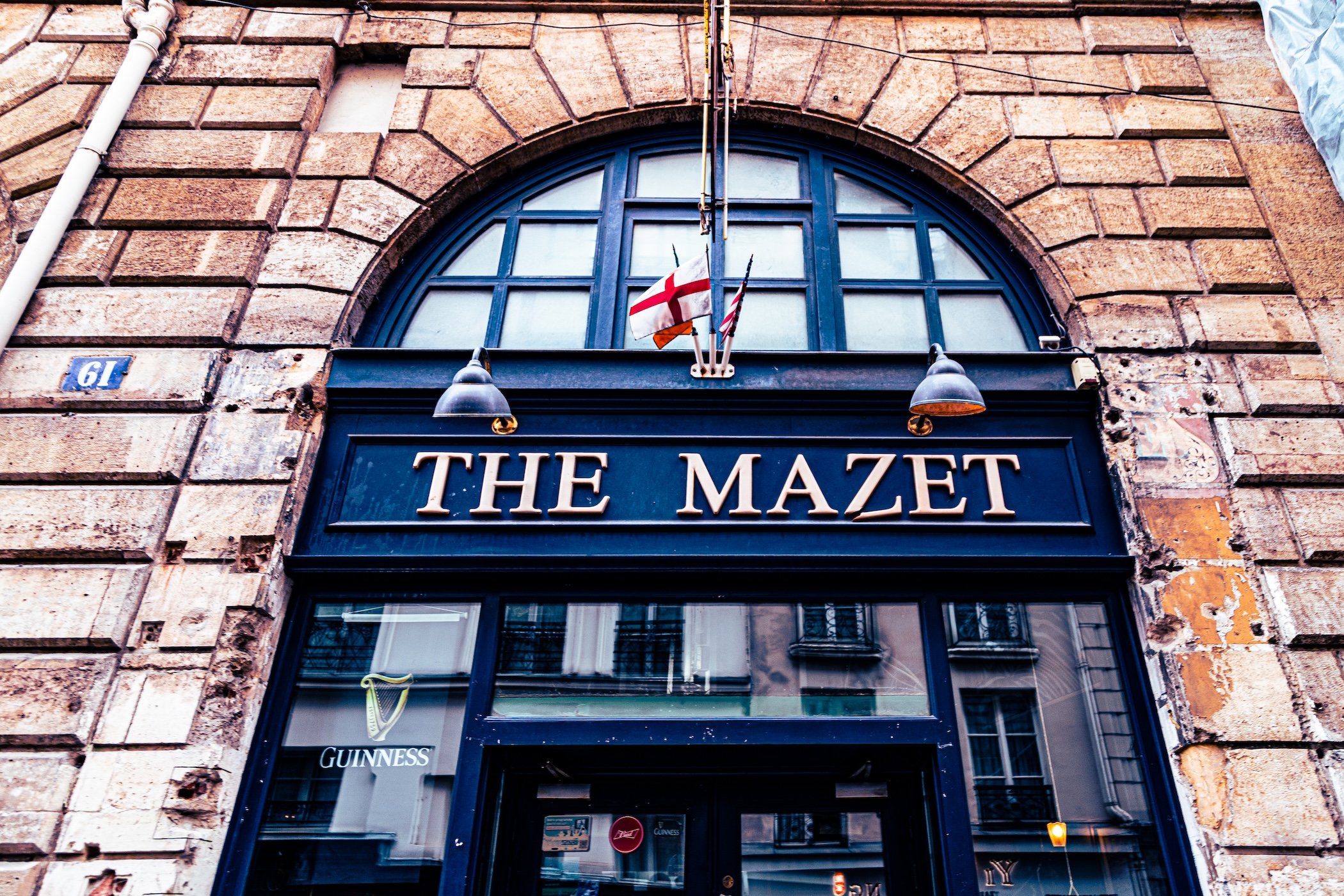
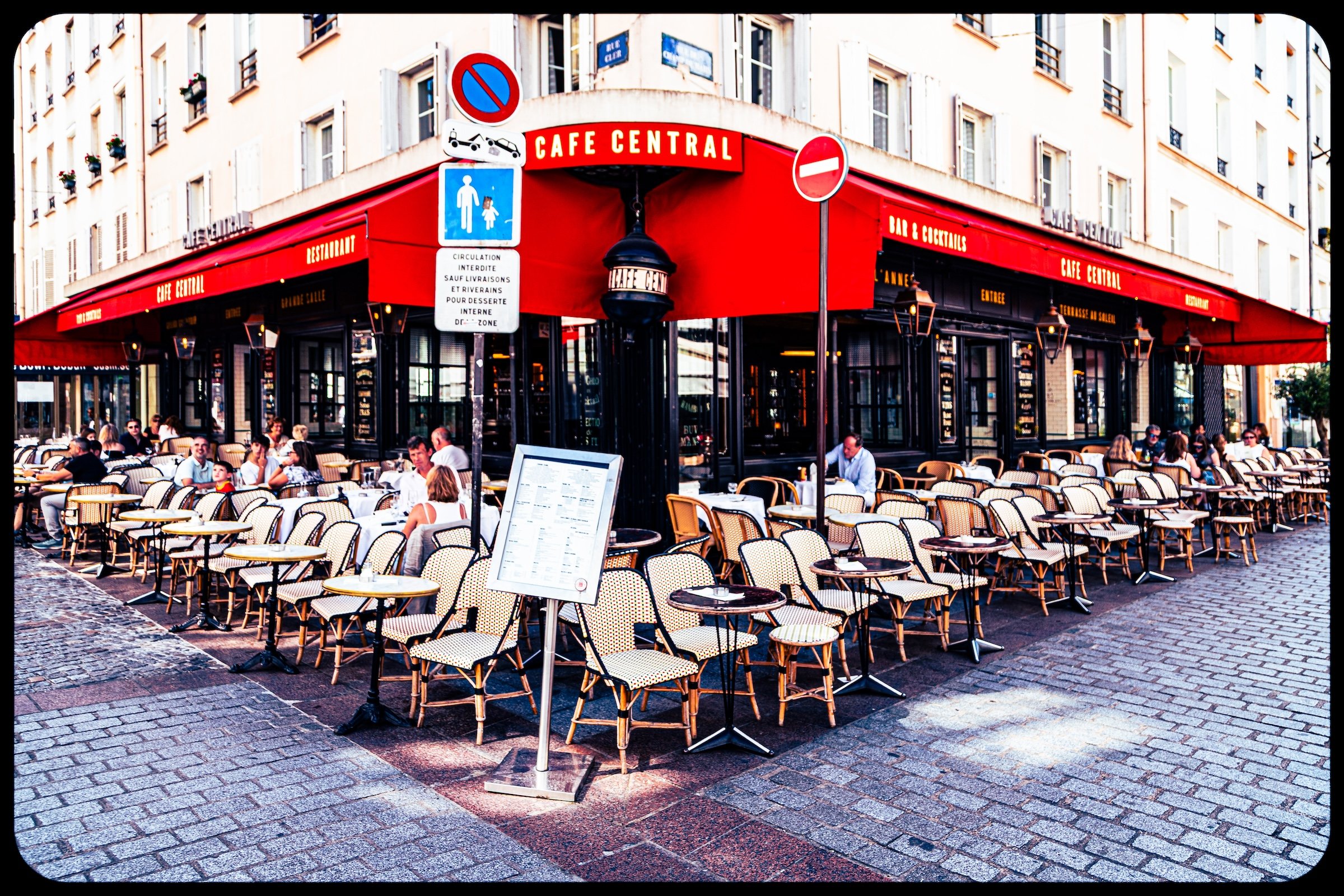
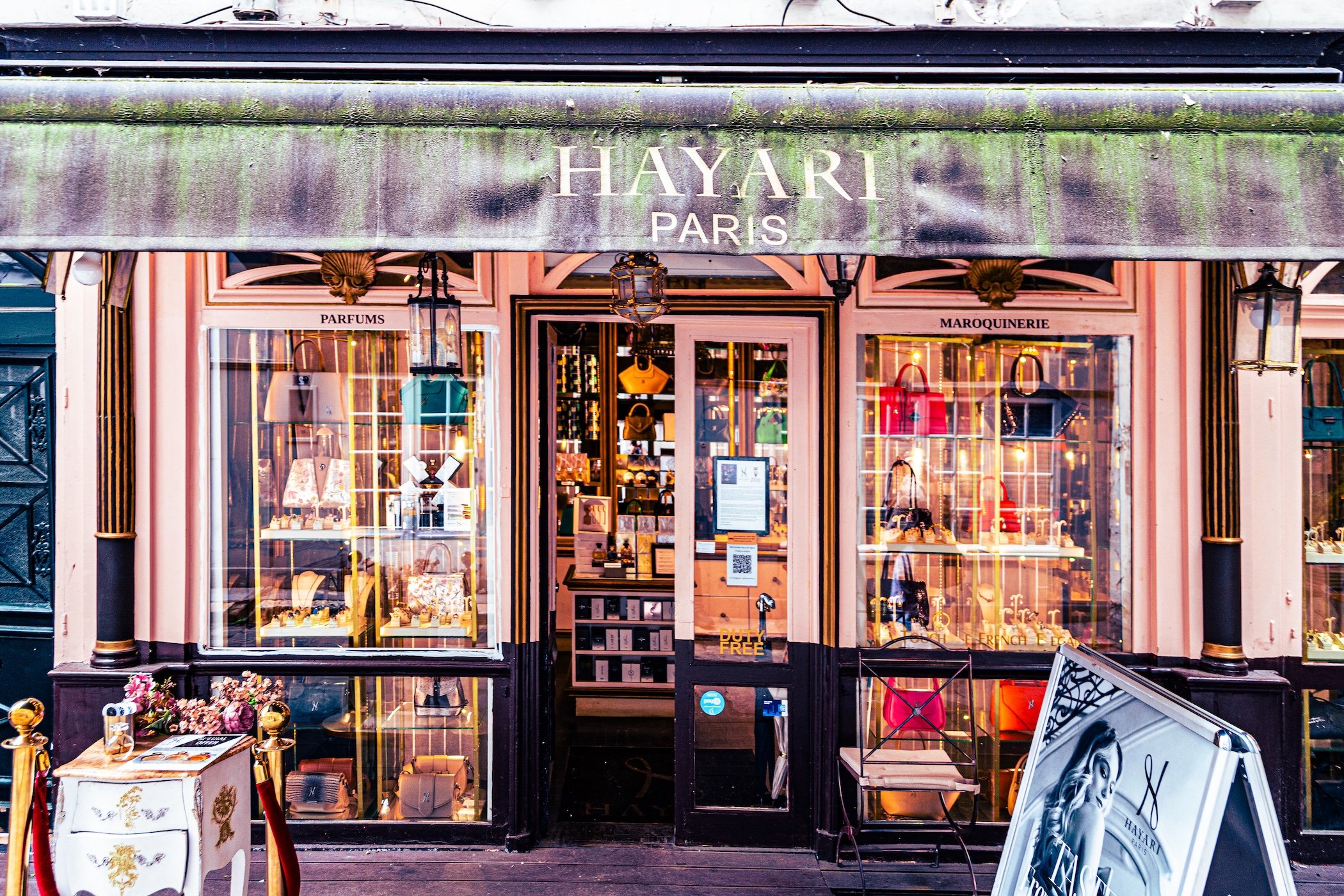
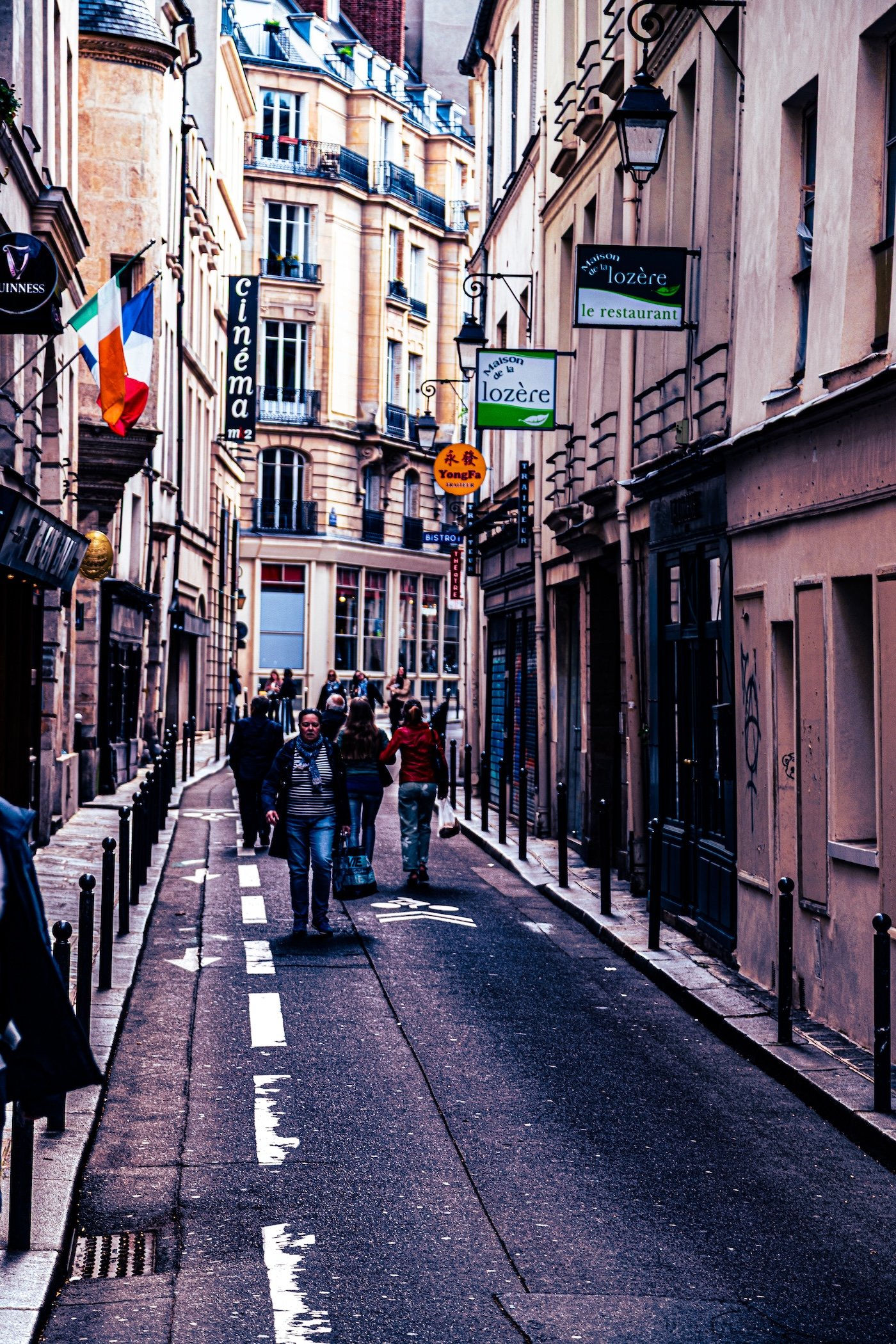
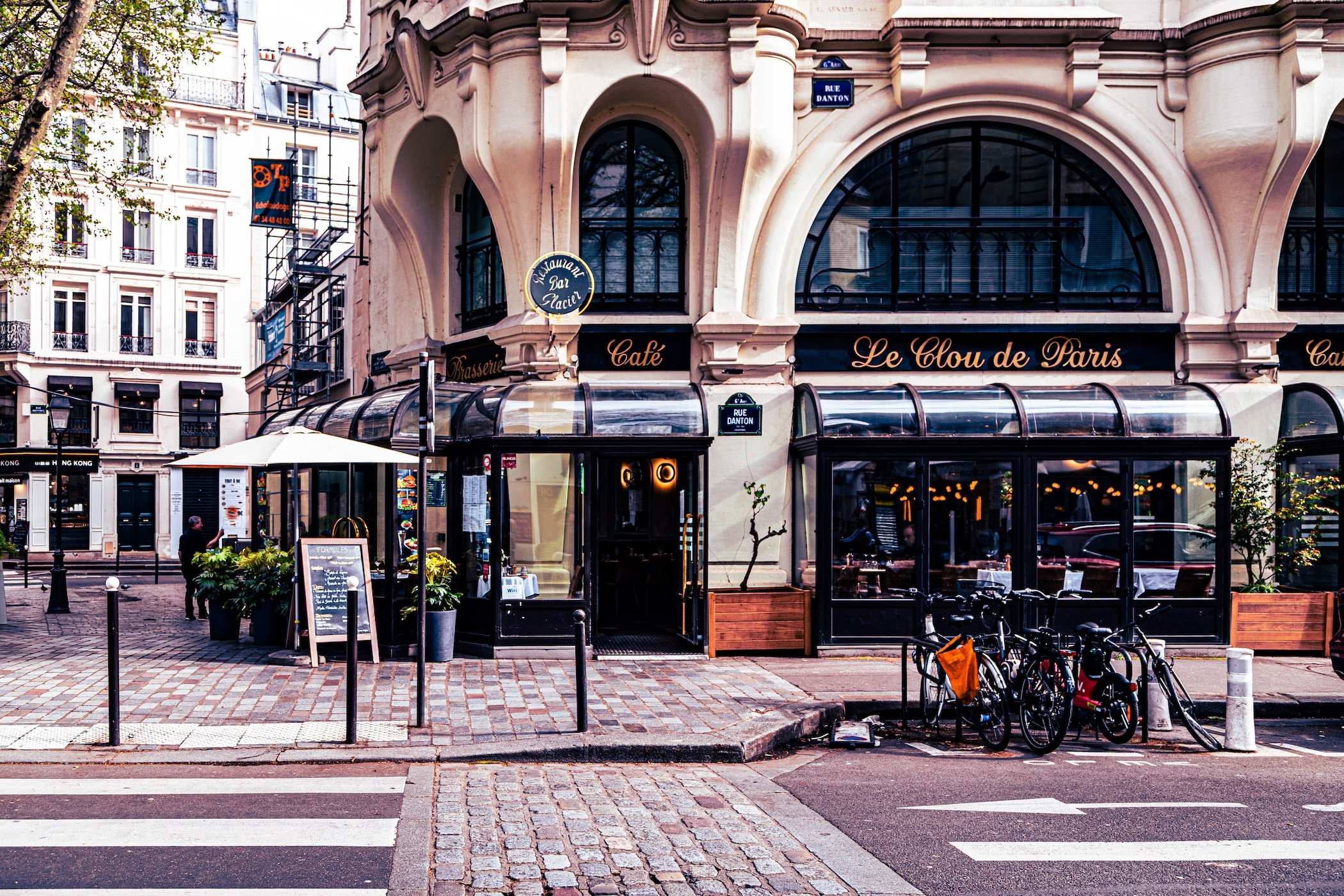
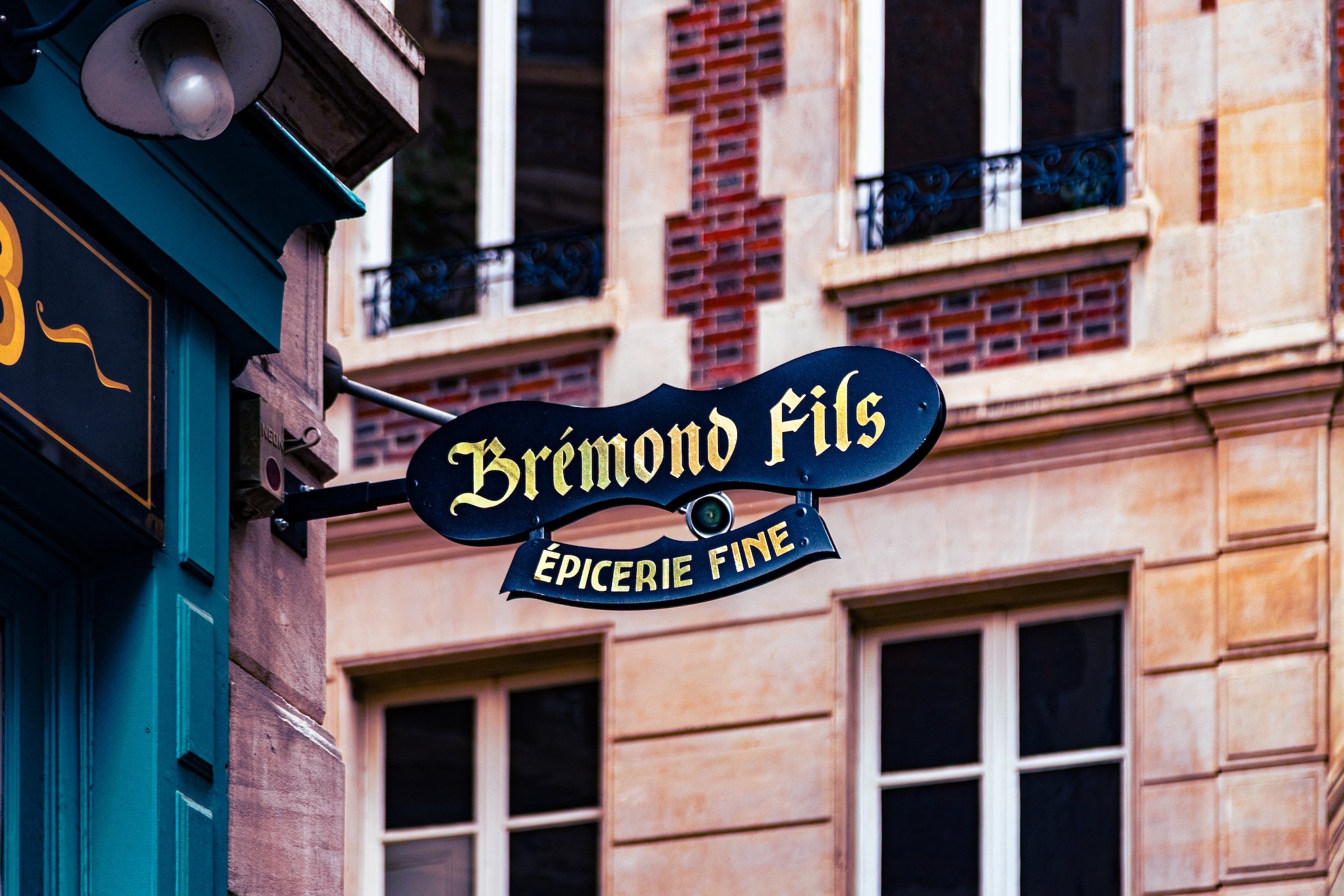
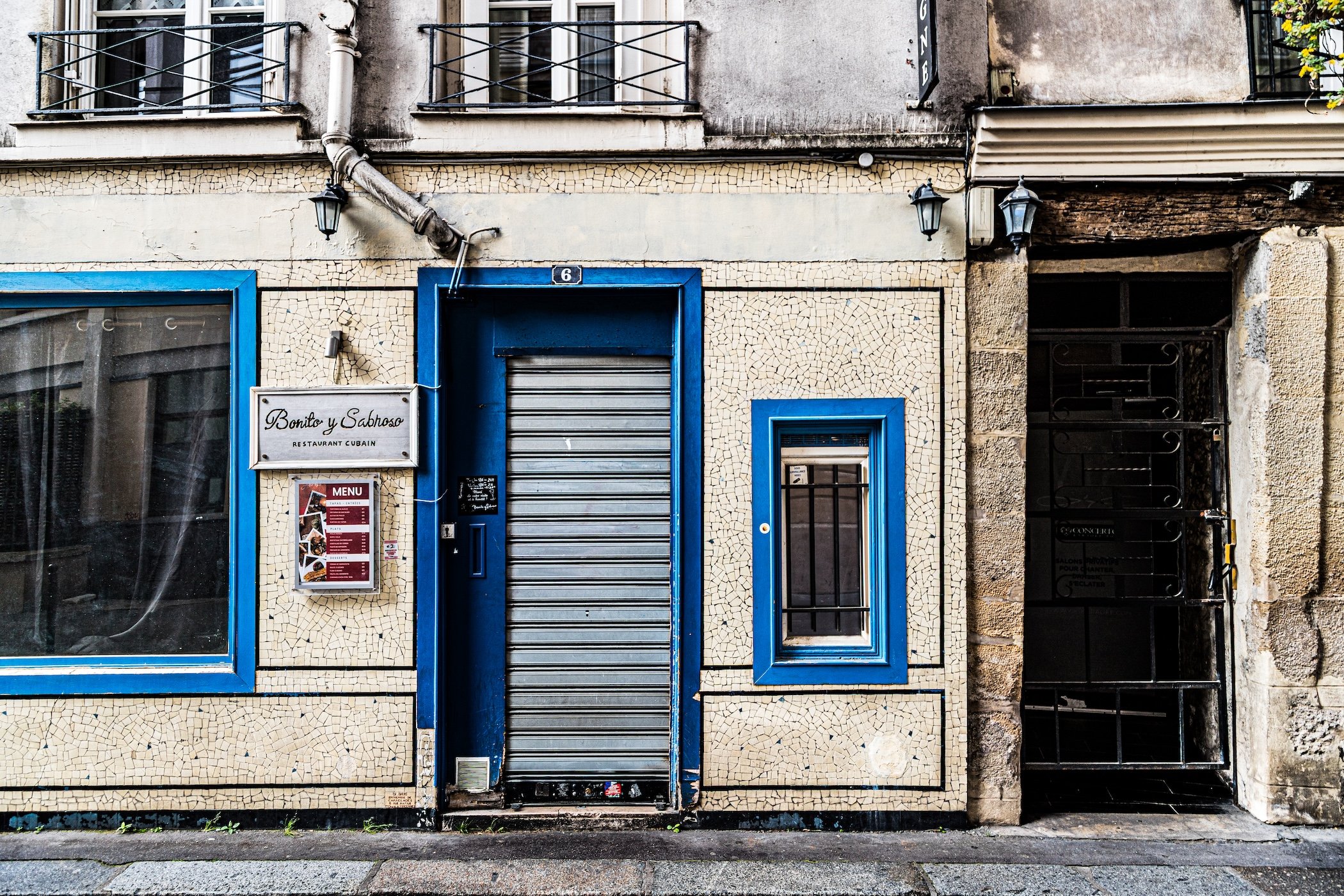
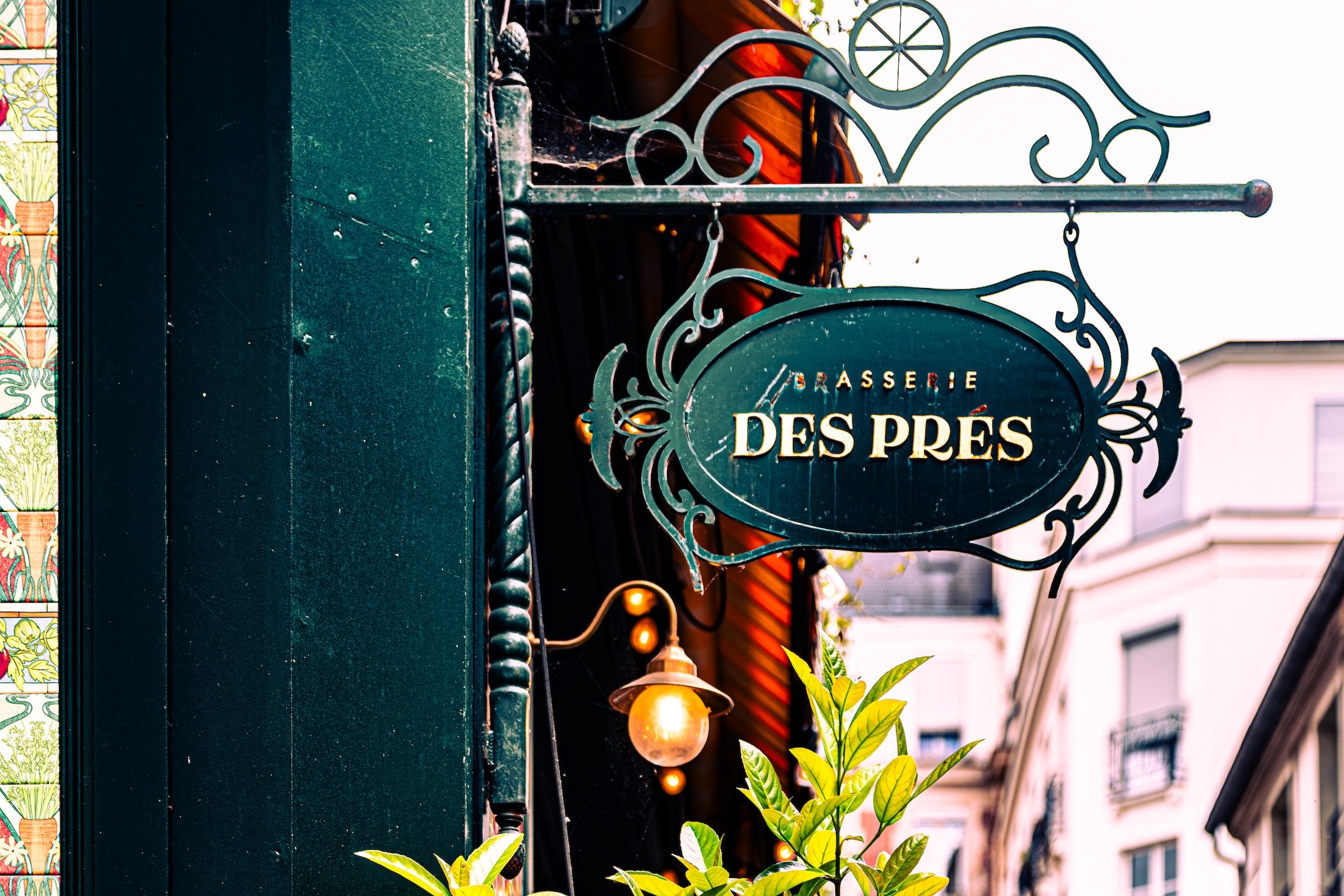
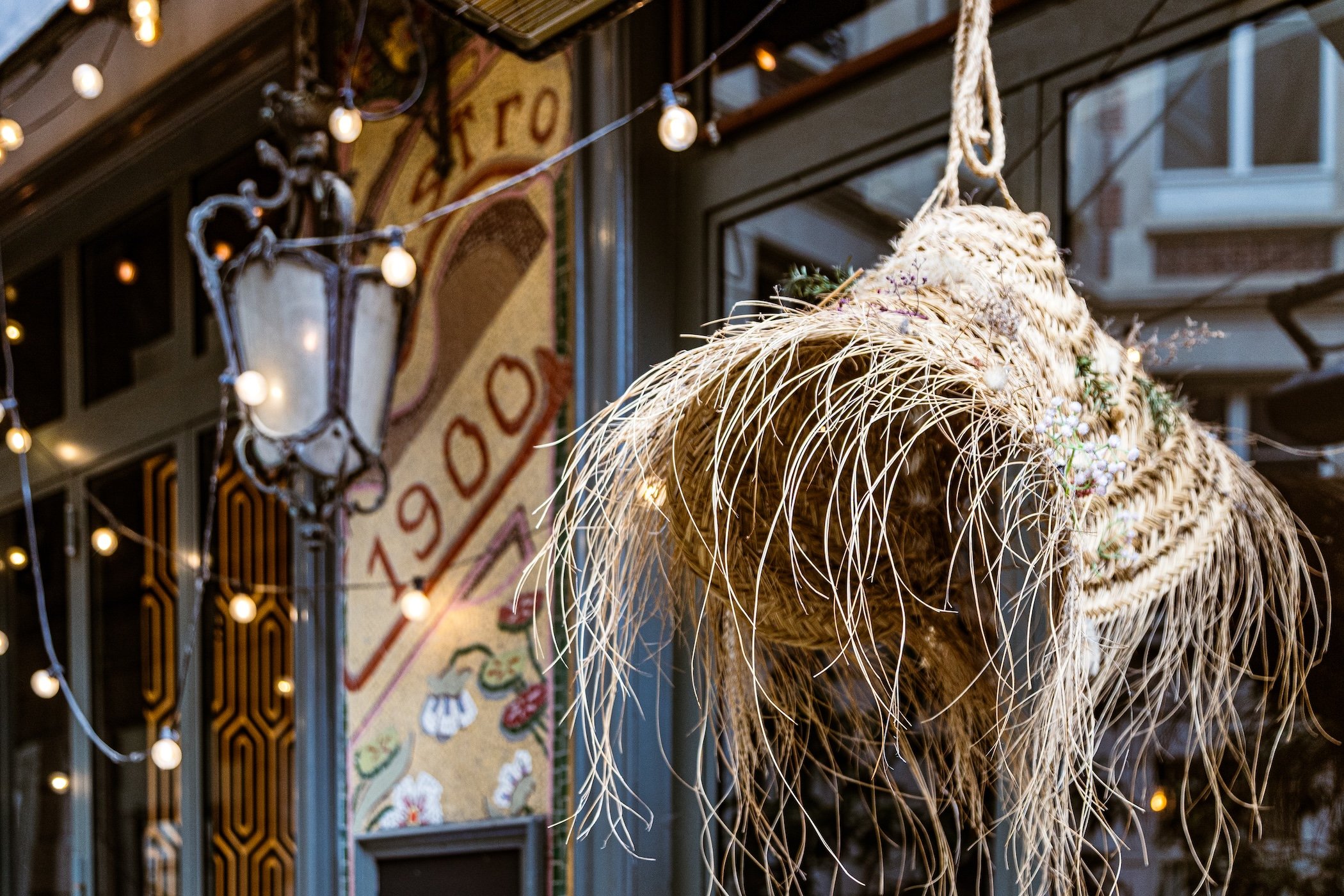
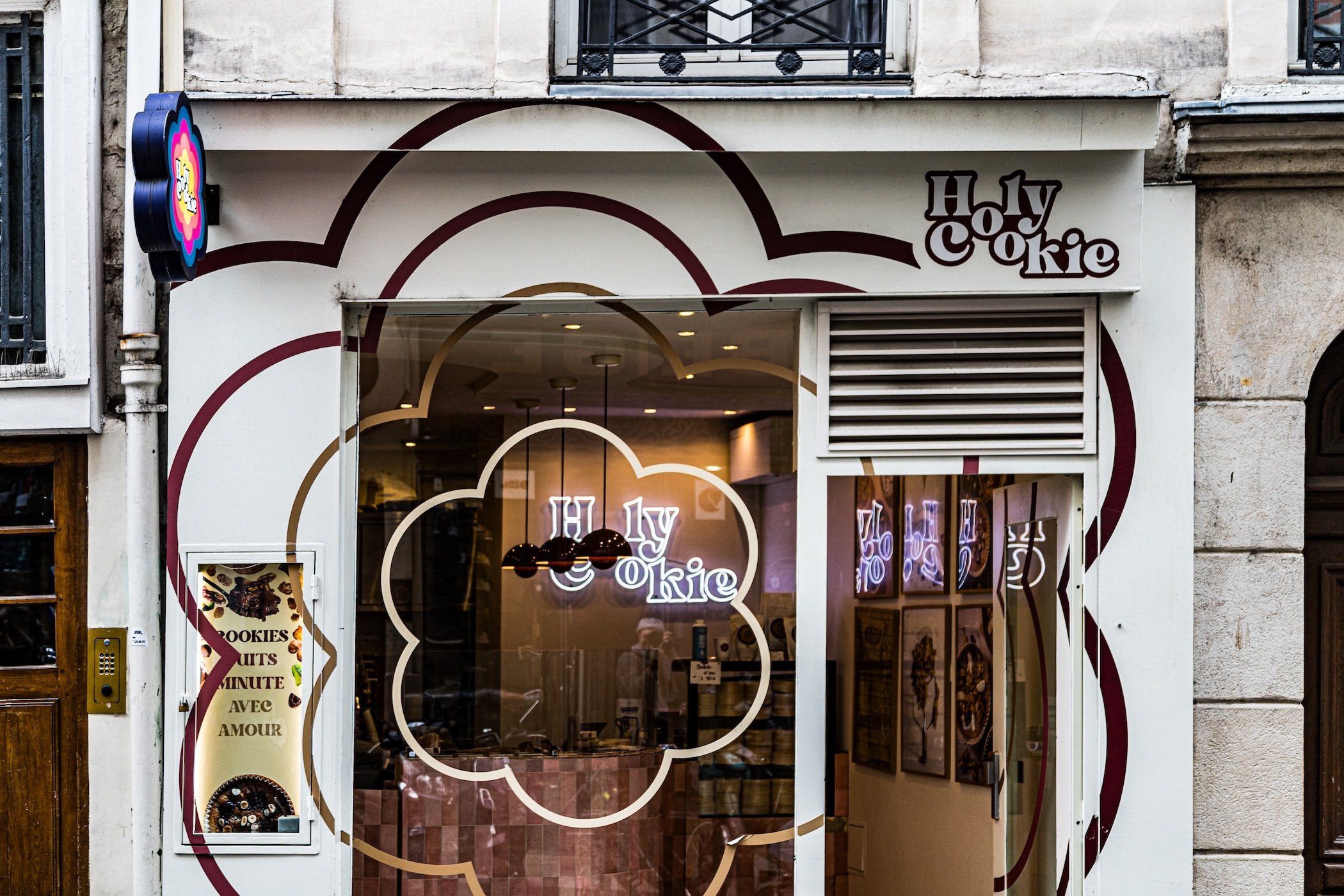
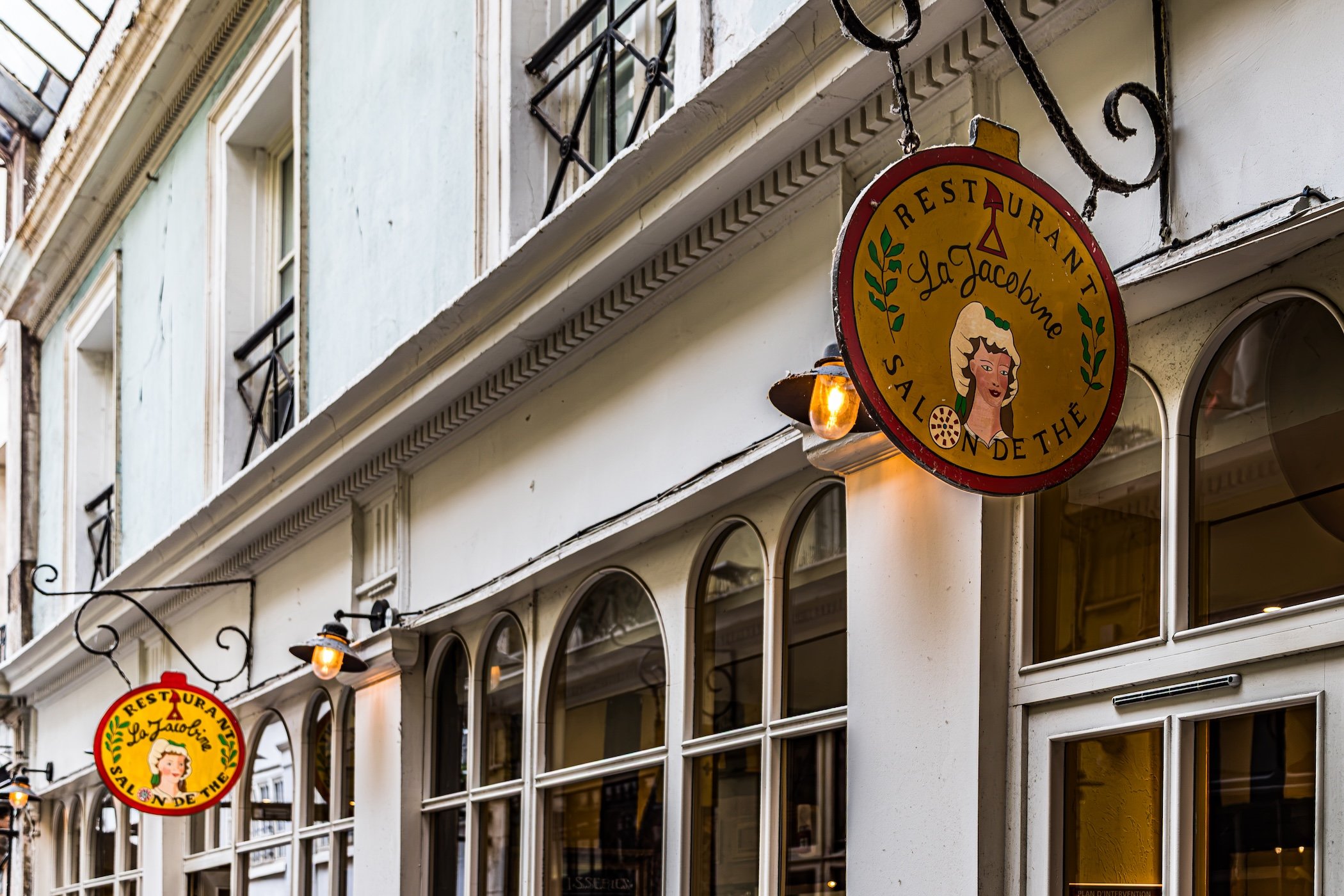
Through the lens, Monnaie became a study in compressed space, social energy, and changing scale. The opening photographs establish the busy western streets through corner façades, café crowds, storefronts, signs, architectural details, and passing vehicles. Close compositions isolate the visual personality of individual businesses—the decorative entrance of The Mazet, glowing signs, painted shopfronts, salon windows, and old hanging signs—while wider frames show how those details accumulate within the active street.
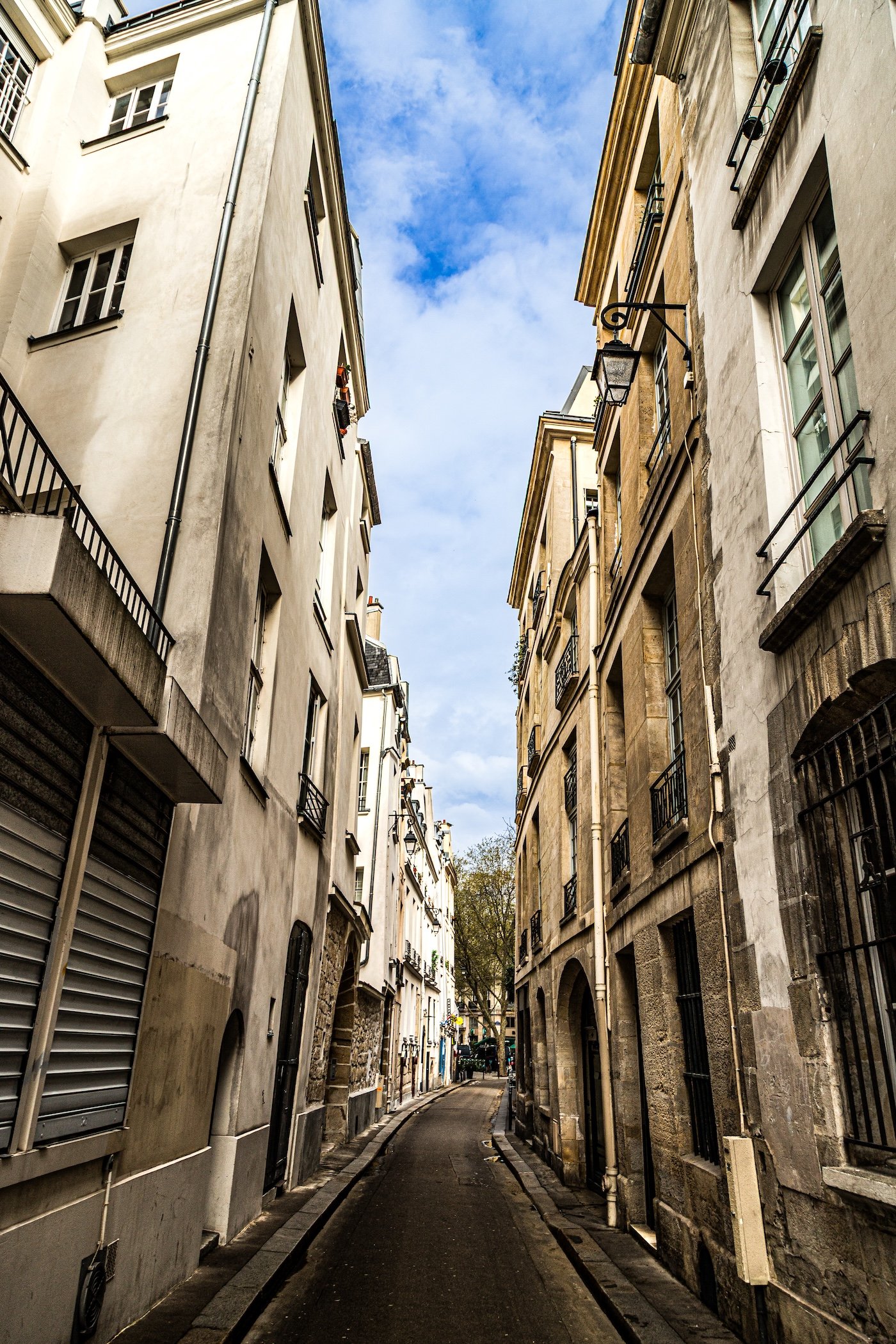
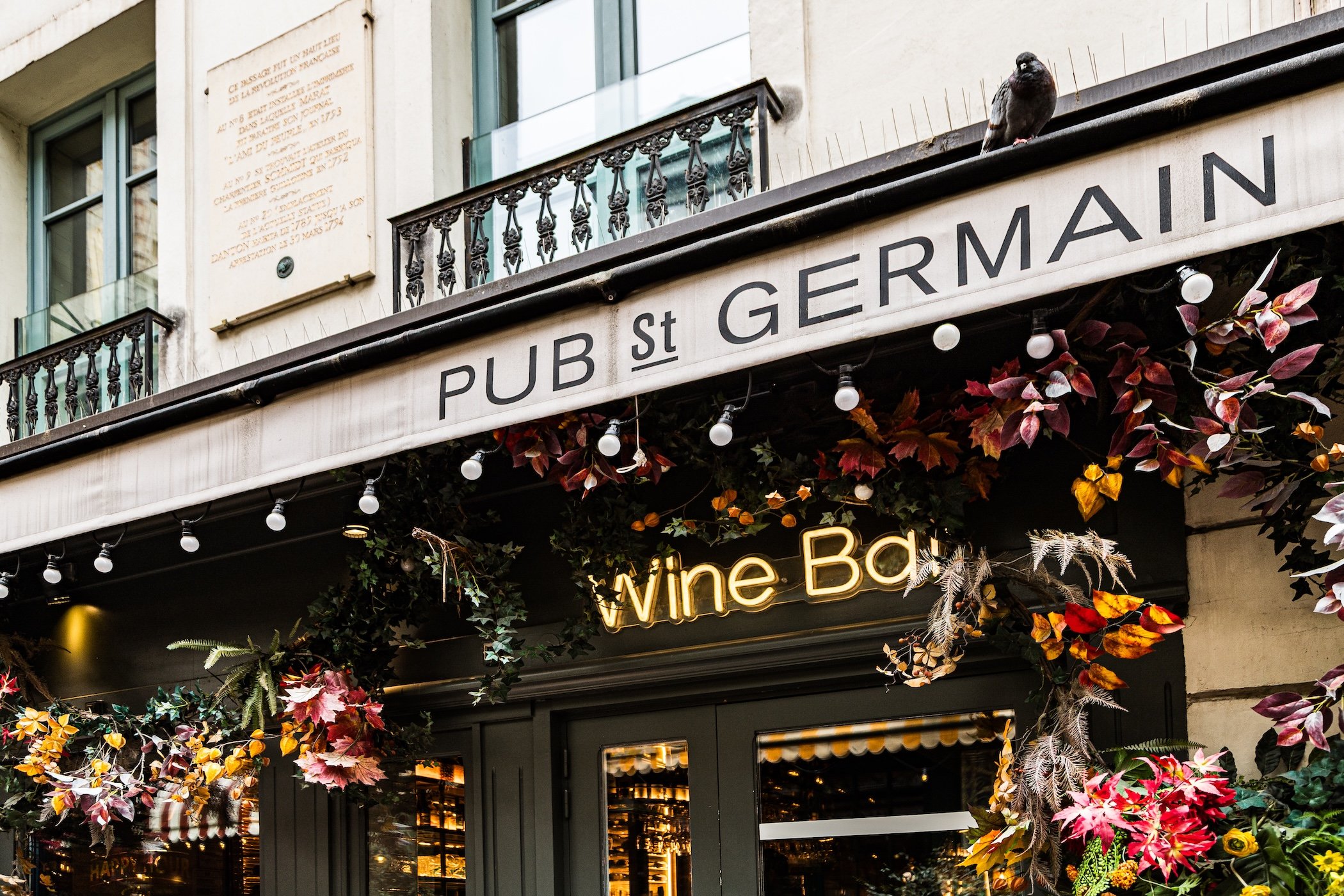
Cour du Commerce Saint-André became the photographic center of the walk. Vertical images emphasize the narrow cobbled passage and the buildings rising tightly around it, while closer studies concentrate on the names, lights, foliage, and elaborate signage of its establishments. Brasserie des Prés, Pub St Germain, and other local businesses visually reinforce the corridor’s strong Saint-Germain-facing identity. Yet the photographs also record the passage as a shared public space: tables spilling onto cobblestones, people gathering beneath awnings, and the historic enclosure functioning as a lively contemporary destination.
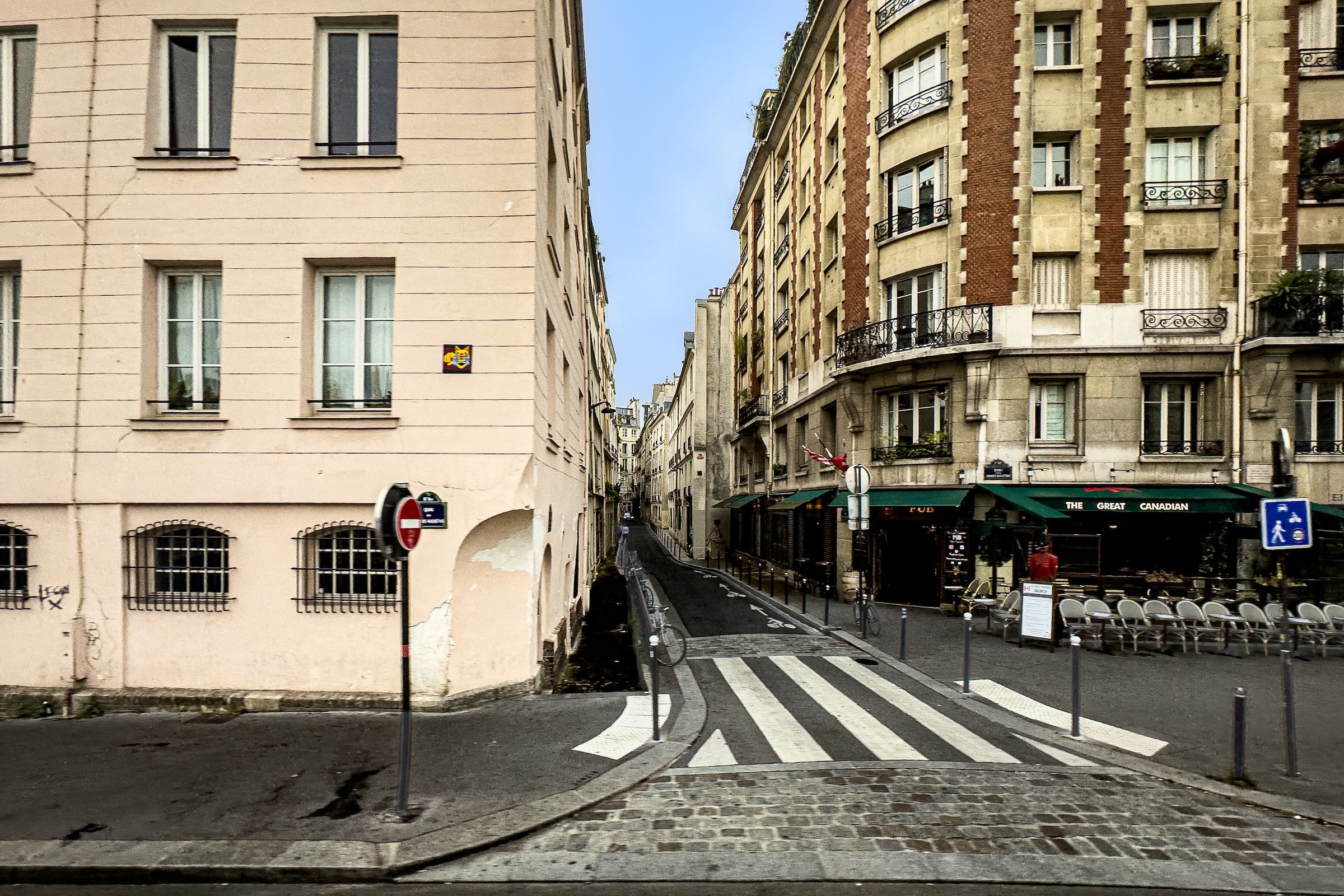
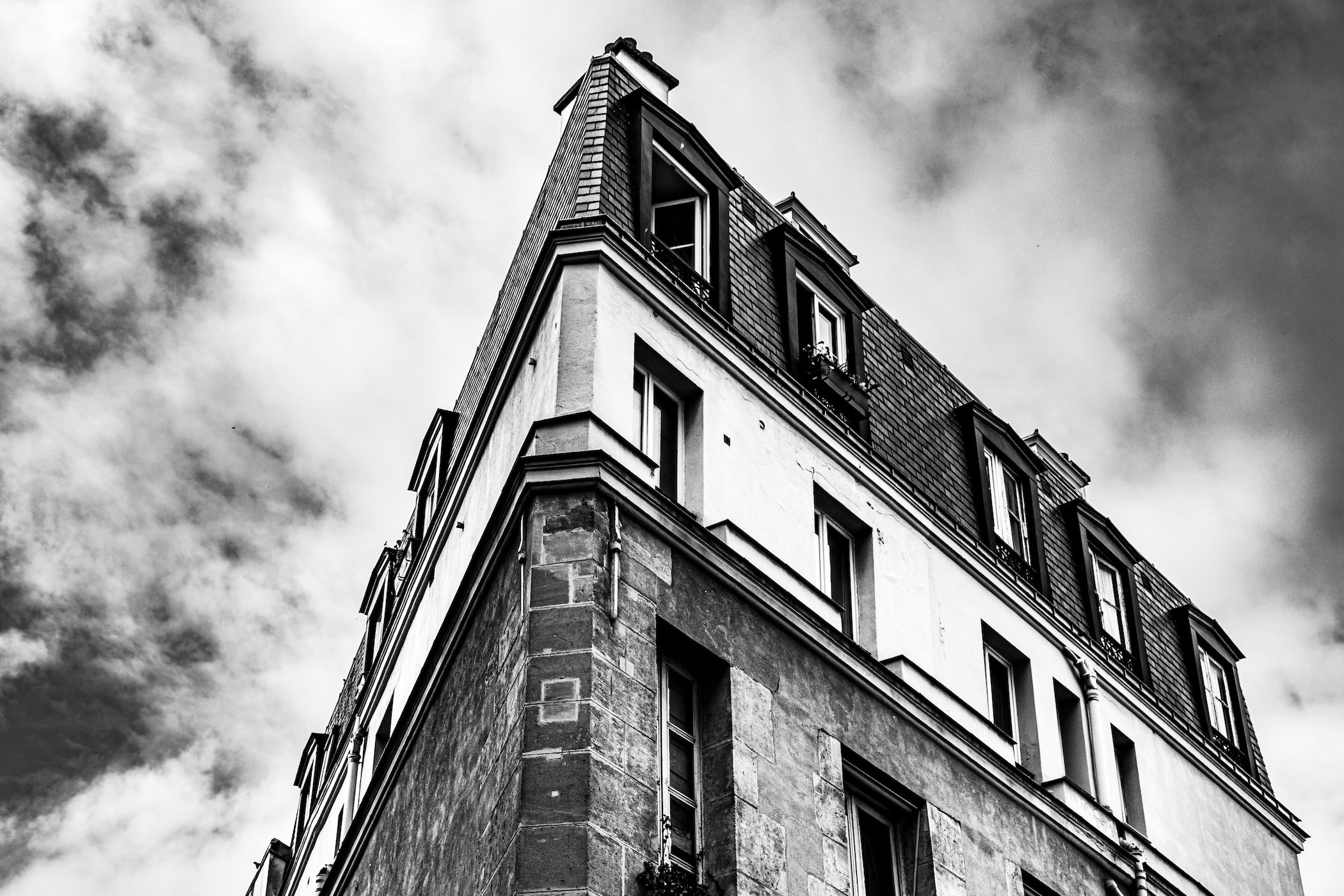
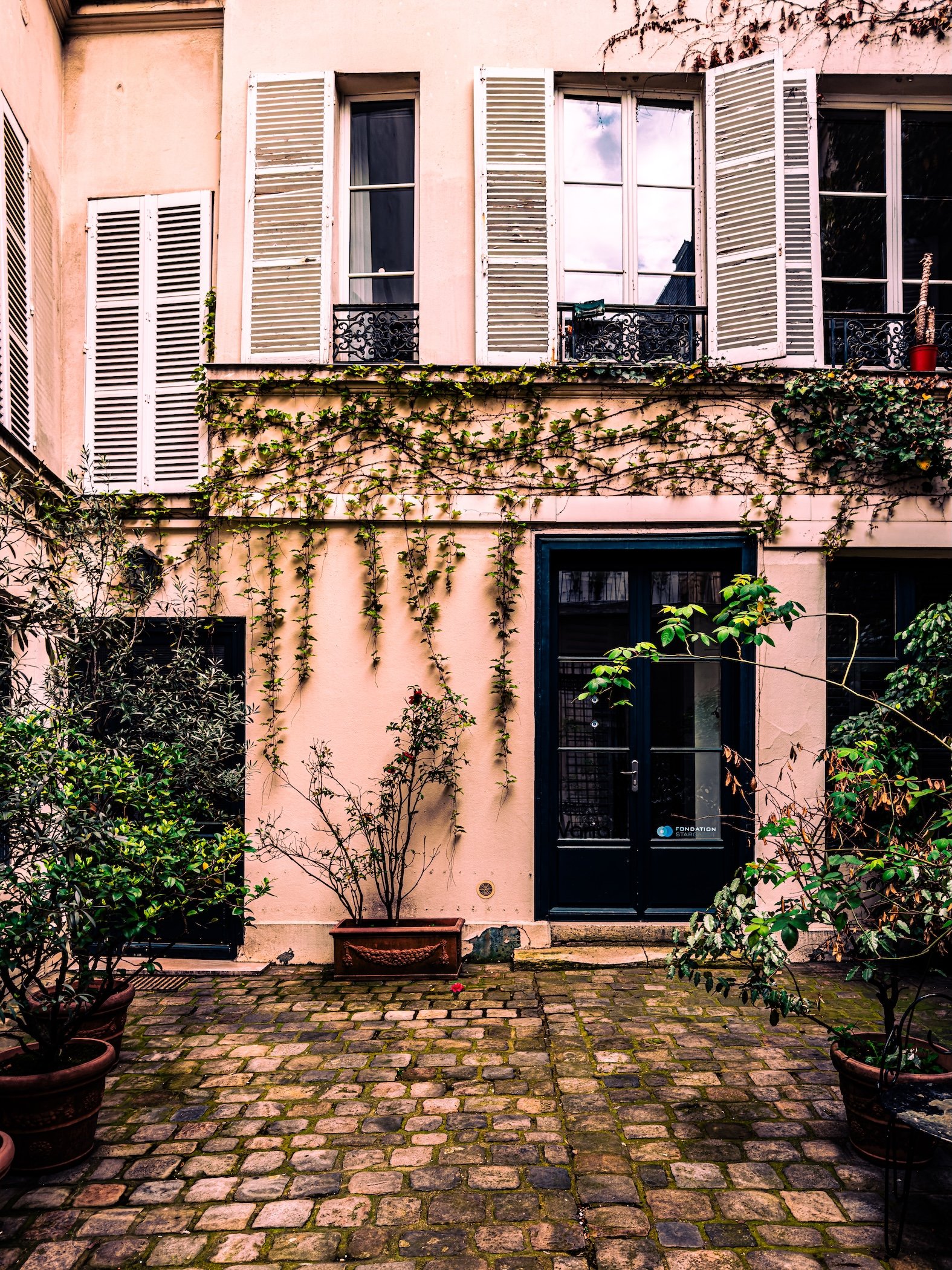
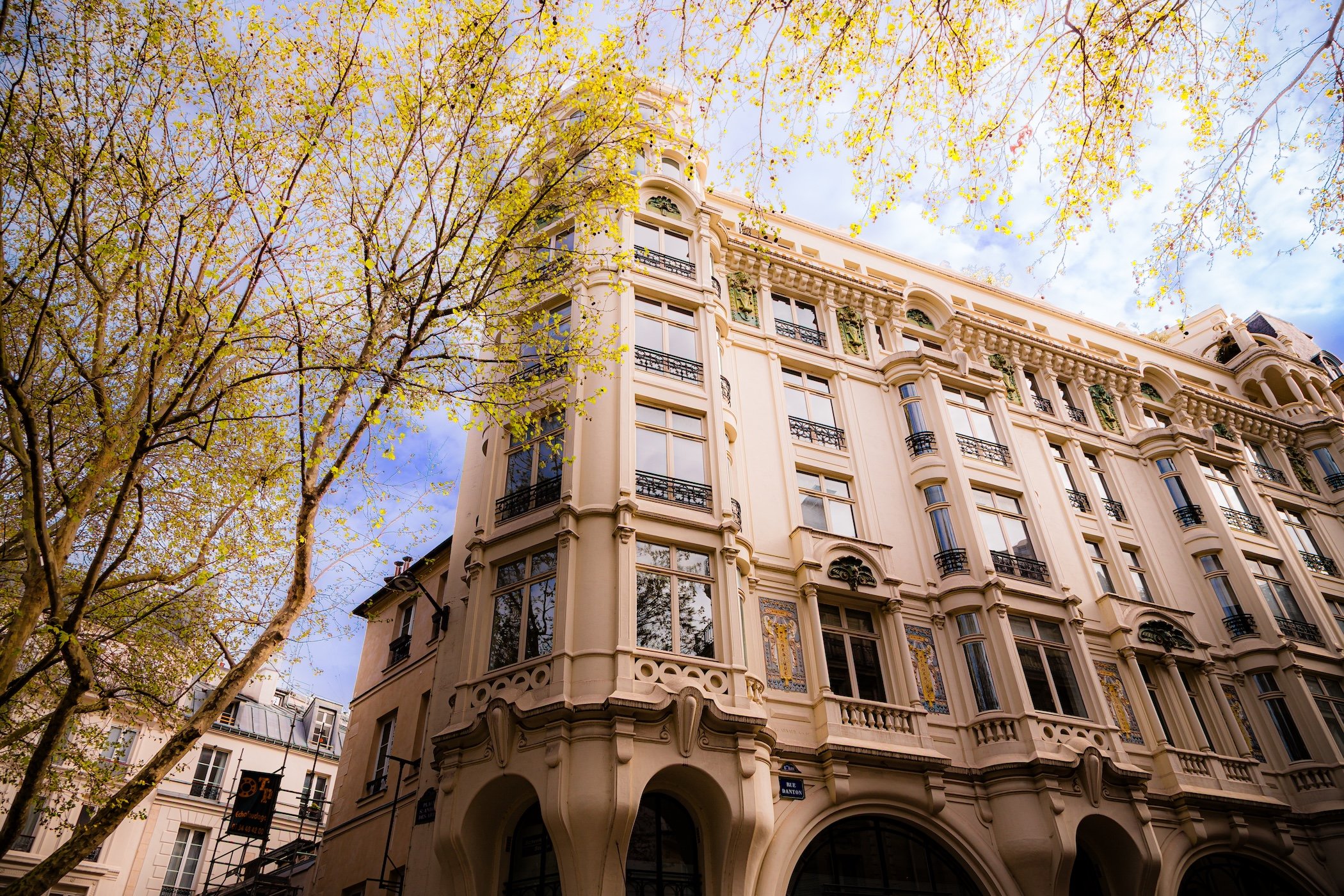
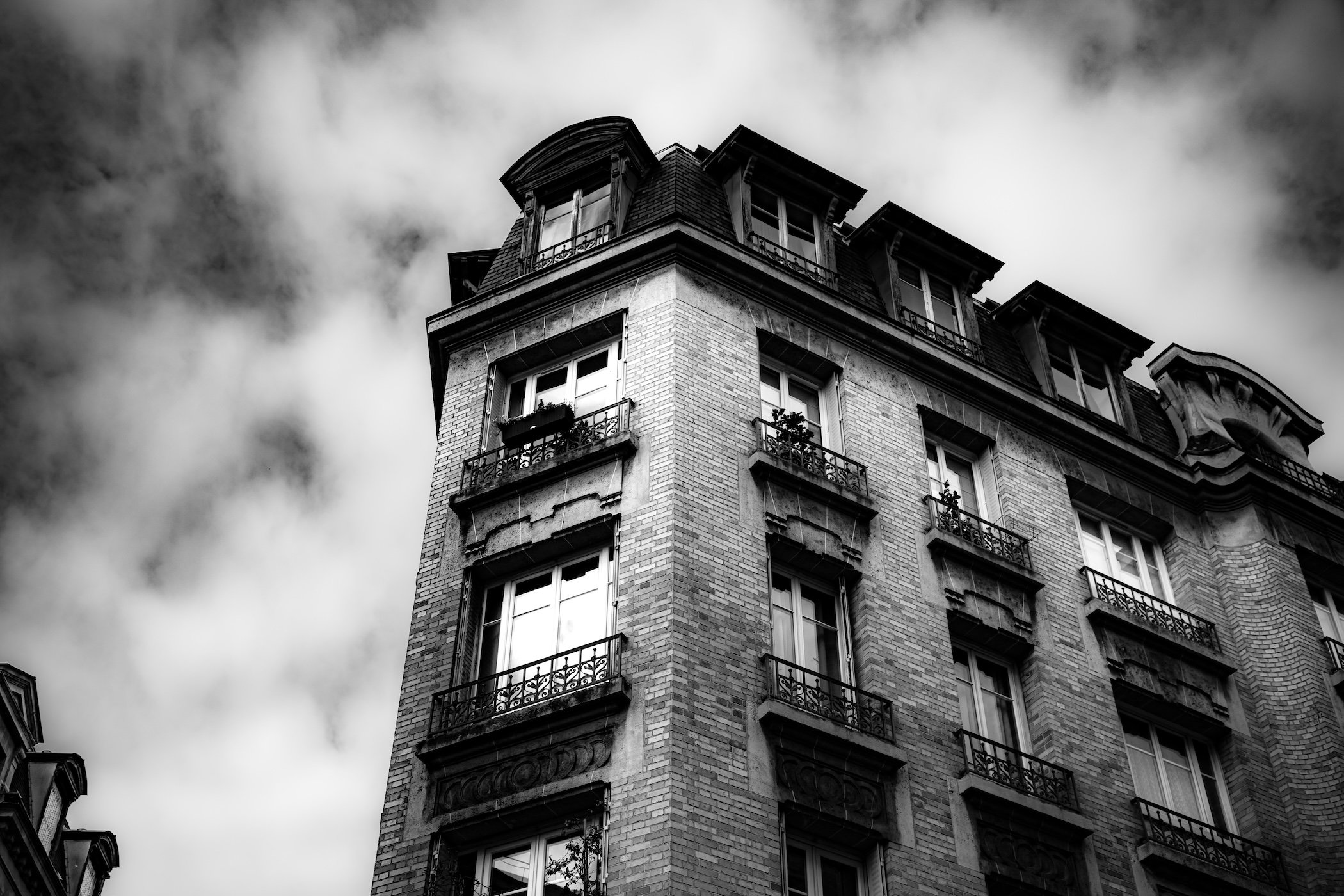
The camera then followed the quarter’s movement between openness and enclosure. Boulevard Saint-Germain invited broader architectural views, while Rue de l’Éperon, Rue Suger, and Rue Francisque-Gay returned the sequence to tight perspectives, receding streets, façades seen at sharp angles, and small moments of street art or commercial color. Black-and-white photographs strengthened the geometry and age of these corridors; color emphasized signs, cafés, spring foliage, and the warm surfaces of the streets. By Place Saint-André-des-Arts, the lens was recording not just a location but a transition—the gradual change from the social and artistic world of Saint-Germain toward the denser Saint-Michel streets of the Latin Quarter.
If you visit Paris, these ideas can help inspire your own photography.
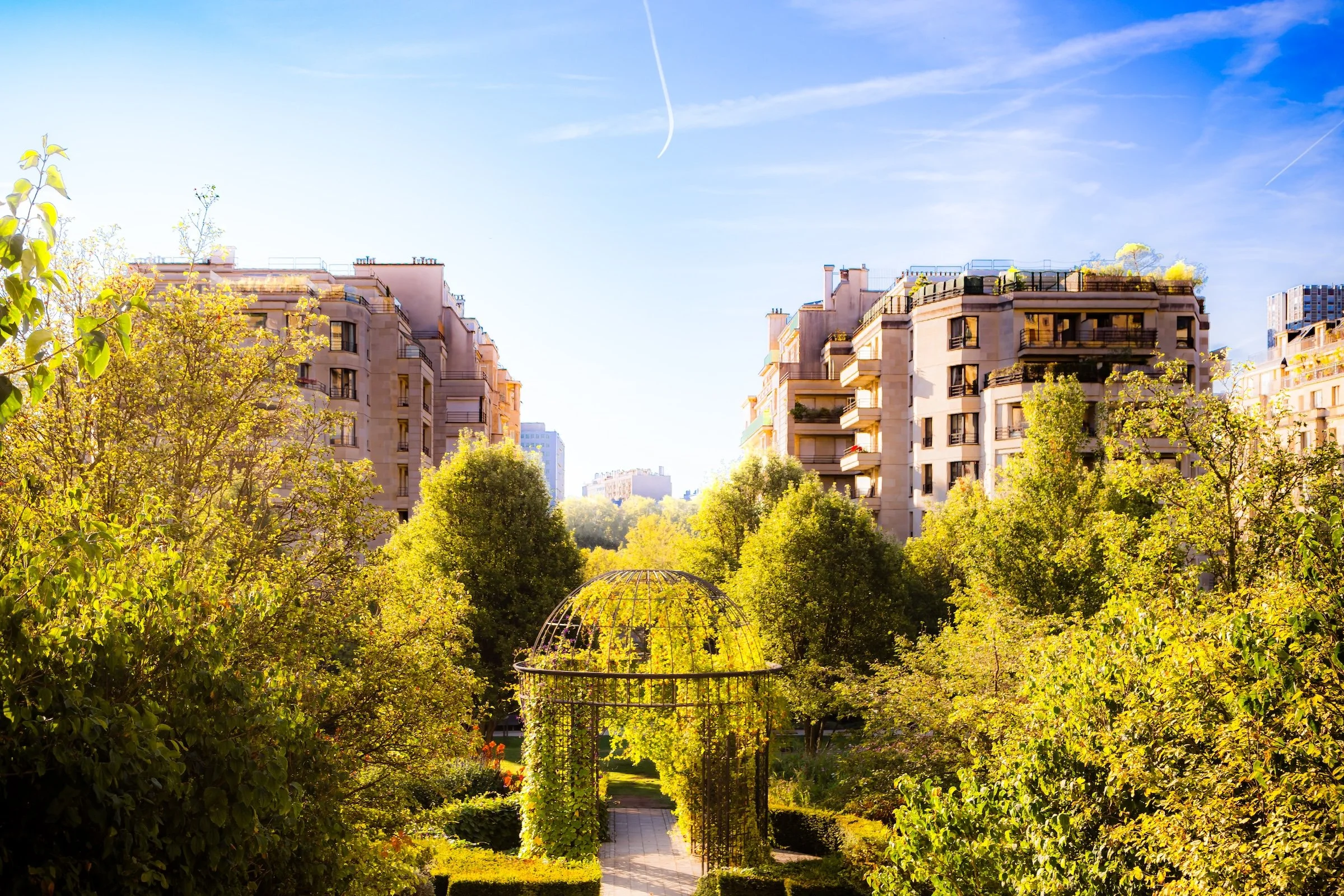
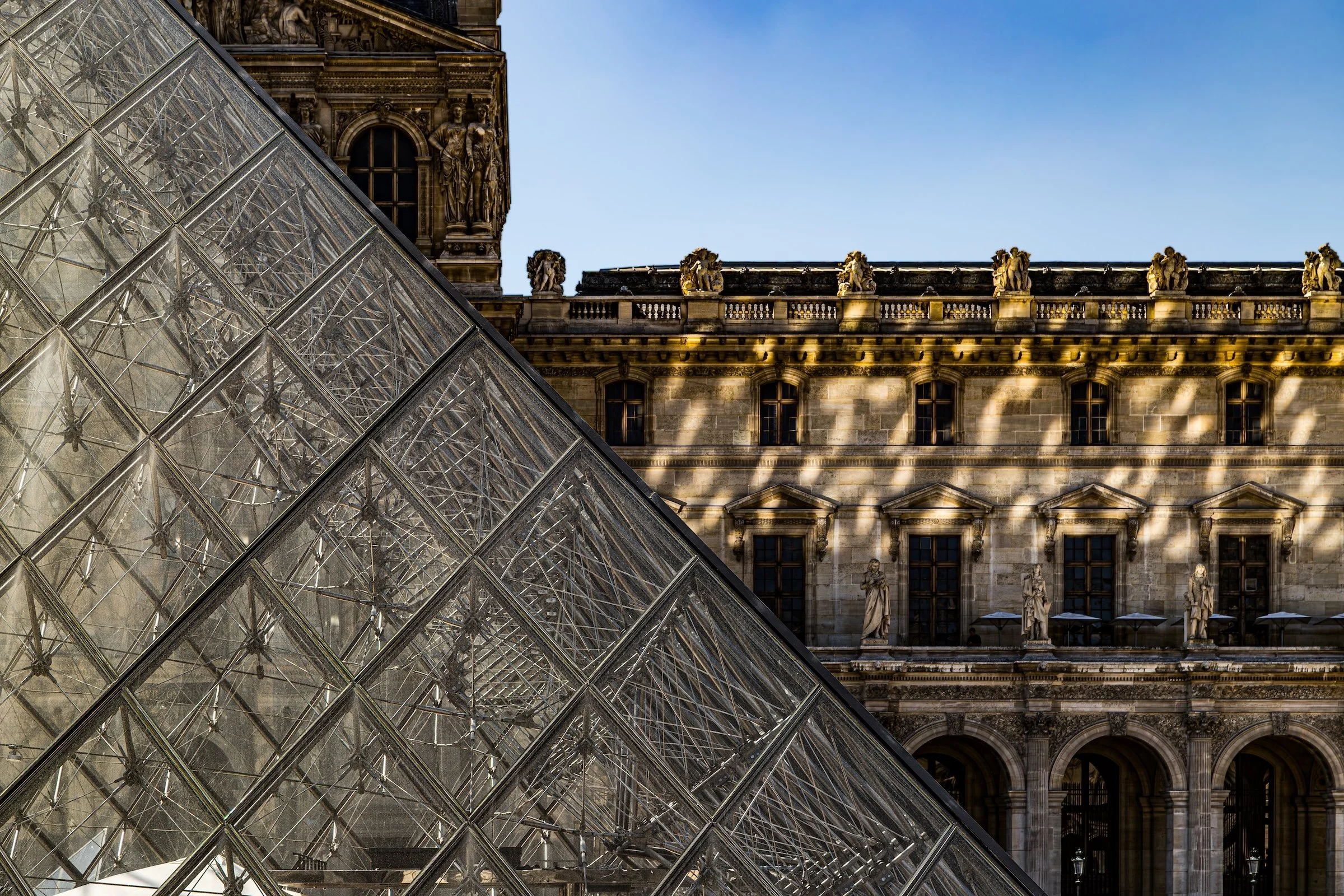
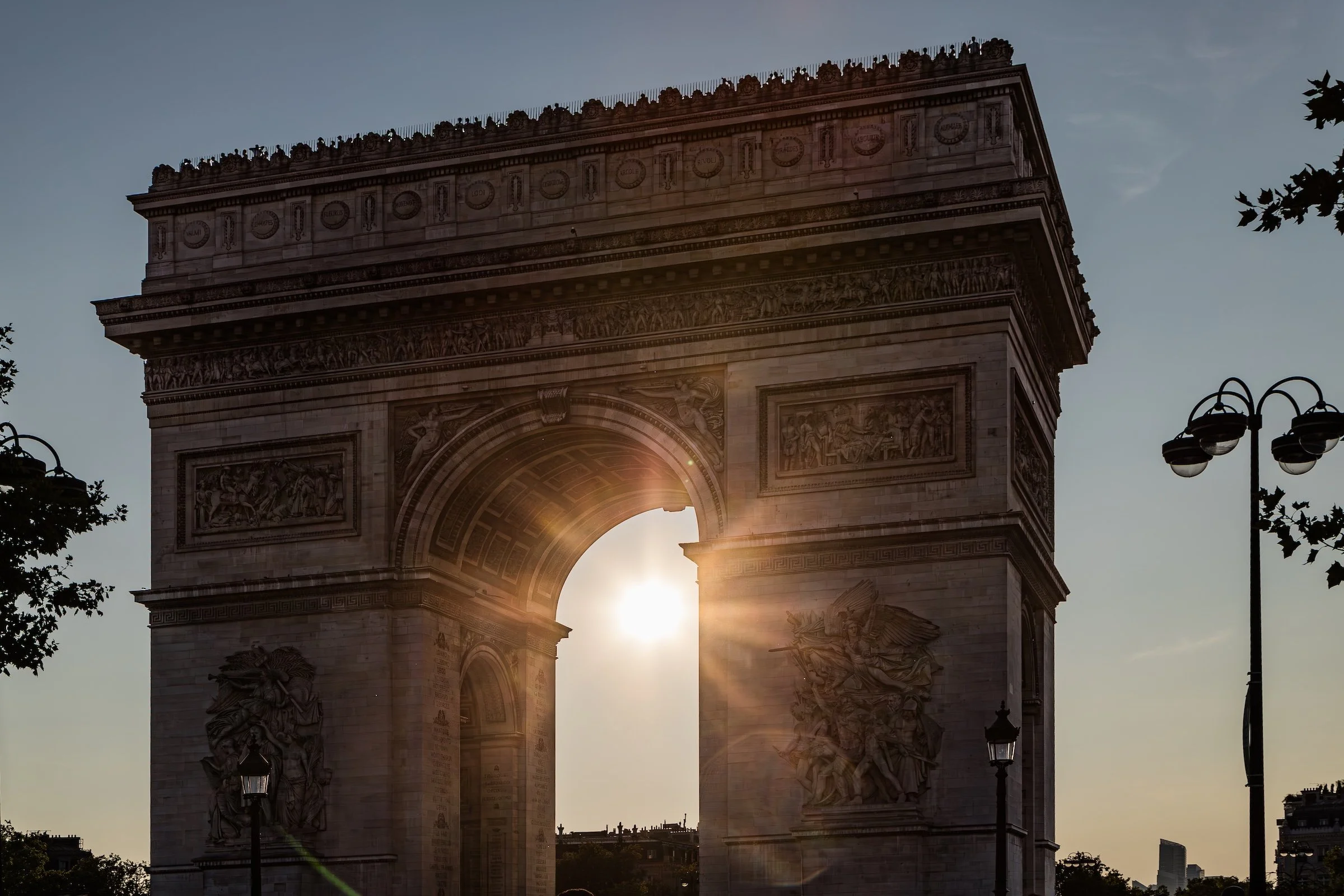
Paris: J’Espere, Je Rêve, Je Vive
Monnaie Photo Gallery
Monnaie Flâneur Notes
-
10:30 AM
Conditions: 22°C (72°F) | Humidity: 71%.
Monnaie was seen through a sequence of major Left Bank routes: Boulevard Saint-Germain, Boulevard Saint-Michel, Quai des Grands Augustins, and Quai de Conti. The quarter appeared as one of the intellectual and institutional edges of the Seine, with broad boulevards giving way to riverfront institutions and the formal architecture of the Left Bank.
Other neighborhoods visited:
-
15:22-16:26 PM
Conditions: Sunny 15°C (59°F) | Humidity: 66%
Monnaie occupies the unenviable position of being situated between Saint-Germain-des-Prés and Sorbonne, two cultural neighborhoods whose identities can easily overshadow the territory between them. Yet walking through the quarter revealed something far more compelling than an indistinct borderland. Monnaie felt visually and culturally rich in its own right, shaped by the convergence of the larger Left Bank worlds around it.
My route began at the confluence of Rue Mazarine, Rue de Buci, Rue Dauphine, and Rue Saint-André-des-Arts. The streets were already animated by cafés, restaurants, shops, and people enjoying the spring afternoon. Heading east brought me to what became the unexpected discovery of the walk: Cour du Commerce Saint-André. On the map, it had appeared simply as a curious passage worth investigating. In person, it opened into a bustling historical gem.
The Cour was overflowing with life. Restaurants, cafés, breweries, salons, and terraces occupied the cobblestones, while pedestrians moved through a corridor carrying centuries of political, commercial, and cultural history. The space felt neither preserved as a relic nor stripped of its past by contemporary use. Its history and present life existed together. Old walls, narrow proportions, ornate signs, greenery, conversation, and restaurant tables all contributed to one of those especially rewarding Parisian discoveries in which a seemingly minor line on the map becomes a complete neighborhood encounter.
After briefly emerging onto the Haussmannian breadth of Boulevard Saint-Germain, I turned north onto Rue de l’Éperon and returned almost immediately to the narrower scale of older Paris. Here, the quarter’s relationship with literature and art remained visible through its small establishments, signs, façades, and intimate street form. The route narrowed still further along the winding Rue Suger, where the dense buildings and compressed perspective created a strong sense of enclosure before the street opened toward Place Saint-André-des-Arts.
The Place felt like a genuine gateway. Behind me lay the Odéon-facing cafés, cultural history, and social world associated with Saint-Germain-des-Prés. Ahead lay Boulevard Saint-Michel and the medieval, student-filled streets of the Latin Quarter. Between them, the smaller Saint-Michel district began to assert its own identity—not merely as a blurred border, but as the hinge connecting the two larger cultural neighborhoods.
My time in Monnaie ended as Rue Francisque-Gay carried me toward Boulevard Saint-Michel. By then, the quarter’s position between famous neighbors no longer felt like a disadvantage. Its transitions were the experience. Monnaie brought together cobbled passages and broad boulevards, historic establishments and contemporary crowds, cultural memory and daily commerce. Rather than being diluted by the identities surrounding it, the quarter gained its particular character from the way those identities met, overlapped, and gradually changed within its streets.
Other neighborhoods visited:
Explore Paris
-

The twenty arrondissements form the civic spiral of Paris, organizing the city into its broad local districts of government, identity, and daily life.
-
Each arrondissement is divided into four official administrative quarters, giving Paris a more precise civic and geographic framework.
-

The conseils de quartier bring participation to street level, giving residents a voice in neighborhood needs, public space, and local civic life.
-

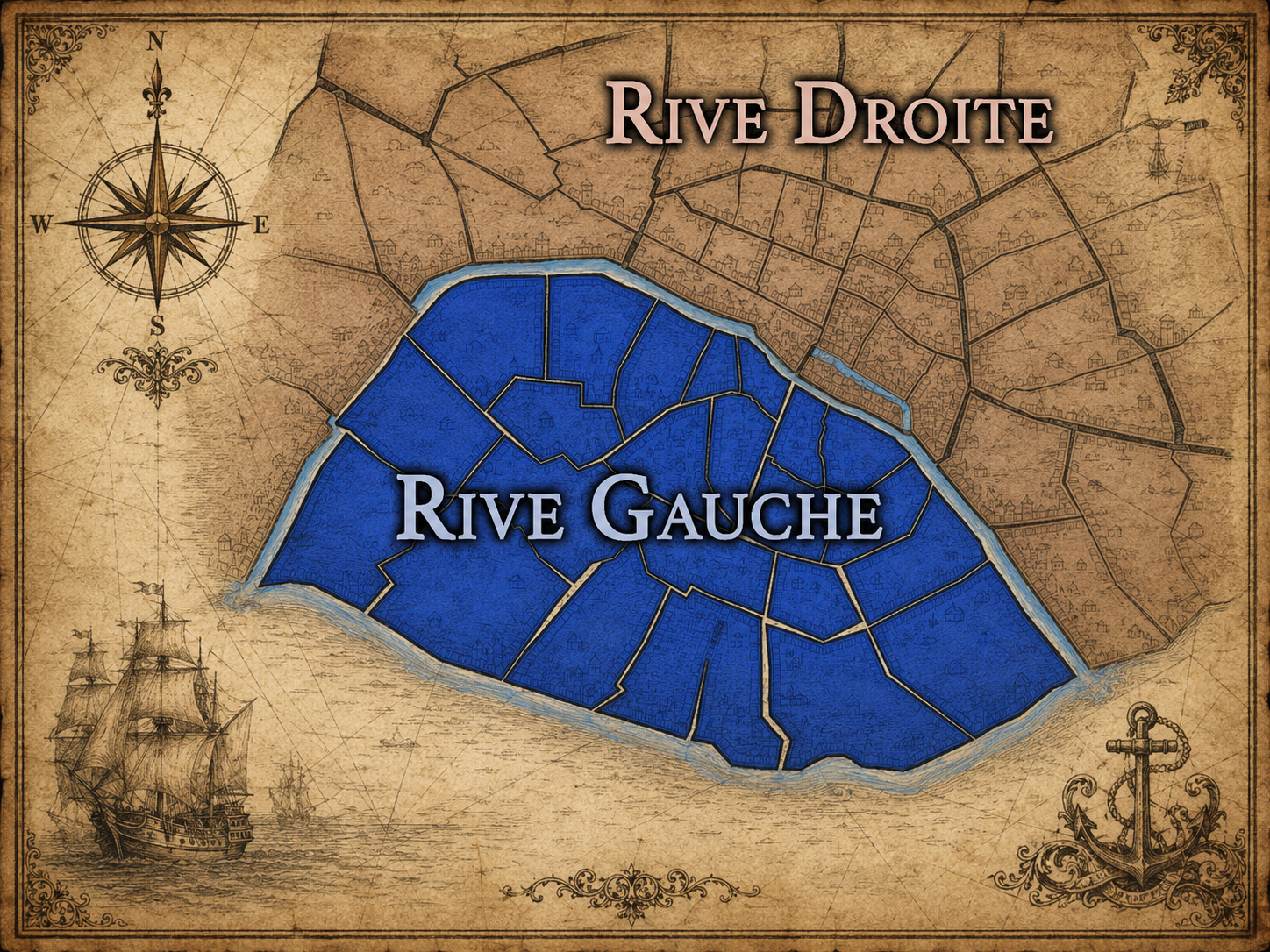
Les Deux Rives trace Paris through the Seine’s two banks, revealing how the Rive Droite and Rive Gauche shaped the city’s civic power, commerce, learning, art, and cultural identity.
-
Cultural neighborhoods reveal the Paris people recognize through history, cafés, architecture, memory, atmosphere, and local belonging.