
3e - ENFANTS-ROUGES
Quartiers Administratifs
Welcome to the Enfants-Rouges neighborhood page! Enfants-Rouges is a quartier administratif — the 10th administrative quarter — one of 80 such districts across Paris. As a quartier administratif of the 3e Arrondissement - Temple, Enfants-Rouges belongs to a formal layer of Parisian geography and is centered around the Marché des Enfants-Rouges, Rue de Bretagne, and the northern Marais. Enfants-Rouges blends market life, historic hôtels particuliers, cafés, galleries, and the intimate scale of old Paris.
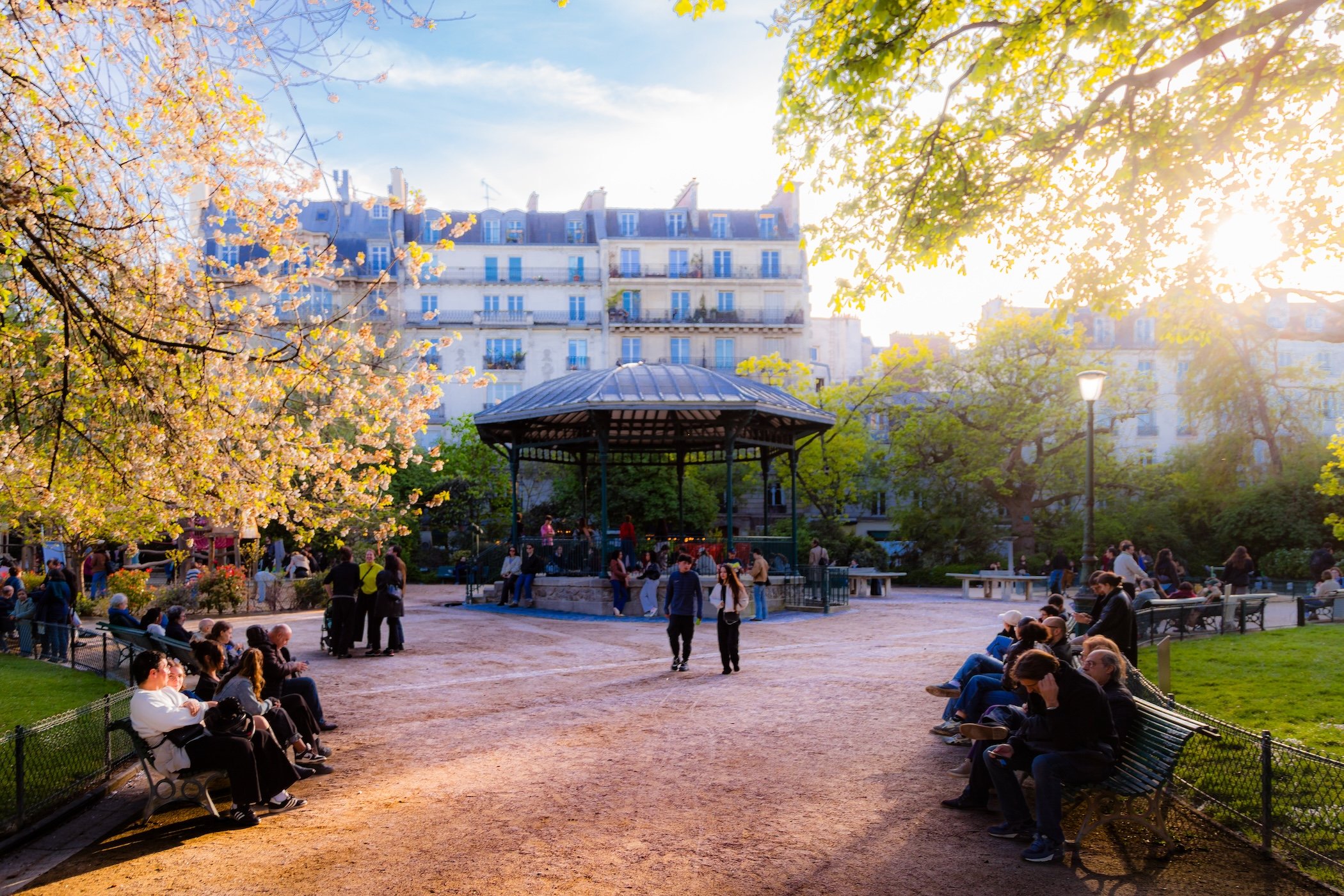
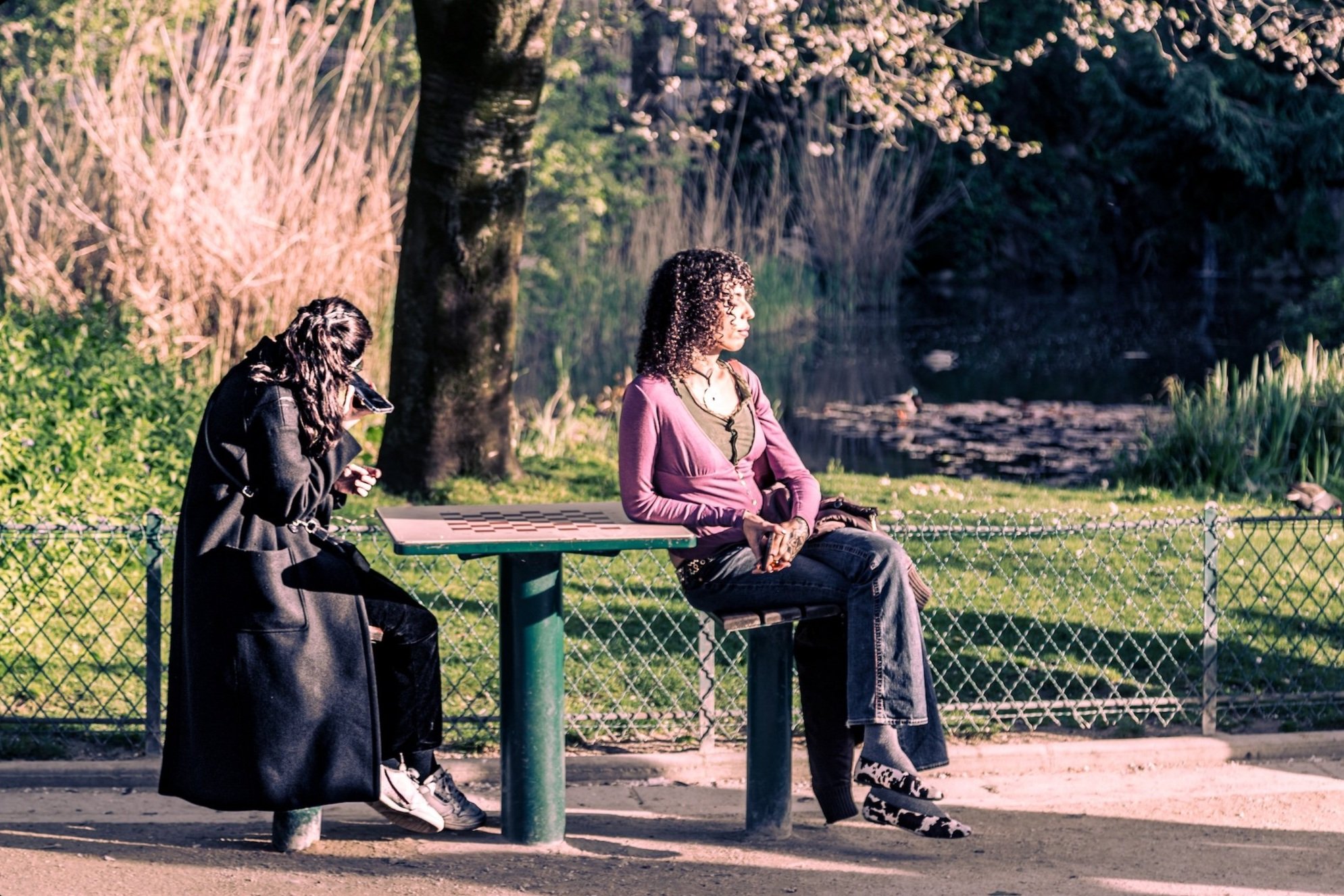
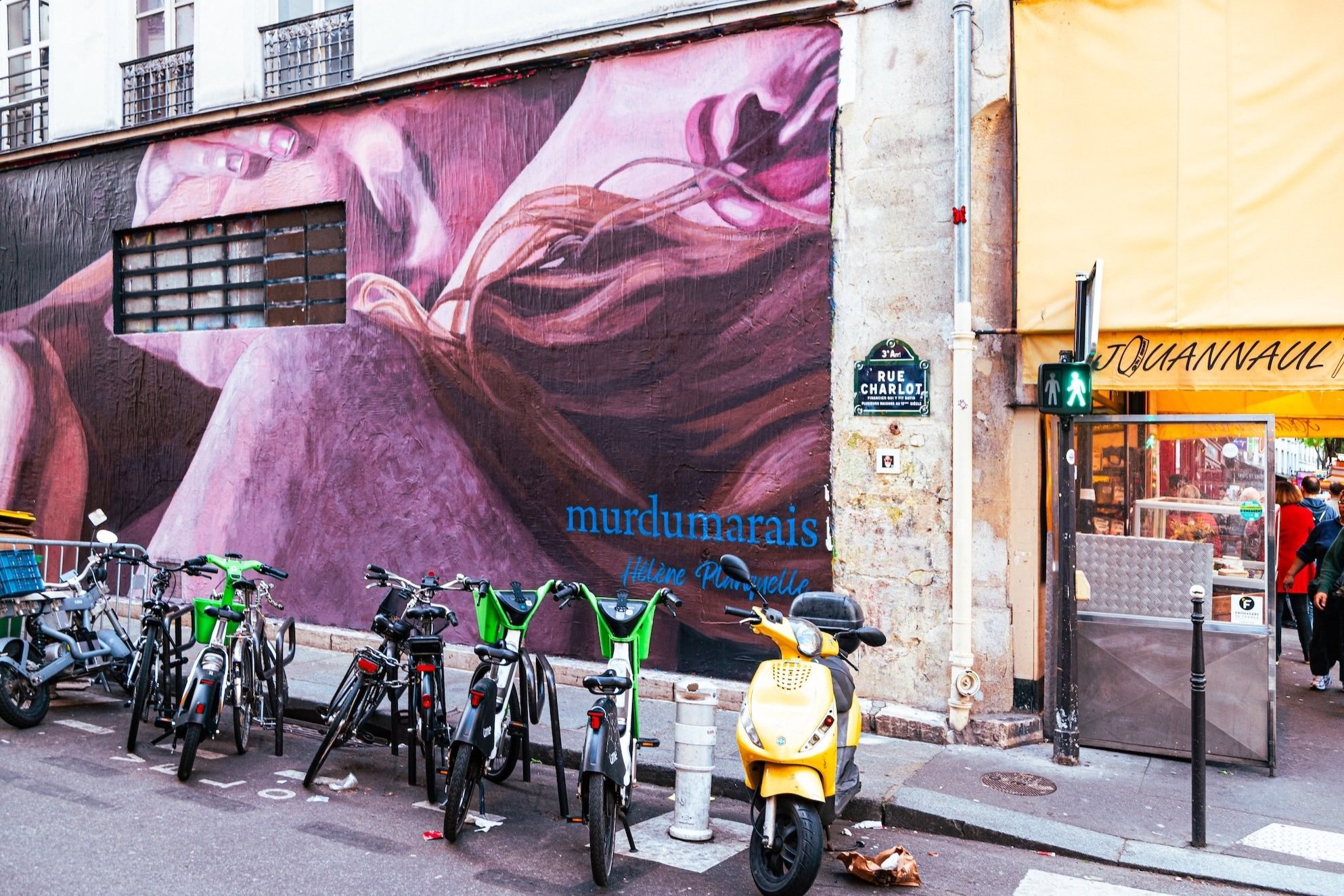
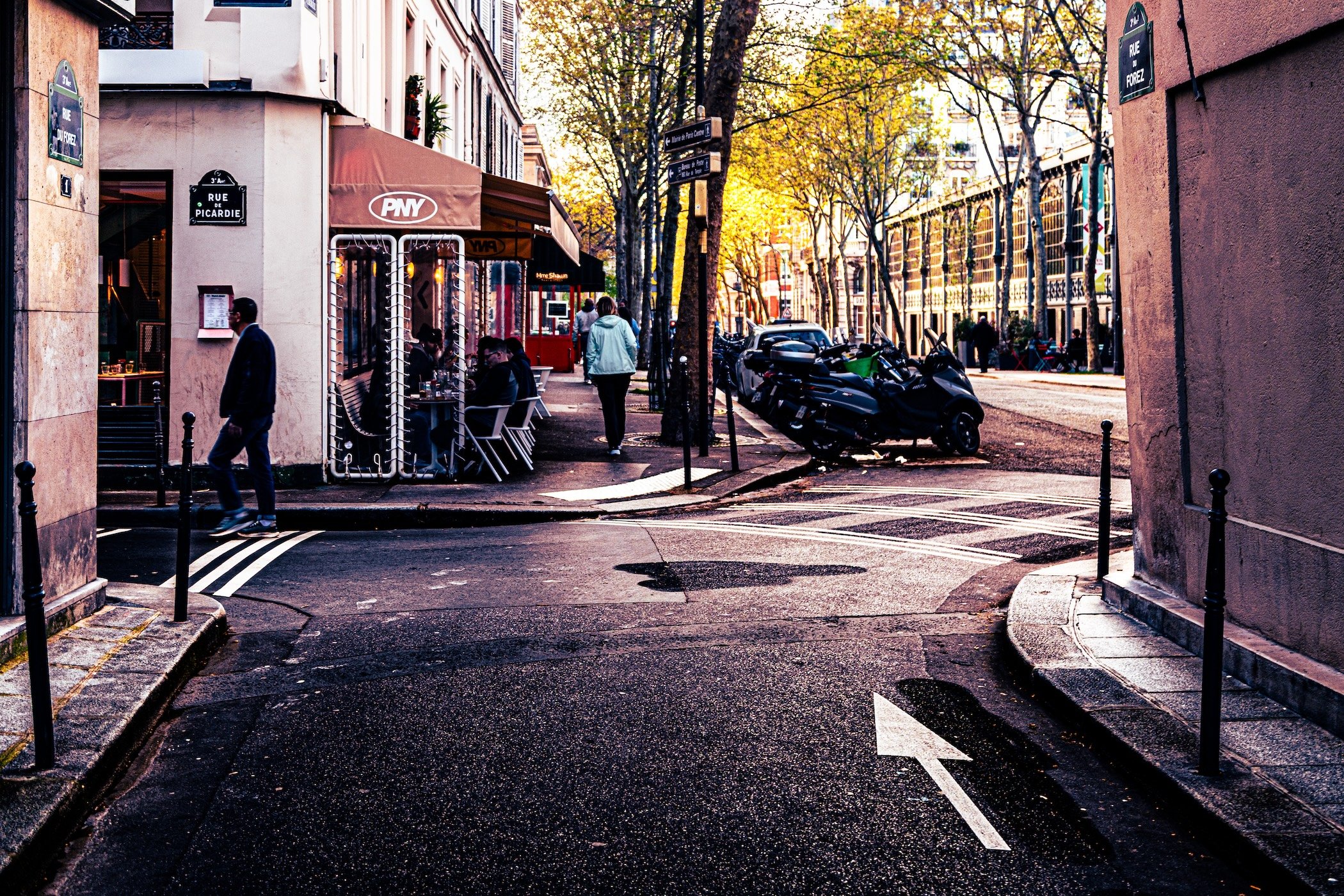
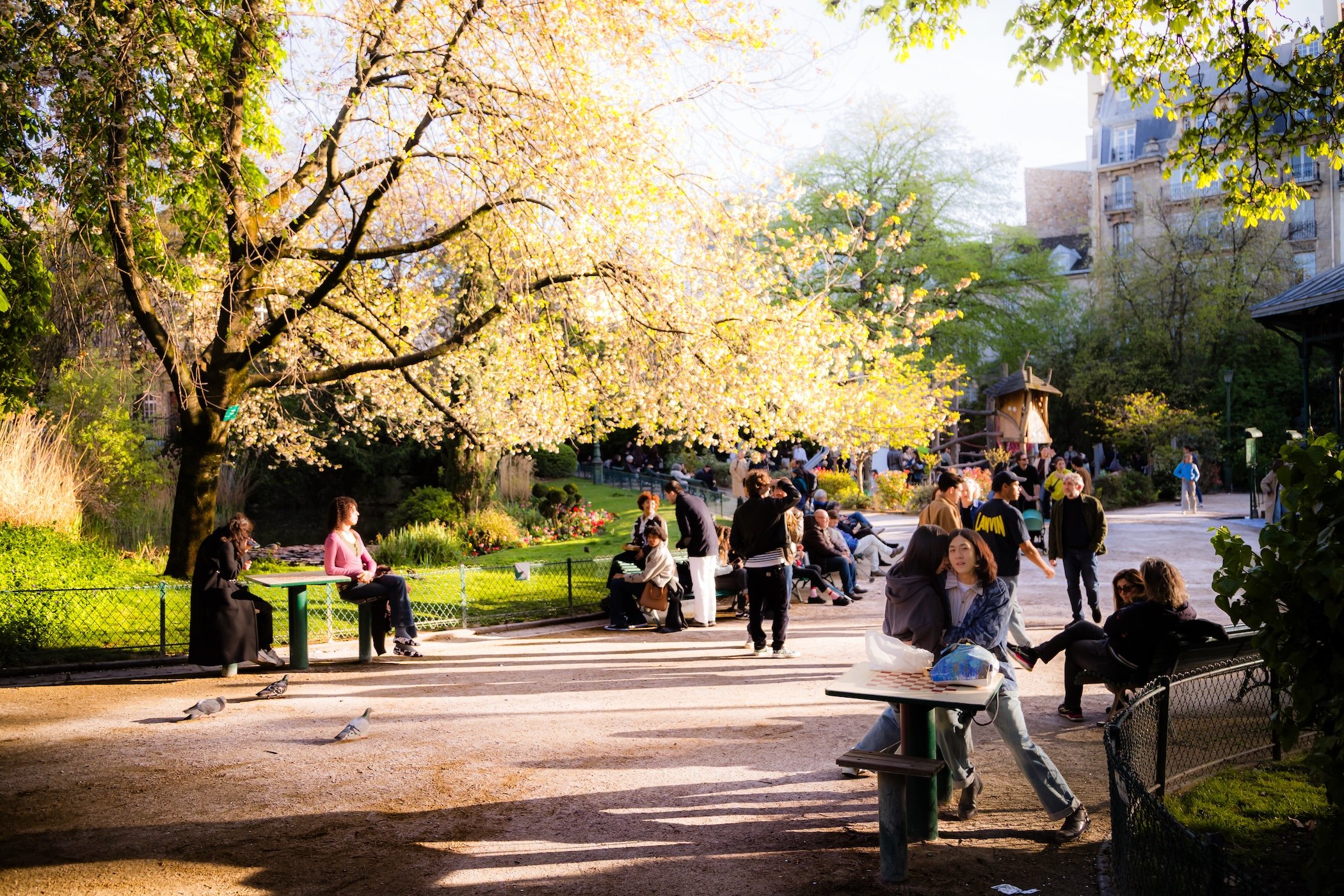
The journey through Enfants-Rouges began along Rue Perrée. Here, at Square du Temple - Élie-Wiesel, lush greenery, ponds and a gazebo played host to Parisians enjoying the lowering afternoon sun of a temperate spring evening, Here, in the increasingly golden light, the Carreau du Temple glittered before the streets became narrower, cozier ... and filled with storefronts - their reflected displays creating visions real and surreal to accompany corner cafés along Rue Charlot and Rue de Bretagne.
Part of an ongoing project to walk and photograph every neighborhood in Paris, this page explores 3e Enfants-Rouges through maps, district identity, history, and photography.
The Map
Geographic Setting
Enfants-Rouges Neighborhood Maps
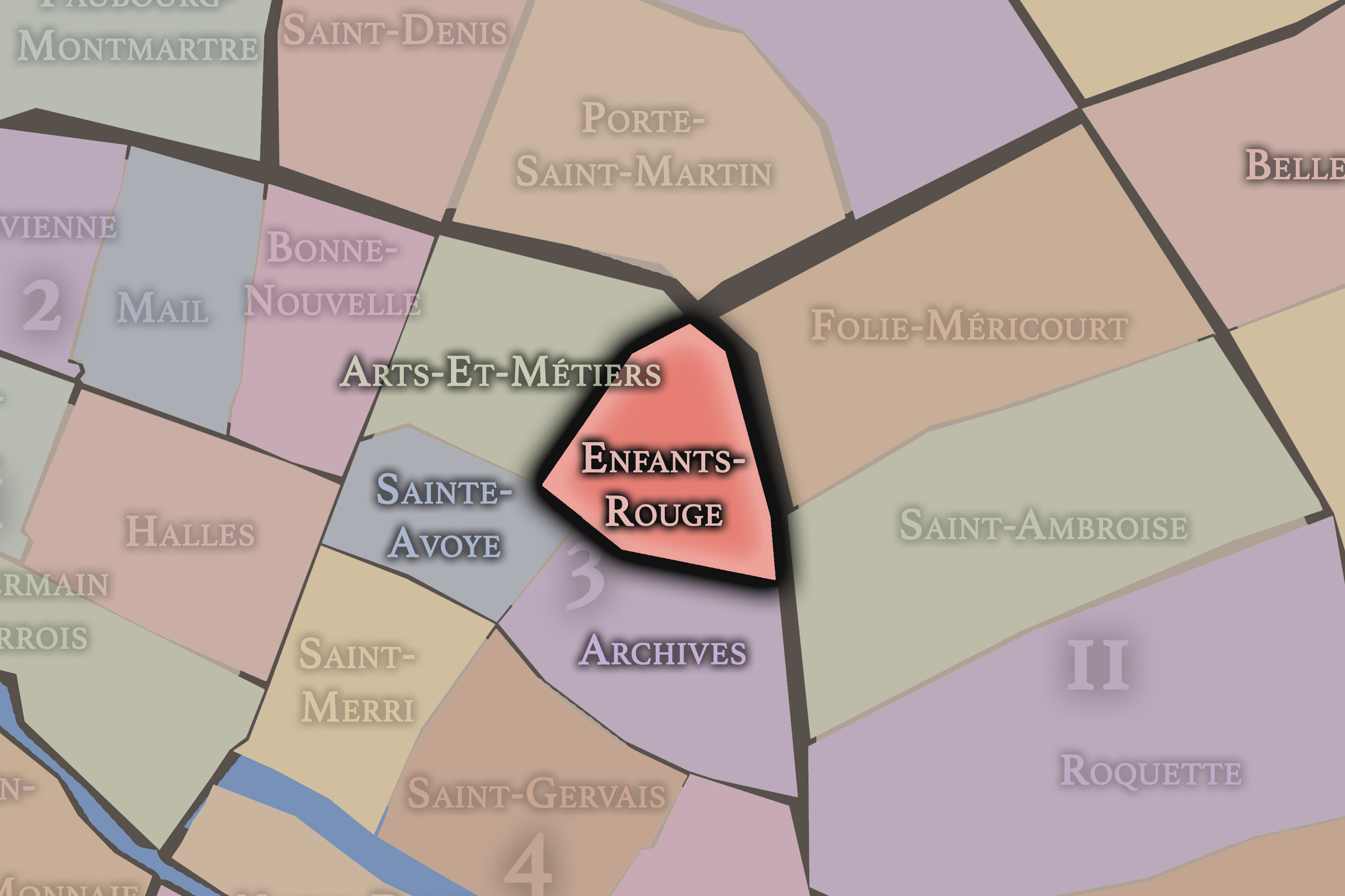
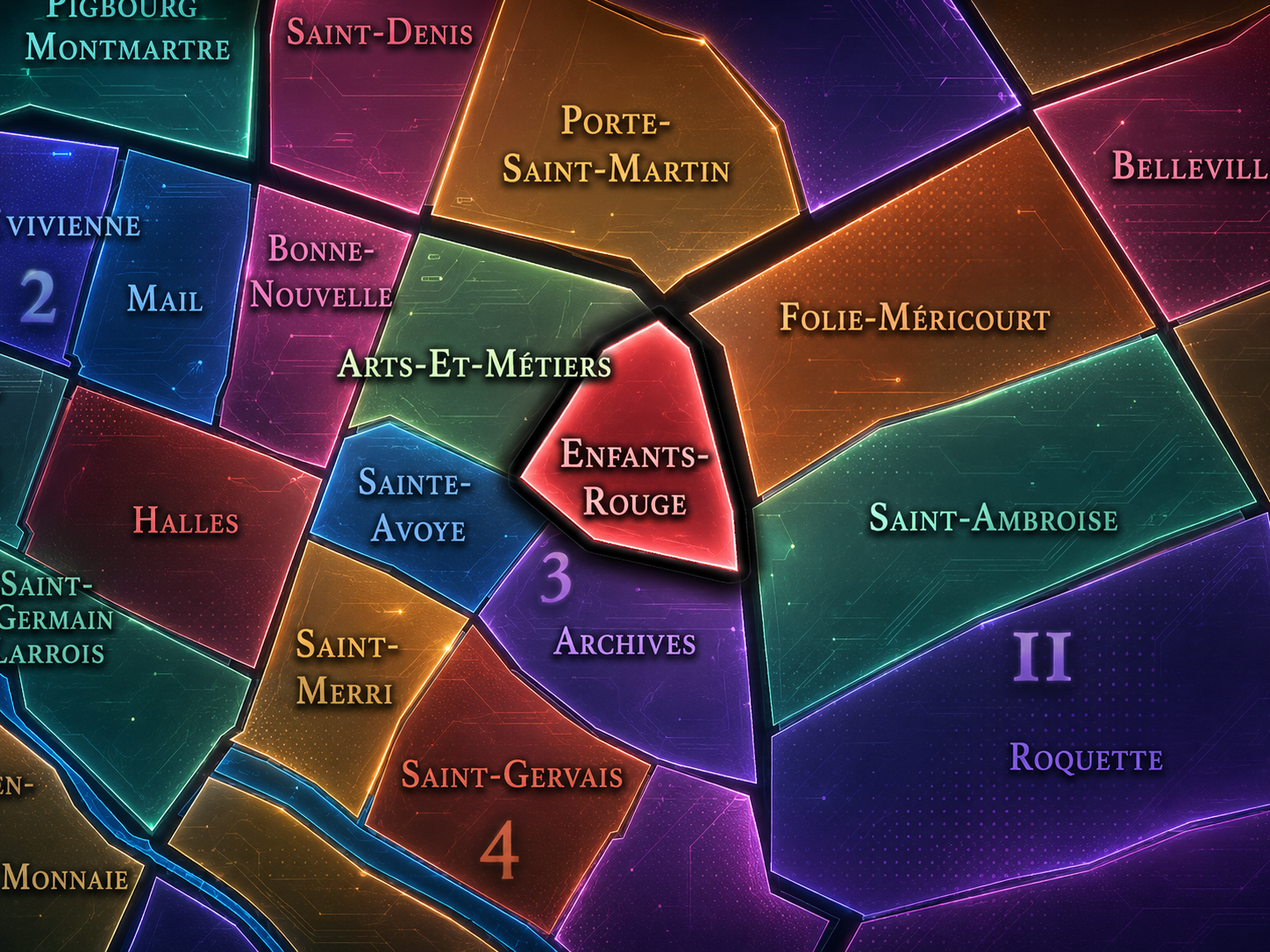
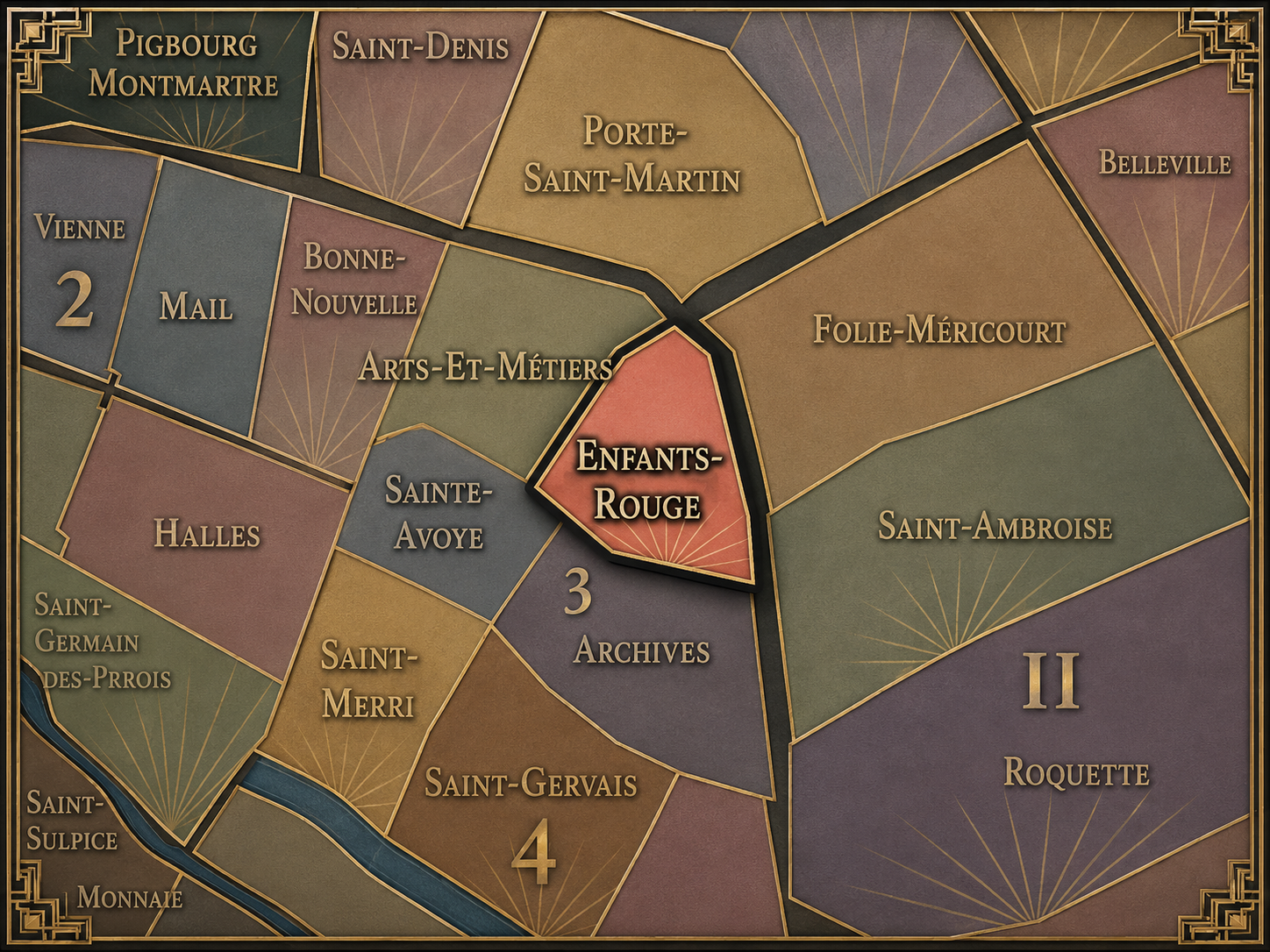
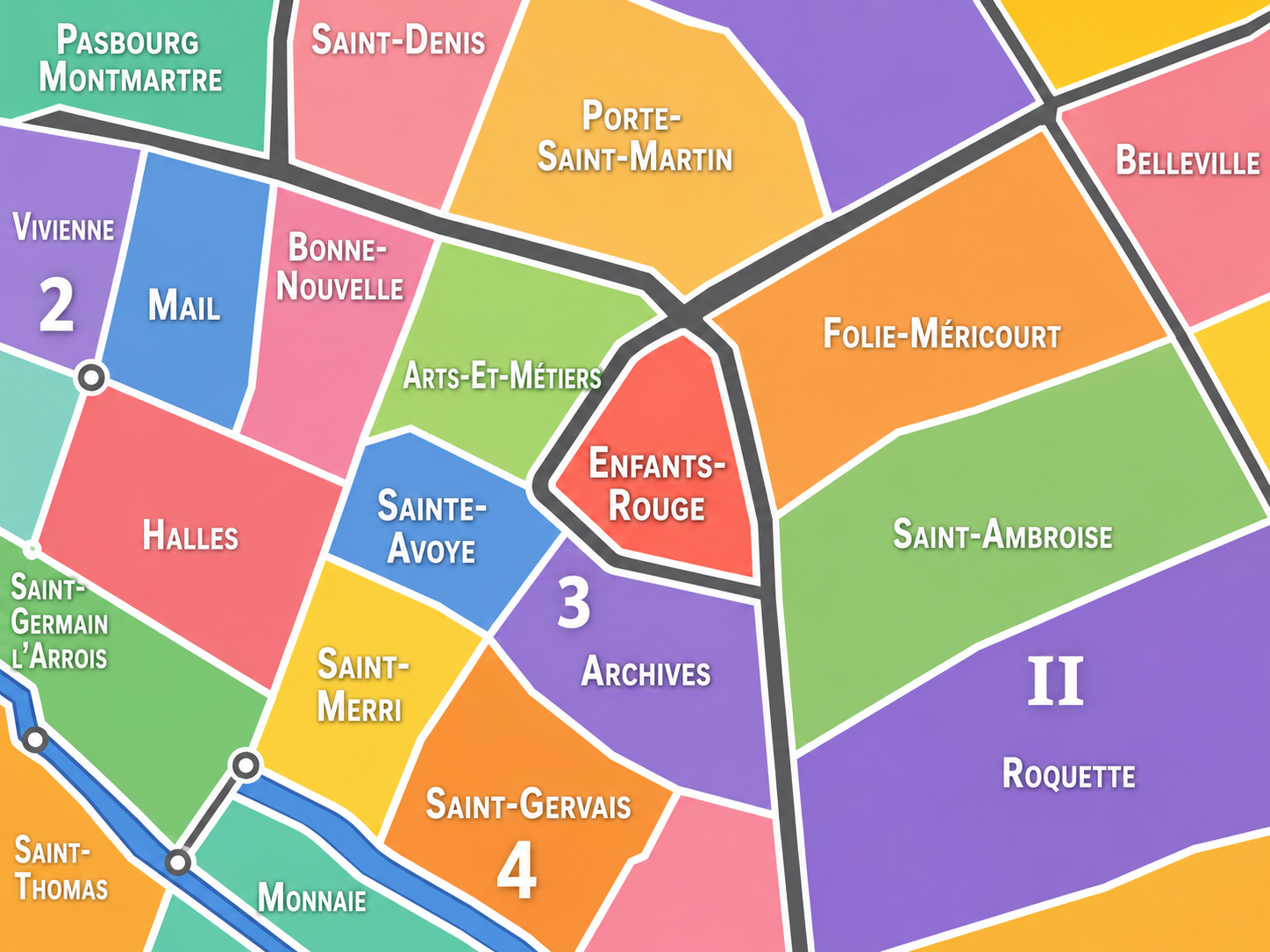
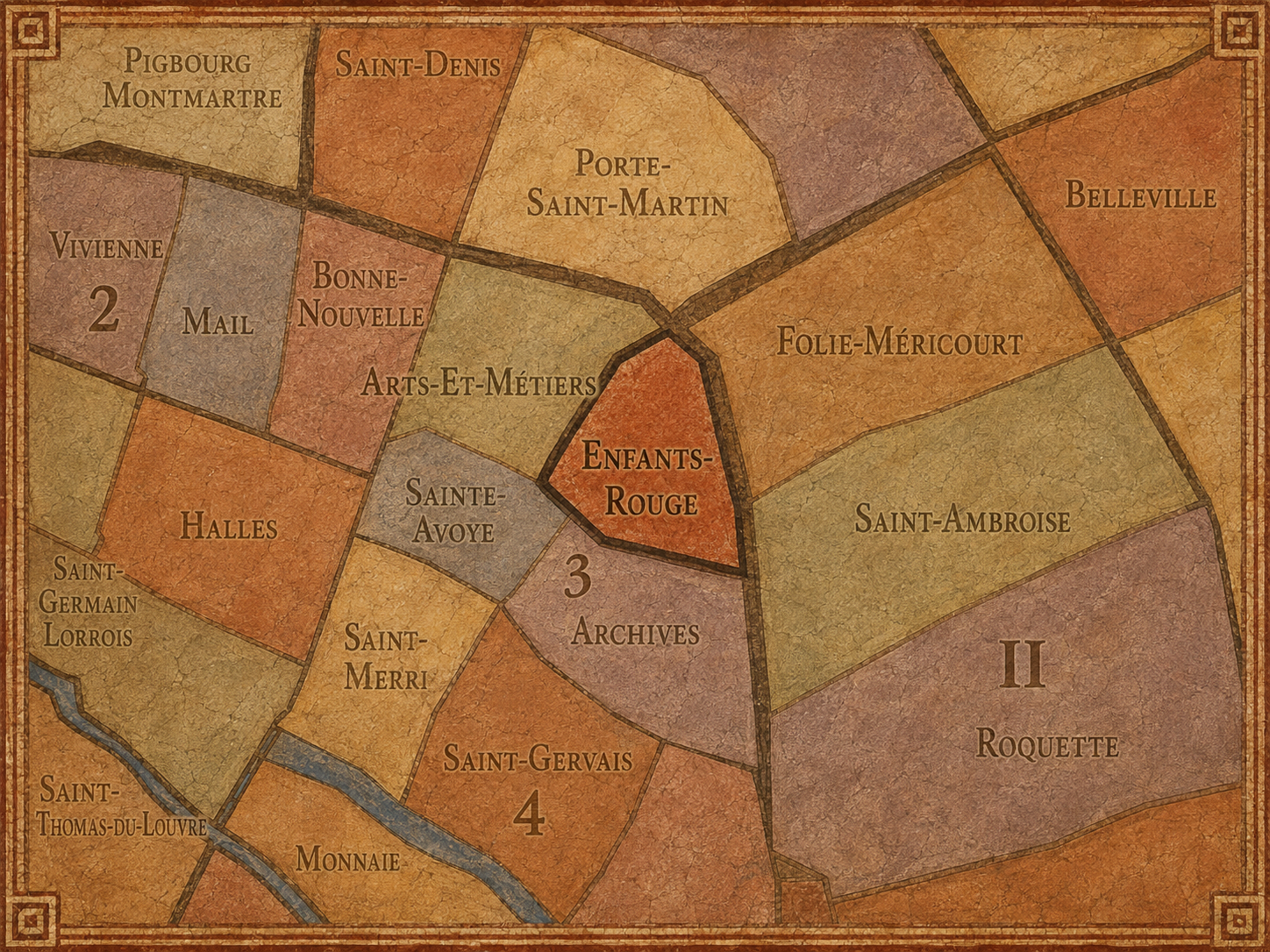
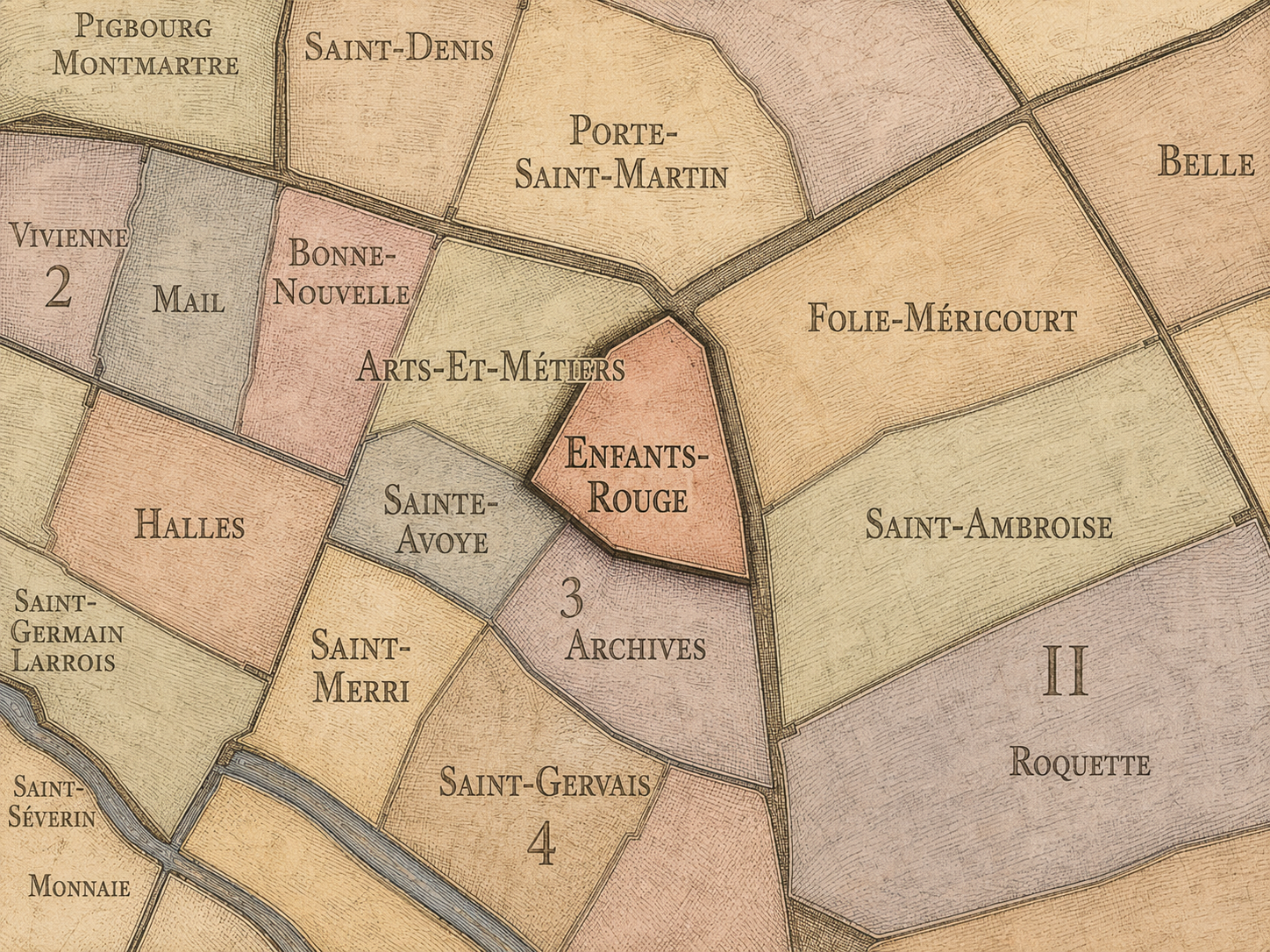
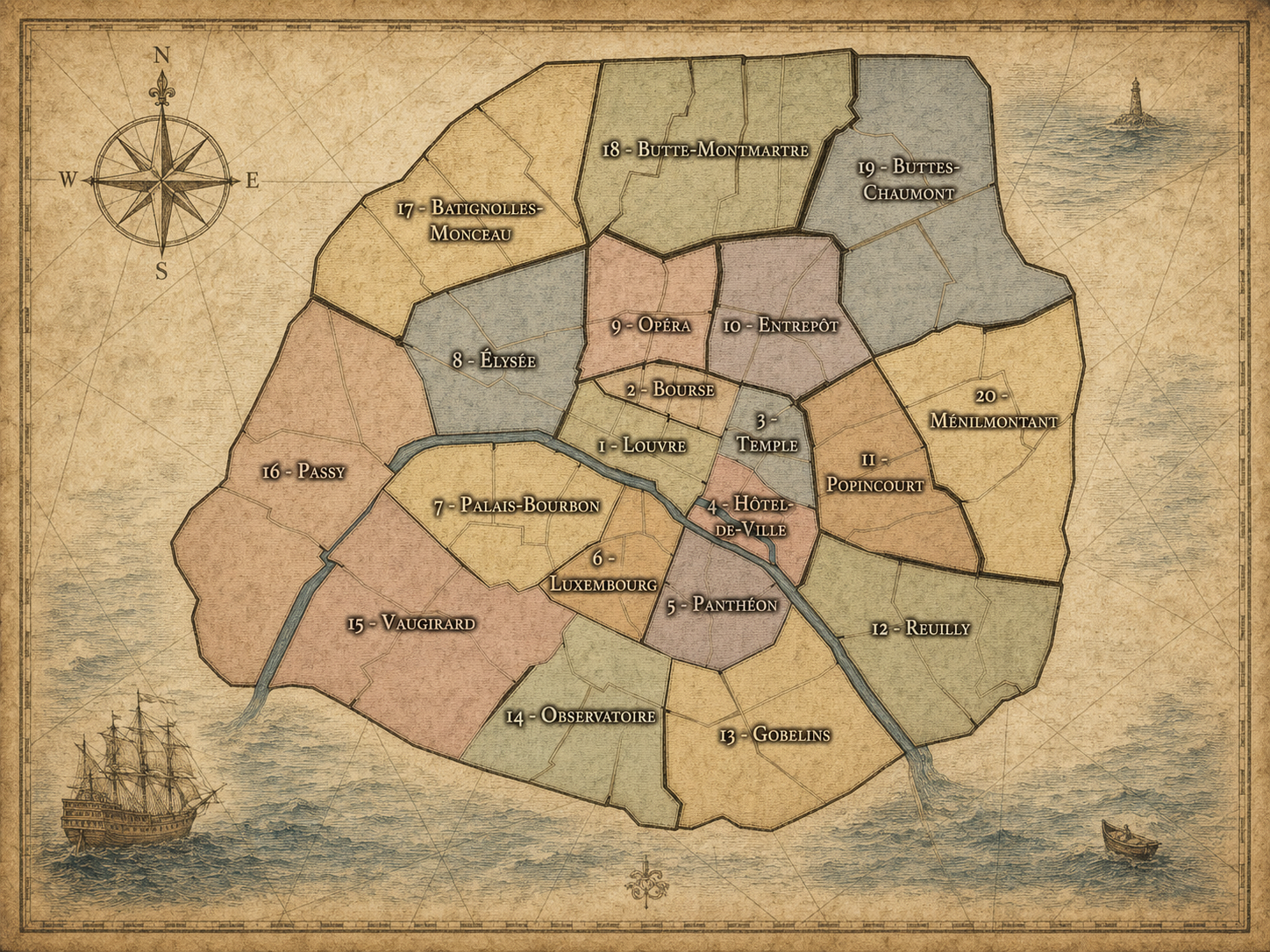
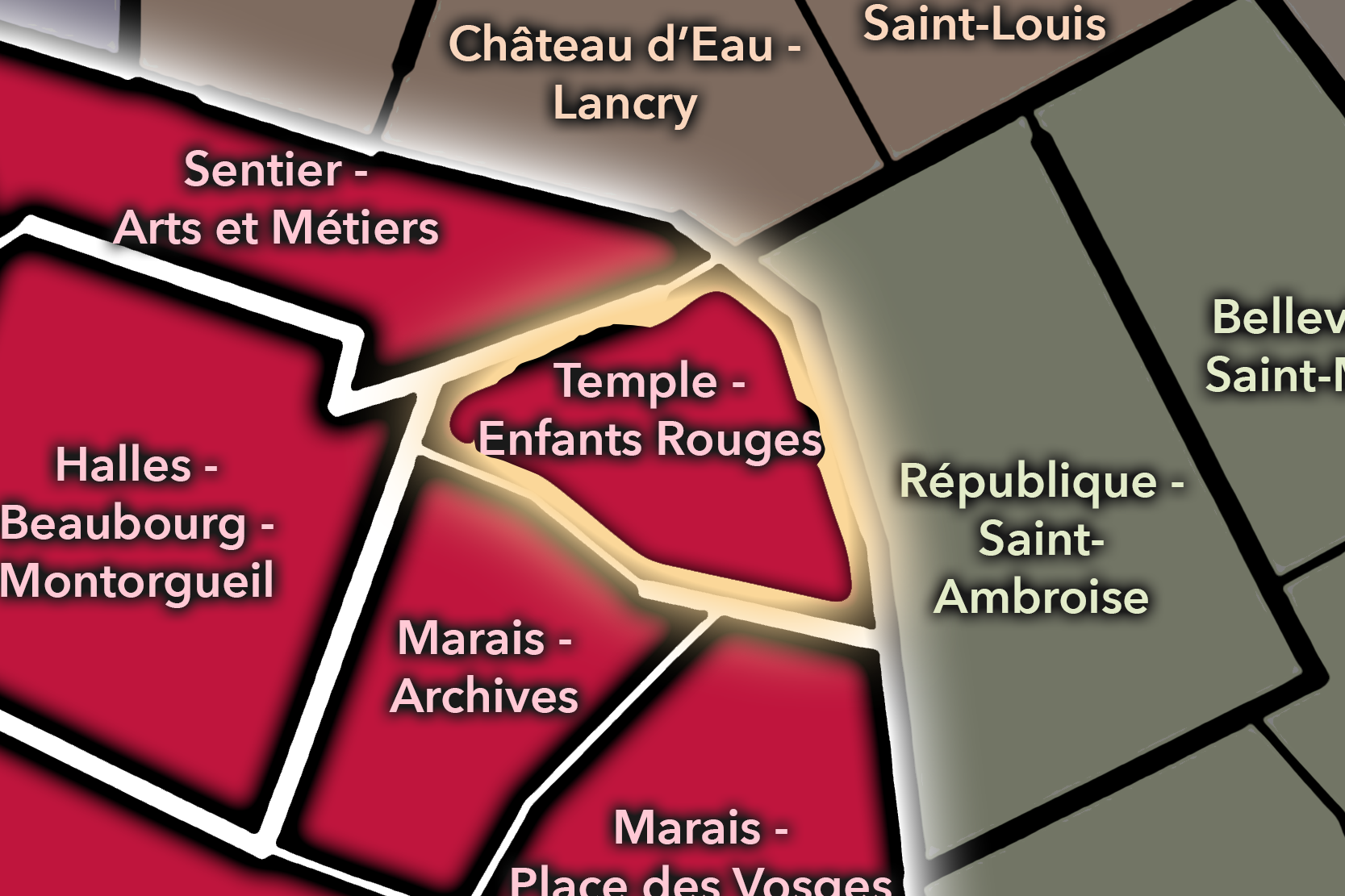
Enfants-Rouges occupies the northeastern portion of the 3rd arrondissement, where the northern Marais gathers around market streets, galleries, cafés, restaurants, residential blocks, and the intimate urban fabric between Temple, République, Archives, and the old aristocratic core of the Marais. The quarter sits north of Archives, east of Arts-et-Métiers, and west of the 11th arrondissement’s more openly popular eastern neighborhoods. It is one of the places where the Marais feels less ceremonial and more lived-in: a quarter of food, street life, conversation, courtyards, shops, and changing social texture.
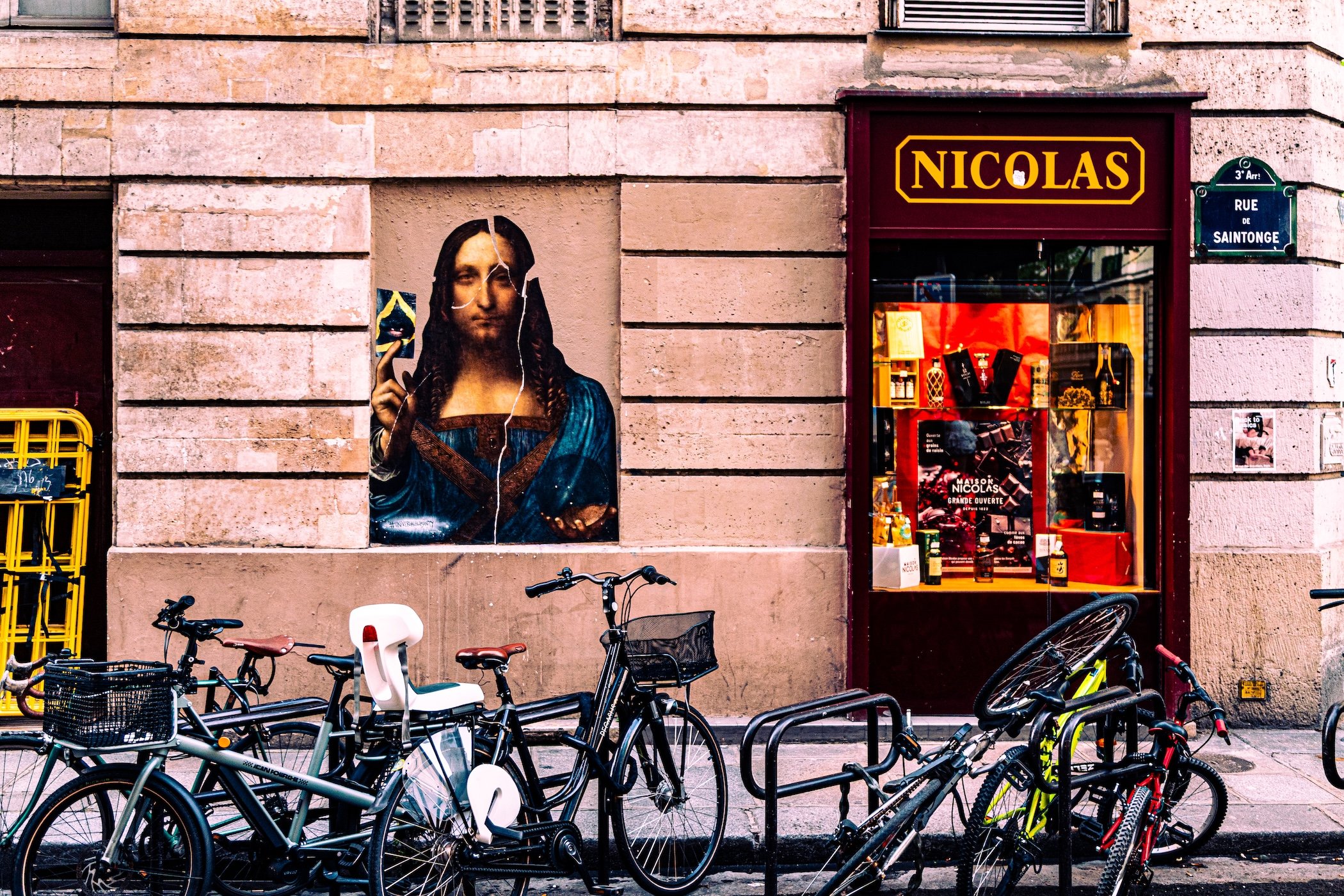
Its geography is strongly associated with Rue de Bretagne and the Marché des Enfants-Rouges, the historic covered market that gives the quarter much of its identity. The market is located at 39 Rue de Bretagne and is widely described as the oldest covered market in Paris, founded in 1615. Its vegetable stands, food counters, caterers, florists, cafés, and small restaurants give the surrounding district a lively center of gravity, while nearby streets such as Rue Charlot, Rue de Saintonge, Rue de Turenne, Rue du Temple, and Rue Vieille-du-Temple connect the quarter to the broader Marais.
Unlike Archives, whose atmosphere is shaped by preservation and national memory, or Arts-et-Métiers, which turns toward invention and technical knowledge, Enfants-Rouges is grounded in sociability. Its scale is local, its streets are textured, and its identity is built from the rhythms of walking, eating, shopping, meeting, and returning.
Administrative Quarter Identity
Etymology and Origins
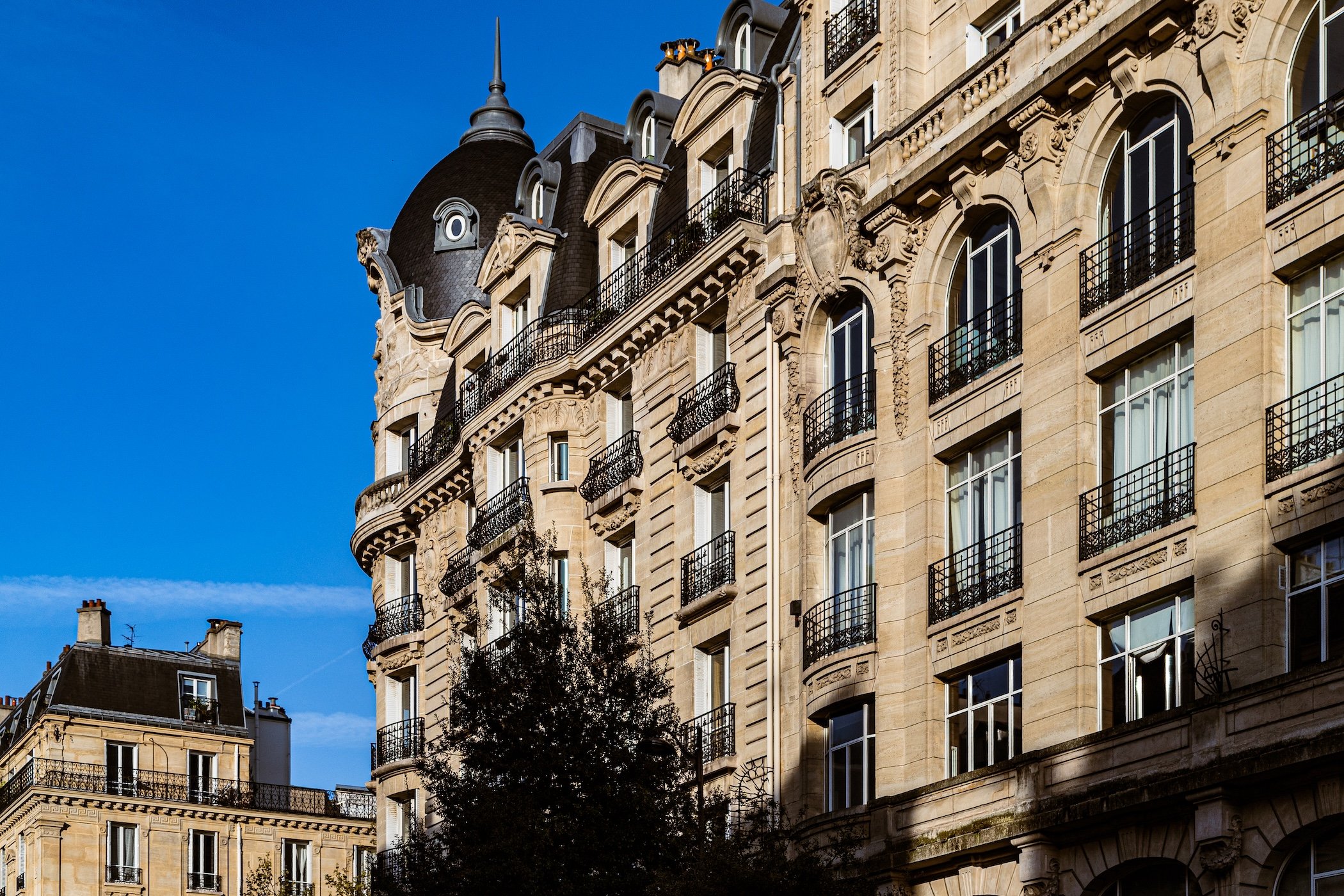
The name Enfants-Rouges means “Red Children.” It comes from the former Hospice des Enfants-Rouges, an orphanage or charitable institution founded in the 16th century, where the children were known for wearing red clothing associated with charity. The nearby market later took the name Marché des Enfants-Rouges, preserving the memory of that institution even after the orphanage itself disappeared. Sources commonly trace the orphanage to the 1530s and connect its name to the red garments worn by the children in its care.
This gives the quarter one of the most evocative names in Paris. It is not named for a monarch, a gate, a church, or a village. It is named for children — vulnerable, visible, remembered by the color of their clothing. That origin gives the neighborhood a human tenderness beneath its contemporary life as a fashionable and food-centered part of the Marais.
The name also shows how Paris preserves memory indirectly. The orphanage is gone, but the market remains. The market gave its name to the quarter. The quarter carries the phrase forward into the city’s official geography. In this way, Enfants-Rouges is a place where charity, food, memory, and neighborhood identity have become entwined.
Civic Framework
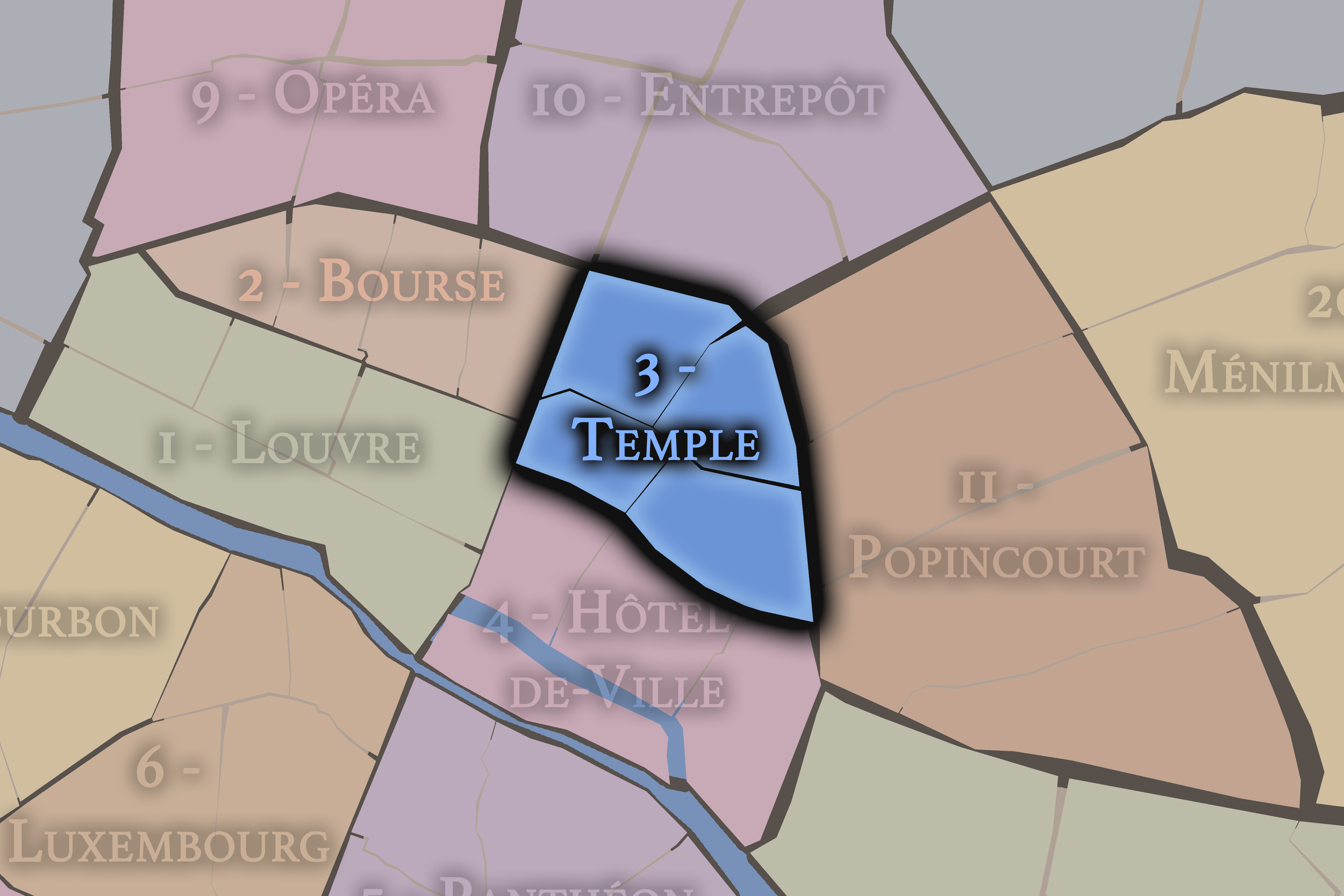
Within the official geography of Paris, Enfants-Rouges is one of the four administrative quarters of the 3rd arrondissement, alongside Arts-et-Métiers, Archives, and Sainte-Avoie. It belongs to Paris Centre’s wider municipal structure while retaining the identity of the northern Marais, where official boundaries and cultural neighborhood names overlap constantly.
As an administrative quarter, Enfants-Rouges gives civic form to an area that many visitors and residents might describe simply as “the Marais.” But the official name is useful because it identifies a particular section of that broader district: more market-centered, more northern, more tied to Rue de Bretagne, and more defined by everyday social life than by the grander hôtel particulier landscapes to the south.
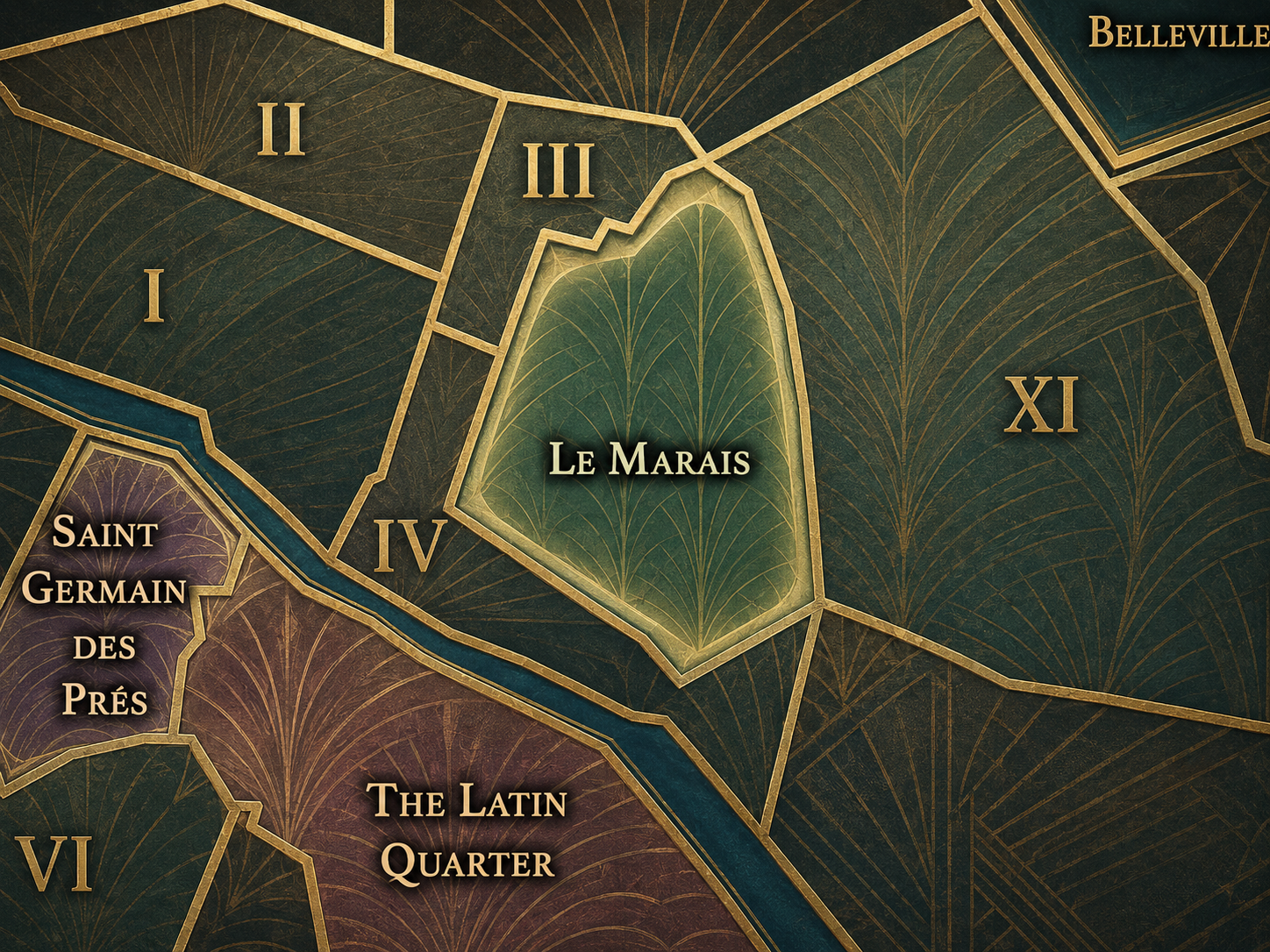
The quarter therefore operates at two scales. Officially, it is a mapped unit of the 3rd arrondissement. Culturally, it is part of the larger Marais, whose identity crosses the 3rd and 4th arrondissements and gathers many histories into one elastic name. Enfants-Rouges is one of the finer civic threads within that larger fabric.
Neighborhood Distinction
Enfants-Rouges differs from the other quarters of the 3rd arrondissement through its strong association with market life and northern Marais sociability. Arts-et-Métiers is shaped by technical knowledge, invention, and the Conservatoire. Archives is anchored by national memory, historic mansions, and preserved institutional spaces. Sainte-Avoie sits closer to the older commercial and medieval fabric near the southern and western edges of the arrondissement.
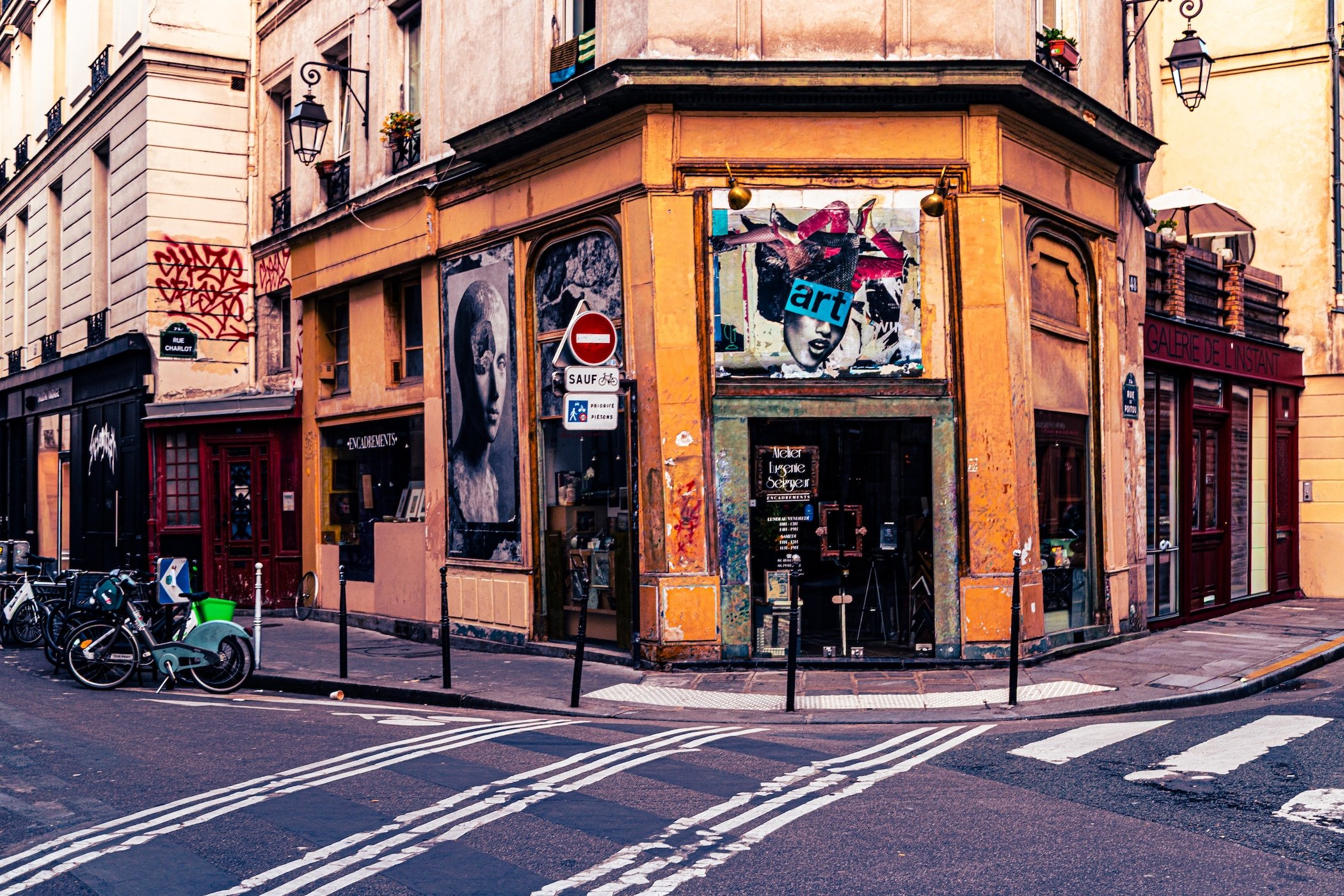
Enfants-Rouges feels more open to the everyday street. Its identity gathers the market, cafés, galleries, small restaurants, residential streets, boutiques, and the public life of Rue de Bretagne. It is historic, but less solemn than Archives. It is fashionable, but less formal than the luxury corridors west of the Louvre. It is part of the Marais, but with a texture that feels less monumental and more convivial.
It should also be distinguished from the Marais as a whole. The Marais is a major cultural and historical district, but Enfants-Rouges is a more precise administrative quarter within it. The distinction allows the visitor to see the Marais not as one undifferentiated zone, but as a collection of smaller landscapes: archival, aristocratic, market-centered, technical, religious, commercial, and social.
Parisian Identity
Enfants-Rouges expresses Paris as a city of intimate public life. Its identity does not rest on a single monumental façade or grand avenue. It lives in smaller rituals: buying food, sharing a table, walking from market to gallery, pausing at a café, noticing a courtyard through an open gate, watching the city gather around a street corner.
The market is essential to this identity. The Marché des Enfants-Rouges remains a rare example of a historic market structure that has adapted to contemporary Parisian life. It is no longer only a provisioning site in the old sense; it is also a place of prepared food, international flavors, lunch counters, weekend crowds, and neighborhood sociability. Visit Paris Region describes the market today through its produce vendors, dairy shops, florists, restaurants, caterers, and wine cellars, emphasizing its mix of historic setting and contemporary food culture.
This makes Enfants-Rouges one of the quarters where Paris feels both old and immediate. Its name reaches back to 16th-century charity. Its market reaches back to the early 17th century. Its present life unfolds in crowded aisles, café tables, gallery windows, and residential streets that still feel recognizably lived.
Neighborhood Connections
Every neighborhood belongs to a wider Parisian fabric.
-
3e — Temple
-
Temple - Enfants Rouges
-
Rive Droite
-
Le Marais
The History
Origins
The origins of Enfants-Rouges belong to the growth of the northern Marais and to the charitable, religious, and market landscapes that developed there before the area became one of Paris’s most fashionable historic districts. The former orphanage or hospice that gave the quarter its name was founded in the 16th century, and its memory became attached to the neighborhood through the red clothing of the children who lived there.
Before the district was filled with galleries, restaurants, boutiques, and restored residences, it was shaped by religious institutions, charitable houses, market functions, workshops, residences, and the gradually urbanizing land north of the older medieval core. Like much of the Marais, it developed through enclosure and adaptation: institutions behind walls, houses around courtyards, commerce along streets, and local life gathered around parish, market, and charitable structures.
The later Marché des Enfants-Rouges transformed that memory into a daily urban function. Founded in 1615, the market brought food, trade, and neighborhood exchange into the quarter, creating a center of gravity that has survived for more than four centuries.
16th–17th Century
The 16th and 17th centuries established the two great foundations of Enfants-Rouges identity: charity and market. The charitable institution associated with the “red children” belongs to the 16th-century history of care, religion, and social welfare in Paris. The children’s red clothing, remembered in the name, gave the district a human image that would long outlast the institution itself.
In the early 17th century, the Marché des Enfants-Rouges was created, traditionally dated to 1615 under Louis XIII. Originally connected to the food needs of the expanding Marais, the market helped root the neighborhood in the practical life of provisioning and exchange. The Marais at this time was also becoming an important residential district for elites, with hôtels particuliers spreading through nearby streets. Enfants-Rouges therefore developed within a layered social setting: aristocratic houses, religious and charitable institutions, workshops, markets, and everyday street life.
This mixture shaped the quarter’s lasting personality. It was never only noble, never only religious, never only commercial. It carried all of those functions at once, which is why its modern identity still feels so textured.
18th Century
In the 18th century, Enfants-Rouges remained part of the broader Marais as the district’s social meaning began to change. Aristocratic fashion gradually shifted westward, and many older hôtels particuliers were adapted, subdivided, or repurposed. The neighborhood became more mixed, with commerce, workshops, market life, and residential use layered into the older elite fabric.
The market continued to serve the local population, while the memory of the orphanage remained attached to the name. Some accounts note that the charitable institution closed in the 18th century, after which the market increasingly carried forward the Enfants-Rouges identity. This transfer of memory is important. The children’s institution vanished, but its name survived through a marketplace — a shift from charity as institution to memory as neighborhood identity.
By the time of the Revolution, Enfants-Rouges was part of a Marais no longer defined solely by old noble order. The district’s mixed fabric made it adaptable, and that adaptability would become one of its long-term strengths.
19th Century
The 19th century brought modernization, commercial change, and shifting social life to Enfants-Rouges. The market remained active, and the surrounding streets continued to support food trades, workshops, residences, and local commerce. Unlike the most dramatically Haussmannized parts of Paris, much of the Marais retained its older street pattern and dense built fabric, allowing Enfants-Rouges to preserve a more intimate scale.
The quarter also participated in the broader transformation of the Marais from aristocratic district into a more mixed urban landscape. Many older buildings served new purposes: workshops, warehouses, apartments, shops, schools, institutions, and small businesses. The neighborhood’s historic architecture remained, but its social identity became more practical and diverse.
In this period, Enfants-Rouges embodied one of Paris’s recurring patterns: heritage surviving not because it was frozen, but because it was reused. The quarter’s old structures and market life continued to serve the city even as Paris modernized around them.
Early–Mid 20th Century
In the early and mid 20th century, Enfants-Rouges remained a working and residential section of the northern Marais. The market continued to serve local needs, while the surrounding streets held workshops, small businesses, modest residences, and the layered social life of central Paris. The district was historic, but not yet polished into the heritage and boutique landscape often associated with the Marais today.
The quarter also belonged to the broader Marais environment of immigrant communities, Jewish life, small manufacturing, and dense urban coexistence. While the strongest Jewish commercial and religious geography is often associated with streets farther south and east, the cultural life of the Marais crossed administrative boundaries and shaped the wider district. The experience of occupation, deportation, and postwar recovery left deep marks on this part of Parisian memory.
During these decades, the market’s survival was not guaranteed by romance alone. Like many older urban institutions, it had to endure changing food systems, modernization, and shifting habits of shopping and distribution. Its continued existence gave the quarter a rare continuity in a city where many central markets were altered, relocated, or destroyed.
Late 20th Century

The late 20th century transformed Enfants-Rouges through preservation, cultural reinvestment, and the wider revival of the Marais. As the district became increasingly valued for its historic streets and architecture, the market and surrounding streets gained new visibility. What had once been a local provisioning space became a beloved and increasingly visited food destination.
This period also brought tension between preservation and redevelopment. Like other historic market sites in Paris, the Marché des Enfants-Rouges faced questions about modernization, viability, and survival. The market’s continued presence became part of the quarter’s identity as a place where local memory resisted erasure. Its classification as a protected historic site helped reinforce its standing as an irreplaceable part of Parisian market heritage. Visit Paris Region notes that the market is classified as a Historical Monument, underscoring its heritage value alongside its everyday food culture.
At the same time, boutiques, galleries, restaurants, and new residents changed the surrounding neighborhood. Enfants-Rouges became more fashionable, more visible, and more expensive. But the market gave the quarter a grounded center that kept it connected to older forms of sociability and exchange.
21st Century
In the 21st century, Enfants-Rouges is one of the most vivid quarters of the northern Marais. Its historic market remains a major point of identity, attracting residents, workers, visitors, food lovers, and photographers. The surrounding streets mix galleries, cafés, fashion boutiques, restaurants, residential entrances, and older architectural fragments, creating a neighborhood atmosphere that feels both curated and genuinely animated.
The quarter’s appeal lies in its concentration. A few streets can hold market life, 17th-century memory, contemporary food culture, quiet courtyards, boutique retail, and the wider atmosphere of the Marais. It is a place where Paris feels walkable in the richest sense: not because it is large, but because every turn seems to offer another texture.
For CityNeighborhoods: Paris, Enfants-Rouges is essential because it shows how an administrative quarter can be both historically specific and sensorially alive. The name carries a charitable memory; the market carries a food history; the streets carry the continuing life of the Marais. Together, they form a quarter where the past is not remote. It is tasted, walked, overheard, and shared.
Spirit and Legacy
Enfants-Rouges is the quarter of remembered care and living appetite. Its spirit is human-scaled: children once clothed in red, a market founded to feed a growing neighborhood, streets that have absorbed centuries of change, and a contemporary life built around food, conversation, and encounter.
Its legacy is continuity through transformation. A charitable institution gave the name. A market preserved it. A historic district reshaped it. Modern Paris rediscovered it. Through all of that, Enfants-Rouges retained a local pulse. It is not only a heritage site or a fashionable Marais address. It is a place where the city still gathers around the oldest forms of neighborhood life: food, memory, trade, and presence.
To walk Enfants-Rouges is to encounter Paris at table height and street scale. It is the Marais not as monument alone, but as market, flavor, threshold, and crowd. In this quarter, neighborhood identity is not only written into façades or official maps. It is carried in the act of arriving hungry, sitting close, speaking across tables, and finding the past alive in the daily rhythm of the city.
The Photography
Visual Identity
-
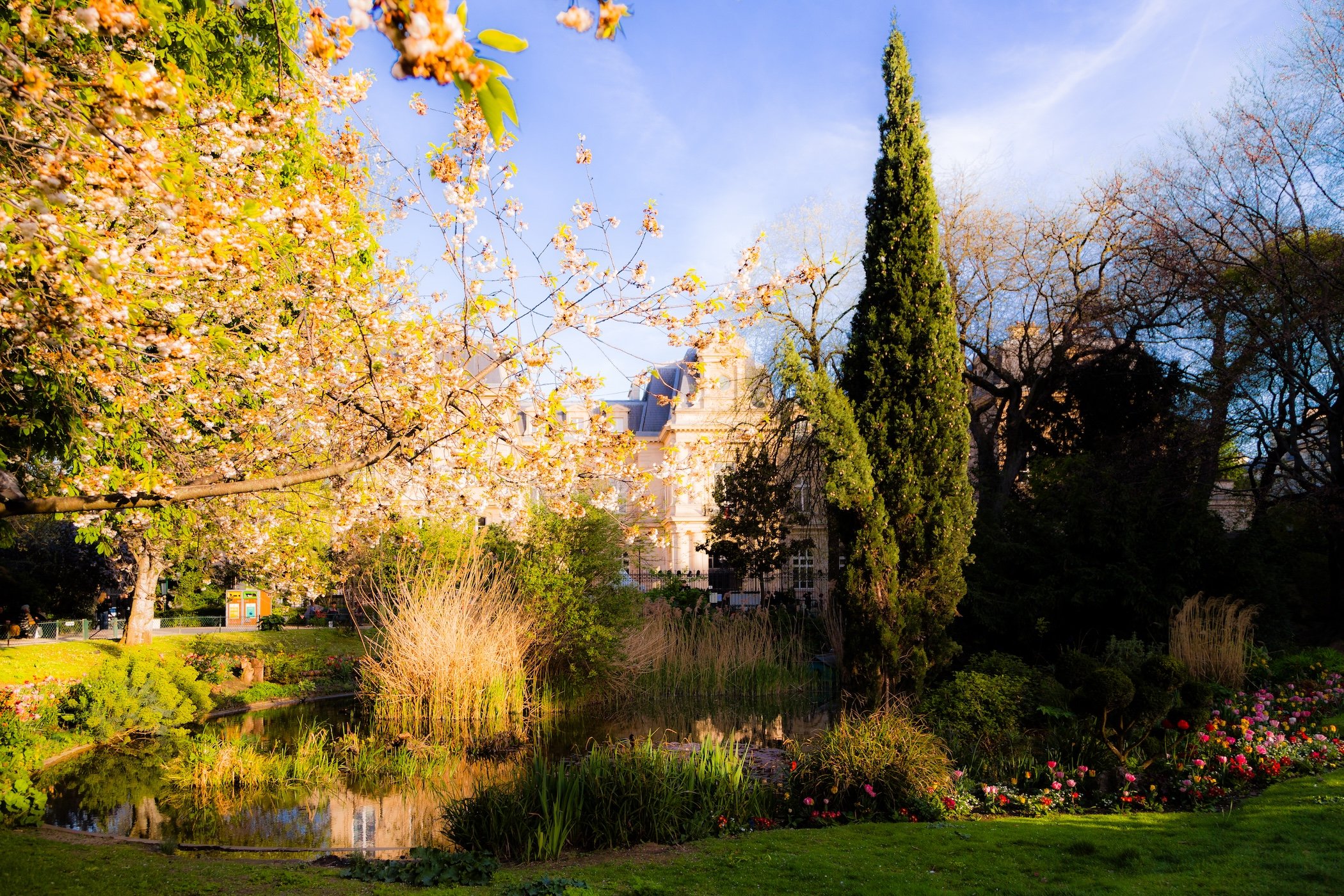
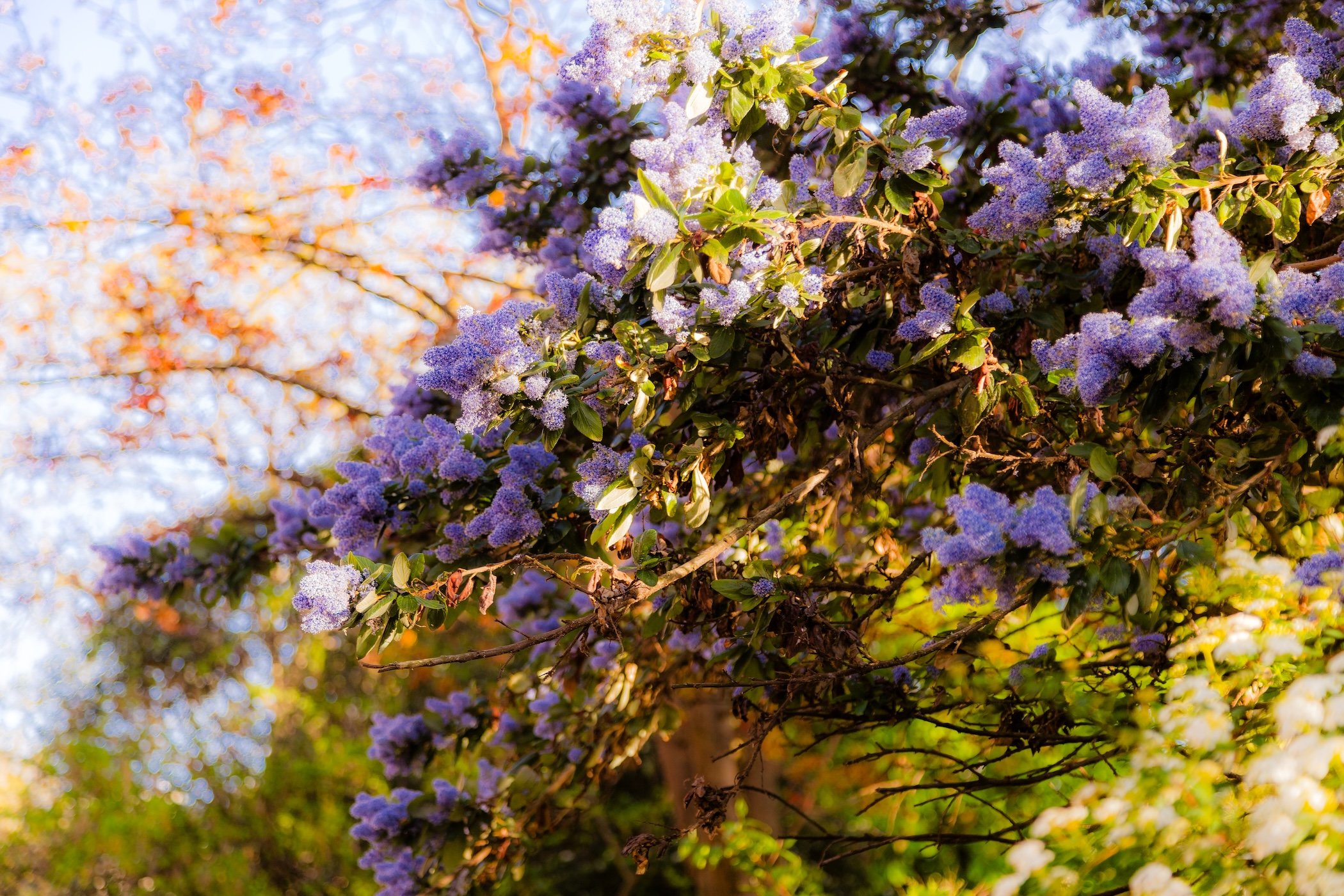
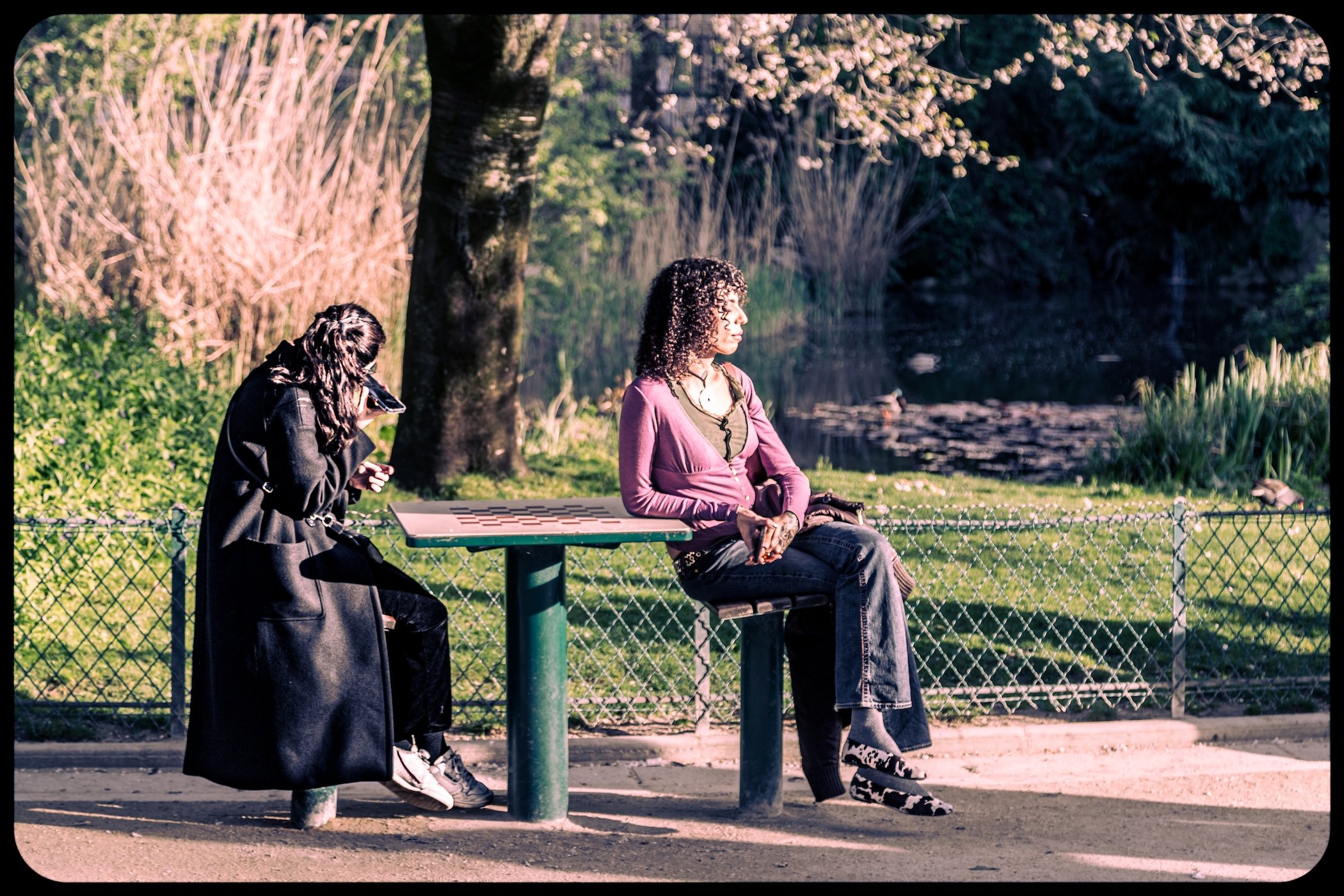
Enfants-Rouges revealed itself through a blend of greenery, sociability, commerce, and warm late-afternoon light. Along Rue Perrée, Square du Temple–Élie-Wiesel introduced the quarter through spring foliage, flowering branches, ponds, pathways, and people lingering in the temperate evening. The park felt both cultivated and deeply lived-in: a soft green interior where the architecture of the surrounding city remained visible but temporarily receded behind trees, water, and human activity.
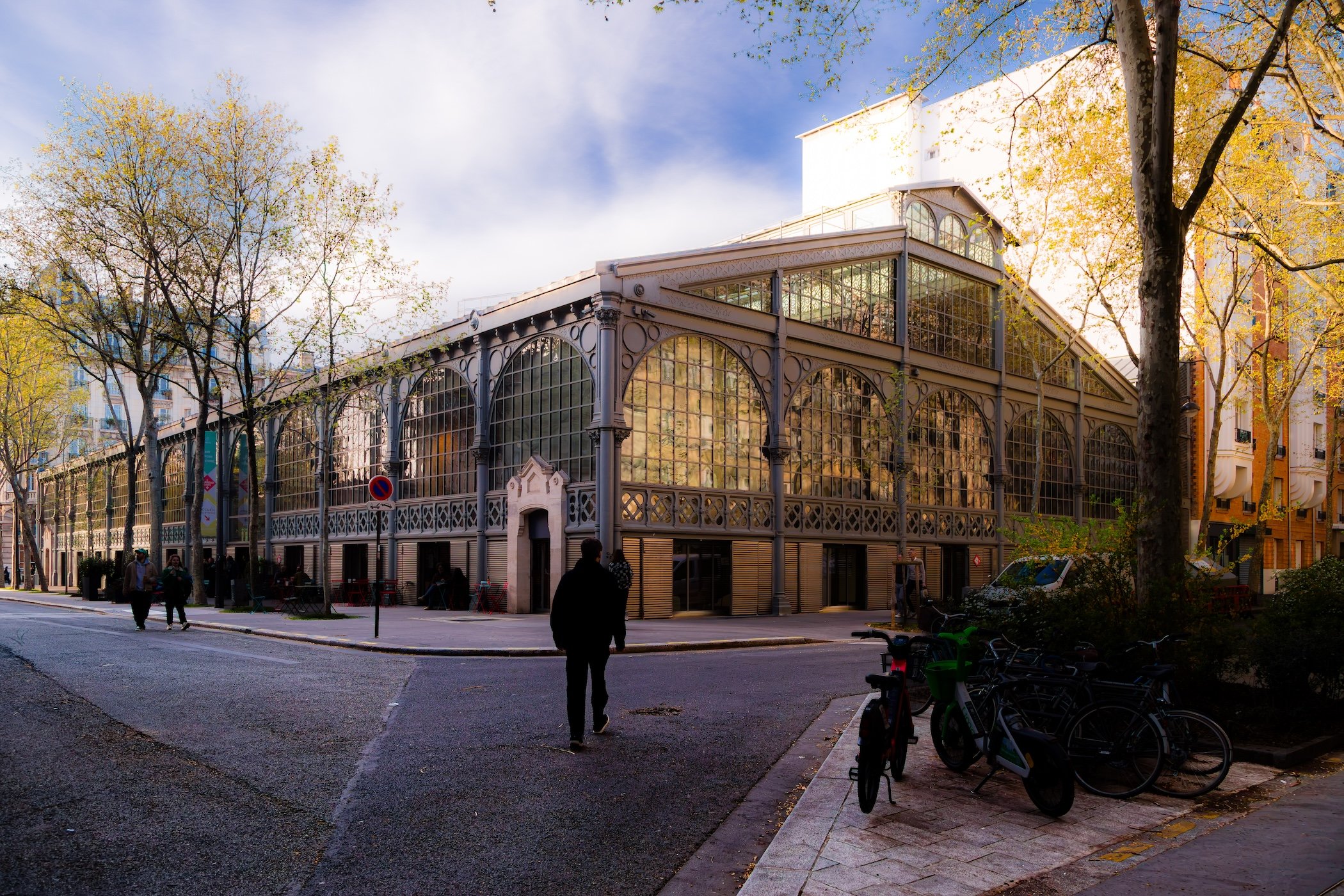
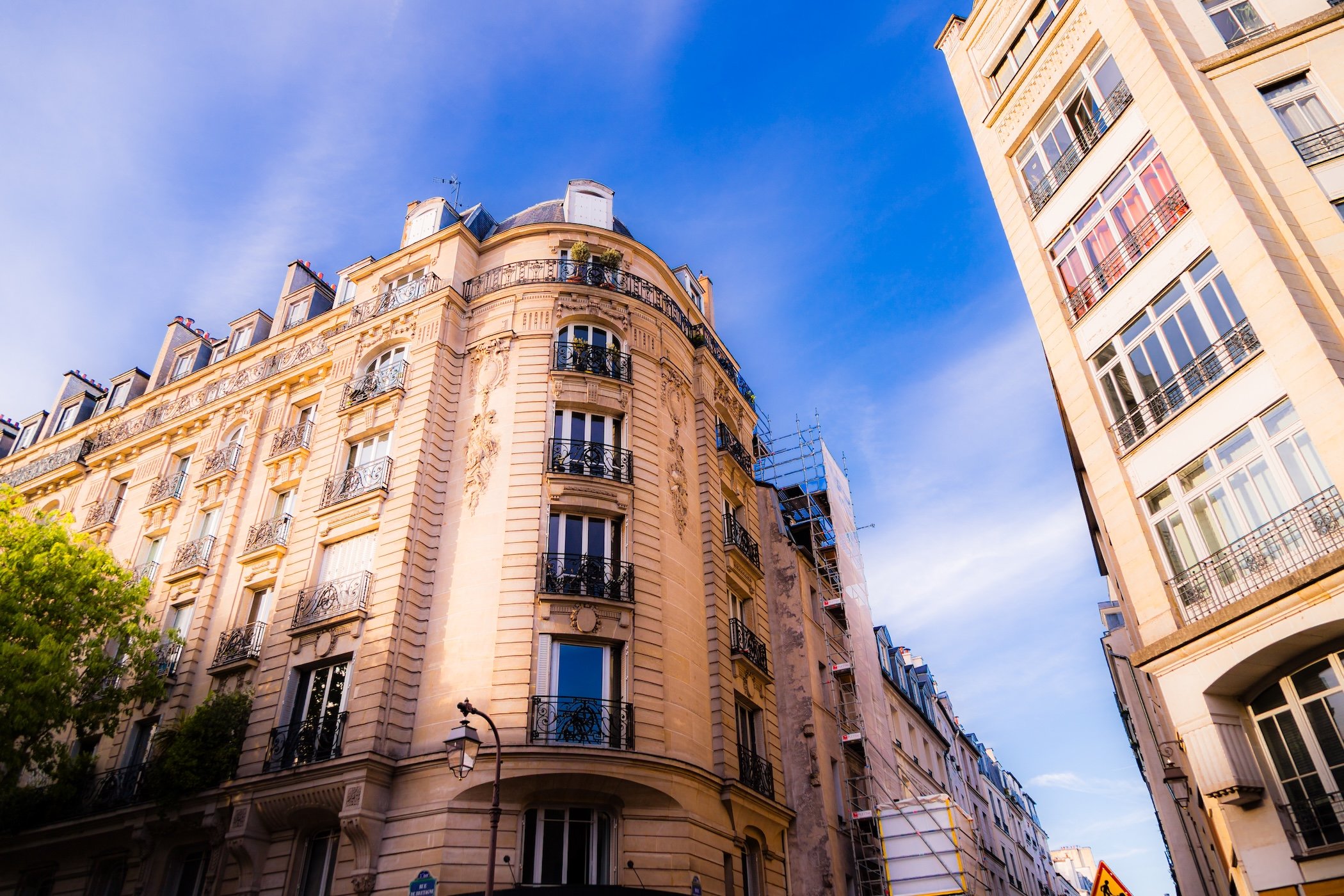
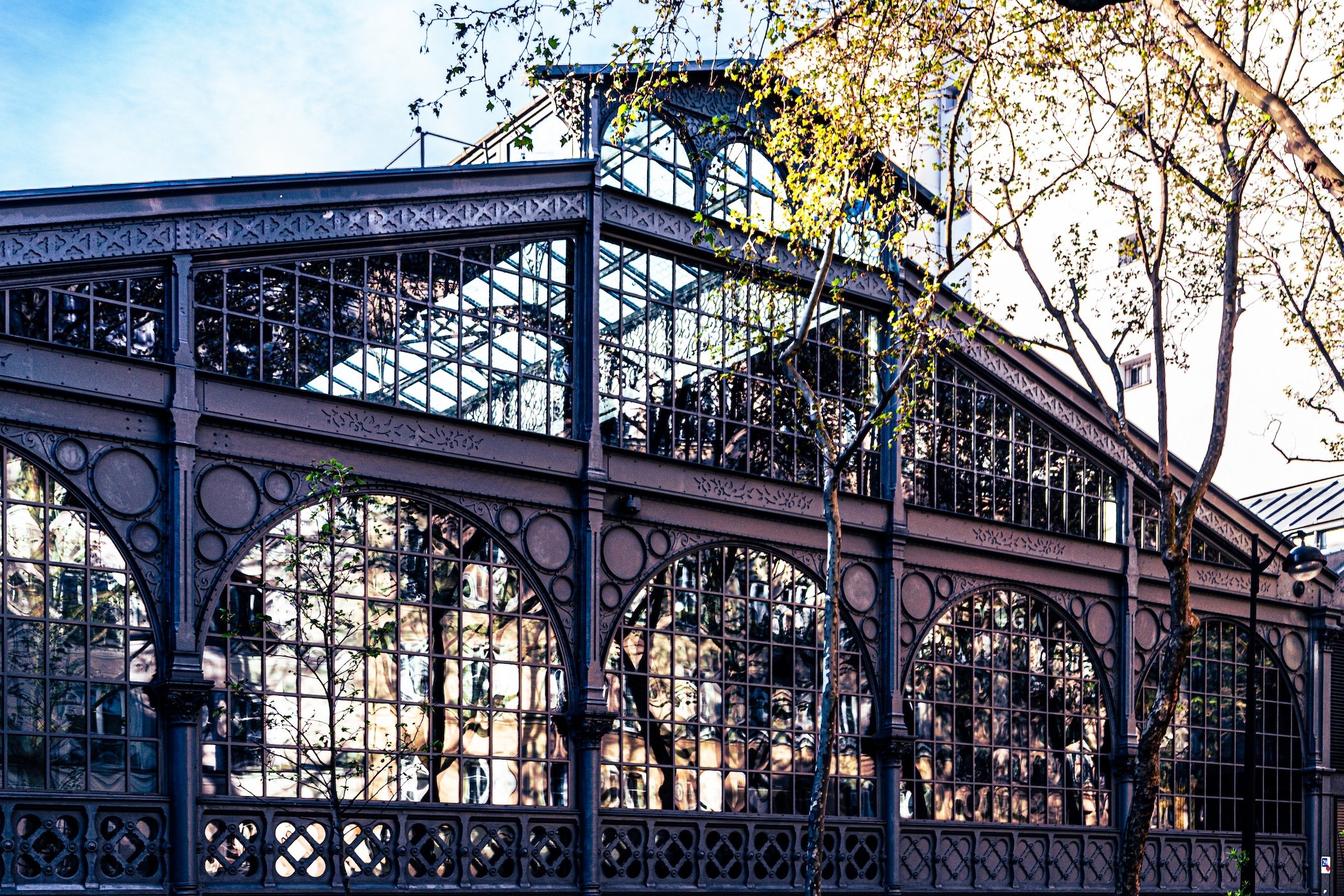
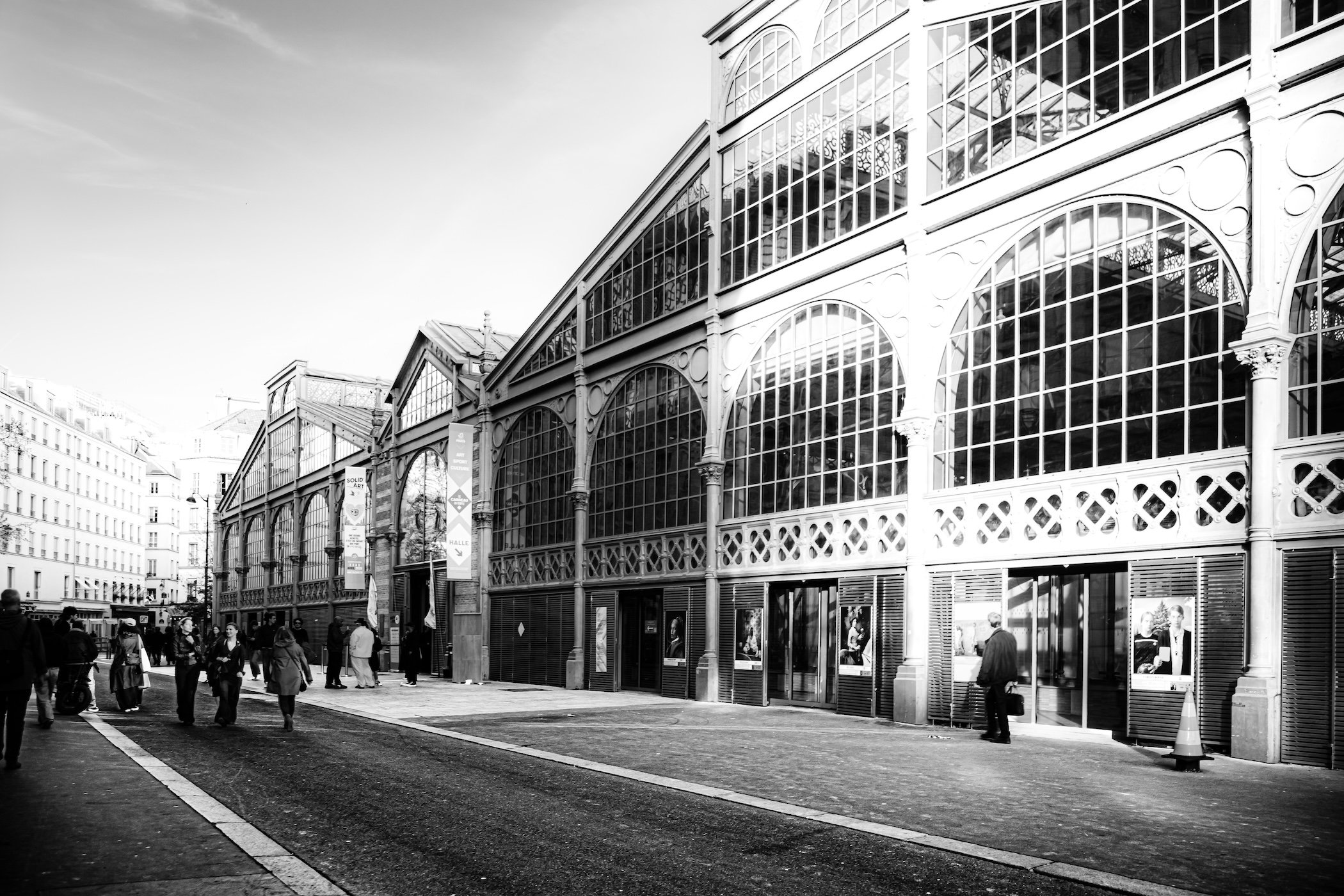
The Carreau du Temple then became the quarter’s most luminous architectural presence. Its iron-and-glass structure caught the lowering sun and seemed to glitter against the surrounding streets. The building acted as a visual threshold between the openness of the square and the denser commercial world beyond, where façades, cafés, shops, market displays, bicycles, and pedestrians began to crowd the frame.
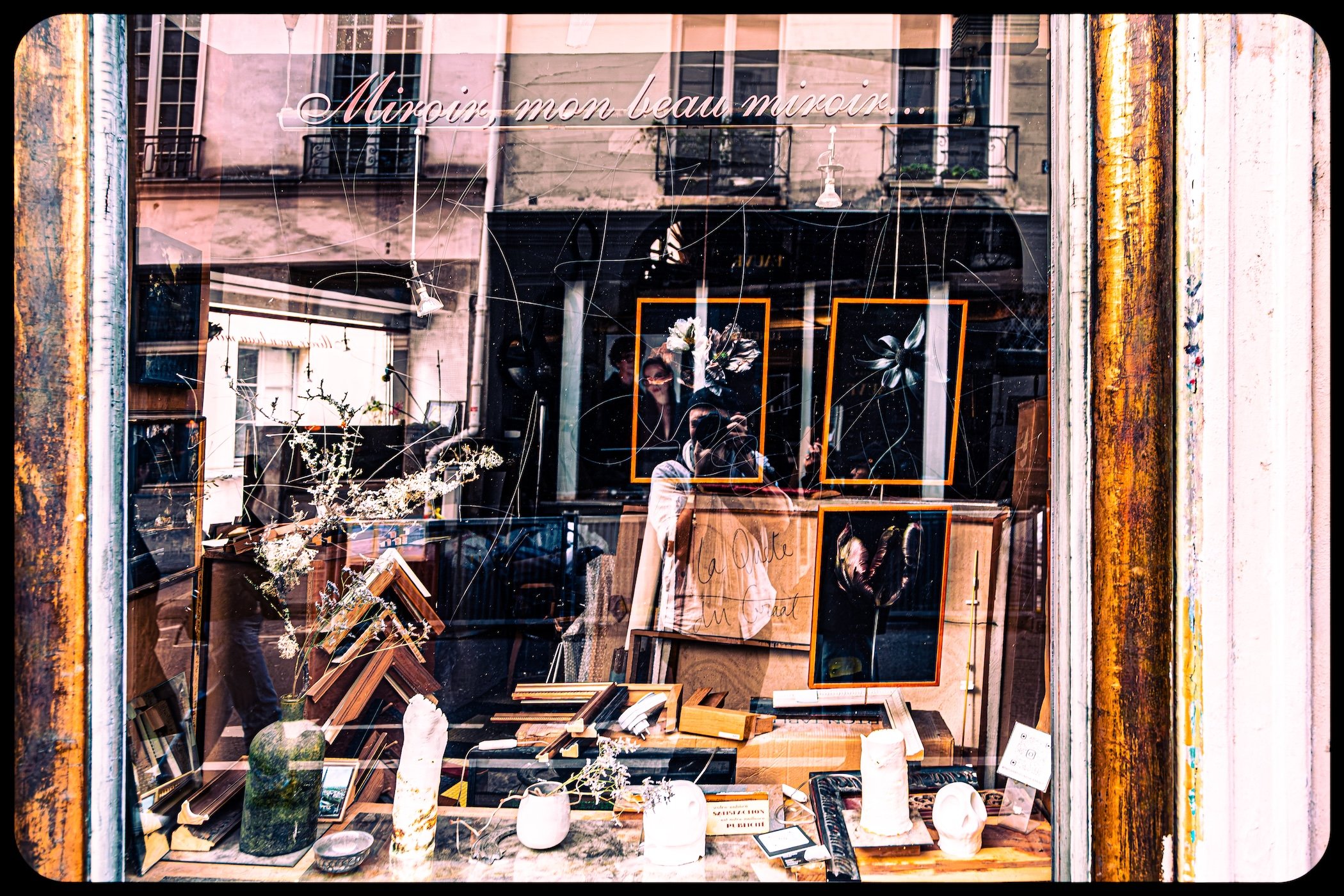
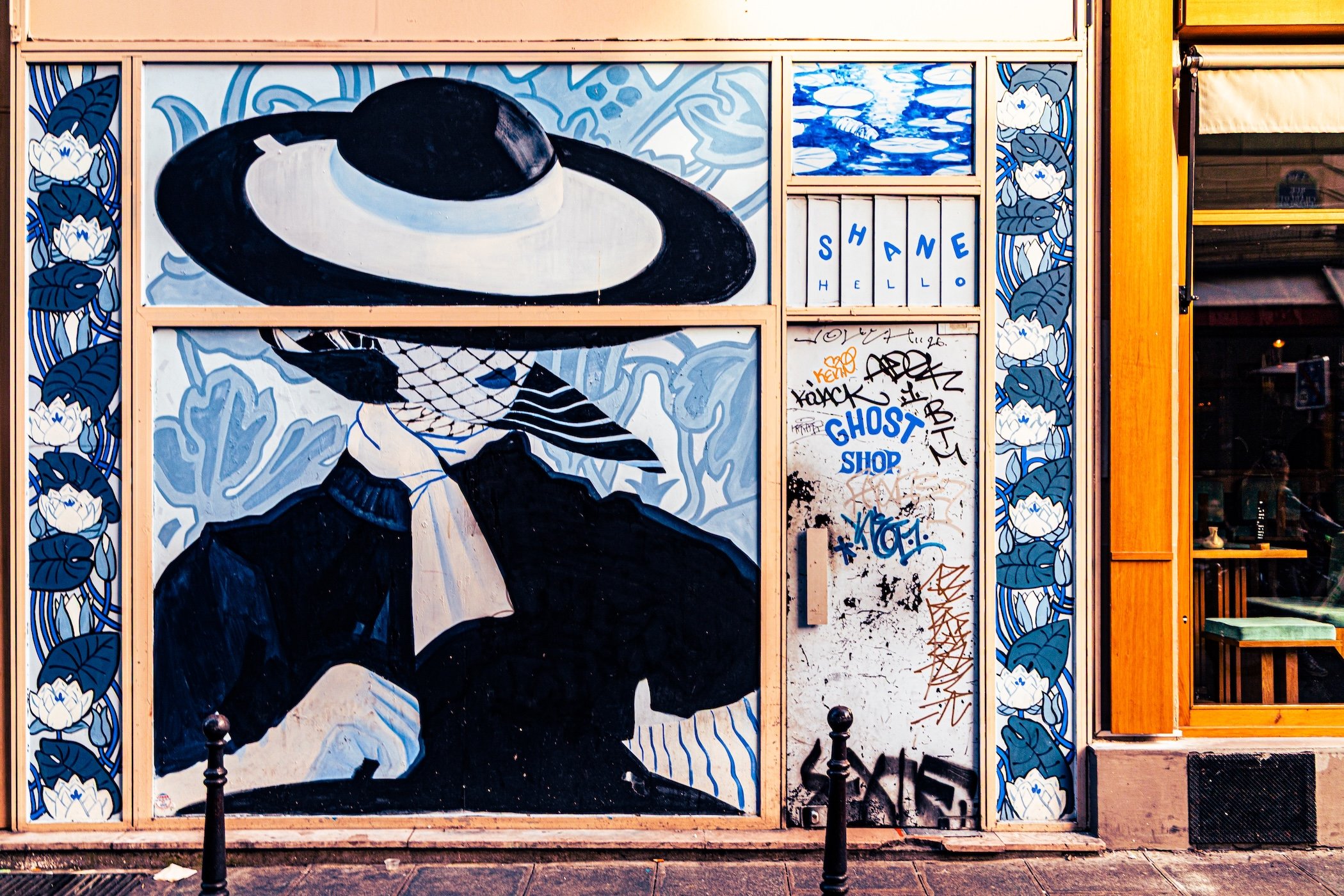
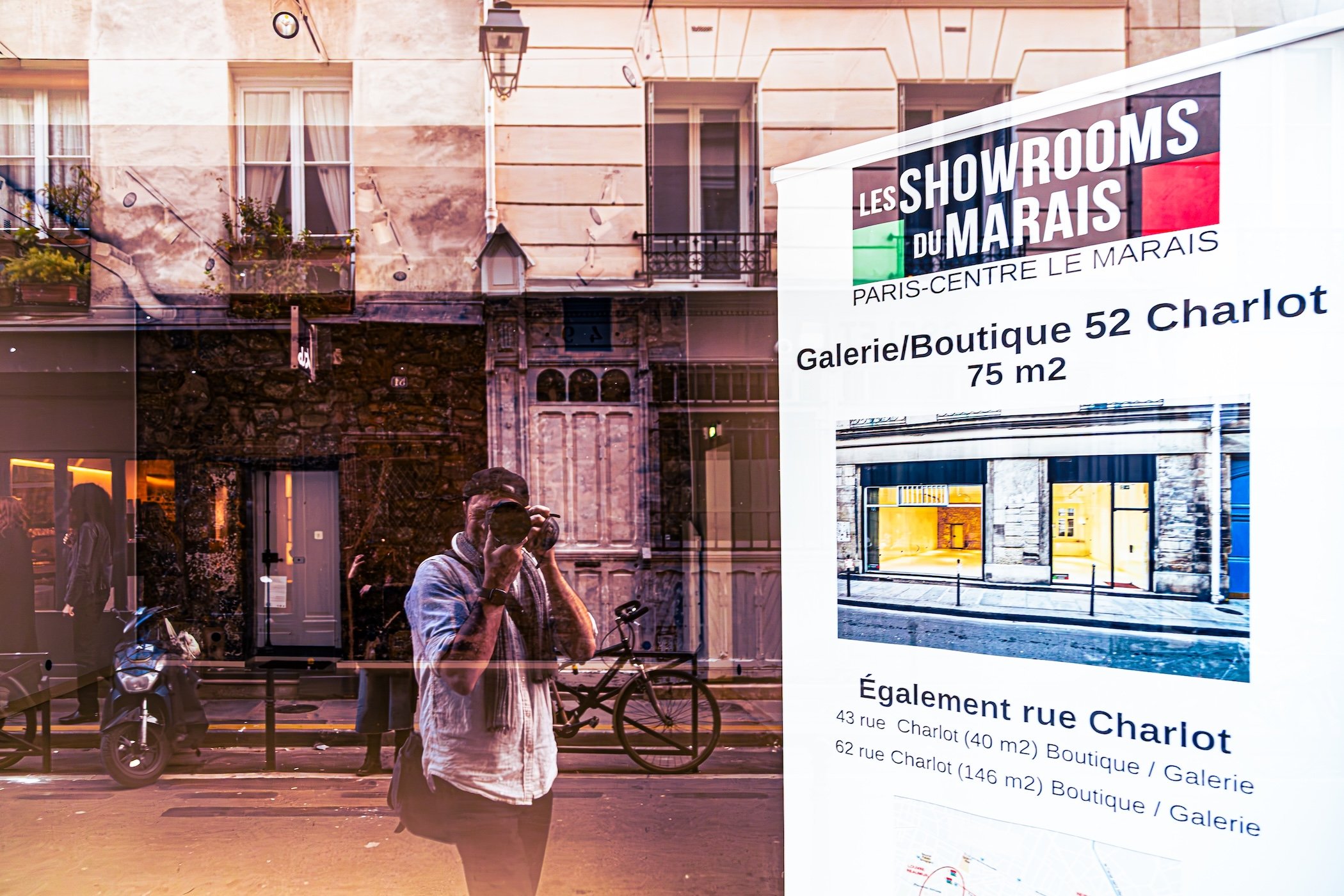
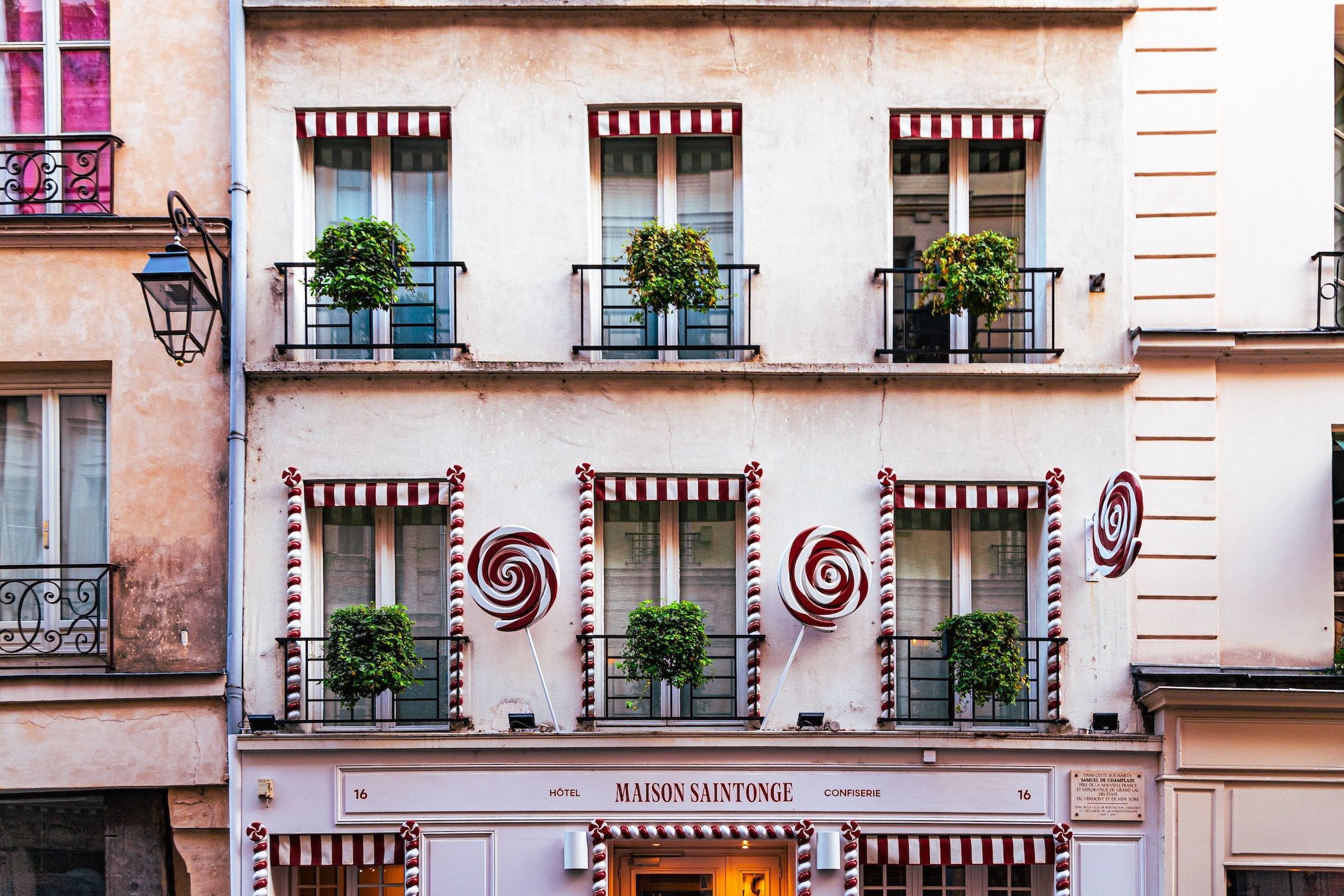
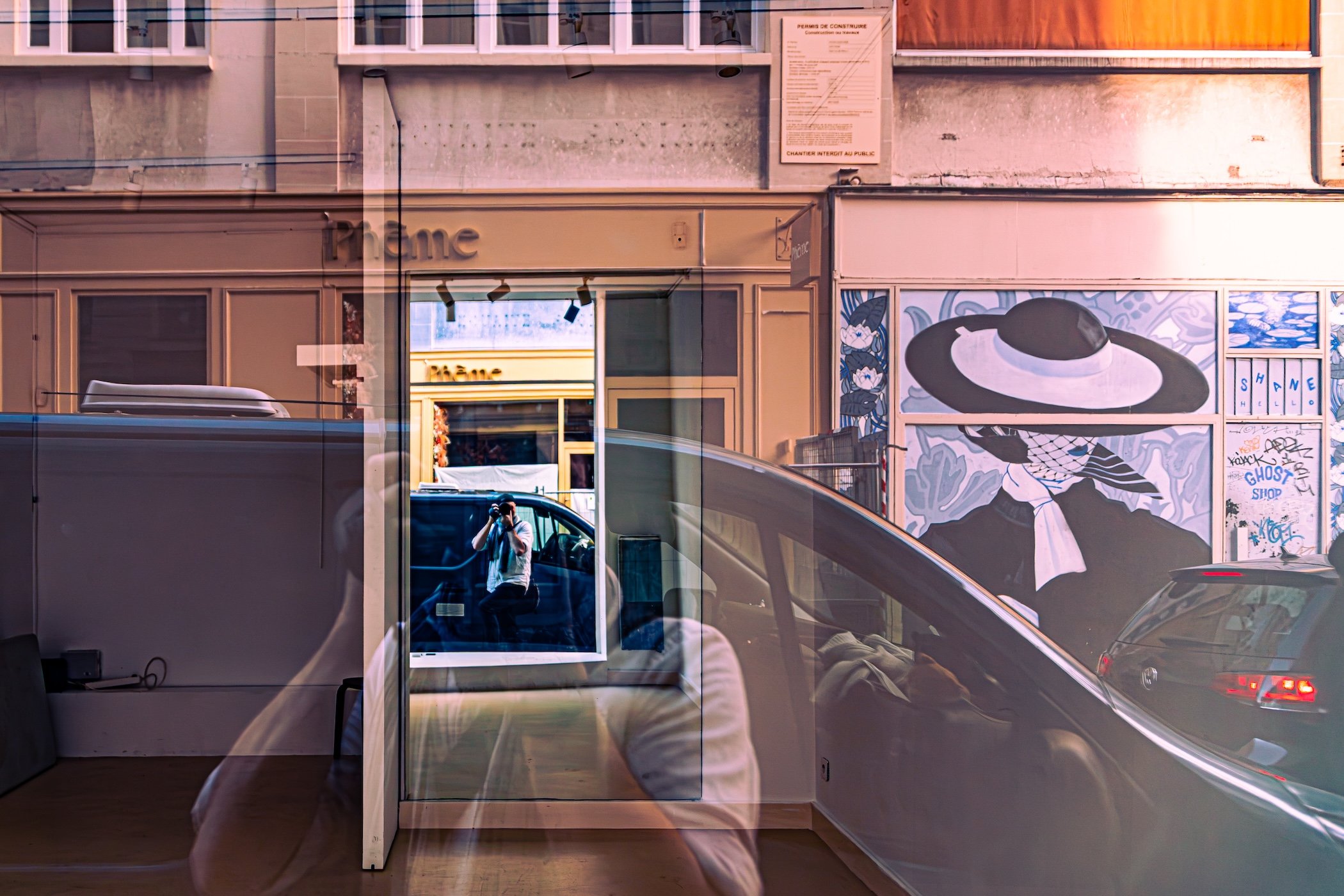
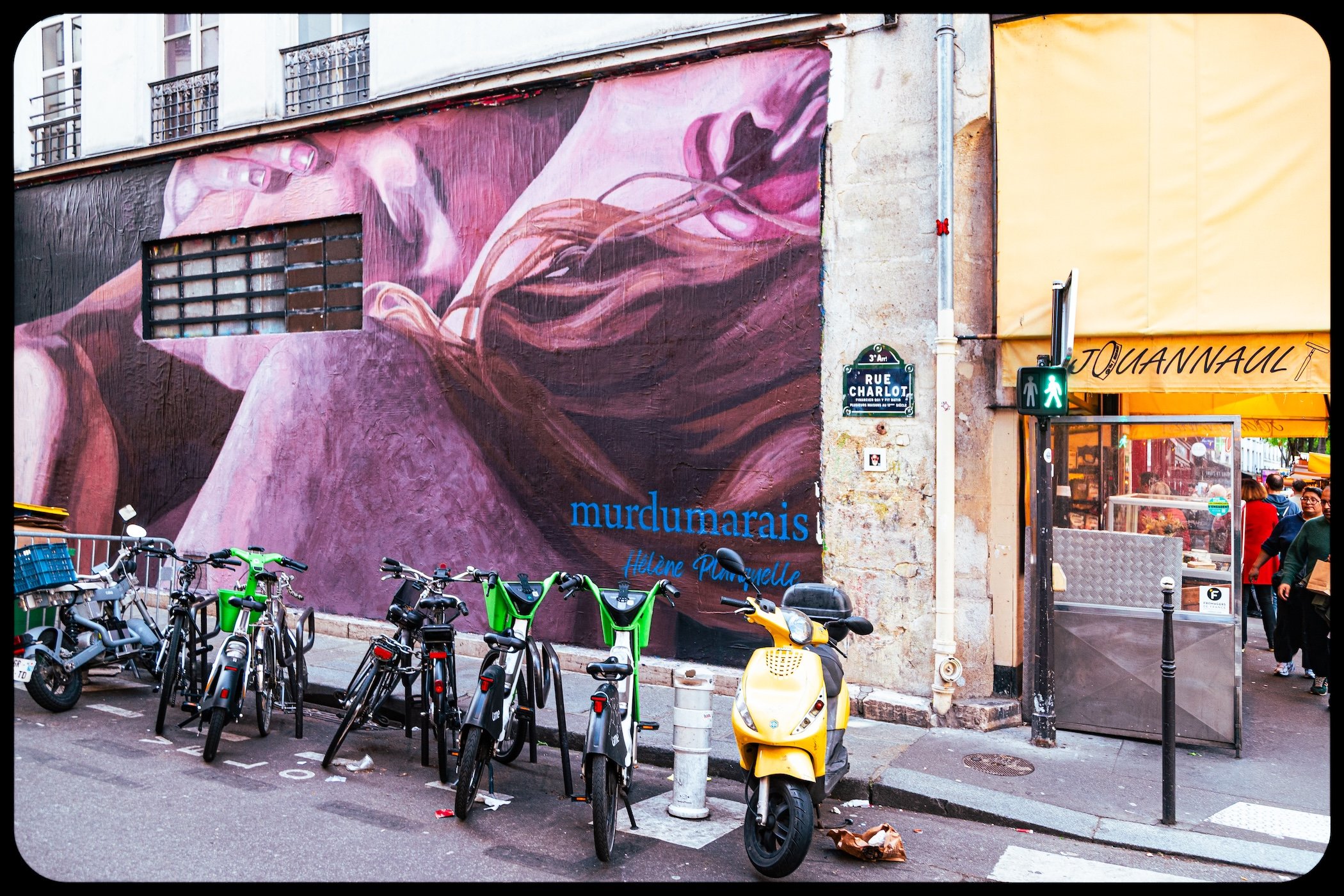
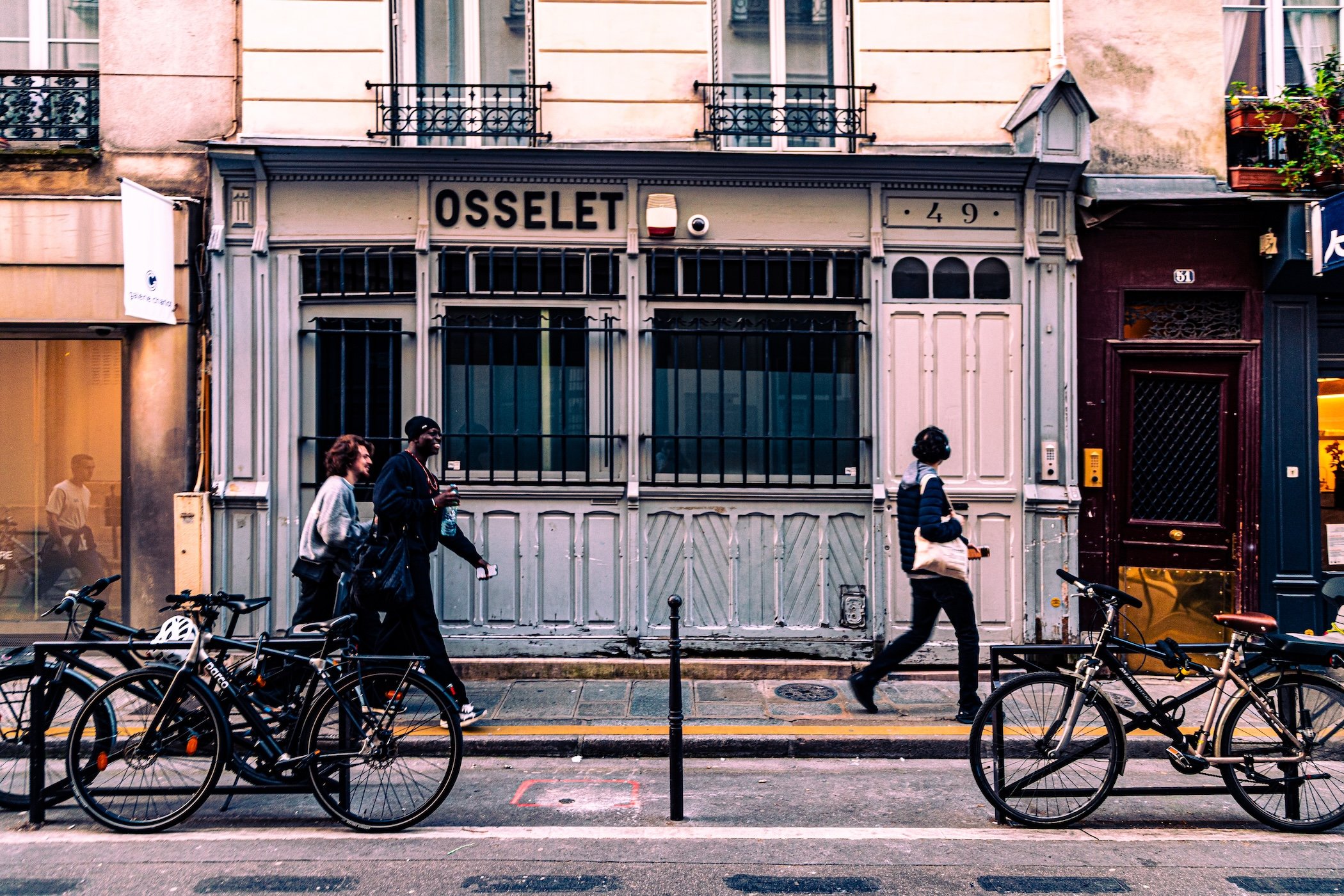
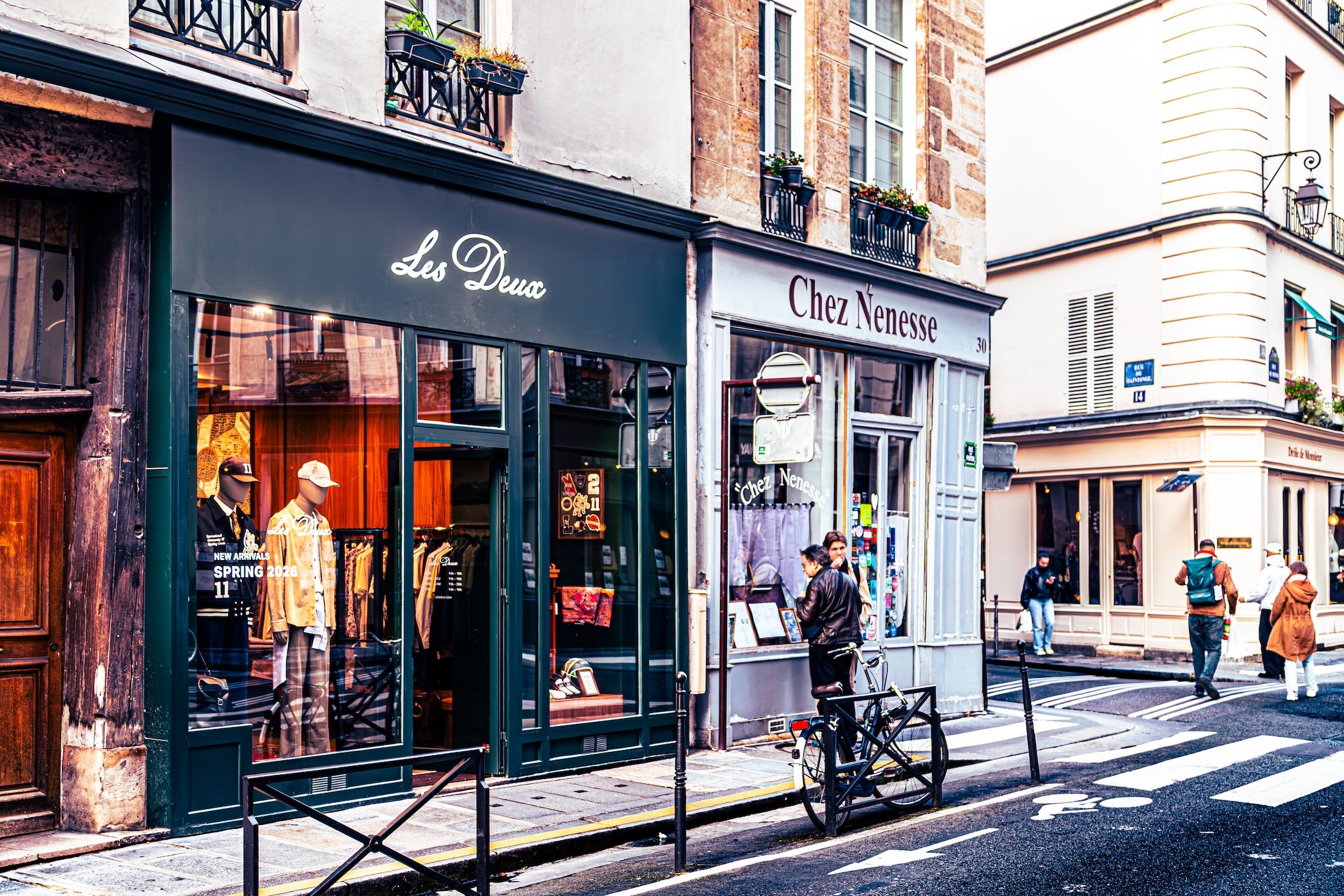
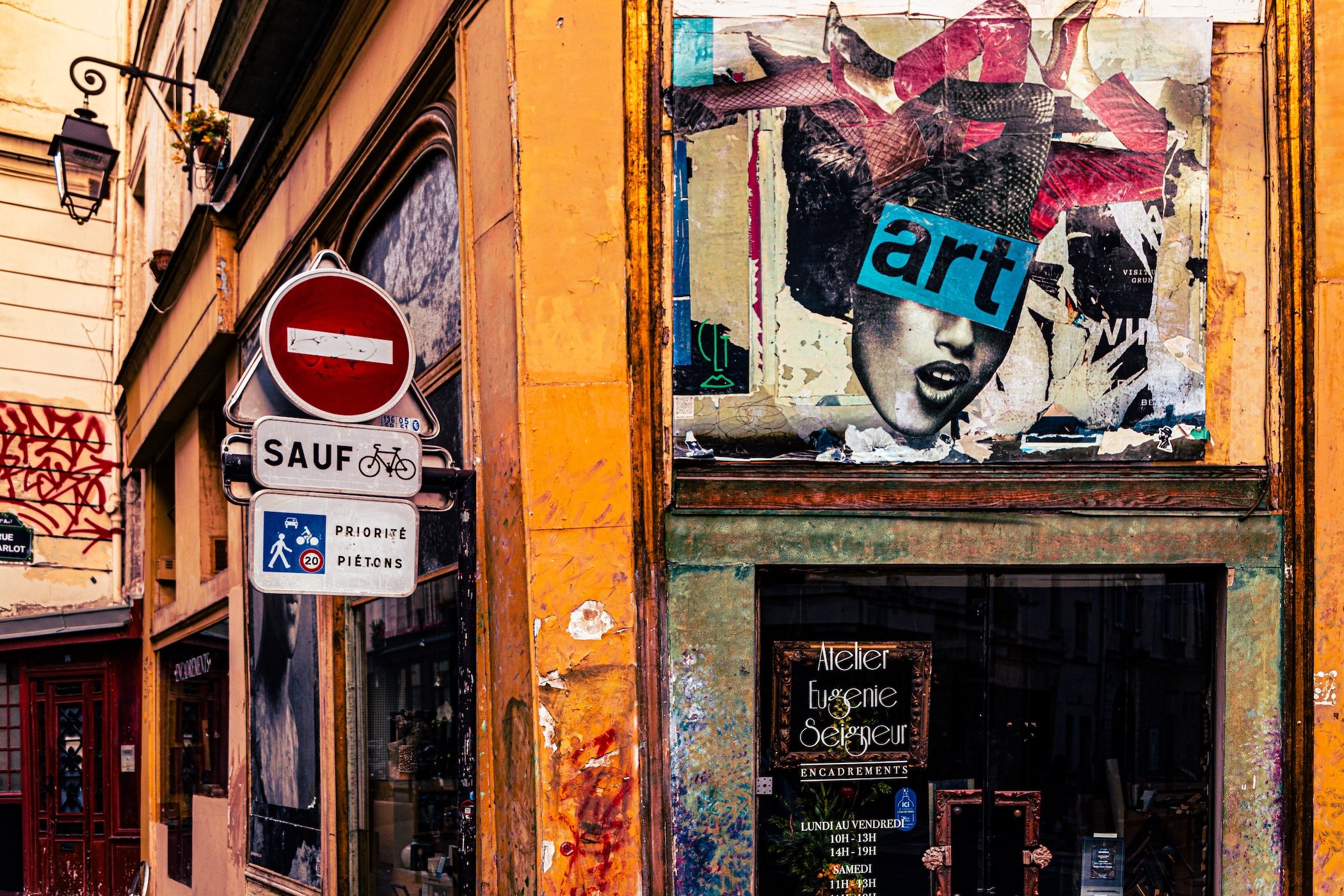
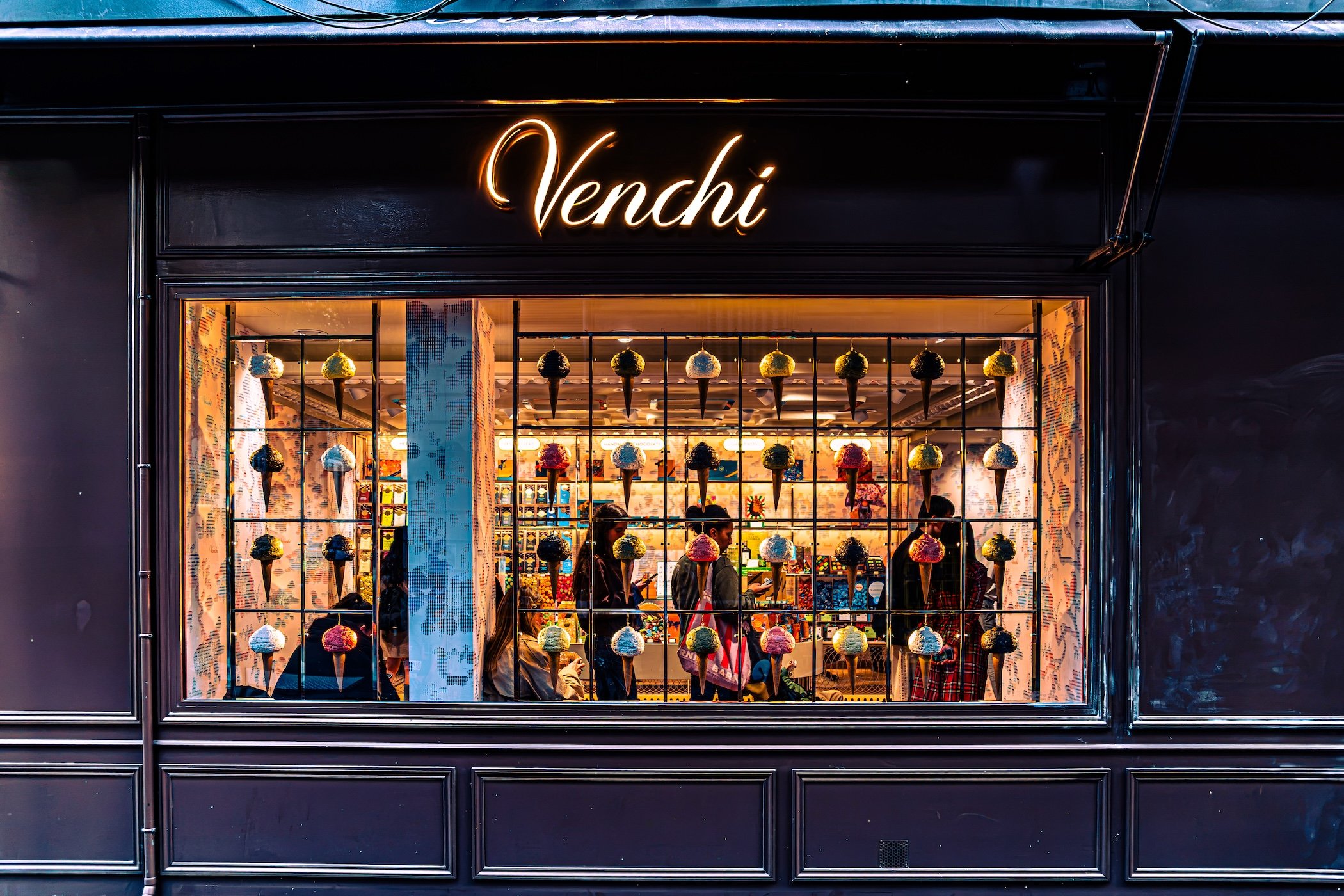
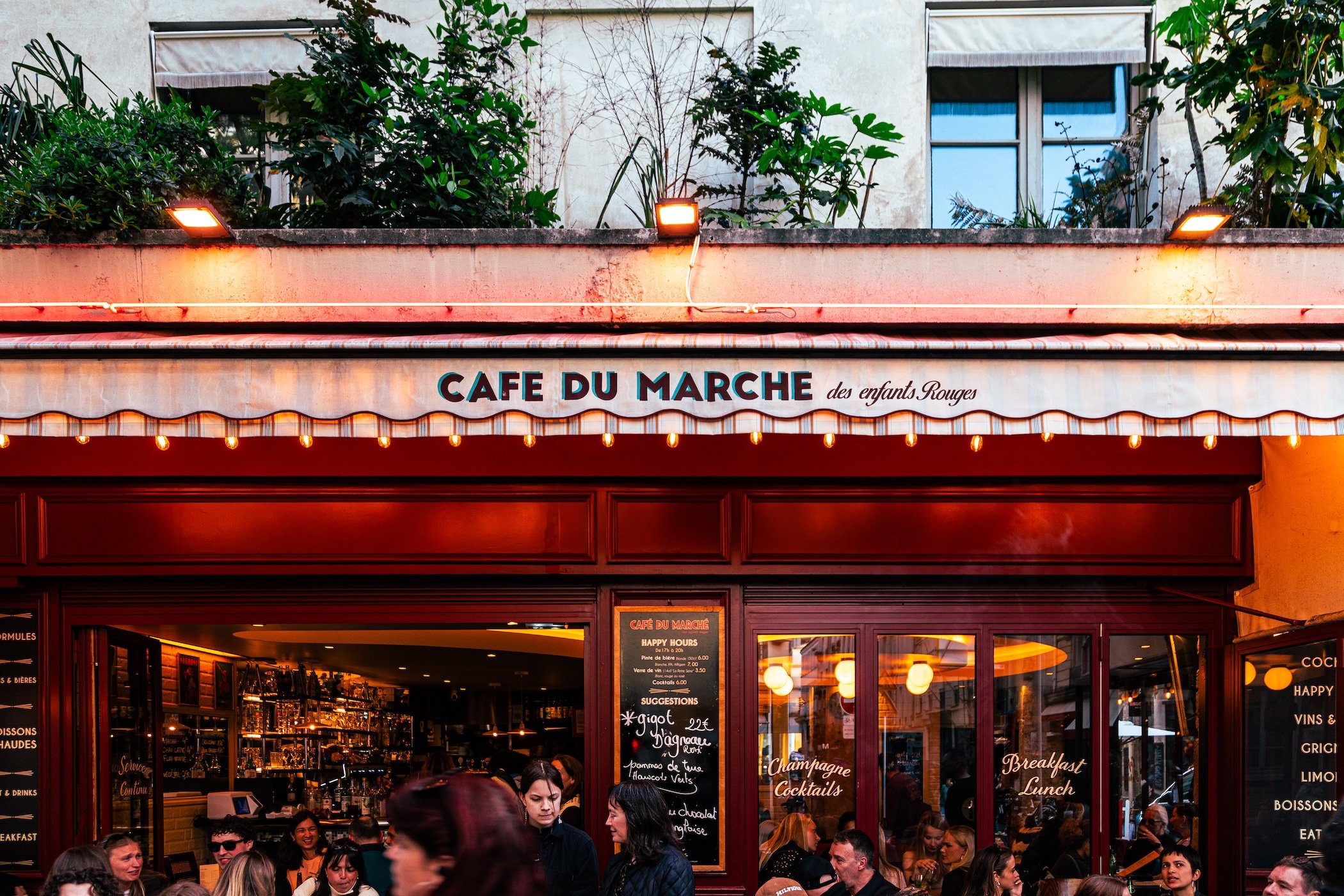
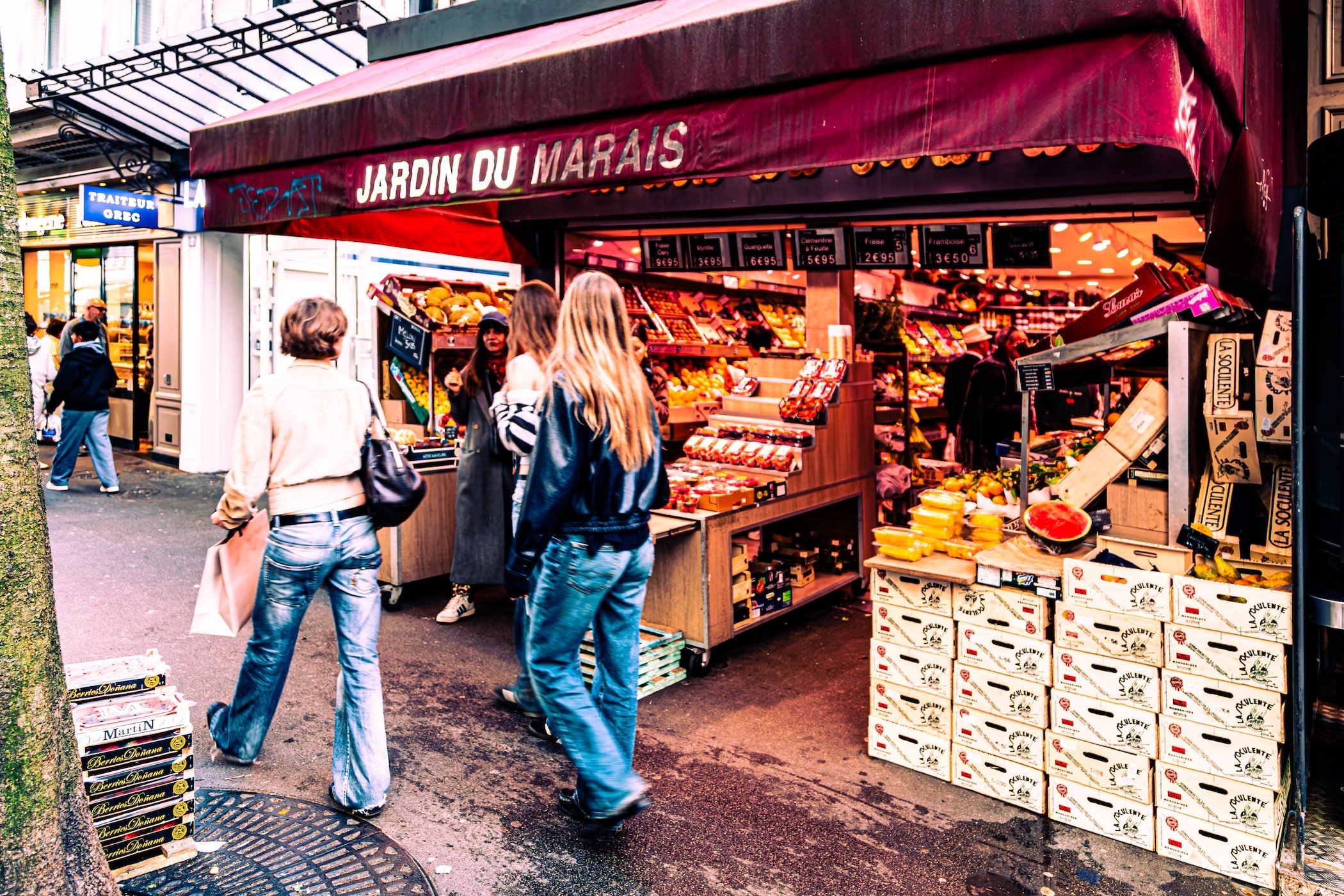
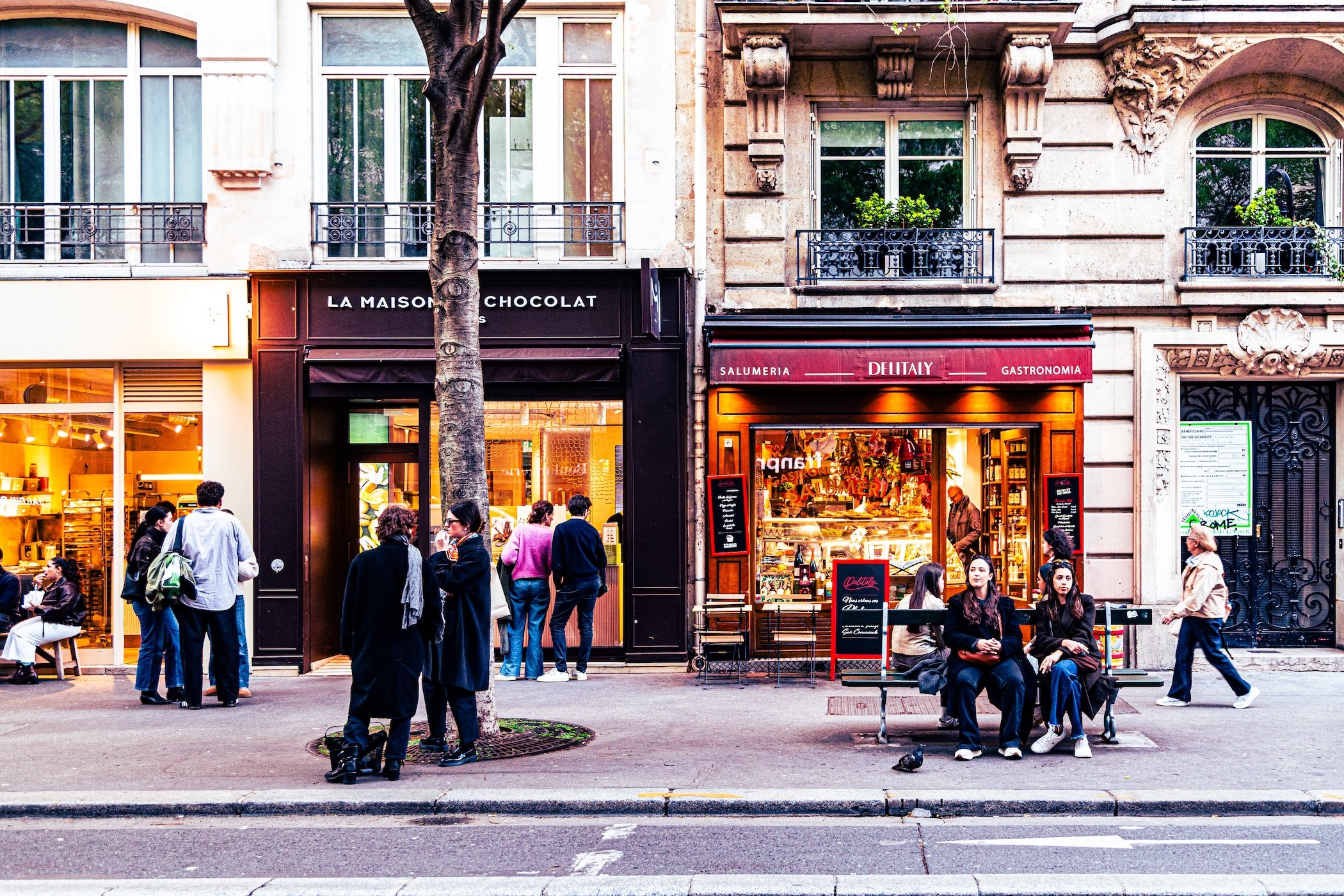
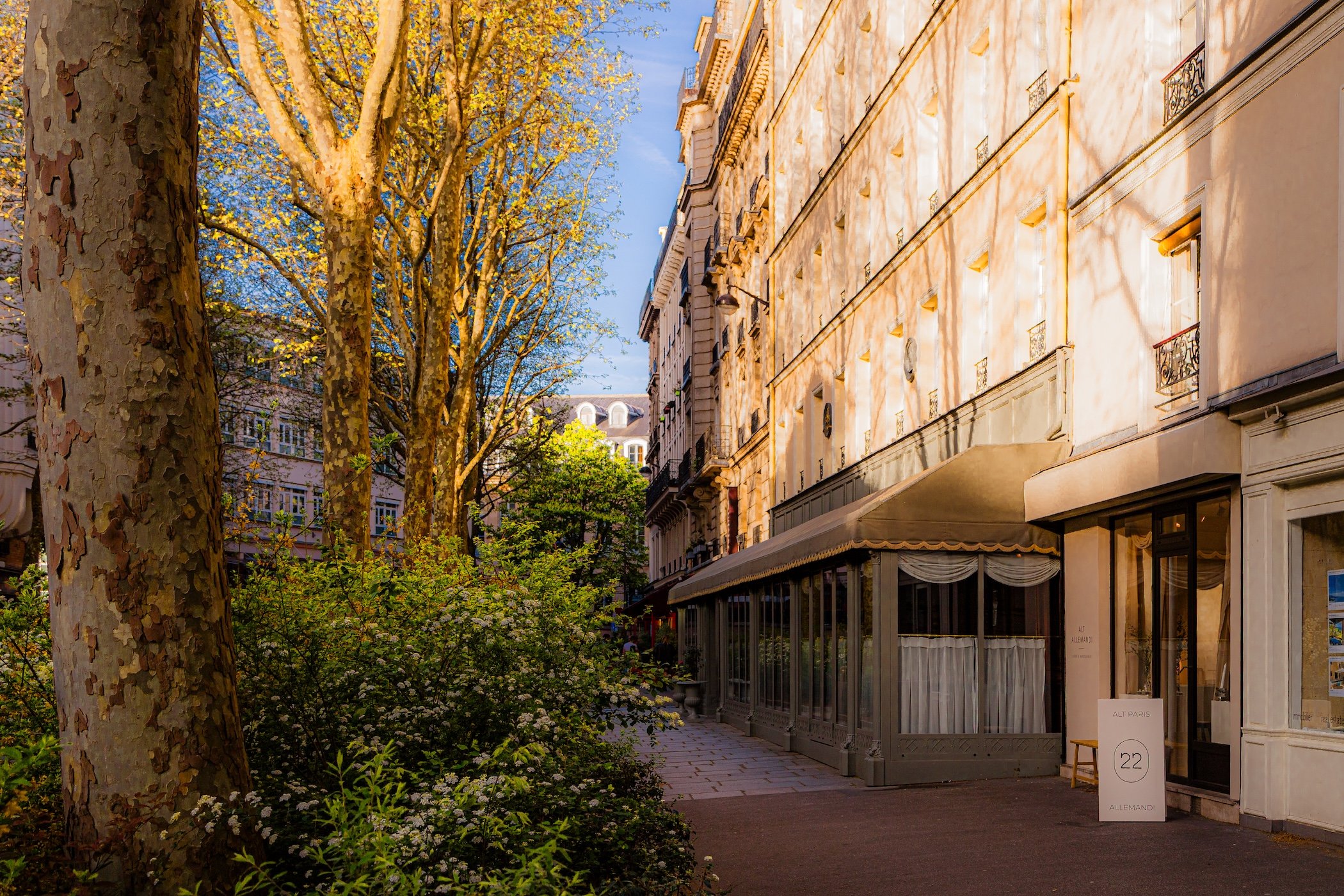
Along Rue Charlot and Rue de Bretagne, Enfants-Rouges became narrower, warmer, and more intimate. Storefront glass multiplied the street through reflection, producing layered images in which merchandise, architecture, passersby, and interior displays overlapped. The quarter’s visual identity therefore emerged not from a single landmark, but from the movement between public garden, civic structure, and richly textured neighborhood commerce.
Through The Lens
-
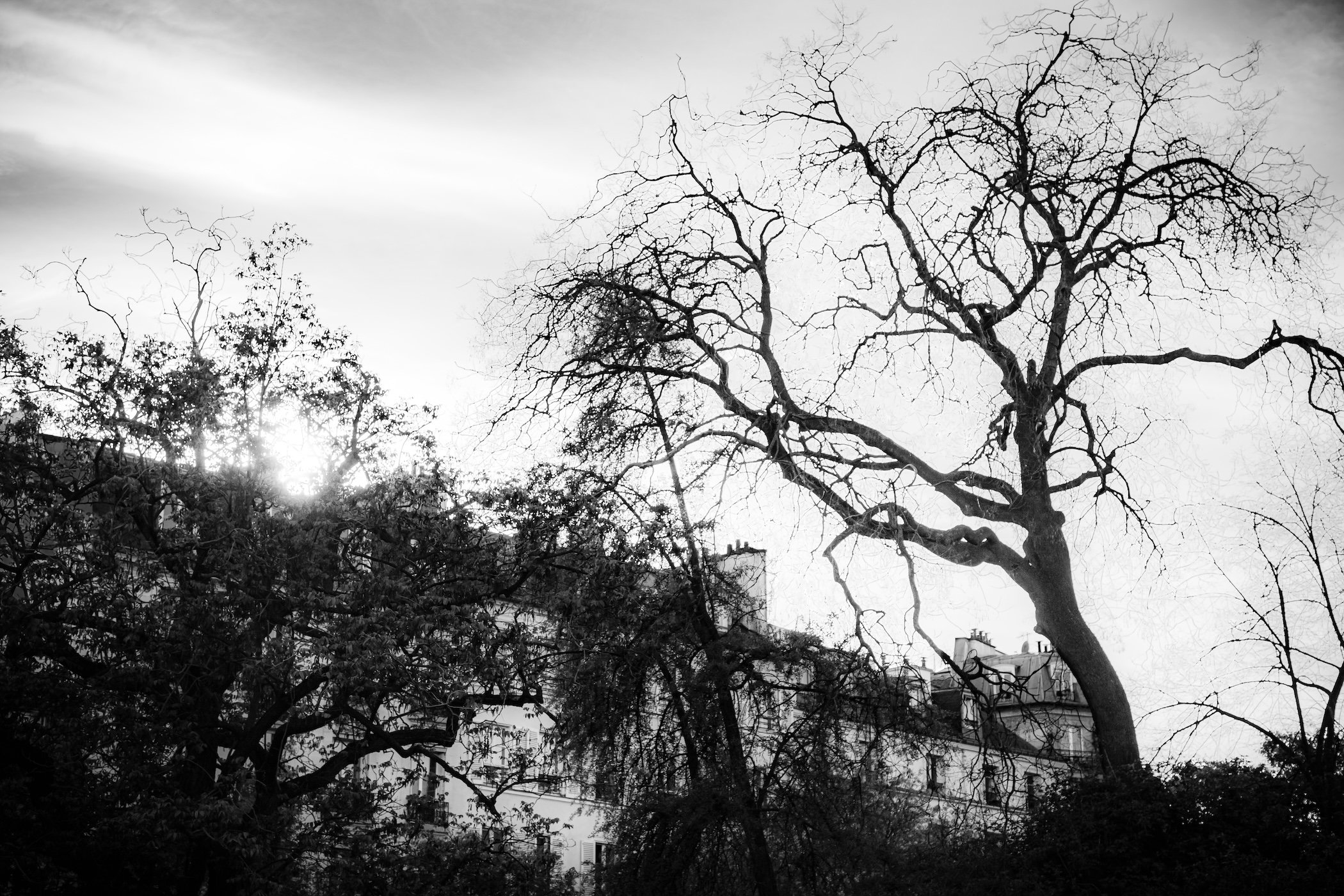
Through the lens, Enfants-Rouges became a study in spring light and reflection. In Square du Temple–Élie-Wiesel, the camera was drawn to blossoms, branches, pond edges, shadowed paths, and people occupying the park in small, unforced groups. Sunlight filtered through foliage and produced a softer, more diffuse kind of drama than the hard architectural light seen earlier in the afternoon.
The Carreau du Temple invited a more structural response. Its glass, ironwork, and long façades were photographed through bands of light, shadow, and black-and-white geometry, emphasizing both its industrial clarity and its place within the everyday movement of the quarter. The building became less a fixed monument than a surface continually altered by weather, angle, and passing light.
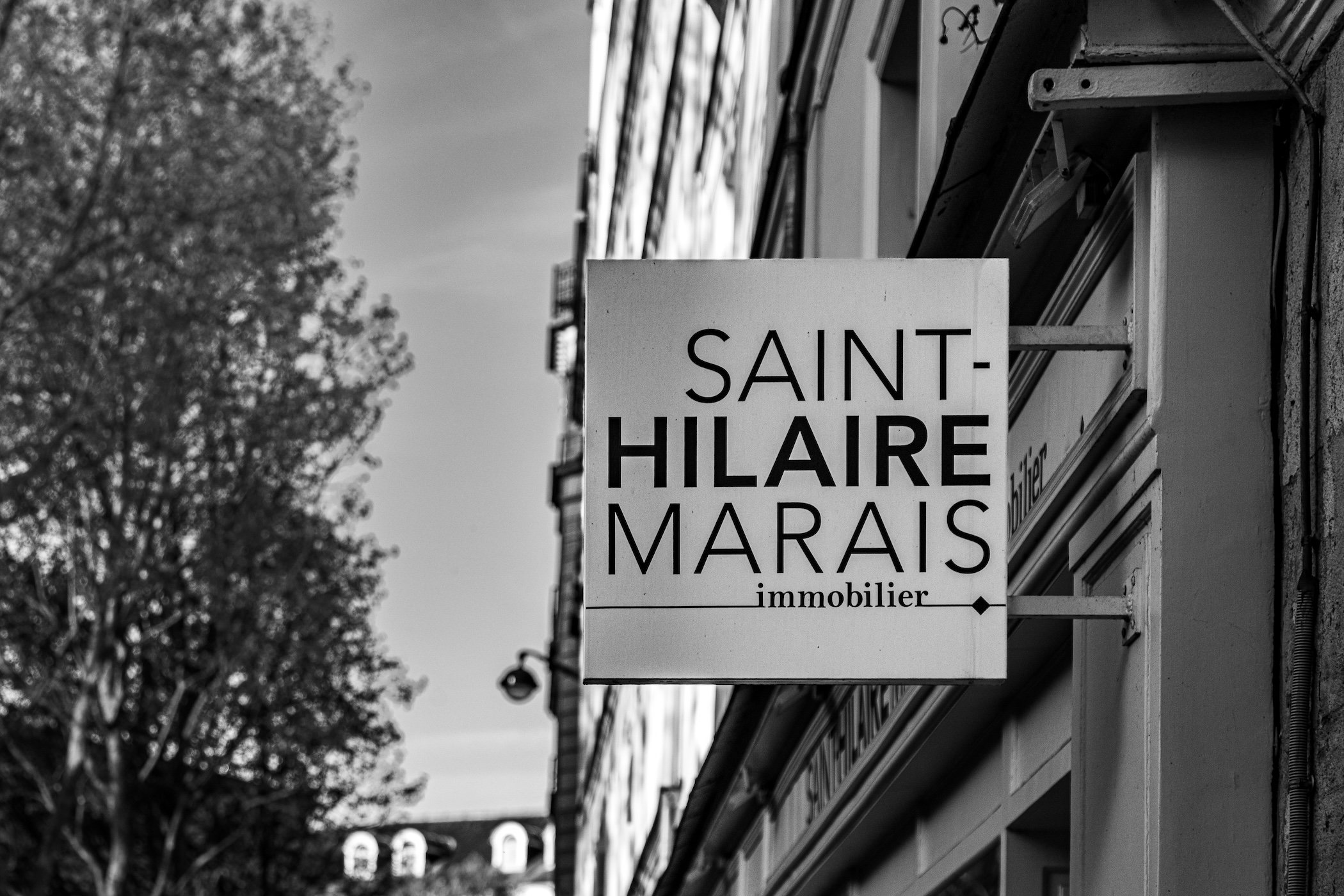
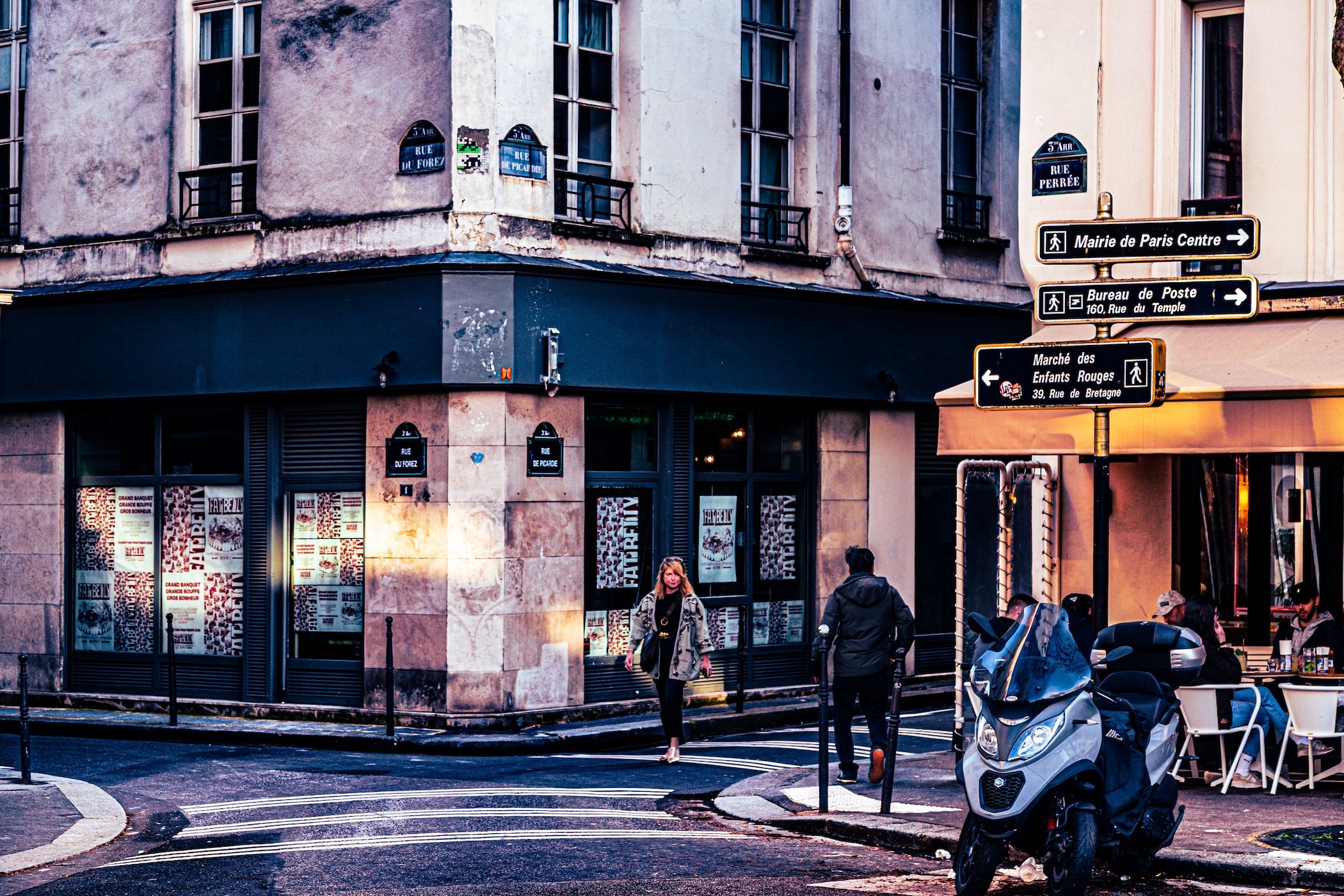
Farther along Rue Charlot and Rue de Bretagne, the lens moved closer to storefronts and street-level detail. Windows became layered compositions, mixing reflections of façades and pedestrians with objects displayed inside. Cafés, market stalls, signs, awnings, bicycles, and shopfronts created a dense visual rhythm. The strongest images feel almost double-exposed, not through technique but through the natural complexity of glass and reflected city life.
If you visit Paris, these ideas can help inspire your own photography.
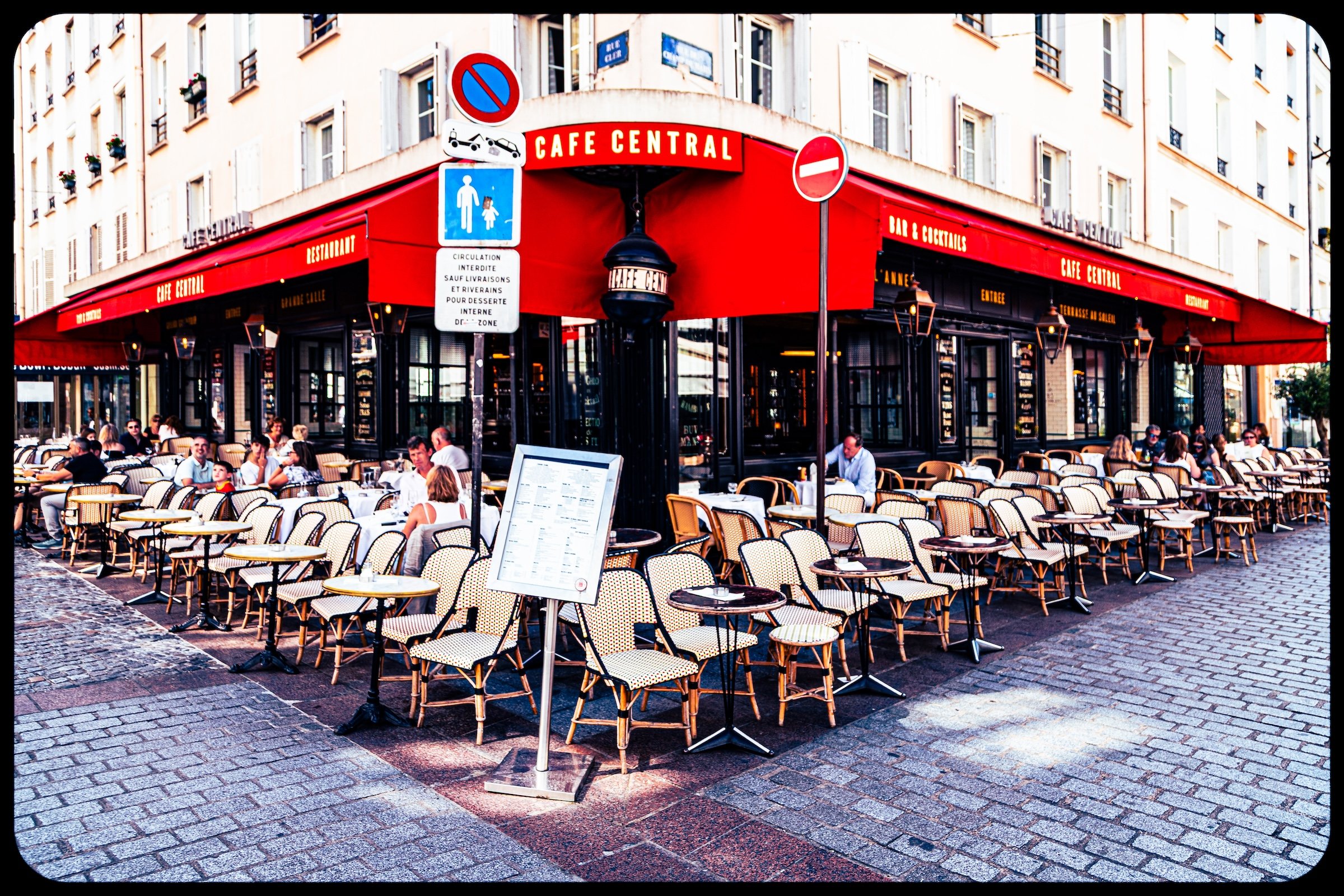
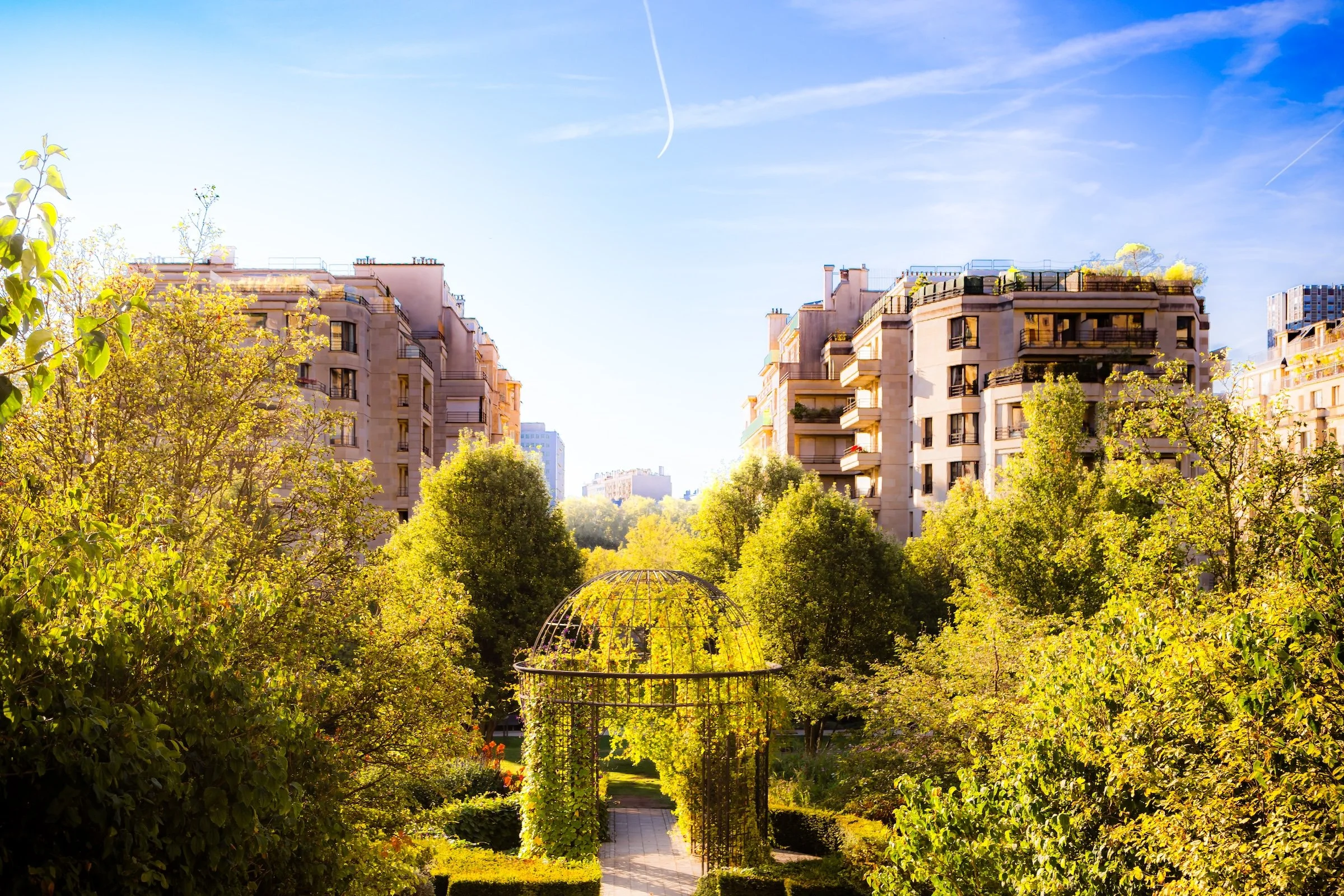
Moving Pictures: Enfants-Rouges
Enfants-Rouges Photo Gallery
Paris Flâneur Notes
-
17:46 - 18:19 PM
Conditions: 18°C (64°F) | Humidity: 59%.
The walk through Enfants-Rouges began at 17:46 along Rue Perrée, where Square du Temple–Élie-Wiesel offered a calm, green counterpoint to the increasingly urban intensity of the afternoon. In the lowering sun, the square was full of spring color: fresh foliage, flowering trees, pond reflections, and paths shared by people sitting, walking, talking, and enjoying the mild evening.
The atmosphere was relaxed but never empty. The park felt animated by ordinary use rather than spectacle, and that gave the photographs a particular warmth. The light had begun to turn more golden, catching leaves, building edges, and faces as the day slowly moved toward evening.
From the square, the Carreau du Temple came into view as a brighter, more architectural presence. Its glass and iron framework caught the sun and seemed to shimmer above the surrounding streets. Crossing beyond it, the quarter changed character again. Rue Charlot and Rue de Bretagne became narrower, cozier, and more commercial, lined with cafés, shops, food displays, bicycles, and people moving through the early-evening streets.
The storefronts were especially compelling. Reflections merged interiors with the street outside, creating images that felt both documentary and slightly surreal. Objects in windows floated over façades, pedestrians appeared to pass through displays, and the quarter seemed to multiply itself in glass. Enfants-Rouges ultimately felt like a neighborhood of layered pleasures: greenery, architecture, commerce, sociability, and the warm visual ambiguity of a city reflected back upon itself.
Other neighborhoods visited:
Flâneur Notes document the walks, photographs, light, and street-level observations behind this neighborhood entry. Learn more about the Spirit of the Flâneur.

Explore Paris
-

The twenty arrondissements form the civic spiral of Paris, organizing the city into its broad local districts of government, identity, and daily life.
-

Each arrondissement is divided into four official administrative quarters, giving Paris a more precise civic and geographic framework.
-

The conseils de quartier bring participation to street level, giving residents a voice in neighborhood needs, public space, and local civic life.
-

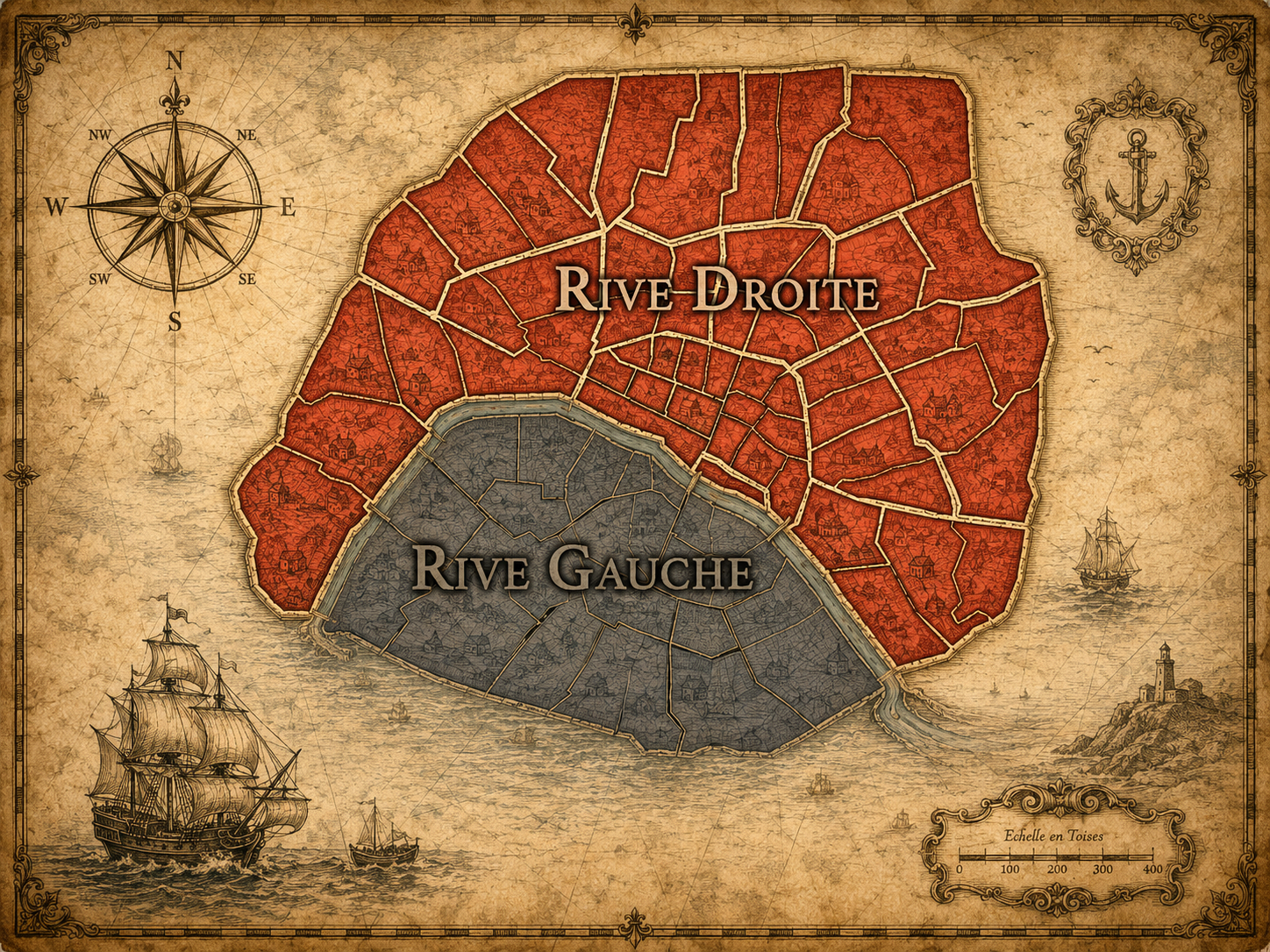
Les Deux Rives trace Paris through the Seine’s two banks, revealing how the Rive Droite and Rive Gauche shaped the city’s civic power, commerce, learning, art, and cultural identity.
-

Cultural neighborhoods reveal the Paris people recognize through history, cafés, architecture, memory, atmosphere, and local belonging.