
6e - ODÉON
Quartiers Administratifs
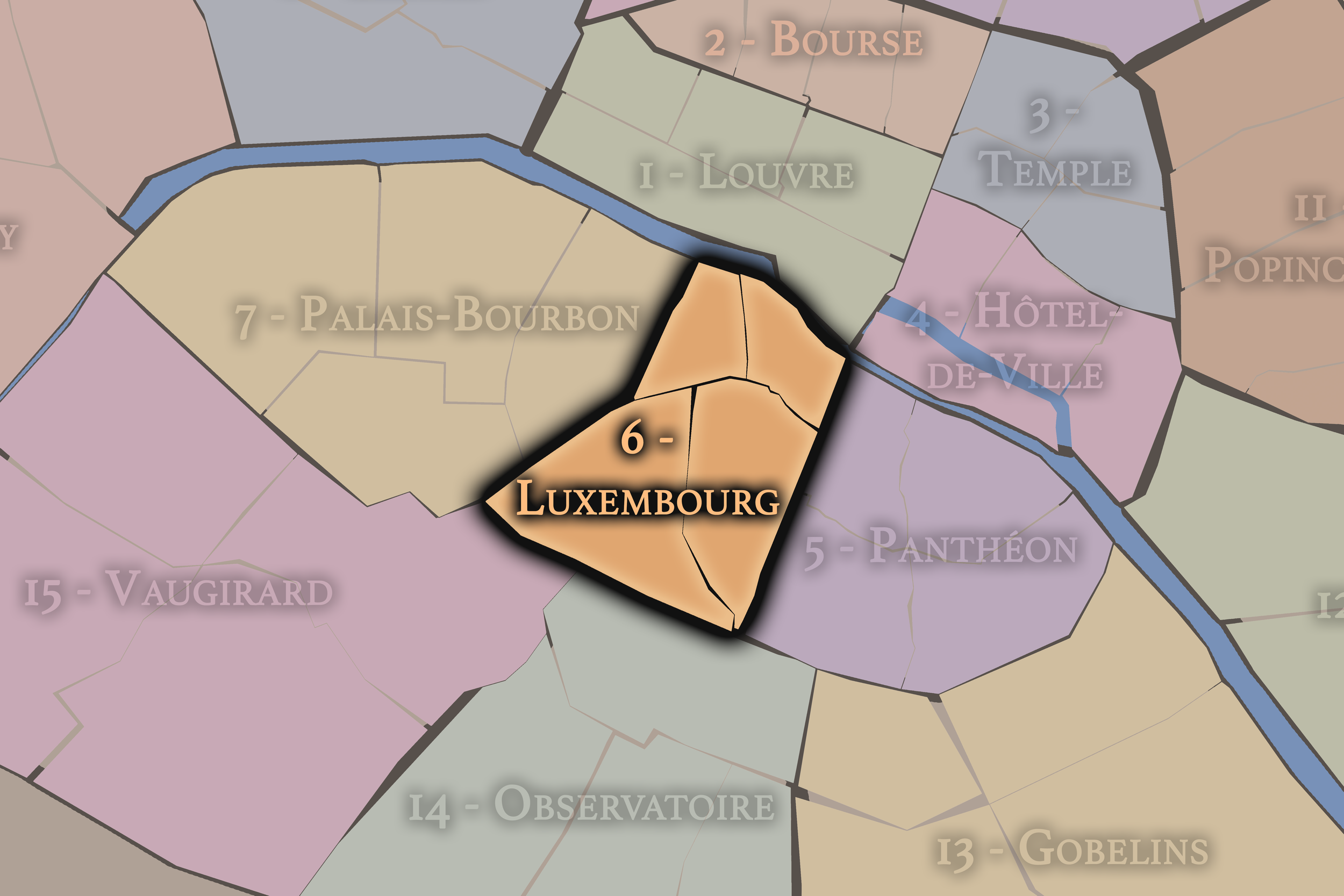
Welcome to the Odéon neighborhood page! Odéon is a quartier administratif — the 22nd administrative quarter — one of 80 such districts across Paris. As a quartier administratif of the 6e Arrondissement - Luxembourg, Odéon belongs to a formal layer of Parisian geography and is centered on one of the Left Bank’s great cultural crossroads. This is where the Théâtre de l’Odéon, Luxembourg Garden, Boulevard Saint-Germain, and surrounding cafés connect literary Paris with formal civic life.
The journey through Odéon began on Rue de Vaugirard from BD Saint-Michel, in the shadow of the Panthéon. The route west along Rue Vaugirard skirted past the Senate, before heading south on the picturesque cobbles of Rue Servandoni. This trek ended at Place Saint-Sulpice at the fountain and Church of Saint-Sulpice.
Part of an ongoing project to walk and photograph every neighborhood in Paris, this page explores 6e Odéon through maps, district identity, history, and photography.
The Map
Geographic Setting
Odéon Neighborhood Maps
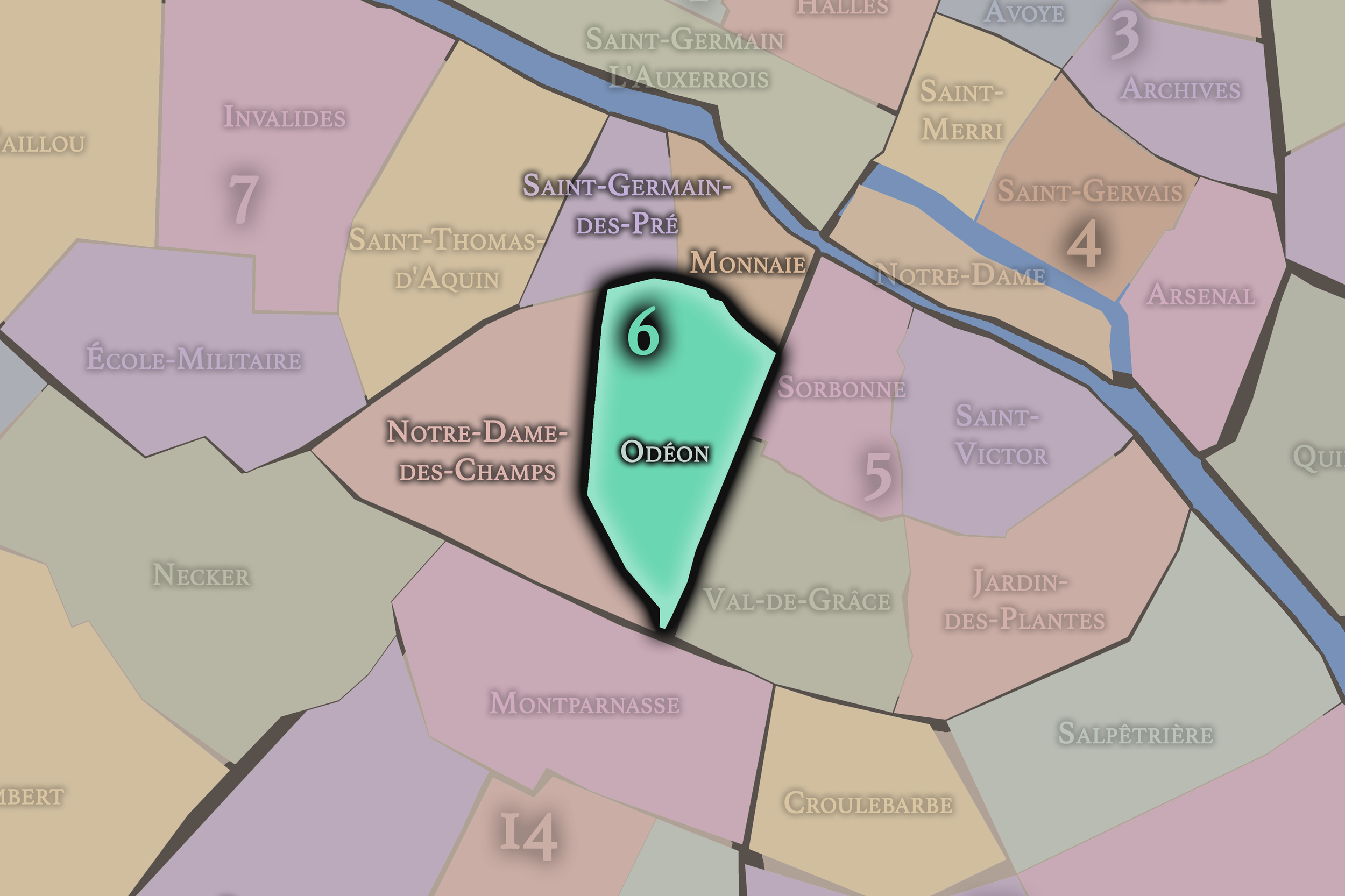
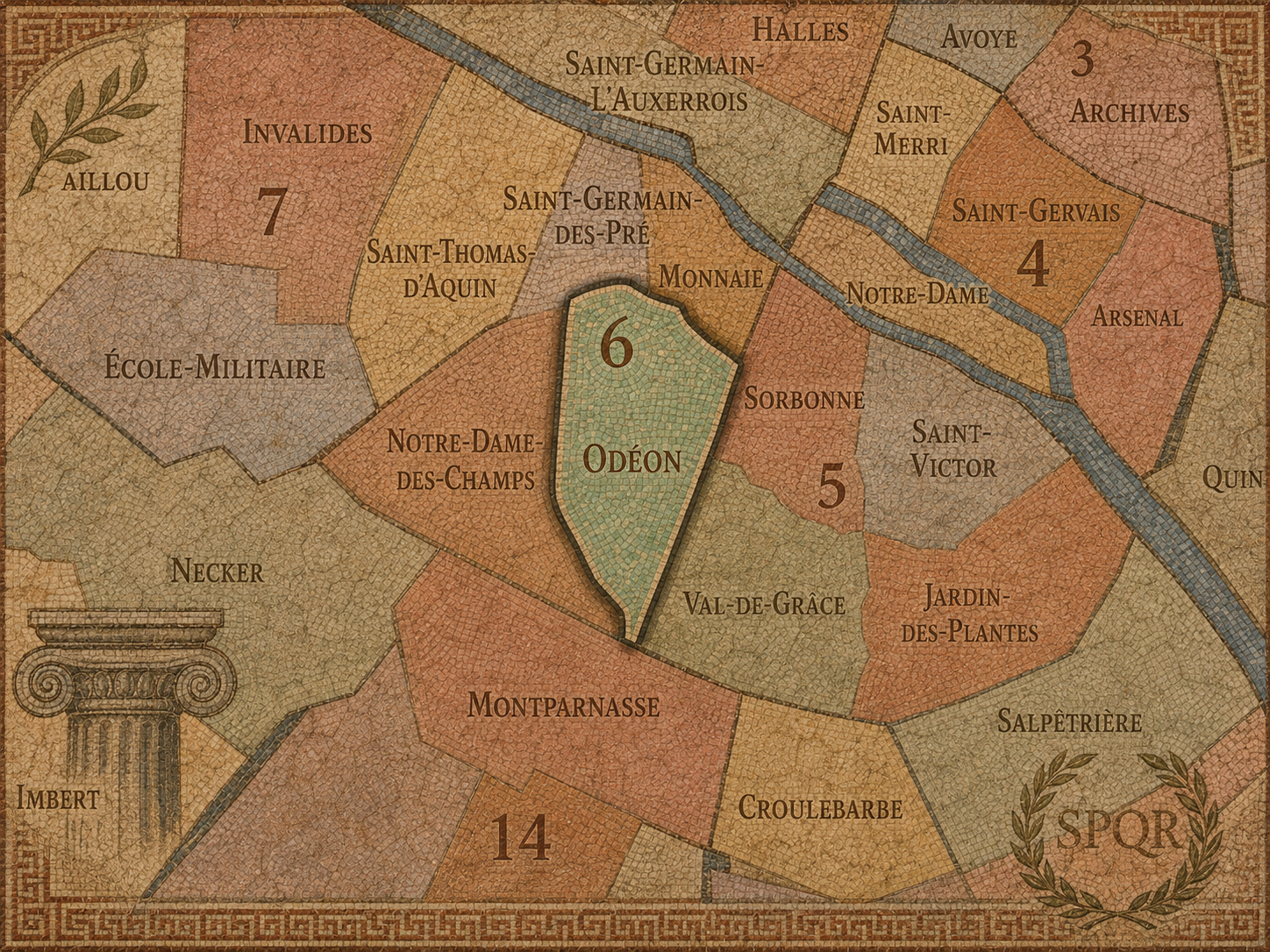
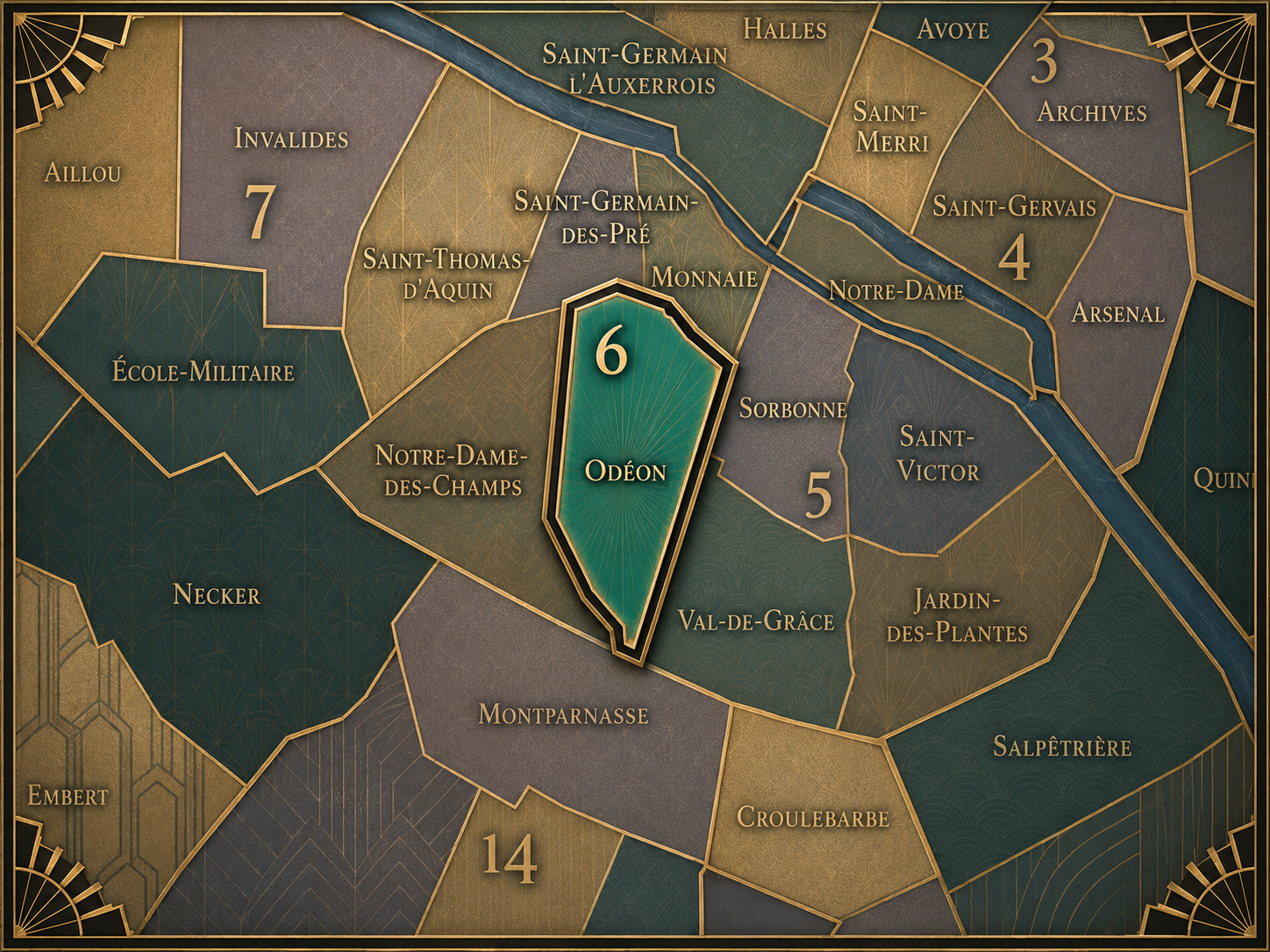
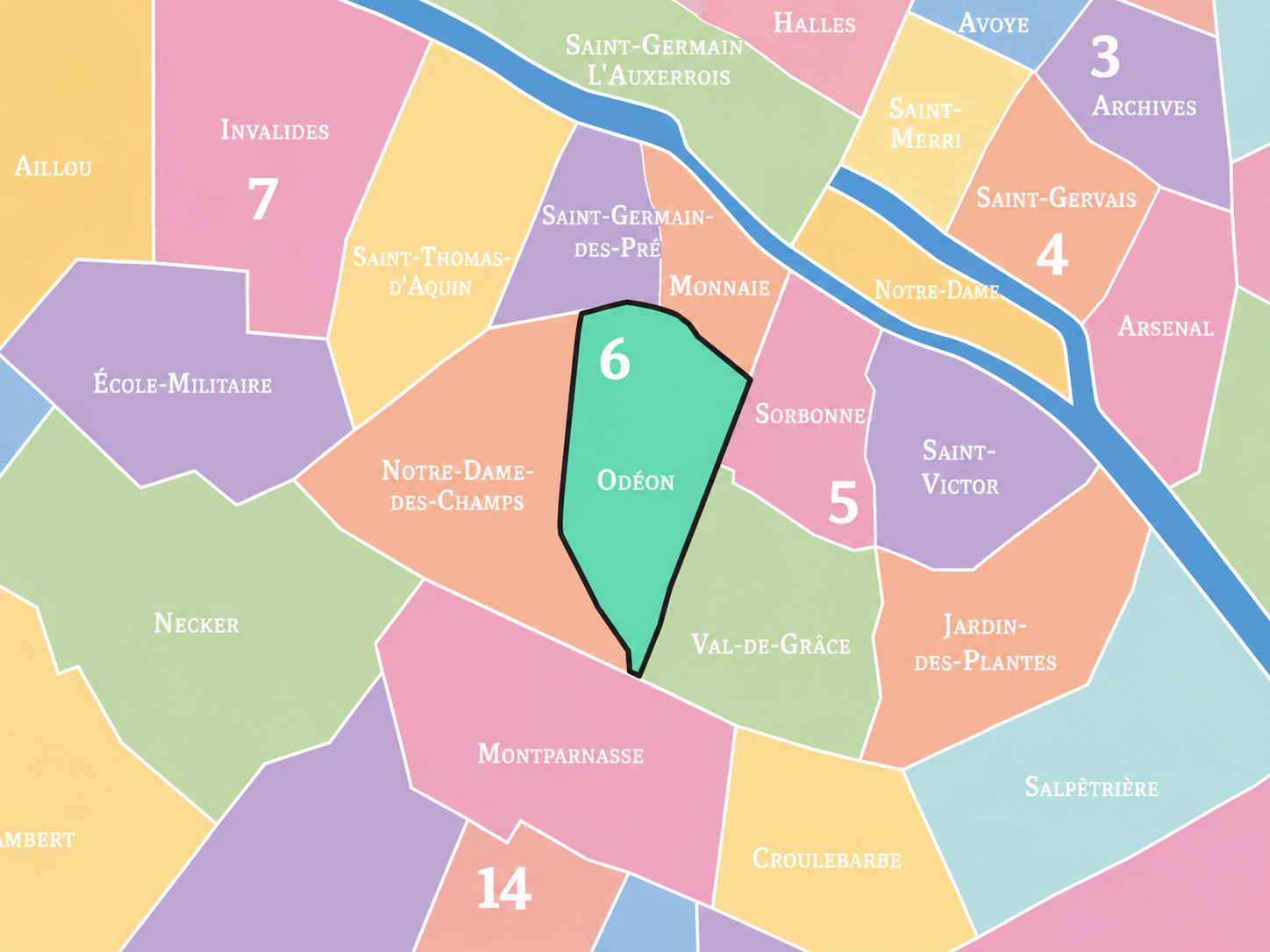
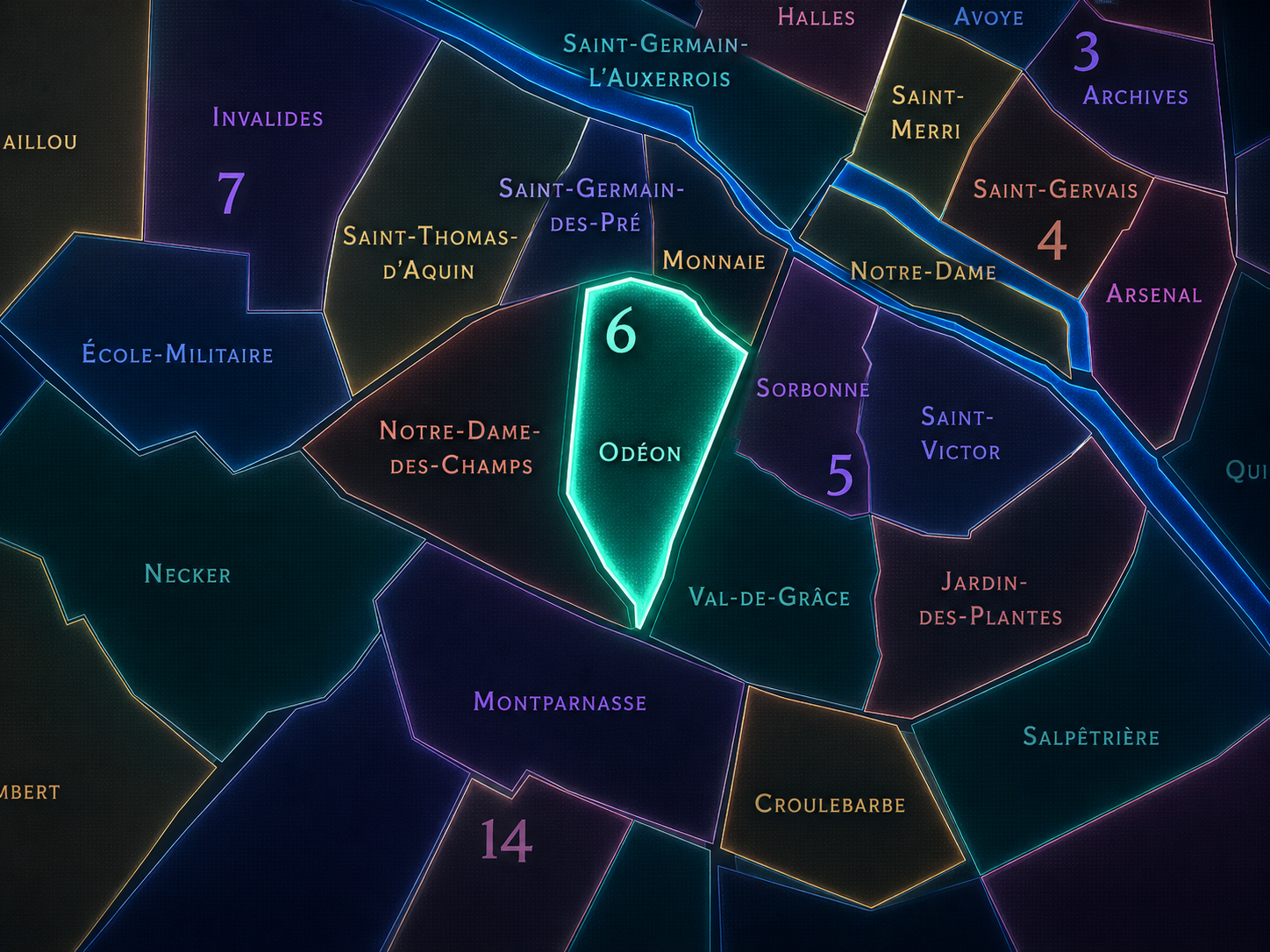
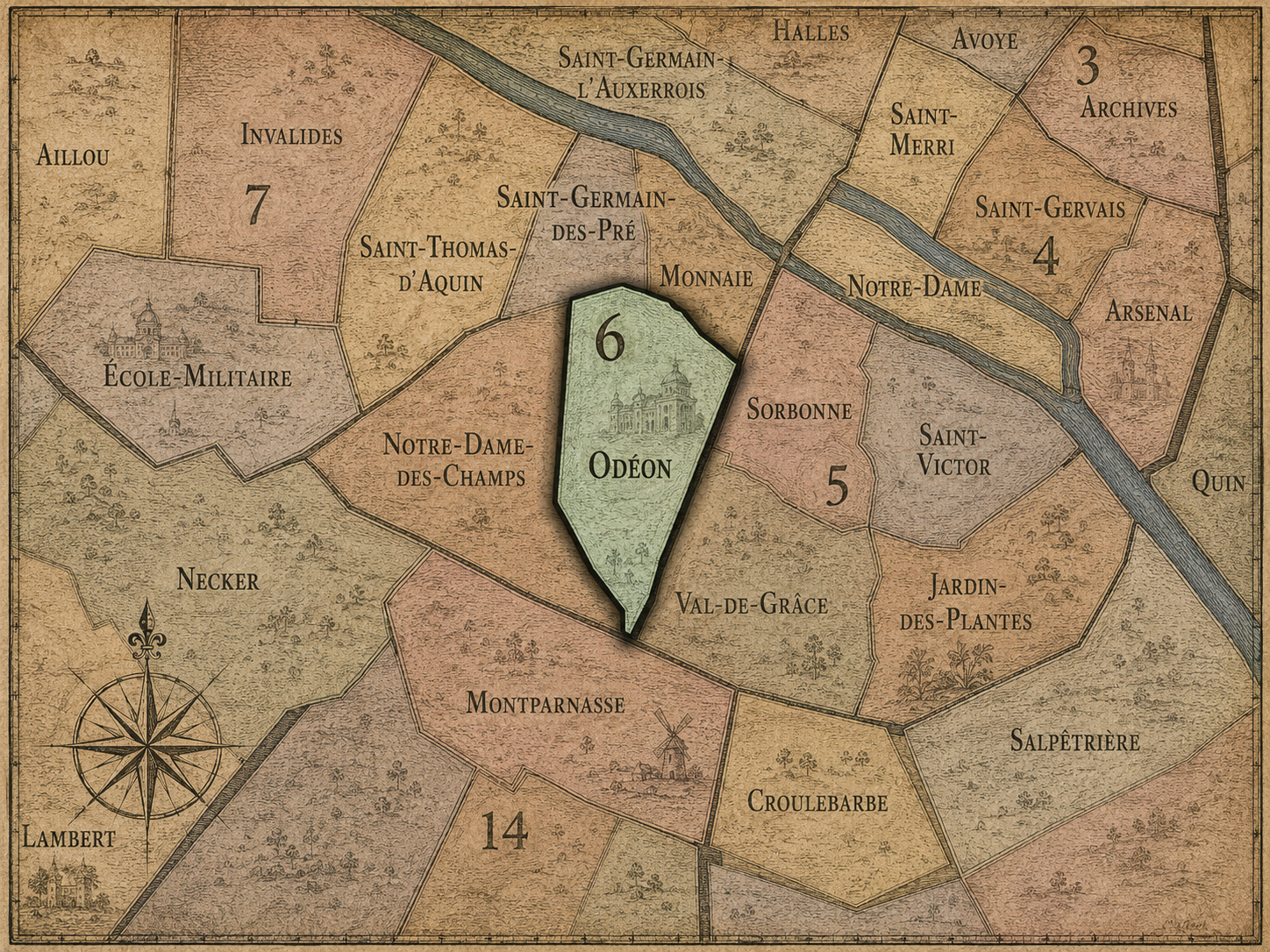
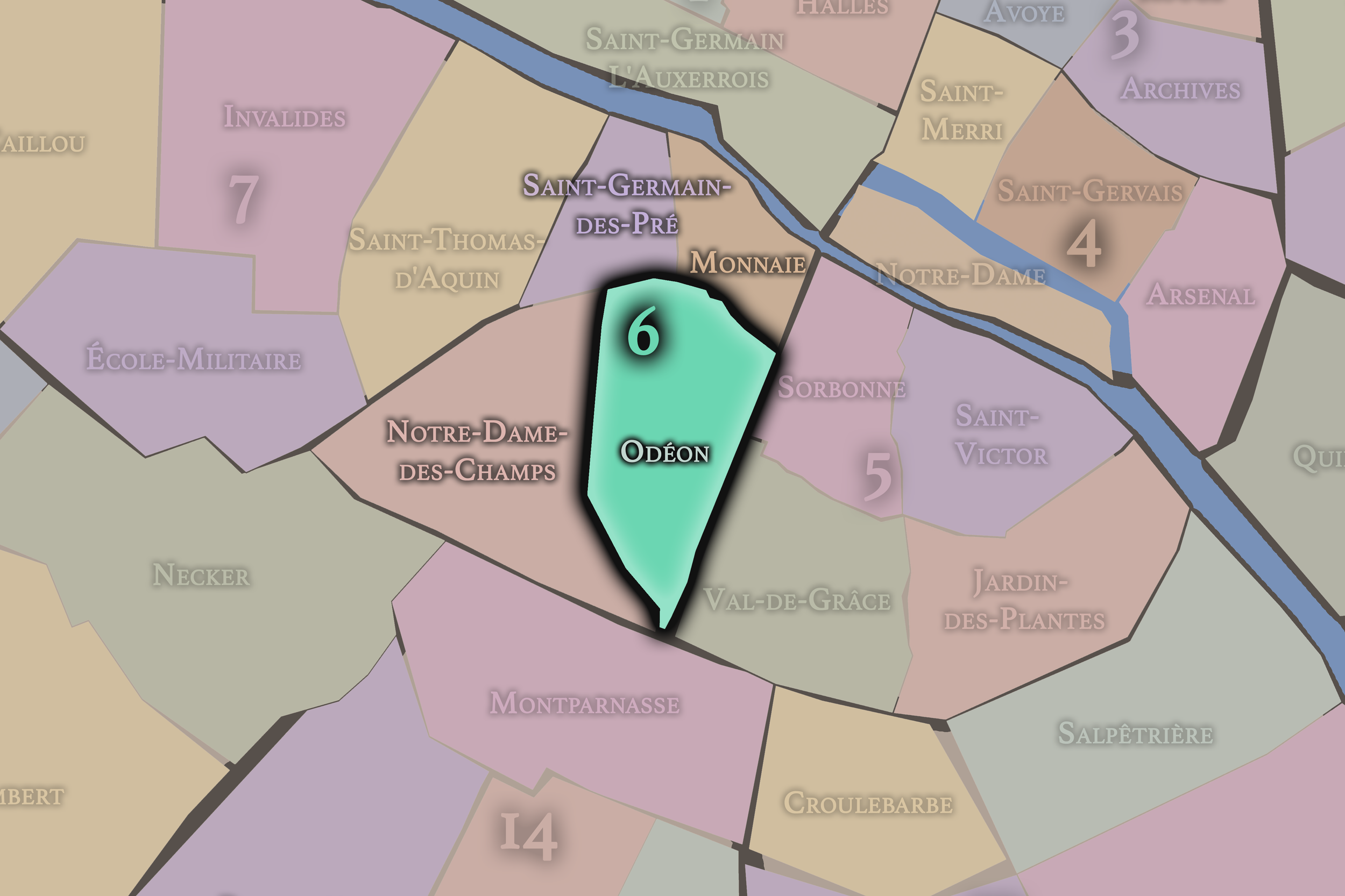
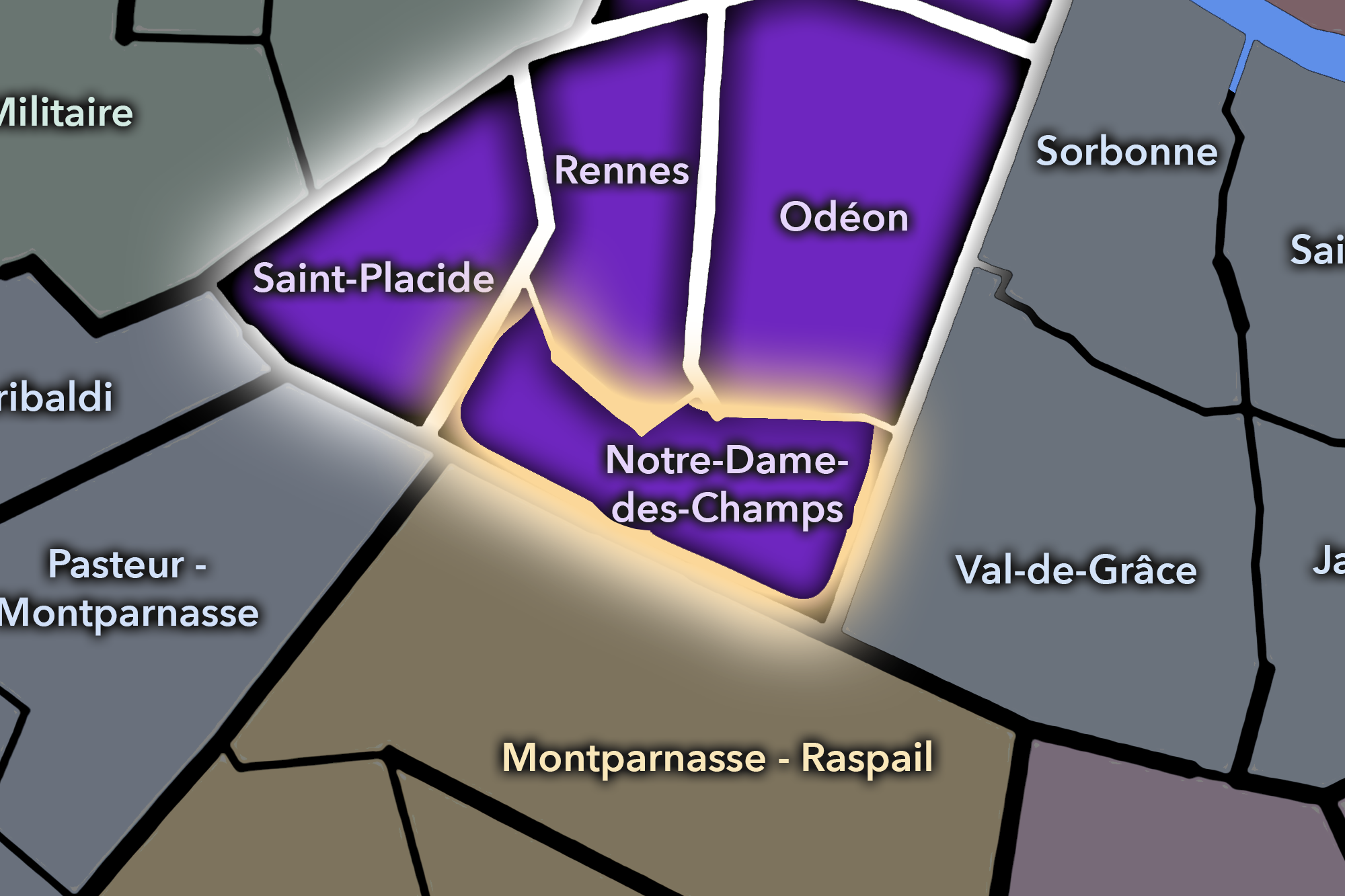
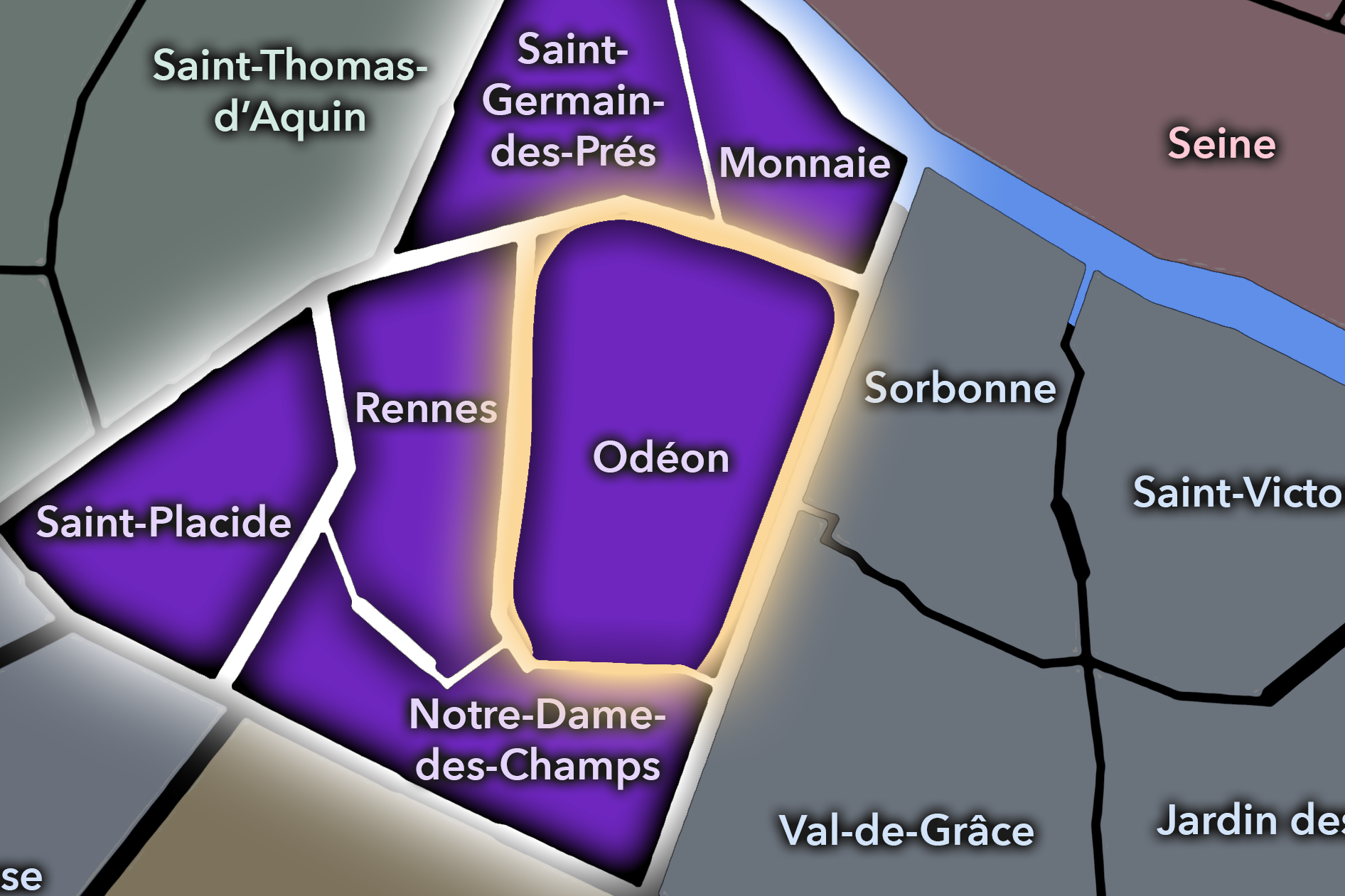
Odéon occupies the central portion of the 6th arrondissement, where the Left Bank gathers around theater, cafés, revolutionary memory, literary streets, academic corridors, and the northern edge of the Luxembourg Garden. It lies south of Monnaie, east of Saint-Germain-des-Prés, north of Notre-Dame-des-Champs, and west of the 5th arrondissement’s Sorbonne quarter. Its geography is shaped by Place de l’Odéon, the Théâtre de l’Odéon, Boulevard Saint-Germain, Boulevard Saint-Michel, Rue de l’Ancienne-Comédie, Rue de l’Odéon, Rue Monsieur-le-Prince, Rue de Médicis, and the approaches to Luxembourg.
This is a quarter of crossings. It stands between the river-facing world of Monnaie and the garden-facing world of Luxembourg, between the academic Latin Quarter and the literary-cultural Saint-Germain, between theater and café, between official institution and street argument. Odéon is not as monumental as Monnaie, not as mythologically broad as Saint-Germain-des-Prés, and not as residential-studio oriented as Notre-Dame-des-Champs. It is more immediate and theatrical: a neighborhood where public life gathers around entrances, squares, books, performances, conversations, and political echoes.
The quarter’s urban form reflects this hinge identity. Streets arrive from many directions and tighten into a dense, walkable Left Bank grid. The theater gives the quarter a ceremonial focus, while the nearby cafés and bookstores give it a conversational one. Odéon is the 6th arrondissement at the point where performance, intellect, and daily life meet in public.
Administrative Quarter Identity
Etymology and Origins
The name Odéon comes from the Théâtre de l’Odéon, the great neoclassical theater on Place de l’Odéon. The word “odeon” derives from the ancient Greek ōideion, a building for musical or poetic performance. In Paris, the name became attached to a theater, then a square, a metro station, and finally to the administrative quarter itself. It is a name that carries antiquity, performance, and civic culture in a single word.
The theater was inaugurated in 1782 to house the troupe of the Théâtre-Français, and the Ministry of Culture notes that the institution has been known since 1990 as the Odéon–Théâtre de l’Europe. Its official history places it at the center of Parisian theatrical life, from the late ancien régime through revolutionary transformations and modern European cultural programming.
As a quarter name, Odéon is therefore not simply topographic. It is performative. It names a place through the act of gathering to watch, hear, speak, debate, and interpret. That meaning suits the surrounding streets, where literature, politics, education, cafés, publishing, and public conversation have long shaped the atmosphere of the Left Bank.
Civic Framework
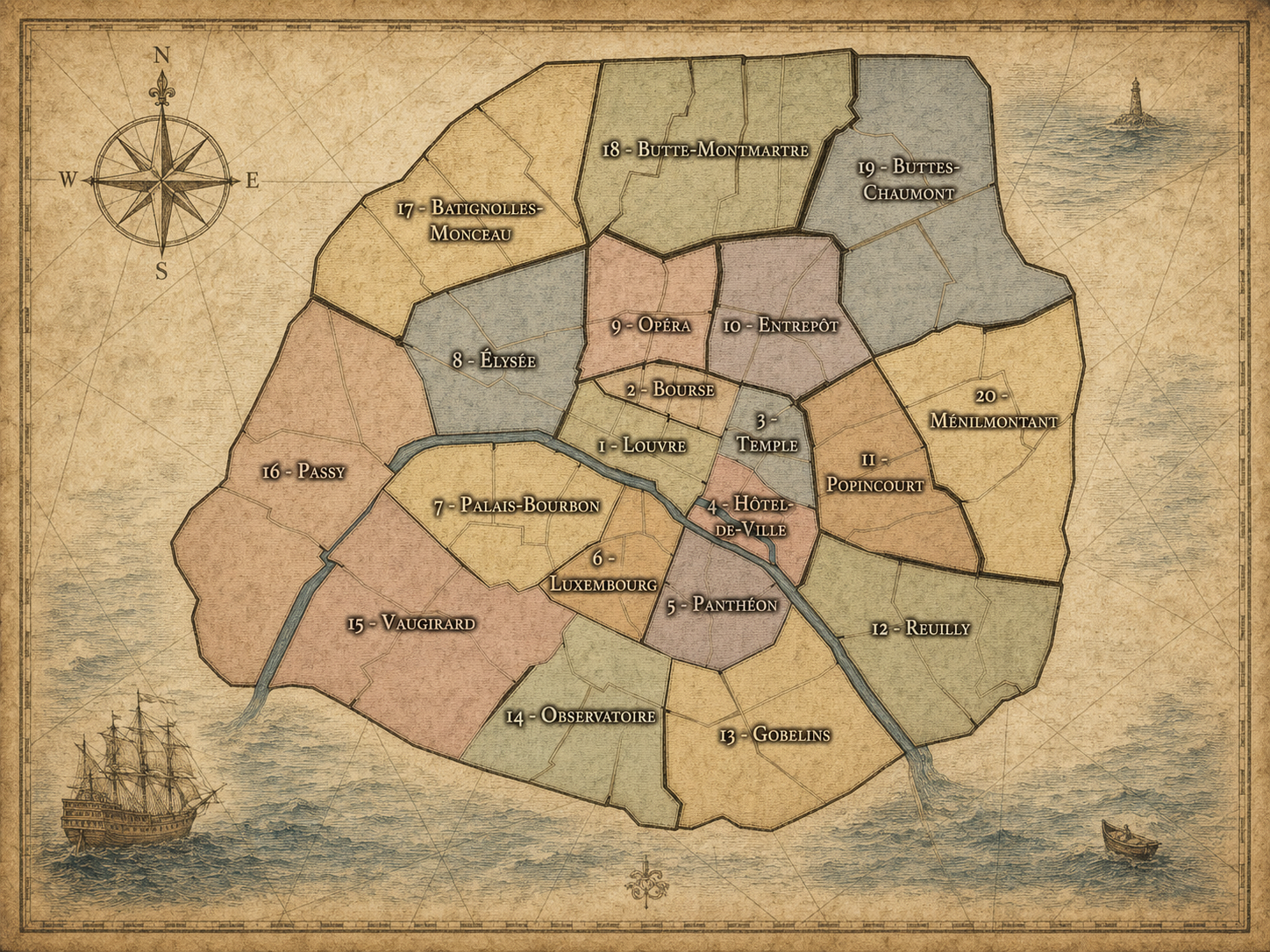
Within the official geography of Paris, Odéon is one of the four administrative quarters of the 6th arrondissement, alongside Monnaie, Notre-Dame-des-Champs, and Saint-Germain-des-Prés. It is traditionally counted as the 22nd administrative quarter of Paris, occupying the central-eastern portion of the arrondissement near the boundary with the 5th.
As an administrative quarter, Odéon gives civic form to a landscape that often appears under several overlapping names: Latin Quarter, Saint-Germain, Luxembourg, Saint-Michel, or the theater district around Place de l’Odéon. The official quarter name helps clarify this central Left Bank zone as its own unit, not merely a threshold between better-known places.
That clarity matters because Odéon is one of the places where Parisian identities converge. It belongs partly to the academic and student life of the Latin Quarter, partly to the literary and café culture of Saint-Germain-des-Prés, partly to the institutional and garden landscape of Luxembourg, and partly to the theatrical history of the Odéon itself. The administrative quarter gives that convergence a civic frame.
Neighborhood Distinction
Odéon differs from the other quarters of the 6th arrondissement through its theatrical, conversational, and hinge-like character. Monnaie is river-facing and institutional, shaped by the mint, the Institut de France, bridges, quays, and the Seine. Saint-Germain-des-Prés is the great cultural name of the arrondissement, associated with the abbey, galleries, publishing, cafés, jazz, and postwar intellectual life. Notre-Dame-des-Champs is more residential and educational, tied to schools, studios, churches, and the northern edge of Montparnasse.
Odéon sits between these worlds but is not reducible to any of them. It is more theatrical than Monnaie, more compact than Saint-Germain, and more public-facing than Notre-Dame-des-Champs. Its identity is held in the theater, the square, the cafés, the bookshops, the streets leading to Luxembourg, and the long tradition of ideas performed in public.
It should also be distinguished from the Latin Quarter as a whole. Odéon touches the Latin Quarter and shares its intellectual atmosphere, but its tone is less scholastic than Sorbonne and less academic-institutional than Saint-Victor. It is the Left Bank where thought becomes conversation, performance, and debate.
Parisian Identity
Odéon expresses Paris as a city of public intelligence. It is a quarter where ideas are staged: in theaters, cafés, bookshops, lecture rooms, cinemas, political meetings, and street conversations. The Théâtre de l’Odéon gives this identity architectural form, but the larger neighborhood extends the idea outward. Here, the act of speaking — lines on stage, arguments in cafés, readings in shops, slogans in the street — becomes part of the urban atmosphere.
The quarter’s Parisian identity is also tied to its closeness to Luxembourg. The garden and palace bring a stately, reflective presence to the southern edge of the neighborhood, while the streets north of it carry the livelier texture of cafés, students, booksellers, and theaters. Odéon balances these moods: performance and promenade, scholarship and leisure, institution and improvisation.
This is not Paris as pure elegance or pure rebellion. It is Paris as conversation. Odéon belongs to the city’s long habit of turning public life into a stage where literature, politics, performance, and daily sociability can speak to one another.
Neighborhood Connections
Every neighborhood belongs to a wider Parisian fabric.
-
6e - Luxembourg
-
Notre-Dame-des-Champs
-
Odéon
-
Rive Gauche
-
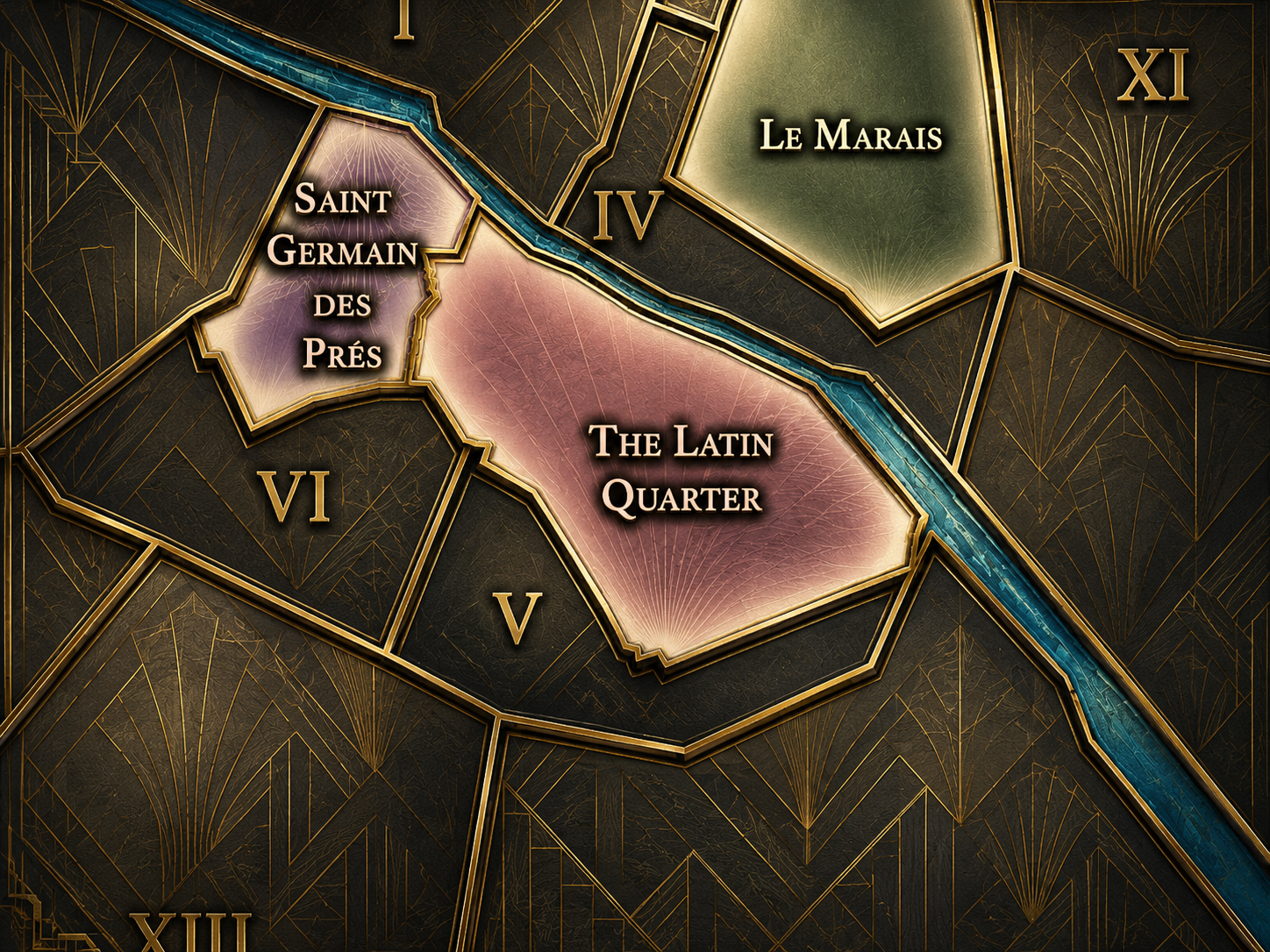
Latin Quarter
-
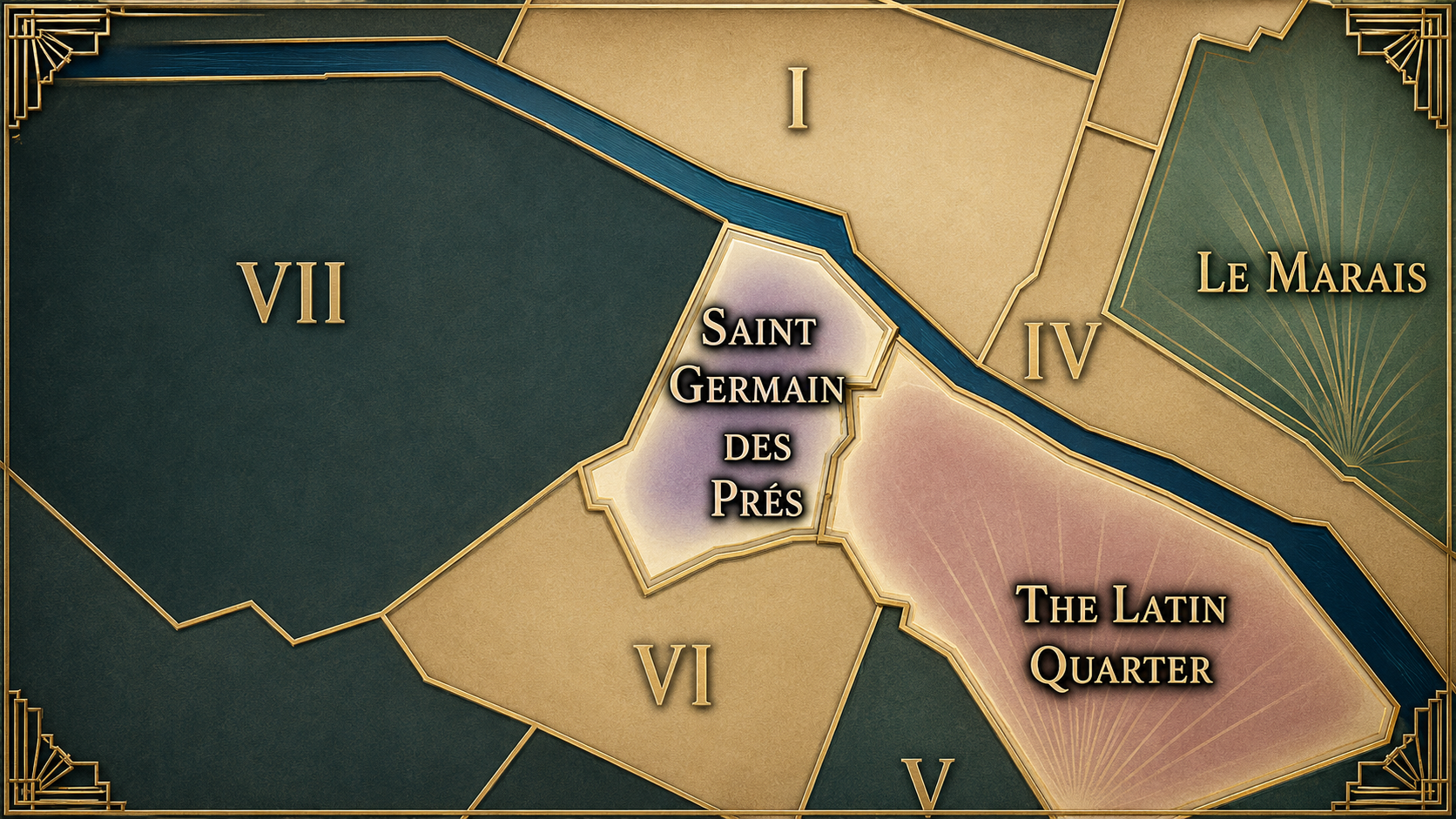
Saint-Germain-des-Prés
The History
Origins
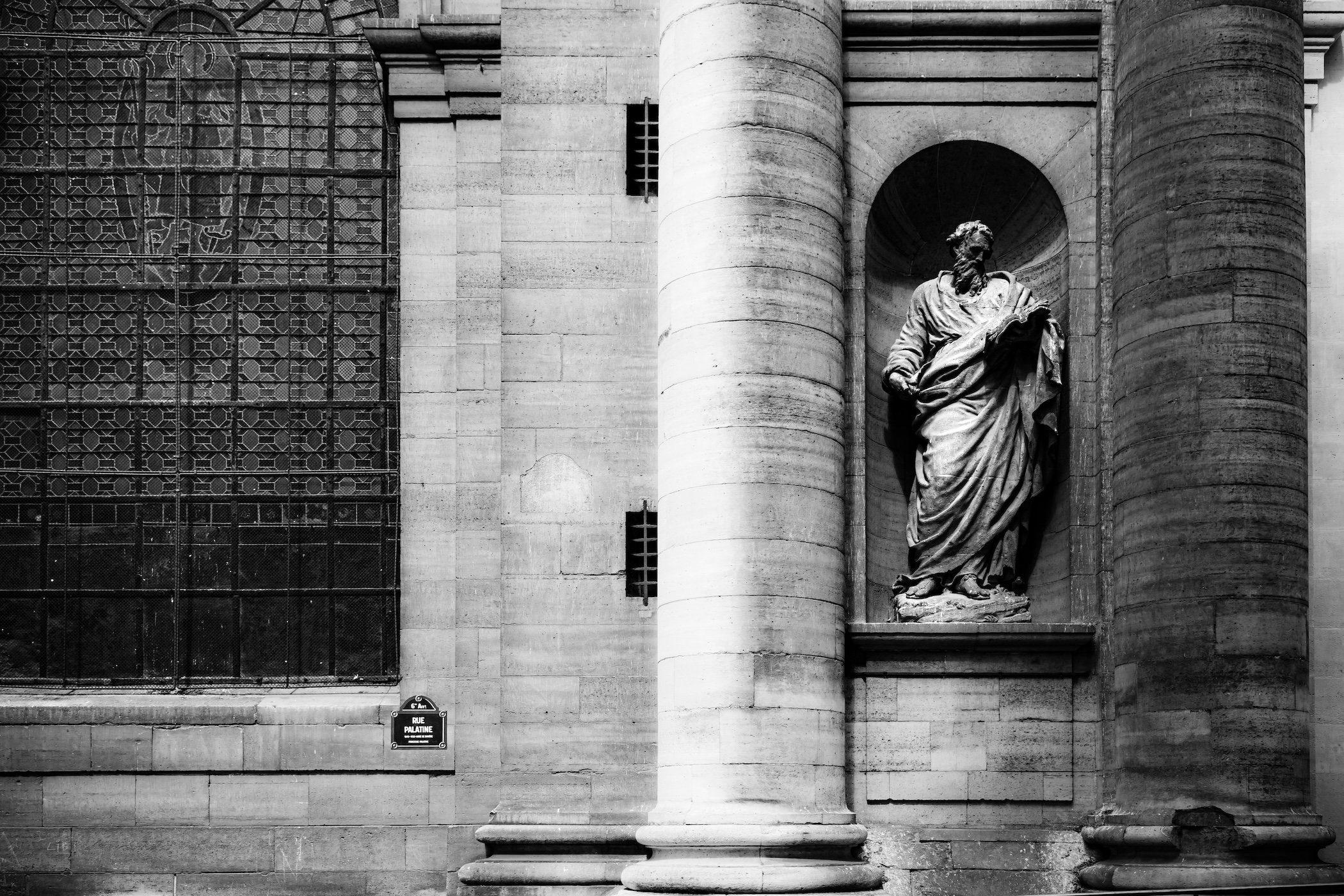
The origins of Odéon lie in the growth of the Left Bank between the old Latin Quarter, Saint-Germain-des-Prés, and the future Luxembourg landscape. Before the modern theater gave the quarter its name, this area was shaped by religious institutions, colleges, gardens, aristocratic residences, bookish streets, and the gradual expansion of the city south of the Seine.
The broader district occupied a strategic cultural position. To the east lay the university world of the Latin Quarter. To the west, Saint-Germain carried abbey, aristocratic, and later literary identities. To the south, the Luxembourg Palace and garden created a major axis of power, leisure, and urban refinement. Odéon emerged from the meeting of these neighboring worlds.
Before it was officially “Odéon,” the quarter was already a landscape of crossing: students moving between colleges, readers and printers in the surrounding streets, theater audiences gathering nearby, and walkers moving between Saint-Germain, Saint-Michel, and Luxembourg. The name later fixed that performative identity around one major institution.
16th–17th Century
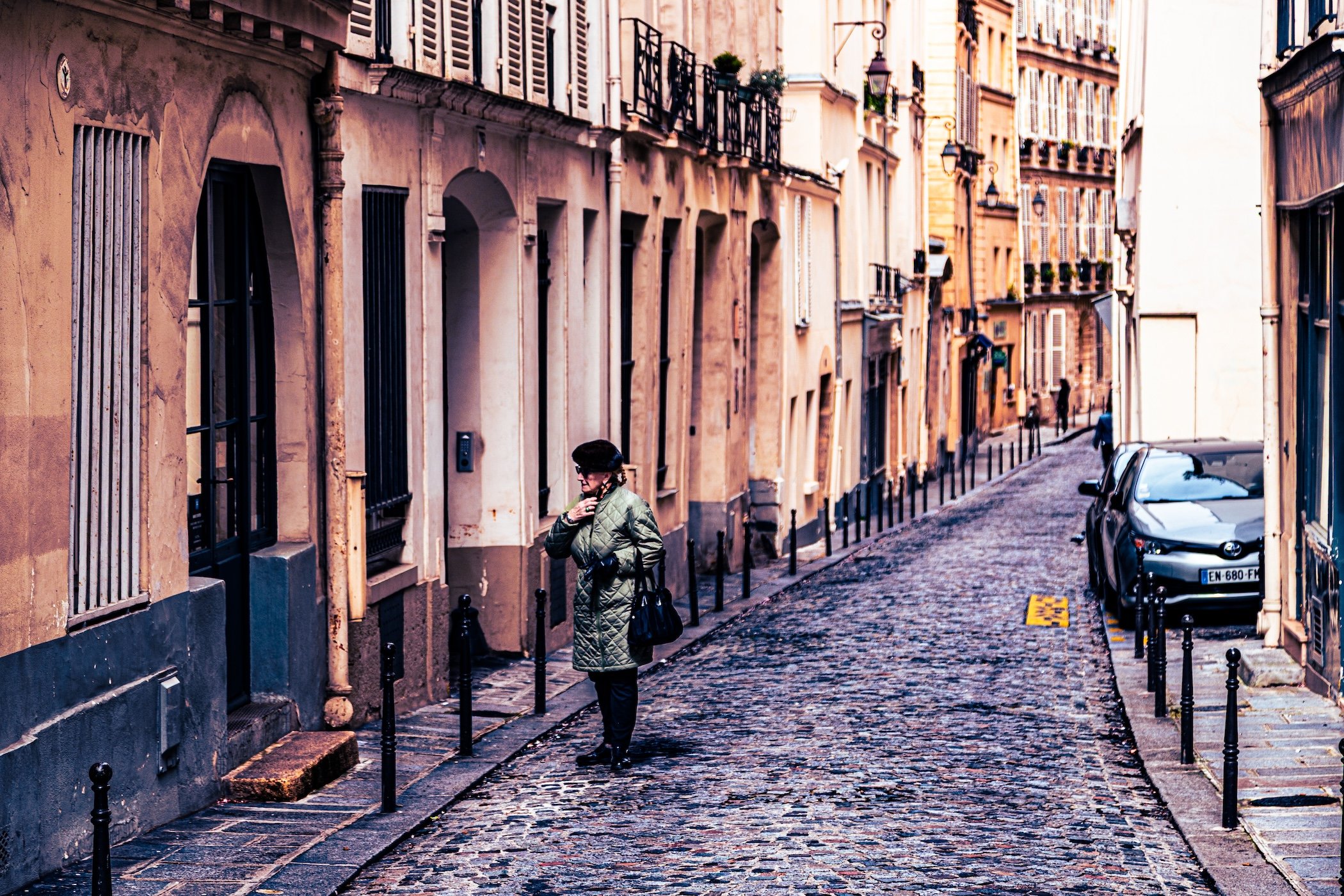
In the 16th and 17th centuries, the future Odéon quarter belonged to the expanding cultural and institutional landscape of the Left Bank. The Latin Quarter remained a center of learning, while Saint-Germain-des-Prés and the Luxembourg area drew aristocratic, religious, and political attention. Streets in and around the quarter connected these worlds through residences, schools, religious houses, and early forms of urban sociability.
The construction of the Luxembourg Palace and Garden in the early 17th century gave the southern edge of the district a powerful new presence. Although the palace belongs institutionally to a broader Luxembourg landscape, its proximity shaped Odéon’s later identity by creating a major garden and seat of power immediately beside the quarter.
During this period, the neighborhood’s theatrical identity had not yet taken its defining form, but the ingredients were present: proximity to elite residences, educated publics, religious and academic institutions, and streets suited to gathering, walking, and exchange. Odéon’s future role as a stage for Left Bank culture grew from this layered setting.
18th Century
The 18th century created Odéon as a recognizable theatrical quarter. The Théâtre de l’Odéon was built in 1782 by the architects Marie-Joseph Peyre and Charles de Wailly, originally to house the Théâtre-Français. The theater’s own institutional history describes it as the oldest theater-monument in Paris, while official cultural sources confirm its inauguration in 1782 and its later identity as Odéon–Théâtre de l’Europe.
The theater’s location gave the surrounding streets a new civic and cultural focus. Place de l’Odéon, opened on the site of the former Hôtel de Condé, provided a semicircular urban setting that framed the building and linked it to the nearby Luxembourg landscape. The quarter became a place where theater was not hidden inside the city, but presented through architecture and public space.
The French Revolution then transformed the theater’s meaning. As with many cultural institutions of the period, the Odéon became entangled with new political and social realities. The quarter’s theatrical identity was no longer only courtly or elite; performance became part of a broader public culture in which audiences, actors, texts, and politics intersected.
19th Century
The 19th century gave Odéon a turbulent and enduring theatrical identity. The theater suffered major fires in 1799 and 1818 and was rebuilt, with the present form emerging from those reconstructions. The Odéon’s own history notes these fires and reconstructions, emphasizing the theater’s repeated return as a central institution of Parisian stage life.
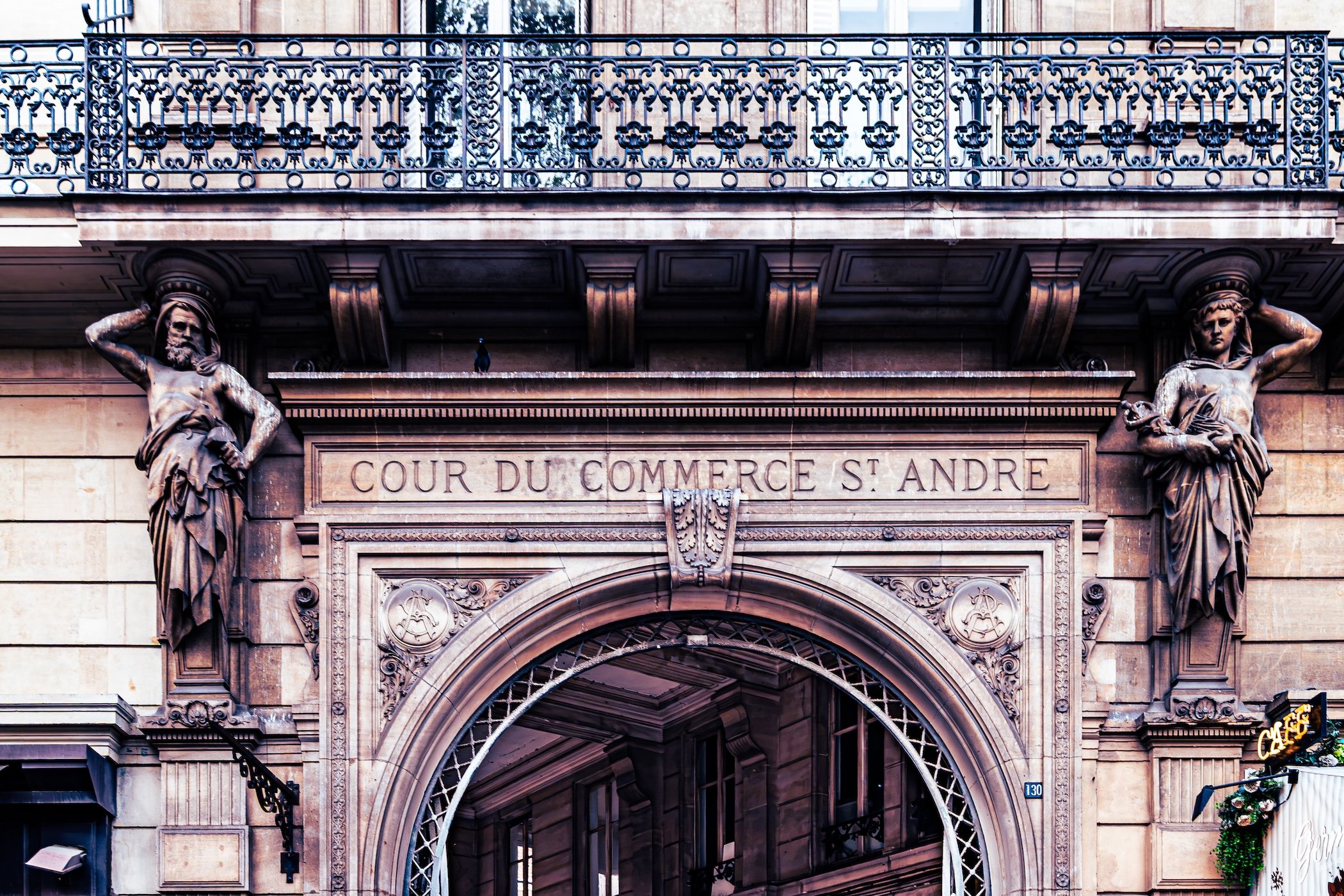
Around the theater, the quarter became increasingly tied to cafés, publishers, bookshops, theaters, and the literary life of the Left Bank. The nearby Cour du Commerce-Saint-André, Rue de l’Ancienne-Comédie, and surrounding streets carried memories of older cultural and political life, while Boulevard Saint-Germain and Boulevard Saint-Michel later reshaped movement through the district.
Odéon in the 19th century stood between tradition and modernization. Its theater preserved a neoclassical and literary identity, while the surrounding city adapted to new boulevards, transport, political regimes, and commercial habits. The quarter became one of the Left Bank’s durable cultural hinges: old theater, modern street, student world, café culture, and Luxembourg all held close together.
Early–Mid 20th Century
In the early and mid 20th century, Odéon remained part of the Left Bank’s dense cultural landscape. The theater, cafés, bookstores, cinemas, schools, and surrounding streets tied the quarter to literature, performance, philosophy, and politics. Its proximity to both Saint-Germain-des-Prés and the Latin Quarter placed it near the heart of the intellectual and artistic life that made the Left Bank internationally famous.
The Odéon theater itself passed through changing institutional forms during the 20th century. Cultural references note that after the Second World War it was attached to the Comédie-Française for a period under the name Salle Luxembourg, before later becoming Théâtre de France and then Théâtre national de l’Odéon. These changes reflect the quarter’s broader identity: historically rooted, but continually reorganized by modern cultural policy.
During war, occupation, liberation, and postwar recovery, the quarter’s streets remained charged by the intellectual and political life of Paris. Odéon’s cafés and cultural institutions stood near the conversations that shaped the postwar Left Bank: literature, existentialism, theater, cinema, criticism, and political commitment.
Late 20th Century
The late 20th century gave Odéon renewed political and cultural significance. The theater and surrounding quarter were deeply associated with the events of May 1968, when students, artists, workers, and intellectuals challenged the institutions and assumptions of French society. The Odéon was occupied during the uprising and became one of the symbolic spaces where theater, politics, and public debate converged.
After 1968, the quarter continued to adapt within a changing Left Bank. The official theater later became the Odéon–Théâtre de l’Europe in 1990, signaling a broader European cultural mission and a new phase in its institutional life. The Ministry of Culture identifies this name change and role as part of the theater’s modern public identity.
At the same time, the surrounding neighborhood became more expensive, more touristic, and more heritage-conscious. Bookshops, cinemas, cafés, and old Left Bank businesses faced new pressures, but the quarter retained a strong association with intellectual and theatrical life. Odéon’s challenge became one of continuity: how to remain a living cultural quarter as the conditions of urban culture changed around it.
21st Century
In the 21st century, Odéon remains one of the most recognizable cultural quarters of the 6th arrondissement. The Théâtre de l’Odéon continues to anchor the neighborhood, now officially Odéon–Théâtre de l’Europe, with a mission that connects Parisian theater to broader European creation and exchange. Its location on Place de l’Odéon keeps performance physically embedded within the street life of the quarter.
The surrounding streets still carry the marks of literary and intellectual Paris: cafés, cinemas, bookshops, schools, galleries, restaurants, and routes toward Luxembourg, Saint-Germain, and Saint-Michel. Yet contemporary Odéon also faces the pressures common to central Paris: tourism, rising rents, changing retail, institutional security, and the difficulty of preserving everyday cultural life in a highly desirable district.
For CityNeighborhoods: Paris, Odéon is essential because it shows how a neighborhood can be shaped by performance in the broadest sense. The quarter is not only a theater district. It is a place where Paris performs ideas, arguments, manners, memory, and public presence. It is the Left Bank as stage.
Spirit and Legacy
Odéon is the quarter where Paris speaks before an audience. Its spirit is theatrical, literary, argumentative, and civic. It belongs to the stage and the café, to the bookshop and the boulevard, to the Luxembourg edge and the Latin Quarter threshold, to the sentences spoken under lights and the conversations carried afterward into the street.
Its legacy is the continuity of public culture. A theater built for the Théâtre-Français became a revolutionary and modern cultural institution. A square became a gathering place. Streets of students, readers, actors, and thinkers became part of the Left Bank’s enduring mythology. Through fires, revolutions, occupations, closures, reforms, and reinventions, Odéon remained a place where culture is not only preserved, but enacted.
To walk Odéon is to move through Paris as performance and debate. It reminds us that neighborhoods are not only made from buildings and boundaries. They are made from the voices that gather there — voices on stage, in classrooms, across café tables, in protest, in print, and in memory. In Odéon, the city becomes audible.
The Photography
Visual Identity
-
Odéon’s visual identity is shaped by Left Bank refinement: historic streets, theaters, institutions, cafés, bookish associations, and the formal approach to the Luxembourg area. It is a district where elegance often appears in compressed form — through façades, corners, passages, and streets that seem to open into deeper cultural interiors.
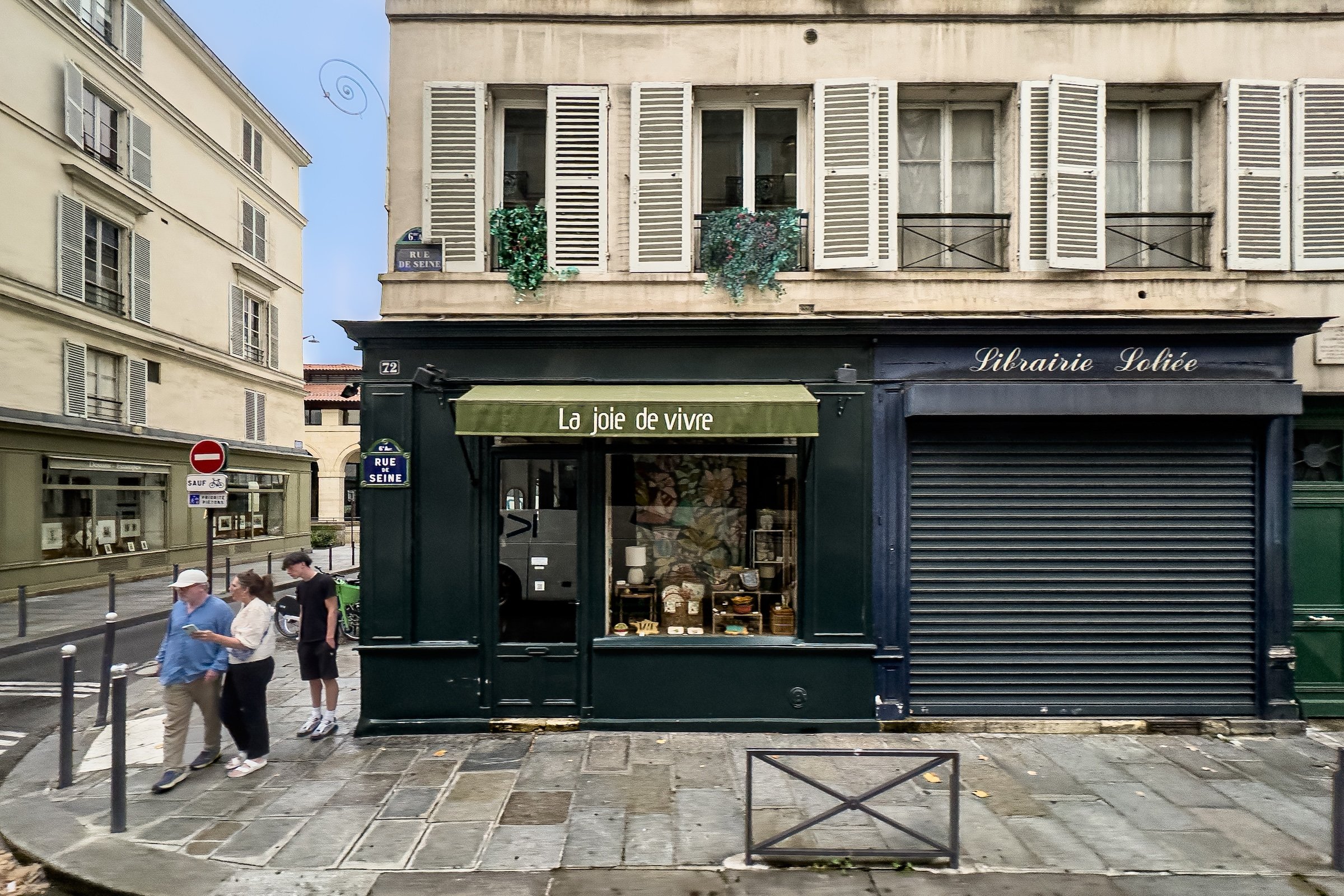
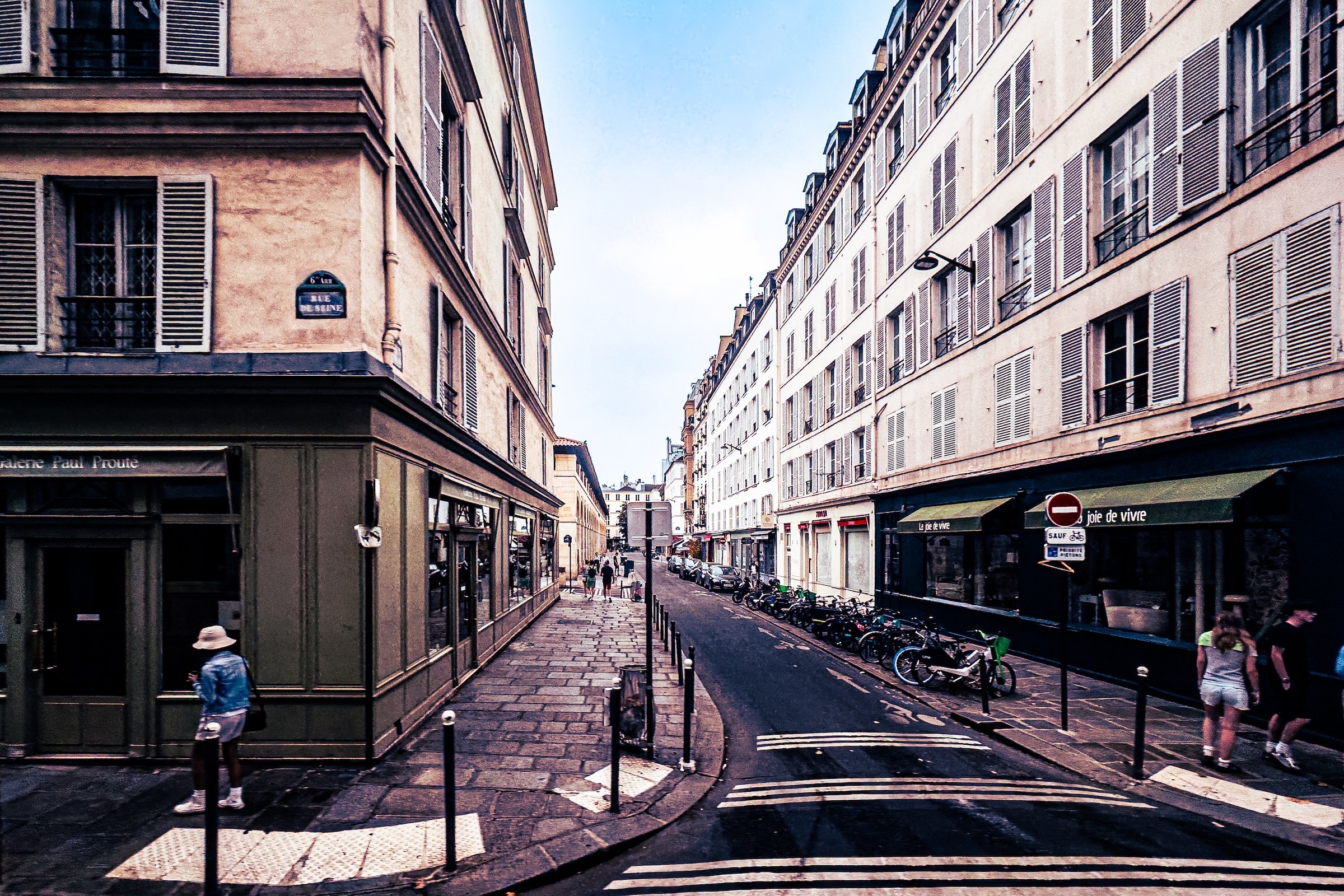
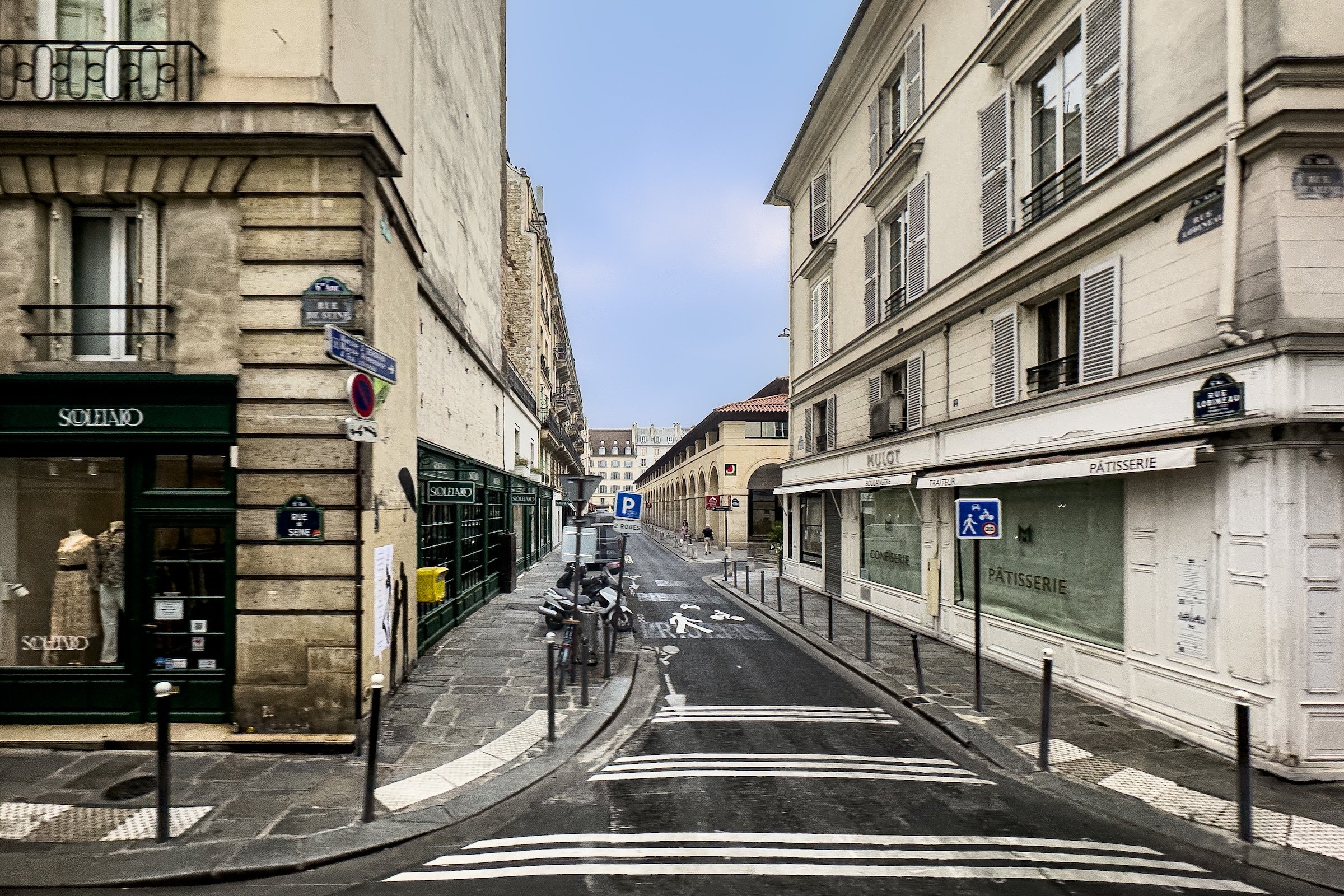
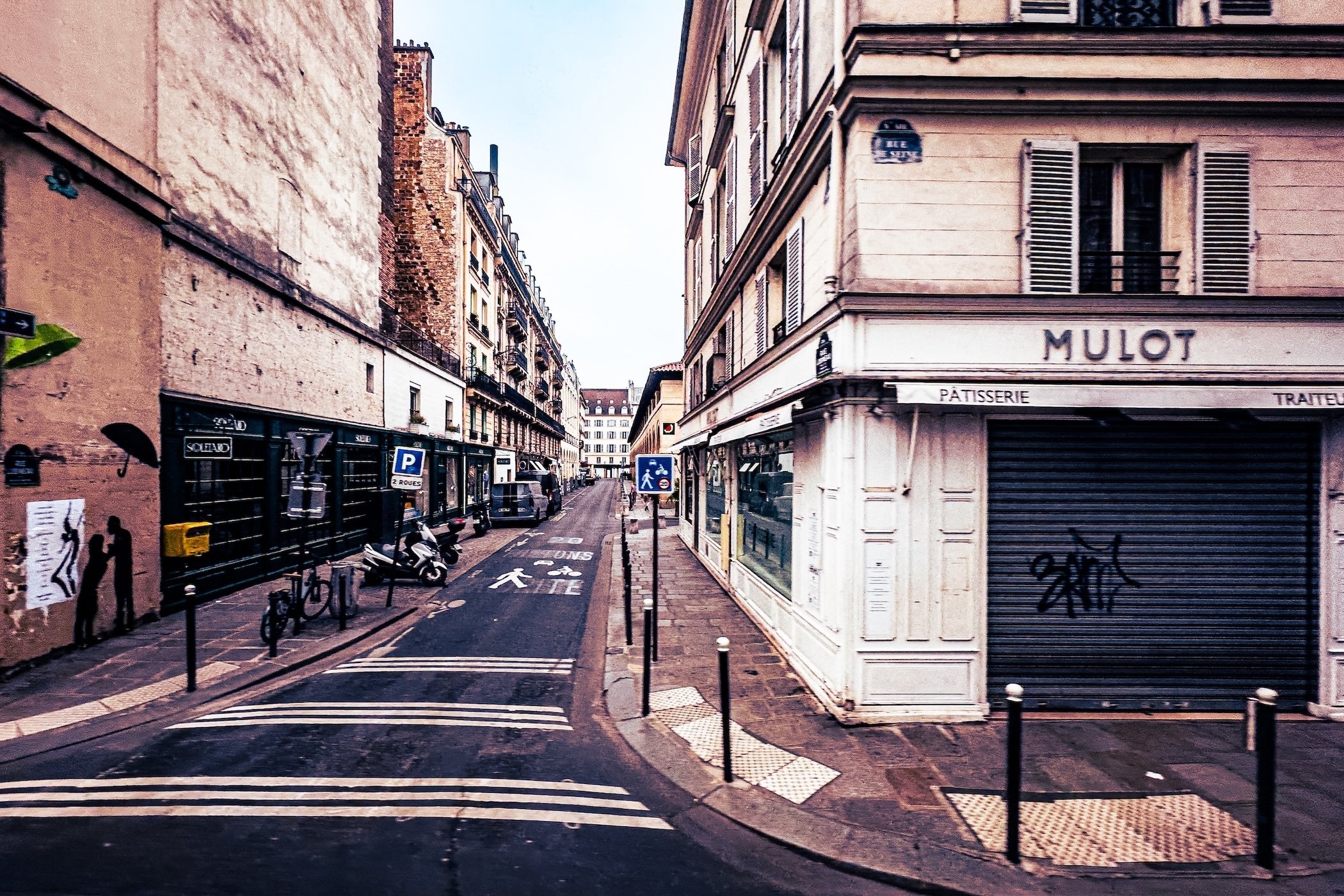
In this bus encounter, Odéon appeared through the rhythm of Rue de Tournon and the streets branching from it. The quarter was not entered slowly, but its visual character was still legible: enclosed, historic, polished, and suggestive. It photographed as a district of openings, where even a passing glance suggested layers beyond the frame.
-
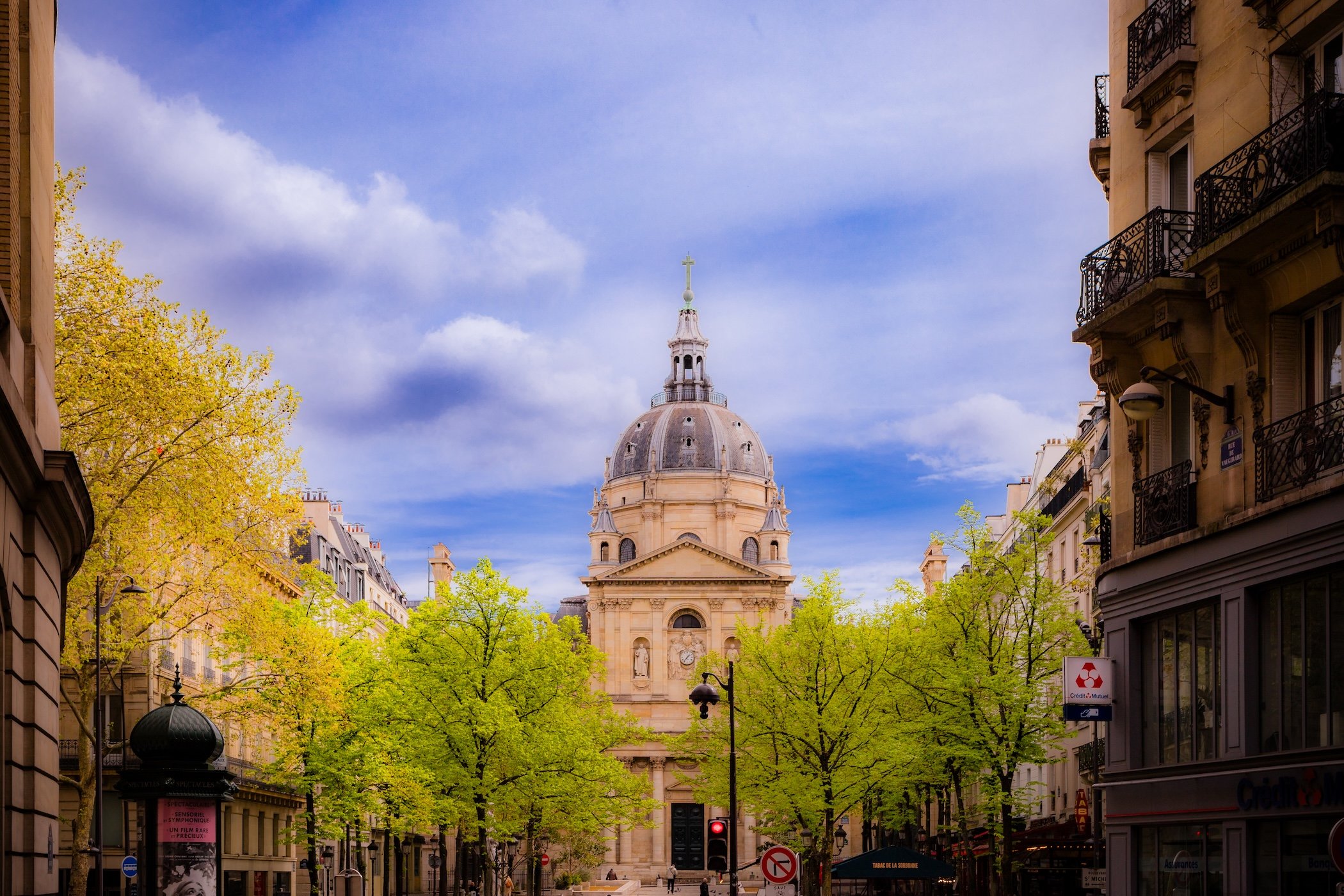
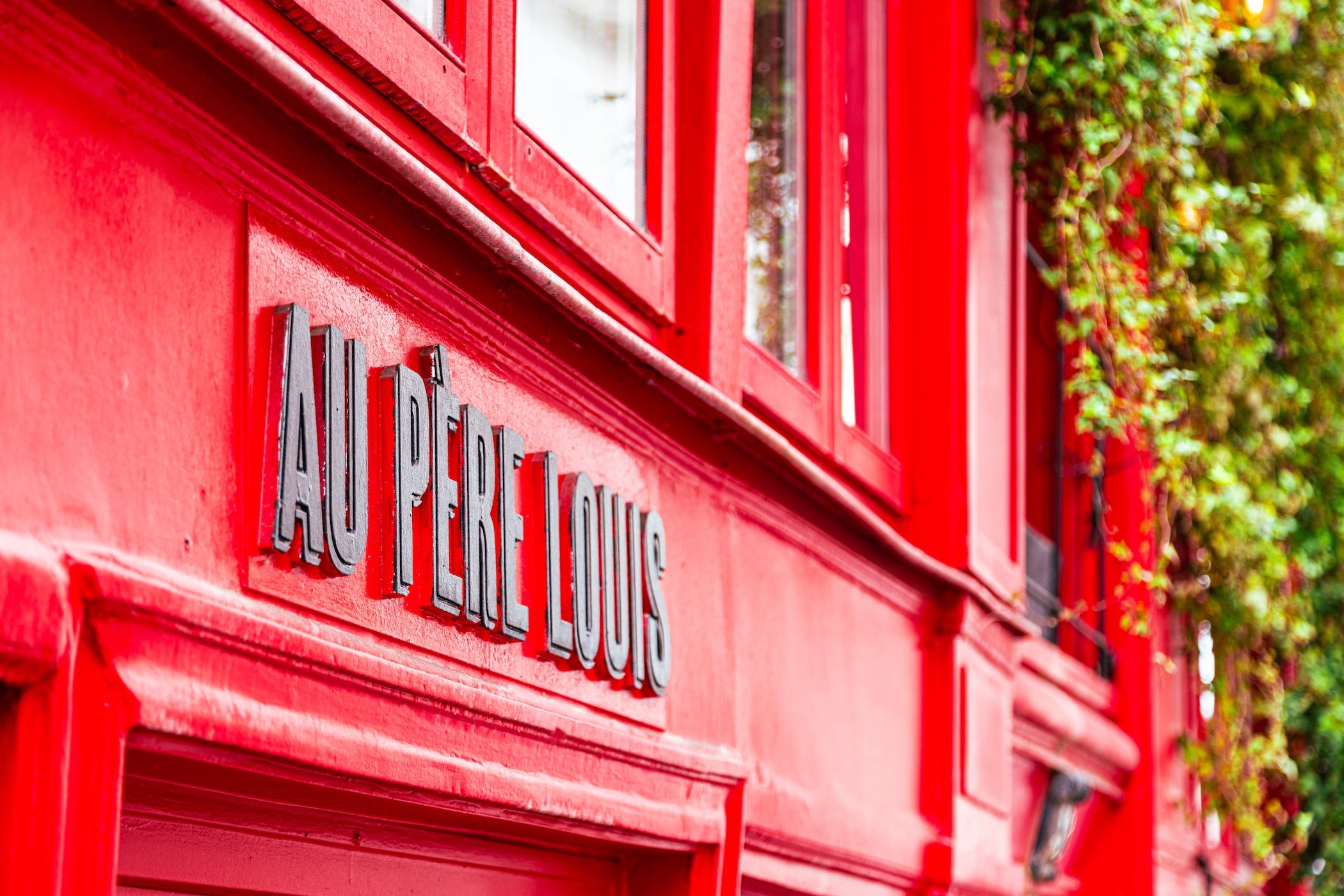
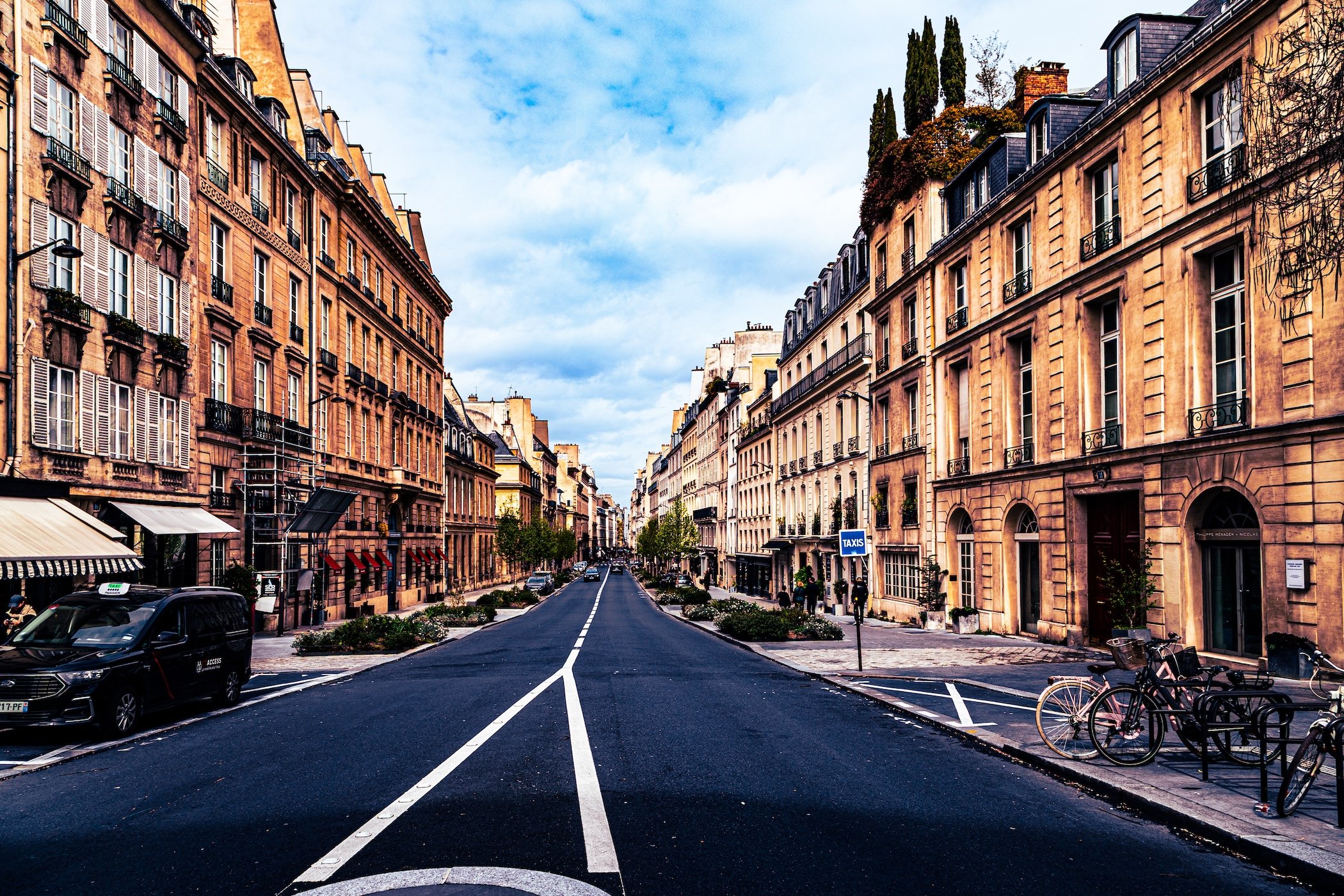
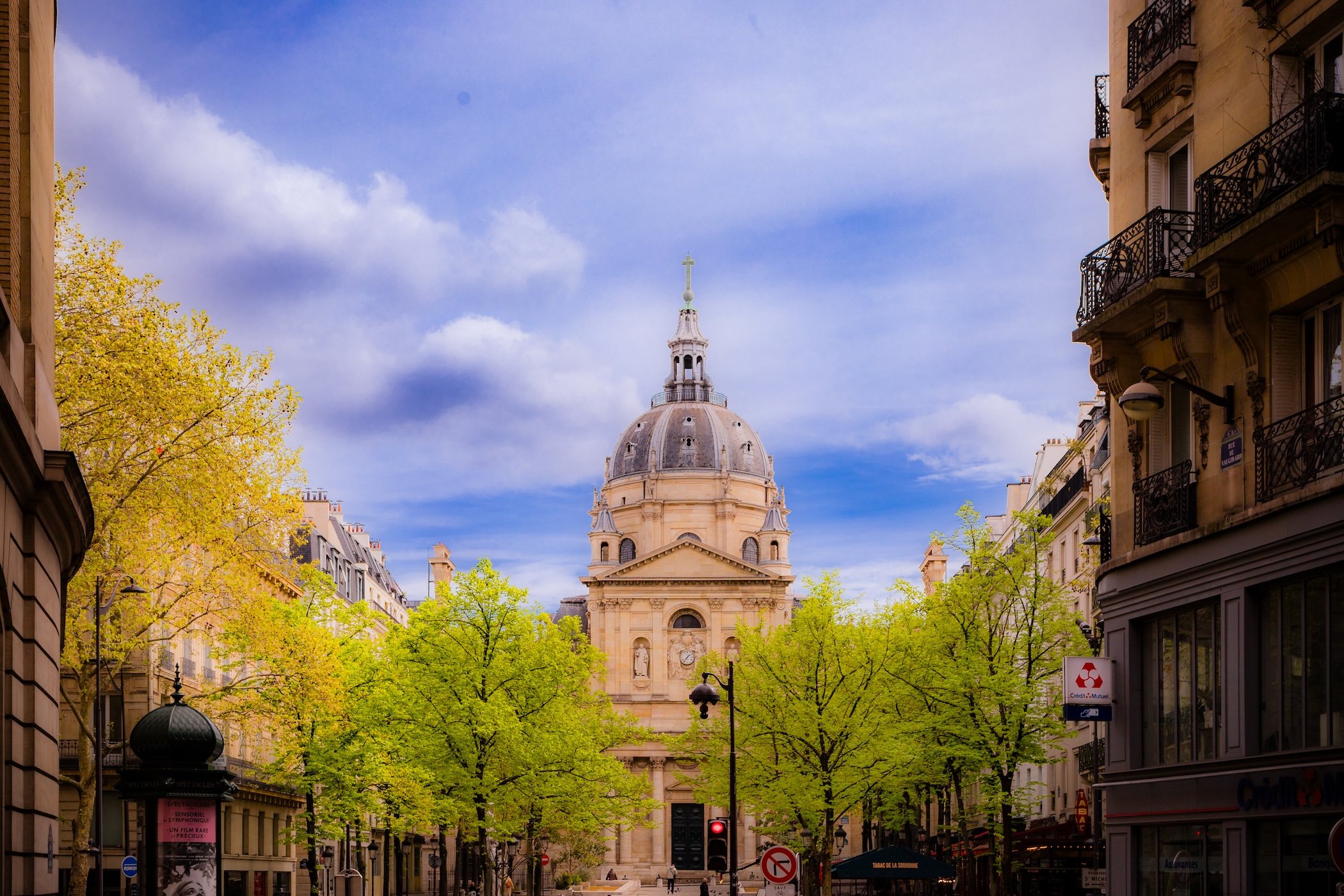
Odéon revealed a visual identity shaped by the meeting of intellectual Paris, institutional grandeur, and intimate residential streets. The journey began along Rue de Vaugirard near Boulevard Saint-Michel, where the Panthéon remained a distant but commanding presence above the spring foliage. Broad streets, substantial façades, bookstores, specialty shops, painted storefronts, and the formal architecture surrounding the Luxembourg quarter gave this opening section a distinctly Left Bank character—cultivated, historic, and closely connected to the civic and cultural life of Paris.
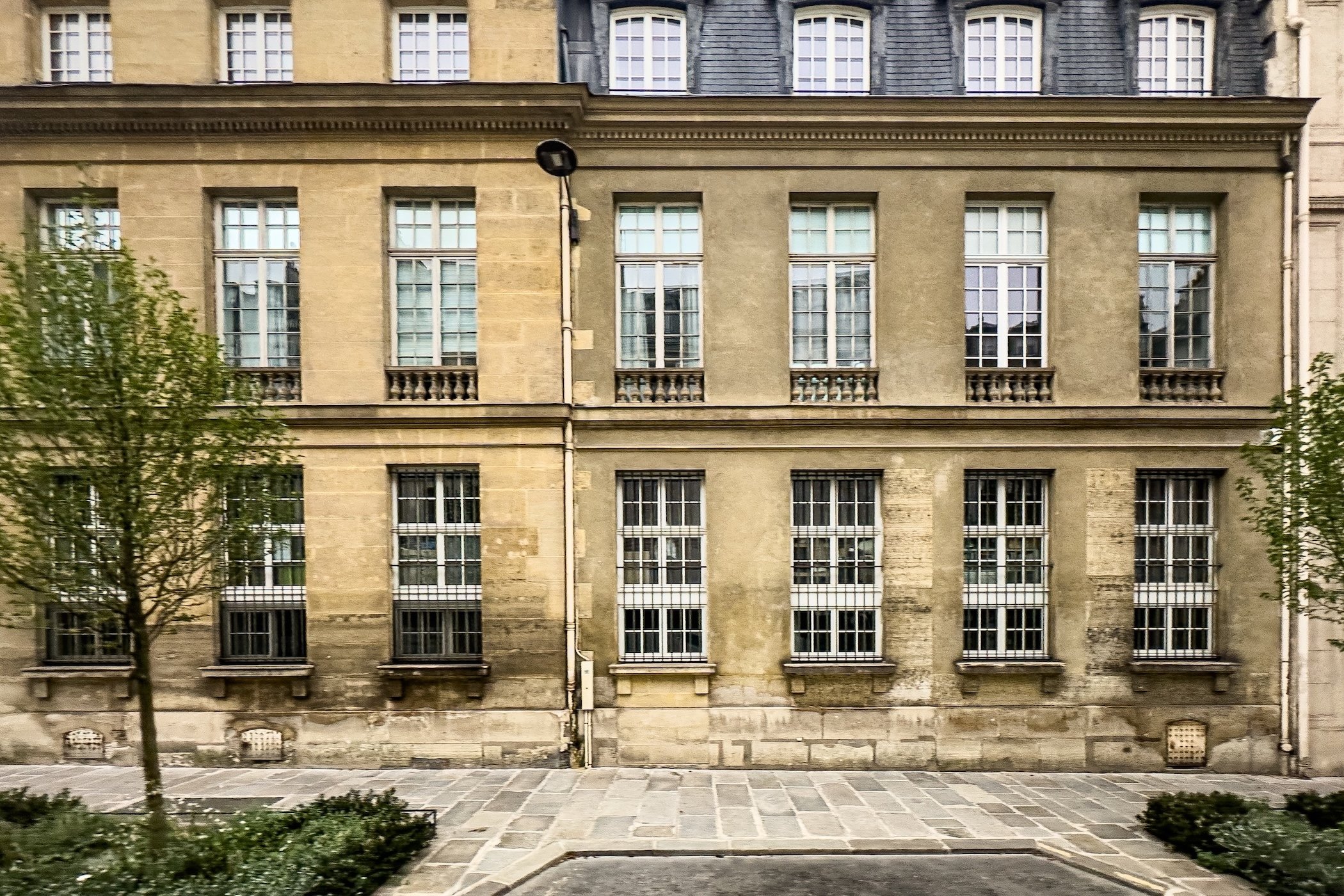
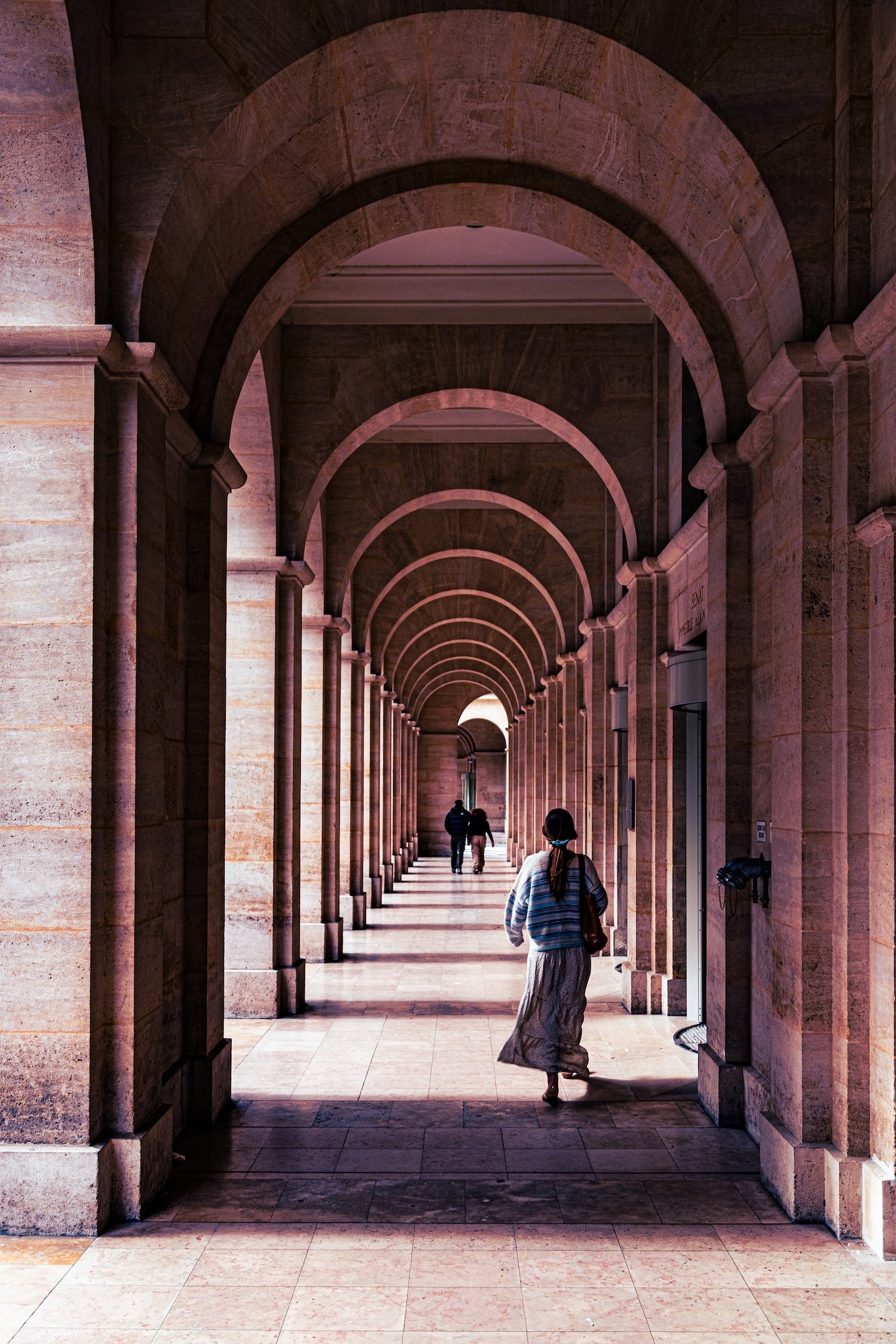
Near the Senate, the neighborhood assumed a more monumental register. Repeated arches, stone colonnades, guarded entrances, ceremonial façades, and long perspectives expressed the authority of the institutions surrounding the Jardin du Luxembourg. Yet these grand architectural forms remained embedded within an active neighborhood of apartments, cafés, shop windows, and quieter side streets. The formality of the Senate never overwhelmed the human scale around it.
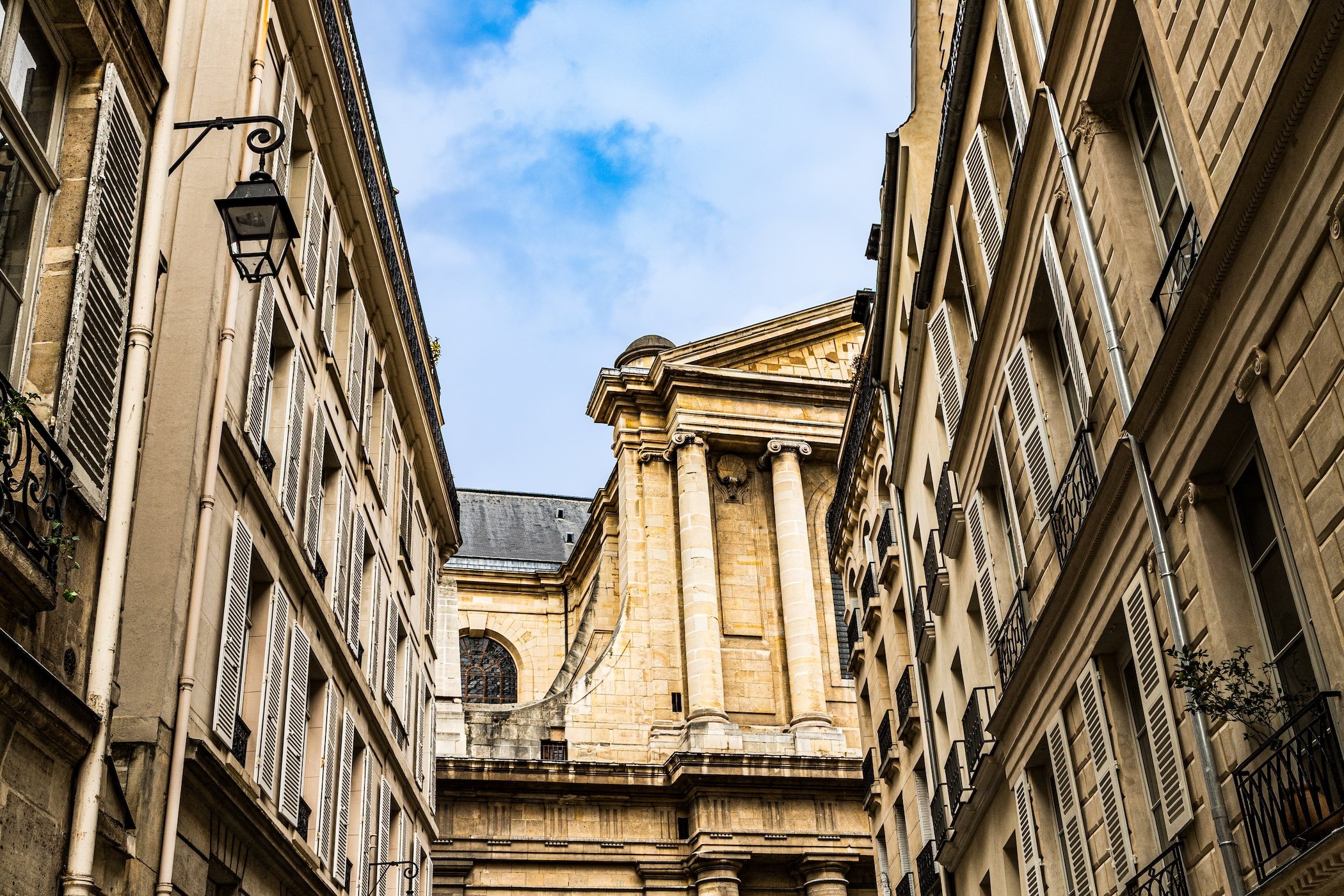
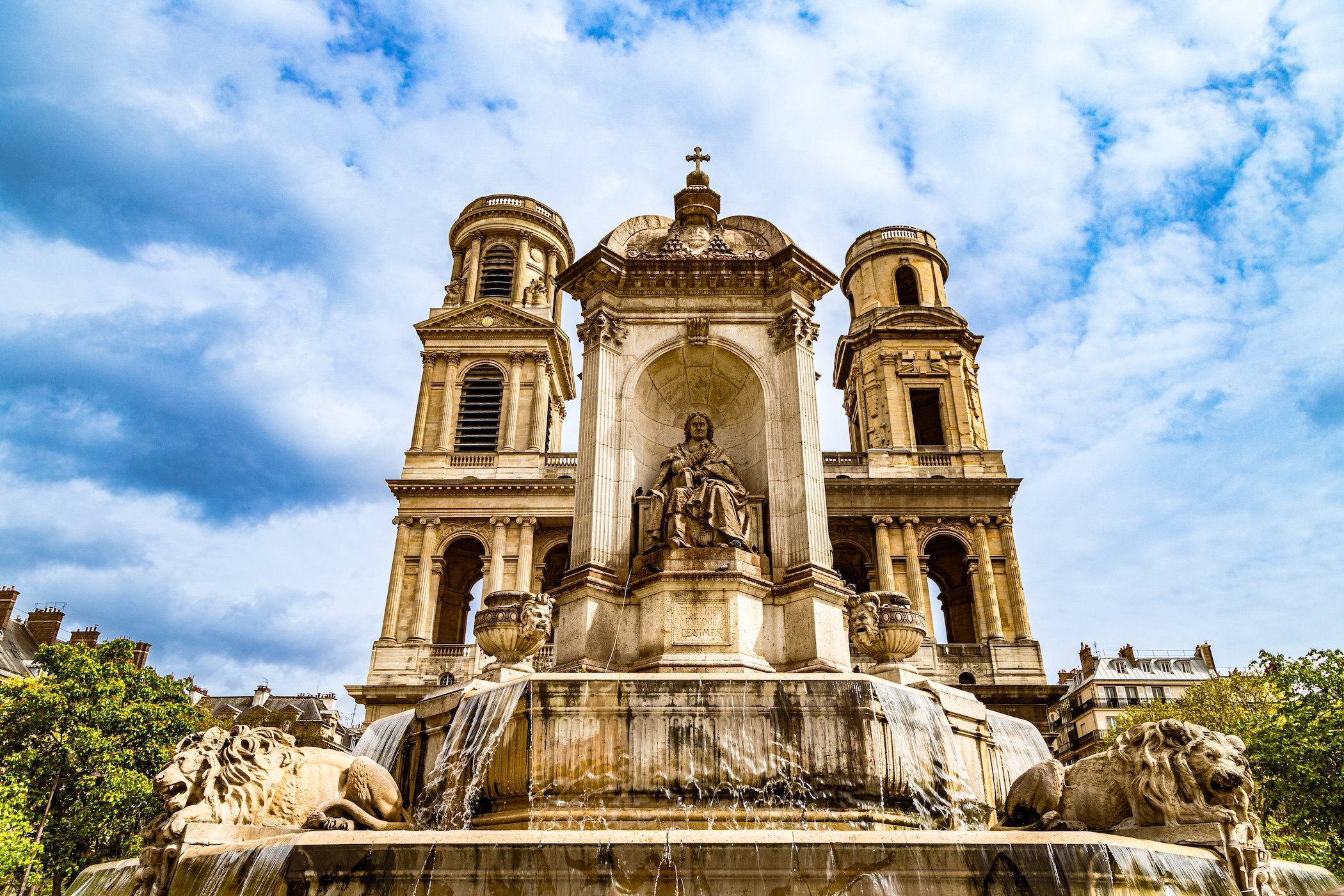
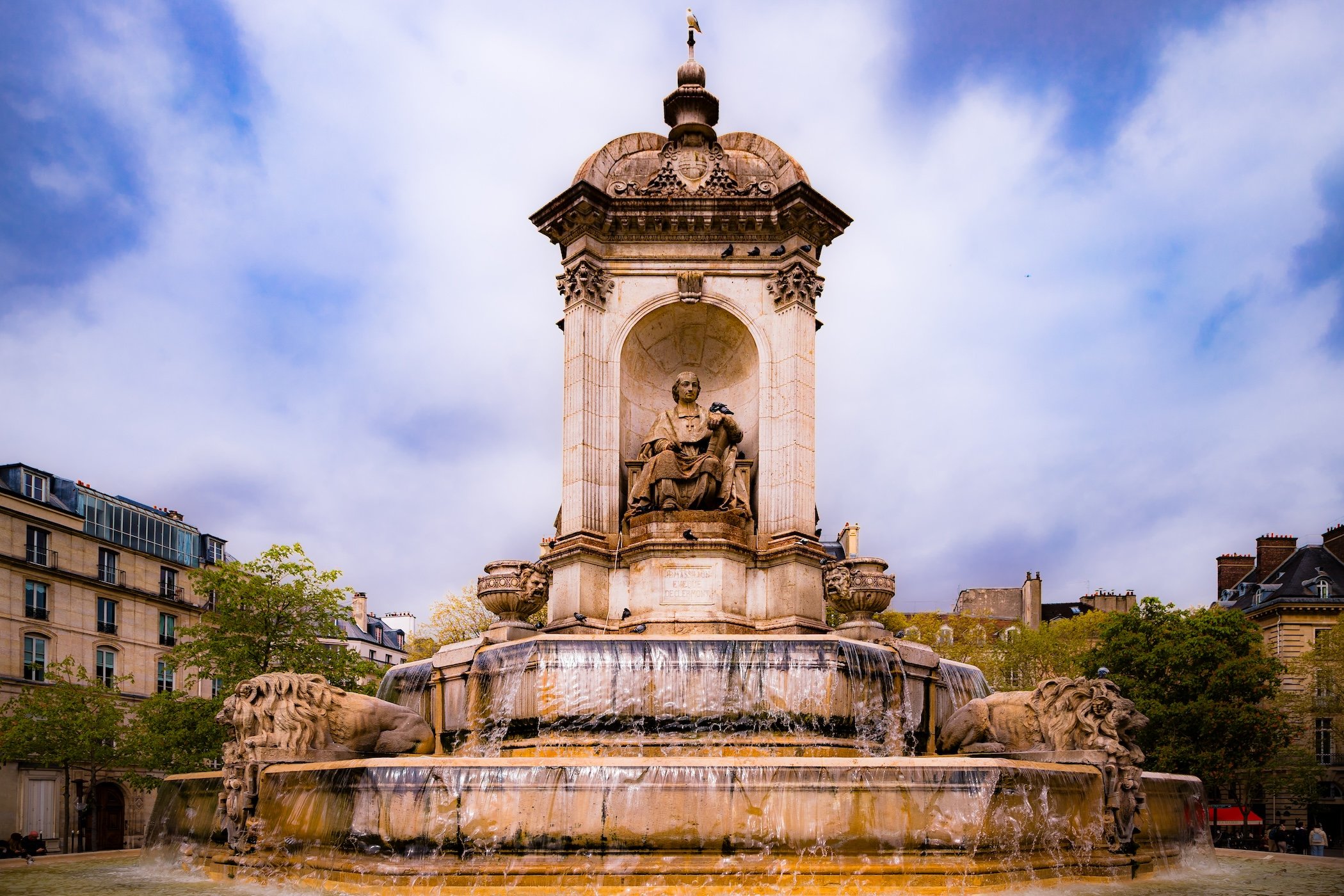
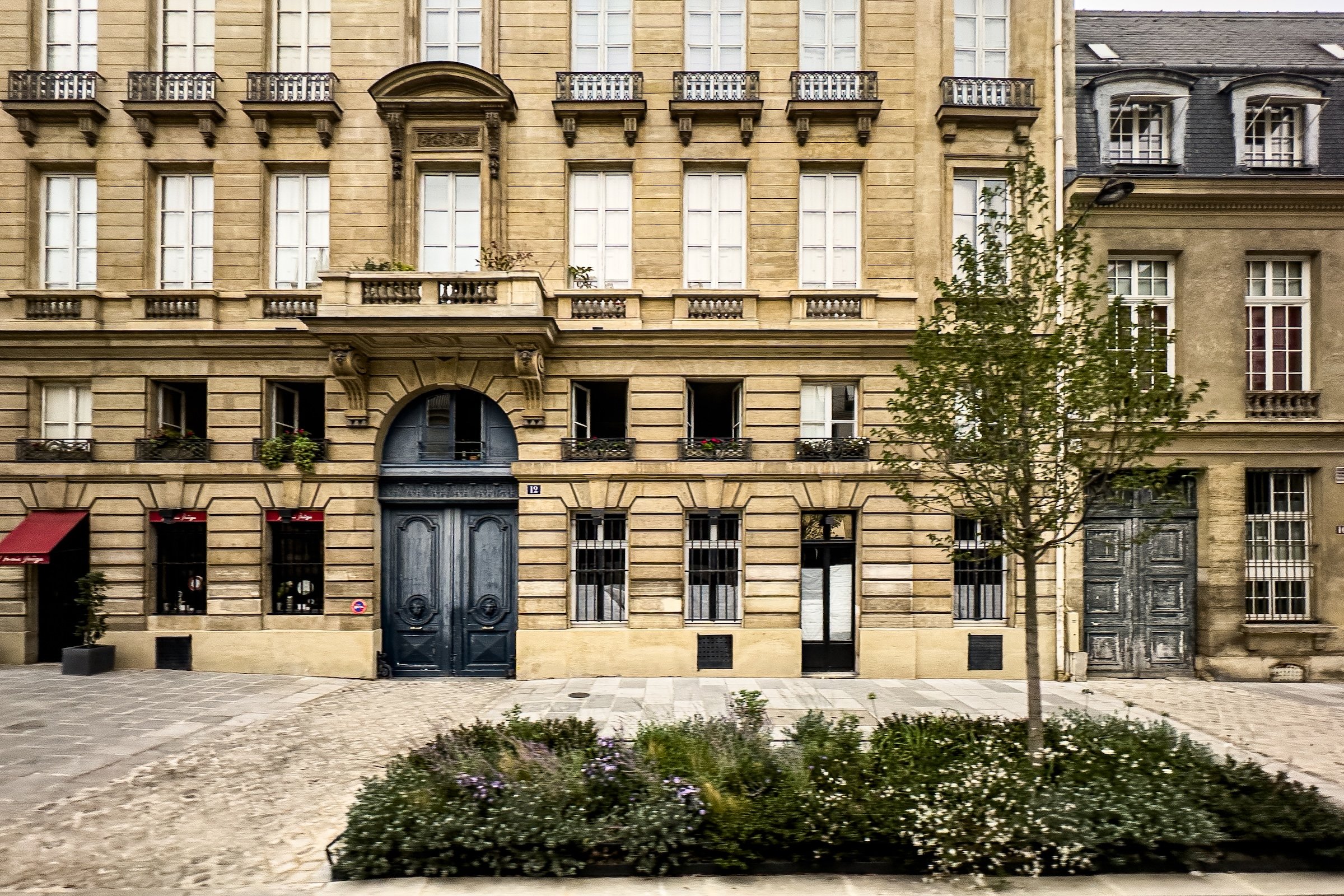
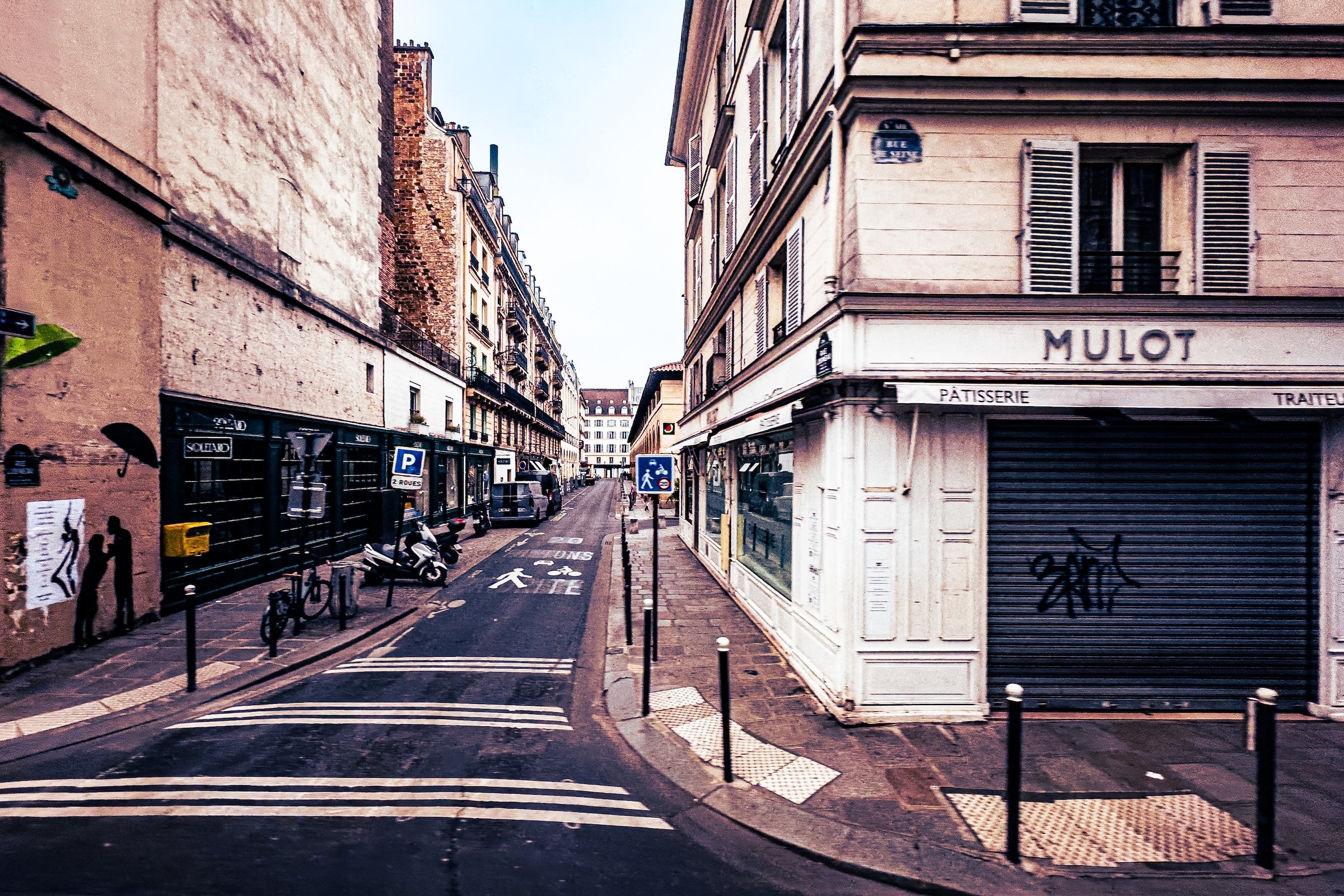
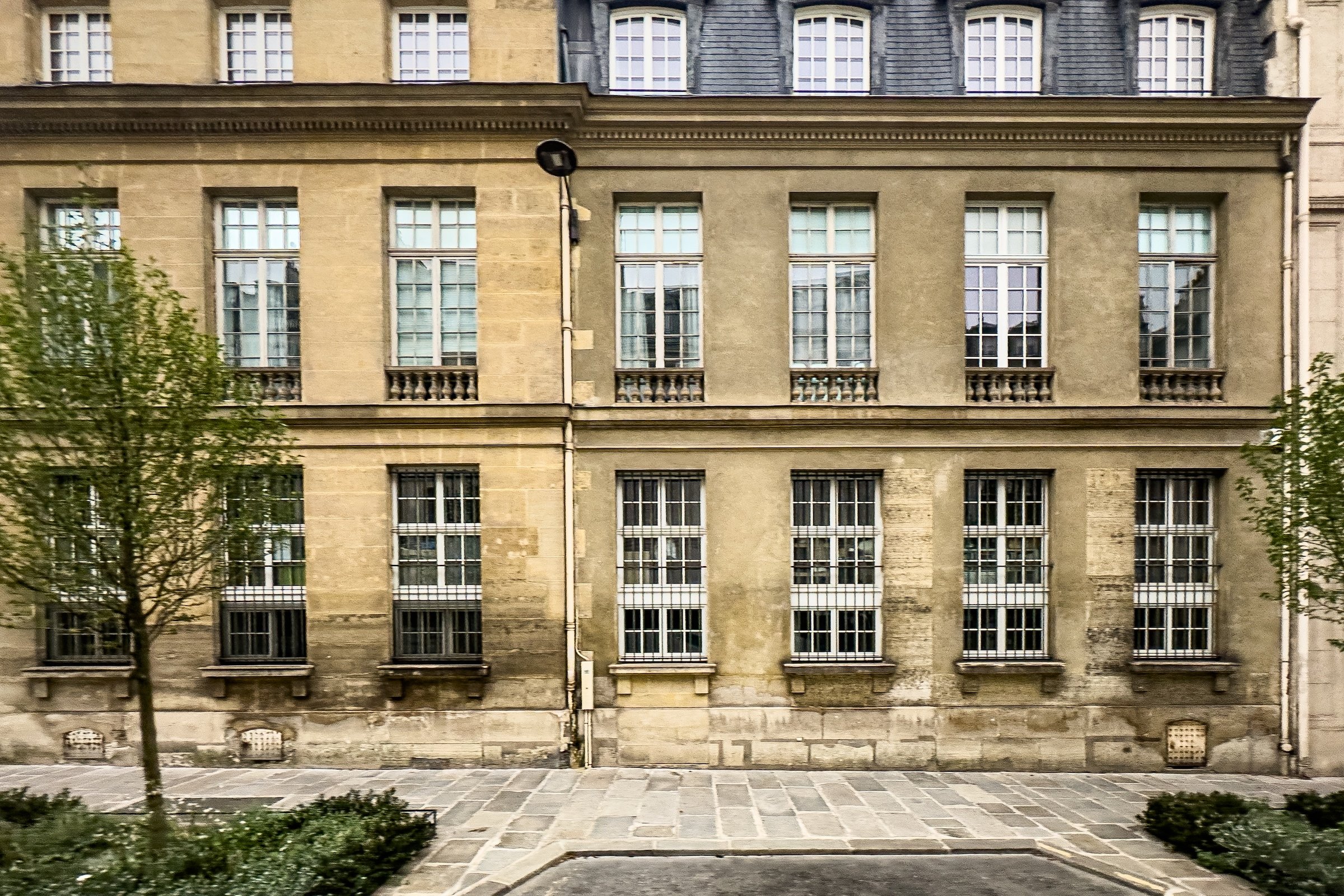
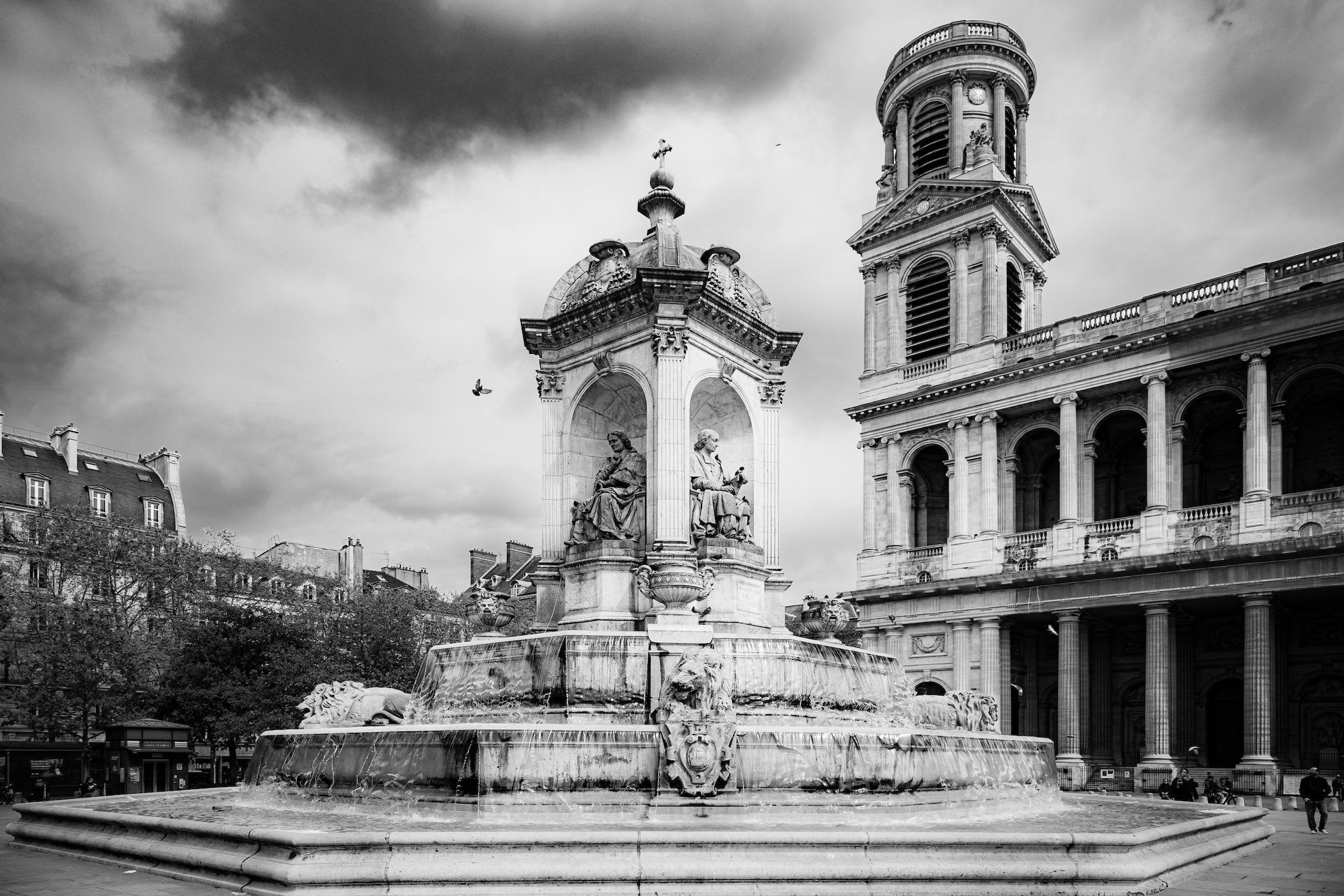
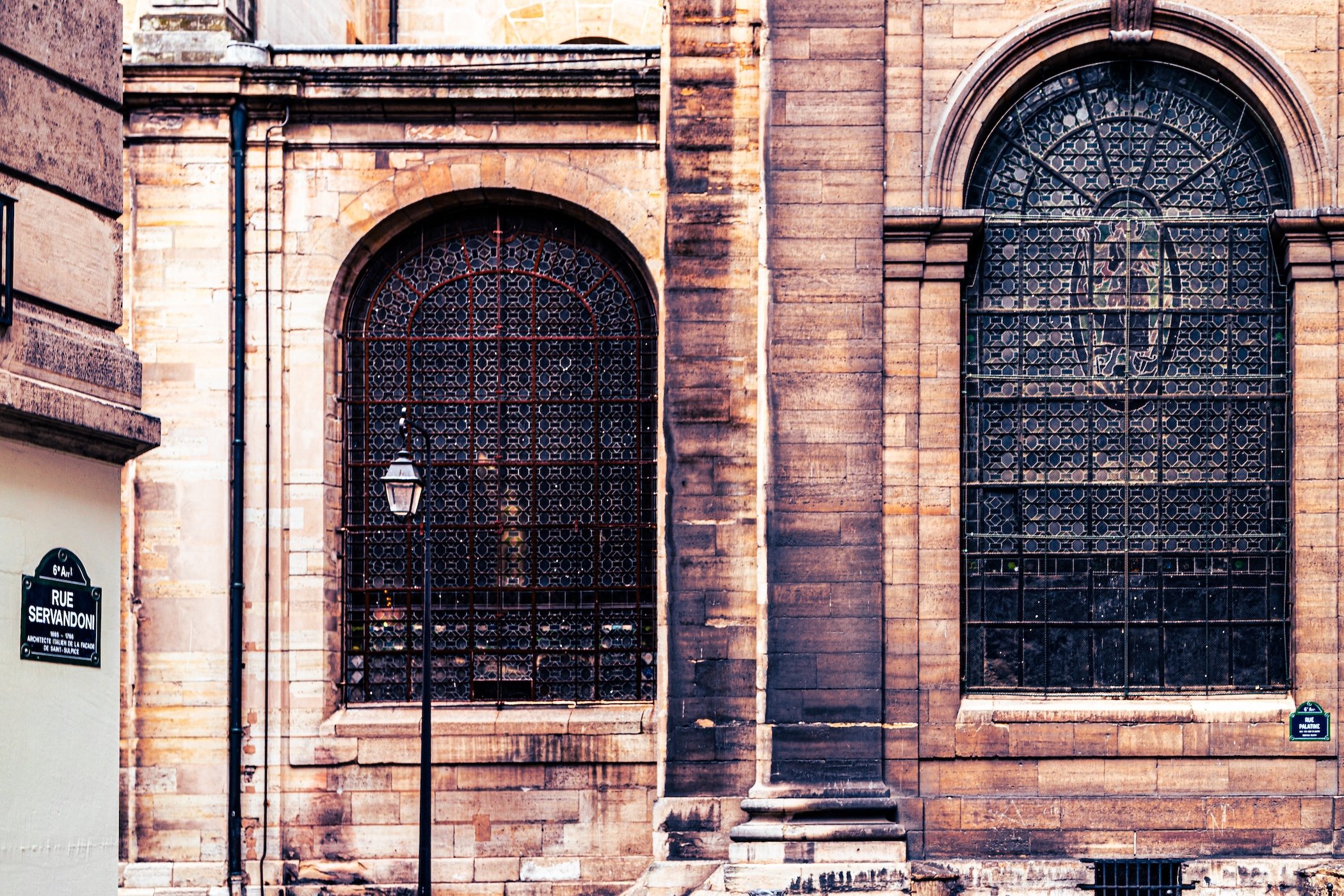
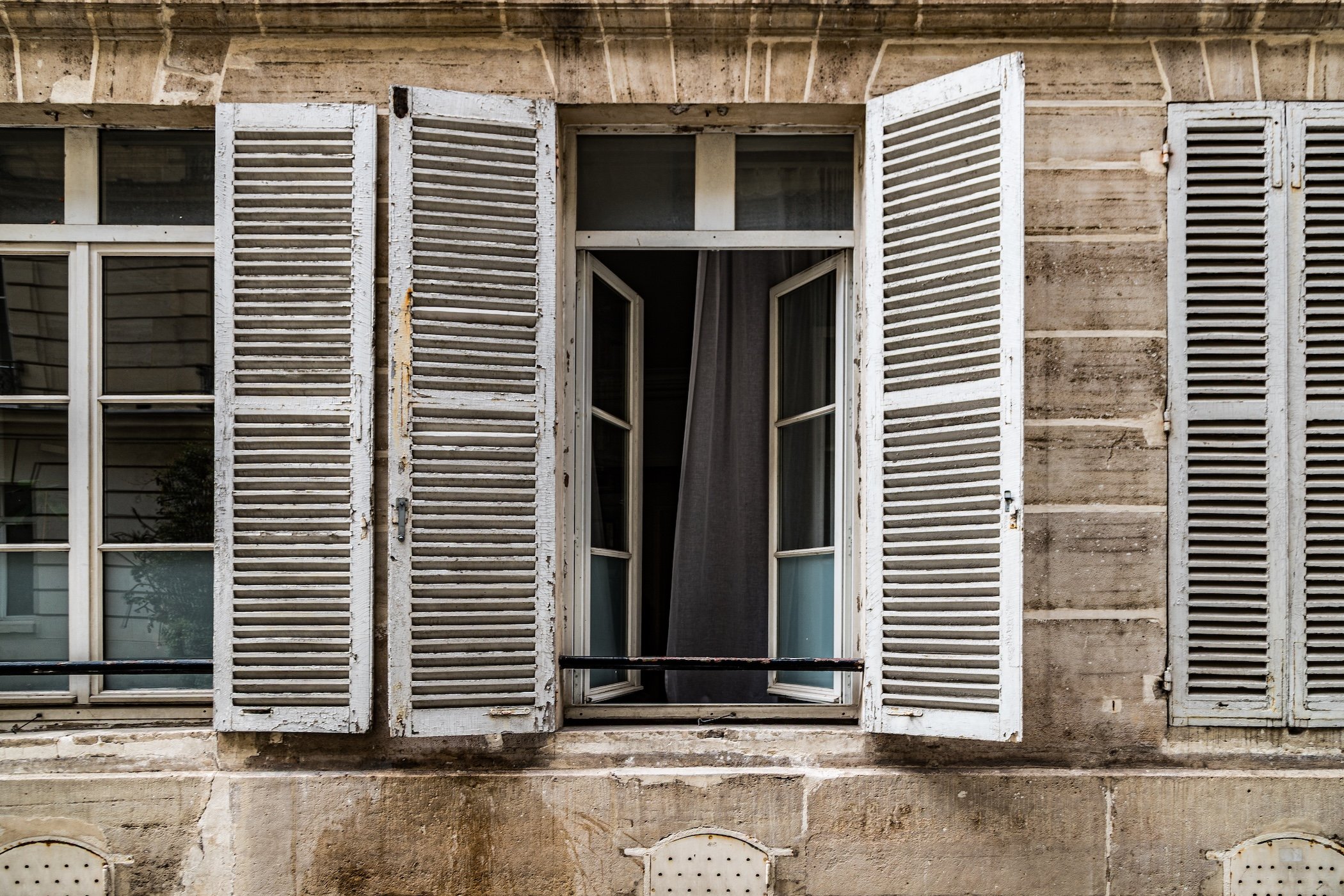
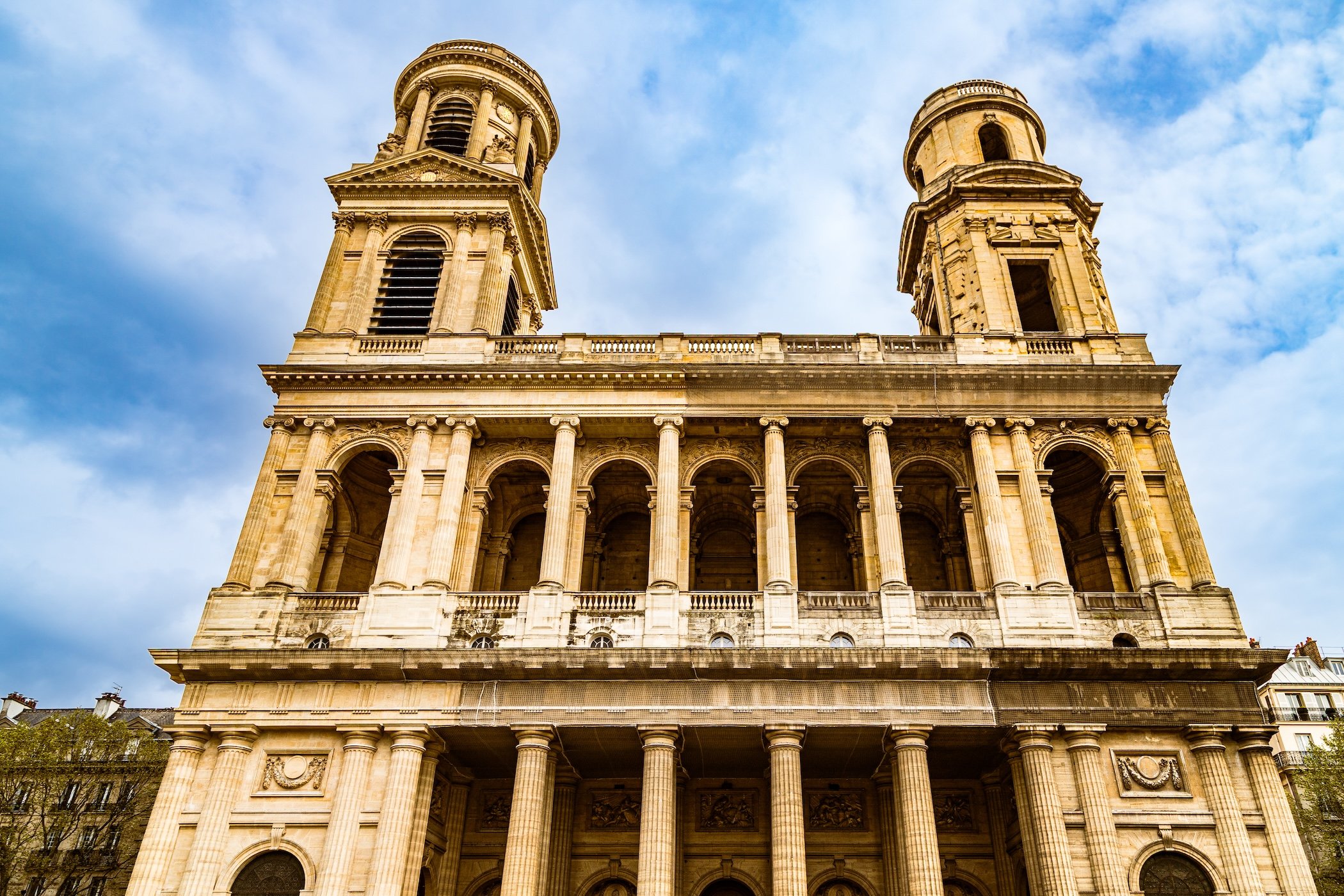
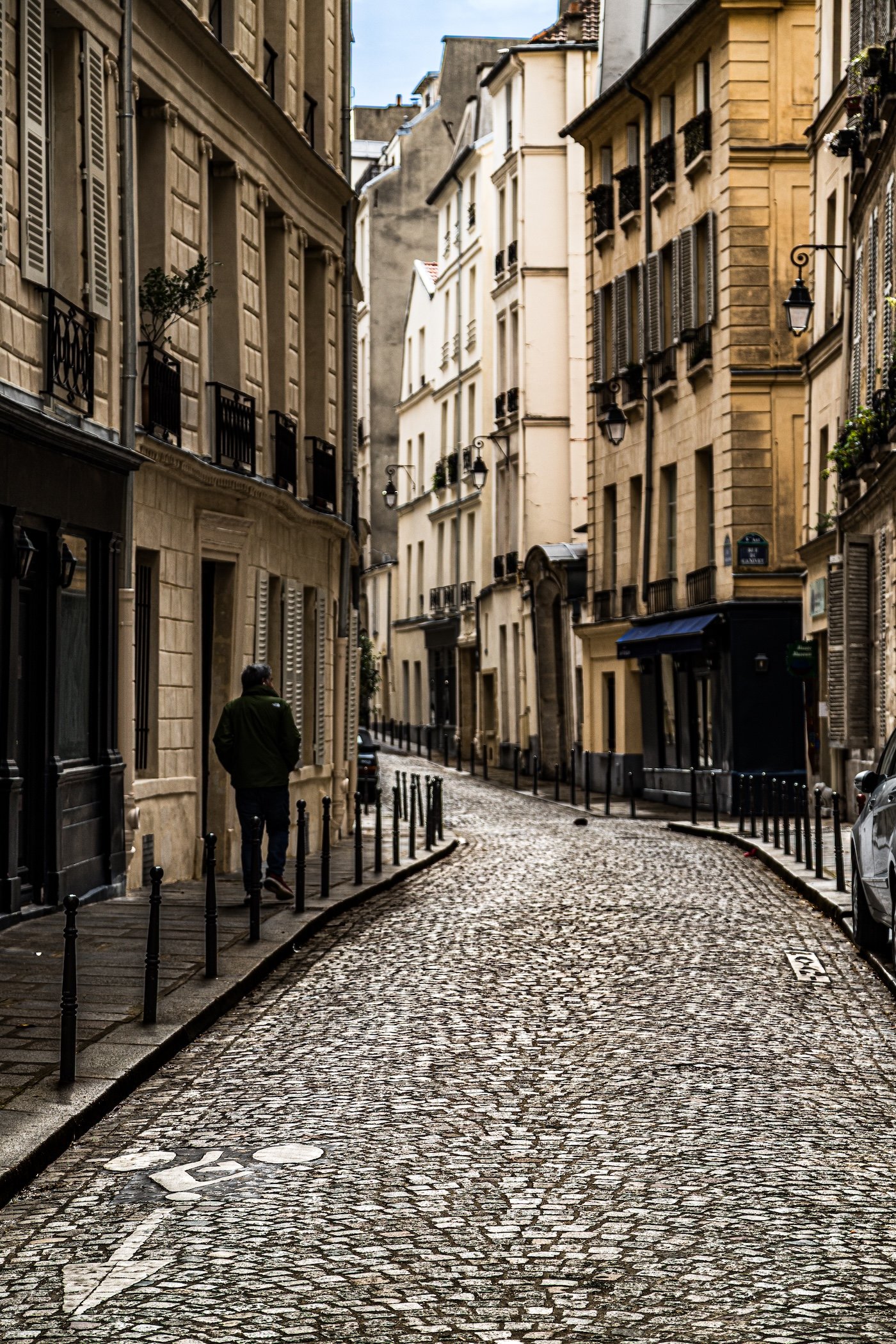
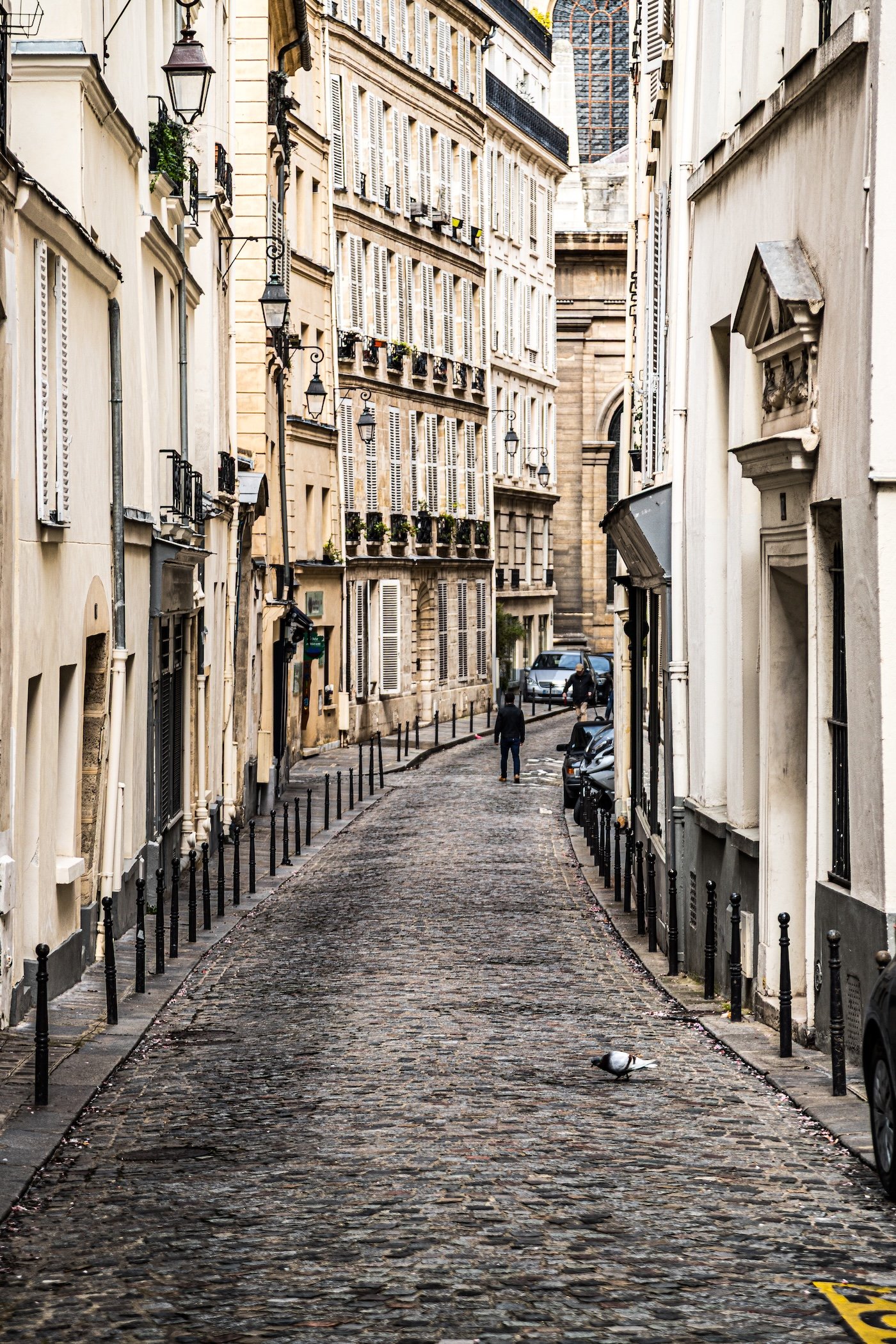
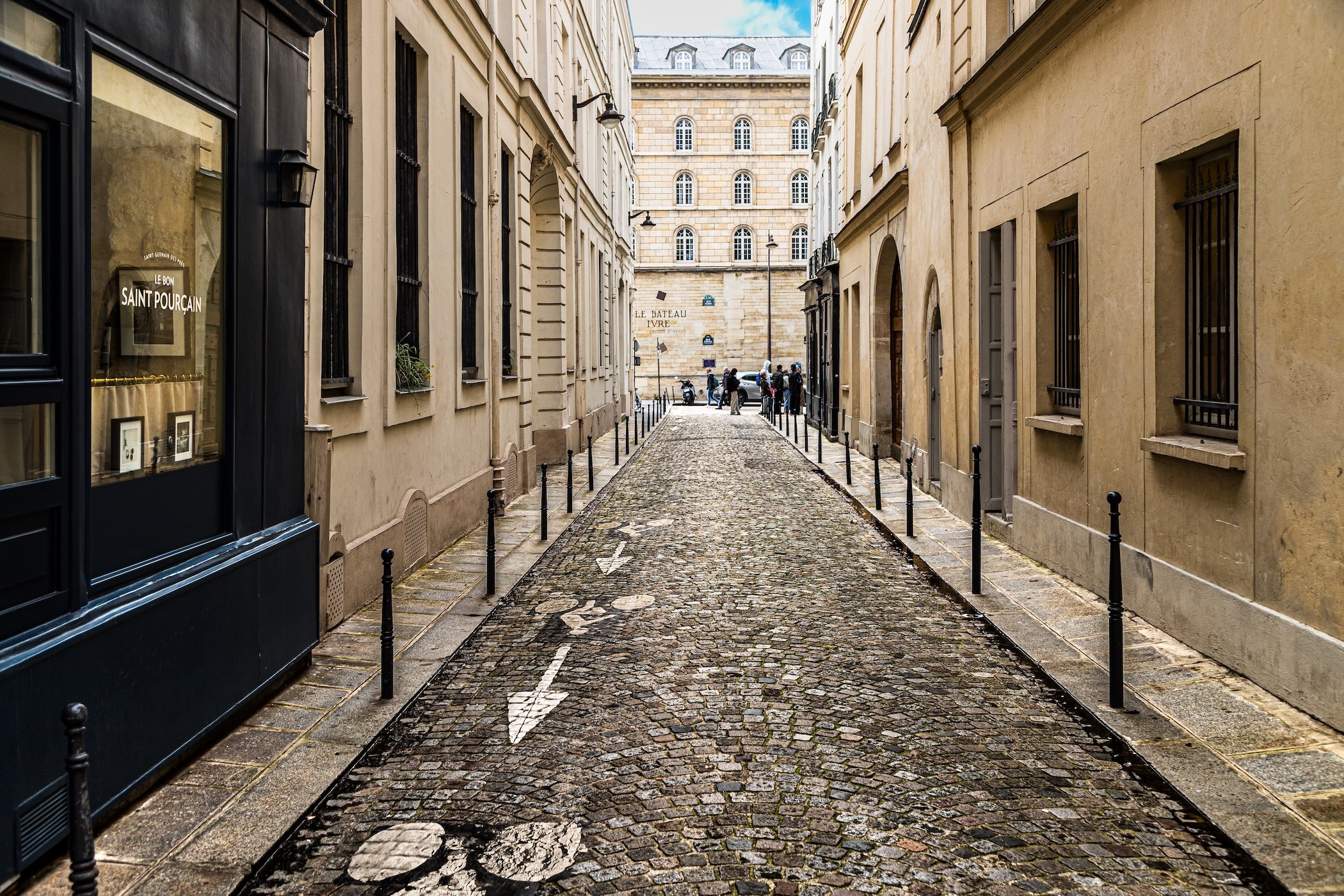
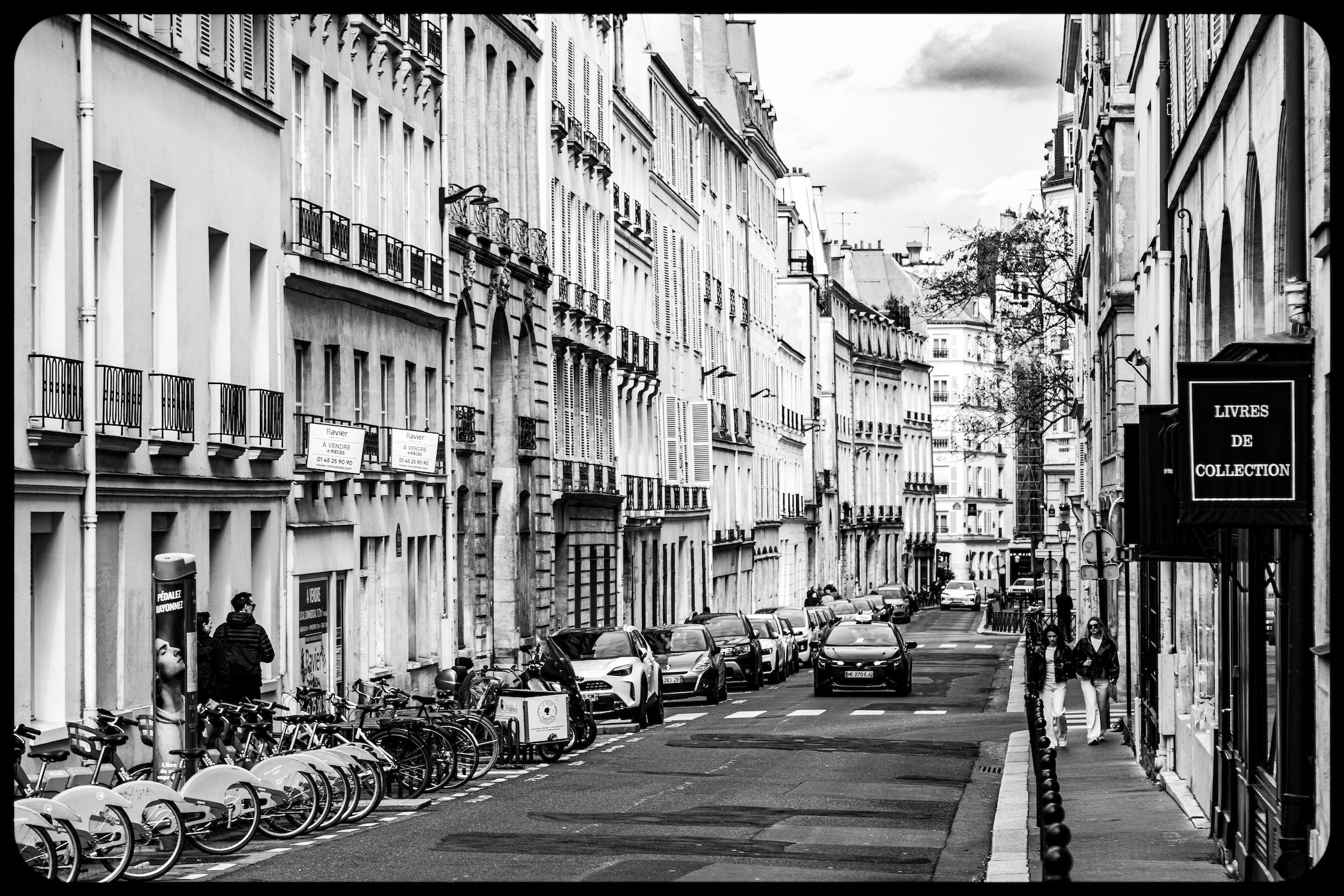
Rue Servandoni marked the most striking change in atmosphere. Its cobbles, narrow proportions, shuttered windows, worn façades, carved doors, and views toward Saint-Sulpice created a secluded and almost timeless passage through the quarter. At Place Saint-Sulpice, the neighborhood opened once again into monumentality: the great fountain, the church’s mismatched towers, surrounding façades, trees, and broad paved space formed an expansive civic room. Odéon’s visual identity emerged through this continual alternation between grandeur and intimacy—between the institutional city and the quiet streets folded behind it.
Through The Lens
-
Through the lens, Odéon becomes a study of side openings and architectural compression. The camera catches façades, corners, and narrow streets splitting away from the main route. Motion prevents lingering, but it also sharpens the sense of reveal: the district appears in glimpses between walls, as a sequence of urban invitations.
-
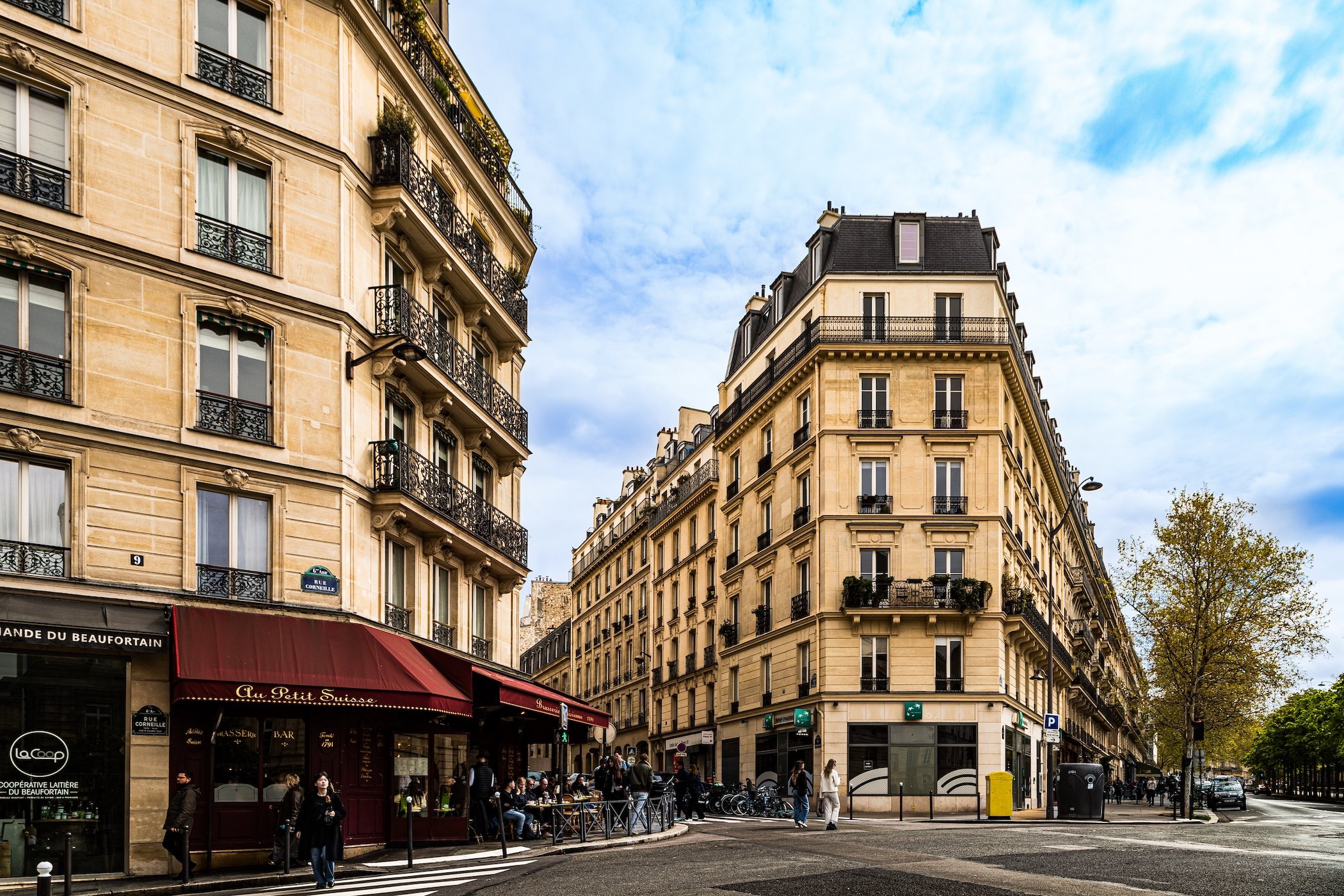
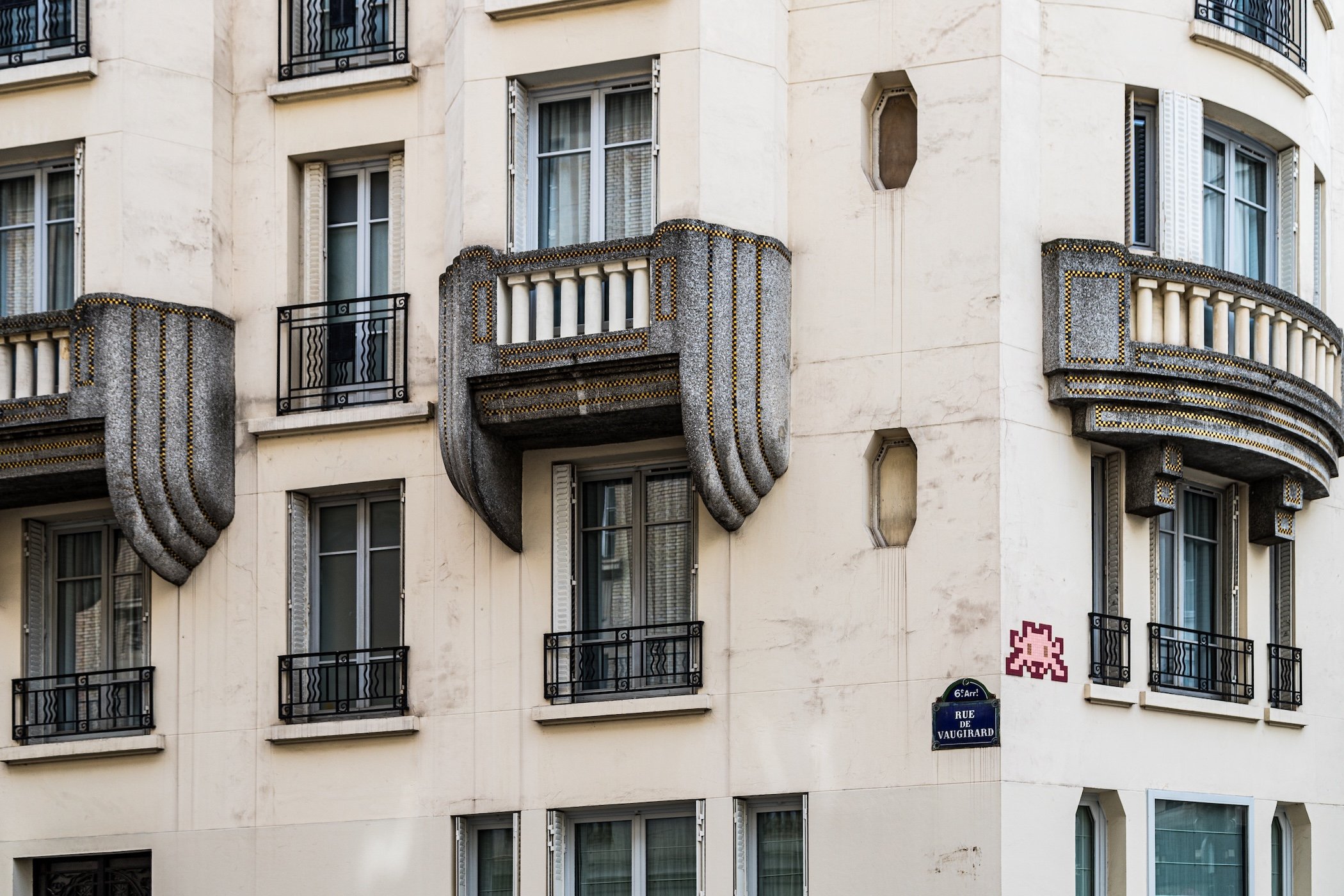
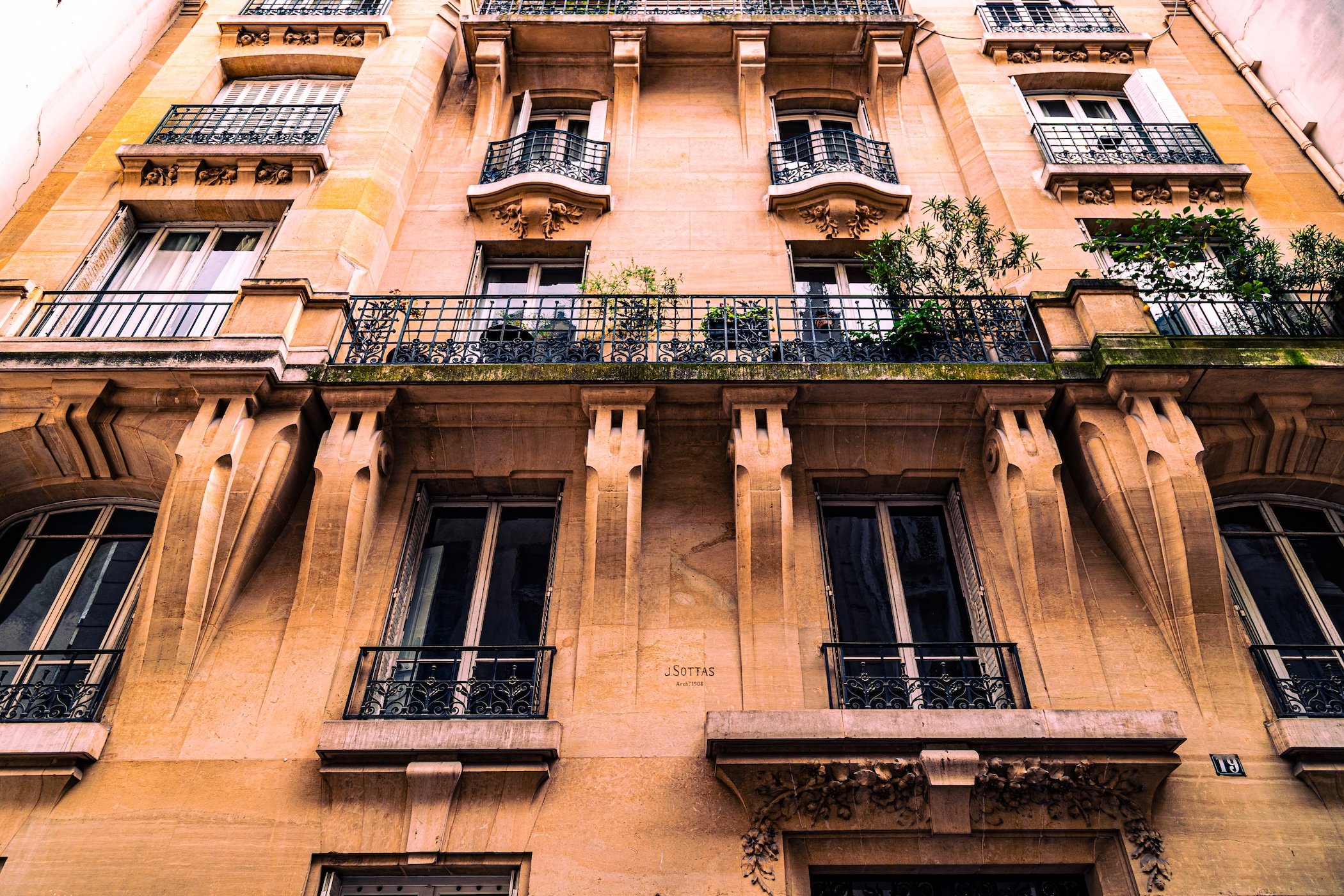
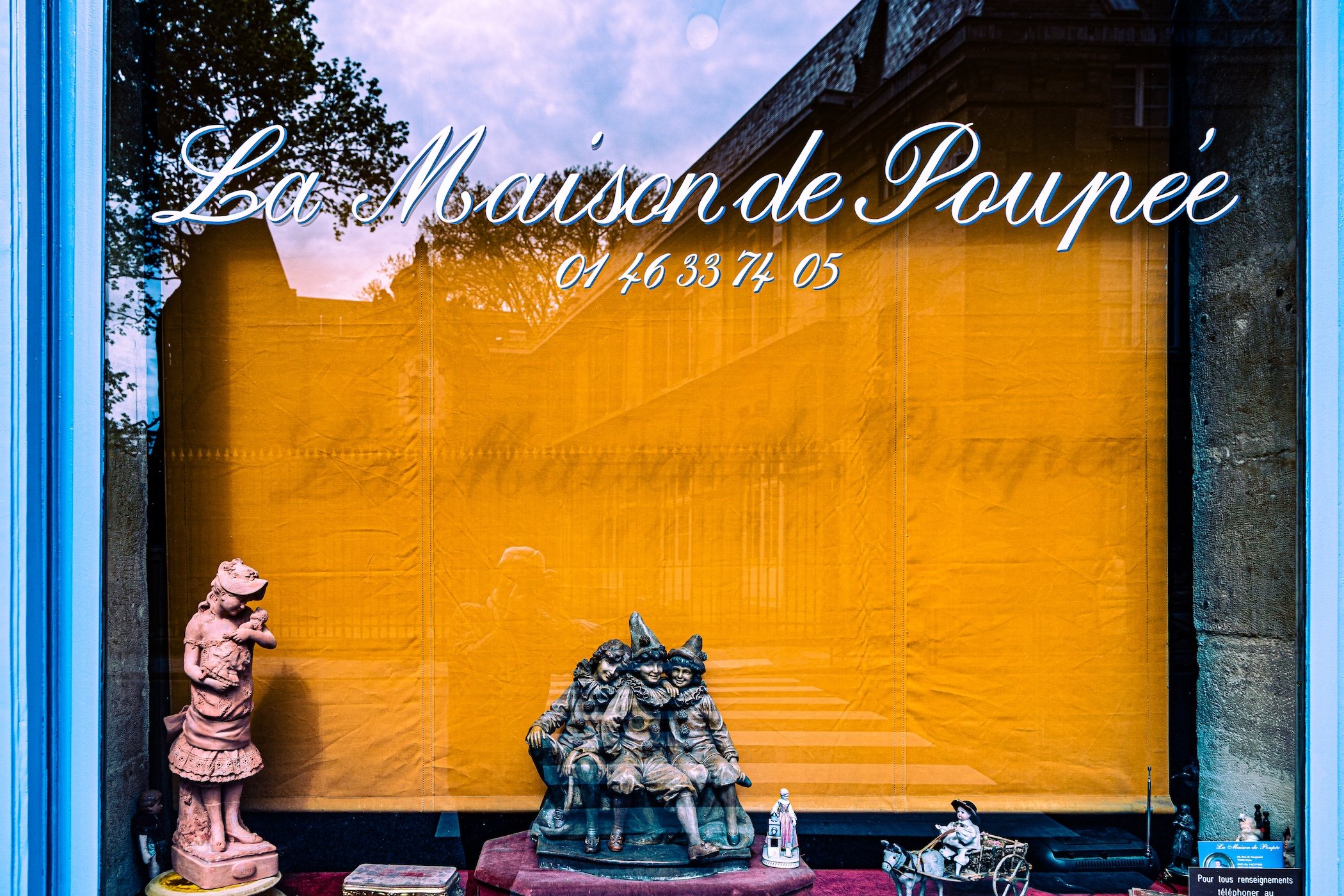
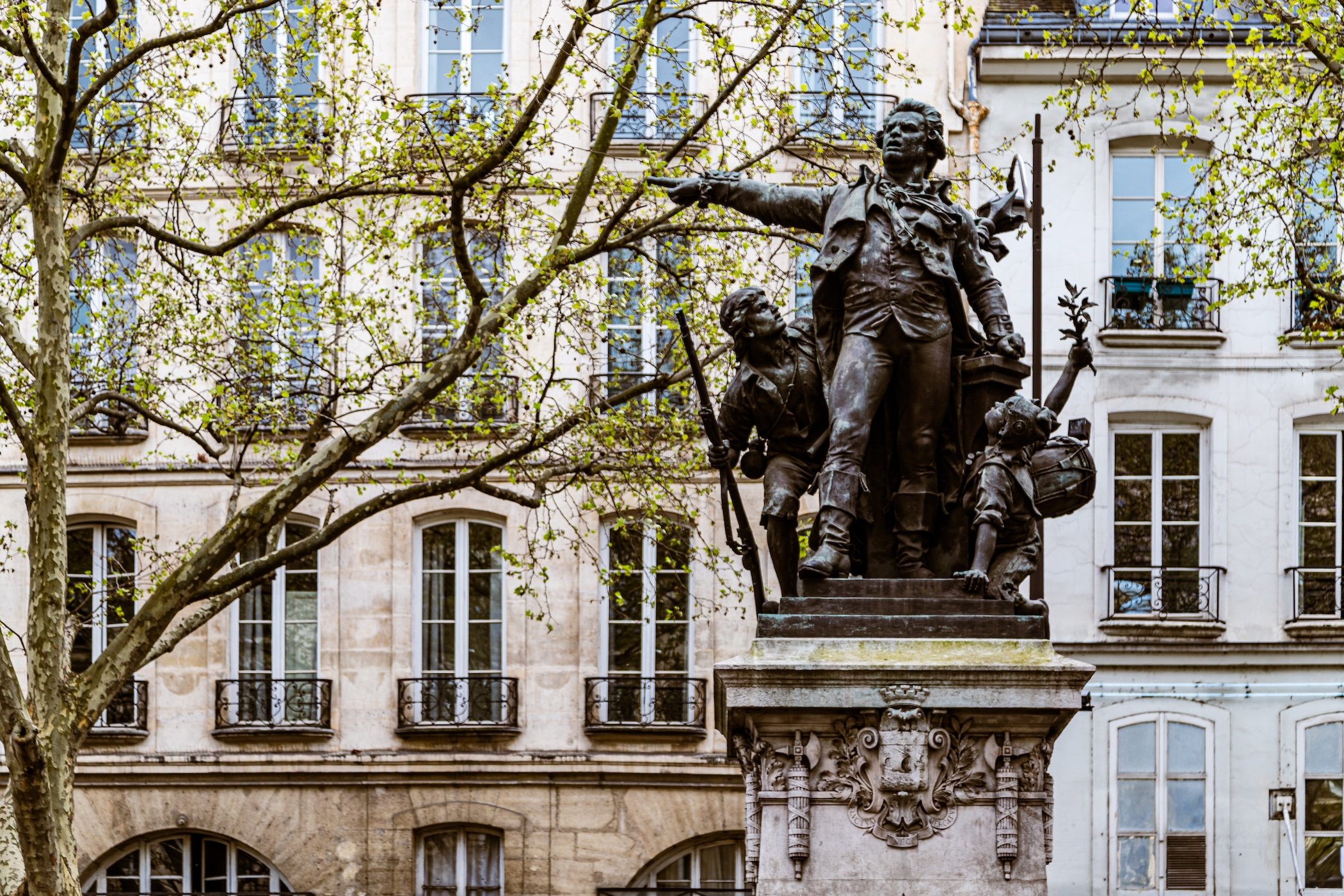
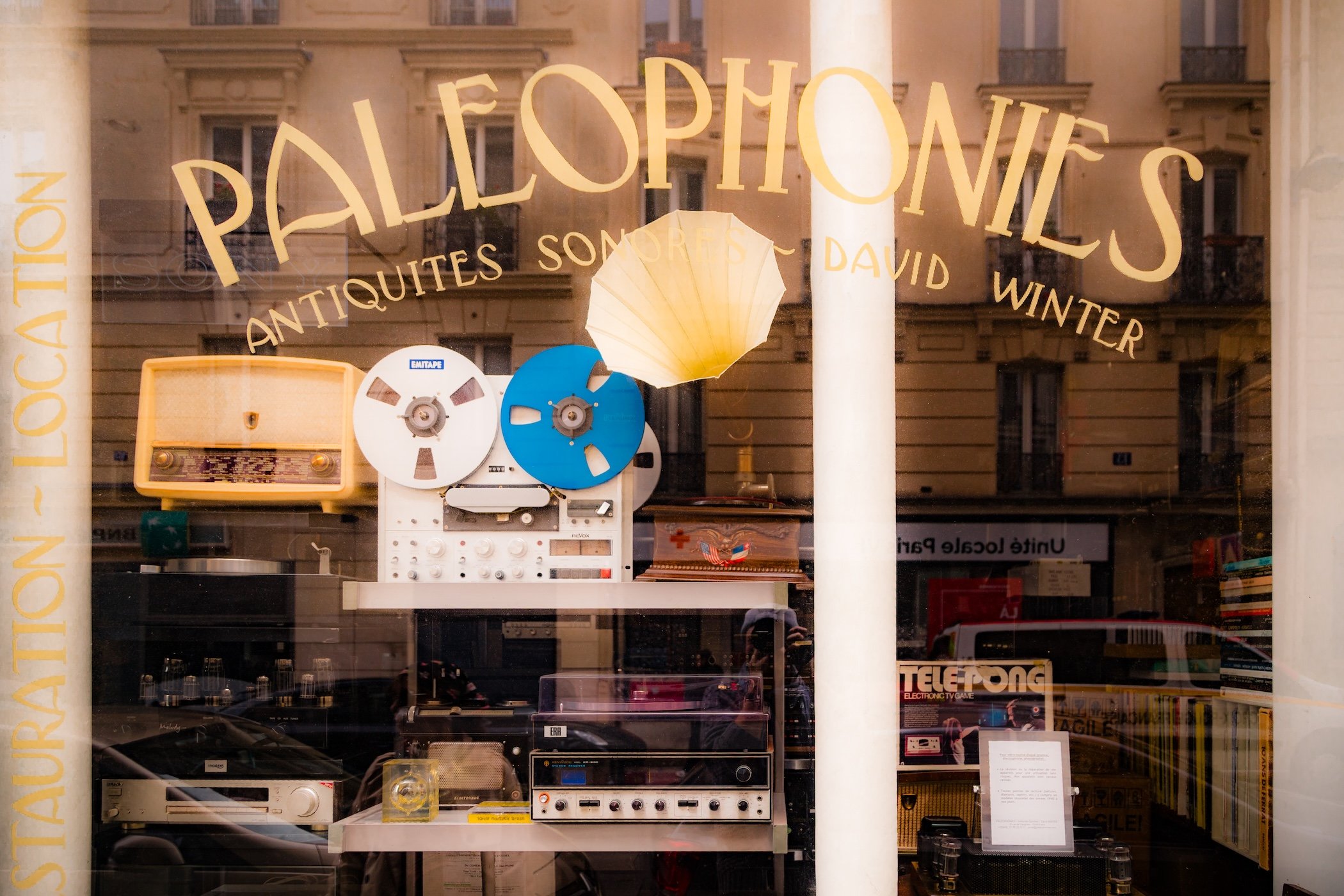
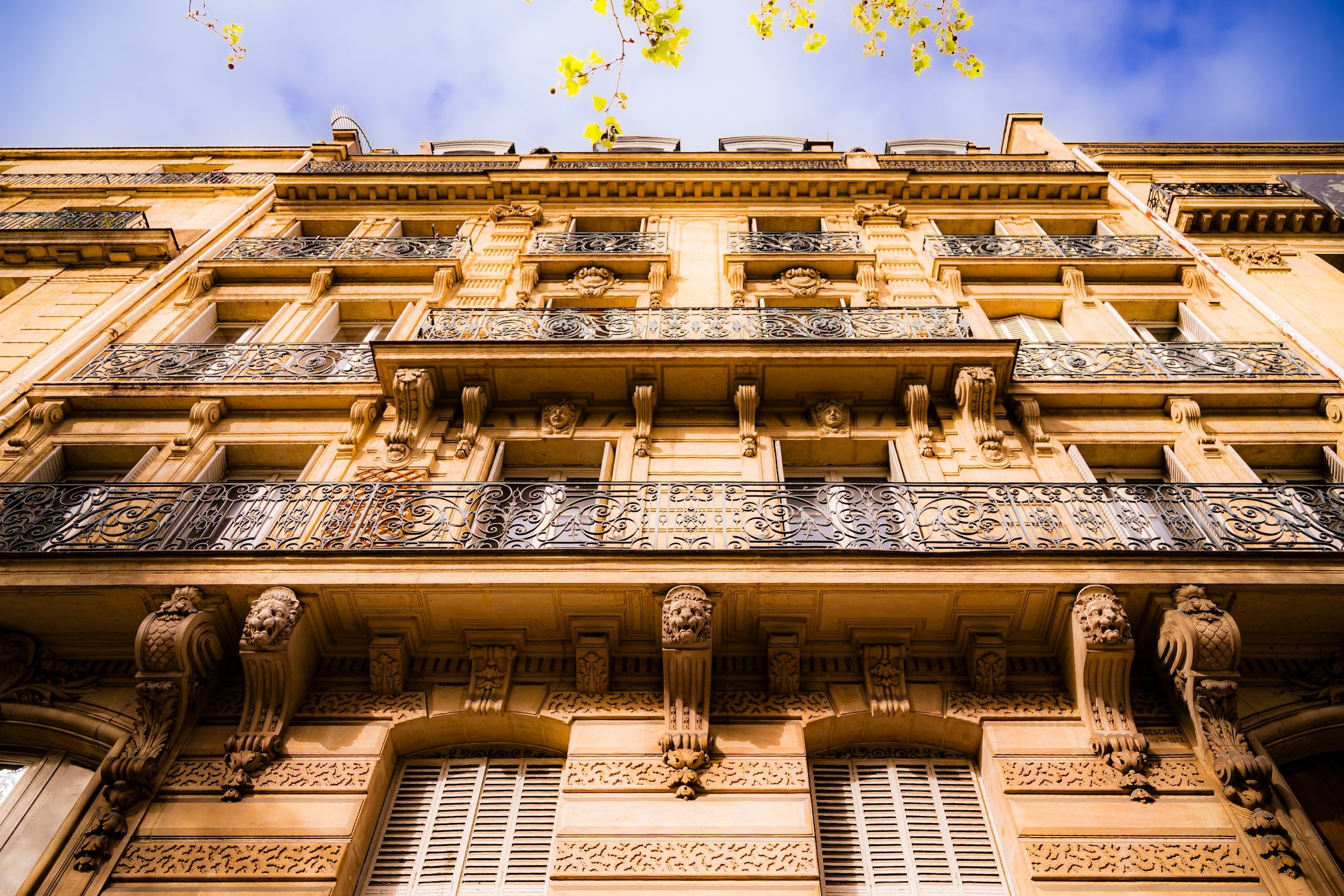
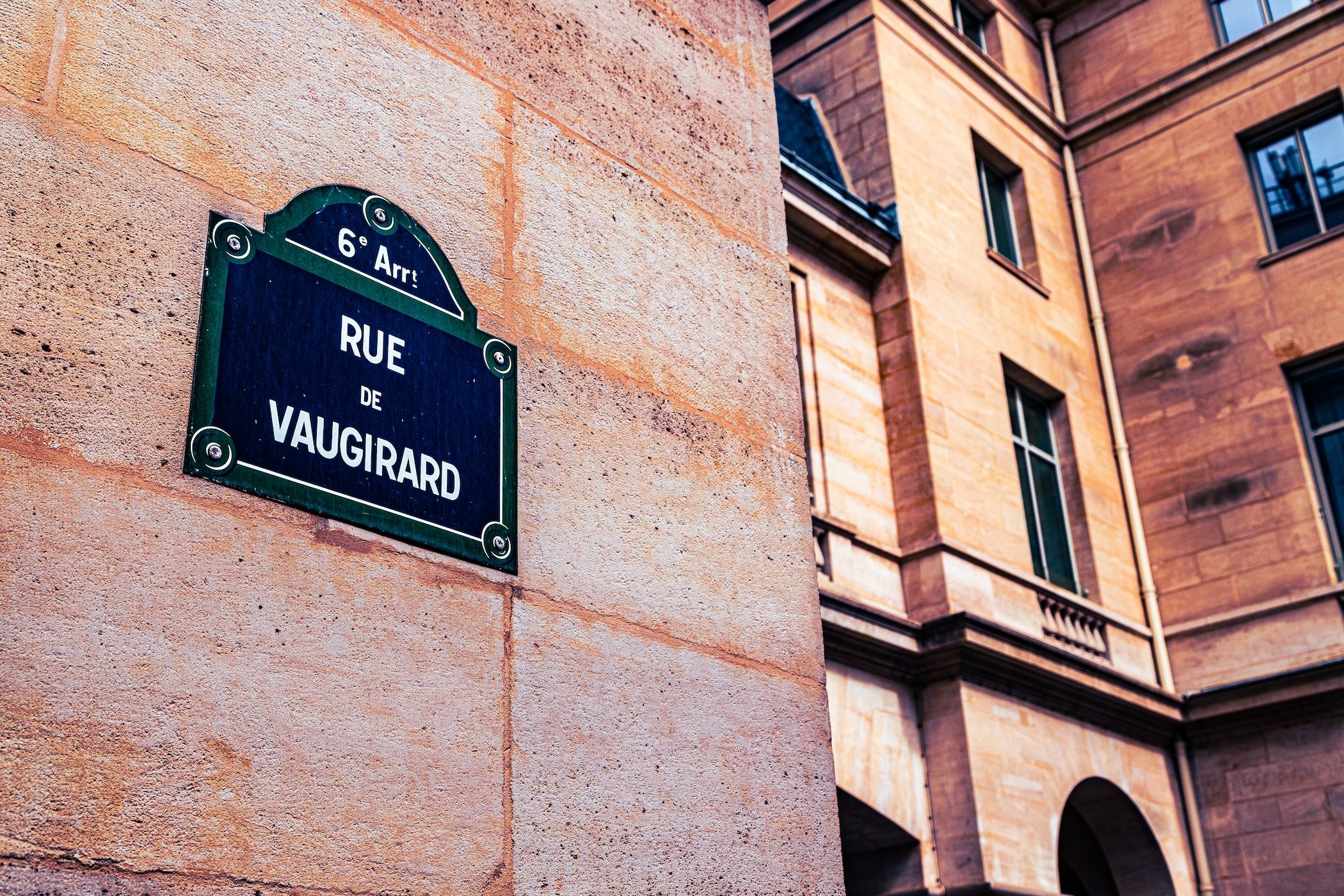
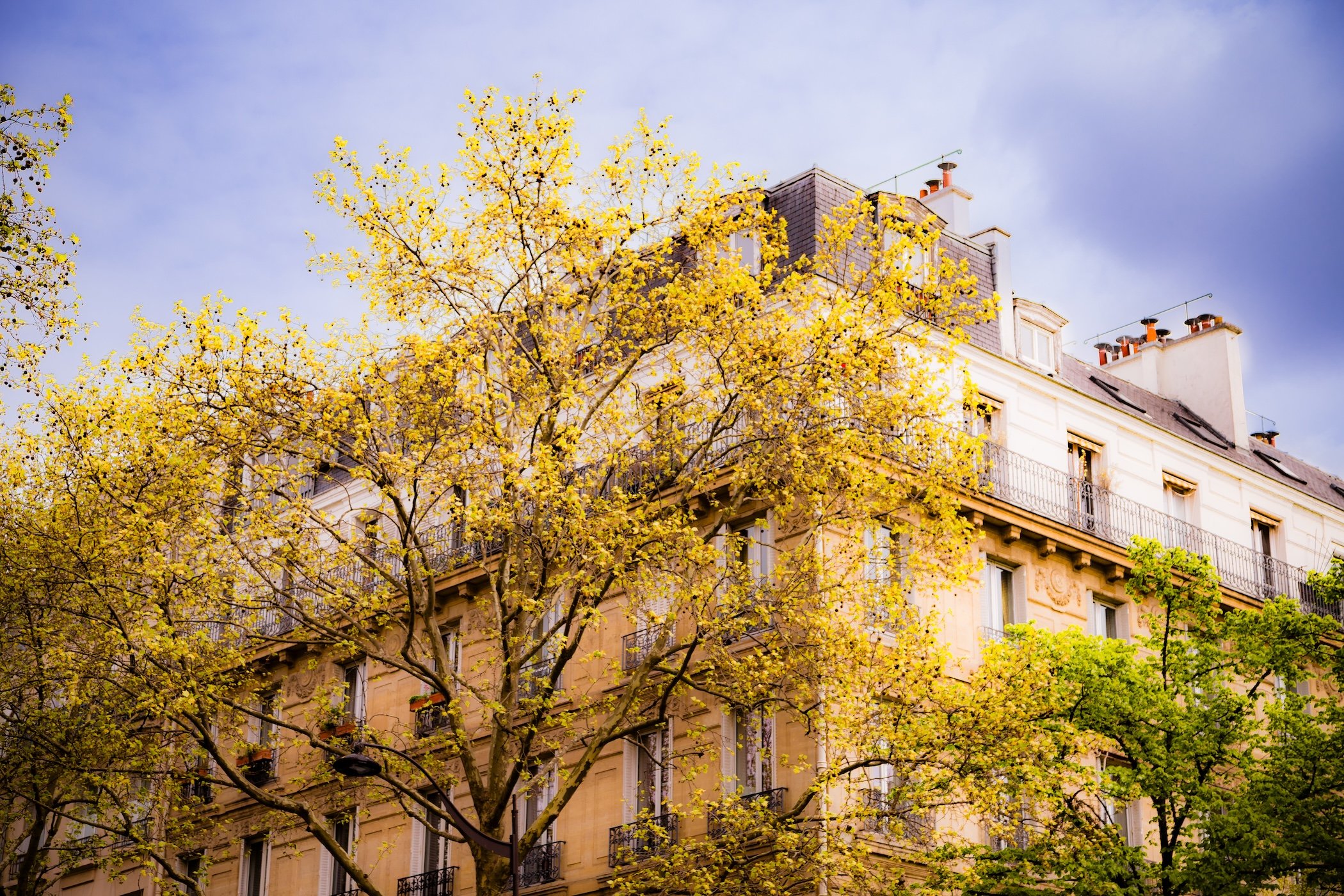
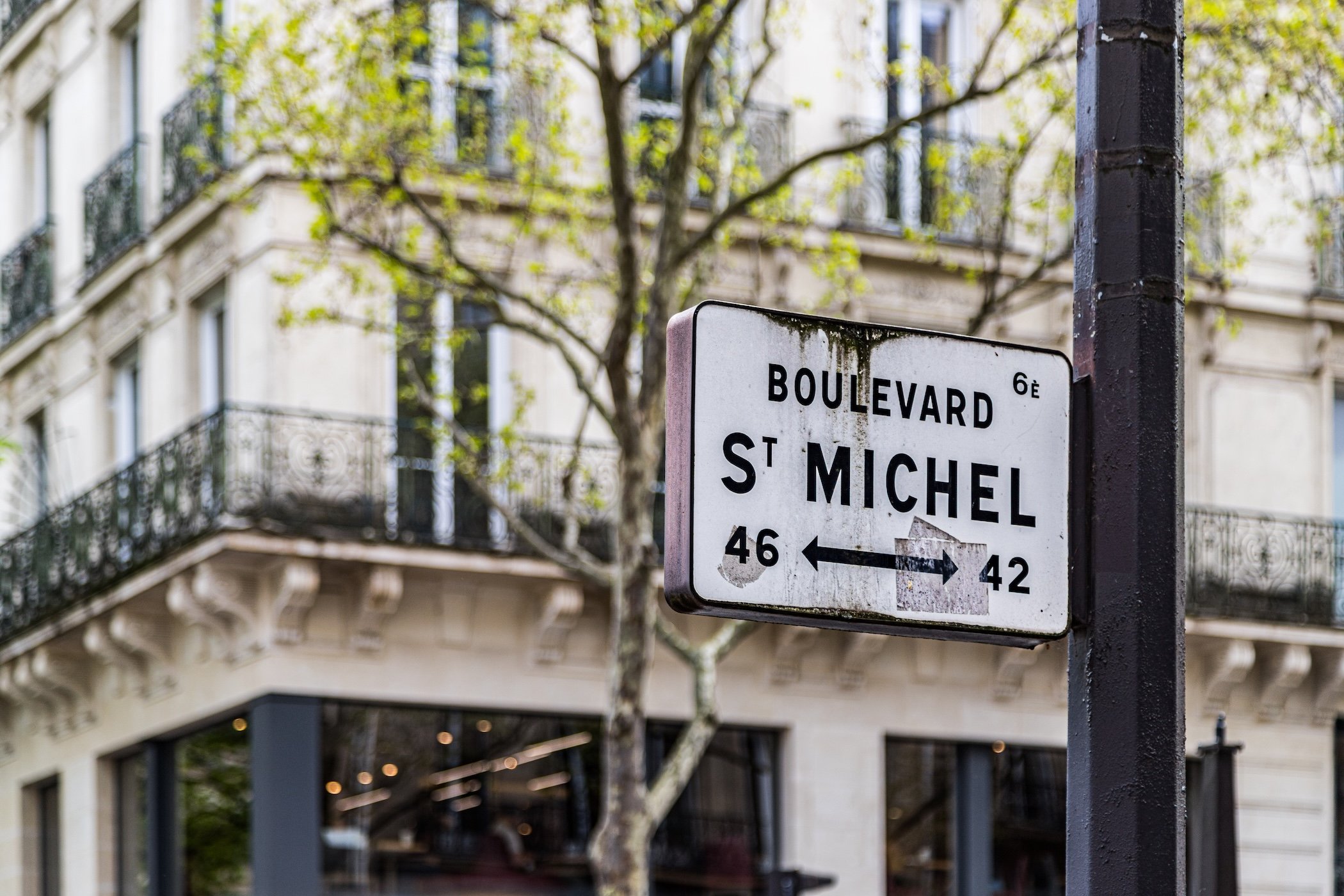
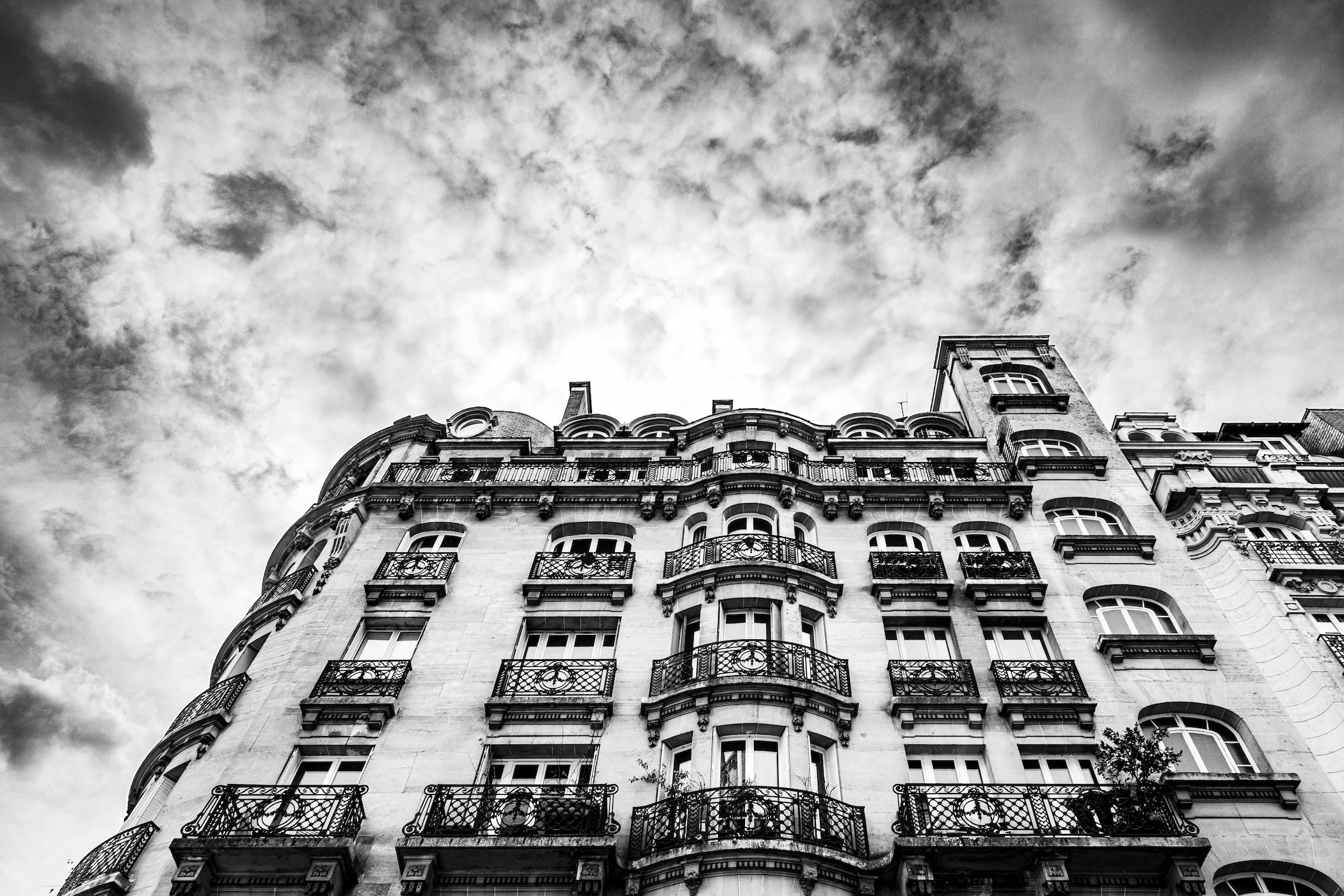
Through the lens, Odéon became a study in architectural progression. The early photographs use long streets and distant landmarks to establish orientation, allowing the dome of the Panthéon to rise beyond trees, façades, and the line of Rue de Vaugirard. Upward-looking compositions emphasize balconies, cornices, corner buildings, and the meeting of pale masonry with the bright blue and violet tones of the spring sky. Closer photographs of street signs, shopfronts, window displays, and saturated red façades return the experience to pedestrian scale.
Around the Senate, the camera responded to order and repetition. Colonnades, arches, formal entrances, stone walls, and long institutional elevations created strong lines and carefully framed perspectives. Figures passing beneath the arcades supplied scale and movement, while alternating color and black-and-white treatments distinguished warm architectural surfaces from the more graphic geometry of columns, shadows, façades, and road markings.
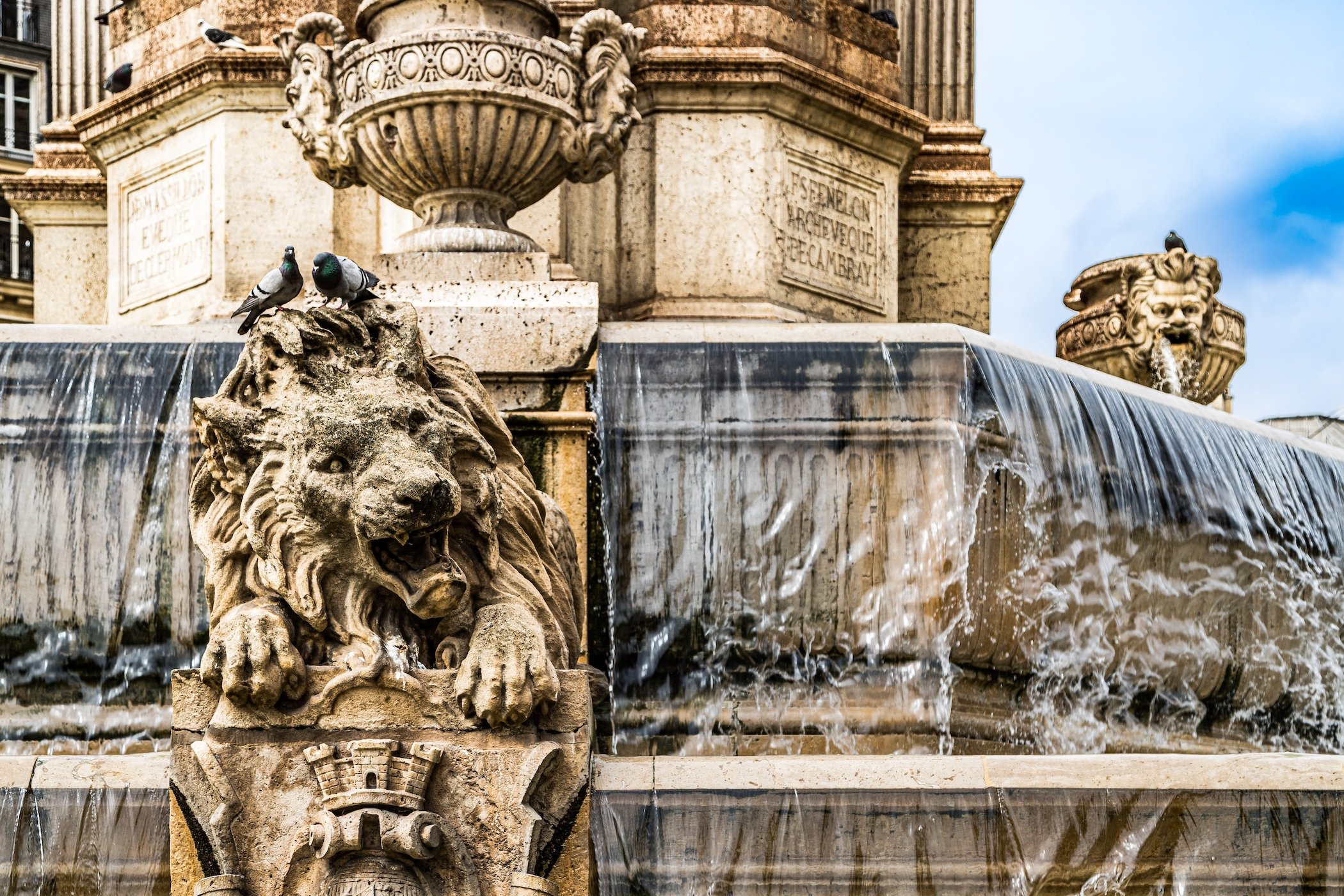
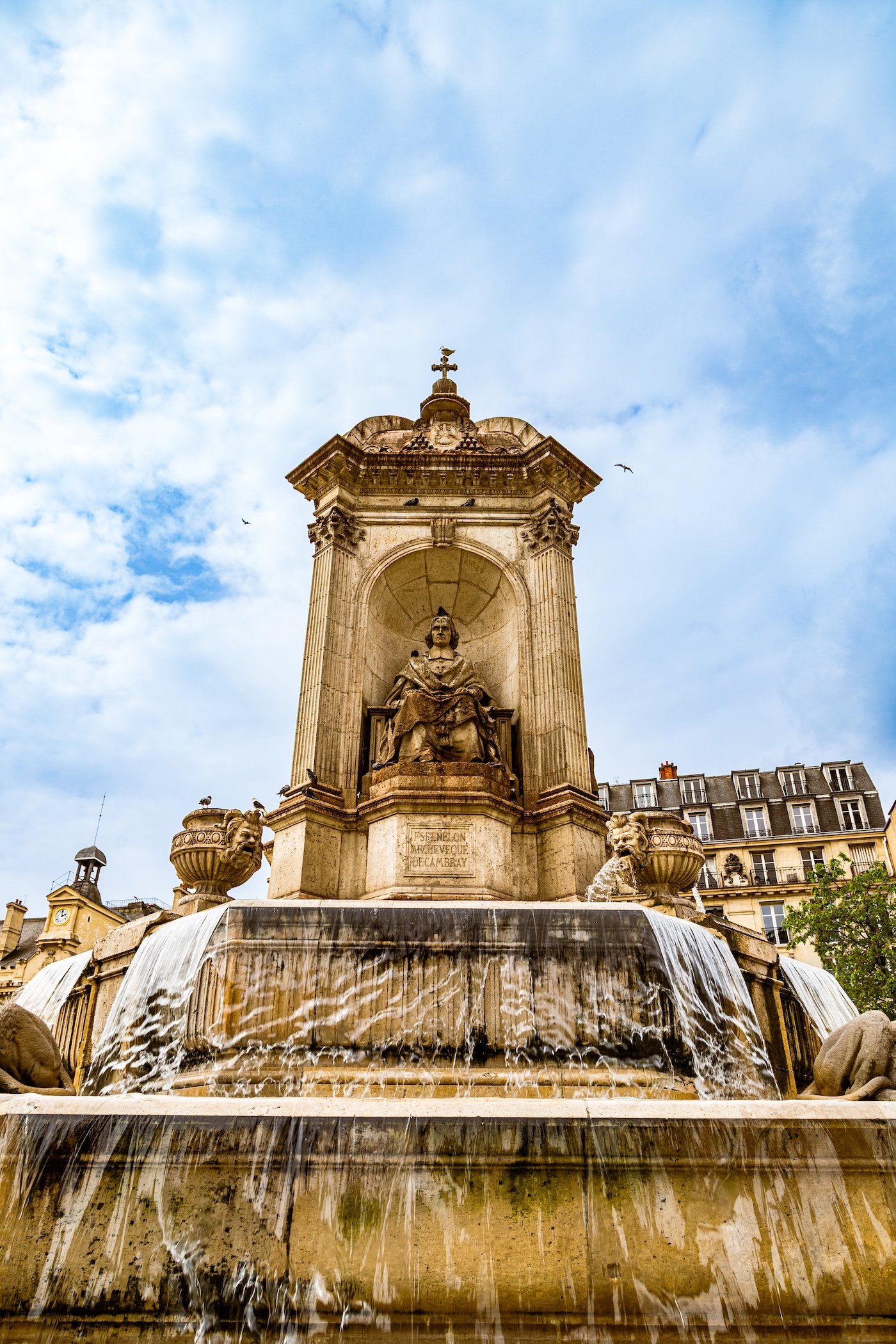
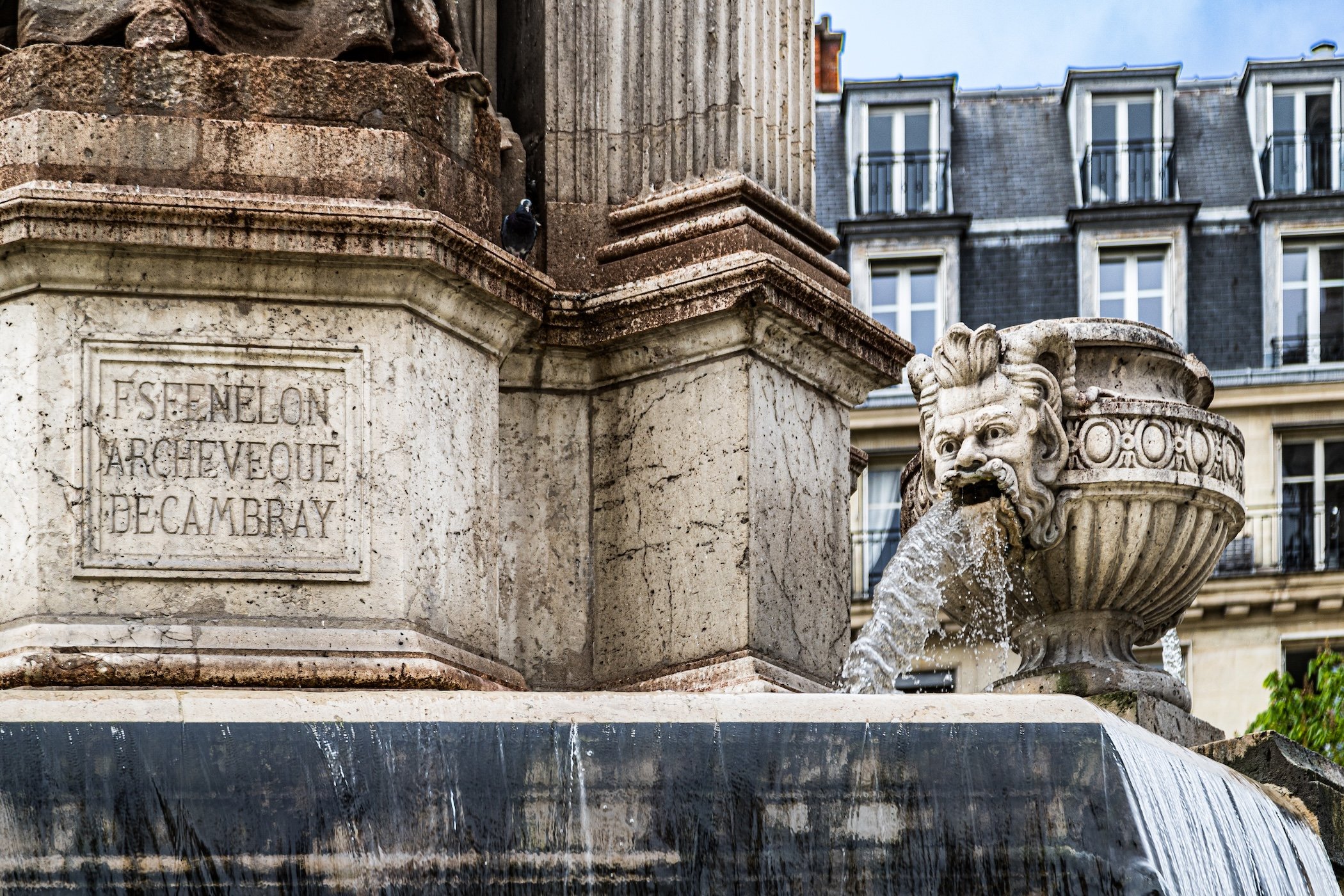
The imagery became more enclosed along Rue Servandoni and the surrounding side streets. Vertical compositions accentuated narrow cobbled lanes, walls rising tightly on either side, old shutters, carved doors, and glimpses of towers above the rooftops. At Place Saint-Sulpice, the lens widened again. The fountain was photographed through both grand views and close studies of sculpted lions, stone basins, cascading water, and allegorical figures, while the church appeared repeatedly against dramatic cloud. Across the full sequence, the photography moved from distant landmark to street detail, from formal symmetry to irregular enclosure, and finally into the theatrical scale of the square.
If you visit Paris, these ideas can help inspire your own photography.
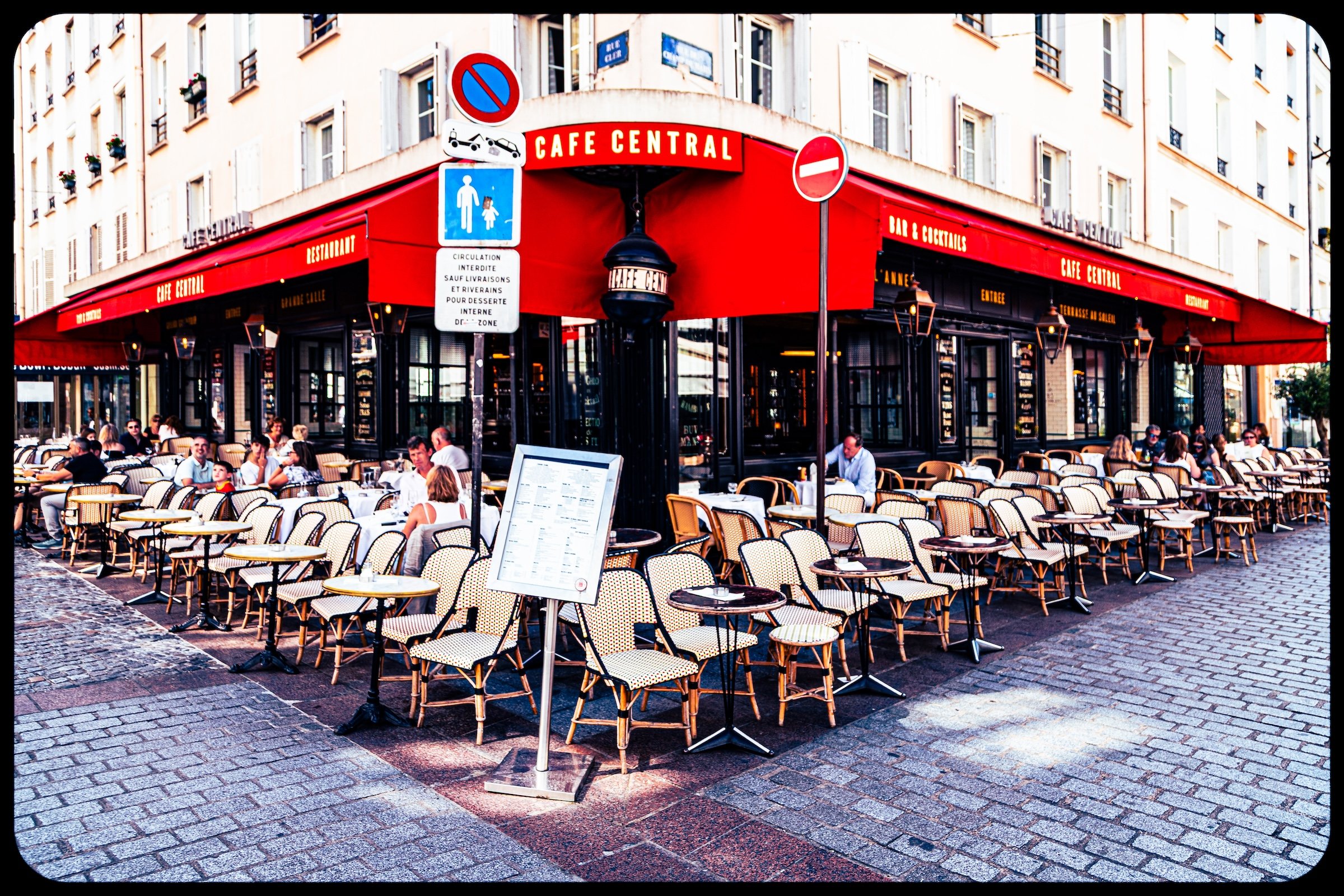
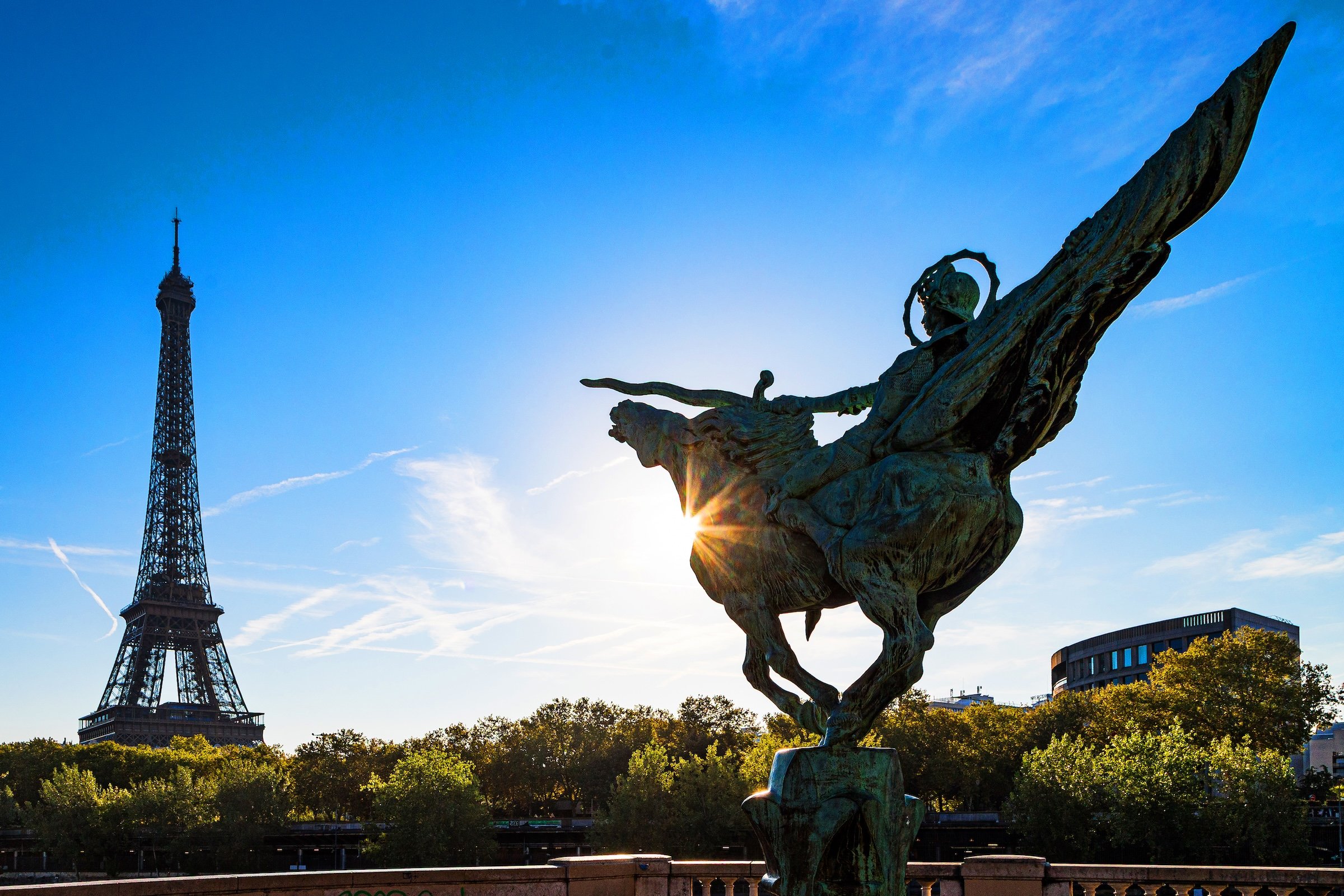
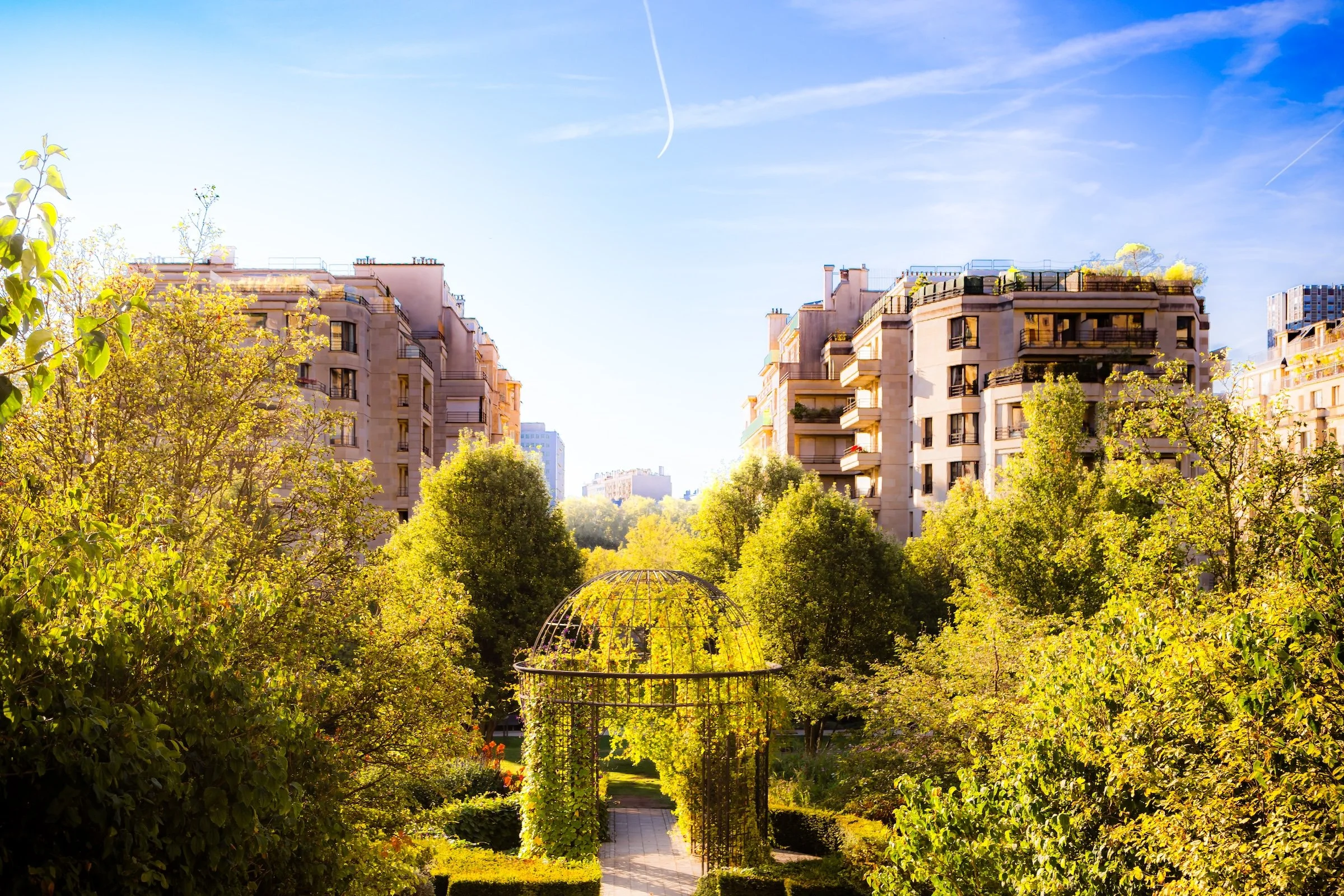
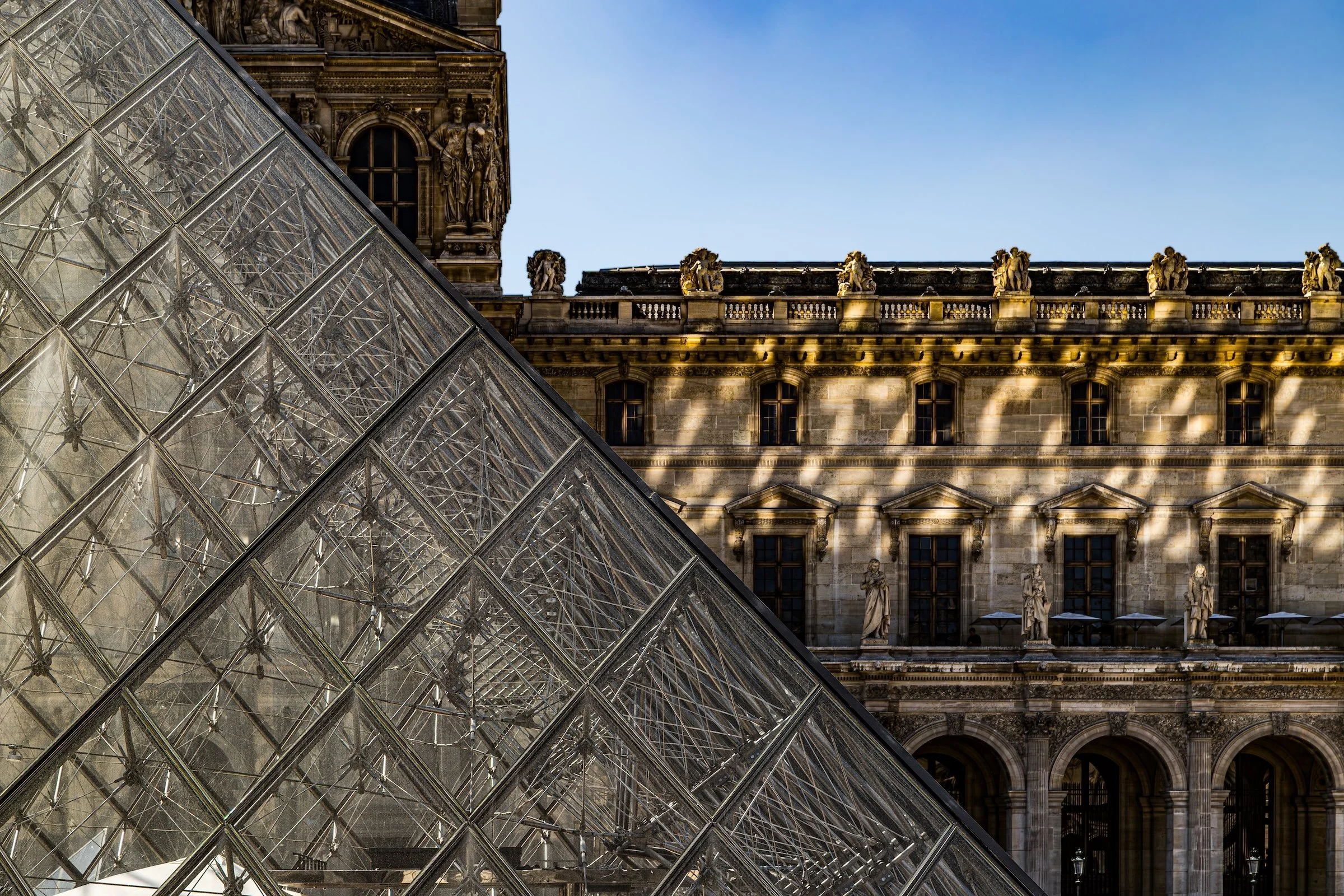
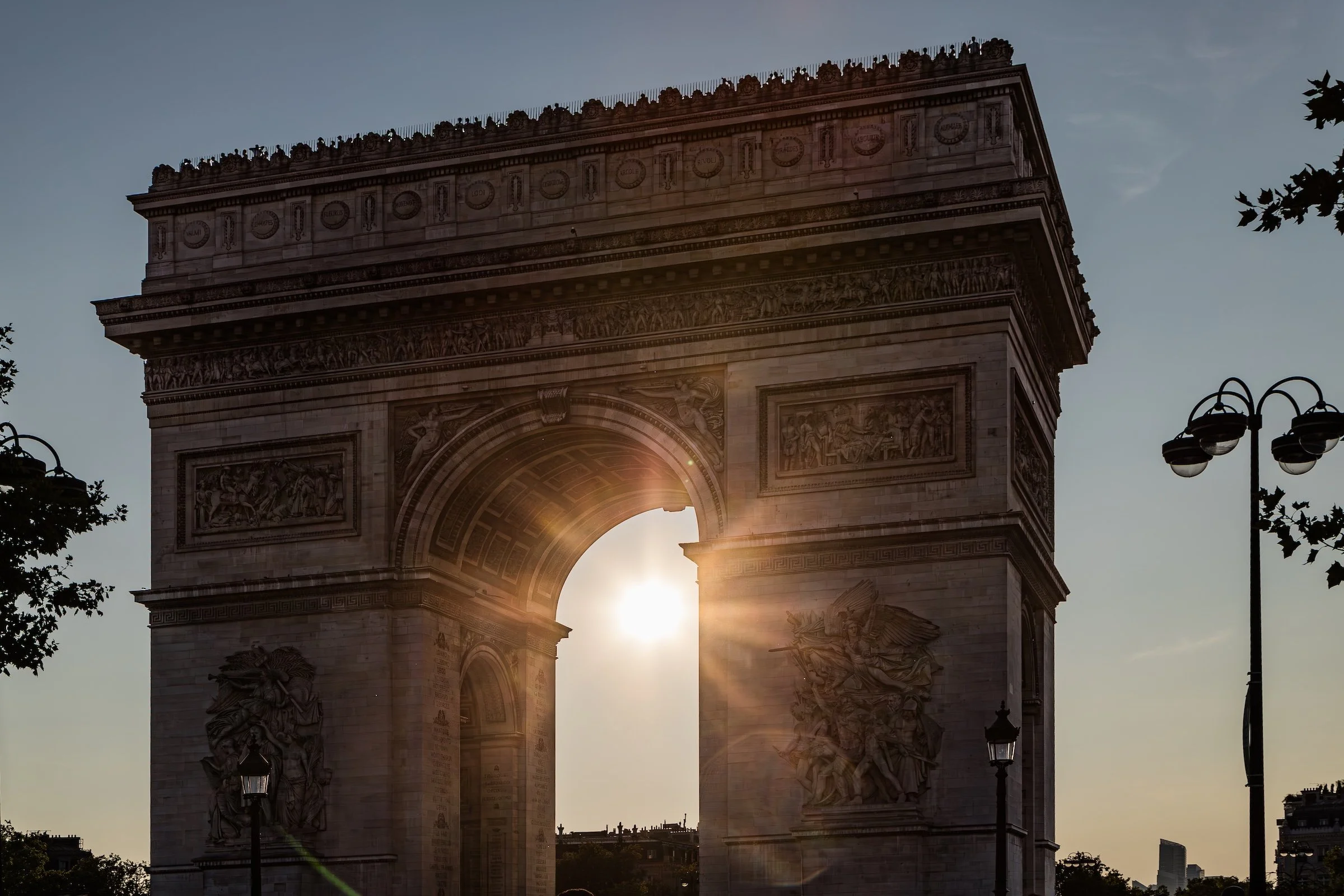
Paris: J’Espere, Je Rêve, Je Vive
Odéon Photo Gallery
Odéon Flâneur Notes
-
10:27 AM
Conditions: 22°C (72°F) | Humidity: 71%.
After rounding Fontaine du Bassin Soufflot, the bus headed south on Rue de Tournon, where narrow side streets opened between the walls of the buildings lining the route. Odéon appeared as a quarter of enclosure and glimpsed depth: façades close to the street, side corridors, institutional elegance, and the sense that much of the neighborhood’s life waited just beyond the bus’s path.
Other neighborhoods visited:
-
12:36-16:14 PM
Conditions: Sun & Clouds | 18°C (54°F)
My journey through Odéon began on Rue de Vaugirard from Boulevard Saint-Michel, with the dome of the Panthéon rising above the trees and surrounding rooftops. Although the route was moving westward into the 6th arrondissement, that great landmark remained a visual point of departure—a reminder of the dense architectural and intellectual landscape connecting the Latin Quarter with Luxembourg.
Rue de Vaugirard carried me through a varied streetscape of substantial apartment buildings, shops, cafés, painted façades, and occasional openings toward broader institutional spaces. The afternoon light brought warmth to the masonry and brilliance to the young spring foliage. Approaching the Senate, the atmosphere became more formal. Arcades, stone façades, guarded entrances, and long architectural perspectives announced the civic importance of the quarter, while the surrounding streets continued to feel lived-in and unmistakably Parisian.
Heading south onto Rue Servandoni brought an immediate contraction of scale. The broad institutional world receded behind narrow cobbles, high façades, shuttered windows, carved entrances, and quieter passages. The street felt picturesque without appearing staged—an older residential Paris surviving alongside the grand institutions only a short distance away. Glimpses of Saint-Sulpice beyond the rooftops gradually drew the walk toward its conclusion.
The route ended at Place Saint-Sulpice, where the narrow approach released into the openness of the square. The monumental fountain occupied its center, its lions and sculpted figures surrounded by flowing water, trees, pedestrians, and the façades enclosing the plaza. Beyond it rose the Church of Saint-Sulpice, imposing yet irregular, its two towers standing differently against the shifting clouds.
Odéon ultimately felt like a journey between several scales of Paris. It began beneath the distant presence of the Panthéon, passed beside the formal authority of the Senate, slipped into the intimate cobbles of Rue Servandoni, and concluded within the monumental space of Saint-Sulpice. The route never depended upon a single atmosphere. Its character came from the transitions between them—from avenue to passage, institution to residence, and architectural distance to immediate encounter.
Other neighborhoods visited:
Explore Paris
-

The twenty arrondissements form the civic spiral of Paris, organizing the city into its broad local districts of government, identity, and daily life.
-

Each arrondissement is divided into four official administrative quarters, giving Paris a more precise civic and geographic framework.
-

The conseils de quartier bring participation to street level, giving residents a voice in neighborhood needs, public space, and local civic life.
-

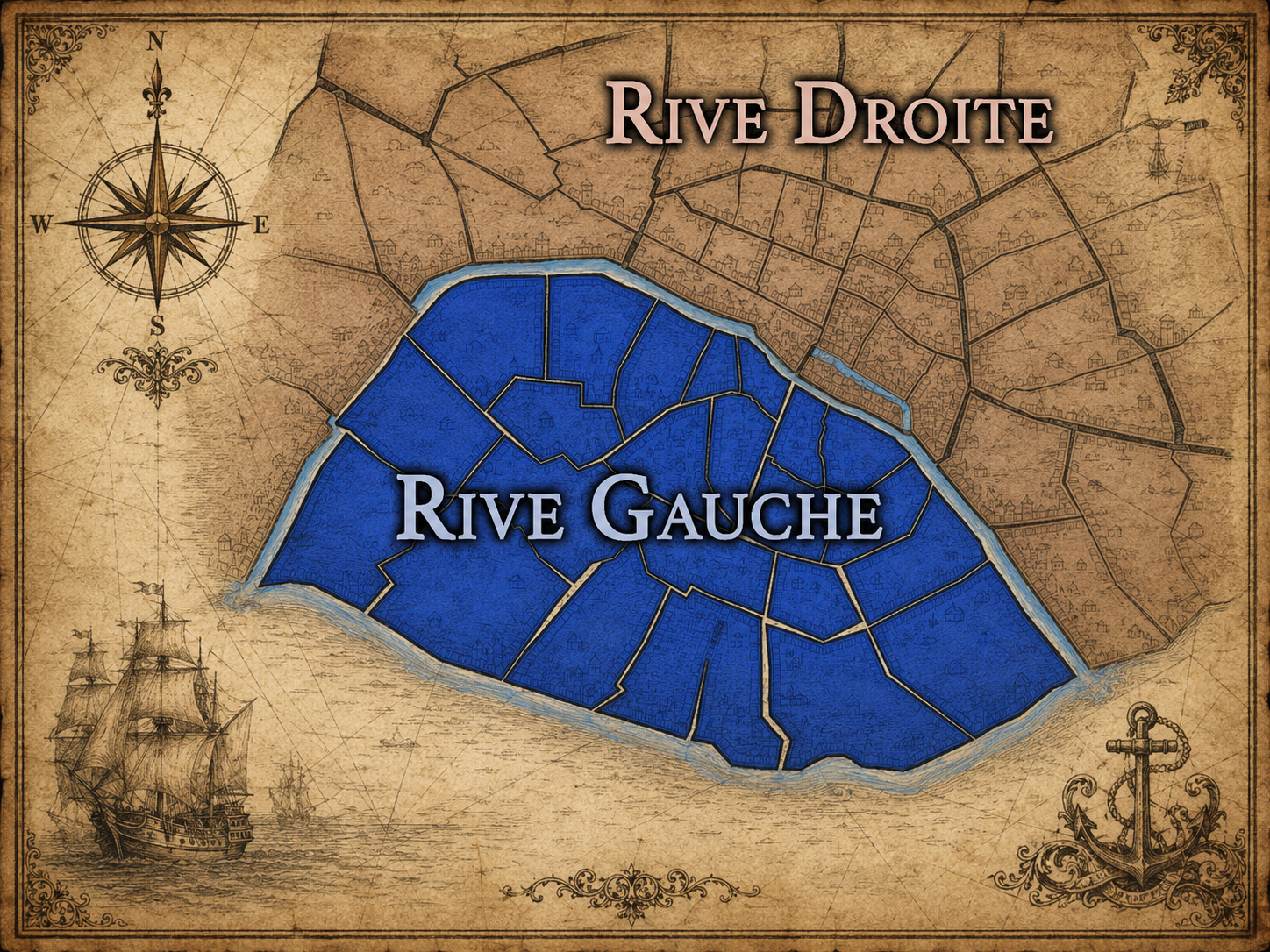
Les Deux Rives trace Paris through the Seine’s two banks, revealing how the Rive Droite and Rive Gauche shaped the city’s civic power, commerce, learning, art, and cultural identity.
-

Cultural neighborhoods reveal the Paris people recognize through history, cafés, architecture, memory, atmosphere, and local belonging.